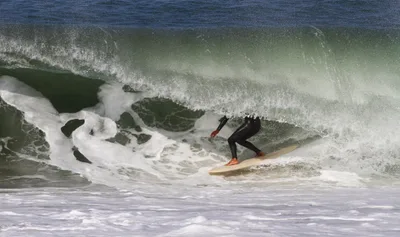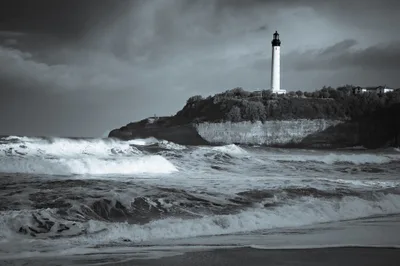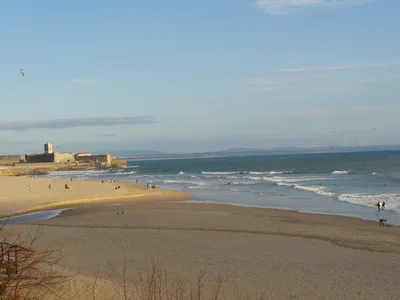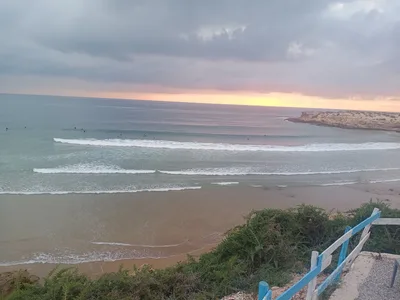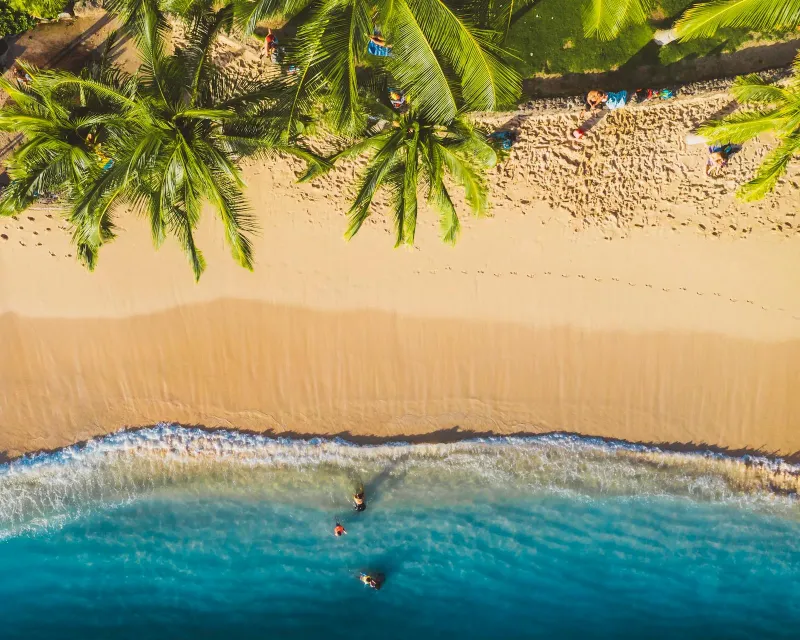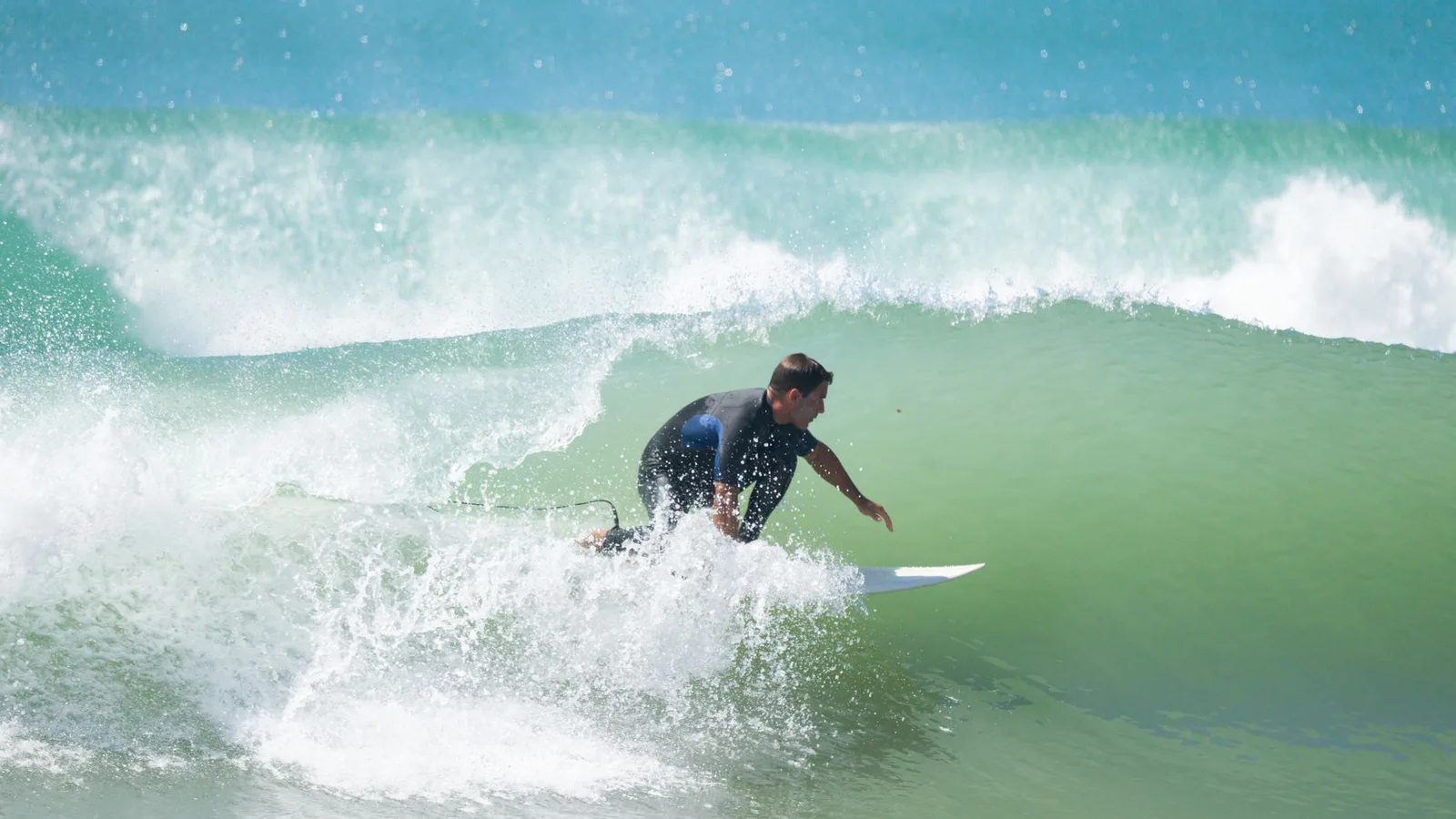

There's a moment, the first time a wave actually picks you up and you find your feet, when something rearranges itself for good. It's not the adrenaline — it's the silence. The crowd, the carpark, the emails: gone. Just you, a moving wall of water, and the strange physics of standing on the ocean. That's the hook, and it never lets go. This is the long version — written by someone who's eaten a lot of sand getting here. How waves really work, the board you should actually start on, the etiquette that keeps the lineup civil, how to stay safe when the ocean stops being friendly, when to go, and the best breaks to point your nose at, coast by coast.
The honest part first: surfing is hard, and that's the point
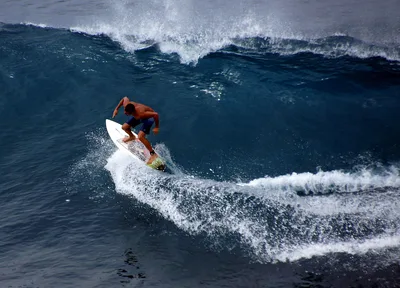
Nobody tells beginners this, so here it is: surfing has one of the steepest learning curves in sport. You'll spend your first sessions getting worked, swallowing seawater, watching everyone else make it look effortless. That's normal. The paddling muscles take months. Reading the ocean takes years. Catching an unbroken wave, making the drop, and feeling the board come alive under your feet — that can take a whole season, and then it'll happen by accident and you'll be ruined forever. Go in expecting to be a beginner for a long time and you'll have a great time. Go in expecting to "get it" in a weekend and you'll quit. The good news: the whitewater — the broken, foamy stuff close to shore — is fun on day one, and that's where everyone starts.
How a wave actually works
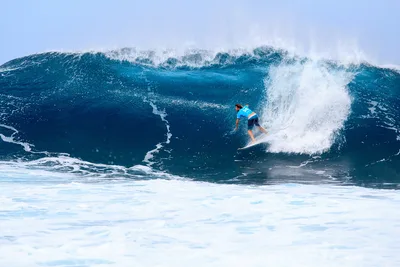
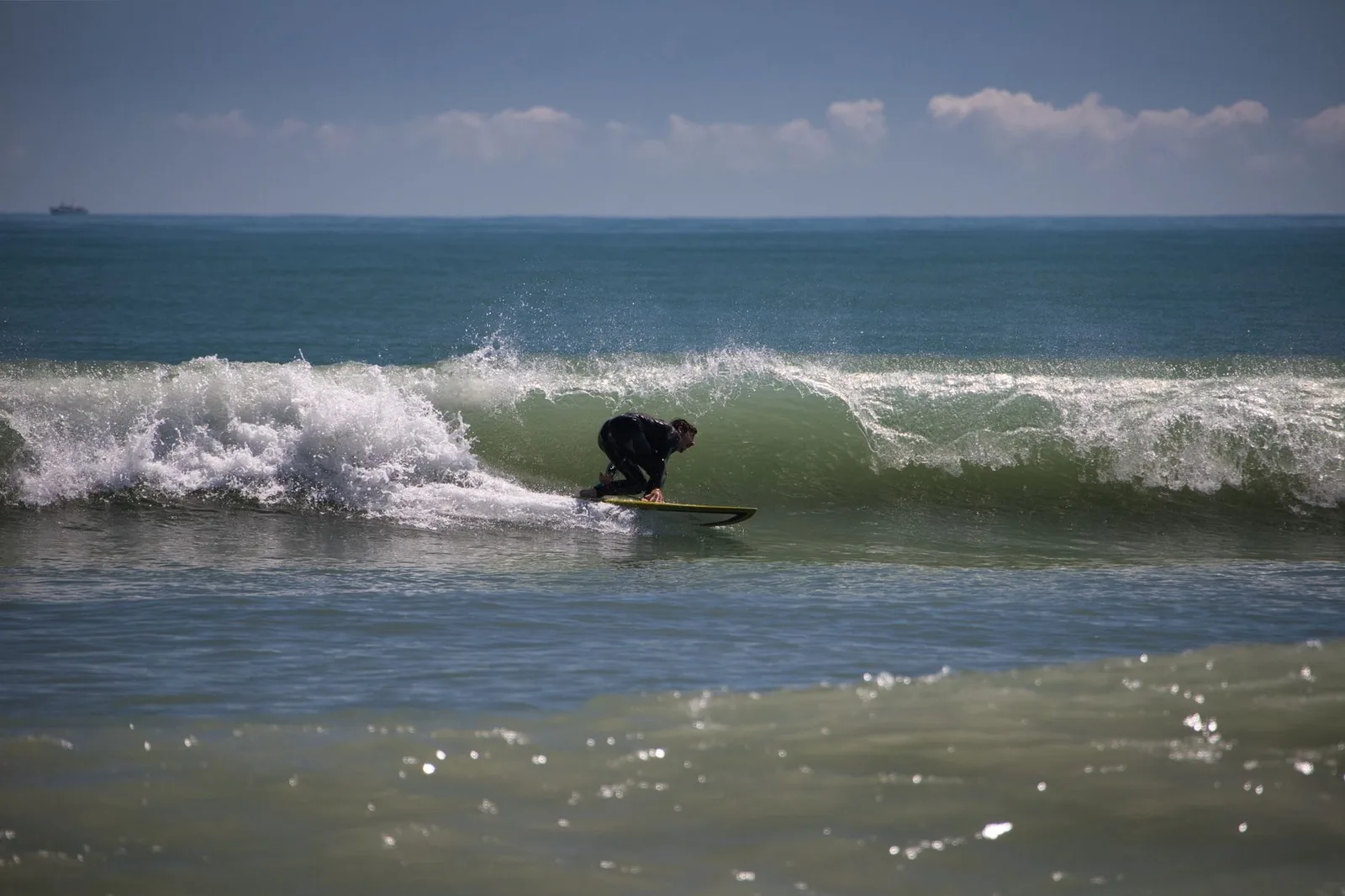
Waves aren't made where you surf them. They're made by wind, often thousands of miles away, blowing over open ocean and stacking up energy into swell. That energy travels across the sea as lines, and only stops when it hits something shallow — a sandbar, a reef, a point — which trips it up and makes it stand up and break. Understanding that one idea changes everything about how you read a beach.
Three numbers tell you what you're getting. Swell height is how big the lines are. Swell period — seconds between waves — is the one beginners ignore and shouldn't: a long period (12s+) means powerful, well-organised, "groundswell" waves with real punch; a short period (6–8s) means weak, messy "windswell". And wind direction decides whether the wave is clean or a mess: offshore wind (blowing from the land out to sea) holds the wave up and grooms it into glass; onshore wind (blowing in from the sea) flattens and crumbles it. The dream session is a long-period swell with light offshore wind. That's why surfers are up at dawn — the wind is usually calmest then.
Beach break, point break, reef break — and which you want
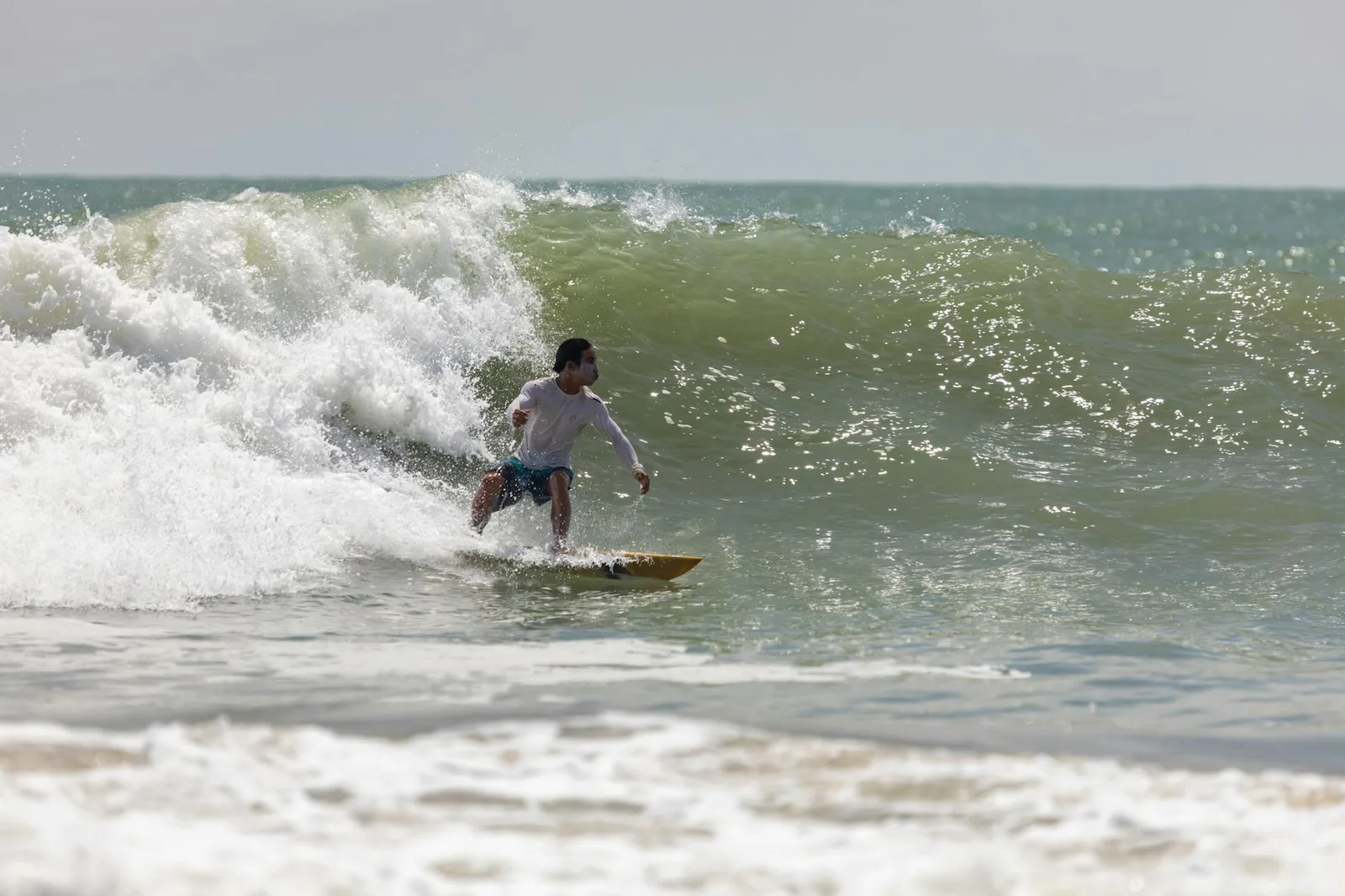
Where the wave breaks decides how it behaves, and which one suits you depends entirely on your level.
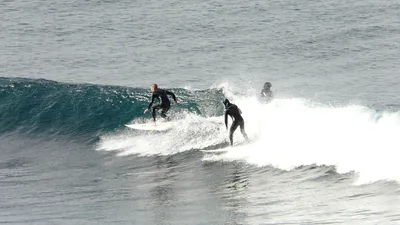
- Beach breaks peel over sand. The sandbars shift, so the wave moves around and can be unpredictable, but a sand bottom is forgiving when you fall. This is where you learn. Most of the world's beginner spots are beach breaks.
- Point breaks wrap around a headland or point of land and peel in one long, predictable direction — often the longest, most makeable rides you'll ever get. Many are mellow enough for improvers; a few are world-class and crowded.
- Reef breaks break over rock or coral. They're the most consistent and often the most perfect waves on earth — and the least forgiving. Shallow reef means you don't want to fall the wrong way. These are not for beginners.
A simple rule for your first year: sand under you, not reef. Plenty of time for coral later.
Your first board: please don't buy a shortboard
The single most common beginner mistake is buying the board the pros ride. A short, thin, pointy high-performance board has almost no flotation and is desperately hard to paddle and stand on. You'll catch nothing and hate it. Here's what actually works:
Start on a foamie. A soft-top foam board (a "foamie"), 7 to 9 feet, is stable, floaty, safe when it hits you, and catches waves easily. Every good surf school puts you on one for a reason. Learn here.
Then a mid-length or a "funboard." Once you're standing and turning in the whitewater, a 7'–8' mid-length lets you paddle out the back and catch unbroken green waves without jumping straight to a shortboard. Many surfers happily ride mid-lengths forever.
Volume beats ego. The number that matters is volume (litres). More volume = easier paddling and wave-catching. Carry more than you think you need until your technique catches up.
The rest of the kit. A leash (attaches the board to your ankle — your board is your biggest flotation device, stay attached to it). Wax or a deck grip so your feet don't slide. The right fins for your board. And a wetsuit matched to the water temperature, not the air — cold water saps you fast, and being cold makes you surf worse and tire sooner. In the tropics a rash vest for sun and board rash is enough. Learning to read a forecast — swell height, period, wind and tide — is a real skill, and it's where surfers check it: Surf-Forecast, Windy and Windguru are the standards. Read the forecast and you'll score far better waves.
The unwritten rules: etiquette and the lineup
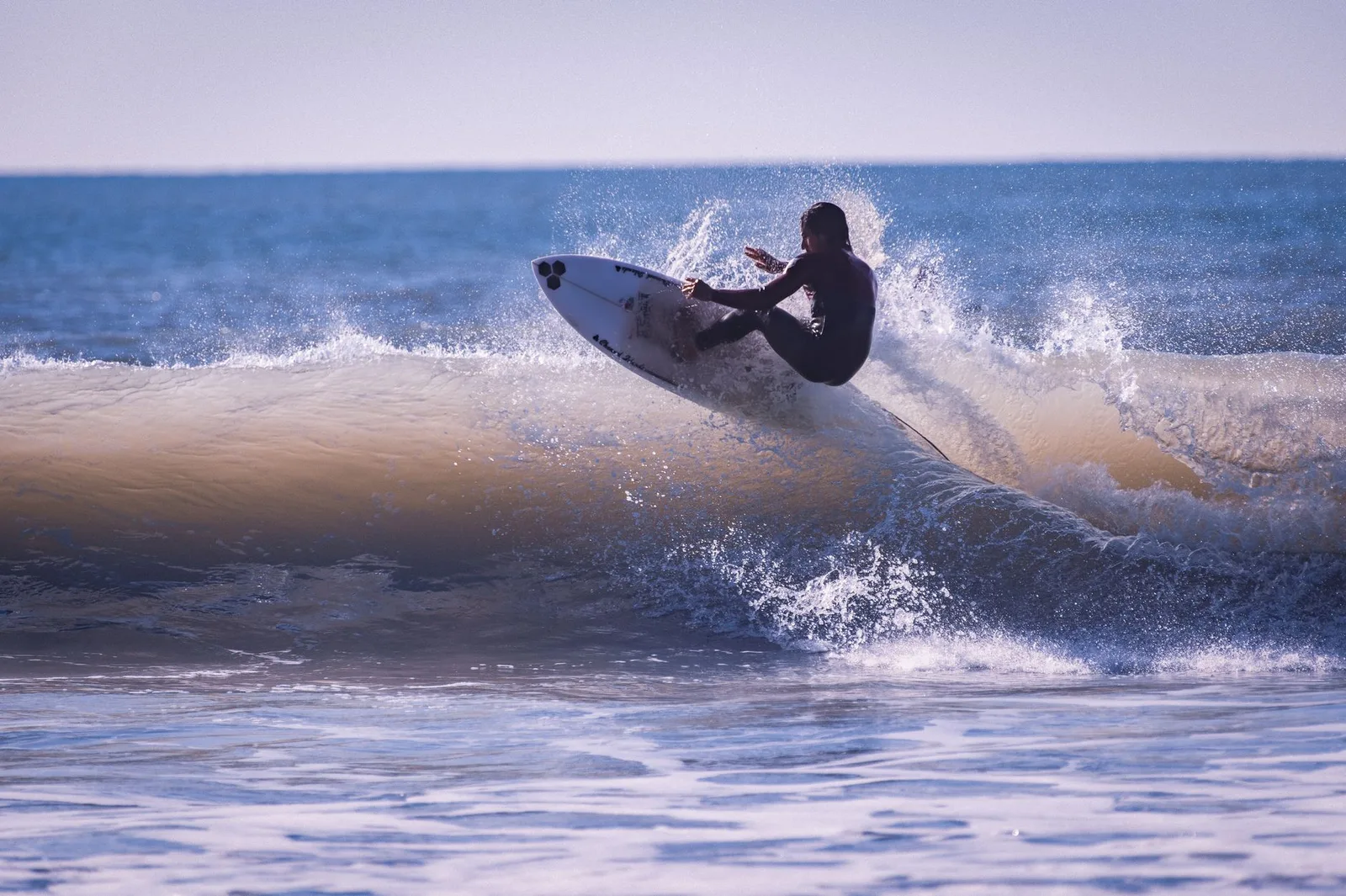
Surfing has no referees, so it runs on a code. Break it and you'll get yelled at — or worse, hurt someone. Learn it before you paddle out and you'll be welcome anywhere.
- The surfer closest to the breaking part of the wave (the peak) has priority. It's their wave. Don't take off in front of them.
- Don't drop in. Taking off on a wave someone is already riding is the cardinal sin. It's dangerous and it's rude.
- Don't snake. Don't paddle around someone repeatedly to steal priority.
- Paddle out around the break, not through the lineup. Use the channel where the waves aren't breaking; never ditch your board when someone's riding toward you.
- Wait your turn, and respect the locals. Every break has a pecking order. Be humble, smile, give a few waves before you take them, and you'll get them back.
- Apologise when you mess up. Everyone does. A raised hand and a "sorry" defuses almost anything.
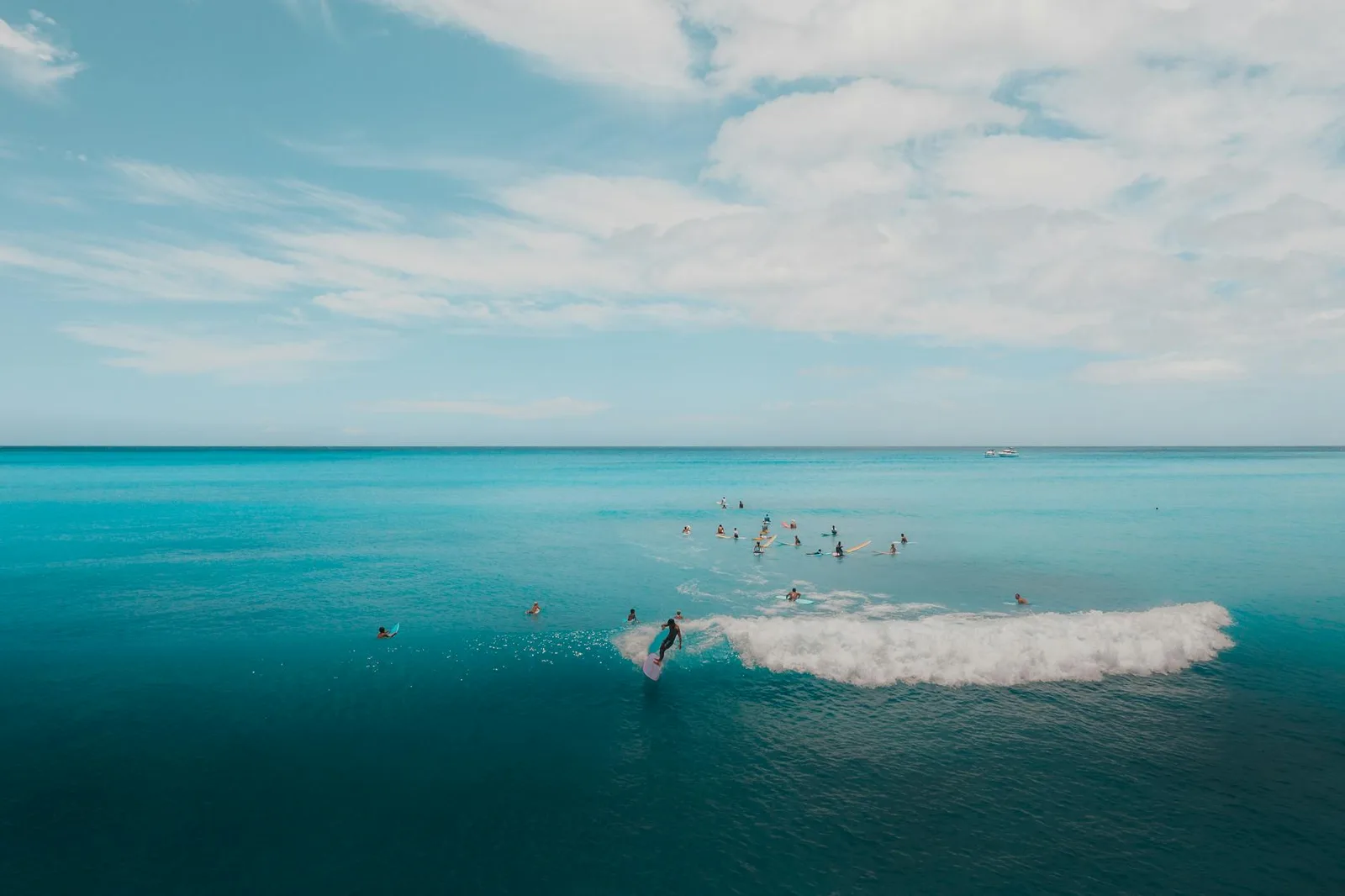
Start in the gentle, uncrowded whitewater on the inside while you learn — you'll stay out of trouble and out of the experienced surfers' way.
Staying alive: rips, reef, and reading the ocean
Surfing is safe enough if you respect a handful of hazards. Most trouble comes from ignoring one of these.
- Rip currents are the big one — narrow rivers of water flowing back out to sea. They're a surfer's friend (free paddle-out channel) and the number-one cause of beach rescues and drownings. Learn to spot one: a darker, calmer-looking lane where the waves aren't breaking, often with churned or sandy water moving seaward. If you're ever caught and pulled out, don't fight it — you can't out-paddle it. Stay on your board, stay calm, paddle parallel to the beach until you're out of the current, then come in. Panic and exhaustion are what kill, not the water itself.
- The bottom. Over reef or rock, fall flat and shallow — feet first if you can, hands over your head when you surface. Most surf injuries are your own board hitting you, and reef cuts.
- Cold and sun. Cold-water shock and slow hypothermia are real in cool seas; dress for it. In the tropics, the sun and dehydration will end your session early — cover up and drink.
- Know your limit, and the spot. Don't paddle out somewhere beyond your level because it looks good. Ask locals, watch the lineup for fifteen minutes, find the rip and the channel, and tell someone your plan. When in doubt, don't go out.
- Sharks? A genuine but tiny statistical risk, concentrated in a few specific regions (parts of South Africa, Australia, Réunion, some US coasts). Respect local advice, flags and spotter programmes, avoid dawn/dusk and murky water near river mouths — and keep it in proportion: the rip current is far more likely to ruin your day than anything with teeth.
When to go: swell, season, and scoring it
Surf is seasonal. Coasts have a "swell season" when storms in the right ocean send consistent waves their way, and an off-season when it goes flat. Europe and Morocco fire in autumn and winter (roughly September–March). Indonesia and the Indian Ocean run on the dry season, May–October, when the trade winds blow offshore. Hawaii's North Shore is a winter (November–February) phenomenon and glassy-flat in summer. Sri Lanka's south coast is November–April. Get the season right and a mediocre spot turns on; get it wrong and you'll stare at a flat sea. Always check the forecast, the tide (some spots only work on a certain tide) and the wind before you commit.
Where to surf, break by break
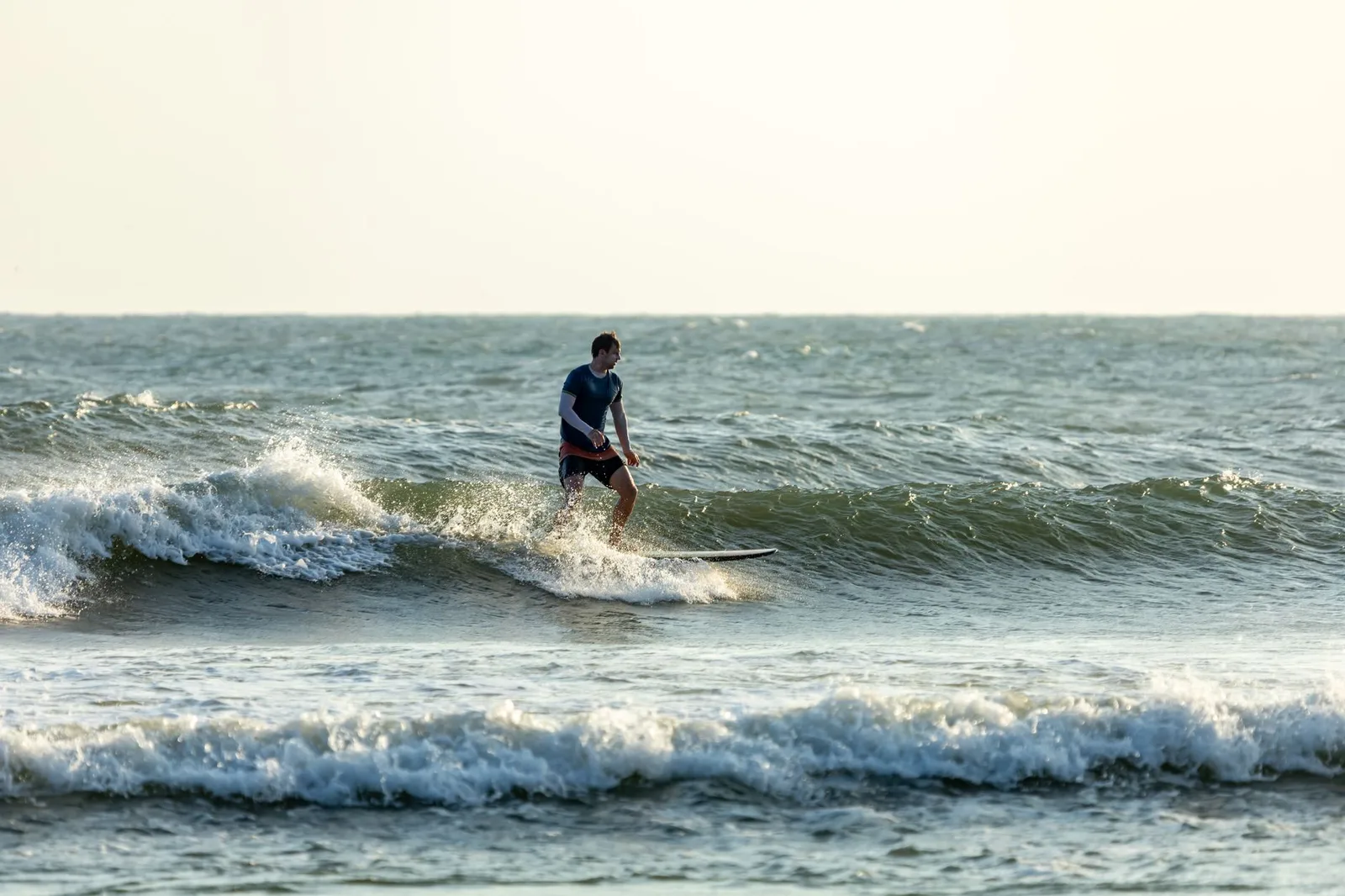
Every wave below is a real, named spot in our catalogue, checked against how surfers actually describe it — what kind of wave it is, when it works, and who it's for. Tap any of them to open the beach in the Atlas.
Europe — the Atlantic engine room
Southwest France is Europe's surf capital. Hossegor and its infamous bank, La Gravière, throw some of the heaviest beach-break barrels on the planet when the autumn swells arrive (September–November) — experts only on size, though the beaches either side have friendlier banks. Just down the coast, the Grande Plage de Biarritz is where European surfing was born in the 1950s, and its gentle rollers in town are still a lovely place to learn; the Port Vieux and the longboard wall of the Côte des Basques are mellower still.
Portugal is the other heavyweight. Carcavelos, minutes from Lisbon, is a punchy beach break for intermediates on an autumn-to-spring swell — and a forgiving shore break for beginners through summer. Guincho, near Cascais, is more powerful and famously windy (which is why kiters and windsurfers love it too) — one for stronger surfers. Down in the wild southwest, Arrifana tucks a beginner-and-intermediate beach and a tricky right reef into a sheltered Algarve bay, best in autumn and spring.
Out in the Atlantic, the Canary Islands serve warm-water surf year-round. Famara on Lanzarote is a vast, consistent, beginner-to-intermediate beach under a wall of cliffs, and El Cotillo on Fuerteventura mixes beach and reef peaks with that same boardshorts-in-winter water.
Africa — long rights and the friendliest classroom
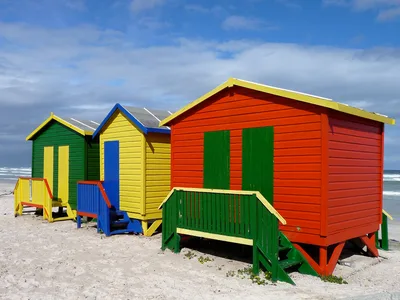
Morocco's Imsouane is a pilgrimage: "The Bay" is the longest right-hand point break in Africa, a slow, mellow wall that can peel for 500–700 metres, making it longboard heaven and a dream for improvers — all an hour from the surf town of Taghazout. At the other end of the continent, Muizenberg in Cape Town is one of the most beginner-friendly waves on earth: soft, sand-bottom rollers in False Bay, iconic painted beach huts, and a wetsuit-on, cold-water classroom that's launched a million first sessions.
Indian Ocean & Asia — warm water, every level
Sri Lanka's south coast (best November–April) is where a lot of people learn to surf abroad. Weligama is the headline beginner spot — a big bay sheltered by two headlands, slow and sandy and safe. Nearby Hikkaduwa is the birthplace of Sri Lankan surf culture, all reef breaks, surf schools and beach bars, while Mirissa is a gentle right reef peeling over deep water — the perfect, low-stress introduction to reef surfing (and you can go whale-watching between sessions).
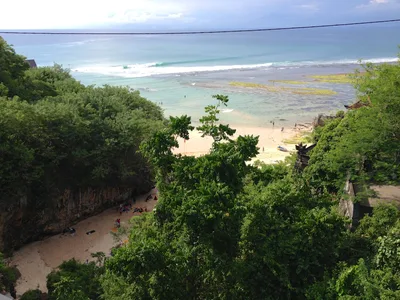
Then there's Bali, the engine of Asian surfing, firing through the dry season (May–October). The Bukit Peninsula holds the jewels: Padang Padang, the hollow left reef they call the "Balinese Pipeline" — a perfect, dangerous, experts-only barrel — and just up the cliffs, Bingin, a shorter, shallow, beautiful left for confident intermediates and up. Beginners head to the soft beach break at Kuta; the Bukit is for when you've earned it.
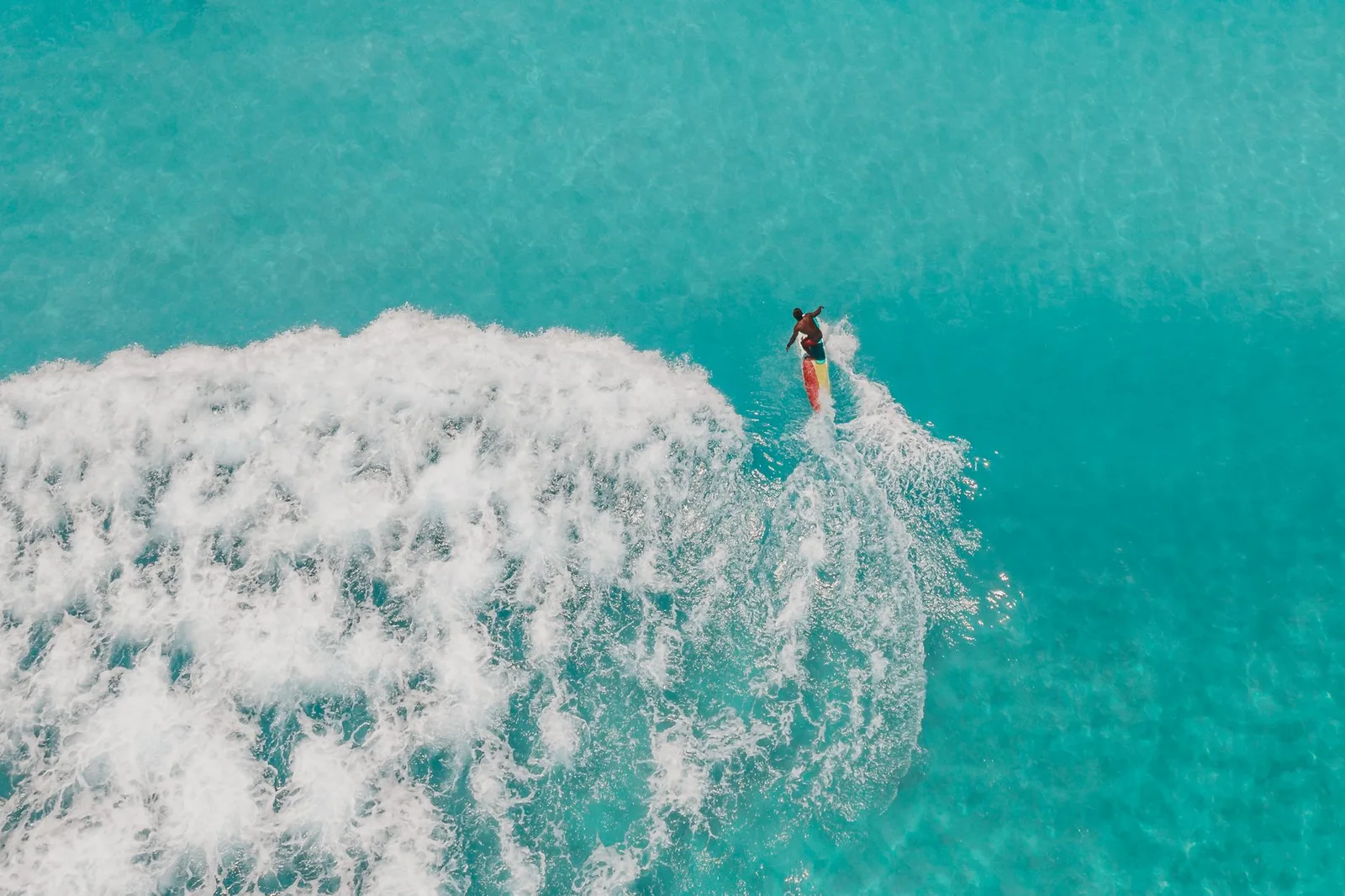
Oceania — surfing is the culture
In Australia, surfing isn't a hobby, it's the weather report. Bells Beach in Victoria is hallowed ground — a powerful right reef-point that hosts the Rip Curl Pro, the longest-running event in pro surfing, on the big cold Southern Ocean swells of autumn. Up on the Gold Coast, Burleigh Heads is a world-class right-hand point that barrels and runs for ages when the summer cyclone swells light it up. In Byron Bay, Wategos is the gentle, longboard-friendly point where you build confidence. And over in Western Australia, the Margaret River region delivers raw Indian Ocean power: Surfers Point is a heavy, advanced reef, while Yallingup mixes reef and beach for intermediates.
Hawaii — where it all comes from
Modern surfing was born in Hawaii, and the North Shore of Oahu is its cathedral — strictly a winter (November–February) affair, and mostly for watching unless you're an expert. Ehukai Beach Park is the Banzai Pipeline: the most famous wave on earth, a hollow left detonating over a shallow, cavernous reef — pros only, and unforgettable from the sand. A few miles along, Waimea Bay is the birthplace of big-wave surfing, a giant in winter and a calm family swimming beach in summer. On Maui, Honolua Bay is one of the best right-hand points in the world when the winter swell wraps in. And for the rest of us, Waikiki — where Duke Kahanamoku introduced surfing to the world — is still one of the planet's best beginner waves: long, slow, sun-warmed rollers you can ride all year.
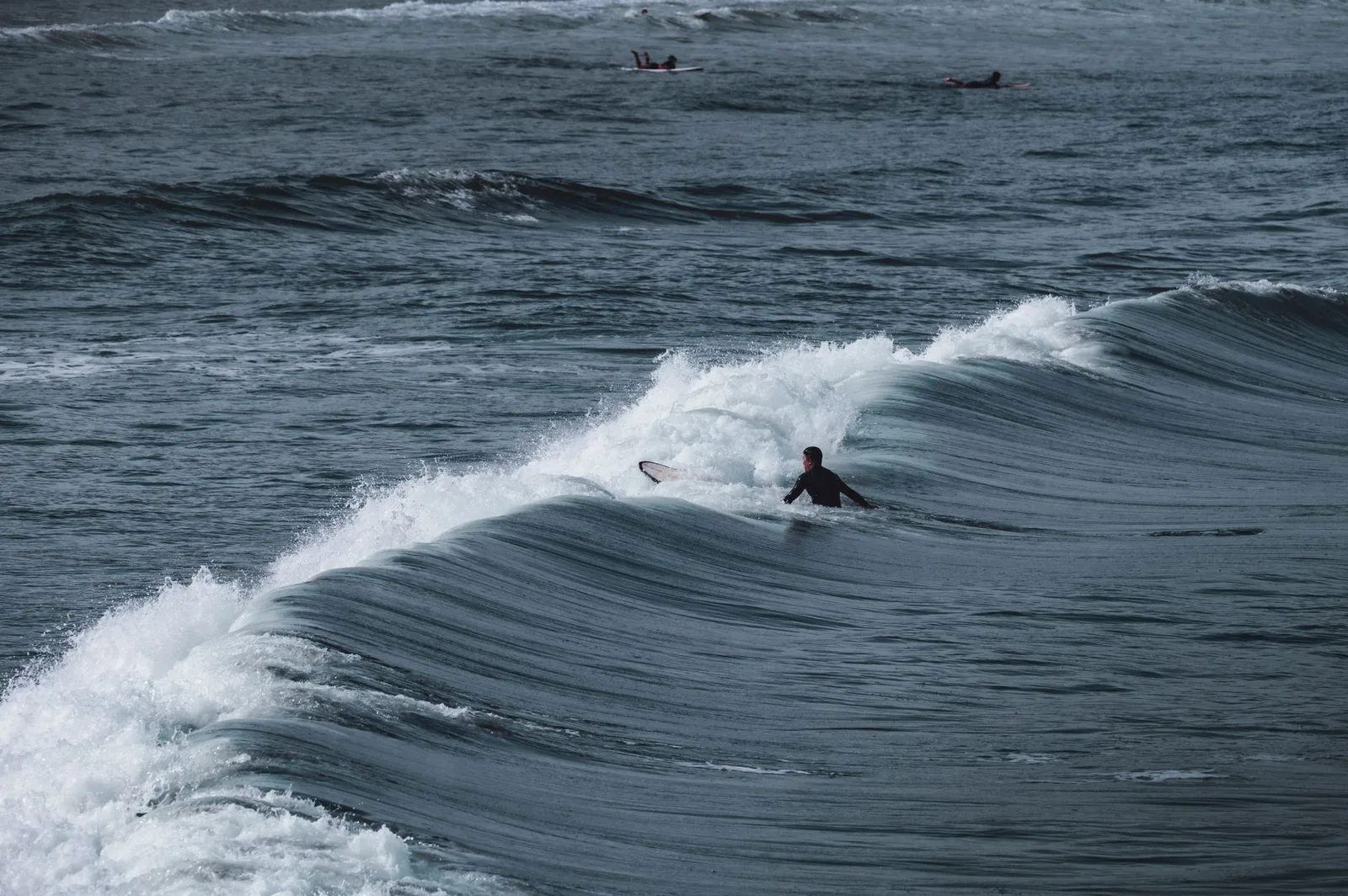
The Americas — from longboard points to heavy beach breaks
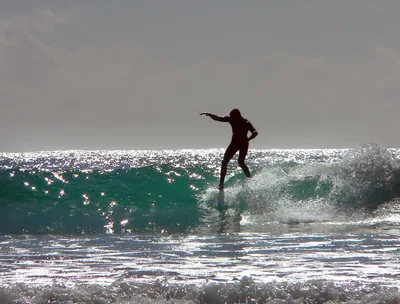
In California, Malibu (Surfrider) is the most famous longboard wave in the world — a long, perfect, peeling right point, best on summer south swells and gloriously, frustratingly crowded. South of the border and the equator, the warm-water surf coast really opens up. Playa Hermosa near Jacó in Costa Rica is a World Surfing Reserve — a powerful, consistent black-sand beach break for advanced surfers (with mellower Jacó next door to learn on). El Tunco in El Salvador is Central America's surf-town hub: a fast left at the river mouth (La Bocana), the long, mellow right point of Sunzal next door, warm water and consistency you can rely on. In Mexico, Carrizalillo is the gentle, golden cove where Puerto Escondido teaches beginners — while the town's other wave, Zicatela, the "Mexican Pipeline", is one of the heaviest beach breaks anywhere and best admired from dry land.
Brazil punches hard too. Praia da Joaquina on Florianópolis Island is the country's contest stage — strong, fast, often tubing beach-break rights and lefts for experienced surfers, framed by huge dunes. And far offshore, Cacimba do Padre on the UNESCO-listed Fernando de Noronha archipelago is the "Brazilian Pipeline": heavy, hollow, perfect tubes that fire from December to March (and peak in February–March) for those with the skill to take them on.
Never surfed? Here's how to actually start
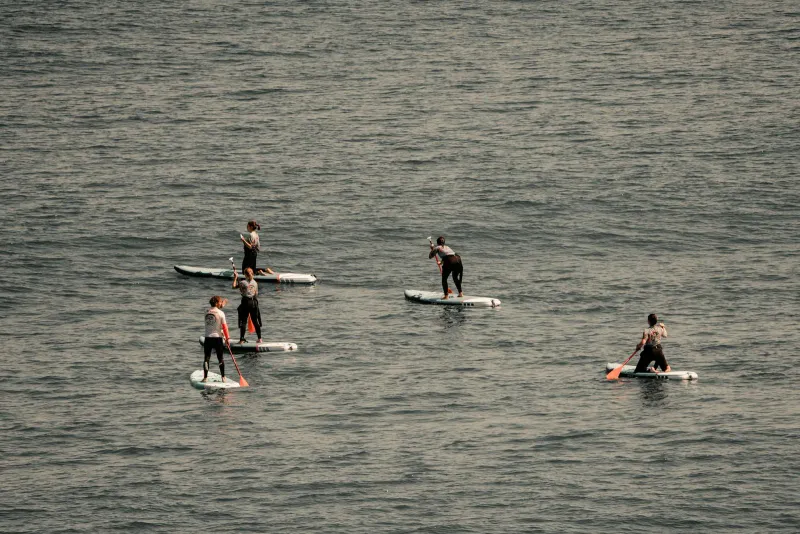
Book a lesson at a real surf school — it's the fastest, safest way in, and one good lesson saves you a season of bad habits. They'll put you on a foamie, in gentle whitewater, on a sandy-bottomed beginner beach, and teach you the pop-up, where to sit, and how to stay out of everyone's way. Pick a mellow beach break (Muizenberg, Weligama, Waikiki, Famara and Imsouane are all famous for exactly this), go on a small day, and accept that you'll spend a while in the soup. Stick with it past the frustrating part — and one ordinary afternoon a wave will lift you, you'll stand, and you'll understand why none of the rest of us ever stopped. And if the lineup still looks intimidating, the gentlest way onto the very same water is a paddleboard — our stand-up paddle guide is the calm-water companion to this one.
Frequently asked questions
Is surfing hard to learn?
Standing up in the whitewater on a foam board, with a lesson, usually happens on day one — that part is easy and fun. But "really" surfing — paddling out, catching unbroken green waves, reading the ocean — has a famously steep learning curve and takes months to a season or more. Go in patient, start in the whitewater on a big floaty board, and you'll enjoy every step.
What board should a beginner buy?
A soft-top "foamie" of 7–9 feet — stable, floaty, easy to paddle and safe when it hits you. Do not start on a short, thin, pointy shortboard: it has almost no flotation, you'll catch nothing and give up. Once you're standing and turning, move to a 7'–8' mid-length or funboard. Always pick more volume (litres) than you think you need.
What is a rip current and what do I do if I'm caught?
A rip current is a narrow channel of water flowing back out to sea — it looks like a darker, calmer lane where waves aren't breaking. It's the leading cause of beach rescues. If it pulls you out, don't fight it and don't panic: you can't out-paddle it. Stay on your board, stay calm, and paddle parallel to the beach until you're out of the current, then head in. Surfers actually use rips as a free paddle-out channel — but only once you can read them.
Beach break, point break or reef break — which should I surf?
Beginners want beach breaks: they peel over forgiving sand, which is where almost every learner spot is. Point breaks wrap around a headland into long, predictable rides and many are mellow enough for improvers. Reef breaks break over rock or coral — often the most perfect waves anywhere, and the least forgiving. Rule of thumb for your first year: sand under you, not reef.
When is the best time of year to surf?
It depends on the coast. Europe and Morocco are best in autumn and winter (roughly September–March); Bali and the Indian Ocean run on the dry season (May–October); Hawaii's North Shore is a winter spot (November–February) and flat in summer; Sri Lanka's south coast works November–April. Match the season to the place, then check swell, tide and wind before you go.
What is surf etiquette — what does "dropping in" mean?
Surfing has no referees, so it runs on a code. The surfer closest to the breaking peak has priority — it's their wave. "Dropping in" means taking off on a wave someone is already riding: it's the cardinal sin, both dangerous and rude. Don't snake for position, paddle out around the break (not through the lineup), wait your turn, respect the locals, and apologise when you mess up. Learn the code before you paddle out and you'll be welcome anywhere.
Should I worry about sharks?
The statistical risk is extremely low and shouldn't keep you out of the water. It's concentrated in a few specific regions (parts of South Africa, Australia, Réunion and some US coasts), where you should follow local advice, beach flags and shark-spotter programmes, and avoid dawn, dusk and murky water near river mouths. Keep it in proportion: rip currents, your own board and the sun are all far more likely to affect your day.
Surf conditions, hazards, seasons and local rules change constantly and vary by spot — everything here is general guidance gathered in June 2026, not safety or travel advice. Surfing carries real risks: waves, rip currents, reefs, rocks and other water users can all hurt you. Always check the swell, wind, tide and local conditions yourself, surf within your ability, never surf alone when you're learning, respect lifeguard flags and local advice, and take a lesson with a certified surf school before heading out. Where Is My Beach is not responsible for decisions made on the basis of this article.
Photo credits
Sources and licenses for the photos shown above.
- Photo 1 — Photo by Mateo Franciosi on Pexels · Pexels License
- Photo 2 — Photo by Koen Swiers on Pexels · Pexels License
- Photo 3 — Photo by Serg Alesenko on Pexels · Pexels License
- Photo 4 — Photo by Aurélie Nomadaventure on Pexels · Pexels License
- Photo 5 — Photo by Serg Alesenko on Pexels · Pexels License
- Photo 6 — Photo by Jess Loiterton on Pexels · Pexels License