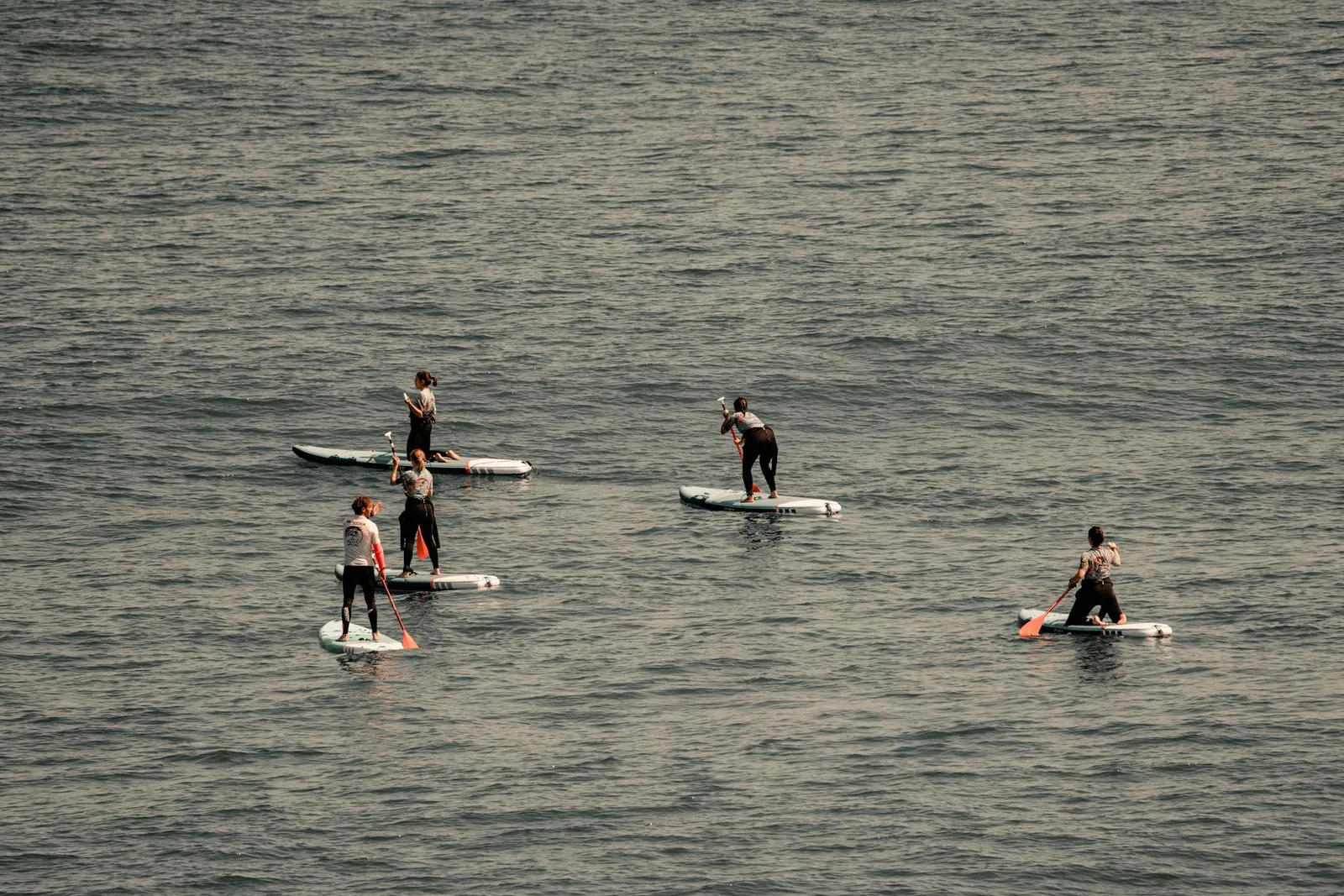

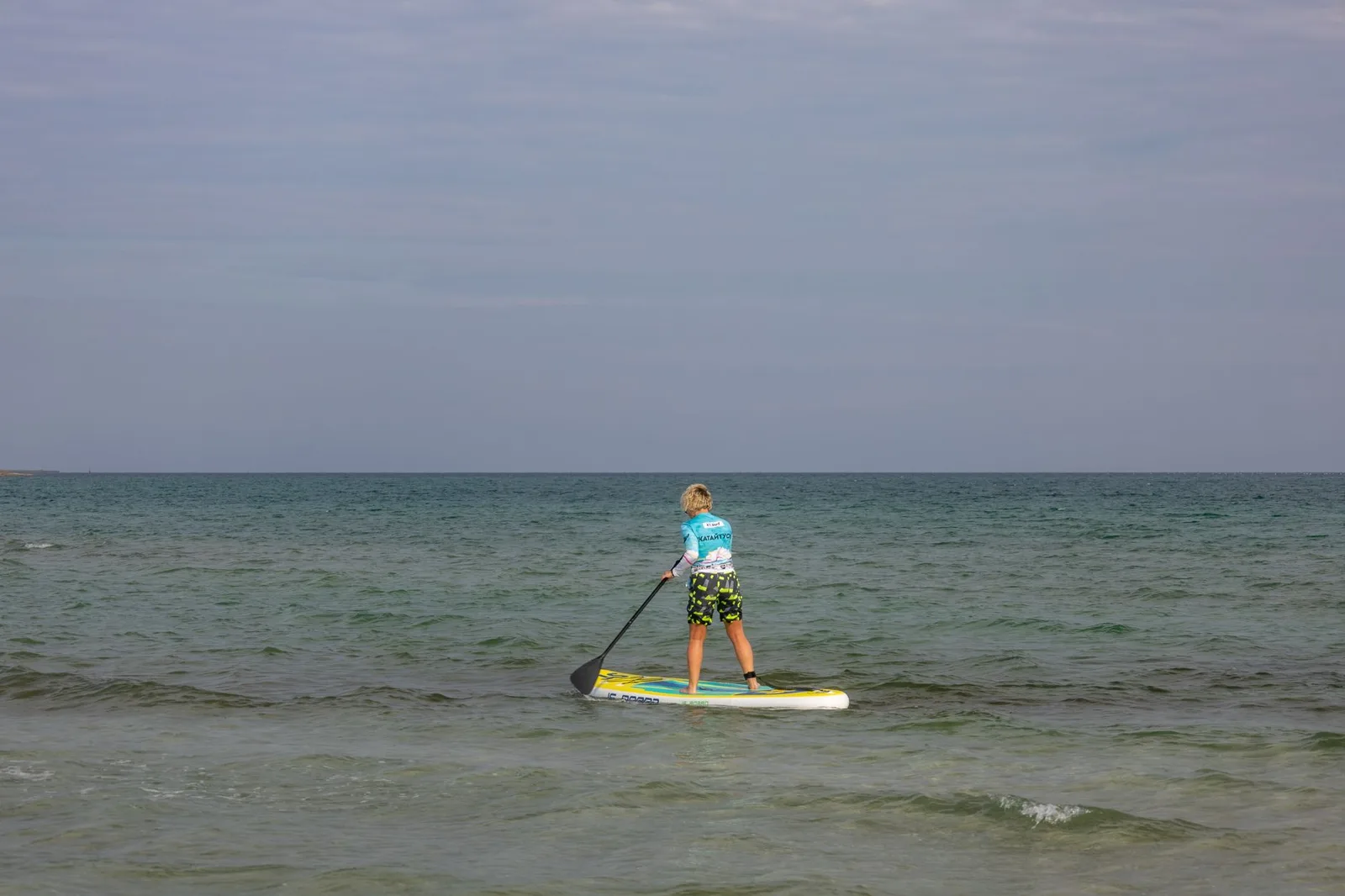
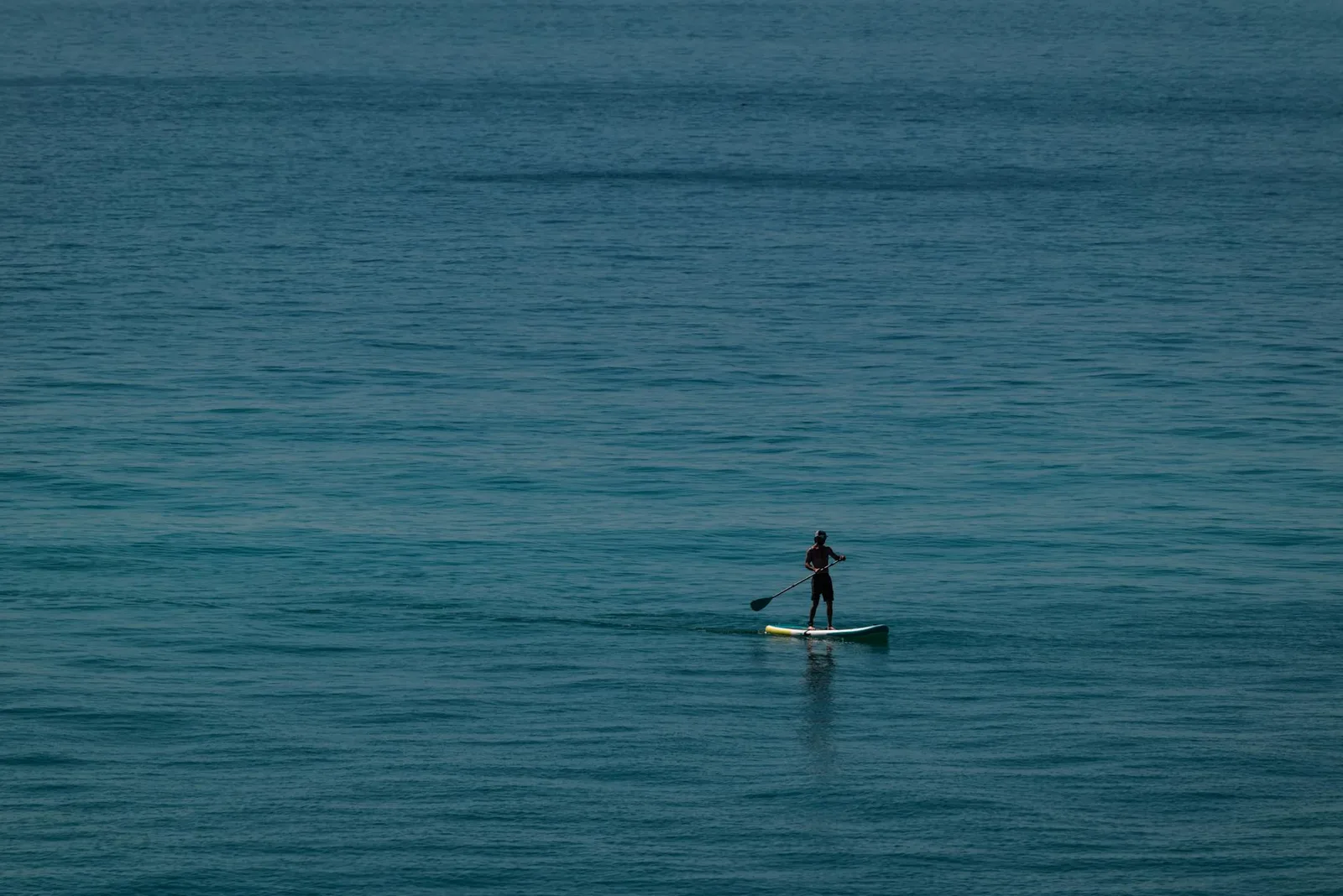
Stand-up paddle — SUP — is the friendliest door onto the water there is. No wave to catch, no engine, no licence: just a board, a paddle, and flat water. You can be gliding across a calm bay within ten minutes of your first lesson, and still be learning a decade later when you're racing, surfing or running rivers on one. This is the long version: the gear that actually matters, how to travel and even fly with your board, how to stay safe (and the dangers people badly underestimate), where you're not allowed to paddle, and the most beautiful places to do it on every continent.
Why SUP is the easiest way onto the water
The appeal is real and it's simple. You stand up, so you see everything — fish, reefs, the seabed, the coastline from a new angle. The learning curve is gentle: most people balance and paddle in their first session on flat water. It's low-impact but works your whole body, especially the core, and it scales endlessly — flat-water cruising, SUP yoga, downwind, surf, racing, multi-day touring, even whitewater. It's quiet and clean, it packs into a backpack (the inflatable kind), and it suits almost every age and fitness level. That combination — accessible on day one, deep enough for life — is why it became the fastest-growing watersport of the last decade.
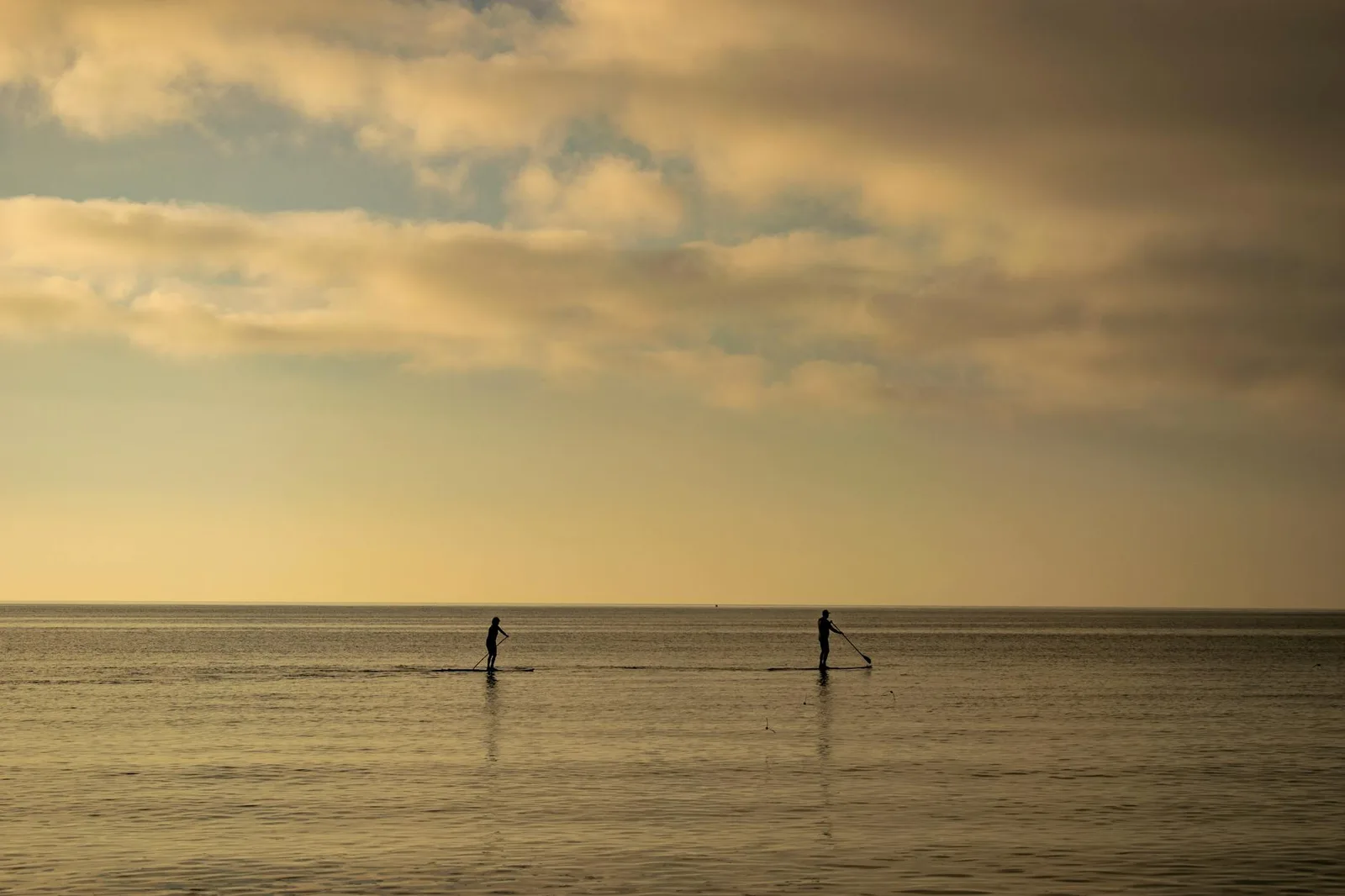
The gear, demystified
You need surprisingly little, but a few choices change everything.
The board — inflatable (iSUP) vs hard. Inflatables dominate for good reason: modern drop-stitch construction makes them stiff, tough and almost indestructible, and they roll into a backpack you can store in a cupboard or check onto a plane. Hard boards (epoxy/foam) are faster and more responsive — better for surfing and racing — but need roof bars and storage space. For most people starting out, a quality inflatable all-rounder is the right call.
Size and volume. A wider, longer board (around 10'6"–11' and 32"+ wide) is more stable and forgiving — ideal for learning, touring and bigger paddlers. Narrower boards are faster but tippier. Volume should comfortably float your bodyweight plus kit.
The paddle. Adjustable aluminium to start; lightweight carbon or fibreglass once you're hooked — the weight saving you feel over a long paddle is huge. Set it roughly 15–25 cm above your height.
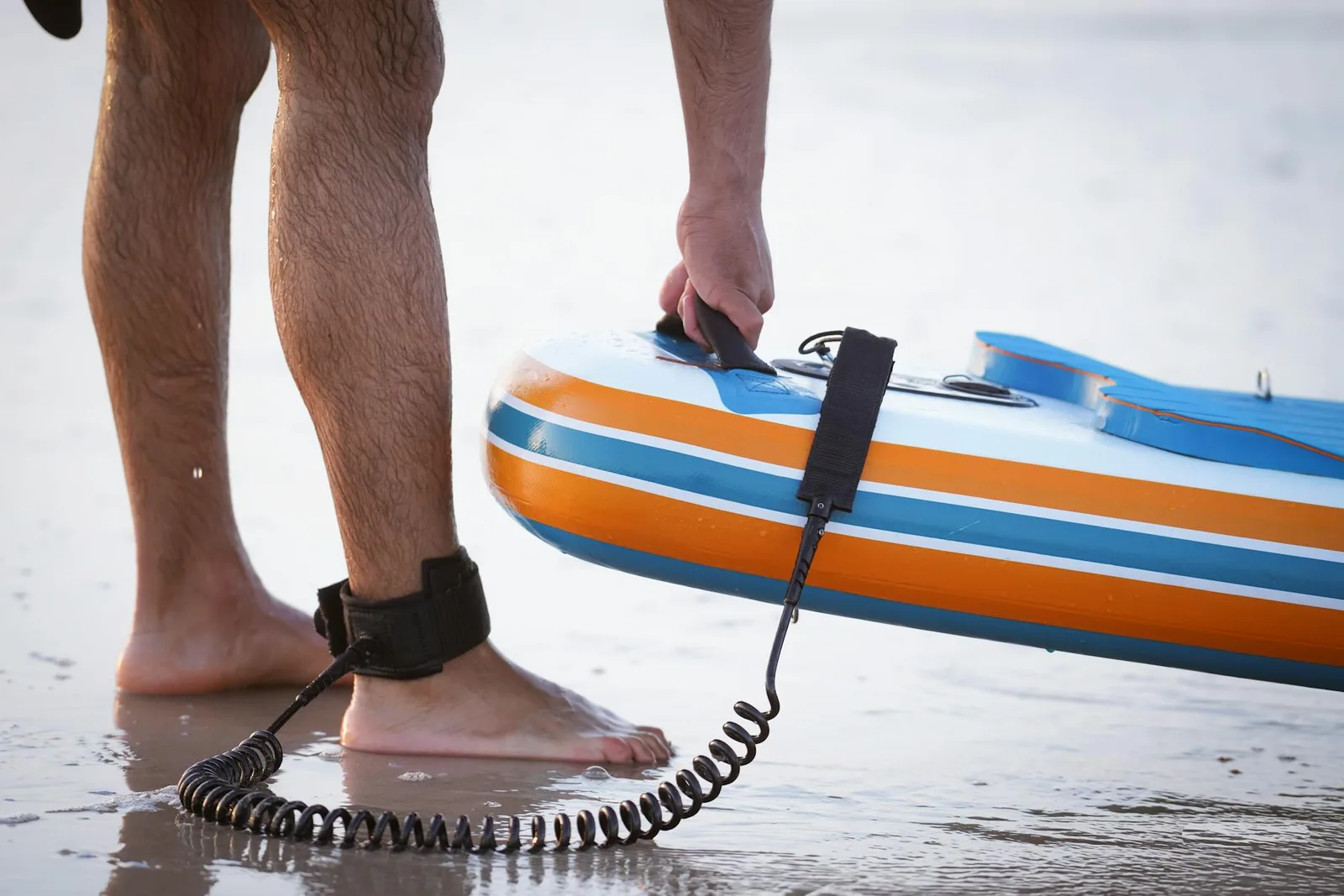
The leash — and why it's a safety item, not an accessory. Your board is your biggest flotation device; a leash keeps it attached if you fall. Crucially, leash type depends on the water: a straight ankle leash for flat/open water, but a quick-release waist leash for any moving water (rivers, strong tidal flow) where a fixed leash can snag and trap you. Get this right.
Buoyancy aid (PFD). Wear one. In many places it's legally required on open water, and it's simply sensible everywhere. Inflatable belt-pack PFDs are popular for warm flat-water paddling.
The rest. A good pump (or an electric pump — a 2026 game-changer that saves your arms), the right fin, a waterproof phone pouch, and clothing for the water temperature, not the air.
Latest 2026 gear trends. Lighter, stiffer double-layer and woven drop-stitch iSUPs; carbon paddles getting cheaper; compact electric pumps; and the continued rise of foiling SUPs (a hydrofoil that lifts the board clear of the water) for experienced paddlers chasing downwind glide. For specs, reviews and gear news, specialist media like Supconnect, TotalSUP and SUPBoarder are the places to look.
Lessons & schools: start the right way
SUP is easy to start and easy to start badly. One lesson teaches you efficient paddling (it's all core and technique, not arms), how to fall safely and remount, and how to read wind and water — the things that keep you out of trouble later. Look for a certified school. Globally recognised certification and school/instructor finders include the American Canoe Association and the World Paddle Association, and for coaching standards and safety the Water Skills Academy. Specialist directories on Supconnect and TotalSUP list schools and rental centres in most paddling destinations worldwide.
Transporting your SUP — including by plane
By car. Inflatables travel in the boot in their bag. Hard boards go on roof bars with padded racks and proper straps (nose forward, tail back, and tie down the bow and stern lines so the board can't lift at speed).
On a plane — yes, you can. This is where inflatables shine. A packed iSUP fits in its wheeled backpack and goes as checked luggage; a complete kit (board, paddle, pump, fin) typically weighs ~12–20 kg, so the limiting factor is usually your airline's weight allowance and excess-baggage fees rather than size. Practical tips: deflate fully and let it cool, protect the fins and valve, split heavy items (pump, fins) into a second bag if you're near the weight limit, and use a hard paddle bag. Hard boards can fly too but go as oversized/special sports baggage — bulky, expensive, and subject to strict length limits — so most travelling paddlers simply take an inflatable or rent on arrival. Always check the specific airline's sporting-equipment policy before you book; allowances and fees vary widely.
Staying safe: the rules that matter
SUP is low-risk if you respect a handful of non-negotiables. Most rescues happen when one of these is ignored.
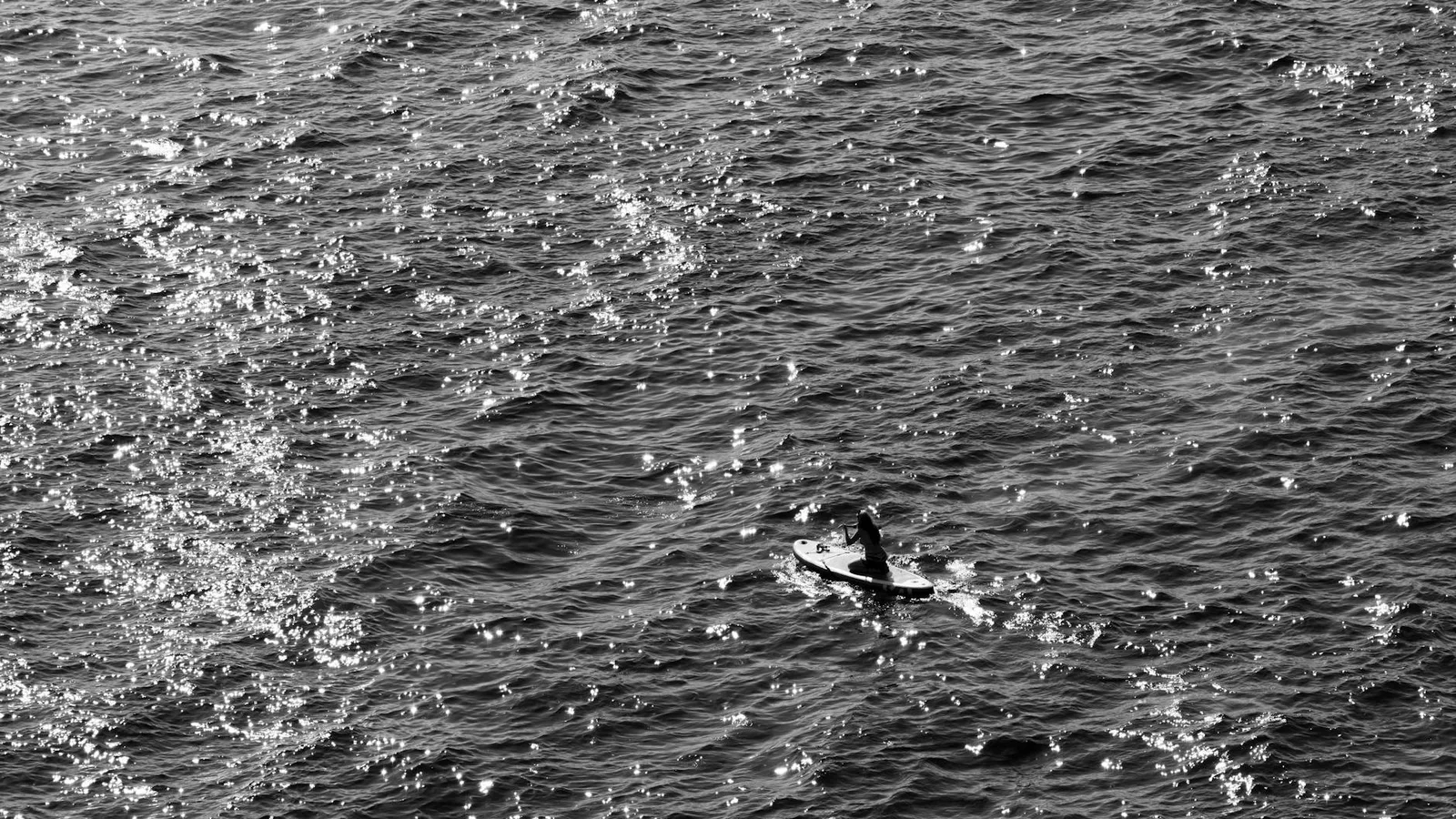
- Never paddle in offshore wind. Wind blowing from the land out to sea is the single biggest cause of SUP rescues — it's deceptively calm near the beach and then blows you out faster than you can paddle back. If the wind is offshore, don't go out. Check the forecast and the wind direction every time.
- Always wear a leash (the right type for the water) and a buoyancy aid. Your board is your life raft — stay attached to it.
- Tell someone your plan and return time, and carry a phone in a waterproof pouch to call for help (in the EU/UK, the coastguard).
- Dress for the water temperature. Cold-water shock is real and fast; a wetsuit in cool seas is safety kit, not comfort.
- Check tides and currents, avoid paddling alone when you're new, and know your limit — turn back early.
The dangers people underestimate
Beyond offshore wind, the recurring hazards are: rip currents and tidal streams that move faster than you can paddle; cold water (shock, then hypothermia); your own board — a fall can send it into you, so cover your head when you come up; sun and dehydration on long sessions; and on rivers, weirs, locks and strainers, which are genuinely dangerous and where a quick-release leash is essential. Sharks? Far down the real list. Standing upright on a board, visible and splashing on the surface, you're an odd, uninteresting silhouette to a shark, and encounters are vanishingly rare — the offshore wind and cold water above are thousands of times likelier to ruin your day. In the few regions where it's a genuine consideration (parts of South Africa, Australia, Réunion), follow local flags and shark-spotter programmes and skip dawn, dusk and murky river-mouth water. Jellyfish, stingrays and coral cuts will spoil far more paddling sessions than anything with fins. Reading wind, swell and currents is the same craft that keeps surfers safe, too — our surfing guide goes deep on rip currents and how waves really break.
Where you usually can't paddle (and why)
SUP is welcome almost everywhere, but some zones are off-limits for good safety and legal reasons — respect them:
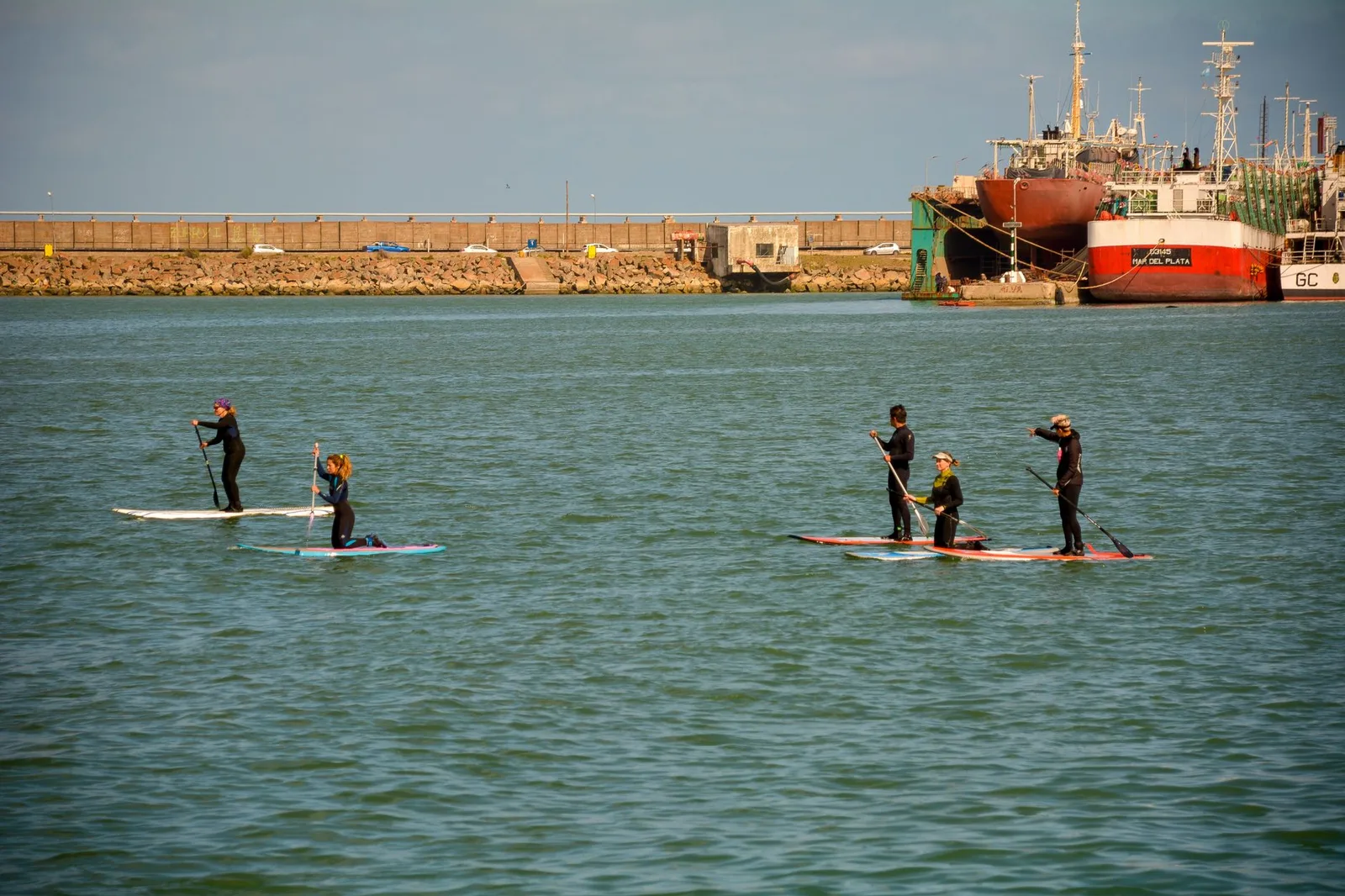
- Commercial ports, harbours and shipping lanes / fairways. Big vessels can't see you or stop for you, and many ports legally ban paddlecraft. Stay well clear.
- Marinas and mooring areas, and designated swimming zones (the area between the red-and-yellow flags is for swimmers — paddle outside it).
- Marine protected areas and nature reserves may restrict or ban access, especially near bird colonies, seal haul-outs or seagrass — check local rules.
- Rivers: locks, weirs and dams (portage around them) and any signed no-go stretches.
- Military / security zones and private water. When in doubt, ask the local club, school or harbourmaster — and always give way to less-manoeuvrable craft.
The most beautiful places to SUP, continent by continent
You can paddle almost anywhere with flat, sheltered water — but some coasts are made for it. A tour around the world:
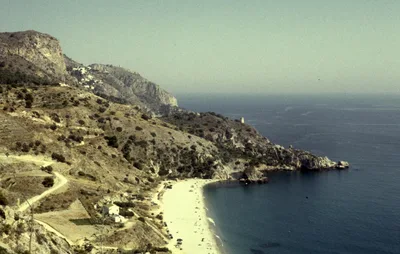
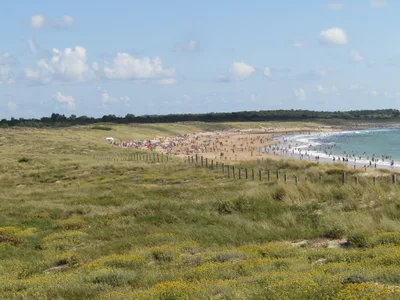
Europe. France's Atlantic islands and the Mediterranean calanques; the Costa del Sol and Spain's coves; the Canary Islands — Fuerteventura and Lanzarote — with warm, calm lagoons year-round; Italy's Sicily, Sardinia and the Amalfi Coast; Greece's Cycladic bays; and Portugal's Madeira. Closer to home, Île d'Oléron is classic flat-water touring.
North America. The USA is a SUP heartland: Maui and the Hawaiian islands, the Florida Keys and mangroves, California's coves and the San Juan Islands; plus Canada's lakes and Pacific coast.
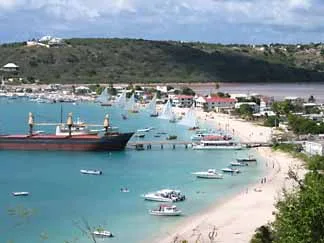
Caribbean & Latin America. Glassy turquoise water at Anguilla and across the Antilles; in South America, Brazil's Fernando de Noronha is world-class.
Africa. Muizenberg in Cape Town, South Africa, plus the lagoons of Cape Verde, Kenya's Indian-Ocean reefs and Zanzibar.
Asia. Warm, calm and beginner-friendly: Thailand's Andaman bays, the Philippines, Sri Lanka's south coast and Bali's lagoons.
Oceania. Australia, where SUP is woven into beach culture — the Great Ocean Road and countless sheltered bays — and New Zealand's fjords and lakes.
Frequently asked questions
Is stand-up paddle hard to learn?
No — it's one of the easiest watersports to start. On flat, calm water most people stand up and paddle in their first session. A wider, longer board makes balancing much easier. One lesson will fast-track your technique and teach you to read wind and water safely.
Can I take a paddleboard on a plane?
Yes, if it's an inflatable (iSUP). Packed in its backpack, a full kit weighs roughly 12–20 kg and travels as checked luggage — the limit is usually your airline's weight allowance, not size. Deflate fully, protect the fins and valve, and check the airline's sports-equipment policy first. Hard boards fly only as bulky, costly oversized baggage, so most travellers take an inflatable or rent on arrival.
Do I need a leash and a buoyancy aid?
Yes to both. The leash keeps you attached to your board — your main flotation — and a buoyancy aid (PFD) is sensible everywhere and legally required on open water in many places. Use a straight ankle leash on flat/open water, but a quick-release waist leash on any moving water (rivers, strong tides) where a fixed leash could snag.
What's the biggest danger in SUP?
Offshore wind — wind blowing from the land out to sea. It feels calm by the beach then pushes you out faster than you can paddle back, and it causes most SUP rescues. Never paddle in offshore wind, always check the forecast and wind direction, wear a leash and PFD, and tell someone your plan.
Where am I not allowed to paddle?
Commercial ports, harbours and shipping lanes; marinas and designated swimming zones (between the flags); many marine reserves and nature-protected areas; and on rivers, around locks, weirs and dams. Always give way to larger craft and check local byelaws — ask a local club, school or harbourmaster if unsure.
Should I worry about sharks?
For the vast majority of paddlers, no — the risk is extremely low. In a few specific regions (parts of South Africa, Australia, Réunion and some US coasts) follow local advice, beach flags and shark-spotter programmes, avoid dawn/dusk and murky water near river mouths or seal colonies. Jellyfish, sun and offshore wind are far more likely to affect your day.
Conditions, local rules and airline policies change and vary by location. Everything here is general guidance gathered in May 2026 — not safety, legal or travel advice. Stand-up paddle carries real risks on open and moving water: always check the wind, weather, tides and local regulations yourself, use the right safety equipment, and consider a lesson with a certified school before heading out. Where Is My Beach is not responsible for decisions made on the basis of this article.
Photo credits
Sources and licenses for the photos shown above.
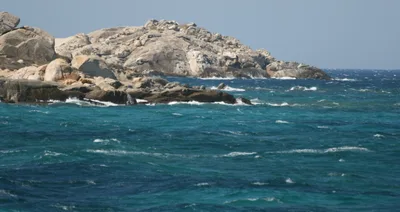
- Photo 1 — Photo by Tanhauser Vázquez R. on Pexels · Pexels License
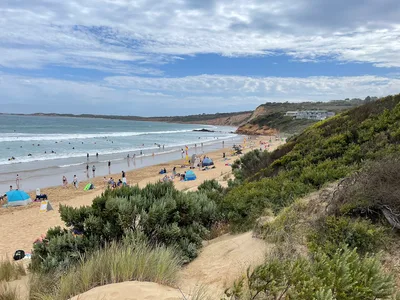
- Photo 2 — Photo by Ira on Pexels · Pexels License
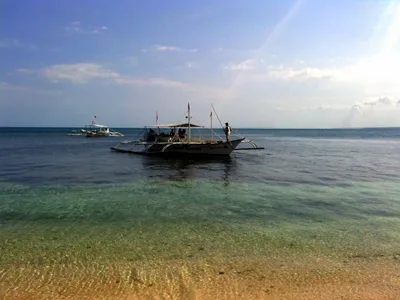
- Photo 3 — Photo by Serg Alesenko on Pexels · Pexels License
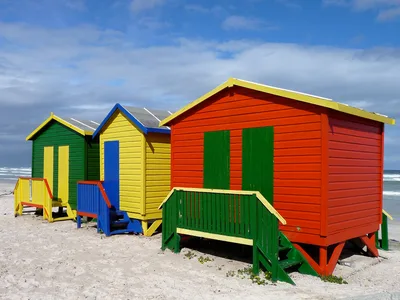
- Photo 4 — Photo by Veronica Arias on Pexels · Pexels License
- Photo 5 — Photo by Chris F on Pexels · Pexels License
- Photo 6 — Photo by Samer Bououd on Pexels · Pexels License