Ovo BeachBrazil Beach Guide
Egg-shaped cove, basalt walls, zero footprints
About
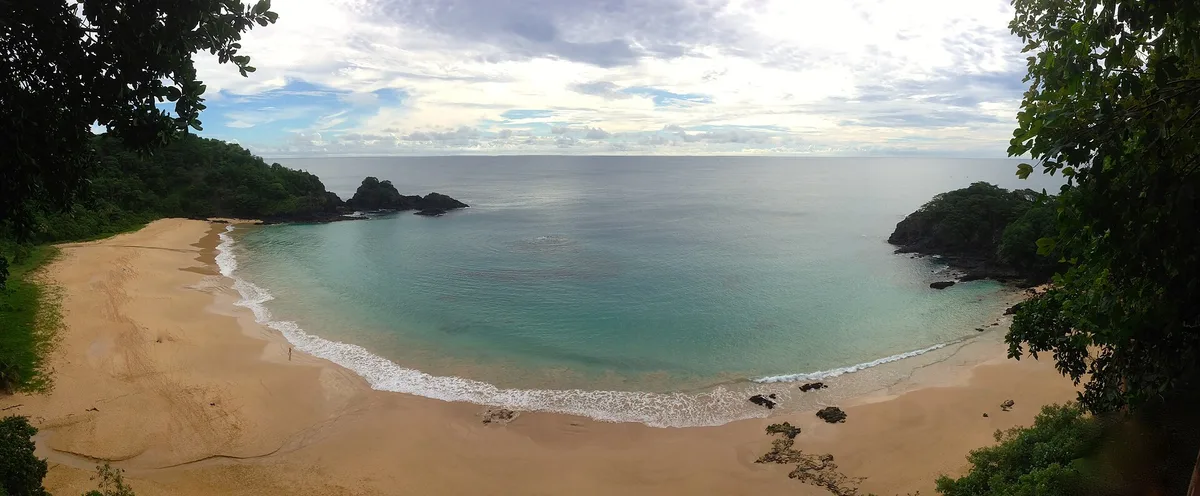
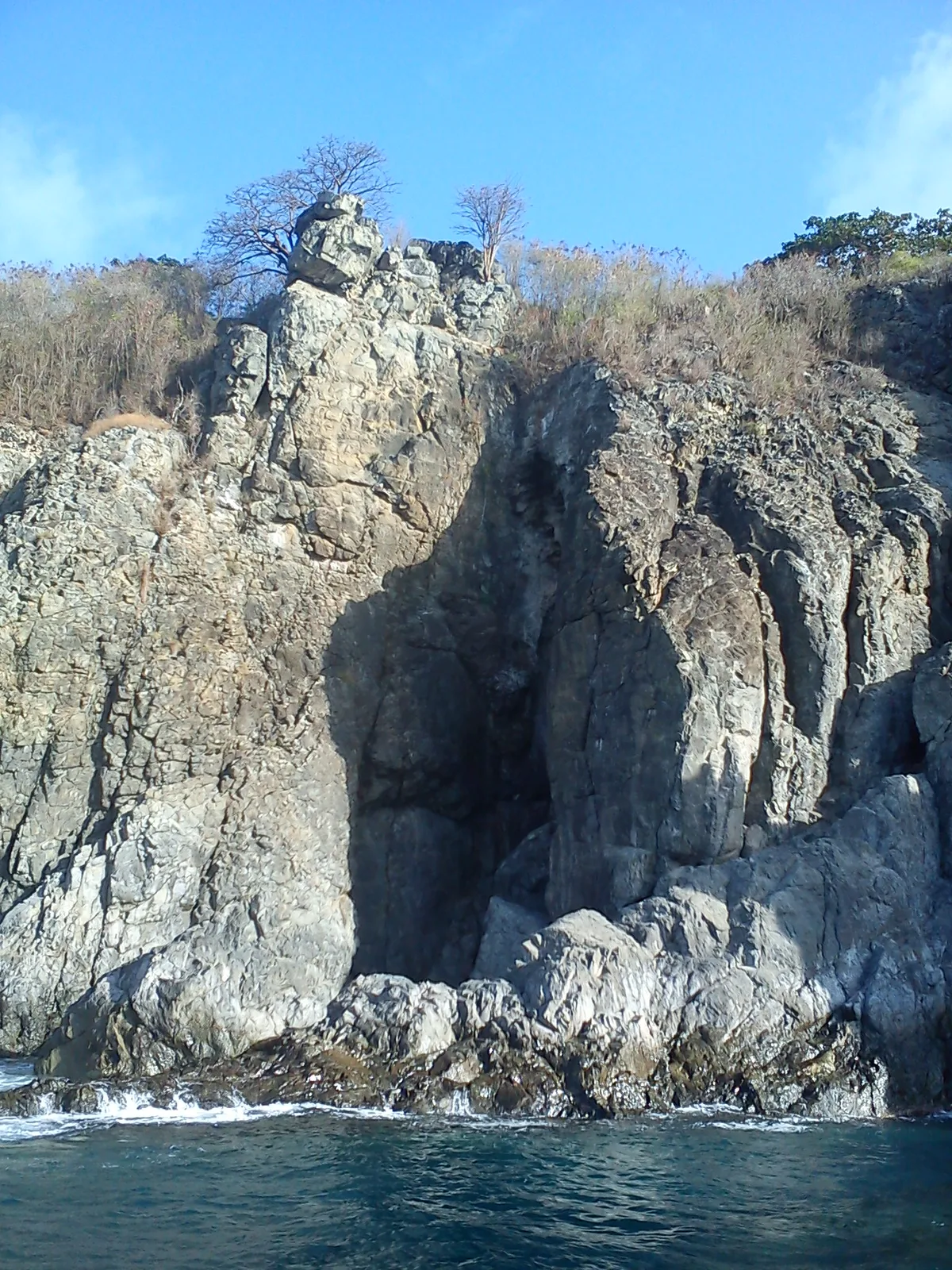
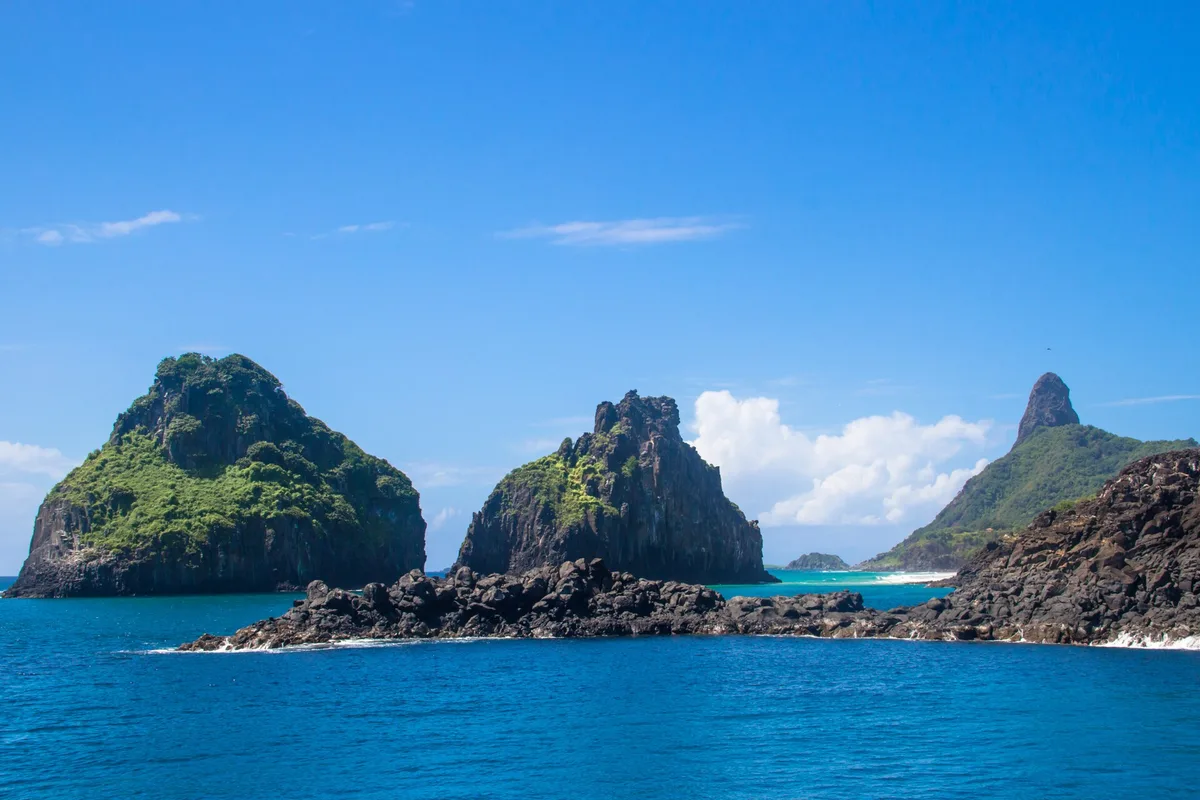
Praia do Ovo sits on Ilha da Conceição within Fernando de Noronha's marine national park — a compact oval cove enclosed on three sides by dark basalt cliffs that drop straight to white sand. The water is crystal clear, shallow enough to see every grain on the floor, and the geometry of the cove creates a natural stillness that makes it feel like a private swimming pool carved by geology. At roughly 50 metres across, it's one of the smallest beaches in the archipelago, which is exactly why it stays empty year-round. No facilities, no vendors, no noise — just the sound of water against volcanic rock.
How to get there
Praia do Ovo has no road access whatsoever. The practical route is by boat from Porto de Santo Antônio on demand — operators run the trip when sea conditions allow. Alternatively, a hike from Vila dos Remédios through the national park trail takes around 40 minutes and runs daily. A mandatory PARNA daily entry fee of R$ 110–220 applies to all visitors; fees go directly to Parque Nacional Marinho conservation.
Who it's for
For couples
The combination of total solitude, enclosed basalt walls, and crystal-clear water over white sand makes this one of the most private beaches in Brazil — you may genuinely have it to yourselves for hours.
For families
The sheltered oval shape keeps the water calm and swimming is rated safe, which suits younger swimmers — but the boat-only or 40-minute hike access, zero facilities, and no mobile signal demand serious preparation; this is not a casual family day-trip.
Our take
Praia do Ovo is not a beach you stumble onto — it demands planning, a working sea state, and a national park fee, and it gives back total solitude in return. Swimming is safe inside the sheltered cove, and the crystal-clear water over white sand is as good as the archipelago gets at this scale. The basalt walls enclosing three sides aren't just photogenic; they're what keep the water calm and the visitors few. Go in the dry season between May and October, confirm conditions with your boat operator the morning you plan to go, and bring every drop of water you'll need. Skip January through March — rainy-season swells make the boat approach unreliable and the hike trail slippery. If you want one of Brazil's genuinely empty beaches inside a functioning marine national park, this oval cove earns the effort.
What to do
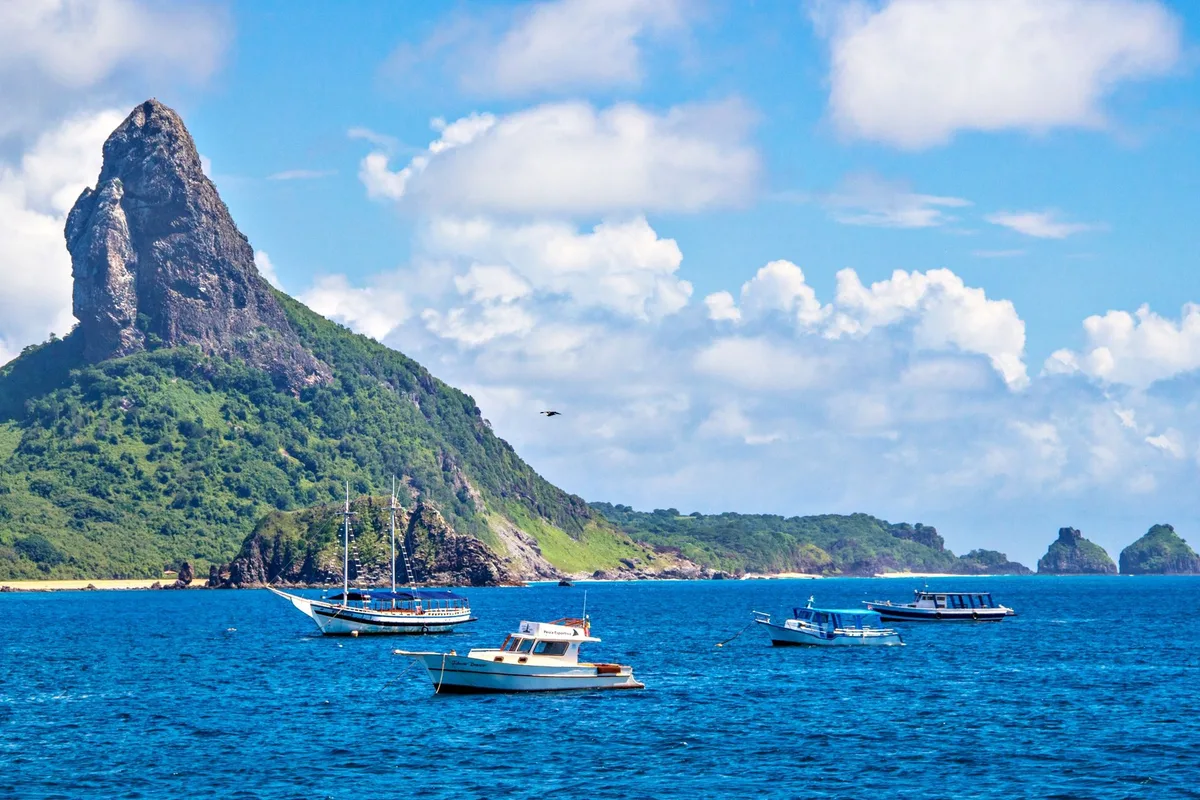
The cove itself is the activity — swimming is safe inside the sheltered oval, and the crystal-clear water over white sand makes snorkelling rewarding without any kit beyond a mask. A short distance away, Baía do Sancho is world-ranked for its crescent beach and spinner dolphins, accessible via iron ladders cut into the cliff face. For a broader perspective on the island, Morro do Pico rises to 321 metres — a volcanic plug with panoramic views roughly 4 kilometres from the beach. The Projeto TAMAR visitor centre, about 4.5 kilometres away, covers the island's sea turtle nesting programmes if you want context for the marine park you're standing in.
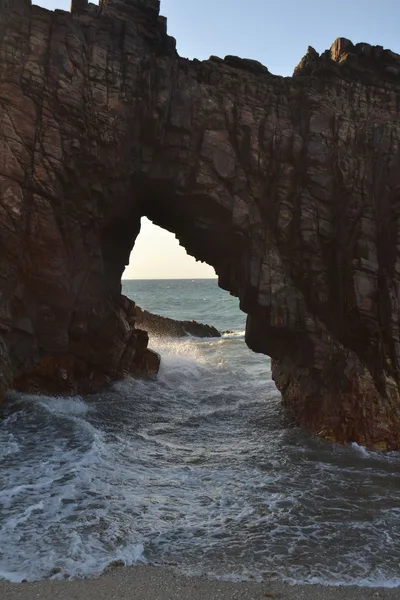
The cove entrance from a boat gives you all three basalt walls converging around the white sand floor — shoot at mid-morning before the sun climbs overhead.
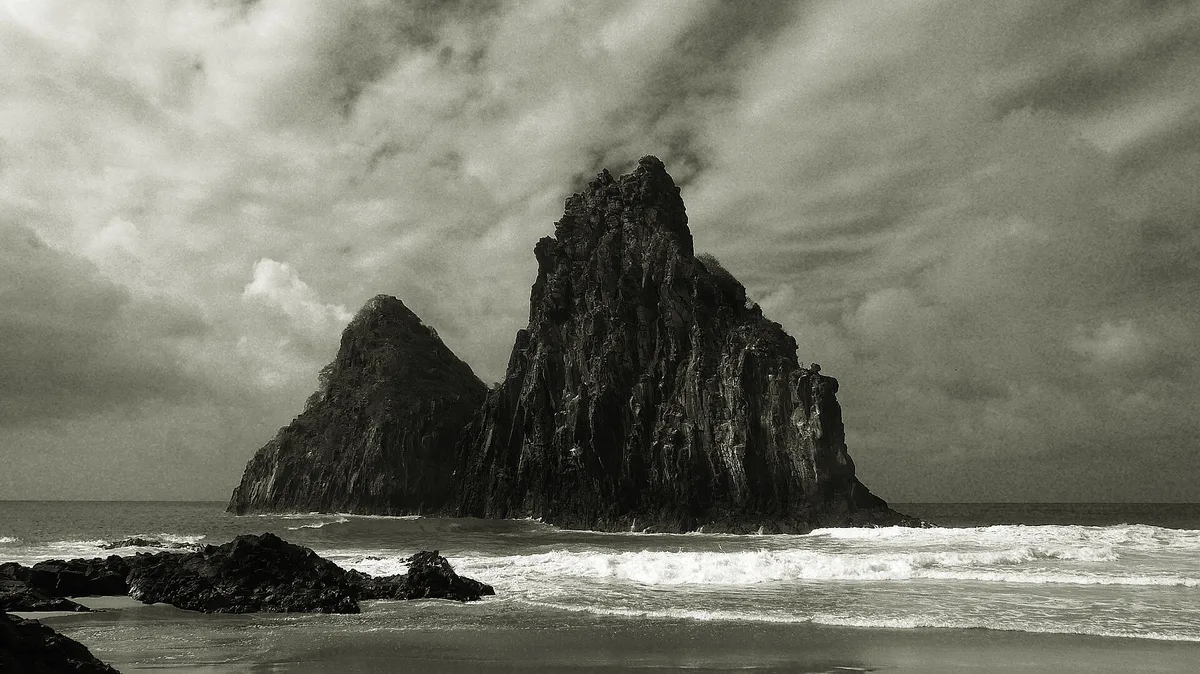
From inside the cove, a low-angle shot from the waterline looking up at the dark volcanic cliffs against open sky is the frame that defines Praia do Ovo.
Where to eat
There are no food or drink facilities at Praia do Ovo — bring everything you need before you leave port. Back in the Vila dos Remédios area, Mare and Dell Isola are both within 300 metres of the main hub, while Restaurante do Valdênio and Aguida Bistro offer local options around 700 metres out. Crepería Euforonha, also at 700 metres, is a solid stop for a quick bite after the hike.
Where to stay
Morro do Farol is the closest listed accommodation, sitting about 1.8 kilometres from the beach access point. Options on Fernando de Noronha are limited and book up well in advance, so plan ahead — especially for the dry-season peak months.
Photography
The best shot is from the water looking back at the basalt walls framing the white sand floor — morning light hits the cliffs directly and the crystal-clear water turns the cove into a natural mirror. For a dramatic wide angle, position yourself at the cove entrance by boat to capture all three basalt walls converging around the oval beach.
Good to know
Check sea state with your boat operator before committing — access is cancelled when swells are rough, and there is no lifeguard on duty once you arrive. Pack everything in: water, sun protection, and snacks, because there are zero facilities at the beach and no mobile signal. National park rules are non-negotiable: no camping, no glass containers, and IBAMA regulations apply throughout. True digital-detox spot — bring offline books, the cell signal fades and there's nowhere to plug in a laptop.
GAMES
🕹️ Five minutes of sand?
Three daily games — including the UV simulator set to this beach.
Map
Nearby places
Mare
Dell Isola
Restaurante do Valdênio
aguida bistro
Crepería Euforonha
Morro do Farol
Things to see around Fernando de Noronha
Baía do Sancho
World-ranked crescent beach accessed via iron ladders, famous for spinner dolphins.
Morro do Pico
Highest point on the island at 323m, a volcanic plug offering panoramic views.
Projeto TAMAR — Centro de Visitantes
Sea turtle conservation centre with exhibits on nesting programmes.
GIFT
🎁 Gift this beach
Its exact coastline, your date, your words — on a print or a PDF you print yourself.
Ovo Beach
THAT DAY
Ovo Beach, Brazilian Islands
© OpenStreetMap contributors
Clean & decorative, or “That day” with the real sky of your date.
Shipping included 3-6 business days
A question before you order? Contact us
Delivered within minutes on the confirmation page and by email: a ZIP with all 4 print sizes (30×40 cm, 12×16″, 50×70 cm, 18×24″), each as a high-resolution PDF and PNG (300 dpi), plus a screen version. Print at home or at any print shop.
Please complete the delivery address.
Please accept the Terms of Sale.
Almost there — the shop opens very soon.
Secure payment · Printed locally in 30+ countries · 7 languages
Frequently asked
The information on this page is provided for guidance only and may evolve. Access conditions, safety and infrastructure can change without notice. Always check official sources before traveling.
Nearest beaches
Other wild beaches in Brazil
Reviews of this beach
- No reviews yet, what a shame — leave yours and share your experience.
Photo credits
Sources and licenses for the photos shown above.
- Photo 1 — Jose Taragano · source · CC BY-SA 3.0
- Photo 2 — Elder Virginio · source · CC BY-SA 3.0
- Photo 3 — Elder Virginio · source · CC BY-SA 3.0
- Photo 4 — Jankel voto · source · CC BY-SA 3.0
- Photo 5 — monicaewagner · source · CC BY-SA 2.0
- Photo 6 — Jankel voto · source · CC BY-SA 3.0