Pedra Furada BeachBrazil Beach Guide
Brazil's iconic rock arch, wild coast, low-tide magic
About
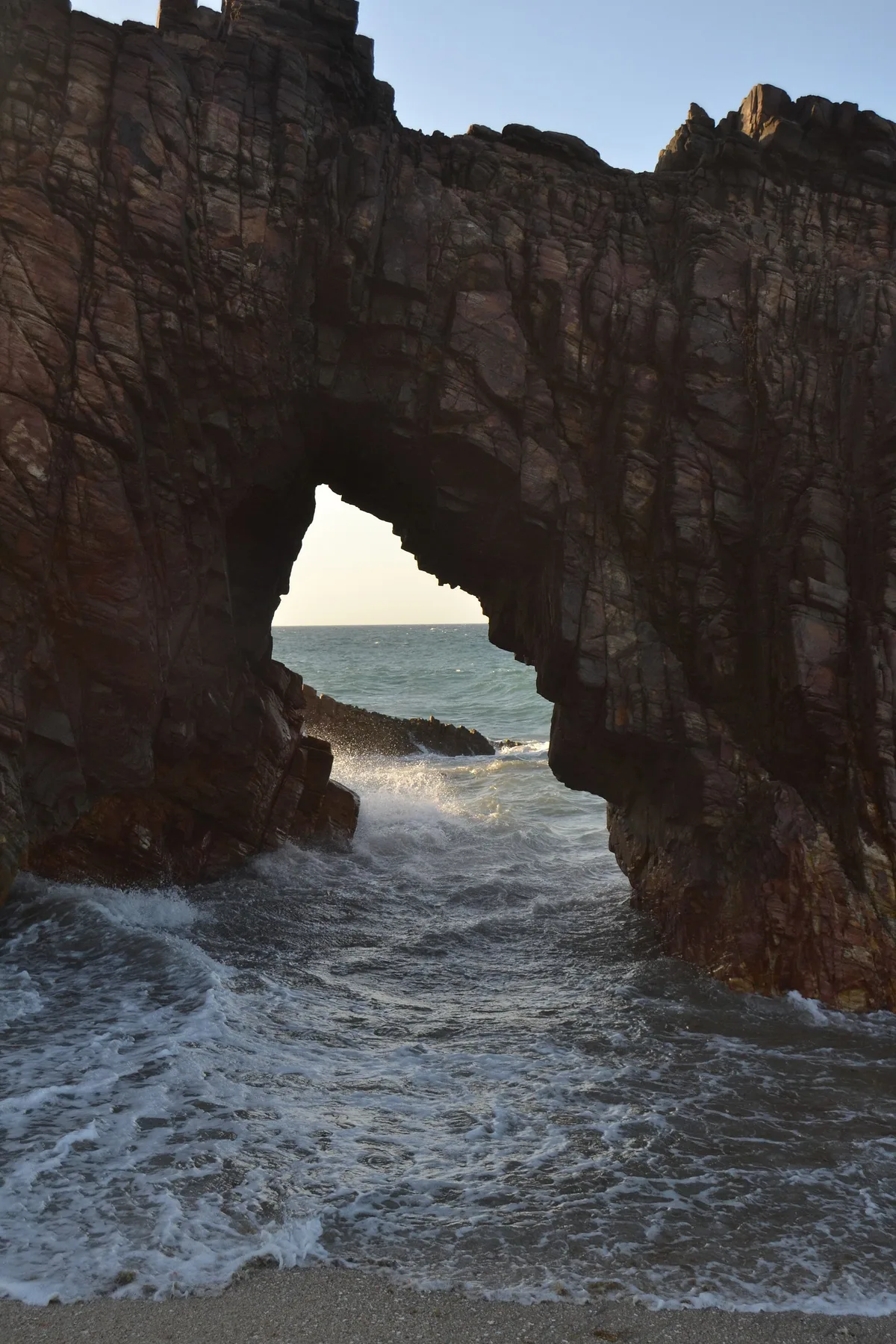
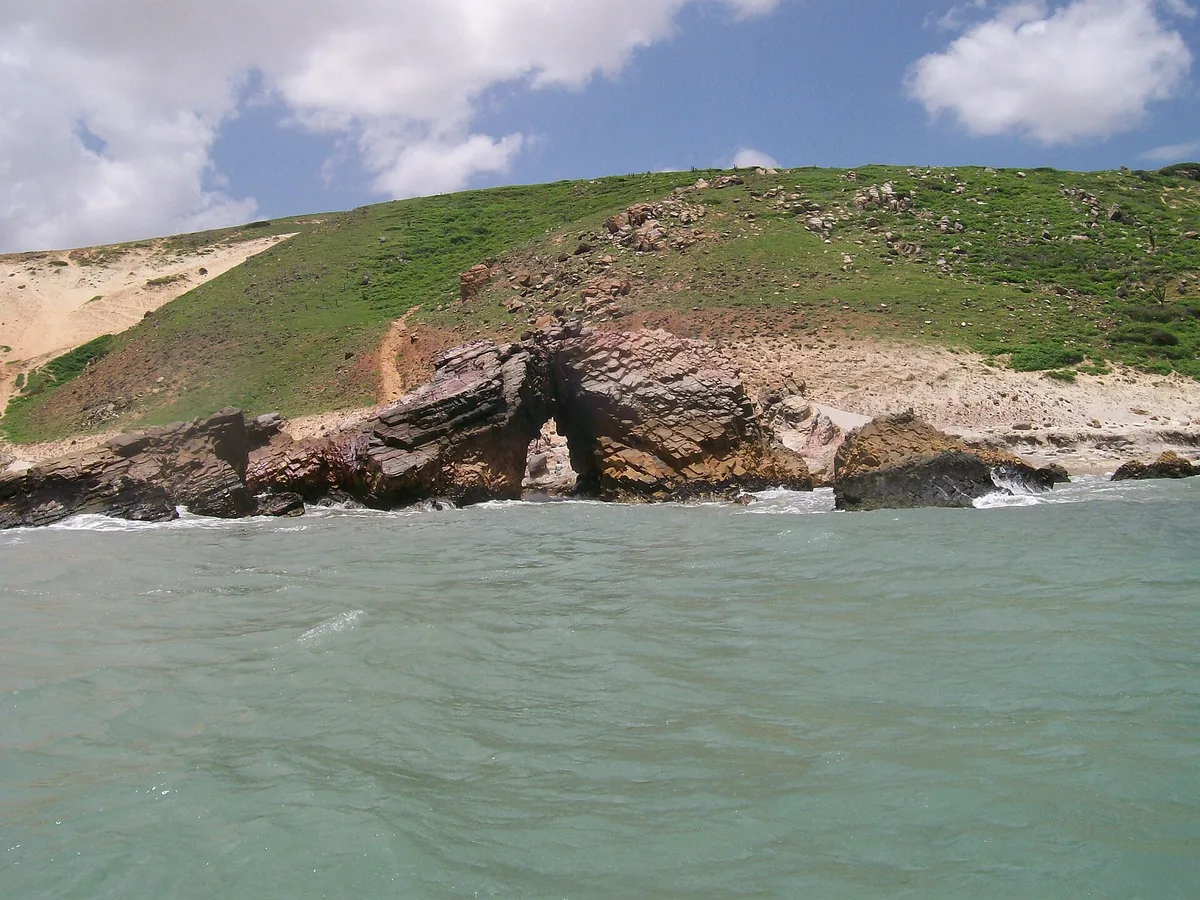
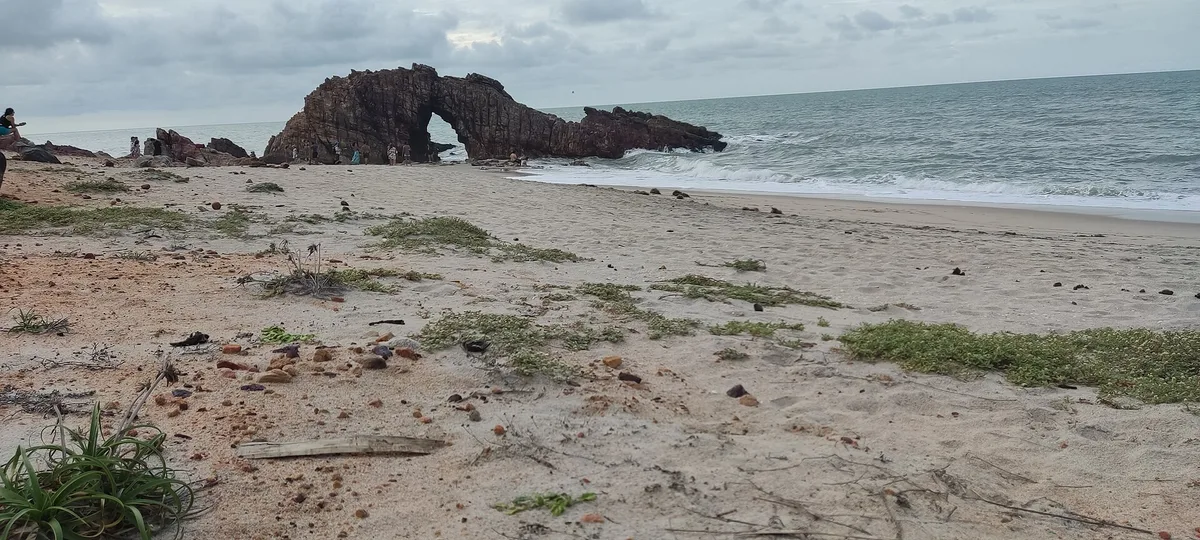
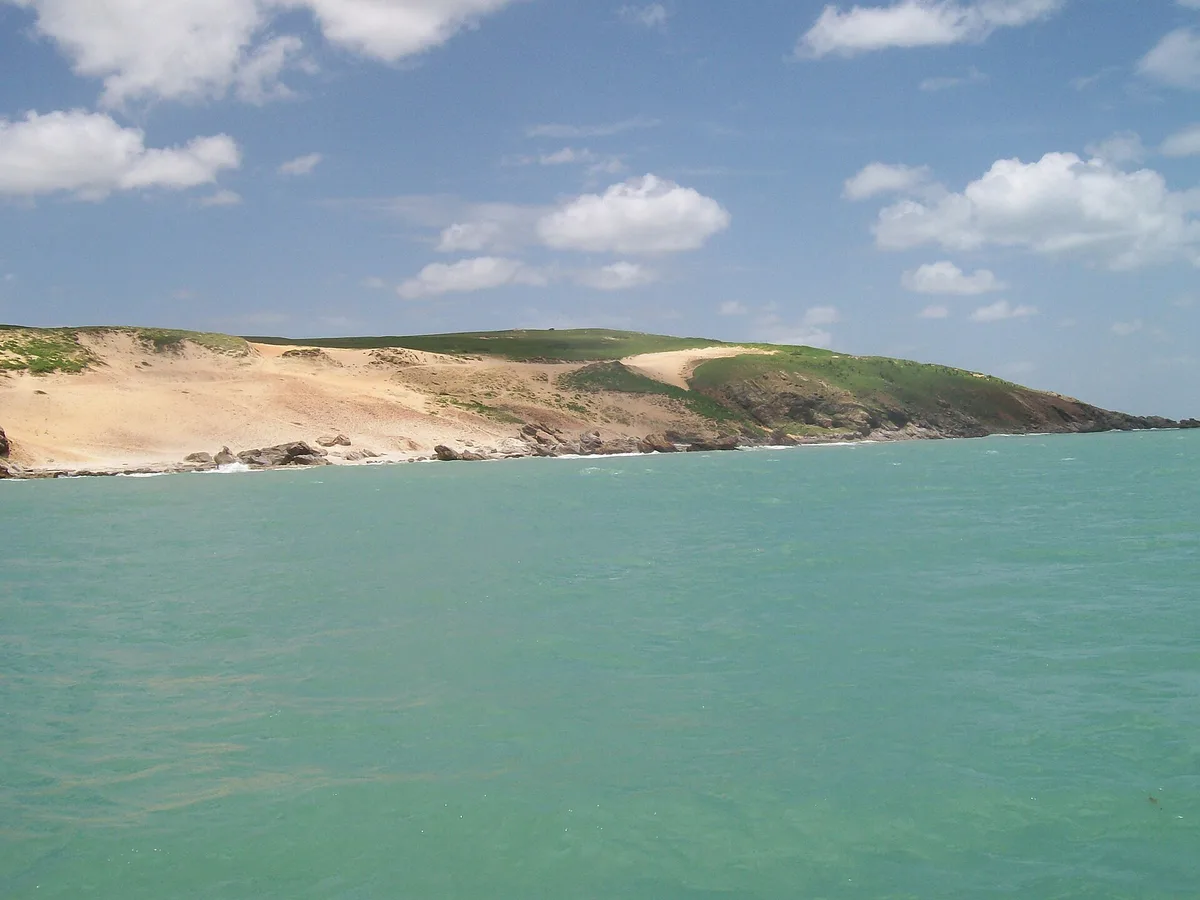
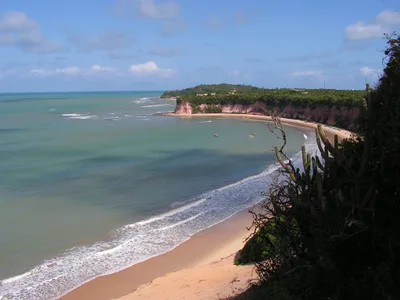
Praia de Pedra Furada is a wild, roughly 800-metre stretch of golden sand backed by dramatic red-orange sandstone cliffs in Jericoacoara National Park, Ceará. The beach takes its name from the perforated sandstone arch — a geological landmark that frames the blue Atlantic in a way that stops you mid-step. At low tide, rock pools open up around the base of the arch, revealing a textured landscape of barnacled stone and shallow water. The vibe is raw and elemental: this is not a beach for sunloungers and cocktails, but for geology lovers, photographers, and anyone who wants to feel genuinely small against the landscape. National park status keeps it from being overdeveloped, and that's exactly the point.
How to get there
Praia de Pedra Furada sits within Jericoacoara National Park, and the village of Jericoacoara itself is car-free — there is no parking here, no car park, no driving to the beach. The easiest route is a 20-minute walk from Vila de Jericoacoara village, doable daily. Alternatively, you can reach the arch by boat from Jericoacoara beach in around 30 minutes. National park rules apply throughout, so come prepared to respect the environment.
Who it's for
For couples
The walk from the village at sunrise, with the arch emerging from the mist and almost nobody else around, is genuinely striking — a shared experience that's hard to replicate anywhere else on the Brazilian coast.
For families
Older children who are steady on their feet will enjoy exploring the rock pools at low tide, but the rocky terrain and slippery surfaces make this unsuitable for toddlers or young children who need close supervision near water. Wheelchair access is not possible.
Our take
Be clear-eyed about what Pedra Furada is: a geological spectacle in a protected national park, not a swimming beach. The surf around the arch can be strong and the rock pools are slippery — visit at low tide, check the tide tables in advance, and keep well clear of the arch during any swell. That said, if you time it right, this place delivers something genuinely rare on the Brazilian coast: a landscape that feels ancient and unhurried, shaped by wind and water rather than tourism. The 30-minute walk from the village keeps the numbers manageable. Photographers and geology enthusiasts will find it worth every step. Just don't touch the arch.
What to do
The arch itself is the main event — time your visit around low tide and walk around its base to appreciate the scale of the sandstone formation up close. Just 0.5 km east, Praia do Coqueirinho offers a sheltered contrast: a short beach shaded by a dense coconut grove, good for a quieter pause. The famous Duna do Pôr do Sol, Jericoacoara's iconic sunset dune, is 0.4 km away and pairs naturally with an afternoon at Pedra Furada. Poço da Princesa, a freshwater lagoon, is only 0.7 km from the arch and worth adding to any half-day loop.
The arch itself is the defining shot — position yourself at the base during low tide with the blue Atlantic framed perfectly through the perforation, ideally at golden hour.
The red-orange sandstone cliffs running along the beach make a strong second composition, especially when reflected in the shallow rock pools left by the retreating tide.
Where to eat
There are no restaurants on the beach itself, so plan accordingly. Back towards the village, Armazém de Burro (1.9 km) and Girasol, an Italian option (2 km), cover a decent range of moods. Restaurante Sol e Sabor and WB Delicius, both around 2 km away, round out the local eating scene.
Where to stay
Most accommodation is a short walk from the arch, clustered in the village. Pousada Vital (1.7 km) and Hotel Maré Mansa (1.8 km) are the closest options, with Pousada Alquimia also at 1.8 km. Jeri Pousada and Pousada Pérolas do Mar are both around 1.9 km away if those are full.
Photography
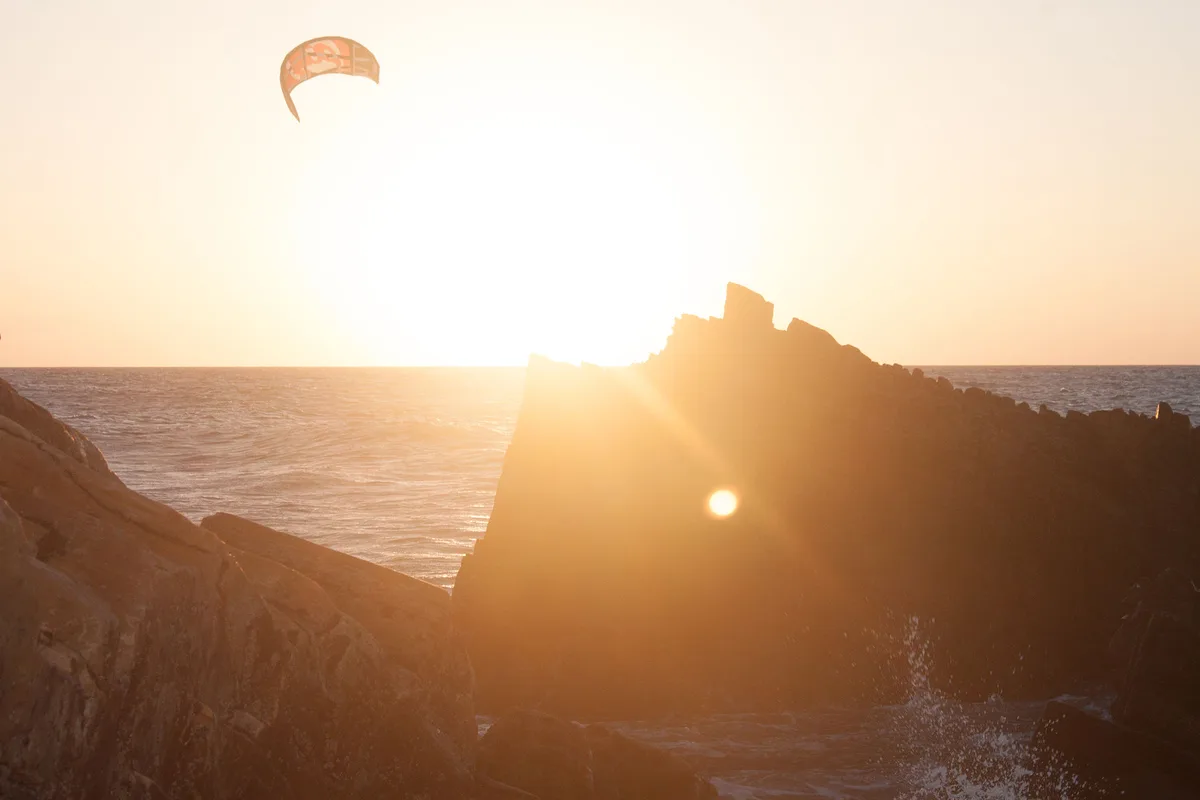
The arch is at its most dramatic in the early morning, when low-angle light catches the red-orange sandstone and the blue water fills the frame through the perforation — arrive before other visitors do. At low tide, the rock pools at the base create strong foreground interest for wide-angle compositions, and the cliffs behind provide a natural backdrop that needs no filter.
Good to know
Always check tide tables before you go — walk-around access to the base of the arch is only possible at low tide, and the rock pools are slippery even in calm conditions. During high tide or any swell, surf can be strong and unpredictable around the rock: do not swim close to the arch under those conditions. Do not climb or damage the arch — this is a protected geological landmark and park rangers enforce the rules. Avoid visiting in March or April, when the rainy season brings stronger swell and reduced visibility.
GAMES
🕹️ Five minutes of sand?
Three daily games — including the UV simulator set to this beach.
Map
Nearby places
Armazém de Burro
Chocolate
Girasol
Restaurante Sol e Sabor
WB Delicius
Pousada Vital
Hotel Maré Mansa
pousada alquimia
Jeri Pousada
pousada pérolas do mar
Things to see around Jijoca de Jericoacoara
Praia de Jericoacoara
Main village beach of the national park.
Duna do Pôr do Sol
Iconic sunset dune at the western tip of Jericoacoara village.
Praia do Coqueirinho
Short sheltered beach east of the arch, shaded by a dense coconut grove.
GIFT
🎁 Gift this beach
Its exact coastline, your date, your words — on a print or a PDF you print yourself.
Pedra Furada Beach
THAT DAY
Pedra Furada Beach, Northeast Brazil
© OpenStreetMap contributors
Clean & decorative, or “That day” with the real sky of your date.
Shipping included 3-6 business days
A question before you order? Contact us
Delivered within minutes on the confirmation page and by email: a ZIP with all 4 print sizes (30×40 cm, 12×16″, 50×70 cm, 18×24″), each as a high-resolution PDF and PNG (300 dpi), plus a screen version. Print at home or at any print shop.
Please complete the delivery address.
Please accept the Terms of Sale.
Almost there — the shop opens very soon.
Secure payment · Printed locally in 30+ countries · 7 languages
Frequently asked
The information on this page is provided for guidance only and may evolve. Access conditions, safety and infrastructure can change without notice. Always check official sources before traveling.
Nearest beaches
Other wild beaches in Brazil
More beaches in Northeast Brazil
Reviews of this beach
- No reviews yet, what a shame — leave yours and share your experience.
Photo credits
Sources and licenses for the photos shown above.
- Photo 1 — TobiART · source · CC BY-SA 4.0
- Photo 2 — Claudio Oliveira Lim… · source · CC BY-SA 3.0
- Photo 3 — Artur Warchavchik · source · CC BY-SA 3.0
- Photo 4 — Gleicidageo · source · CC BY-SA 4.0
- Photo 5 — Claudio Oliveira Lim… · source · CC BY-SA 3.0