Sancho BeachBrazil Beach Guide
Iron ladders, emerald water, spinner dolphins at your feet
About
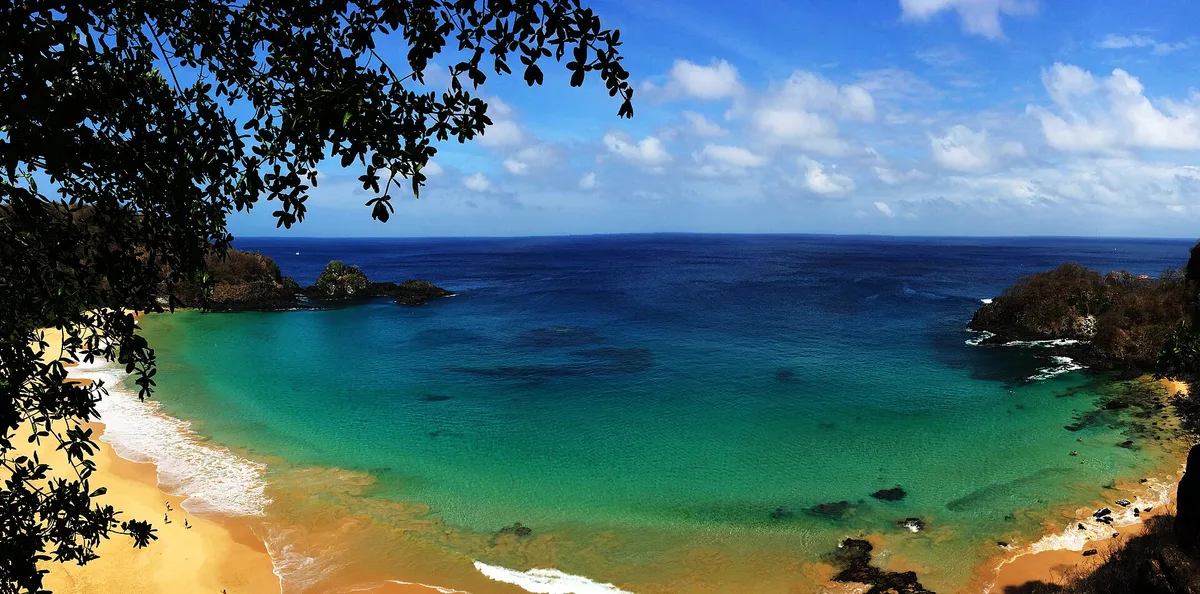
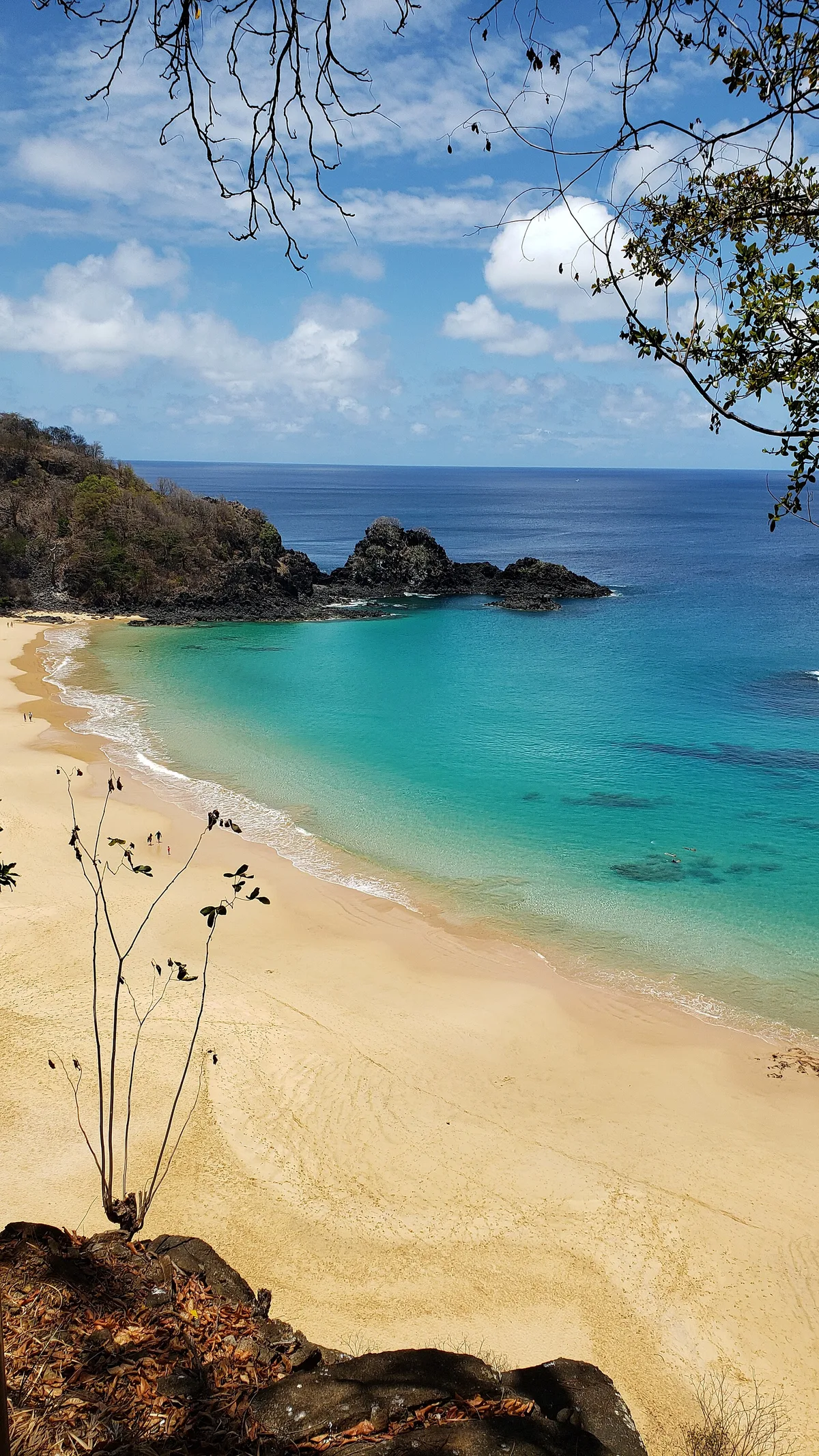
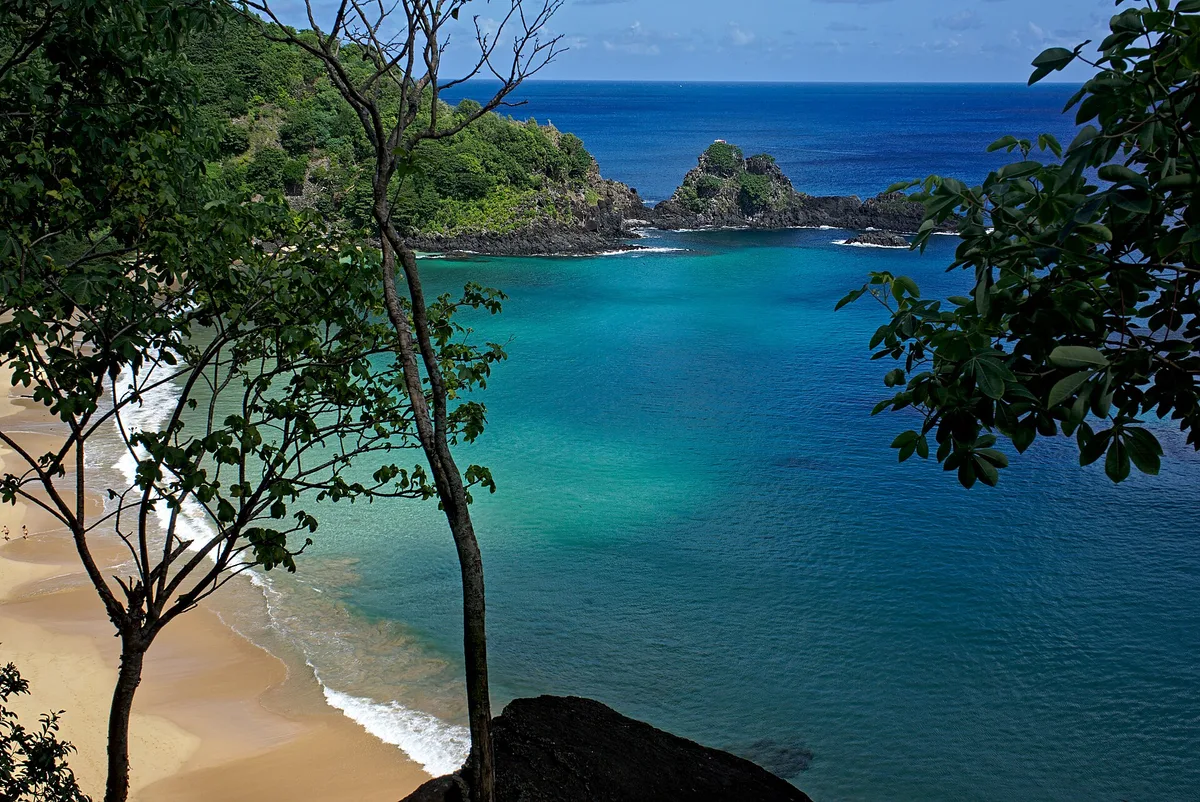
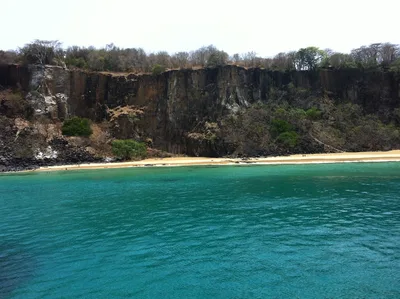
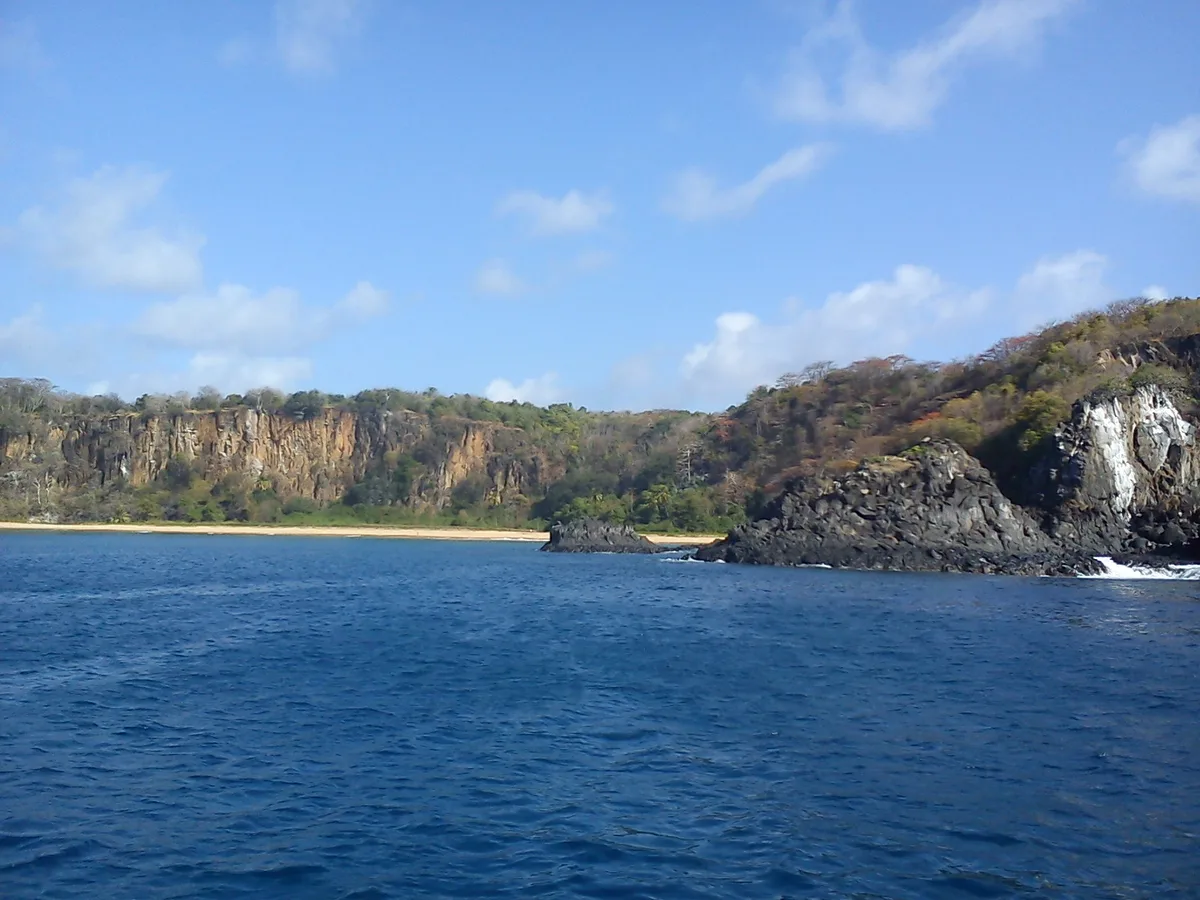
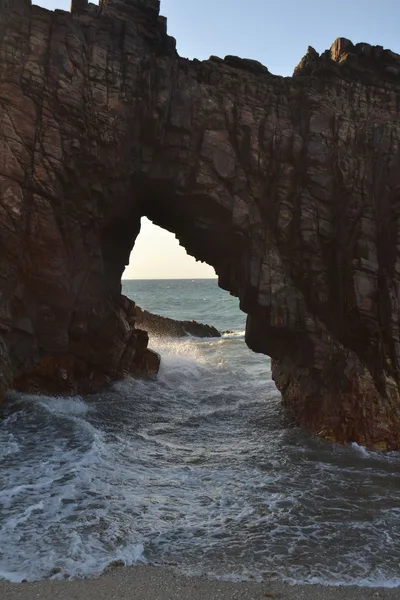
Baía do Sancho sits inside a volcanic basalt amphitheatre on Fernando de Noronha, a protected Brazilian archipelago roughly 350 kilometres off the northeast coast. Golden sand lines a sheltered cove roughly 400 metres wide, and the water runs a deep emerald that shifts with the angle of the sun. There's no road in — you reach it by descending iron ladders bolted into the cliff face or by arriving from the sea. Spinner dolphins frequent the bay, and the entire area sits within a national park that keeps development, noise, and litter firmly in check. The result is one of the most intact beach environments in the Atlantic.
How to get there
You have two options: hike from the national park entrance via a trail that ends with an iron-ladder descent into the cove, or take a boat from Porto de Santo Antônio. Street parking and a small lot are available near the national park entrance for those arriving by land before the trail. A mandatory PARNA daily fee applies — R$ 384.00 for international visitors, R$ 192.00 for Brazilians — so budget for that before you set off. The beach is open 06:00 to 18:00; arriving early by either route gives you the cove at its quietest.
Who it's for
For couples
The difficult access naturally filters out casual visitors, so couples who make the ladder descent together often find a stretch of golden sand that feels almost private — the enclosed basalt walls and emerald water do the rest.
For families
Older children and teenagers who are comfortable on iron ladders will find the descent an adventure in itself, and the calm, safe swimming water inside the cove is genuinely suitable for confident young swimmers — but the ladder access makes this unsuitable for toddlers, pushchairs, or anyone with mobility limitations.
Our take
Baía do Sancho earns its world-ranked reputation honestly — the combination of iron-ladder access, national park protection, spinner dolphins, and that enclosed basalt amphitheatre is genuinely rare. The ladder descent is not a gimmick; it's a real physical commitment, and wet rungs demand full attention. Once you're down, the swimming is safe and the emerald water is as clear as the hype suggests. The mandatory park fee and strict rules — no oxybenzone sunscreen, no glass, no drones, no wildlife feeding — are non-negotiable, and they're exactly why the place looks the way it does. Avoid January through March: the rainy season makes the trail harder and muddies the water visibility. Come between May and October, descend early, and you'll have one of the Atlantic's great beaches at something close to its best.
What to do
The Mirante dos Dois Irmãos viewpoint is just 0.3 kilometres away and gives you a bird's-eye look back over the cove you just descended into — worth the short detour before or after the beach. Baía dos Golfinhos, about a kilometre along, is the island's dedicated dolphin observation point where spinner dolphins gather in the mornings. Further afield, Morro do Pico rises to 323 metres — the highest point on the island — and delivers panoramic views of the entire archipelago on a clear day. The Projeto TAMAR visitor centre, 5.5 kilometres away, runs sea turtle conservation exhibits that put the national park's protection work into sharp context.
Stand at the cliff-top trailhead before descending — the iron ladders dropping into the emerald cove with golden sand below is the defining image of Fernando de Noronha.
From the beach, shoot back toward the basalt amphitheatre walls in the late afternoon when the rock turns amber and the water deepens in colour. If spinner dolphins enter the bay, a long lens from the shoreline captures them without disturbing the animals.
Where to eat
There are no facilities on the beach itself, so eat before you descend. Mirante Doroldro, about 1.9 kilometres from the park entrance, is the closest option for a meal with a view. Forno Noronha handles pizza around the 2-kilometre mark, and if you want something lighter, Crepería Euforonha serves crepes roughly 2.4 miles out.
Where to stay
Morro do Farol sits 2.3 kilometres from the beach and is the closest base for an early-morning ladder descent before the day-visitors arrive. Pousada Morro do Pico and Vila Sal Noronha are both around 3.4–3.5 kilometres out and offer a quieter retreat after a long day on the island.
Photography
The classic shot is from the cliff top before you descend — the iron ladders framing the emerald water and golden sand below, best lit in the mid-morning when the sun clears the basalt walls. From the beach itself, face west in the late afternoon when the volcanic rock glows and spinner dolphins occasionally break the surface of the cove.
Good to know
The iron ladders are the crux of the hike: they get slippery when wet, so use both hands and descend slowly — flip-flops are a bad idea here. There is no lifeguard on duty, so swim within your ability and stay aware of conditions. When spinner dolphins enter the bay, watch from the shore or from your boat — do not enter the water to approach them. Pack out everything you bring in: no glass containers, no oxybenzone-based sunscreen (reef-safe mineral sunscreen only), no drone flights without an IBAMA permit, no feeding wildlife, and no camping overnight. True digital-detox territory — bring offline books, the cell signal fades and there's nowhere to plug in a laptop.
GAMES
🕹️ Five minutes of sand?
Three daily games — including the UV simulator set to this beach.
Map
Nearby places
Mirante Doroldro
Forno Noronha
aguida bistro
Xica da Silva
Crepería Euforonha
Morro do Pico
Forte dos Remédios
Projeto TAMAR — Centro de Visitantes
Things to see around Fernando de Noronha
Morro do Pico
Highest point on the island at 321m, a volcanic plug offering panoramic views of the entire archipelago.
Forte dos Remédios
18th-century Portuguese colonial fort on the cliff above Porto Beach, with intact walls and ocean views.
Projeto TAMAR — Centro de Visitantes
Sea turtle conservation centre with exhibits on hawksbill and green turtle nesting programmes on the island.
GIFT
🎁 Gift this beach
Its exact coastline, your date, your words — on a print or a PDF you print yourself.
Sancho Beach
THAT DAY
Sancho Beach, Brazilian Islands
© OpenStreetMap contributors
Clean & decorative, or “That day” with the real sky of your date.
Shipping included 3-6 business days
A question before you order? Contact us
Delivered within minutes on the confirmation page and by email: a ZIP with all 4 print sizes (30×40 cm, 12×16″, 50×70 cm, 18×24″), each as a high-resolution PDF and PNG (300 dpi), plus a screen version. Print at home or at any print shop.
Please complete the delivery address.
Please accept the Terms of Sale.
Almost there — the shop opens very soon.
Secure payment · Printed locally in 30+ countries · 7 languages
Frequently asked
The information on this page is provided for guidance only and may evolve. Access conditions, safety and infrastructure can change without notice. Always check official sources before traveling.
Nearest beaches


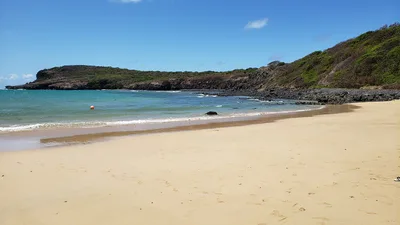
Other wild beaches in Brazil
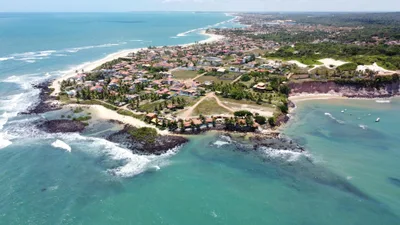
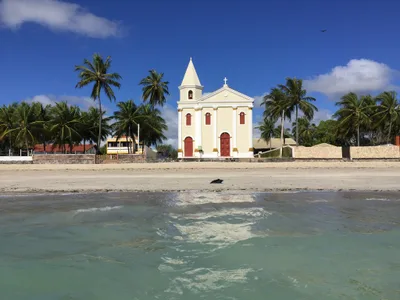
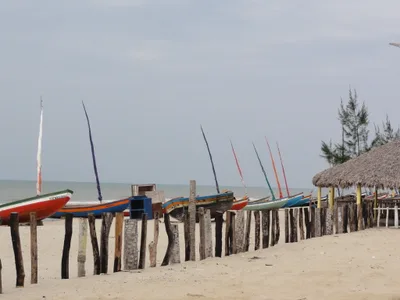
Reviews of this beach
- No reviews yet, what a shame — leave yours and share your experience.
Photo credits
Sources and licenses for the photos shown above.
- Photo 1 — Daniel Albuquerque da Silva · source · CC BY-SA 4.0
- Photo 2 — Alexandre Costa · source · CC BY-SA 4.0
- Photo 3 — Paulo Fernandes de Souza Jr · source · CC BY-SA 3.0
- Photo 4 — Paulo Fernandes de Souza Jr · source · CC BY-SA 3.0
- Photo 5 — Almir de Freitas · source · CC BY 2.0
- Photo 6 — monicaewagner · source · CC BY-SA 2.0