Atalaia BeachBrazil Beach Guide
Brazil's rarest tidal aquarium, strictly rationed by nature
About
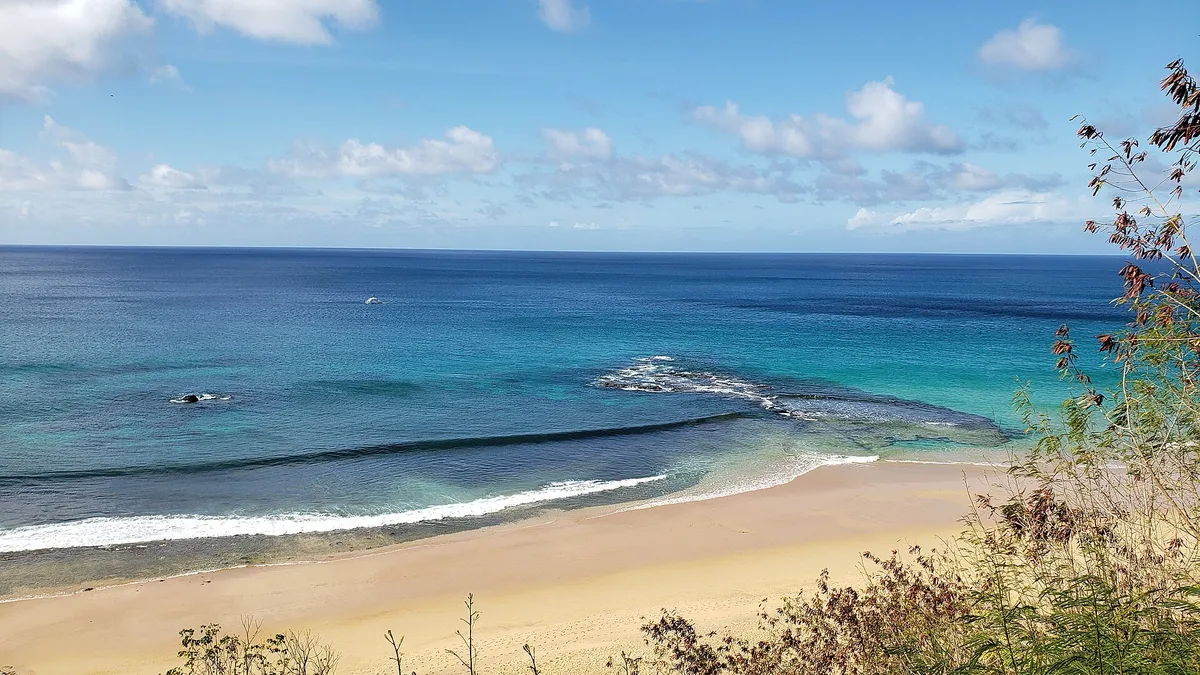
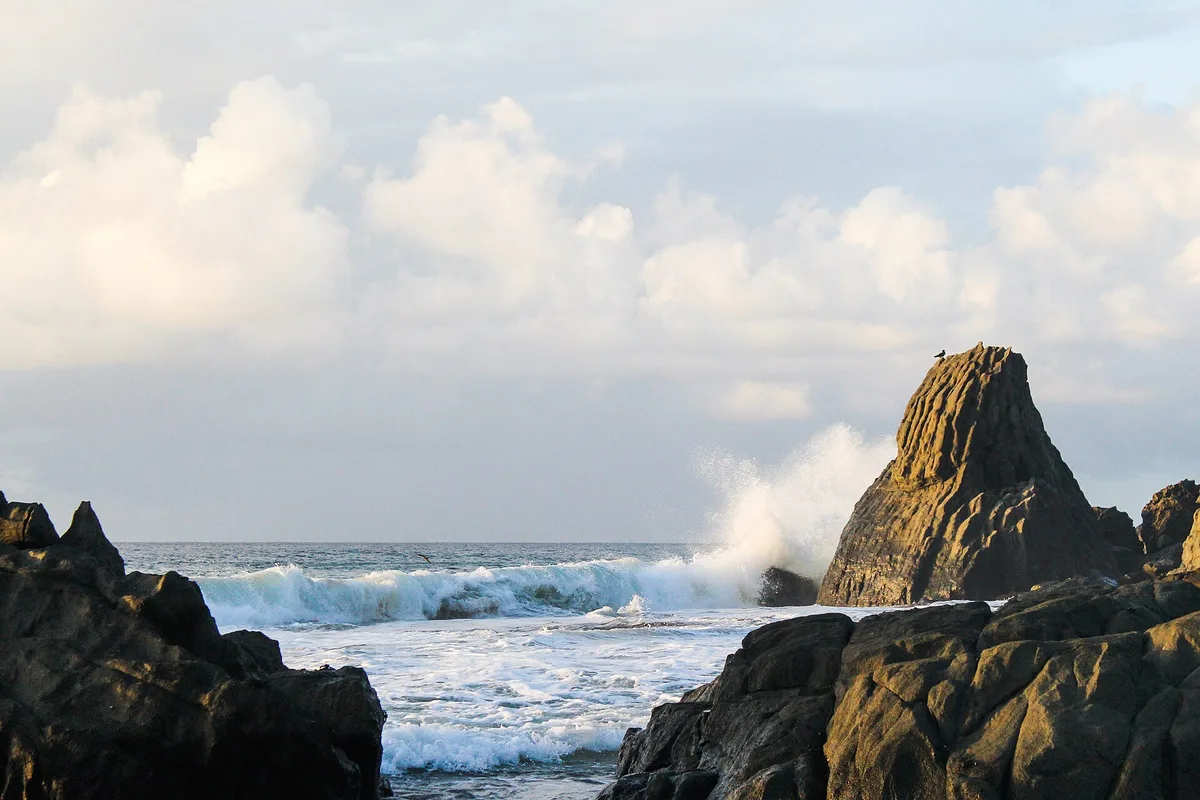
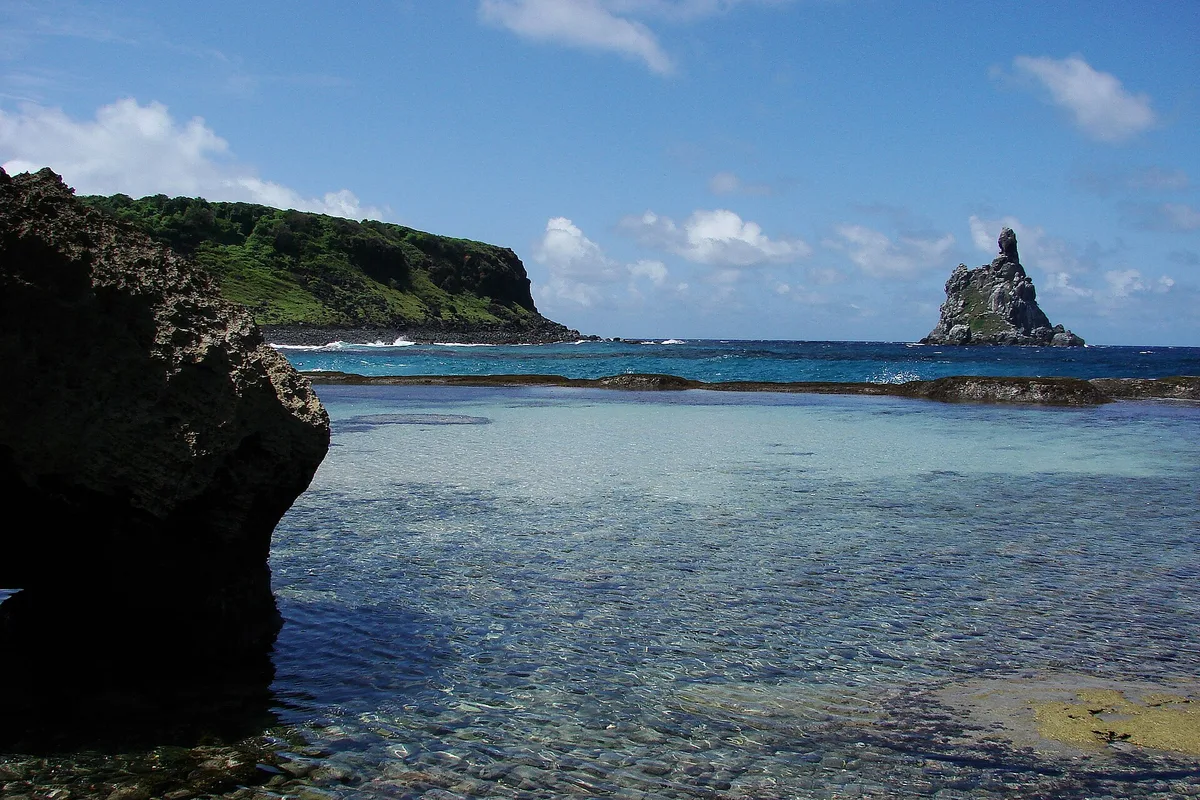
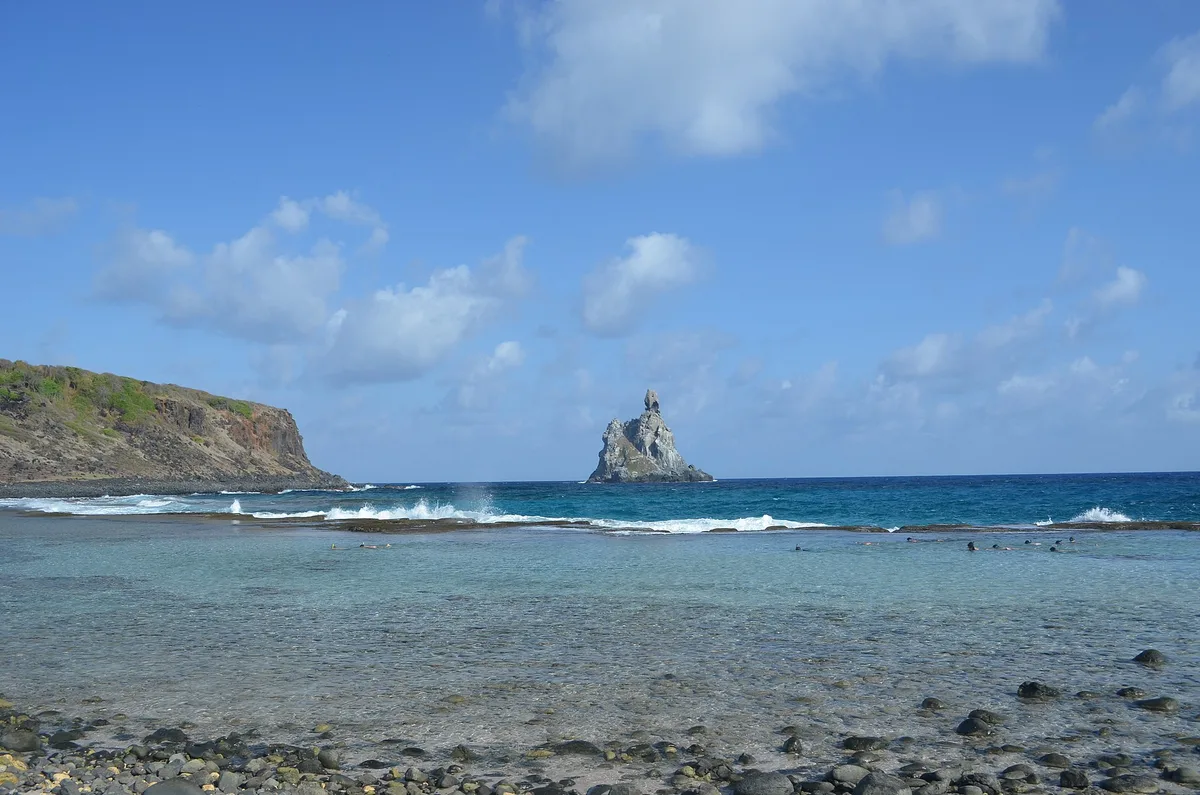
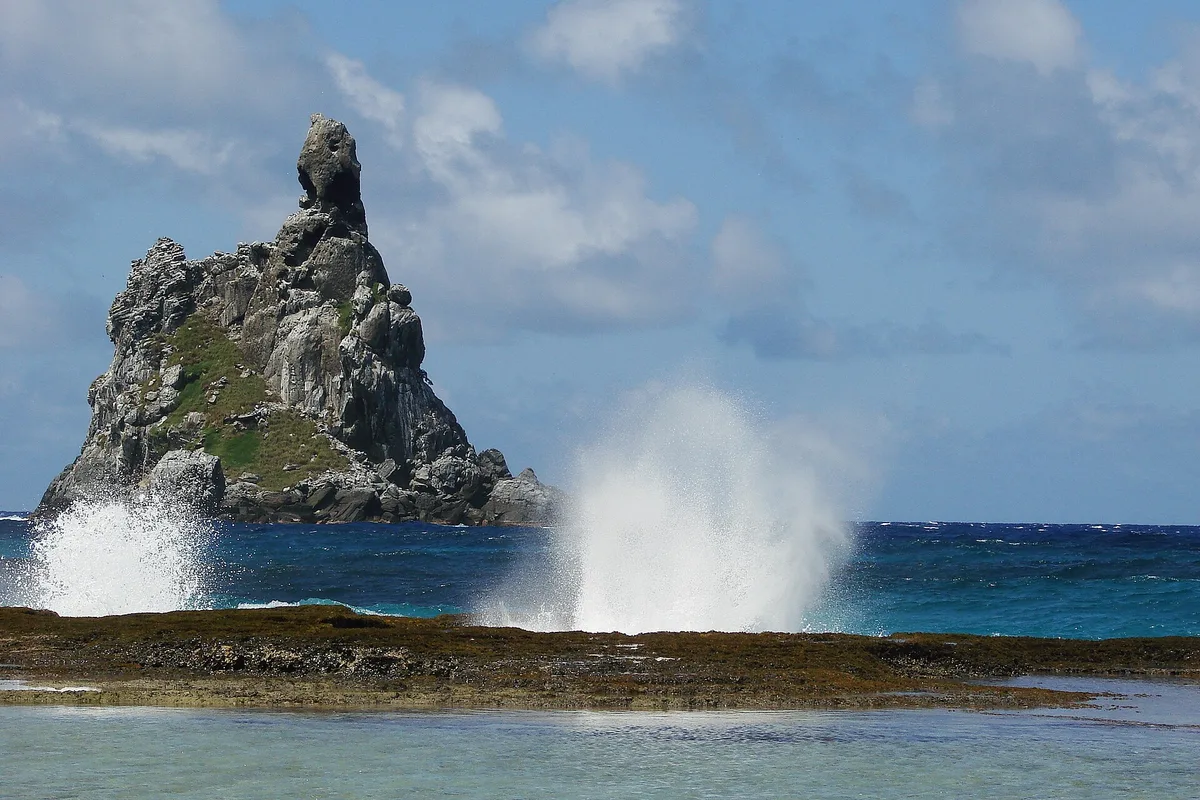
Praia da Atalaia sits on Fernando de Noronha, a volcanic island 350 kilometres off Brazil's northeast coast, and it plays by its own rules. There is no sand here — just a broad basalt platform carved by millennia of Atlantic swells, pocked with crystal-clear natural pools that trap reef fish, rays, and octopus at low tide. The water inside those pools is startlingly transparent, like looking through glass at a living exhibit. IBAMA caps daily entry at 100 people, so the platform never feels overrun, and a ranger is with you every step. It's wild, it's primordial, and it demands your full respect.
How to get there
Atalaia is reached on foot only — a roughly 55-minute hike from the Vila dos Remédios area (trailheads near Vila dos Trinta or Baía do Sueste) along a marked national park trail. There is no parking at the site; arrange a buggy drop-off at the trailhead. Entry requires both the Fernando de Noronha Marine National Park fee (R$ 192 for Brazilians, R$ 384 for foreigners, valid 10 days) and a separate IBAMA permit specifically for Atalaia — book that permit weeks in advance, as the 100-person daily quota fills fast. The beach is accessible only during the two-hour window around low tide; check the tide table before you leave your pousada.
Who it's for
For couples
Atalaia rewards couples who want something genuinely rare — a shared, ranger-guided encounter with rays and octopus in natural pools, with a strict quota ensuring the experience stays intimate. The 55-minute trail hike in and out gives you unhurried time together before the island's other beaches take over the afternoon.
For families
Families with older children who can manage a 55-minute hike on uneven terrain will find the tidal pools endlessly fascinating — no snorkelling gear needed, just eyes. Younger children and anyone with limited mobility should note that the basalt platform is extremely slippery and completely inaccessible for wheelchairs, so plan accordingly.
Our take
Praia da Atalaia is not a beach in any conventional sense — no sand, no swimming, no snorkelling gear, and a ranger at your shoulder the entire time. That is precisely what makes it extraordinary. The IBAMA quota of 100 visitors per day is a genuine conservation tool, not a marketing gimmick, and the four-hour tidal window means you earn the experience with planning and a 55-minute hike. The basalt platform is dangerously slippery — water shoes are non-negotiable, and the open water beyond the pools is off-limits with no lifeguard present. Come in the dry season between August and December for the most reliable tidal access. This is one of the few places on earth where the rules exist entirely to protect what you came to see — follow them without complaint.
What to do
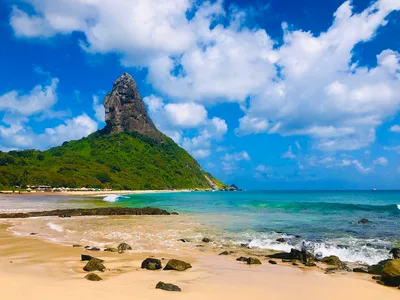
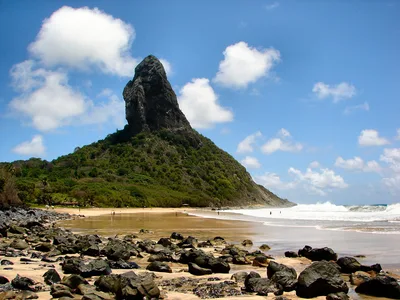
After Atalaia, walk 0.8 km to Praia do Boda e Praia do Americano for a change of scenery, or visit the 17th-century Forte do Bodró just 0.6 km away. The Projeto TAMAR sea-turtle conservation centre, 3.5 km from the beach, runs exhibits on Fernando de Noronha's nesting programmes and is worth an afternoon. For the island's most dramatic panorama, make the 4 km trip to Morro do Pico — a 321-metre volcanic plug that surveys the entire archipelago — and pair it with a detour to Baía do Sancho, 3 km away, where spinner dolphins frequent a world-ranked crescent beach reached by iron ladders.
Crouch at the pool edge and shoot straight down into the crystal-clear water — trapped reef fish and the dark basalt floor create a natural-aquarium frame that needs no filter.
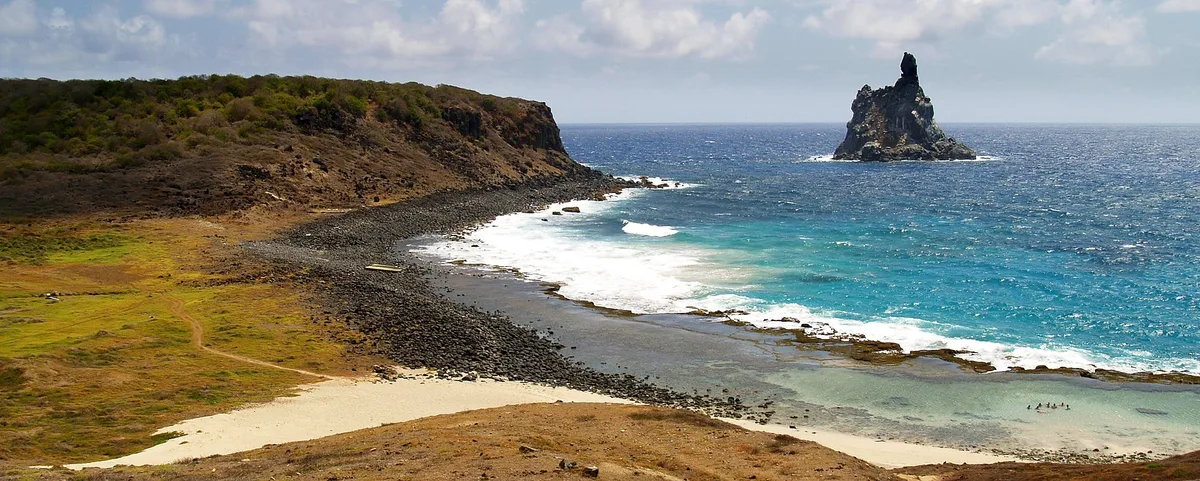
The approach trail also delivers a compelling wide shot: the volcanic platform stretching toward the open Atlantic, with Morro do Pico visible on the horizon if you time it for the golden hour before your tidal window opens.
Where to eat
The closest option is Mirante Doroldro, just 0.3 km from the trailhead area, followed by Forno Noronha's wood-fired pizza at 0.4 km — both are well-placed for a post-hike meal. For something more substantial, Aguida Bistro (1.5 km) and Xica da Silva (1.6 km) offer broader menus, while Jempero da Maezinha at 1.8 km is the pick for traditional Brazilian home cooking. Pack your own water and snacks for the hike itself — there is nothing to buy on the platform.
Where to stay
Morro do Farol, 0.6 km away, is the closest base and well-positioned for an early start to catch the low-tide window. Pousada Morro do Pico (1.4 km) and Vila Sal Noronha (1.5 km) are both comfortable options within easy buggy distance of the trailhead. Wherever you stay, ask your pousada to help you confirm the day's tide times the evening before your visit.
Photography
The best shots come from inside the tidal window itself — position yourself low on the basalt platform to shoot reef fish and rays through the pool surface with the Atlantic horizon behind you; midday light on crystal-clear water gives the most vivid colour. For wider context, the elevated trail approach offers a clean overhead angle of the pools against the dark volcanic rock — arrive at the start of the tidal window when the platform is least occupied.
Good to know
Book your IBAMA permit weeks ahead — 100 slots per day is the hard ceiling, and the quota fills regardless of season. Leave sunscreen, glass containers, and snorkelling gear behind: all three are strictly prohibited, and rangers will turn you back at the trailhead if you're carrying them. The basalt platform is extremely slippery — water shoes are mandatory, not optional. Do not swim beyond the tidal pools into open water; there is no lifeguard on duty, and the platform closes the moment the two-hour tidal window expires. Avoid January through March: rainy-season swell regularly shrinks or cancels the tidal window entirely, even though permit slots still disappear.
GAMES
🕹️ Five minutes of sand?
Three daily games — including the UV simulator set to this beach.
Map
Nearby places
Mirante Doroldro
Forno Noronha
aguida bistro
Xica da Silva
Jempero da Maezinha
Things to see around Fernando de Noronha
Morro do Pico
Highest point on the island at 321m, a volcanic plug offering panoramic views.
Baía do Sancho
World-ranked crescent beach accessed via iron ladders, famous for spinner dolphins.
Projeto TAMAR — Centro de Visitantes
Sea turtle conservation centre with exhibits on nesting programmes.
GIFT
🎁 Gift this beach
Its exact coastline, your date, your words — on a print or a PDF you print yourself.
Atalaia Beach
THAT DAY
Atalaia Beach, Brazilian Islands
© OpenStreetMap contributors
Clean & decorative, or “That day” with the real sky of your date.
Shipping included 3-6 business days
A question before you order? Contact us
Delivered within minutes on the confirmation page and by email: a ZIP with all 4 print sizes (30×40 cm, 12×16″, 50×70 cm, 18×24″), each as a high-resolution PDF and PNG (300 dpi), plus a screen version. Print at home or at any print shop.
Please complete the delivery address.
Please accept the Terms of Sale.
Almost there — the shop opens very soon.
Secure payment · Printed locally in 30+ countries · 7 languages
Frequently asked
The information on this page is provided for guidance only and may evolve. Access conditions, safety and infrastructure can change without notice. Always check official sources before traveling.
Nearest beaches
Other wild beaches in Brazil
Reviews of this beach
- No reviews yet, what a shame — leave yours and share your experience.
Photo credits
Sources and licenses for the photos shown above.
- Photo 1 — Alexandre Costa · source · CC BY-SA 4.0
- Photo 2 — Humberto Sammarco · source · CC BY-SA 4.0
- Photo 3 — Hughes Leglise, Paris, France (Hugo*) · source · CC BY 2.0
- Photo 4 — Thiago Tiganá · source · CC BY-SA 3.0
- Photo 5 — Elvis Boaventura · source · CC BY 3.0
- Photo 6 — Thiago Tiganá · source · CC BY-SA 3.0