Mirissa BeachSri Lanka Beach Guide
Golden sands, blue whales, and Sri Lanka's wildest sunsets
About
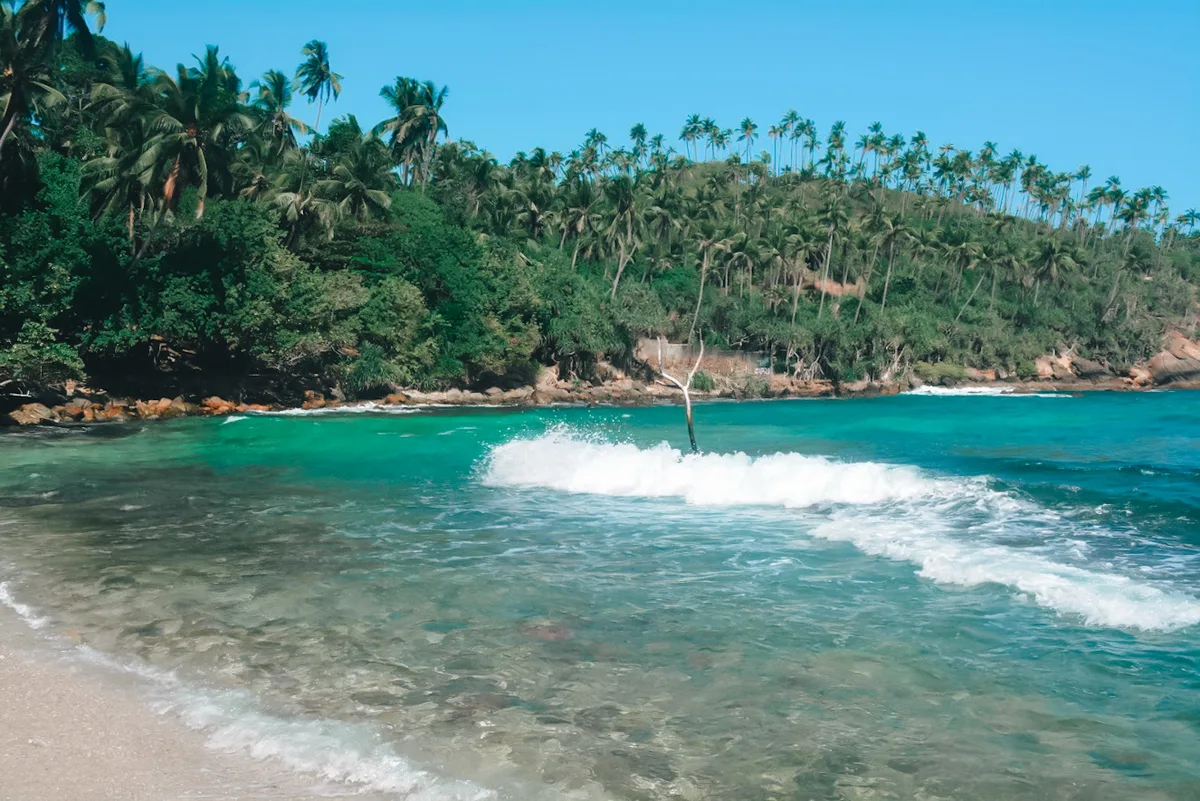
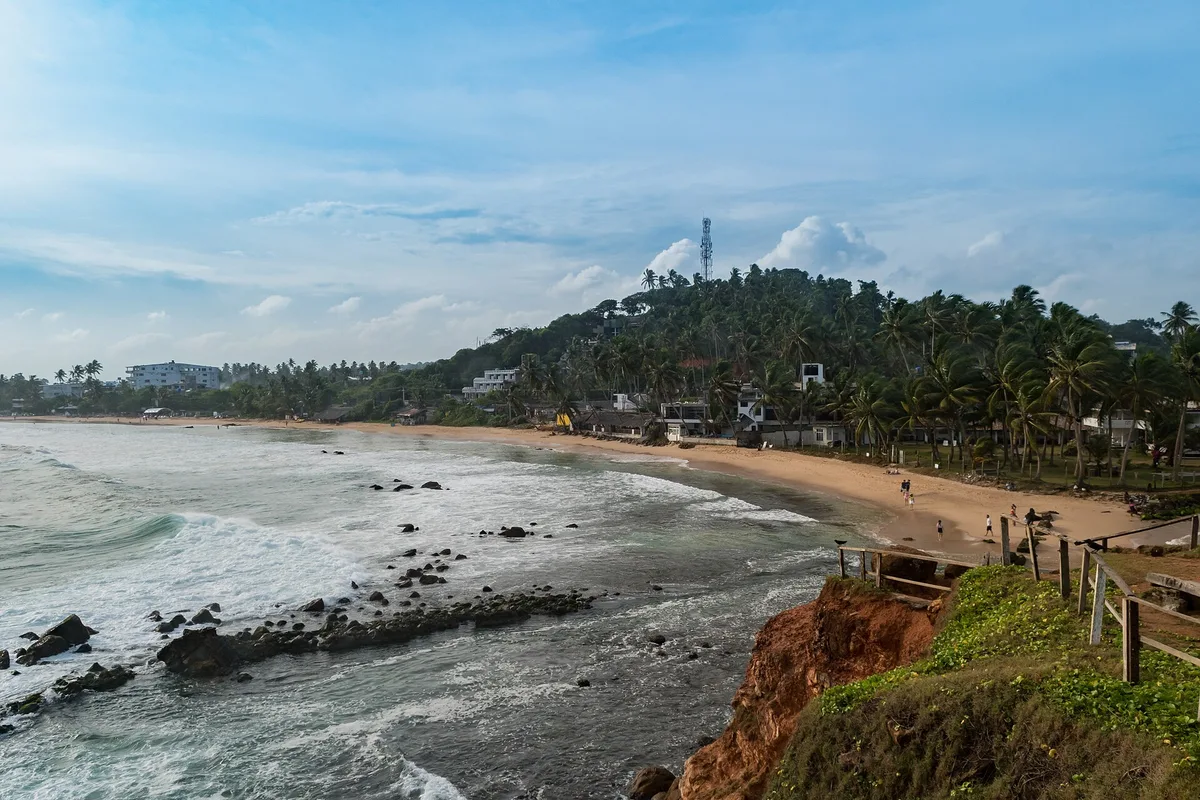
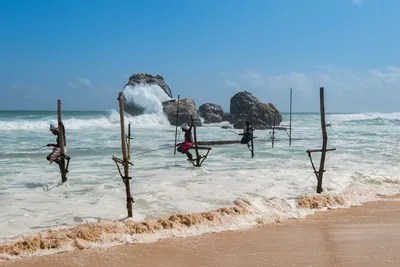
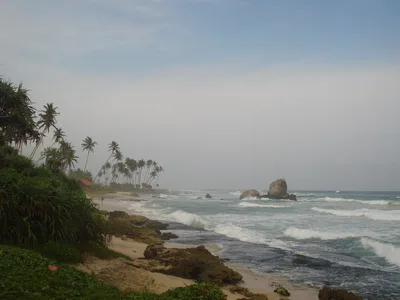
Mirissa sweeps roughly 1,200 metres of golden sand along Sri Lanka's southern coast, framed by a rocky headland that splits the beach into two distinct moods. Blue water rolls in from the open Indian Ocean, and a coconut-fringed rock outcrop at the western end gives the bay its unmistakable silhouette. From December to April, the whale-watching fleet anchors just offshore, and blue whales surface close enough to stop conversations dead. A surf break fires at the eastern end, beach bars line the strip, and by sunset the whole place shifts into a lively, backpacker-fuelled rhythm that runs well into the night.
How to get there
From Matara it's a quick 10-minute drive; from Galle, allow around an hour by car. Seaplane access is also available for those arriving in style. There's no entry fee. Informal free parking is available along the beach road — it's unstructured, so arrive early during peak season to secure a spot.
Who it's for
For couples
Mirissa's sunset-facing bay and lively beach bar scene make it a natural choice for couples — share a table at The Slow for a long Sri Lankan lunch, then watch the whale-watching fleet return as the sky turns amber.
For families
Families should plan carefully: swimming is only moderate in safety and the headland rip currents are a real hazard, so younger children need close supervision in the water. The dry season (November–April) offers calmer conditions, and the whale-watching tours departing from the harbour are a genuine highlight for older kids.
Our take
Mirissa earns its reputation, but it demands respect. The rip currents near the headland are real, the monsoon season (May–September) shuts down swimming and whale-watching entirely, and the December–February peak brings an intensity to the main strip that not everyone enjoys. Come between December and April for the full experience: golden sand, blue water, and the genuine possibility of watching a blue whale surface a few hundred metres offshore. Parrot Rock and Coconut Tree Hill add easy depth beyond the beach itself. Skip it in August — rough seas, suspended tours, and little reward. Time it right, stay alert near the water, and Mirissa delivers.
What to do
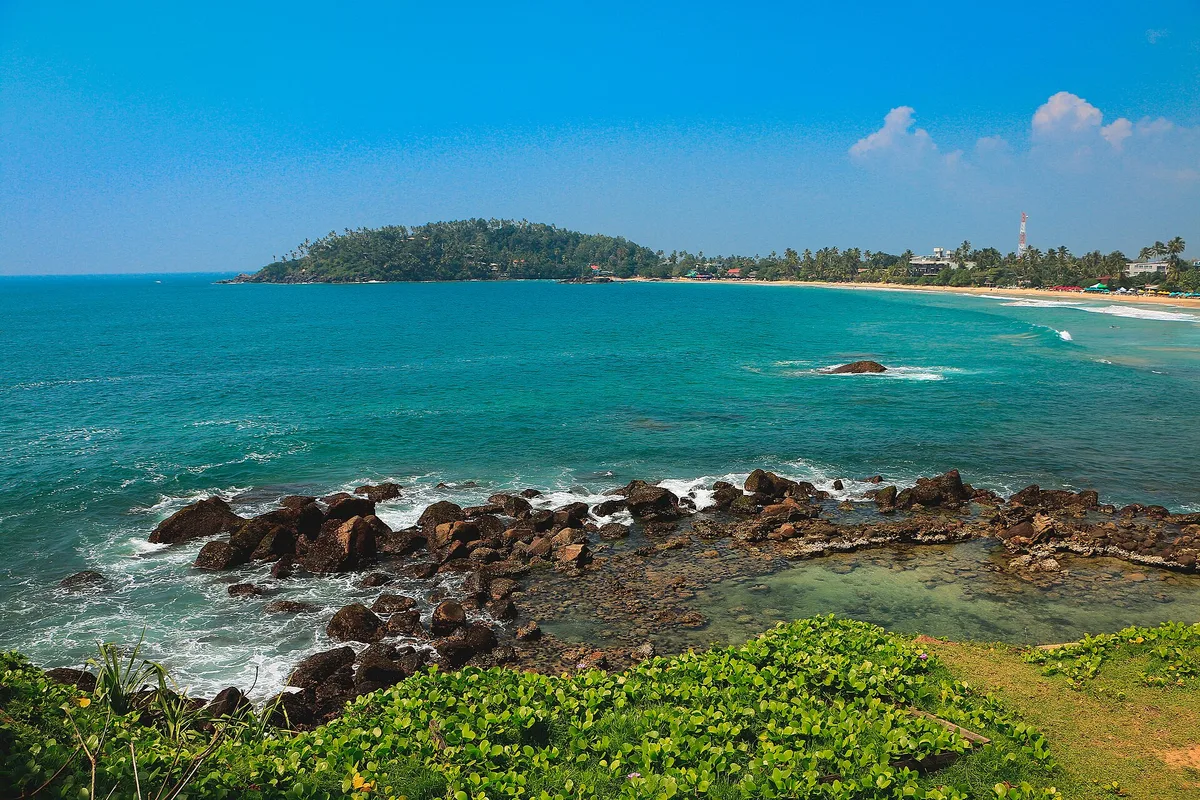
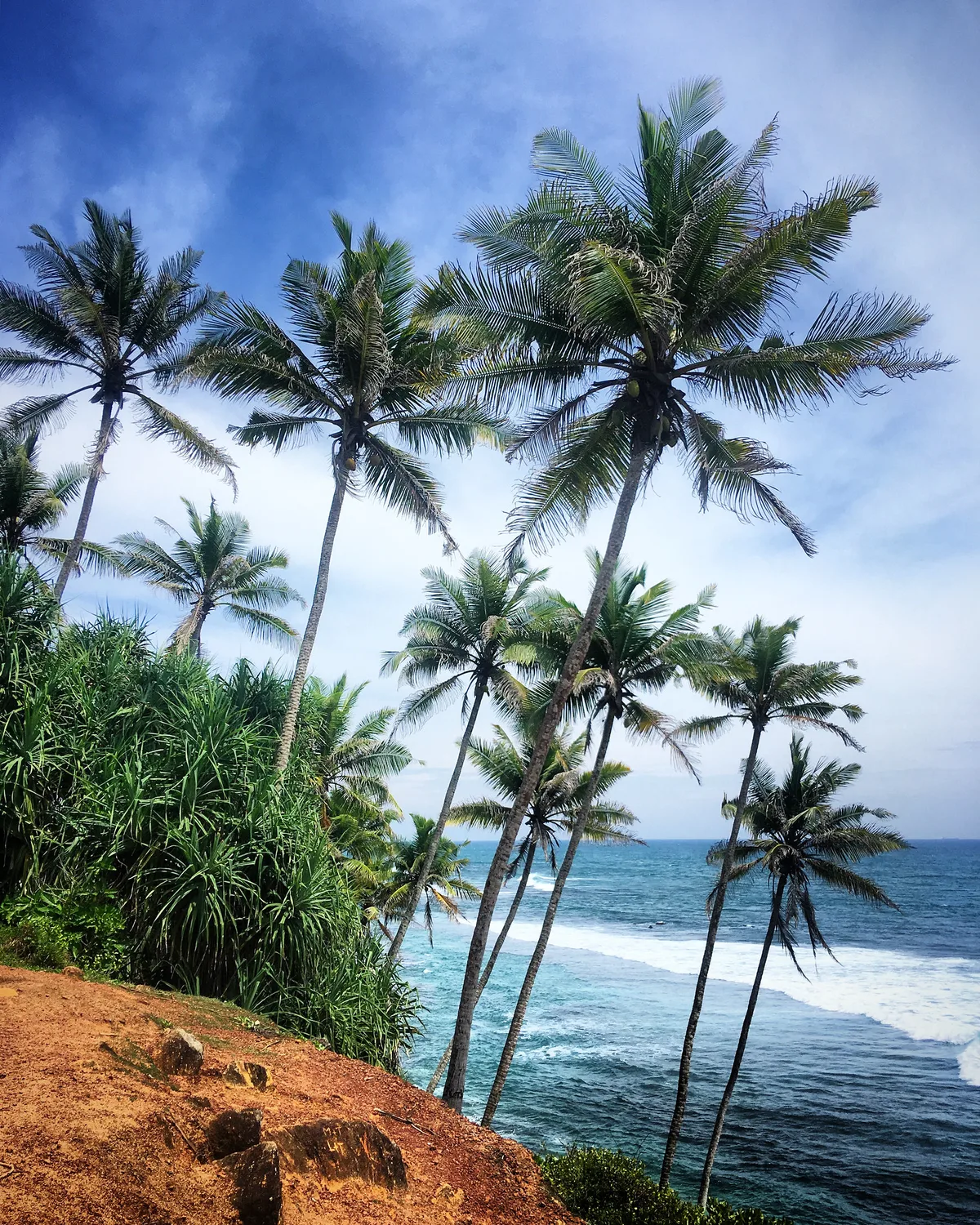
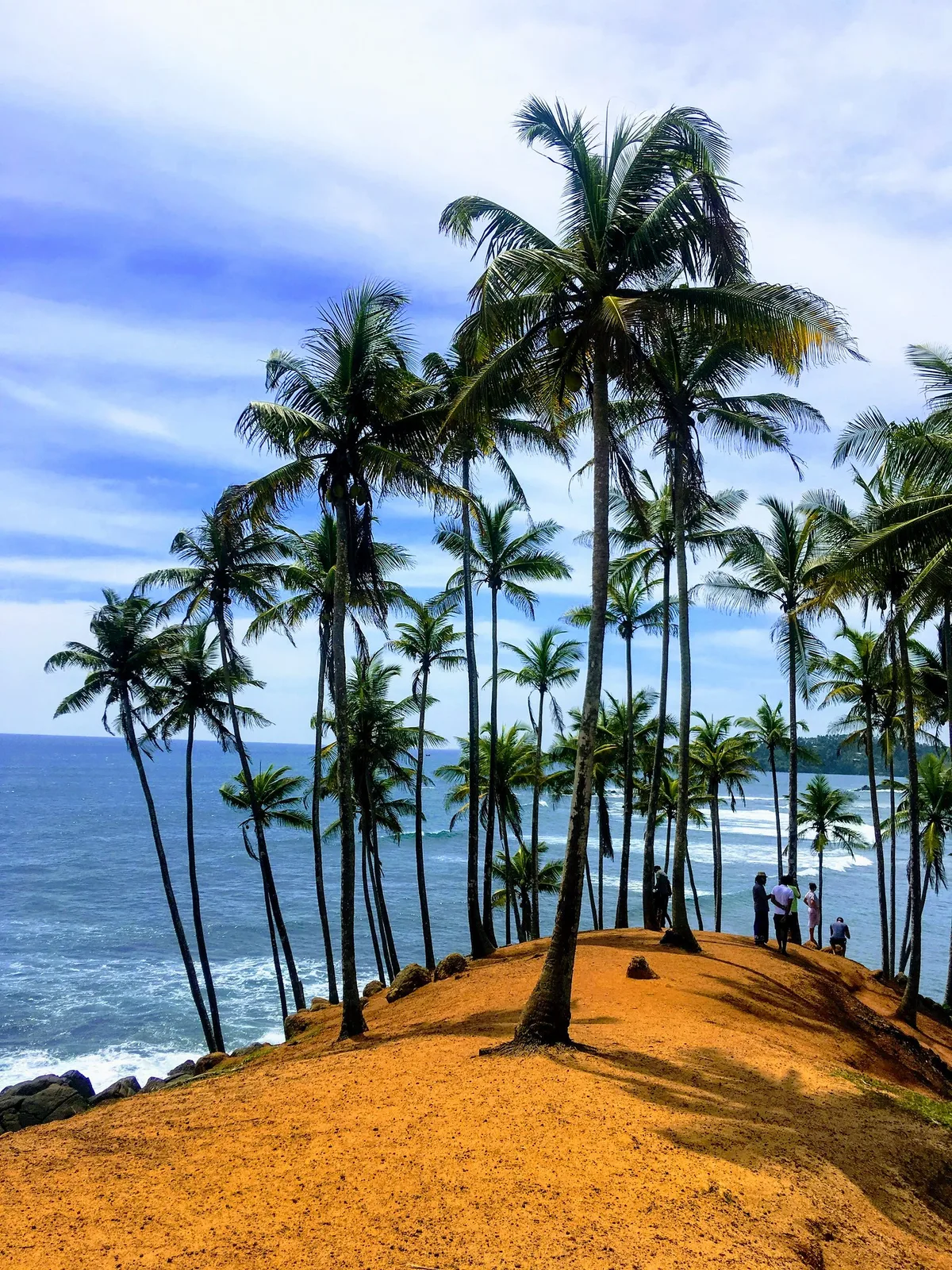
The headline act is Mirissa Whale Watching, departing from the harbour right at the beach — blue whales and sperm whales are regularly sighted between December and April. At low tide, walk out to Parrot Rock, a small rocky islet 500 metres away that delivers panoramic views across the bay. Coconut Tree Hill, just over a kilometre from the beach, is worth the short climb for its iconic framing of the coastline. History lovers can make the 8.5-kilometre trip to Matara Fort, an 18th-century Dutch star fort on the Nilwala River mouth.
Parrot Rock at low tide gives you the full arc of golden sand and blue ocean in a single frame — go at sunrise before anyone else arrives.
The coconut-topped rock outcrop at the western end is Mirissa's most recognisable shot; position yourself on the beach at golden hour for the classic silhouette. During whale-watching season, the harbour at dawn — fleet lights, mist, and open ocean — is a frame most visitors miss entirely.
Where to eat
The Slow, about a kilometre from the beach, is the go-to for breakfast and Sri Lankan lunches done properly. Glass House Restaurant and Sea Goggle Rest are both within a kilometre and cover the full range from casual bites to sit-down meals. Bunga Bunga and Simple Restaurant & Cafe round out the strip if you want variety without wandering far.
Where to stay
Beach Mirissa Hotel, Morning Star, and Sunstyle Mirissa all sit within 900 metres of the sand and catch the sea breeze. Methusha Holyday House and Esprit D'ici are slightly further back at around 400 metres — quieter options if you want to sleep past sunrise. Book well ahead for December–February; availability tightens fast.
Photography
Shoot from Parrot Rock at low tide for a wide-angle view of the full golden bay curving beneath you — golden-hour light here is exceptional. The coconut-draped rock outcrop at the western end photographs best in the early morning before the beach fills up.
Good to know
Rip currents run near the headland — do not swim close to it, regardless of how calm the surface looks. During the Southwest monsoon (May–September) the sea becomes genuinely dangerous and swimming must be avoided entirely; whale-watching tours are also suspended during this period. If you visit December–February, expect the main strip to be packed and overpriced — arrive early or stay a short walk back from the action. Always book whale-watching through a licensed operator only, and note that beach fires are strictly prohibited.
GAMES
🕹️ Five minutes of sand?
Three daily games — including the UV simulator set to this beach.
Map
Nearby places
Glass House Restaurant
Sea Goggle Rest
The Slow
Bunga Bunga
Simple Restaurant & Cafe
Methusha Holyday House
Esprit D‘ici
Sunstyle Mirissa
Morning Star
Beach Mirissa Hotel
Coconut Tree Hill
Weligambay Villas Parking Space
Kushtarajagala Statue
Things to see around Mirissa
Mirissa Whale Watching
Seasonal blue whale and sperm whale watching tours departing from Mirissa harbour, peak season December–April
Parrot Rock
Small rocky islet accessible at low tide with panoramic views of Mirissa Bay
Matara Fort
18th-century Dutch star fort on the Nilwala River mouth in Matara town
GIFT
🎁 Gift this beach
Its exact coastline, your date, your words — on a print or a PDF you print yourself.
Mirissa Beach
THAT DAY
Mirissa Beach, Southern Province
© OpenStreetMap contributors
Clean & decorative, or “That day” with the real sky of your date.
Shipping included 3-6 business days
A question before you order? Contact us
Delivered within minutes on the confirmation page and by email: a ZIP with all 4 print sizes (30×40 cm, 12×16″, 50×70 cm, 18×24″), each as a high-resolution PDF and PNG (300 dpi), plus a screen version. Print at home or at any print shop.
Please complete the delivery address.
Please accept the Terms of Sale.
Almost there — the shop opens very soon.
Secure payment · Printed locally in 30+ countries · 7 languages
Frequently asked
The information on this page is provided for guidance only and may evolve. Access conditions, safety and infrastructure can change without notice. Always check official sources before traveling.
Nearest beaches
Reviews of this beach
- No reviews yet, what a shame — leave yours and share your experience.
Photo credits
Sources and licenses for the photos shown above.
- Photo 1 — Praveenshashika · source · CC BY-SA 4.0
- Photo 2 — dronepicr · source · CC BY 2.0
- Photo 3 — Abishek Palraj · source · CC BY-SA 4.0
- Photo 4 — sergei.gussev · source · CC BY 2.0
- Photo 5 — sergei.gussev · source · CC BY 2.0