Ahangama BeachSri Lanka Beach Guide
Sri Lanka's laid-back reef break with a railway backdrop
About
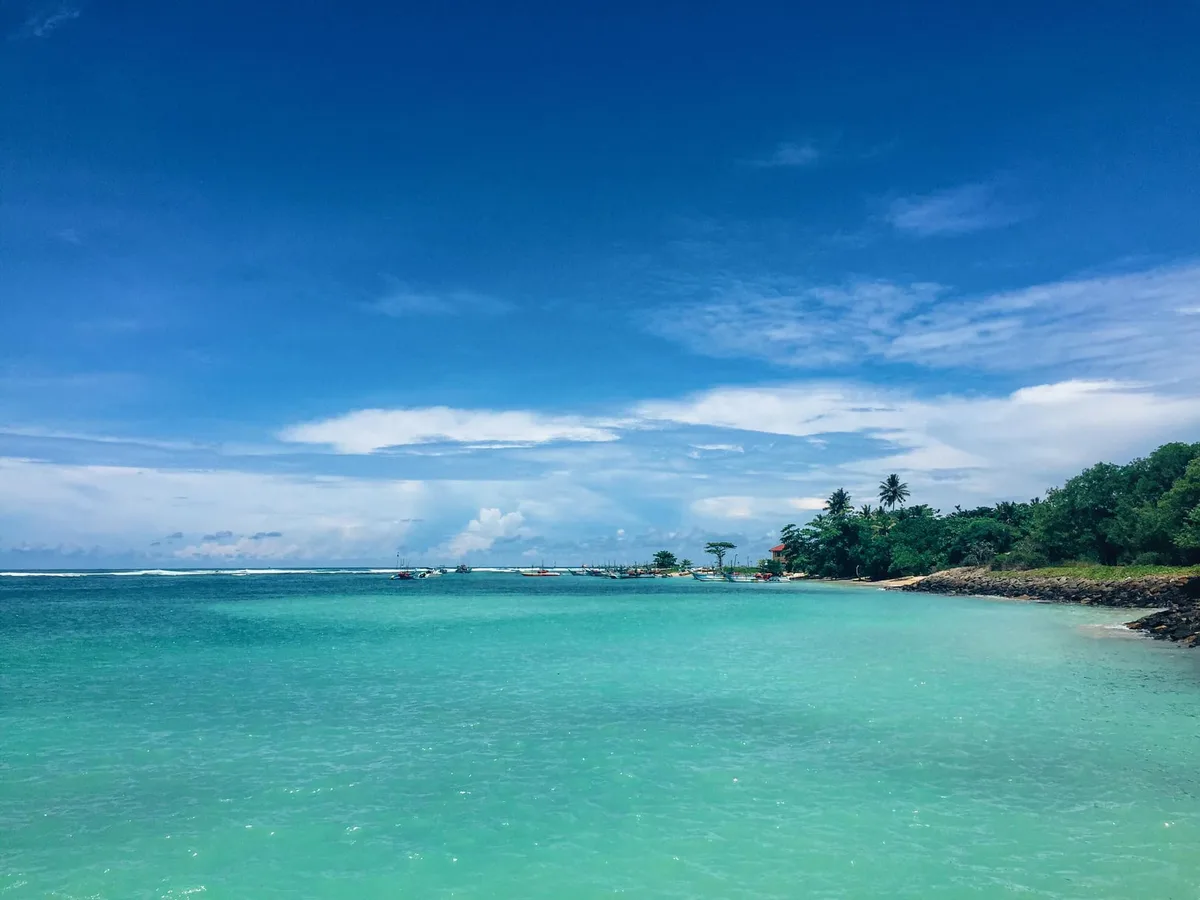
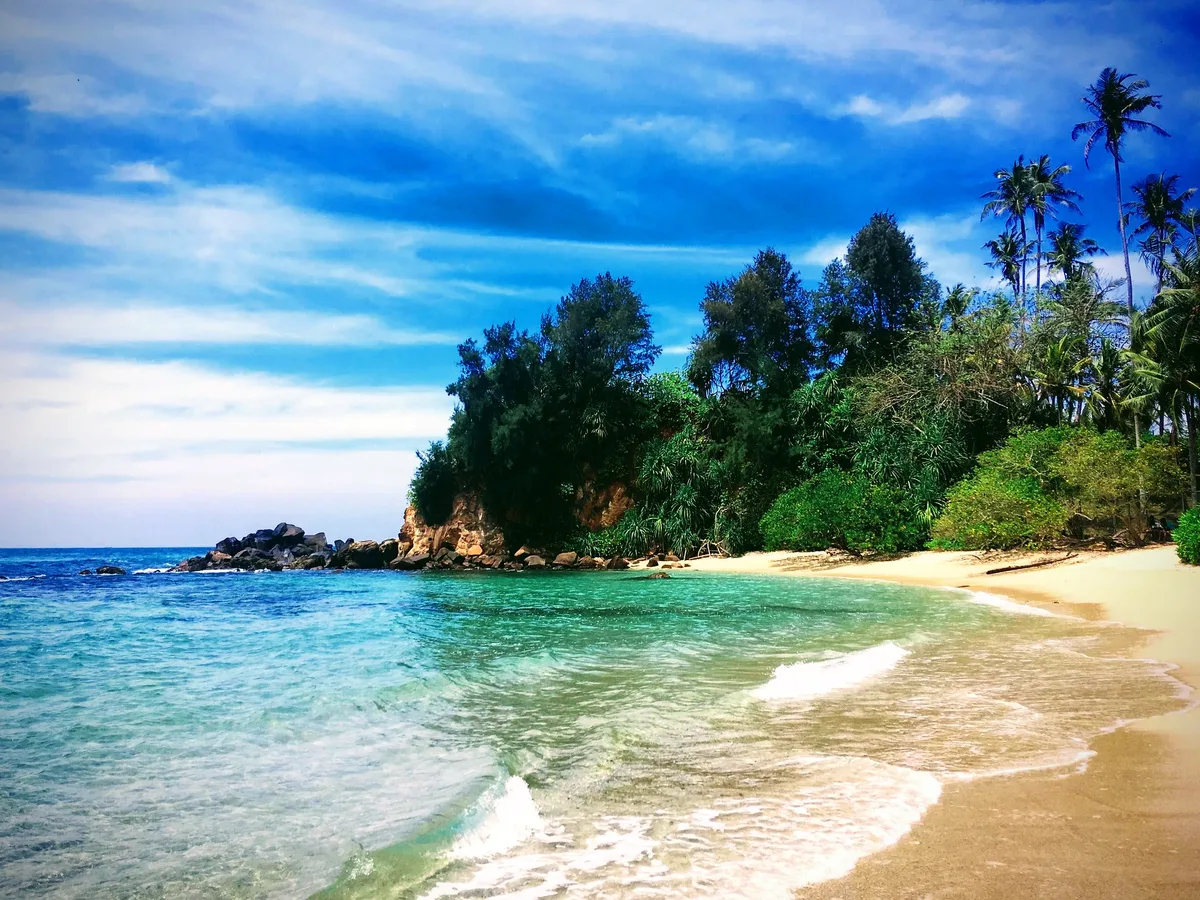
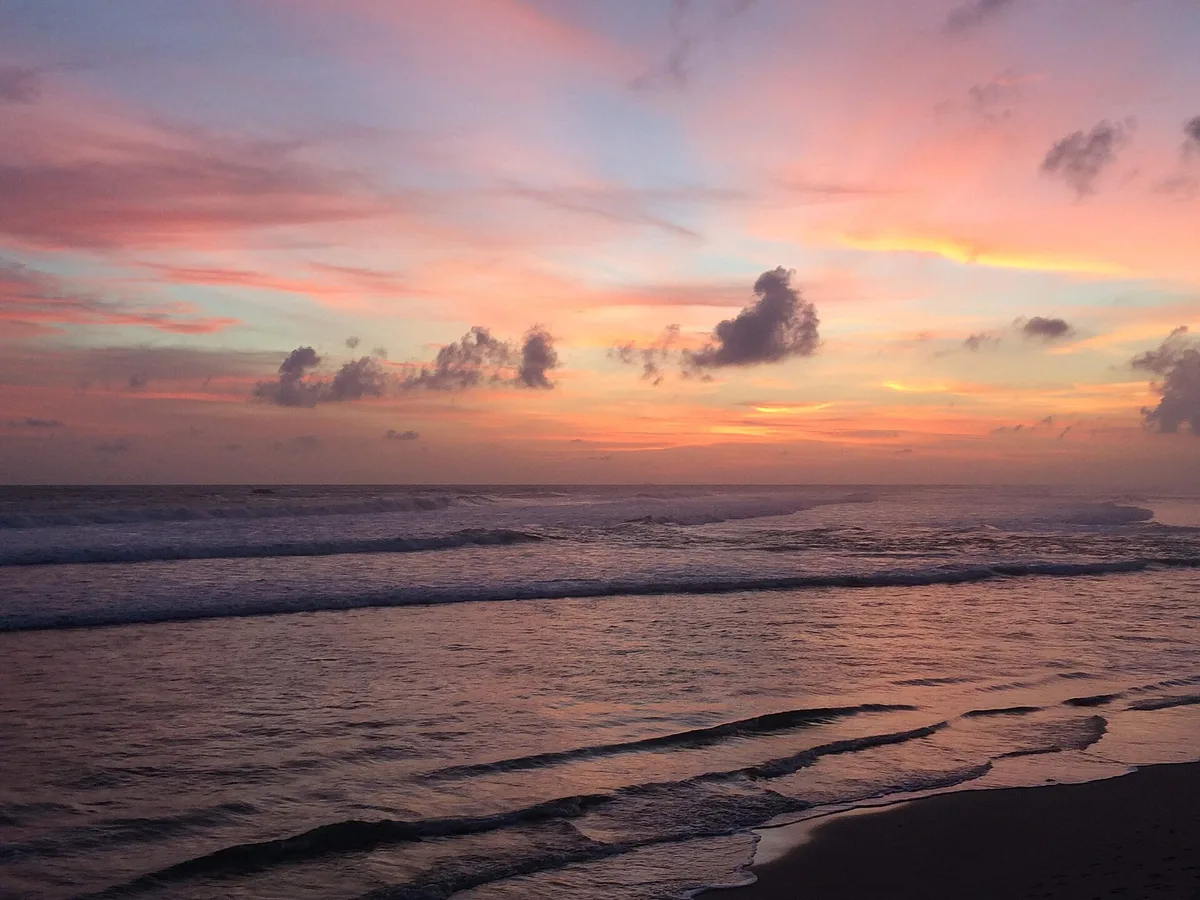
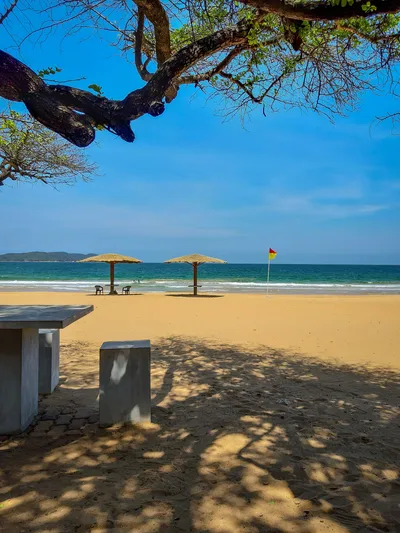
Ahangama stretches along the Southern Province coast of Sri Lanka, a quiet stretch of golden sand meeting open blue water with a character all its own. A right-hand reef break peels off the point, drawing intermediate surfers who know their way around a board. Colonial-era buildings repurposed as surf shops line the road, and the Colombo-Matara railway runs close enough that you'll hear the train before you see it — one of the more unusual backdrops on the south coast. The town itself is authentic and unhurried, far less polished than Weligama or Unawatuna, which is exactly the point. The vibe here is relaxed, local, and genuinely unpretentious.
How to get there
Ahangama sits about 22 minutes by car from Galle and just 8 minutes from Weligama — both routes are straightforward along the coastal A2 highway. The train from Galle runs four times daily and takes around 31 minutes; from Weligama it's a 10-minute ride on the same line, making it one of the more scenic arrivals on the south coast. Bus connections from both towns exist but run only once daily, so check timings carefully. Free roadside parking is available along the beach road — no app, no ticket machine, just pull in.
Who it's for
For couples
Ahangama suits couples who want a genuinely local south-coast experience without the tourist polish — quiet evenings, golden sand, and a slow pace that doesn't need to be manufactured.
For families
Families with young children should be cautious: swimming is dangerous due to strong currents and a shallow reef at both ends of the bay, so this beach works better as a base for day trips to Koggala Lake or Galle Fort than as a place to splash around.
Our take
Ahangama doesn't try to impress you, and that's what makes it work. The golden sand, the reef break, the old colonial shopfronts turned surf shacks, the train rattling past — it's a genuinely characterful stretch of coast that hasn't been smoothed out for tourism. Be clear-eyed about the water, though: swimming is dangerous here, full stop. Strong currents, a shallow reef at both ends, and monsoon swell from May to September mean the ocean is for surfers who know what they're doing, not for casual dips. Come between November and April for the best surf conditions, but skip December through February if waves are your priority — the swell tends to flatten out just when the most visitors arrive. If you're an intermediate surfer or simply want an authentic south-coast town with good food nearby and Galle Fort within easy reach, Ahangama earns its place on the itinerary.
What to do
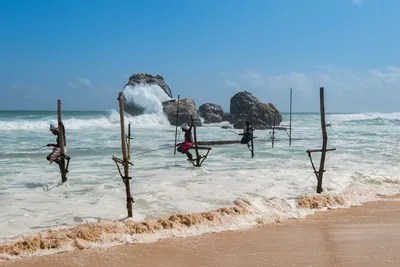
The main draw is the right-hand reef break, and several surf camps in town cater to intermediate surfers looking to sharpen their skills. Within a kilometre of the beach you can watch the famous stilt fishermen balanced on their poles above the water — a practice unique to this stretch of Sri Lanka's coast. A short drive brings you to Koggala Lake, a large inland lake with island temples and cinnamon gardens worth an afternoon. Galle Fort, the UNESCO-listed 17th-century Dutch colonial fort, is about 17 kilometres up the road and easily done as a half-day trip.
The colonial buildings converted into surf shops along the beach road offer a distinctive shot — peeling paint, boards stacked outside, and the blue ocean behind.
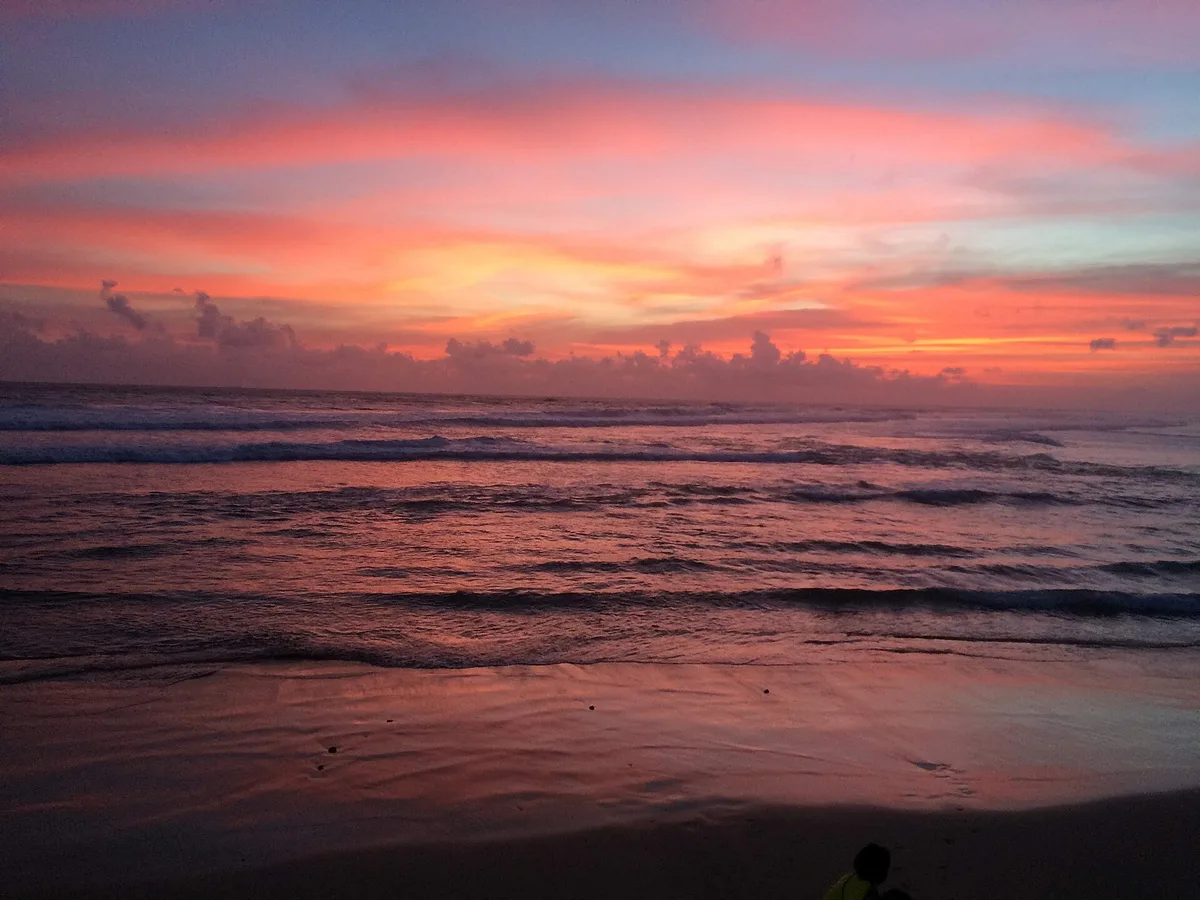
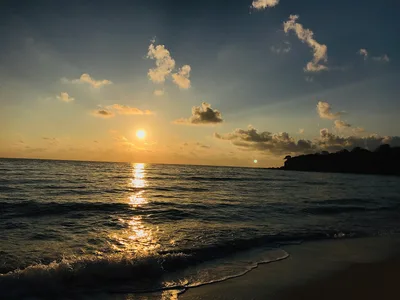
The railway line backdrop with golden sand in the foreground is one of the more unusual compositions on the south coast, best caught in the hour before sunset when the light goes warm.
Where to eat
No Fish Today, just 100 metres from the beach, is the closest option and a local favourite for fresh plates. Gang Kitchen nearby covers Asian, Indian, and curry bases and opens for breakfast, while Crust Pizza Ahangama offers a more casual bite at 200 metres. For regional Sri Lankan cooking, Odara Foods is worth the 400-metre walk.
Where to stay
Gitano Surf Ahangama at 400 metres is the obvious pick for surfers, with the break practically on the doorstep. Pickled Pelican and Insight Hotel are both within 300 metres and offer easy beach access, while Lark Hill and Sunshine Stories sit just 500 metres out if you want a quieter setting.
Photography
The railway line running behind the beach makes for a striking frame — position yourself at track level in the late afternoon when the light is warm and golden on the sand. The stilt fishermen 800 to 900 metres along the shore are best photographed at dawn or dusk when the blue water behind them catches the low light.
Good to know
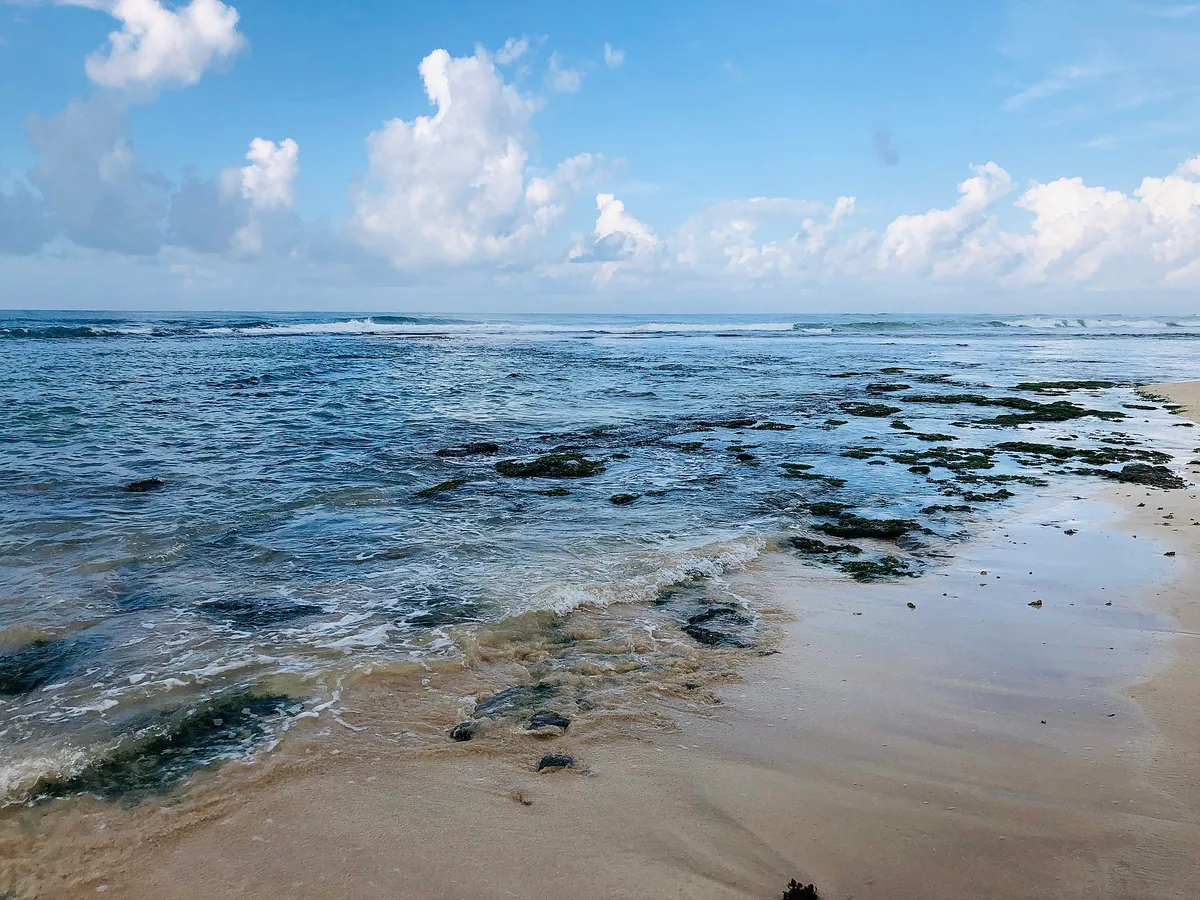
Swimming here is dangerous and should be avoided. Strong currents and waves affect much of the beach, and the reef at either end of the bay is shallow — if you must cool off, stay strictly in the middle section and stay alert. Watch for sea urchins in rocky areas. Surfers must respect reef break etiquette: wait your turn, don't drop in, and know that this break is for intermediate riders only — beginners should head to Weligama Bay instead. The surf season runs November to April; May through September brings monsoon swell that can be powerful and unpredictable. Avoid December through February if you're chasing waves — surf tends to go flat during peak tourist season.
GAMES
🕹️ Five minutes of sand?
Three daily games — including the UV simulator set to this beach.
Map
Nearby places
No fish today
Crust Pizza Ahangama
Gang Kitchen
Odara Foods
Mermaid's Kitchen Ahangama
Insight Hotel
Pickled Pelican
Gitano Surf Ahangama
Lark Hill
Sunshine Stories
Things to see around Ahangama
Koggala Lake
Large inland lake with island temples and cinnamon gardens
Weligama Bay
Best beginner surf bay on the south coast with stilt fishermen
Galle Fort
UNESCO-listed 17th-century Dutch colonial fort
GIFT
🎁 Gift this beach
Its exact coastline, your date, your words — on a print or a PDF you print yourself.
Ahangama Beach
THAT DAY
Ahangama Beach, Southern Province
© OpenStreetMap contributors
Clean & decorative, or “That day” with the real sky of your date.
Shipping included 3-6 business days
A question before you order? Contact us
Delivered within minutes on the confirmation page and by email: a ZIP with all 4 print sizes (30×40 cm, 12×16″, 50×70 cm, 18×24″), each as a high-resolution PDF and PNG (300 dpi), plus a screen version. Print at home or at any print shop.
Please complete the delivery address.
Please accept the Terms of Sale.
Almost there — the shop opens very soon.
Secure payment · Printed locally in 30+ countries · 7 languages
Frequently asked
The information on this page is provided for guidance only and may evolve. Access conditions, safety and infrastructure can change without notice. Always check official sources before traveling.
Nearest beaches
Other relaxed beaches in Sri Lanka
Reviews of this beach
- No reviews yet, what a shame — leave yours and share your experience.
Photo credits
Sources and licenses for the photos shown above.
- Photo 1 — Kaushiru90 · source · CC BY-SA 4.0
- Photo 2 — sergei.gussev · source · CC BY 2.0
- Photo 3 — Sasith Lakshan wickramasinghe · source · CC BY-SA 4.0
- Photo 4 — Erangamendis · source · CC BY-SA 4.0
- Photo 5 — Erangamendis · source · CC BY-SA 4.0