Dalawella BeachSri Lanka Beach Guide
Rope swing, turquoise water, zero fuss
About
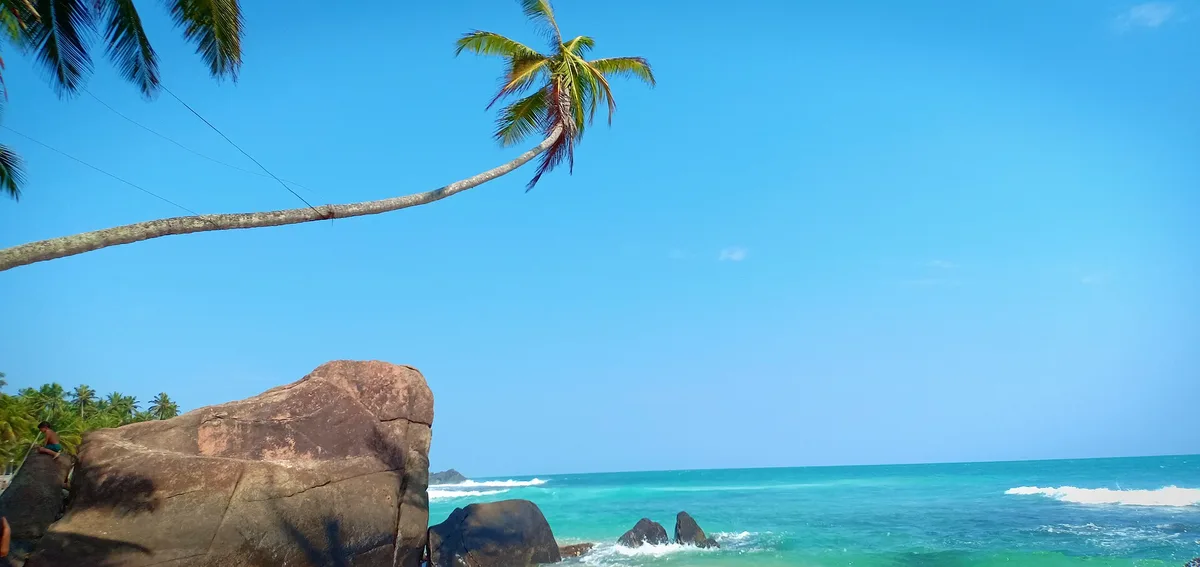
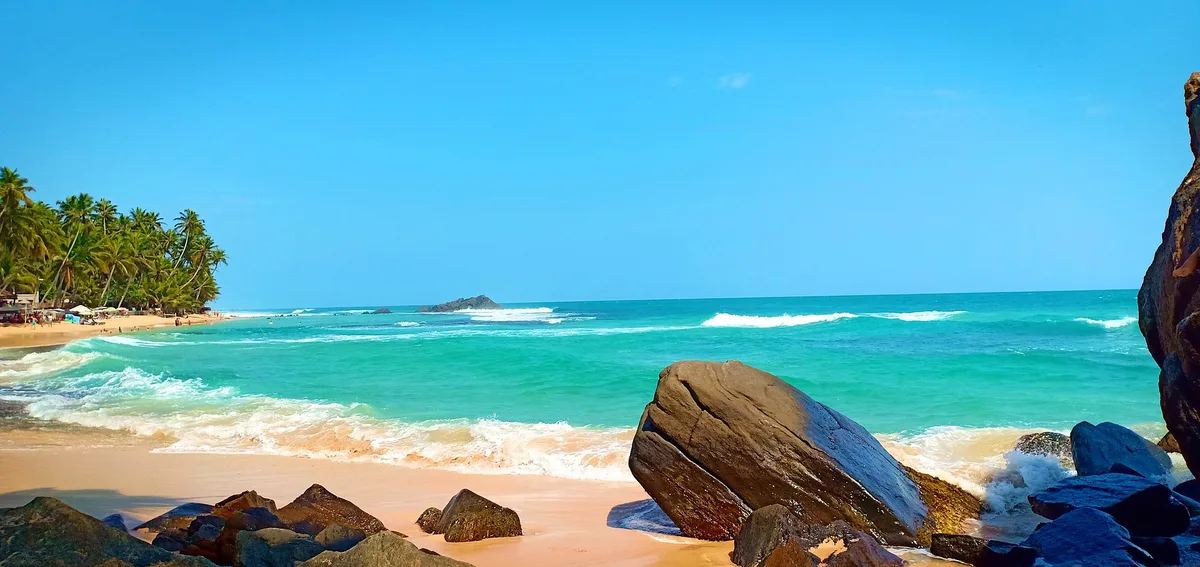
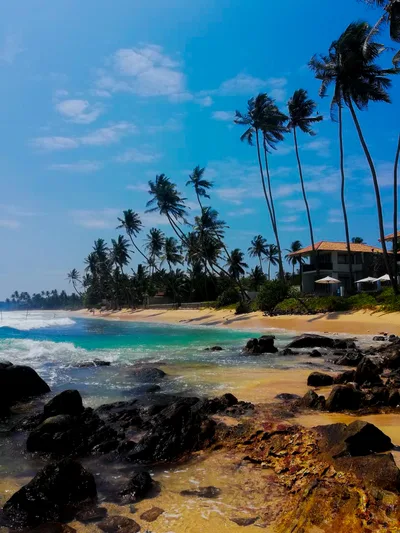
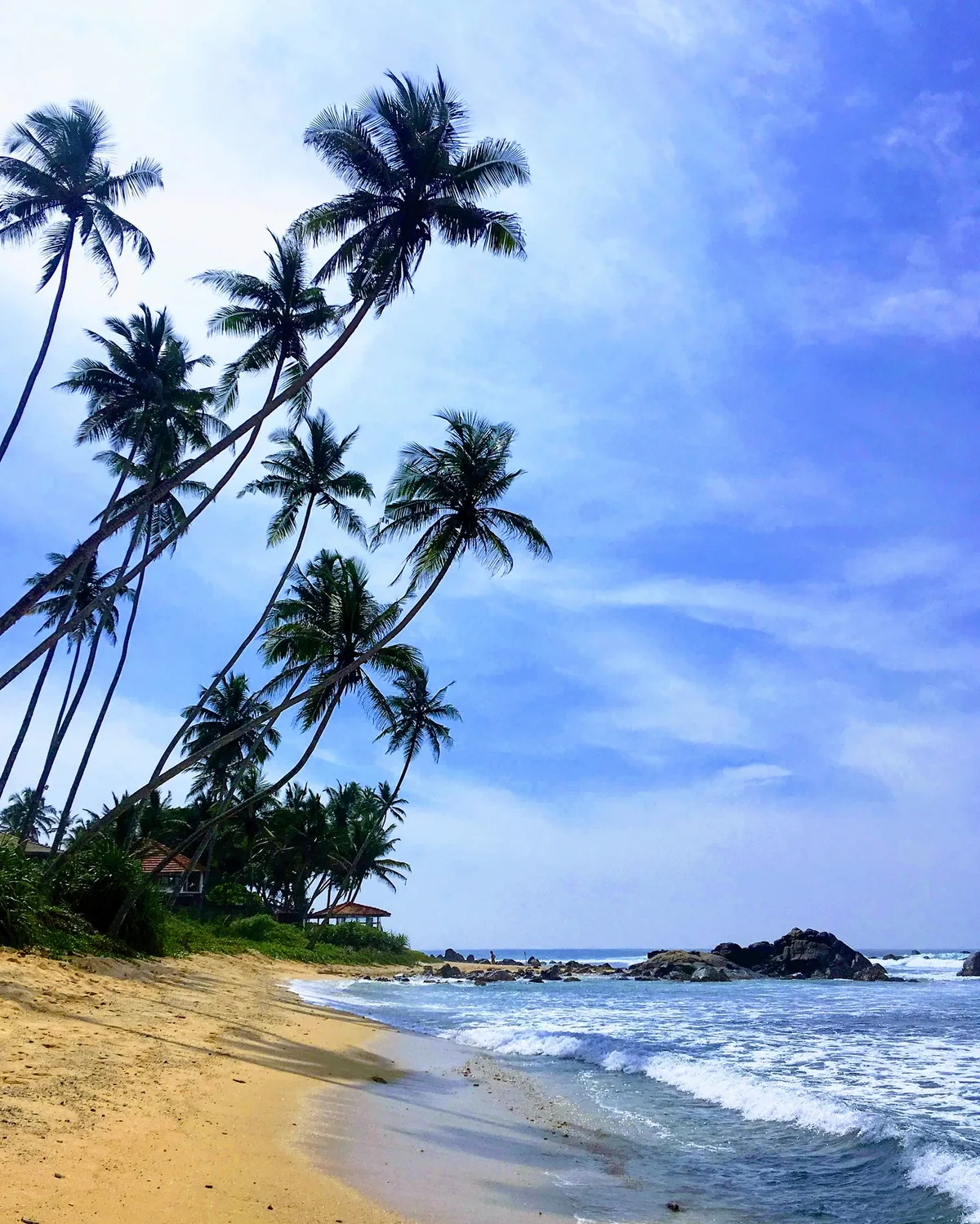
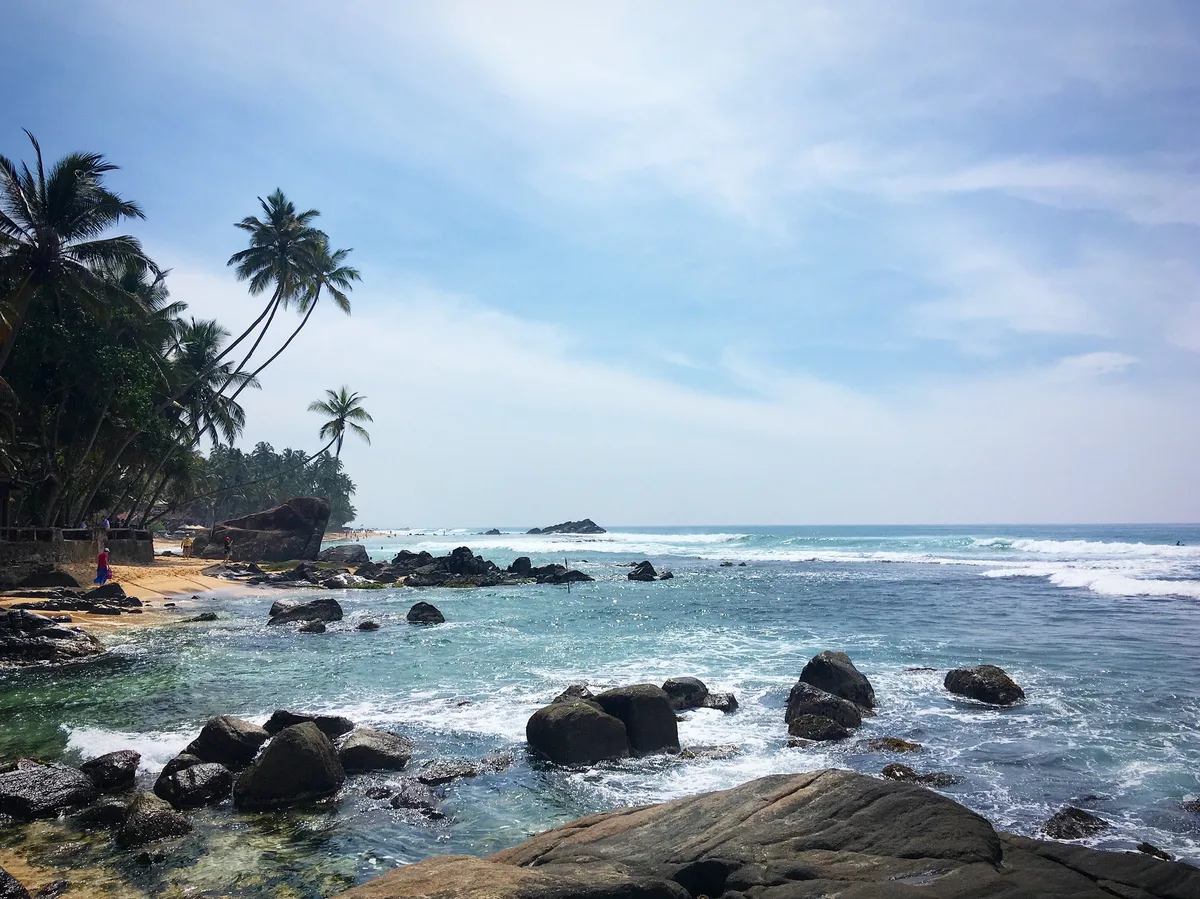
Dalawella is a compact, road-adjacent beach on Sri Lanka's south coast, sitting just 2 kilometres from Unawatuna but feeling a world quieter. The water runs turquoise and the mixed sand stretches roughly 300 metres, framed by leaning coconut palms that dip dramatically toward the sea. It's the calmer, less vendor-heavy alternative to its famous neighbour — swimmers appreciate the gentler conditions inside the protected stretch. The beach's signature is a rope swing hanging from one of those tilting palms, equal parts fun and photogenic, and a small cluster of cafés keeps the vibe easy and unhurried.
How to get there
Dalawella sits right on the coastal road, making it one of the easiest beaches to reach on the south coast. From Galle it's a 10-minute drive; from Unawatuna you can hop a tuk-tuk in 5 minutes or walk the coastal path in about 15. Public transport works too — Talpe railway station and Mihiripenna bus stop are both a 5-minute ride away. Roadside parking is often free but limited; private parking is available for a small fee (Rs. 50 for bikes, Rs. 100 for tuk-tuks, Rs. 200 for cars).
Who it's for
For couples
Dalawella's relaxed pace and small café scene make it an easy place to spend a slow morning together — grab a coffee, take turns on the rope swing, and watch the turquoise water without the noise of a bigger beach.
For families
The calmer, more sheltered water compared to Unawatuna is a genuine plus for families with younger swimmers, and road-adjacent flat access means no tricky paths to navigate — though parents should keep children well away from the rope swing area and monitor water conditions carefully outside the protected zone.
Our take
Dalawella doesn't try to be anything it isn't, and that's exactly why it works. It's calmer than Unawatuna, shorter on vendors, and just relaxed enough to feel like a local find rather than a tourist circuit stop. The rope swing is genuinely fun and genuinely photogenic — but treat it seriously, use it at your own risk, and know that outside the sheltered section, currents can turn hazardous fast. Come between November and April, arrive early, and keep the monsoon months (May–September) firmly off your itinerary. It won't take your whole day, but it'll be one of the better hours you spend on the south coast.
What to do
The rope swing at Palm rope swing (0.4 km) is the obvious draw — it's pure fun when it's not packed, and the leaning palm backdrop makes for striking photos. Just offshore, Ship Rock (0.2 km) is worth a look for snorkellers and curious waders. When you're ready to venture further, Unawatuna Beach (1 km) offers reef snorkelling and beach bars, while the legendary Galle Fort (6.2 km) — a UNESCO-listed 17th-century Dutch colonial fort with intact ramparts — makes a rewarding half-day trip.
The rope swing on the leaning palm is the defining shot — frame it against the turquoise water with a wide lens for maximum impact.
Ship Rock just offshore provides a secondary foreground element for seascape compositions. The coconut palm canopy along the shoreline works beautifully in early morning light when the beach is at its quietest.
Where to eat
Coffee Beans Ceylon Restaurant & Café, just 0.3 km away, covers everything from regional Sri Lankan dishes to pizza and Indian plates. The beach's own small café scene means you won't go hungry without walking far. For something different, Yummy in the Tummy (burgers, 2 km) and Happy Banana (2.1 km) are easy tuk-tuk rides down the coast road.
Where to stay
Skinny Beach House, Dilhan Guest House, and Galawatta Beach Cabanas are all within 0.1 km — you can practically hear the waves from your bed. Sri Gemunu Beach Resort (0.2 km) and Bird's Paradise Hotel (0.3 km) round out a solid cluster of options right on the doorstep. Staying this close means you can hit the rope swing before the day-trippers arrive.
Photography
The leaning palm rope swing is the hero shot — get there before 8 am for clean light and an empty frame, especially December through February when it draws the biggest visitors. The turquoise water reflecting against the coconut palms also makes for strong wide-angle compositions from the shoreline in the early morning golden hour.
Good to know
The rope swing is the star attraction, but use it entirely at your own risk — there's no attendant and no safety net. Between December and February the swing area gets packed with photo-seekers; arrive before 8 am if you want an unobstructed shot. Outside the calmer lagoon section, currents and wave conditions can shift without warning — hazardous patches have been reported, so stay alert and don't stray far from the protected zone. If you spot sea turtles in the water, observe from a distance and do not touch or feed them. Avoid May through September entirely: the southwest monsoon brings rough surf and bigger waves that make swimming inadvisable.
GAMES
🕹️ Five minutes of sand?
Three daily games — including the UV simulator set to this beach.
Map
Nearby places
Coffee beans Ceylon Restaurant & Cafe
jungle restaurant
Sea Secret Restaurant
Yummy in the Tummy
Happy Banana
Skinny Beach House
Dilhan Guest House
Galawatta Beach Cabanas
Sri Gemunu Beach Resort
Bird's Paradise Hotel
Things to see around Unawatuna
Galle Fort
UNESCO-listed 17th-century Dutch colonial fort with intact ramparts
Unawatuna Beach
Main crescent reef bay with snorkeling and beach bars
Jungle Beach
Secluded jungle-enclosed cove accessible only on foot from Unawatuna
GIFT
🎁 Gift this beach
Its exact coastline, your date, your words — on a print or a PDF you print yourself.
Dalawella Beach
THAT DAY
Dalawella Beach, Southern Province
© OpenStreetMap contributors
Clean & decorative, or “That day” with the real sky of your date.
Shipping included 3-6 business days
A question before you order? Contact us
Delivered within minutes on the confirmation page and by email: a ZIP with all 4 print sizes (30×40 cm, 12×16″, 50×70 cm, 18×24″), each as a high-resolution PDF and PNG (300 dpi), plus a screen version. Print at home or at any print shop.
Please complete the delivery address.
Please accept the Terms of Sale.
Almost there — the shop opens very soon.
Secure payment · Printed locally in 30+ countries · 7 languages
Frequently asked
The information on this page is provided for guidance only and may evolve. Access conditions, safety and infrastructure can change without notice. Always check official sources before traveling.
Nearest beaches
Other relaxed beaches in Sri Lanka
Reviews of this beach
- No reviews yet, what a shame — leave yours and share your experience.
Photo credits
Sources and licenses for the photos shown above.
- Photo 1 — Umeshani Wickramanayake · source · CC BY-SA 4.0
- Photo 2 — Umeshani Wickramanayake · source · CC BY-SA 4.0
- Photo 3 — Umeshani Wickramanayake · source · CC BY-SA 4.0
- Photo 4 — sergei.gussev · source · CC BY 2.0
- Photo 5 — sergei.gussev · source · CC BY 2.0