Heiðarfjara BeachIceland Beach Guide
Raw black sand, fulmar cliffs, zero facilities, zero compromise
About
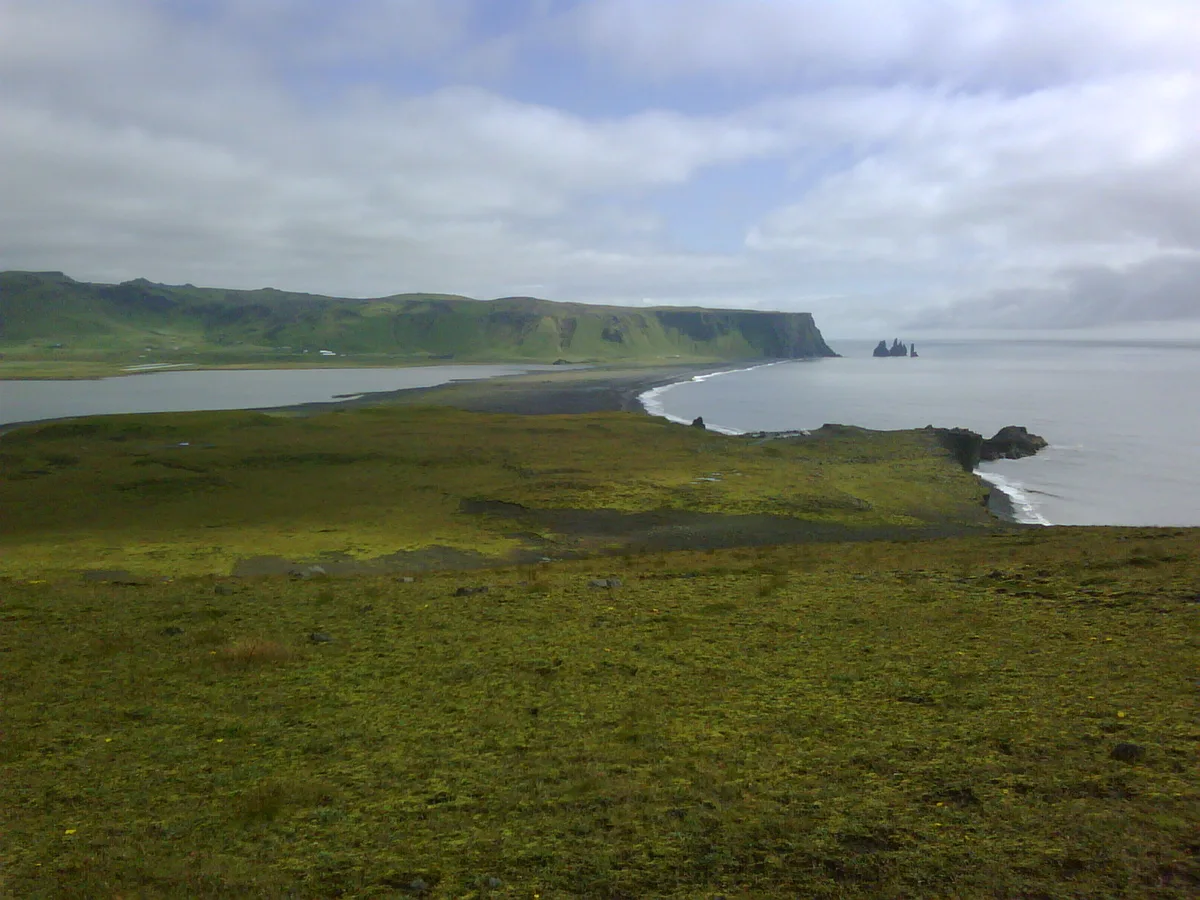
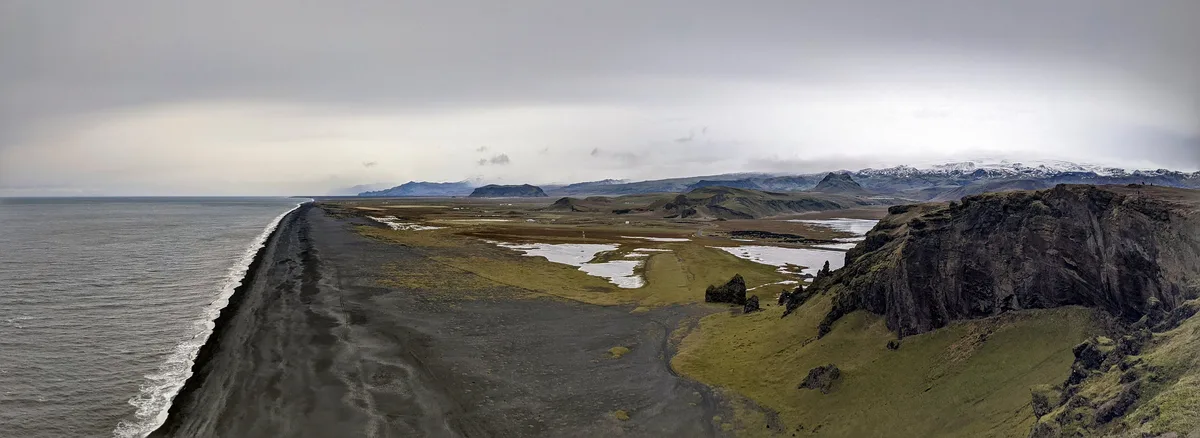
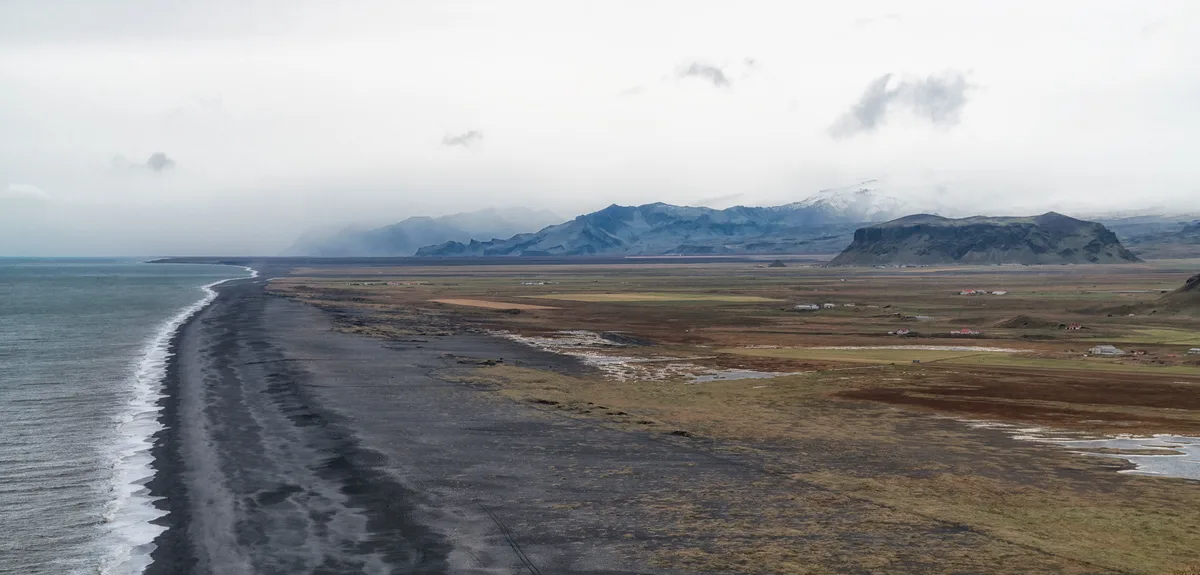
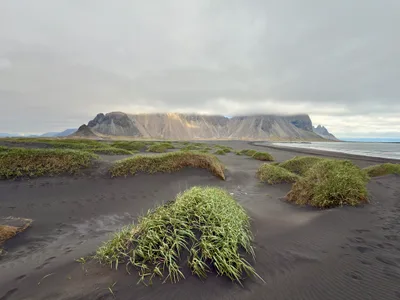
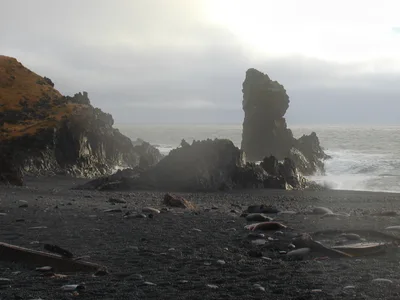
Heiðarfjara is a wild, roughly 1,500-metre stretch of black volcanic sand on Iceland's South Coast, reached only after a 45-minute hike across a lava field from the Dyrhólaey area. The grey Atlantic rolls in hard here — powerful, cold, and unforgiving — against dark sand that absorbs the low Nordic light. Fulmar colonies nest in the cliffs above, and the air carries salt and the occasional sharp cry of seabirds. There are no facilities whatsoever, no signposts, and the beach is absent from most tourist maps. That absence is exactly the point.
How to get there
Heiðarfjara is hike-in only. Use the Dyrhólaey parking area as your starting point and allow around 45 minutes on foot across the lava field — good visibility is essential for safe navigation, so check conditions before you set out. There is no dedicated parking at the beach itself, no entry fee, and no road access. The lava field approach and soft black sand make this completely inaccessible for wheelchairs.
Who it's for
For couples
For couples who are comfortable hiking and self-sufficient, Heiðarfjara offers genuine solitude — it's the kind of place where you'll likely have 1,500 metres of black volcanic sand entirely to yourselves. Come prepared, come in summer, and treat the emptiness as the experience.
For families
Heiðarfjara is not suitable for young children or families expecting amenities — the 45-minute lava field hike, complete absence of facilities, dangerous surf, and patchy mobile signal make it a poor fit. Families are better served by the nearby Reynisfjara Beach or Vík í Mýrdal Village, both of which have services and easier access.
Our take
Do not come to Heiðarfjara unprepared — this beach has no facilities, no rescue access, and no mobile signal in places, and the surf will not forgive a mistake. That said, for experienced hikers who respect the conditions, it delivers something increasingly rare on Iceland's South Coast: a long stretch of black volcanic sand with no one else on it. The 45-minute lava field hike is a genuine commitment, and the beach rewards that commitment with complete solitude and a raw coastal landscape that feels entirely unmediated. Stick to June through September, check visibility before you cross the lava field, and keep well away from the fulmar cliffs. This is not a beach you stumble onto — it's one you earn.
What to do
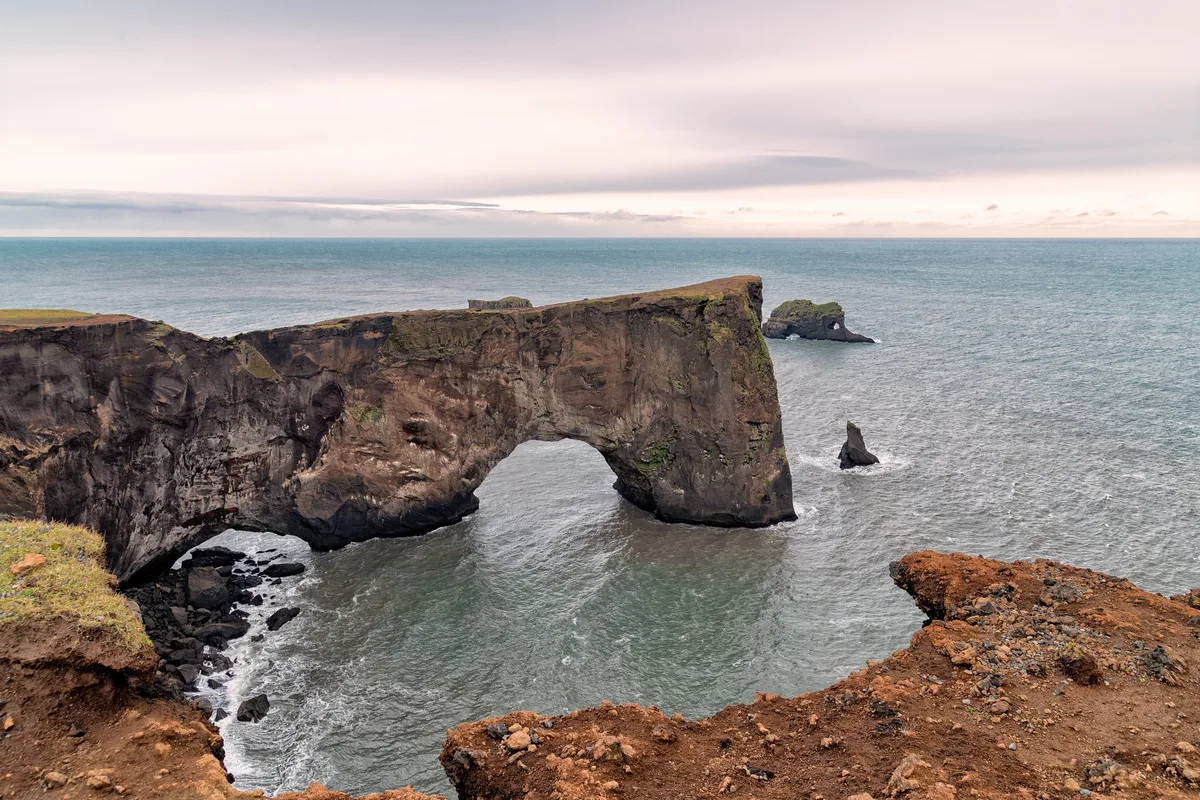
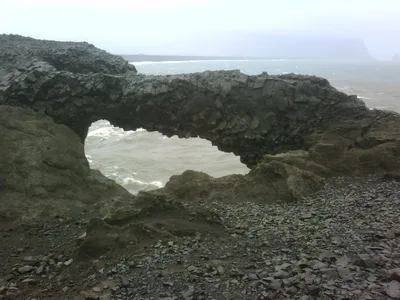
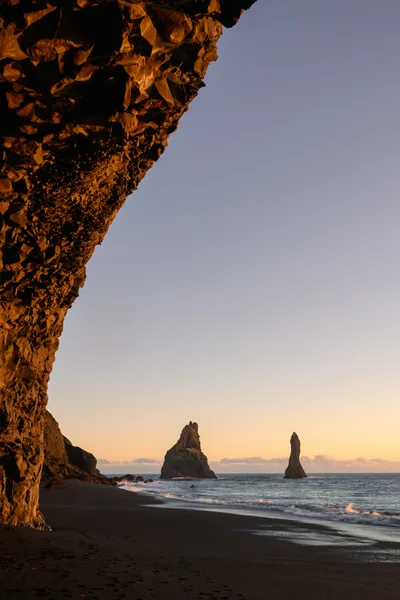
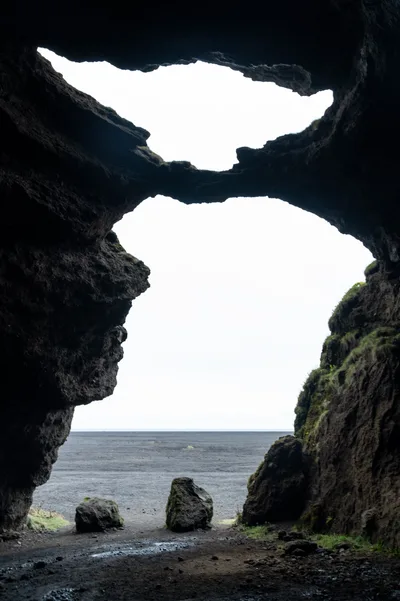
The Dyrhólaey Nature Reserve, about 3 km away, offers a dramatic rock arch promontory with a lighthouse and puffin colonies — a worthwhile stop before or after your hike. Kirkjufjara and the Dyrhólaey viewpoints are both under a kilometre from the trailhead and reward you with sweeping coastal panoramas. Reynisfjara Beach, Iceland's most famous black sand beach with its columnar basalt cave and sea stacks, is around 10 km away and worth the short drive for comparison.
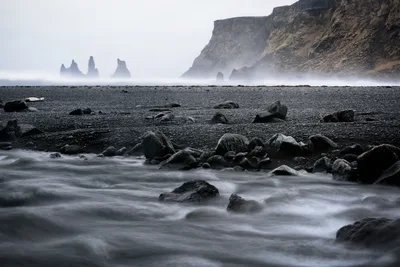
The view along the black sand shoreline toward the fulmar nesting cliffs gives a stark, elemental frame that no filter can improve — shoot in the long golden light of a June or July evening.
The lava field itself, with its fractured dark rock stretching toward the coast, makes a compelling wide-angle shot that captures the raw approach to the beach.
Where to eat
There are no food or drink options at Heiðarfjara — carry everything you need. Back near Vík, Halldórskaffi (about 5.4 km away) serves regional Icelandic food, and The Soup Company is roughly 5.6 km from the beach if you need a warm bowl after the hike.
Where to stay
Hotel Volcano, around 4.2 km away, is the closest base. Hótel Dyrhólaey at 5 km puts you right at the trailhead area, which is practical if you want an early start on the lava field. Edda Vík, about 6 km out, offers another solid option near the village of Vík.
Photography
The contrast between the black volcanic sand and the grey Atlantic is most striking in the soft, low-angle light of early morning or late evening during the Icelandic summer. Position yourself along the shoreline looking back toward the fulmar cliffs for a frame that captures both the raw coastal geology and the nesting birds — keep a respectful distance from the cliff face.
Good to know
Do not disturb the nesting fulmars on the cliffs — stay well back and keep noise low. There are no facilities here at all, so carry everything you need: water, food, first aid, and a fully charged device. Mobile signal drops out in places, there is no rescue access to the beach, and the surf is powerful and cold — do not enter the water under any circumstances. Avoid the exposed lava field approach between October and March, when winter storms make the route genuinely dangerous and there is no shelter anywhere along the way.
GAMES
🕹️ Five minutes of sand?
Three daily games — including the UV simulator set to this beach.
Map
Nearby places
Halldórskaffi
The Soup Company
Ice Cave
Wok On
Drangar
Things to see around Rangárþing eystra
Dyrhólaey Nature Reserve
Rock arch promontory with lighthouse and puffin colonies.
Reynisfjara Beach
Iceland's most famous black sand beach with columnar basalt cave and sea stacks.
Vík í Mýrdal Village
Iceland's southernmost village with a hilltop church and Ring Road services.
GIFT
🎁 Gift this beach
Its exact coastline, your date, your words — on a print or a PDF you print yourself.
Heiðarfjara Beach
THAT DAY
Heiðarfjara Beach, South Iceland
© OpenStreetMap contributors
Clean & decorative, or “That day” with the real sky of your date.
Shipping included 3-6 business days
A question before you order? Contact us
Delivered within minutes on the confirmation page and by email: a ZIP with all 4 print sizes (30×40 cm, 12×16″, 50×70 cm, 18×24″), each as a high-resolution PDF and PNG (300 dpi), plus a screen version. Print at home or at any print shop.
Please complete the delivery address.
Please accept the Terms of Sale.
Almost there — the shop opens very soon.
Secure payment · Printed locally in 30+ countries · 7 languages
Frequently asked
The information on this page is provided for guidance only and may evolve. Access conditions, safety and infrastructure can change without notice. Always check official sources before traveling.
Nearest beaches
Other wild beaches in Iceland
Reviews of this beach
- No reviews yet, what a shame — leave yours and share your experience.
Photo credits
Sources and licenses for the photos shown above.
- Photo 1 — Pietro Valocchi · source · CC BY 3.0
- Photo 2 — Eric Kilby · source · CC BY-SA 2.0
- Photo 3 — Eric Kilby · source · CC BY-SA 2.0
- Photo 4 — Eric Kilby · source · CC BY-SA 2.0