Sólheimasandur BeachIceland Beach Guide
Iceland's legendary plane wreck on endless black sand
About
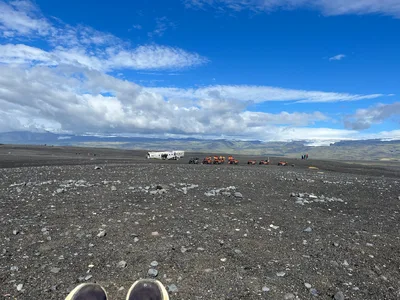
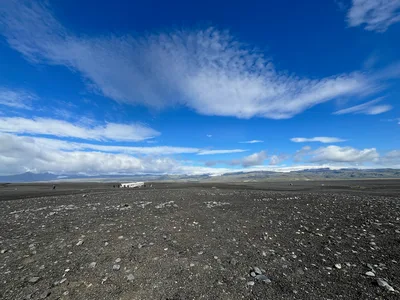
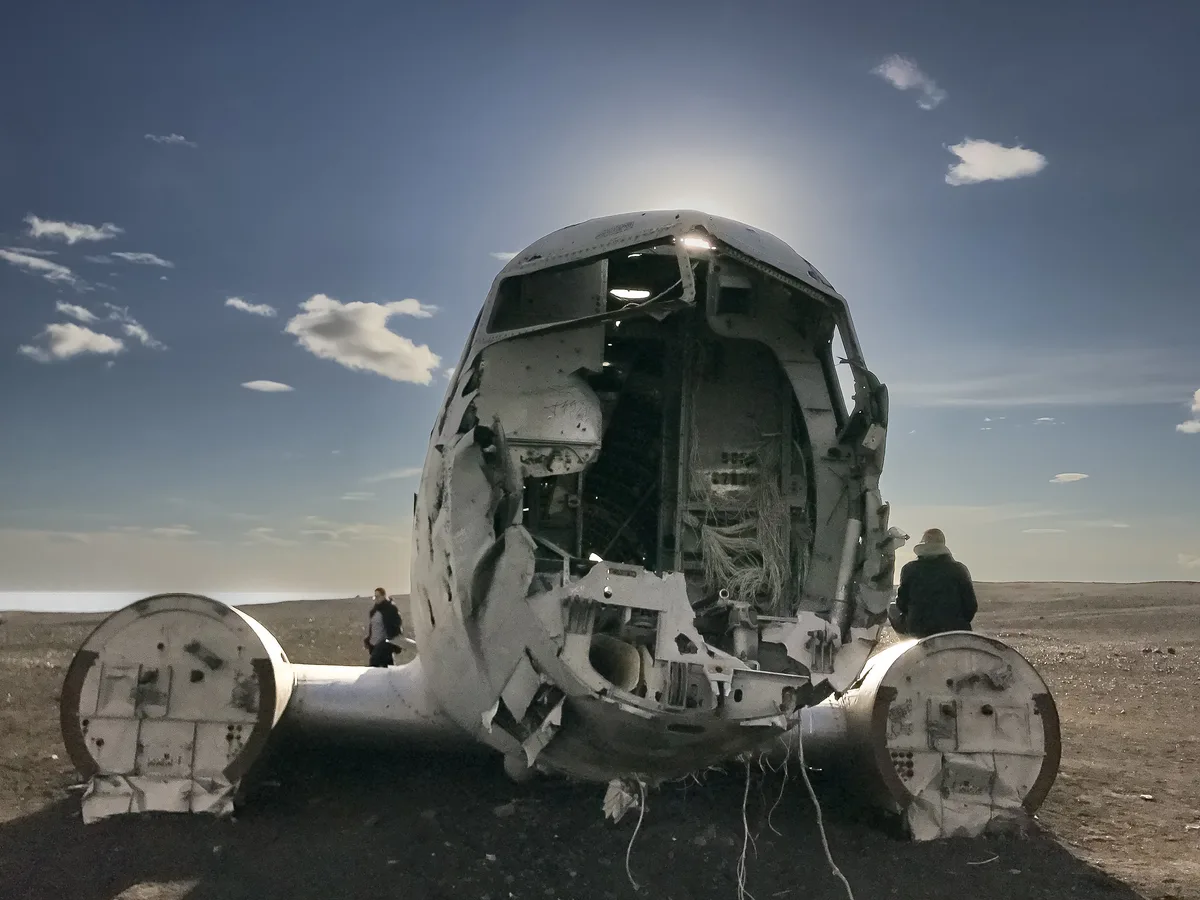
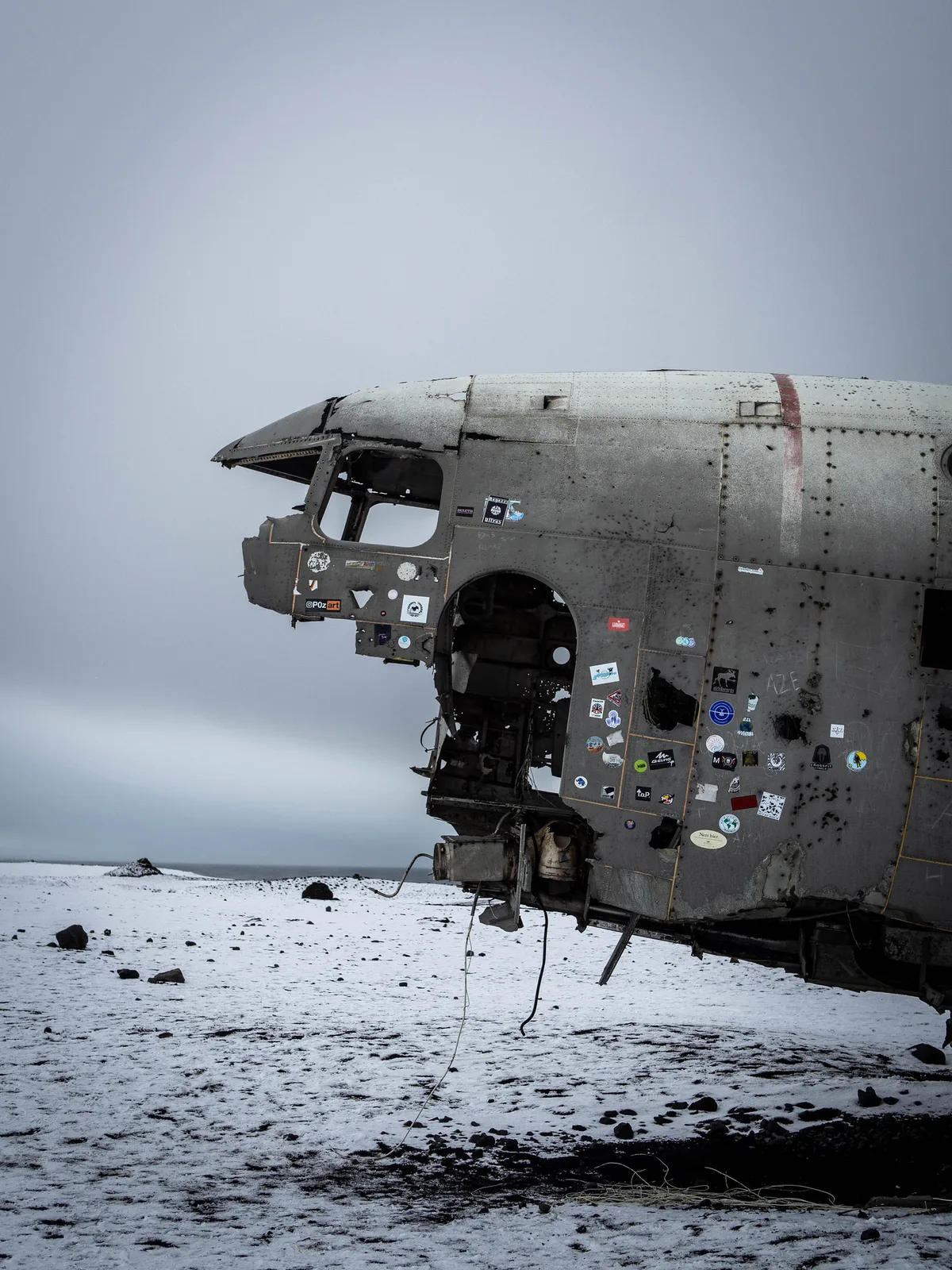
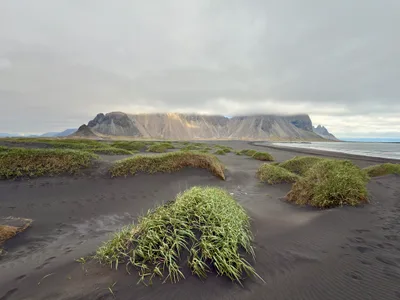
Sólheimasandur is a vast black sand desert on Iceland's South Coast, where a US Navy DC-3 aircraft has rested since 1973, slowly rusting against a sky that rarely shows mercy. The landscape is stripped to its bones — no vegetation, no landmarks, just kilometres of flat volcanic sand stretching toward grey ocean water and distant mountains. Wind scours the plain constantly, and the silence between gusts is absolute. It's one of the most surreal, photogenic locations in Iceland, and it earns that reputation honestly.
How to get there
Turn off Route 1 at the Sólheimasandur signposted parking area. Private vehicles are not permitted on the sand track — you must walk the roughly 4 km to the wreck (around 40 minutes each way) or take the shuttle bus, which runs daily and costs approximately 3,200 ISK round trip per person. Parking at the Route 1 trailhead is paid at 750 ISK. ATV tours are also available through various local operators.
Who it's for
For couples
The long, quiet walk across the black sand plain gives couples genuine time away from distraction — no cafés, no signal, just the wind and the wreck at the end of it. It's a shared effort that makes the destination feel earned.
For families
Older children who can manage an 8 km round-trip walk on soft black sand will find the plane wreck genuinely fascinating. Note that the terrain is not wheelchair accessible, there are no facilities on site, and the ocean is strictly off-limits — keep young children well back from the water's edge.
Our take
Do not enter the water — the ocean at Sólheimasandur is dangerous, full stop. That said, this is one of the most genuinely otherworldly places you can reach by foot in Iceland, and it rewards the effort. The 4 km walk across a featureless black sand plain with no vegetation and no shelter is not a stroll — it's an experience in itself, and arriving at the rusting DC-3 after it feels right. Come year-round when the shuttle bus runs and the walk is manageable. Avoid winter: the exposed plain becomes genuinely hazardous in storms, and there is nowhere to take cover. Worth the detour — but go prepared, go in season, and keep well away from the water.
What to do
The DC-3 wreck itself is the main event — Flugvélaflak á Sólheimasandi sits right at the site and the walk out to it is part of the experience. Eight kilometres away, Sólheimajökull glacier offers guided glacier walks for a dramatic contrast to the sand plain. Skógafoss Waterfall, just 8 km from the trailhead, is a 25-metre-wide cascade with a clifftop staircase trail worth the short detour.
The DC-3 fuselage shot from ground level, framed against the wide black sand plain with no horizon clutter, is the defining image of this beach.
The walk itself offers stark minimalist compositions — a lone figure on the flat dark desert makes for powerful perspective shots. On clear days, distant glacier-capped peaks provide a rare colour contrast to the monochrome foreground.
Where to eat
There are no food or drink facilities at Sólheimasandur itself — bring everything you need for the walk. The nearest option is Hótel Skógafoss Bistro Bar, about 10.5 km away, which makes a practical stop before or after your visit.
Where to stay
Hotel Volcano (10.3 km) and Hótel Dyrhólaey (11.1 km) are both within easy striking distance of the trailhead. Edda, roughly 10.1 km away, is another solid base for exploring this stretch of the South Coast.
Photography
The wreck is most dramatic in the flat, diffused light of overcast mornings, when the grey sky and black sand create a monochrome palette that no filter can replicate. For scale shots, position yourself low and wide with the fuselage against the open horizon — the total absence of vegetation makes every angle feel cinematic.
Good to know
No private vehicles are allowed on the sand track — this rule is enforced, so don't attempt to drive it. Do not remove or pocket any wreckage fragments; the site is protected and pieces must stay. Stay on the marked path across the plain. In winter, the exposed 4 km walk is dangerous: there is zero shelter, storms arrive fast, and wind chill is severe — avoid December, January, and February entirely. Ocean waves at the beach end are dangerous; do not enter the water under any circumstances.
GAMES
🕹️ Five minutes of sand?
Three daily games — including the UV simulator set to this beach.
Map
Nearby places
Hótel Skógafoss Bistro Bar
Things to see around Rangárþing eystra
Skógafoss Waterfall
60-metre-high waterfall with a staircase to a clifftop viewpoint trail.
Seljalandsfoss Waterfall
Waterfall with a path behind the curtain of water, accessible from Route 1.
Reynisfjara Beach
Iceland's most famous black sand beach with columnar basalt cave and sea stacks.
GIFT
🎁 Gift this beach
Its exact coastline, your date, your words — on a print or a PDF you print yourself.
Sólheimasandur Beach
THAT DAY
Sólheimasandur Beach, South Iceland
© OpenStreetMap contributors
Clean & decorative, or “That day” with the real sky of your date.
Shipping included 3-6 business days
A question before you order? Contact us
Delivered within minutes on the confirmation page and by email: a ZIP with all 4 print sizes (30×40 cm, 12×16″, 50×70 cm, 18×24″), each as a high-resolution PDF and PNG (300 dpi), plus a screen version. Print at home or at any print shop.
Please complete the delivery address.
Please accept the Terms of Sale.
Almost there — the shop opens very soon.
Secure payment · Printed locally in 30+ countries · 7 languages
Frequently asked
The information on this page is provided for guidance only and may evolve. Access conditions, safety and infrastructure can change without notice. Always check official sources before traveling.
Nearest beaches
Other wild beaches in Iceland
Reviews of this beach
- No reviews yet, what a shame — leave yours and share your experience.
Photo credits
Sources and licenses for the photos shown above.