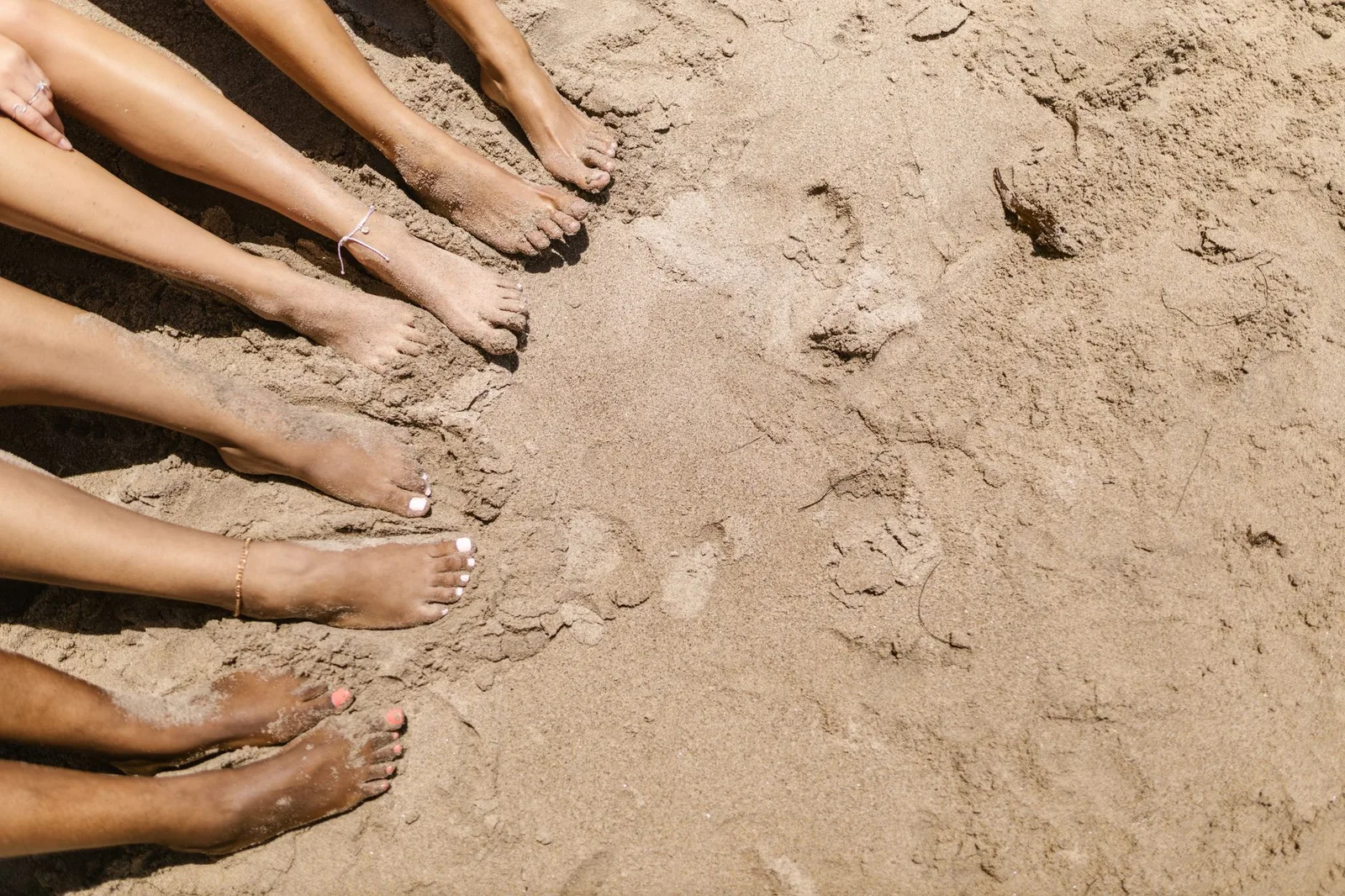

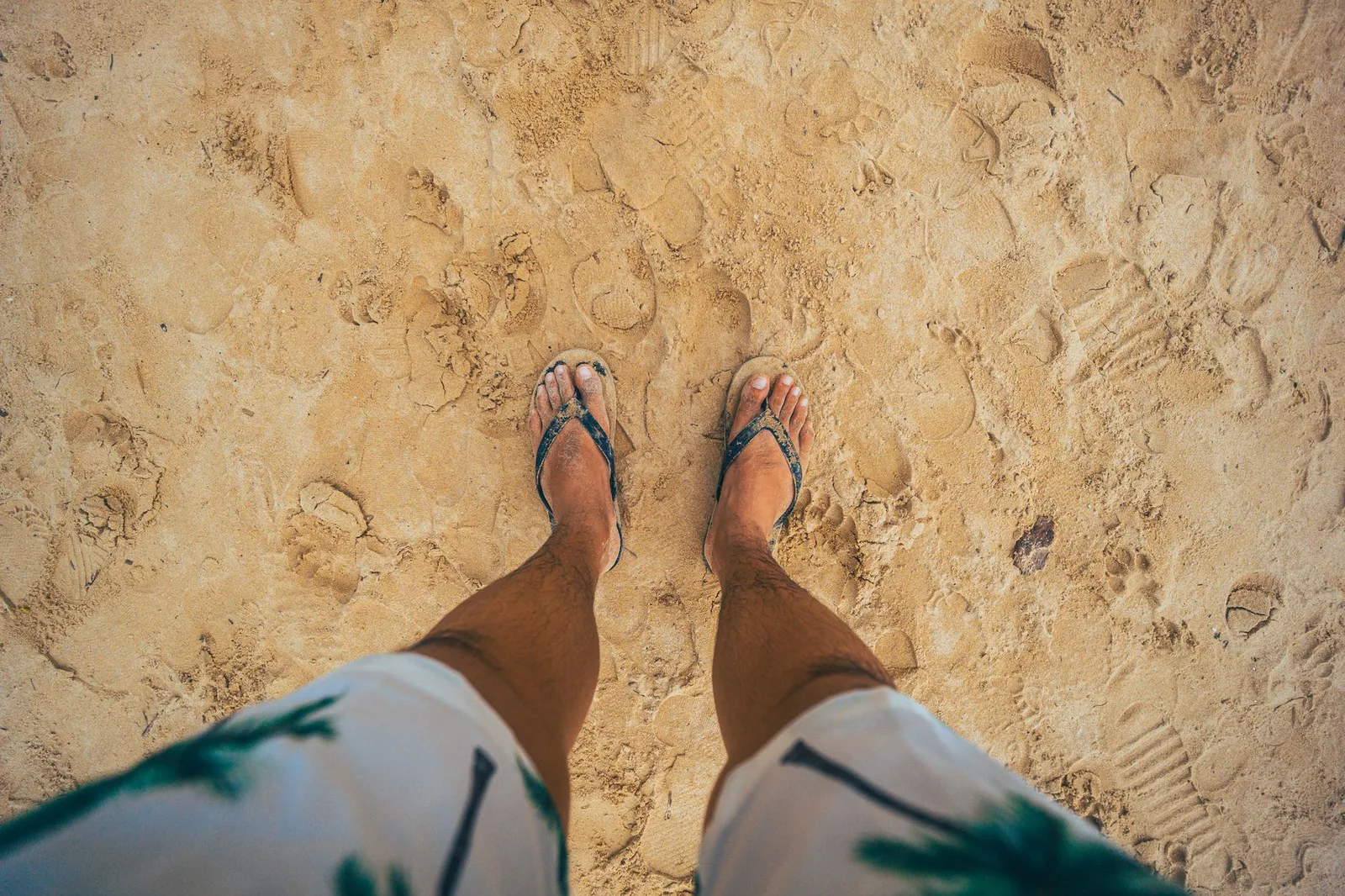
Sand stuck to your skin is the small, gritty tax on a perfect beach day. It clings to your feet, hides between your toes, works into every fold, and somehow ends up in the car, the bed and the bottom of the bag a week later. The good news: there's a method that works in seconds, it costs almost nothing, and once you know why sand sticks you'll never fight it the wrong way again. Here's the whole thing — the main trick, the alternatives for when you've packed light, the spots everyone forgets, the baby-safe version, and the mistakes that make it worse.
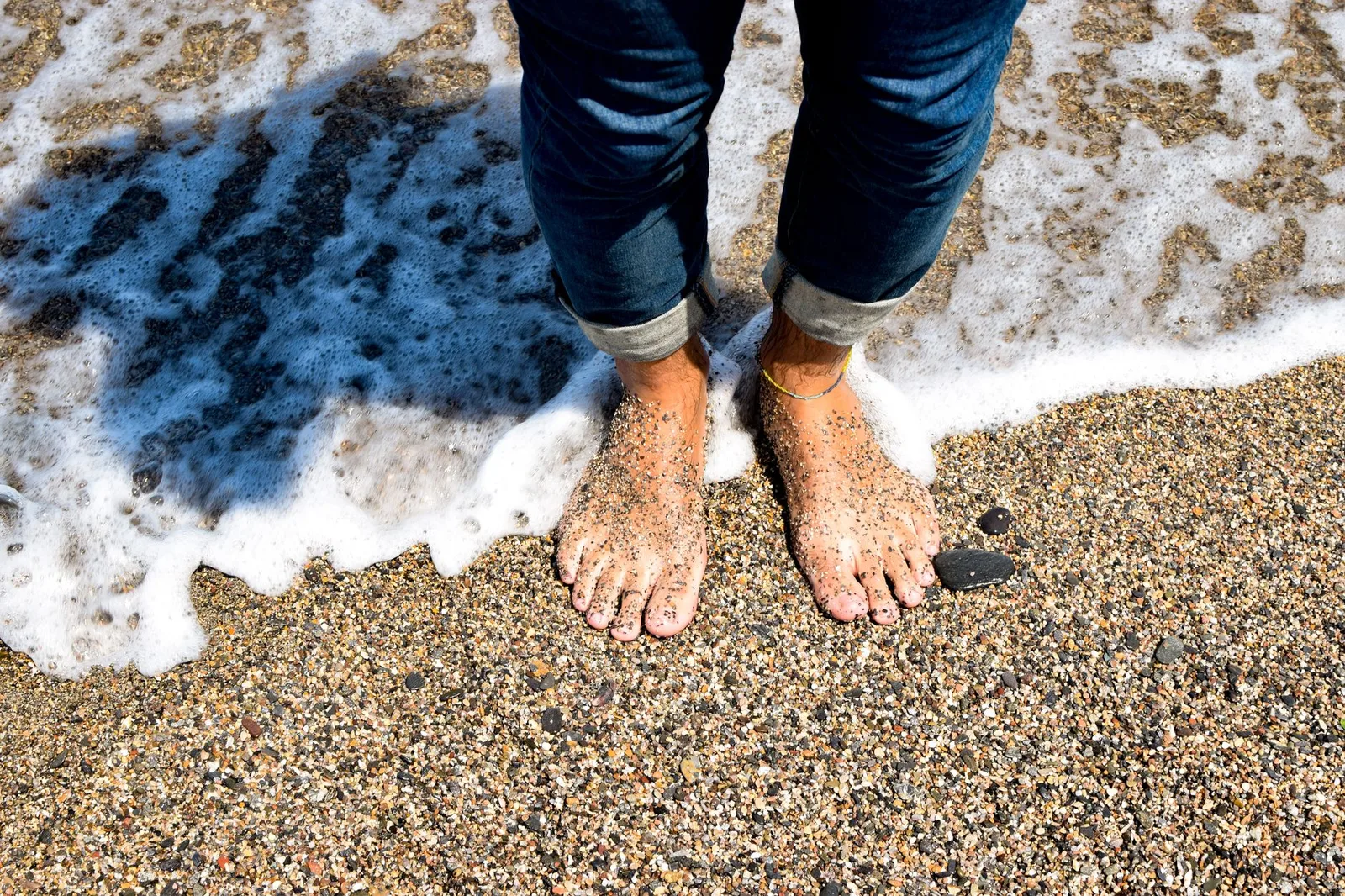
How to get sand off your skin, step by step
This is the method beach regulars swear by. It takes under a minute.
- Stop rubbing. If the sand is wet, leave it. Rubbing wet sand grinds it into the skin and can scratch you — do nothing for a moment.
- Get out of the water and let the skin dry. Stand in the sun or pat the area with a dry towel. The drier the skin, the weaker sand's grip — this is the step everyone skips.
- Dust on a little powder. Sprinkle a small amount of talc, baby powder or plain cornstarch over the sandy area. A light coating is plenty.
- Rub gently, back and forth. A few light passes with your hand. You'll feel the grit release almost immediately.
- Brush it all away. Sweep off the powder and the sand together with your hand or a dry towel. Skin comes away smooth and clean.
Keep a small bottle of cornstarch or talc-free powder in the beach bag or the car door pocket. It's the single most useful thing you can pack, and it doubles as a chafing fix and a dry shampoo in a pinch.
No powder? Methods by what you've got on hand
Forgot the powder? Reach for the next best thing.
The dry-towel flick. The most reliable no-kit method. Wait until the skin is completely dry — really dry, not damp — then flick or brush the sand off with a dry towel or your fingers. On damp skin a towel just smears grit around; on dry skin it falls away.
The fresh-water rinse, then dry. A quick rinse with fresh water washes off the loose grains and the drying salt. But don't stop there — a wet rinse alone leaves a fine film of sand stuck by the water. Rinse, then dry fully, then brush off whatever's left.
The sun-and-wait. No towel, no tap? Stand in the sun for a minute or two. As the last of the water evaporates, the grains lose their grip and most simply drop off when you brush lightly.
A baby wipe or a damp cloth, for faces and small patches. For a sandy cheek or hand, a single firm wipe with a baby wipe lifts grit cleanly — better than dragging a gritty hand across the face.
Sunscreen-and-sand paste. When sand sticks to a layer of sunscreen, water won't shift it. Wipe the area with a dry cloth or a wipe to lift the greasy layer first, then dry and brush.
Beach hacks from around the world (and the one that's just hype)
Every beach culture has its own home remedy for sand, and the good ones all land on the same idea — dry the skin first. Here are the ones worth borrowing, wherever they come from, and the one to skip.
- The cornstarch sock (the American viral hack). Made famous by beach parents on social media: fill a clean cotton sock with plain cornstarch, knot the top, and dab it over sandy skin like a powder puff. The cornstarch dusts through the weave, the sand brushes off, and you avoid almost all the mess of loose powder. Brilliant for kids and for the car.
- Cornstarch or talc straight from the cupboard (the universal pantry fix). Known from kitchens everywhere — cornstarch, Maïzena, talcum powder. It works exactly like the powder method, it's cheap, and cornstarch is gentler on delicate skin. Many "baby powders" are now cornstarch-based for this reason.
- The sun-dry-and-brush (the Mediterranean & tropical way). On hot beaches from Greece to the Caribbean, locals don't reach for anything: they let the sun bake the skin bone-dry, then flick the sand off with a hand. No kit, no mess — just patience and heat doing the work.
- A soft dry brush (the resort trick). A clean, soft brush — even a large makeup or pastry brush — sweeps powder-fine sand off dry skin beautifully, especially off faces, ankles and the swimsuit line. Popular wherever the sand is talc-fine.
- Rubbing alcohol or vinegar? Skip it. You'll see it online. Don't — it dries and irritates skin, it's unnecessary, and plain powder or a dry brush does the job better. The only "active ingredient" you ever need is dryness.
By the body part: the spots everyone forgets
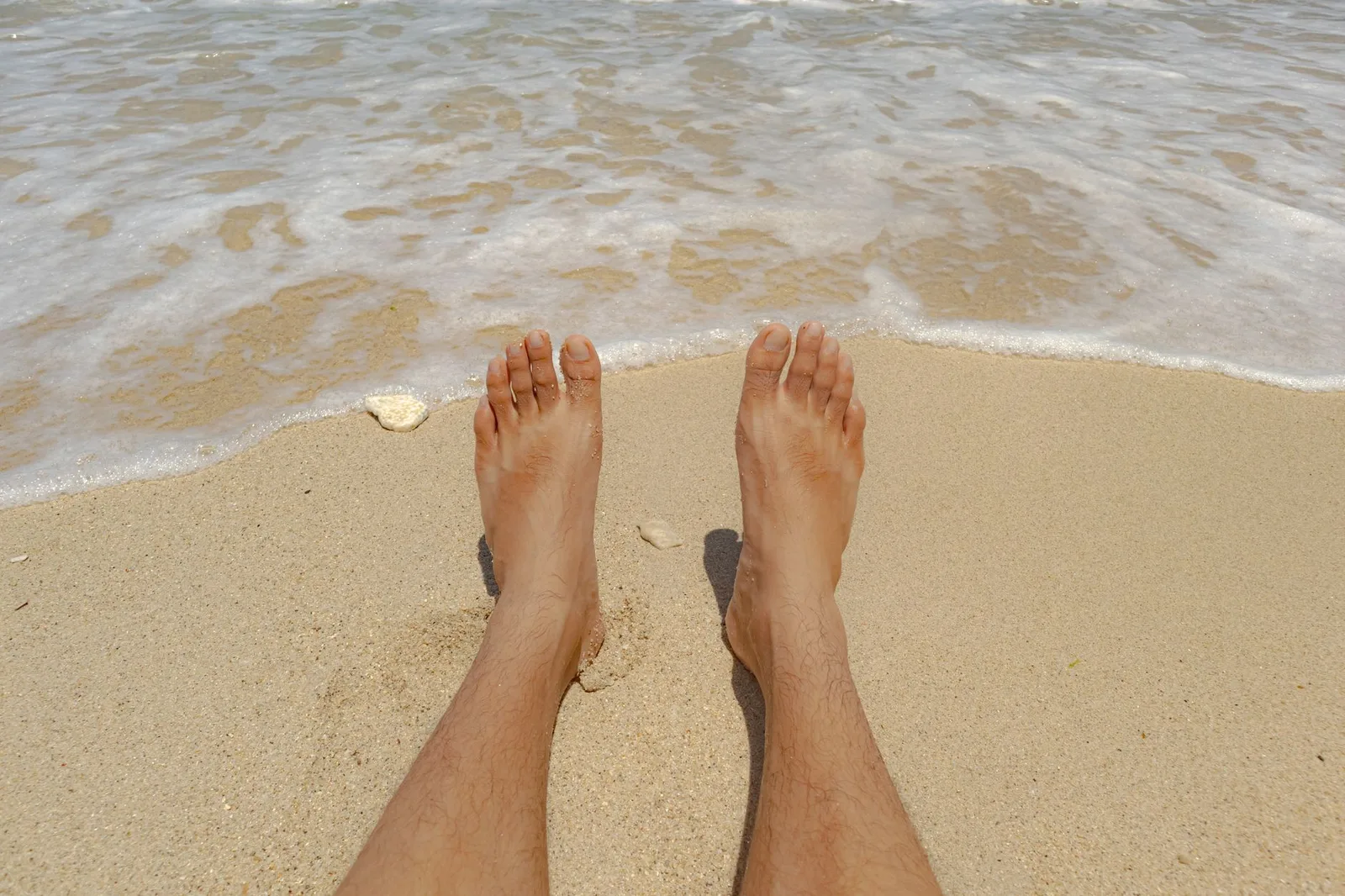
Between the toes. The number-one trap. Dry your feet completely, then powder between each toe and wiggle — the grit drops out. Flip-flops on the walk back keep fresh sand from packing in again.
Hands and fingers. Powder, rub palm to palm, brush off. Do your hands first so you're not spreading grit everywhere else.
Ears, scalp and hair. Don't dig. Tip the head, let dry sand fall out, then brush the scalp gently with your fingers. For hair, wait until it's dry and shake it out head-down; a little powder at the roots helps. For ears, a dry tissue around the outer ear only — never poke inside.
Skin folds, waistband and the swimsuit line. Sand collects where fabric meets skin. Dry the area, powder it, and gently pull the fabric away to let the grains fall rather than rubbing them in.
Babies and sensitive skin: the safe way
Children's skin is thinner and the grit is genuinely uncomfortable, so a gentle method matters — but so does what you reach for.
Use a talc-free, cornstarch-based powder, not loose talc. Paediatric bodies, including the American Academy of Pediatrics, advise against talcum powder for babies because the fine dust can be inhaled and irritate or harm little lungs, and talc has historically carried a contamination concern. Cornstarch does the same job without that risk.
Never puff powder near a baby's face. Shake a little into your own hands first, away from the child, then apply it by hand to feet, legs and hands. No clouds, no shaking the bottle over them. Keep the bottle out of reach.
Dry first, then a soft cloth. Often the gentlest fix needs no powder at all: let the skin dry, then lift the sand with a soft, dry cloth or a baby wipe. Pat, don't scrub — a rough towel on damp skin is what causes the red, sand-burned patches parents dread.
This is general guidance, not medical advice. If your child's skin is broken, very red, blistered or irritated, stop, rinse with clean water, and ask a pharmacist or doctor. Don't use any powder on broken skin.
Sorting out a sandy toddler is half of every family beach day — our guide to the best family-friendly beaches has more on packing light and picking shores that make the clean-up easy, and you can browse family-friendly beaches in the Atlas directly.
Swimsuits, clothes and the beach towel
Swimsuits and clothes. Don't fight it wet. Let the fabric dry completely, then shake it out hard — most of the sand falls free. At home, shake again before washing, and run a rinse cycle; sand in a wet swimsuit thrown in a bag is what grinds into the seams.
Towels. A sandy towel re-coats you every time you use it. Let it dry, then snap it sharply in the wind a few times — dry sand flies off, wet sand stays glued. A smooth, tightly-woven towel sheds sand far better than a thick terry one.
Keeping sand out of the car (and the house)
The fight doesn't end at the towel — it ends at the car door. A few habits save you a week of grit underfoot:
- Powder everyone at the car, not at home. Do the feet-and-hands routine the moment before you get in. The car is the choke point.
- Keep a "beach exit" kit by the door pocket: a bottle of cornstarch, a dry towel, a jug of water and a bag for wet swimsuits.
- Rinse feet, then dry, then step onto a mat. Wet feet pick sand straight back up — dry them before they touch the floor.
- Bag the wet stuff. Damp suits and towels in a sealed bag keep the sand they carry out of the boot.
What NOT to do
- Don't rub wet, sandy skin. It's the most common mistake. Wet sand is at its grippiest, and rubbing grinds it in and scratches you. Dry first, always.
- Don't scrub it off under the shower. Wetting sandy skin again and scrubbing just spreads it and irritates the skin. Dry, powder, brush — then shower.
- Don't blast powder near a child's face. Apply from your hands, never a cloud.
- Don't use a rough towel on damp skin. That's how you get "sand burn." A dry, smooth towel on dry skin does it painlessly.
- Don't rely on a sea-water rinse alone. Salt water leaves a sticky, drying film that holds fine sand and tightens the skin. Finish with fresh water, then dry.
The sand that's worth the trouble
The finer and softer the sand, the more it clings — and the most beautiful beaches in the world tend to have exactly that flour-soft, powder-white sand that gets absolutely everywhere. The talc-fine white sand of Maniniowali (Kua Bay) in Hawaii, the powdery shore of Helicopter Island in El Nido, Philippines, and the fine white sand of Pinarellu in Corsica are worth every grain you'll be brushing off afterward. Pack the cornstarch and enjoy them.
Frequently asked questions
Why does sand stick to my skin so much?
Mostly water. Thin bridges of water between each grain and your skin act like glue, helped by faint electrostatic forces and by irregular grains lodging in skin folds. That's why wet sand clings hard and dry sand brushes off easily — remove the water and you remove the stickiness.
Does baby powder really get sand off, and how?
Yes — it's the fastest method. The powder soaks up the surface moisture and oil that hold the sand in place. Once that water is gone, the grains have nothing to cling to and brush straight off. Let the skin dry first, dust on a little powder, rub gently, then sweep powder and sand away together.
What can I use instead of baby powder?
Plain cornstarch (Maïzena) works exactly the same way and is gentler on sensitive skin. No powder at all? Let the skin dry completely and brush the sand off with a dry towel, or stand in the sun for a minute or two and let the grains drop off as the water evaporates.
Is baby powder safe to use on a baby at the beach?
Choose a talc-free, cornstarch-based powder. Paediatric guidance, including from the American Academy of Pediatrics, advises against loose talc on babies because the fine dust can be inhaled. Never puff powder near a child's face — shake a little into your own hands first, then apply it by hand to feet and legs, and keep the bottle out of reach. This is general guidance, not medical advice.
How do I get sand from between my toes?
Dry your feet completely, then dust powder between each toe and wiggle them — the grit drops out. Slip on flip-flops for the walk back so fresh sand can't pack in again.
Should I rinse with sea water or fresh water?
Fresh water, and at the end. A sea-water rinse leaves a salty film that keeps drawing moisture, tightens the skin and helps fine sand cling. Rinse off loose grains, finish with fresh water, then dry fully and brush away whatever's left.
Why does wet sand stick more than dry sand?
Because water is the glue. Wet sand has water bridges linking every grain to your skin; dry sand has almost none, so it falls off with a brush. This is the whole reason the trick is "dry first, then remove."
How do I keep sand out of the car after the beach?
Do the clean-up at the car, not at home. Dry and powder feet and hands right before everyone gets in, rinse-then-dry feet before they touch the floor, and seal wet swimsuits and towels in a bag so the sand they carry stays out of the boot.
This article is general, practical guidance gathered in June 2026 — not medical advice. Skin reacts differently from person to person, and powders are not suitable for broken, blistered or irritated skin. Keep all powders away from children's faces and out of their reach, and prefer talc-free, cornstarch-based products for babies and sensitive skin. If skin is irritated, broken or doesn't settle, rinse with clean water and consult a pharmacist or doctor. Where Is My Beach is not responsible for decisions made on the basis of this article.
Photo credits
Sources and licenses for the photos shown above.
- Photo 1 — Photo by RDNE Stock project on Pexels · Pexels License
- Photo 2 — Photo by Paula GValles on Pexels · Pexels License
- Photo 3 — Photo by Nothing Ahead on Pexels · Pexels License
- Photo 4 — Photo by Elle Hughes on Pexels · Pexels License
- Photo 5 — Photo by RDNE Stock project on Pexels · Pexels License
- Photo 6 — Photo by Nothing Ahead on Pexels · Pexels License