Manini'owali BeachUnited States Beach Guide
White sand, lava framing, and a shore break that demands respect

About
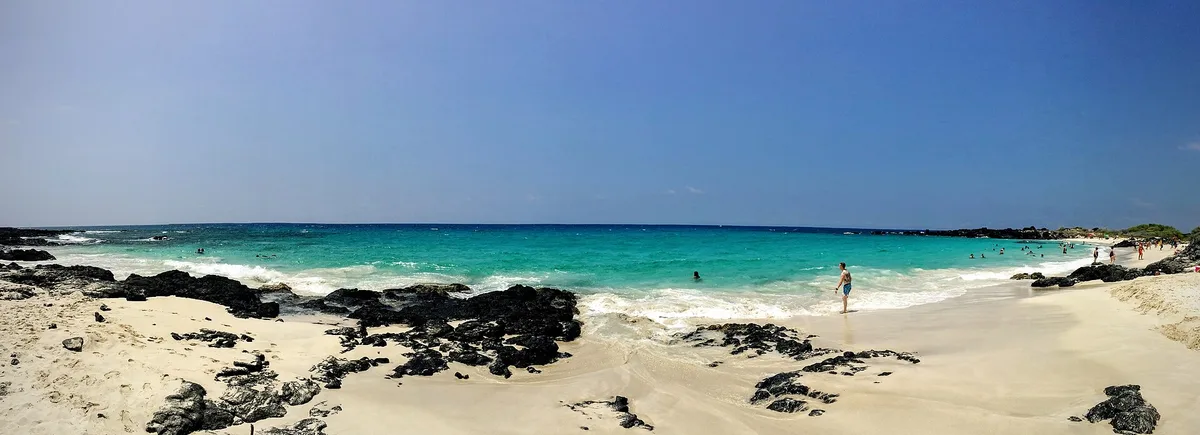
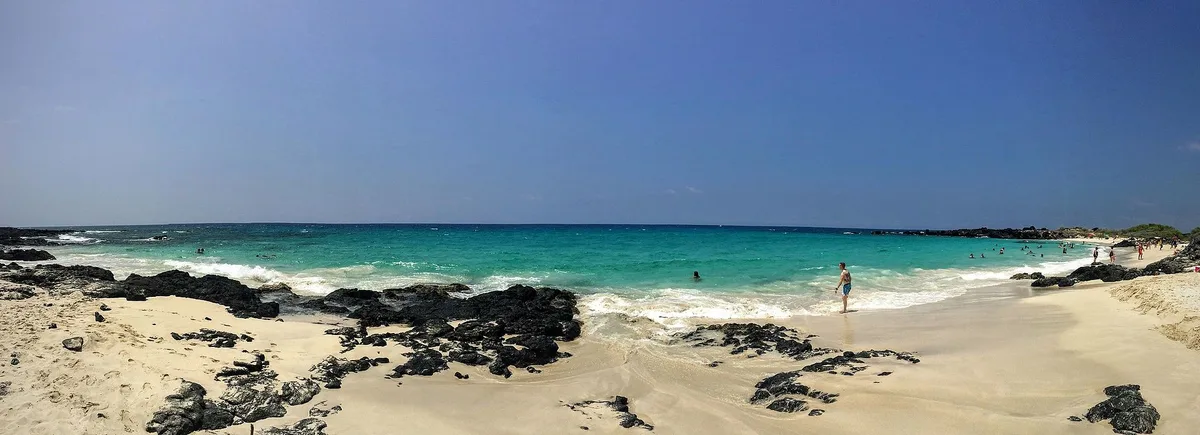
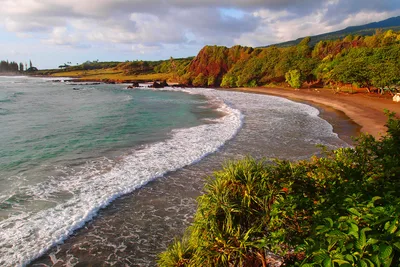
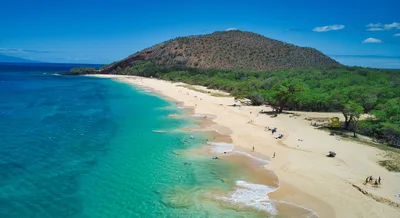
Manini'owali Beach is a compact pocket cove on the Big Island's sun-drenched Kona coast, where roughly 200 metres of white sand meets crystal-clear water framed by dramatic black lava rock. The contrast is striking — pale sand against dark volcanic shoreline — and the water's clarity makes every wave readable from the beach. It sits inside Kekaha Kai State Park, giving it a tidier, more protected feel than many roadside beaches nearby. The shore break is steep and powerful, which keeps the energy lively and draws bodyboarders on good days. Arrive early: this place fills up fast, and for good reason.
How to get there
Drive north from Kailua-Kona on Queen Ka'ahumanu Highway (Hwy 19) to the paved Kekaha Kai State Park entrance — about 20 minutes. The small parking lot charges $10 per vehicle for non-residents; Hawaii residents park free with a valid Hawaii state ID. The lot routinely fills by 10am on weekends, with overflow spilling onto the highway shoulder, so an early start is not optional. Entry is $5 per person for non-residents (waived with a valid Hawaii state ID), and the park is open daily from sunrise to sunset.
Who it's for
For couples
The compact scale of the cove and the vivid white-sand-against-lava scenery make it a naturally photogenic stop for two — come early on a weekday, claim a quiet patch of sand, and you'll have the postcard moment before the day-trippers arrive.
For families
Families with older kids who bodyboard will find the shore break entertaining on calm summer days (May–October), but the steep break and potential currents mean this is not a beach for toddlers or non-swimmers — plan accordingly and keep young children well clear of the water's edge.
Our take
Be clear-eyed about what Manini'owali is: a beautiful, busy, state-managed pocket beach with a shore break that can hurt you if you're careless. The safety calculus changes dramatically by season — May through October is when this beach earns its reputation for summer swimming and bodyboarding; November through February, north swells make the water dangerous and you should stay out. The paved access and paid parking keep it accessible but also mean it gets packed early on weekends, so a sunrise arrival isn't just advice, it's the difference between a great day and a frustrating one. The crystal-clear water against white sand and black lava is genuinely striking, and the state park setting keeps it cleaner than most. Worth the drive from Kona — just go in the right season and read the water before you wade in.
What to do
Kikaua Point, just 1.1km away, is worth a short detour for its own lava-edged shoreline. If you have a vehicle that can handle a rough lava road, Mahai'ula Beach — a longer, more remote golden-sand beach in the same state park — sits about 3km away and rewards the effort with far fewer visitors. Further afield, Kaloko-Honokōhau National Historical Park (14.5km) preserves ancient Hawaiian fishponds and coastal settlement ruins that put the whole coastline in cultural context.
The black lava rock at either end of the cove frames the white sand and crystal-clear water for a high-contrast shot that photographs best in the first hour after sunrise.
Shooting from the waterline looking back toward the lava shoreline captures the full pocket-cove shape — add a bodyboarder mid-wave if the shore break is running for a dynamic foreground.
Where to eat
The Hualālai Canoe Club, an American-style restaurant 1.7km from the beach, is the closest option for a post-swim meal. Beach Tree (2.4km) blends American and Italian menus and sits near the Four Seasons if you want something a step up. There are no food vendors at the beach itself, so pack snacks and plenty of water.
Where to stay
The Four Seasons Resort Hualalai, 2.4km away, is the obvious luxury anchor for this stretch of coast. Kona Village, A Rosewood Resort (3.6km) offers a more intimate, historically rooted alternative on the same shoreline.
Photography
The best shot at Manini'owali is from the lava rock edges at either end of the cove — shoot back toward the white sand with the black rock in the foreground at golden hour for maximum contrast. Early morning light is cleaner and the beach is quieter; by mid-morning the scene gets busy and the midday sun flattens everything out.
Good to know
No fires, no camping, and pack out every scrap of trash — state park rules are enforced. The shore break turns genuinely dangerous from November through February when north swells arrive; if you're visiting in winter, treat the water as a spectator sport. Strong currents can develop at any time of year, so read conditions carefully before entering. Jellyfish appear predictably 9–10 days after each full moon — check the lunar calendar before you go.
GAMES
🕹️ Five minutes of sand?
Three daily games — including the UV simulator set to this beach.
Map
Nearby places
The Hualālai Canoe Club
Residents' Beach House
Beach Tree
Hualalai Grille
Ke'olu Clubhouse
Four Seasons Resort Hualalai
Kona Village, A Rosewood Resort
Things to see around North Kona
Mahai'ula Beach
Longer, more remote golden-sand beach in the same state park accessible via rough lava road.
Kekaha Kai State Park
Preserved Hawaiian fishponds and coastal settlement within a national historical park.
Kailua-Kona Historic District
Historic waterfront with Moku'aikaua Church and Hulihe'e Palace.
GIFT
🎁 Gift this beach
Its exact coastline, your date, your words — on a print or a PDF you print yourself.
Manini'owali Beach
THAT DAY
Manini'owali Beach, Hawaii
© OpenStreetMap contributors
Clean & decorative, or “That day” with the real sky of your date.
Shipping included 3-6 business days
A question before you order? Contact us
Delivered within minutes on the confirmation page and by email: a ZIP with all 4 print sizes (30×40 cm, 12×16″, 50×70 cm, 18×24″), each as a high-resolution PDF and PNG (300 dpi), plus a screen version. Print at home or at any print shop.
Please complete the delivery address.
Please accept the Terms of Sale.
Almost there — the shop opens very soon.
Secure payment · Printed locally in 30+ countries · 7 languages
Frequently asked
The information on this page is provided for guidance only and may evolve. Access conditions, safety and infrastructure can change without notice. Always check official sources before traveling.
Nearest beaches
Other lively beaches in Hawaii
More beaches in Hawaii
Reviews of this beach
- No reviews yet, what a shame — leave yours and share your experience.
Photo credits
Sources and licenses for the photos shown above.
- Photo 1 — Skarz · source · CC BY-SA 4.0
- Photo 2 — Skarz · source · CC BY-SA 4.0
- Photo 3 — Skarz · source · CC BY-SA 4.0