
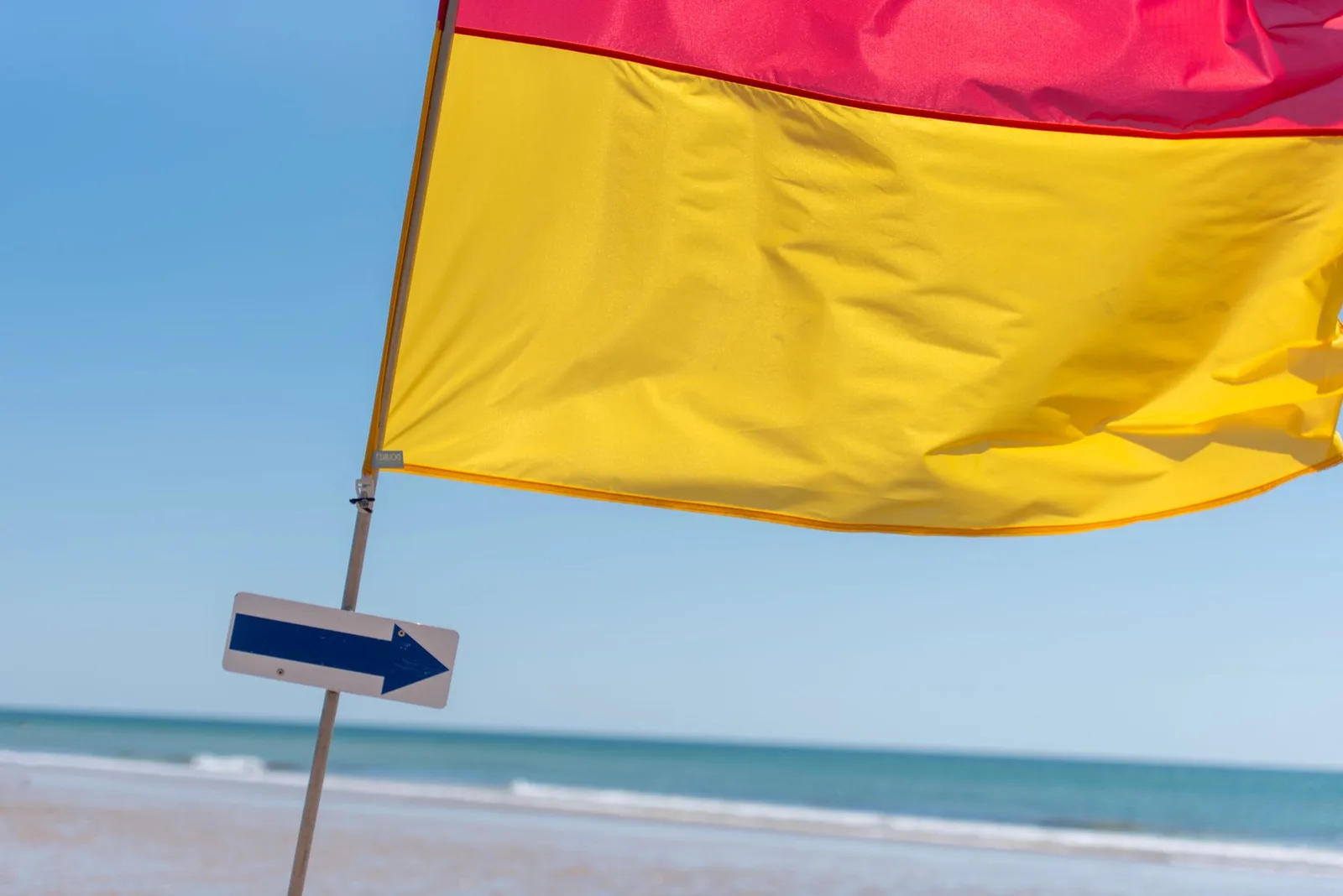
Here’s a small experiment run by researchers at UNSW Sydney: show the classic red-and-yellow lifeguard flag to students from different countries and ask what it means. Around 70% of South Korean and 60% of Japanese students read it as “danger — keep out” — the exact opposite of its real meaning, “this is the safe, patrolled place to swim” (UNSW, January 2026). If a flag can be misread that badly, it’s worth five minutes to learn the language before your next swim. This guide covers the flags you’ll actually meet — in France, Spain, Australia and the United States — then the thing the flags are mostly warning you about: rip currents.
The core code (almost) everyone shares
There is an international standard — ISO 20712, drawn up with the International Life Saving Federation — and most national systems orbit around it:
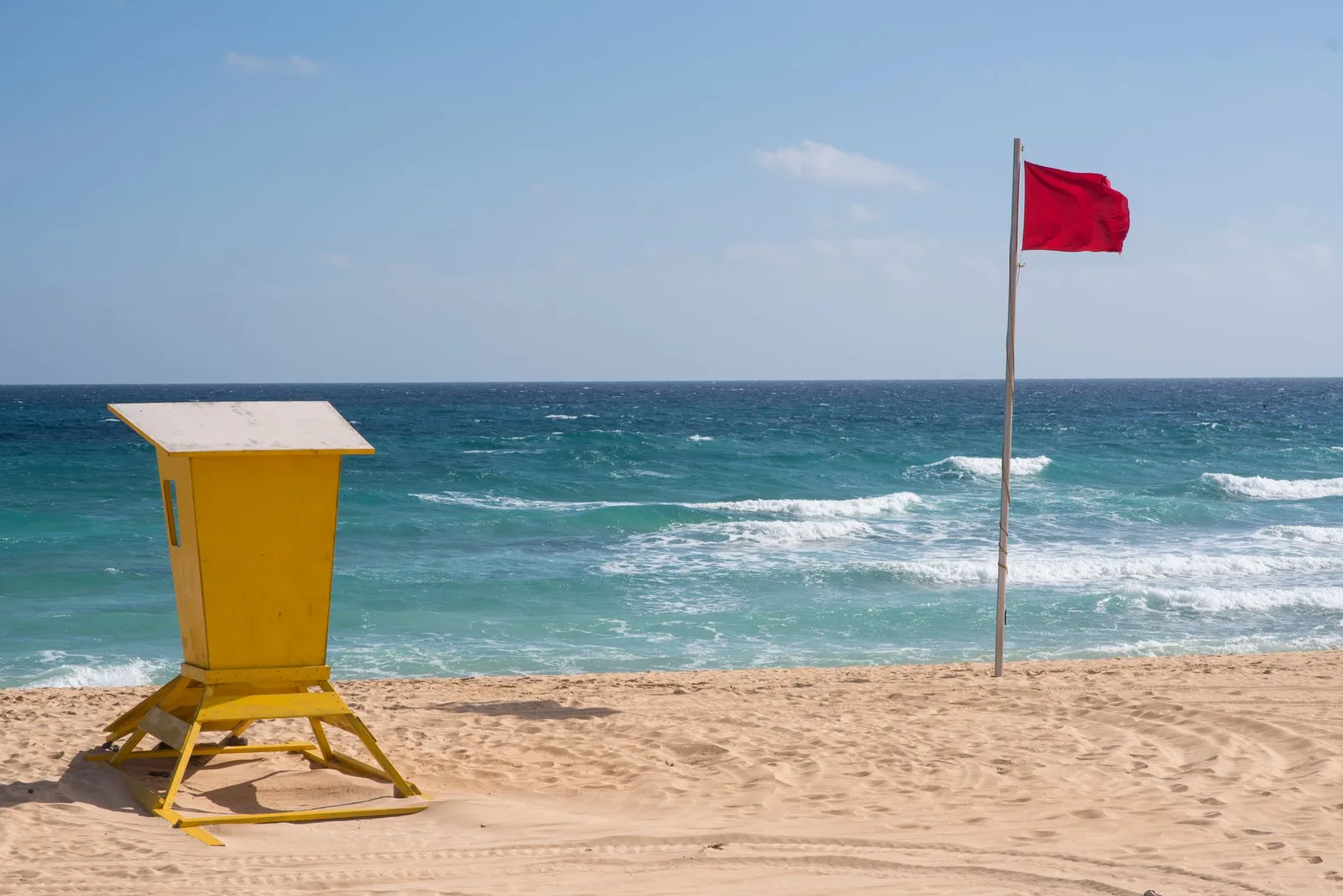
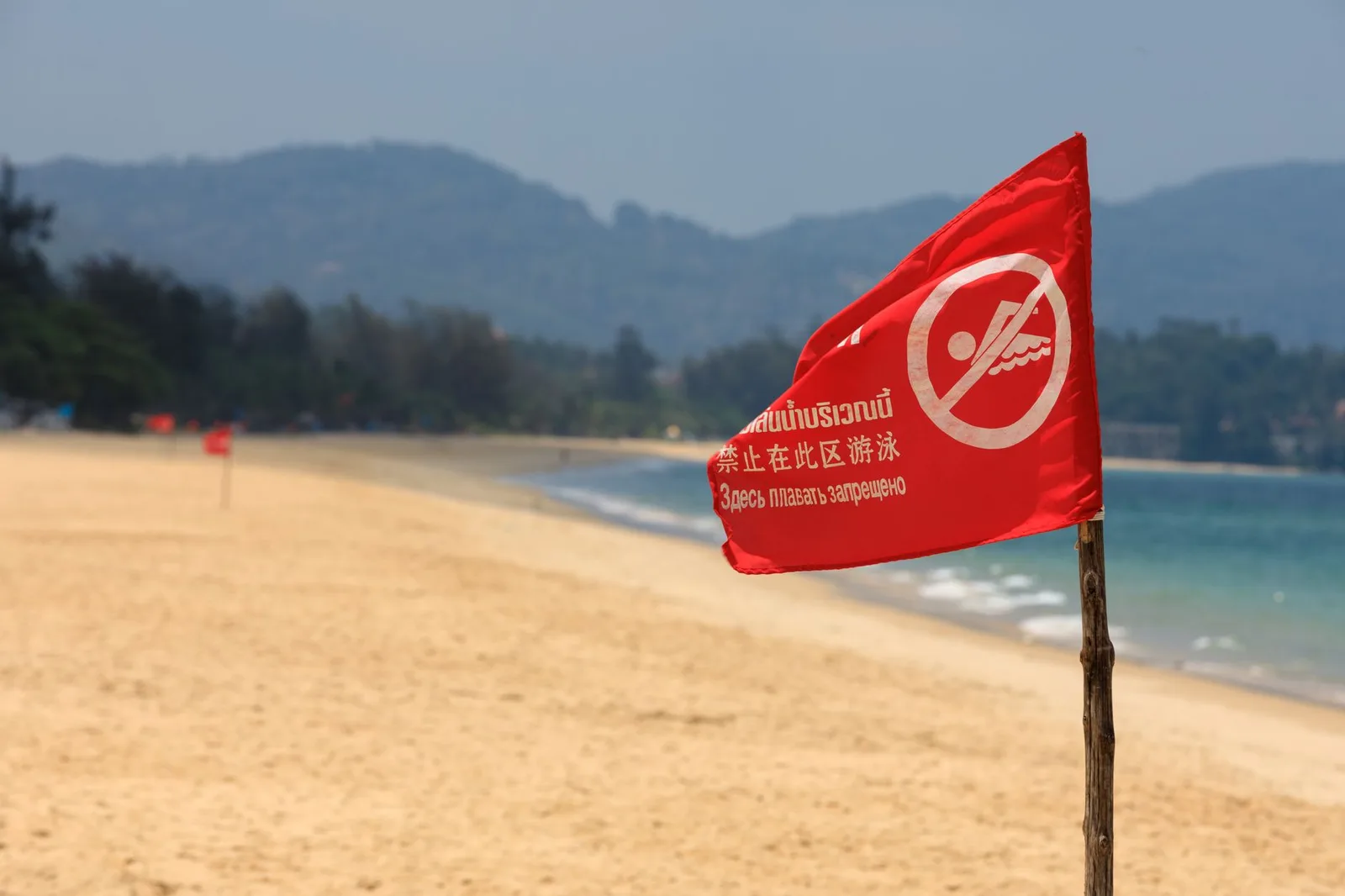
- Red — serious hazard. Swimming is prohibited or strongly discouraged. A double red (or red over red) in the US means the water is closed outright.
- Yellow — caution. Swimming allowed but conditions are tricky: waves, currents, weather. Weak swimmers should stay shallow.
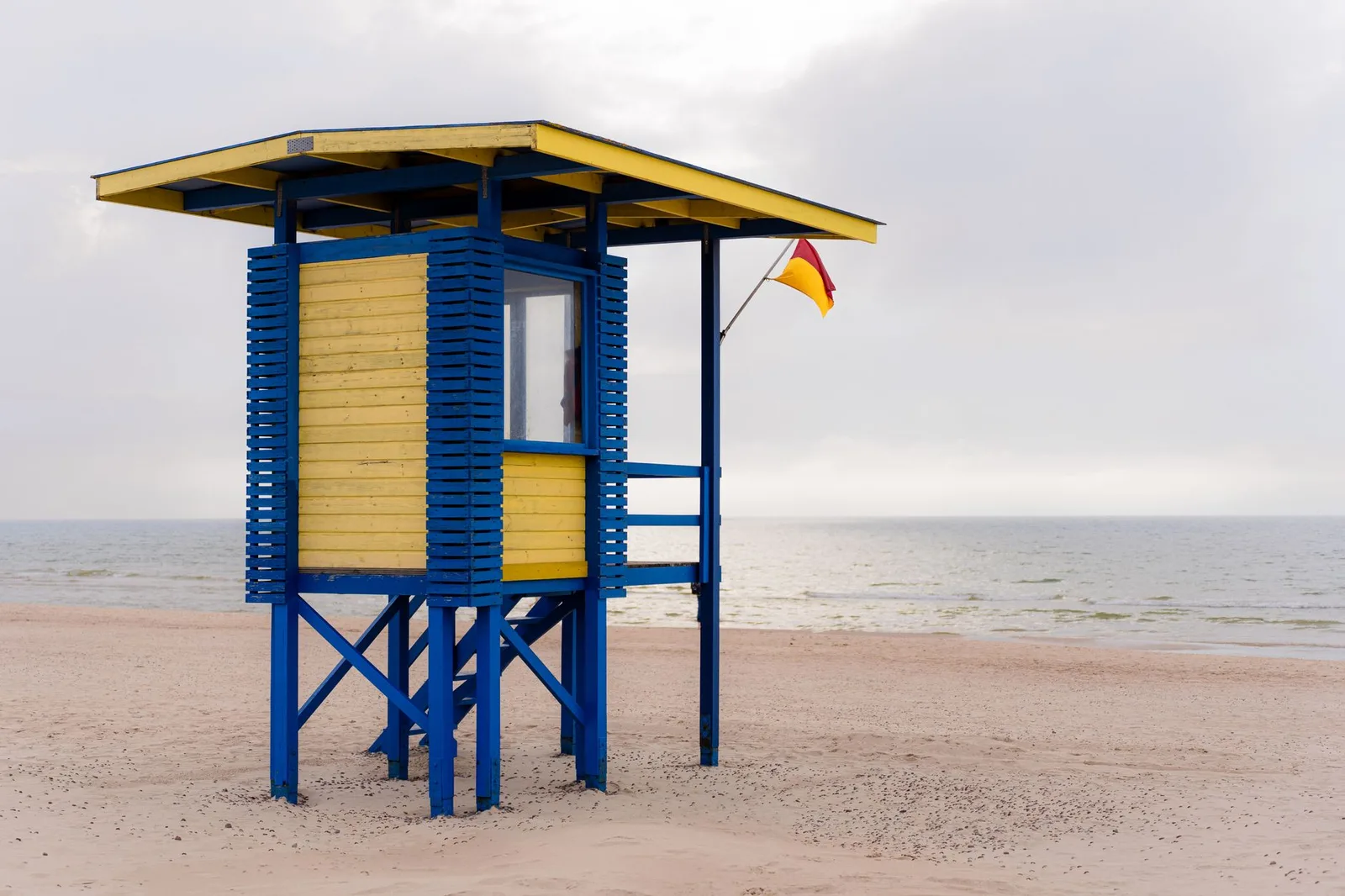
- Red over yellow (one flag, two horizontal bands) — lifeguarded bathing zone. Usually flown in pairs: swim between them, where the lifeguards are watching.
- Black-and-white quartered — watercraft zone: surfboards, kayaks, foils. Swimmers keep out; boards keep out of the bathing zone.
- Purple (mainly US) — dangerous marine life: jellyfish, stingrays. Usually flown with a green/yellow/red flag, not instead of one.
- Orange windsock — offshore wind. Inflatables (unicorns, dinghies, paddle boards for kids) get blown out to sea; keep them on the sand.
Two things the flags never say: a green flag doesn’t mean “risk-free” (it means supervised, low apparent hazard — the sea keeps its own counsel), and no flag doesn’t mean “go ahead”. It almost always means nobody is watching that water today.
France: the 2022 reset
France redrew its beach signals in 2022 — the old triangular pennants became rectangles, precisely so foreign visitors would stop misreading them (Service-Public.fr, Maire-Info). The code: green = supervised swimming, no apparent danger; yellow = supervised but hazardous (waves, currents, jellyfish — you can swim, carefully); red = swimming prohibited. The paired red-over-yellow flags mark the boundaries of the watched zone, exactly as in the international code. Outside the flags or outside patrol hours, you swim unsupervised — on the southwest coast, that matters more than almost anywhere else (see baïnes, below).
Spain: same colours, real fines
Spain flies the familiar green / yellow / red tricolour, municipality by municipality (Murcia Today). Two local twists. First, many coasts add a jellyfish flag — a jellyfish pictogram flown alongside the colour flag — when swarms come inshore. Second, the red flag has teeth: swimming under it is a sanctionable offence, with fines that can reach €3,000 in some municipalities (Euro Weekly News). And a warning about a famous impostor: the Blue Flag you see flying over marinas and beach entrances is an environmental quality label — water quality, services, accessibility. It says nothing about today’s swimming conditions. A Blue Flag beach can fly a red flag on the same mast.
Australia: swim between the flags
Australia has run the same system since the 1930s, and it’s drilled into every child on the continent: the red-and-yellow flags mark the patrolled zone, and the rule is “swim between the flags” — full stop (Healthdirect Australia). Lifesavers deliberately plant the flags on a stretch of beach away from rip currents, so the zone between them is both watched and chosen. The corollary is stark: recent drowning cases are overwhelmingly people who entered the water at unpatrolled spots or outside patrol times — not swimmers between the flags. On an Australian beach with no flags flying, the local advice isn’t “be careful”. It’s “don’t swim”.
United States: the colour ladder plus purple
US beaches (where flagged — systems vary by state) use a ladder: green = low hazard, yellow = medium, red = high hazard/strong currents, double red = water closed to the public, plus the purple flag for dangerous marine life flown alongside. The scale behind the flags is sobering: the United States Lifesaving Association estimates rip currents cause about 100 deaths a year in the US and are behind roughly 80% of all surf-beach lifeguard rescues (National Weather Service).
Rip currents: the danger the flags point at
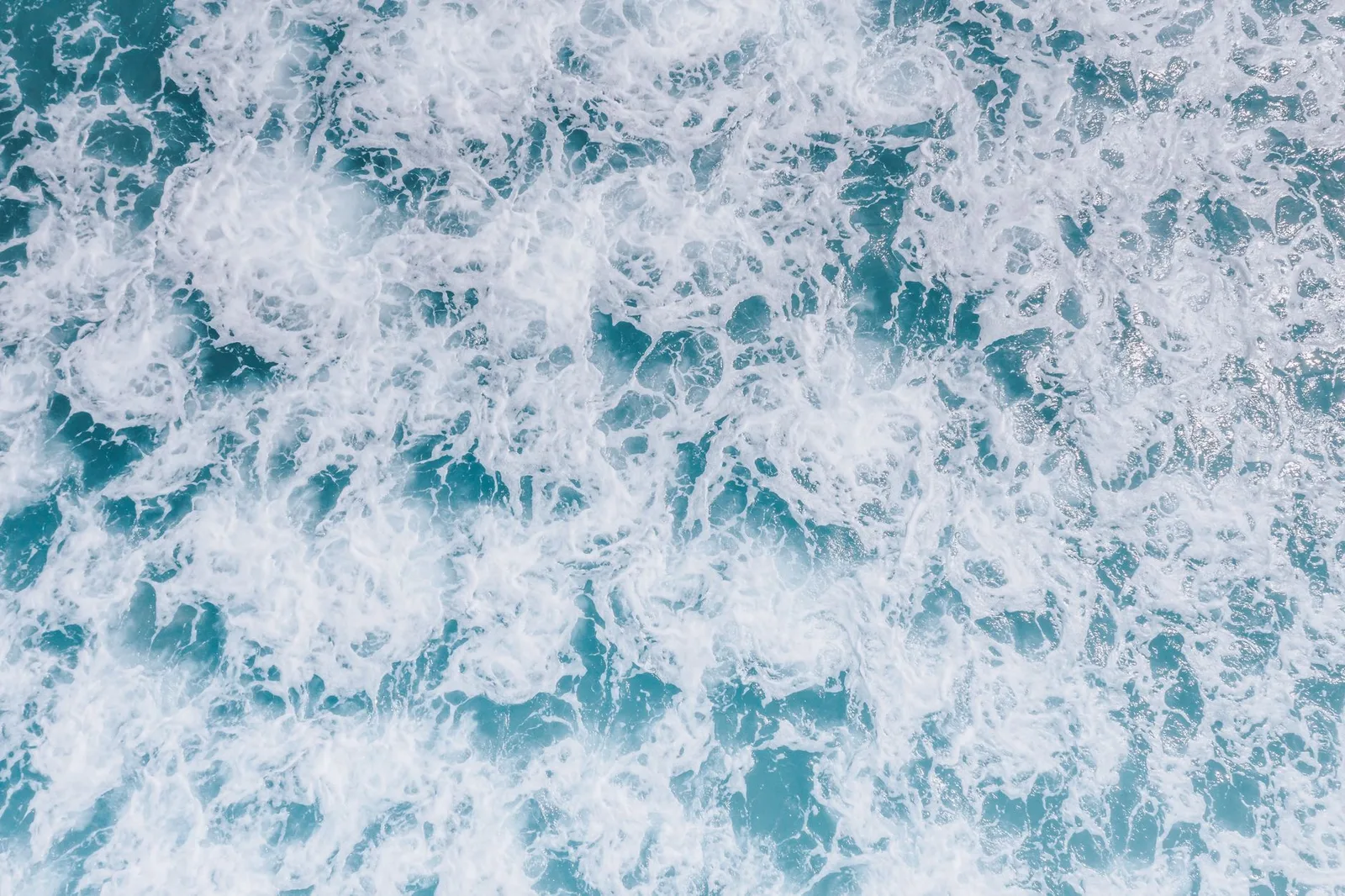
A rip current is a narrow channel of water flowing away from the beach — the sea’s drainage system for the water the waves keep pushing in. It can run at up to about 2.5 metres per second, faster than an Olympic swimmer (NOAA). It does not pull you under — it pulls you out. People drown fighting it: they swim straight against the current toward the beach, exhaust themselves, and panic.
You can learn to see one. From any high point (dune, promenade, lifeguard tower), look for: a gap of calm, darker water between the lines of breaking waves; a channel of churned, sandy water; foam or debris moving steadily seaward. That inviting flat corridor between the whitewater is precisely the place not to swim — waves break on the shallow banks, and stay unbroken over the deep channel that’s flowing out.
France’s southwest coast has its own famous version: the baïne, a tidal pool sculpted between sandbars that empties seaward as the tide moves — the Landes shoreline counts roughly one baïne every 350 metres along its 106 km of sand, and the currents they generate carry swimmers offshore every summer (INA). Australia’s tally is blunter still: rips kill more people there than sharks, floods and cyclones combined — on average more than 20 a year (Surf Life Saving Queensland).
Caught in one? The way out
Lifeguard bodies on every continent teach the same sequence (NOAA’s “Break the Grip of the Rip”; the UK’s RNLI calls its version “Float to Live”):
- Don’t fight it. You will not out-swim a current that outpaces Olympians. Fighting is what exhausts and drowns people.
- Float first. Lean back, spread your arms, breathe. Rips are narrow and lose power past the breakers; many simply release you, and some curve back toward shore.
- Swim parallel to the beach — across the narrow current, not against it — then angle back to shore through the breaking waves once you’re out of the channel.
- Signal. One arm raised, shout. That’s the universal “I need help” to any lifeguard.
- See someone else caught? Don’t swim in after them — double drownings are a lifeguard classic. Alert the lifeguards or call emergency services (112 in Europe), and throw anything that floats.
Where to put your towel
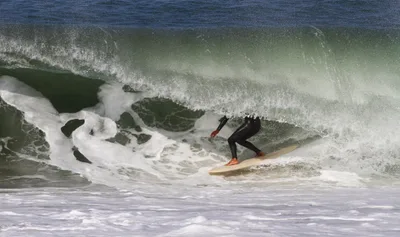
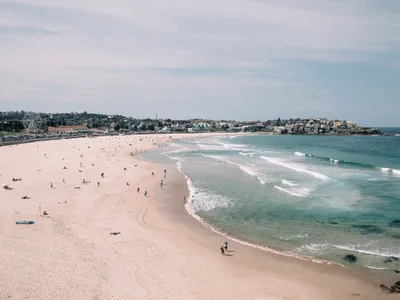
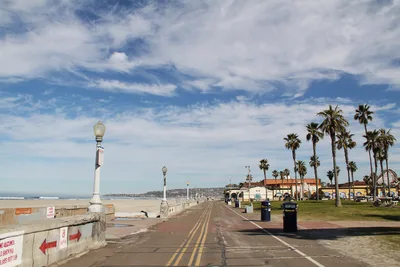
The four beaches below are in our Atlas and each tells a piece of this story: Plage de Hossegor sits in the heart of France’s baïne country, where the flags and patrol hours genuinely matter; Bondi Beach is the world’s most famous “swim between the flags” classroom; Mission Beach in San Diego runs the American colour ladder with year-round lifeguards; and Playa de los Bateles in Conil shows the Spanish system on an Atlantic shore. For calmer water with the family, filter the Atlas by family-friendly or relaxed; if you’re here for the waves themselves, start with the surf filter and our surfing guide — surfers use rips as free taxis out the back, which is exactly why you should never judge “swimmability” by where the surfers are.
Frequently asked questions
What does the red-and-yellow beach flag mean?
It marks the lifeguarded bathing zone — it means “swim here, between the flags, where lifeguards are watching”. It is not a danger signal, although studies show a majority of visitors from some countries read it as one. It’s used in Australia, the UK, France, Spain and most countries following the international ISO 20712 code.
Is it forbidden to swim when the red flag is up?
Yes — a red flag means swimming is prohibited or the water is closed. In parts of Spain, ignoring it is a fineable offence with penalties up to €3,000. Beyond the fine, red flags are raised for hazards a swimmer often can’t see from the sand: violent currents, storm surf, dangerous marine life or pollution.
Does a green flag mean the water is completely safe?
No. Green means the swimming area is supervised and no particular hazard is apparent — calm conditions, lifeguards on duty. The sea can still produce currents, shore-break waves and sudden changes. Green is “go, sensibly”, not “nothing can happen”.
What does the Blue Flag on a beach mean?
The Blue Flag is an international environmental quality label awarded annually for water quality, safety provision, services and environmental management. It is not a daily safety signal: a Blue Flag beach still uses the normal green/yellow/red flags, and can be red-flagged on any given day.
How do I recognise a rip current from the beach?
Look from somewhere high before you swim. A rip usually shows as a gap of calm, darker water between the lines of breaking waves, often with churned sandy water or foam moving steadily out to sea. The calm corridor looks like the easiest place to swim — it’s the most dangerous. When in doubt, ask the lifeguards where to swim; they read the water all day.
What should I do if I get caught in a rip current or baïne?
Don’t swim against it. Stay calm, float on your back to keep breathing and save energy, and let the current carry you — rips are narrow and weaken past the breaking waves. Then swim parallel to the beach to exit the channel, and return to shore at an angle through the breaking waves. Raise one arm and shout to signal for help. Never swim out to rescue someone else — alert lifeguards or call 112, and throw something that floats.
Is it safe to swim at a beach with no flags at all?
Treat “no flags” as “no lifeguards”, not “no danger”. Most drownings happen on unpatrolled beaches or outside patrol hours. If you do swim unpatrolled: never alone, stay shallow, keep children within arm’s reach, check locally for known currents (like the baïnes of southwest France), and know that conditions can change with the tide within an hour.
This article is general travel and water-safety information gathered in July 2026, not professional rescue or medical advice. Flag systems, local rules and patrol seasons vary by country, municipality and beach, and conditions change by the hour — always follow the flags and lifeguard instructions on site, and check the official local source before you swim. In an emergency call the local emergency number (112 in Europe, 911 in the US, 000 in Australia). Where Is My Beach is not responsible for decisions made on the basis of this article.
Photo credits
Sources and licenses for the photos shown above.
- Photo 1 — Photo by Daniel Trylski on Pexels · Pexels License
- Photo 2 — Photo by Anastasiya Badun on Pexels · Pexels License
- Photo 3 — Photo by Vladyslav Dushenkovsky on Pexels · Pexels License
- Photo 4 — Photo by Jess Loiterton on Pexels · Pexels License
- Photo 5 — Photo by Enrique on Pexels · Pexels License
- Photo 6 — Photo by Jan van der Wolf on Pexels · Pexels License