
Eighty years old, and still starting arguments. The bikini celebrated its official birthday on 5 July 2026 — eight decades since a Frenchman with an engineering degree decided the world was ready for a swimsuit that, in his own words, was only genuine if it could be pulled through a wedding ring. What follows is the true story, checked against the sources, of the most controversial 30 square inches in fashion history — including the parts the internet usually gets wrong.
The Romans got there first (they usually did)
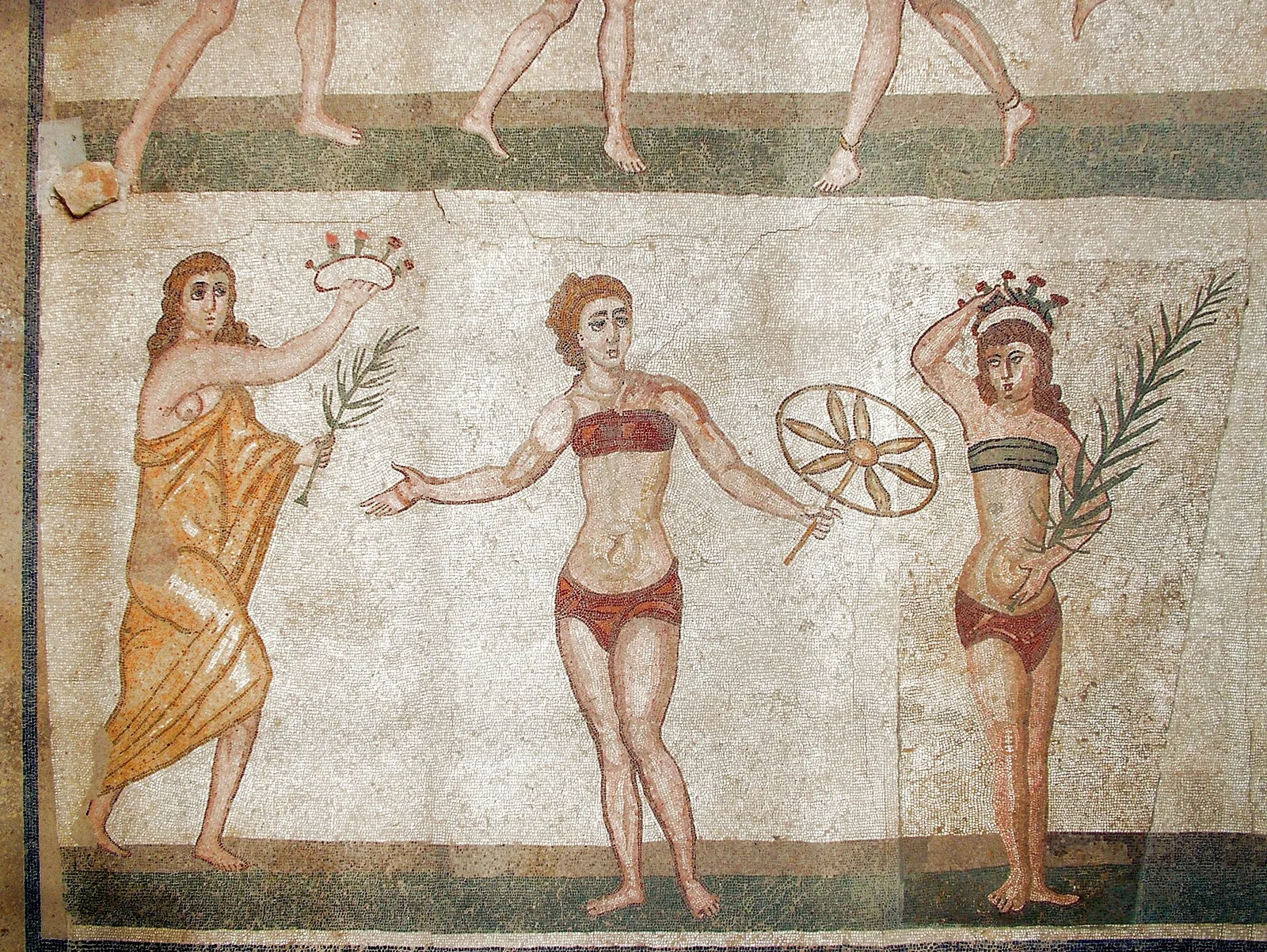
Sixteen centuries before Louis Réard sewed his first triangle, the young women of the Villa Romana del Casale, near Piazza Armerina in Sicily, were already wearing two-piece outfits that would pass unnoticed on any beach today. The villa’s famous early-4th-century mosaic — the Sala delle Dieci Ragazze, the “Room of the Ten Girls” — shows nine of its ten women in bandeau tops and briefs, lifting hand weights, throwing a discus and running races (Ancient World Magazine). One of them is being handed a crown of roses and a palm frond: she has just won.
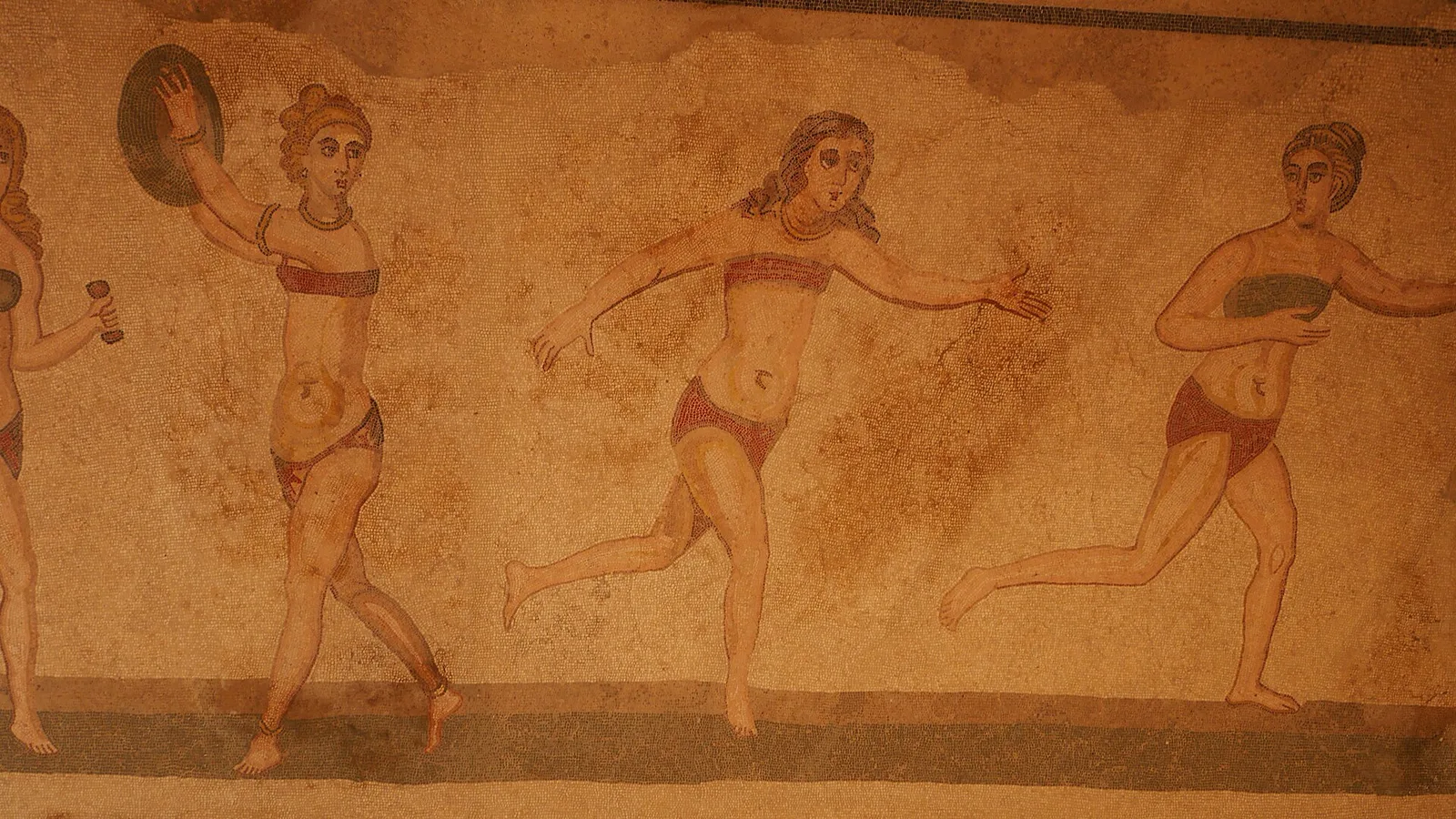
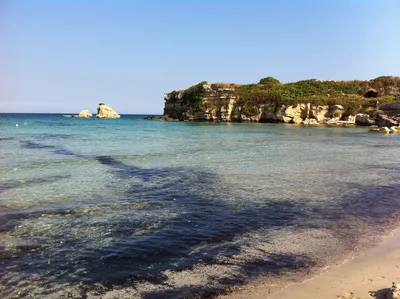
Archaeologists will politely remind you that this was sportswear, not swimwear — the bottom was a subligaculum, a garment Romans also wore as underwear — which technically makes the “bikini girls” the world’s first documented athleisure influencers. The mosaic survived under a mudslide for centuries, was excavated in the 20th century, and now draws visitors to a UNESCO-listed villa a short drive from Sicily’s southern beaches — pair the visit with a swim at Fontane Bianche, near Syracuse. The point stands: when the bikini scandalised the world in 1946, it was a 1,600-year-old rerun.
1946: an engineer, an atomic bomb and a dancer from the Casino de Paris
The modern bikini was invented twice, in the same city, in the same summer — by two Frenchmen locked in the pettiest arms race in fashion history. In May 1946, couturier Jacques Heim launched a two-piece he called the Atome and hired skywriters to advertise “the world’s smallest bathing suit” over the Riviera. Louis Réard — an automobile engineer who had taken over his mother’s Paris lingerie business, a career pivot that worked out — answered by slicing the design down to 30 square inches (about 194 cm²) of newspaper-print fabric and sending up his own skywriters: smaller than the smallest bathing suit in the world (Wikipedia).
Réard also out-marketed Heim on the name. Four days before his launch, on 1 July 1946, the United States had detonated an atomic bomb at Bikini Atoll in the Marshall Islands, and the word was on every front page. Réard wanted his suit to be “explosive” too, so he borrowed the atoll’s name outright — a marketing decision the Smithsonian has soberly described as tying a swimsuit to the biggest news story on Earth (Smithsonian Magazine). The Atome never stood a chance.
One problem remained: no professional model would wear the thing. Réard solved it by hiring Micheline Bernardini, a 19-year-old dancer from the Casino de Paris whose working wardrobe made the bikini look like overdressing. On 5 July 1946, at the Piscine Molitor public pool, she modelled the world premiere in newsprint-patterned fabric — a wink at the headlines Réard knew were coming — while holding a matchbox-sized container the whole suit could fold into (History.com). She went on to receive some 50,000 fan letters, which in 1946 had to be written by hand.
Banned, condemned, ticketed (allegedly)
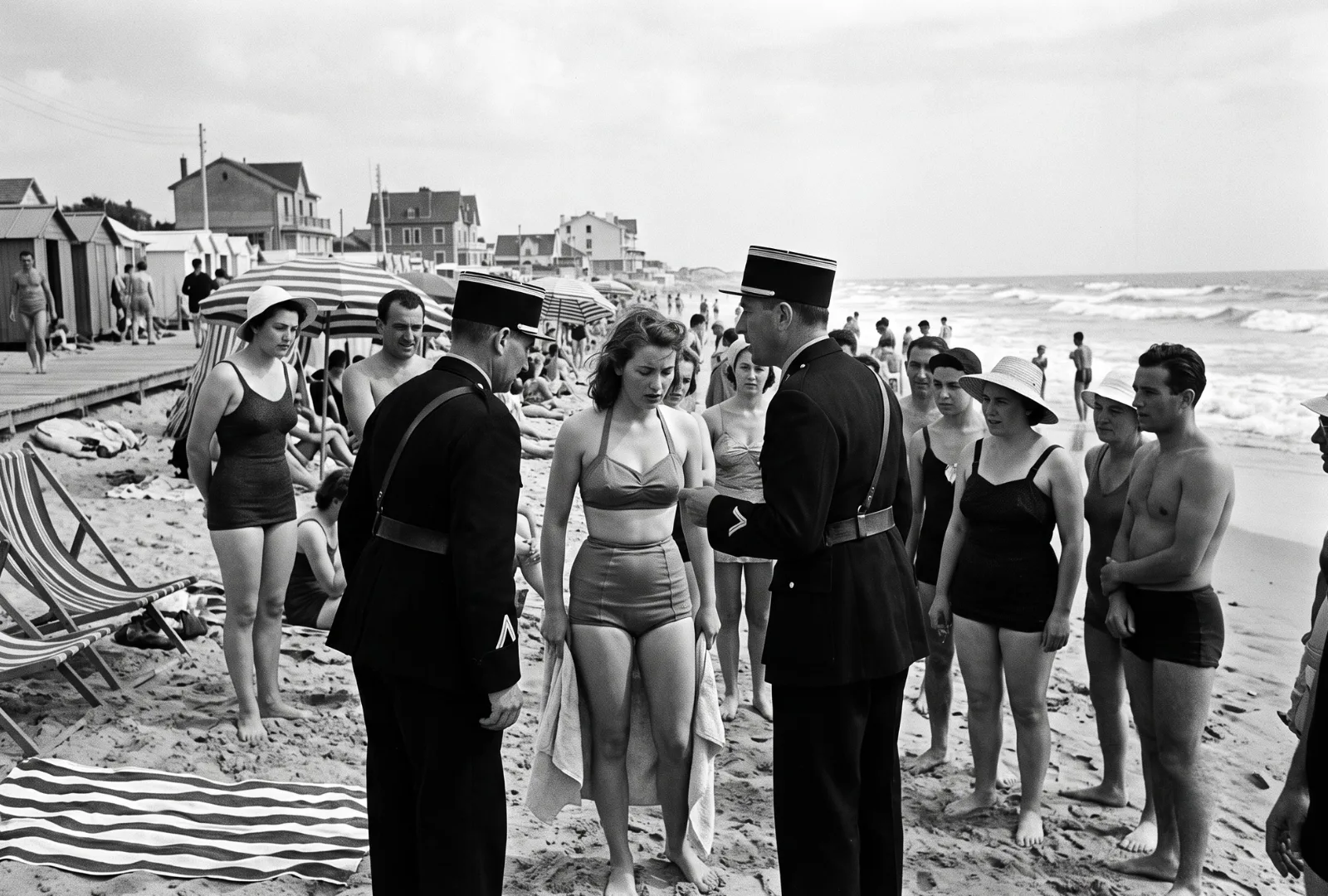
The backlash was immediate and spectacular. The Vatican declared the bikini sinful; it was banned from beaches and public places in Spain, Italy, Portugal, Belgium and Australia, on part of the French Atlantic coast, and discouraged or prohibited in several US states (Wikipedia). For a decade the bikini lived the life of a fugitive: technically existing, rarely seen, permanently scandalous.
The scandal peaked in 1951 at the very first Miss World — a contest literally invented, as the “Festival Bikini Contest”, to advertise swimwear. Sweden’s Kiki Håkansson was crowned wearing a bikini, Pope Pius XII condemned the crowning, several countries threatened to withdraw their delegates, and the organisers surrendered: from 1952 winners were crowned in evening gowns. Seventy-five years later, Håkansson remains the only Miss World ever crowned in a bikini — one of history’s more niche unbreakable records.
And the internet’s favourite piece of bikini history? The black-and-white photo of an Italian policeman apparently ticketing a bikini-clad woman on a beach in Rimini in 1957. Enjoy it responsibly: fact-checkers found the photograph itself is genuine but nobody has ever verified what it shows — it may be staged, or the ticket may have had nothing to do with the swimsuit (Snopes). A garment this good at generating headlines was never going to be above generating a fake one.
The rescue: Bardot, a silly song and a Bond girl

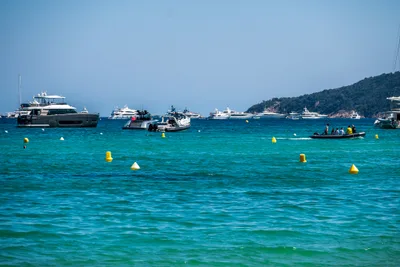
What saved the bikini wasn’t a designer. It was a 19-year-old at a film festival. In May 1953, Brigitte Bardot posed in a floral bikini on the beach at Cannes and the photographs went as viral as 1953 allowed (The Hollywood Reporter). Three years later she wore one in And God Created Woman, filmed in a fishing village called Saint-Tropez — and the fishing village has been recovering from the publicity ever since. If you want to swim where the legend was minted, the mythical sands of Pampelonne are in our Atlas: Plage de Tahiti, Ramatuelle.
Then came the novelty song. In 1960, Brian Hyland’s Itsy Bitsy Teenie Weenie Yellow Polka Dot Bikini — a two-minute story about a girl too embarrassed to leave the changing room — hit number one in the US and is widely credited with helping to normalise the bikini for an entire generation of self-conscious shoppers (Wikipedia). Remember the polka dots; they’ll be back at the end of this article.
The final blow was delivered in 1962, when Ursula Andress walked out of the Caribbean in Dr. No wearing a white bikini with a dive knife on the hip — routinely called the most famous bikini of all time. The suit itself sold at Christie’s in 2001 for £41,125 (Wikipedia), roughly £1,370 per square inch of fabric, making it — per unit area — one of the most valuable garments ever auctioned. The scene was shot in Jamaica; the island’s most famous stretch of sand, Seven Mile Beach in Negril, is in the Atlas for anyone planning a pilgrimage.
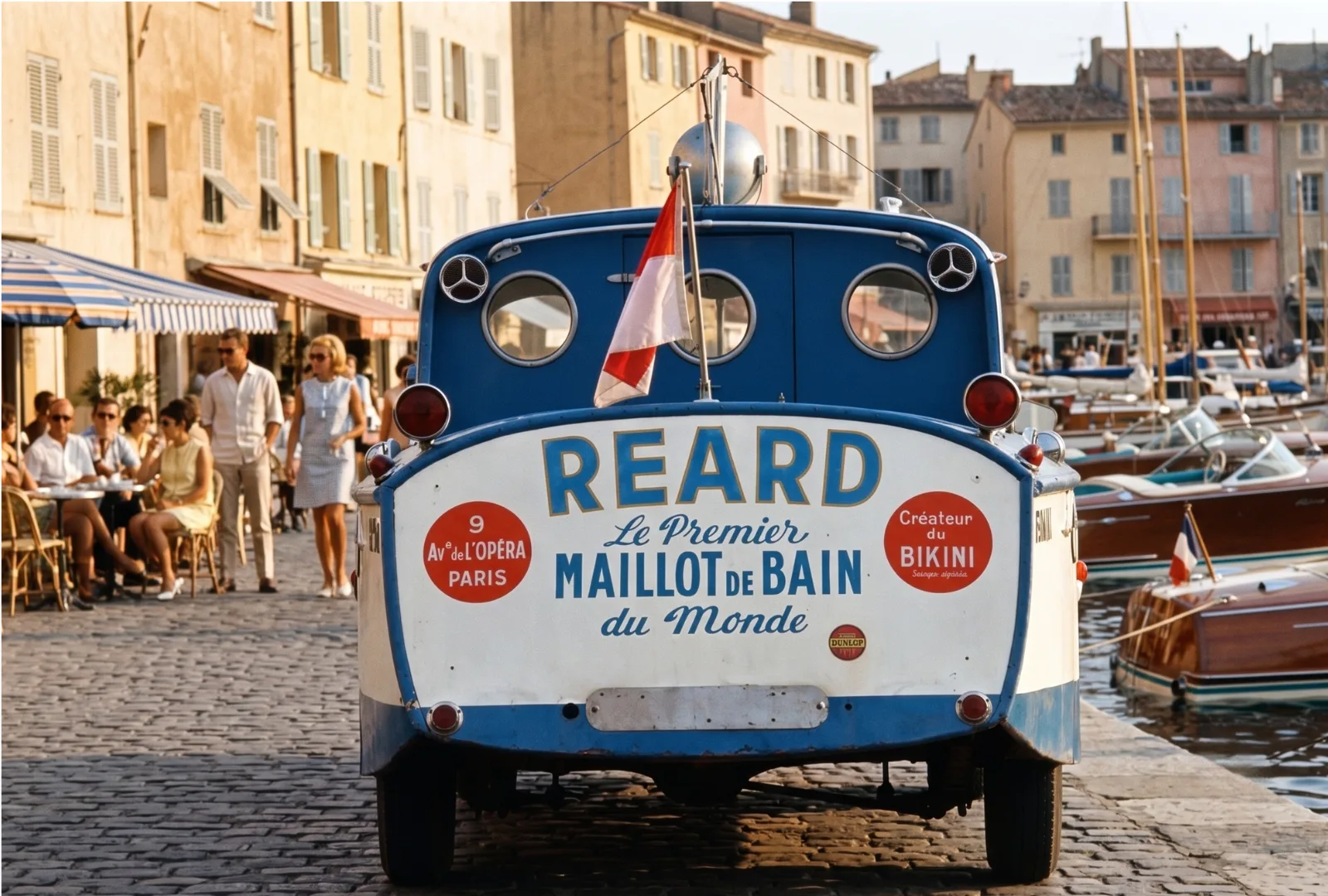
The bikini at 80: what 2026 looks like

The 80th birthday, on 5 July 2026, arrived with the traditional flood of anniversary coverage — and one genuinely philosophical question. With “micro” and “nano” styles shrinking every season, AFP’s birthday dispatch asked the only question left: at what point is a bikini no longer a bikini? One influencer marked the occasion by attempting a “world’s smallest bikini” record with about three centimetres of combined fabric — a garment Louis Réard, a man who demanded his product fit through a wedding ring, would presumably have found excessive… ly large (The Star / AFP).
The actual 2026 trend reports, meanwhile, point the other way. This summer’s swimwear is about structure over string: wider bands, supportive sporty cuts, quiet-luxury minimalism with contrast trims, crochet textures, and softer colours — butter yellow, sunset orange, deep teal (Who What Wear, Marie Claire). And yes: polka dots are officially back. Sixty-six years after Brian Hyland, the itsy bitsy teenie weenie yellow polka dot bikini is once again a legitimate fashion purchase. History doesn’t repeat itself, but it clearly goes swimming.
Where to wear it — a short cultural field guide
Eighty years on, the bikini is legal on virtually every beach it was once banned from — including all of Spain, Italy and Australia. The modern rules are subtler, and they’re mostly about geography: what’s fine on the sand can be a fine on the street.
- Sorrento, Italy — since 2022, walking through town in a bikini or shirtless can cost you up to €500; the mayor cited “discomfort and unease” among residents (The Local).
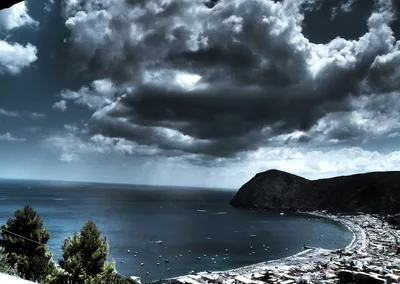
- Lipari, Sicily — the largest of the Aeolian Islands has banned swimwear in the town centre since 2013. On the beach itself, carry on: the island’s lovely pebbled Spiaggia di Canneto is entirely bikini-approved.
- Barcelona, Spain — beachwear away from the beach has been banned since 2011; Tropea in Calabria followed in 2019. The pattern is Europe-wide: sand yes, piazza no.
- Elsewhere in the world — norms vary enormously, from Brazil (where the bikini is practically national dress) to more conservative destinations where swimwear belongs only on designated beaches. The universal rule: five minutes of checking local custom beats an awkward conversation with local police.
Wherever you land, the Atlas has you covered: browse iconic beaches for the Bardot-grade legends, luxury for the beach-club scene, or relaxed and family-friendly shores where nobody cares what decade your swimsuit is from. And whatever you wear, you’ll leave with the same souvenir humanity has collected since the Romans: sand in it. We have a guide for that too.
Frequently asked questions
Who invented the bikini, and when?
The modern bikini was unveiled by French engineer-turned-lingerie-designer Louis Réard on 5 July 1946 at the Piscine Molitor in Paris, weeks after couturier Jacques Heim launched a slightly less minimal two-piece called the “Atome”. Réard’s version — 30 square inches of newsprint-patterned fabric — was modelled by Micheline Bernardini, a 19-year-old Casino de Paris dancer, because no professional model would wear it. Two-piece outfits themselves are far older: a 4th-century Roman mosaic in Sicily shows women exercising in strikingly similar gear.
Why is it called a “bikini”?
Réard named it after Bikini Atoll in the Marshall Islands, where the United States had detonated an atomic bomb on 1 July 1946 — four days before his launch. The test dominated world headlines and Réard wanted his design to feel just as “explosive”. It was a naming coup: his rival’s “Atome” — also atomic-themed — is remembered only by fashion historians.
Was the bikini really banned?
Yes, widely. In the late 1940s and 1950s it was banned from beaches and public places in Spain, Italy, Portugal, Belgium and Australia, on part of the French Atlantic coast, and prohibited or discouraged in several US states; the Vatican declared it sinful. After Miss World 1951 crowned Sweden’s Kiki Håkansson in a bikini, Pope Pius XII condemned the crowning and the pageant switched to evening gowns — she remains the only Miss World ever crowned in one.
What is the most famous bikini of all time?
By common consent, the white bikini Ursula Andress wore as Honey Ryder in the 1962 James Bond film “Dr. No”, emerging from the sea with a dive knife on the hip. The scene was filmed in Jamaica, and the suit sold at Christie’s in 2001 for £41,125. Honourable mentions: Micheline Bernardini’s newsprint original from 1946 and Brigitte Bardot’s floral two-piece at Cannes in 1953, which helped turn Saint-Tropez into the bikini capital of the world.
Can you still get fined for wearing a bikini?
On the beach, essentially nowhere in Europe. In town, yes: Sorrento has fined walking through the centre in swimwear (up to €500) since 2022, Lipari since 2013, Barcelona since 2011 and Tropea since 2019. The rule of thumb almost everywhere: bikinis belong on the sand and by the pool; put something on top before heading to the shops. In more conservative destinations, check local custom — some countries restrict swimwear to designated tourist beaches.
What are the big bikini trends for summer 2026?
Structure over string: wider bands, supportive and sporty cuts, quiet-luxury minimalism with contrast edges, crochet textures, and softer colours like butter yellow and deep teal. The playful headline trend is the return of polka dots — 66 years after “Itsy Bitsy Teenie Weenie Yellow Polka Dot Bikini” topped the charts. At the other extreme, ever-smaller “micro” styles keep making news, with fashion writers asking at what point a bikini stops being a bikini at all.
This article is general travel and cultural information, written for the bikini’s 80th anniversary in July 2026 and checked against the sources linked in the text. Historical anecdotes are reported as the sources give them — including one famous photo whose story remains unverified. Local dress rules, fines and cultural norms change and vary from town to town: always check the official local source before you travel. Where Is My Beach is not responsible for decisions made on the basis of this article, or for any wardrobe choices, however itsy bitsy.
Photo credits
Sources and licenses for the photos shown above.
- Photo 1 — AI-generated illustration · Where Is My Beach
- Photo 2 — AI-generated illustration · Where Is My Beach
- Photo 3 — AI-generated illustration · Where Is My Beach
- Photo 4 — AI-generated illustration · Where Is My Beach
- Photo 5 — AI-generated illustration · Where Is My Beach
- Photo 6 — Photo by Clemensfranz on Wikimedia Commons · CC BY 2.5