Wineglass BayAustralia Beach Guide
White sand, pink granite, zero roads — earn every step
About
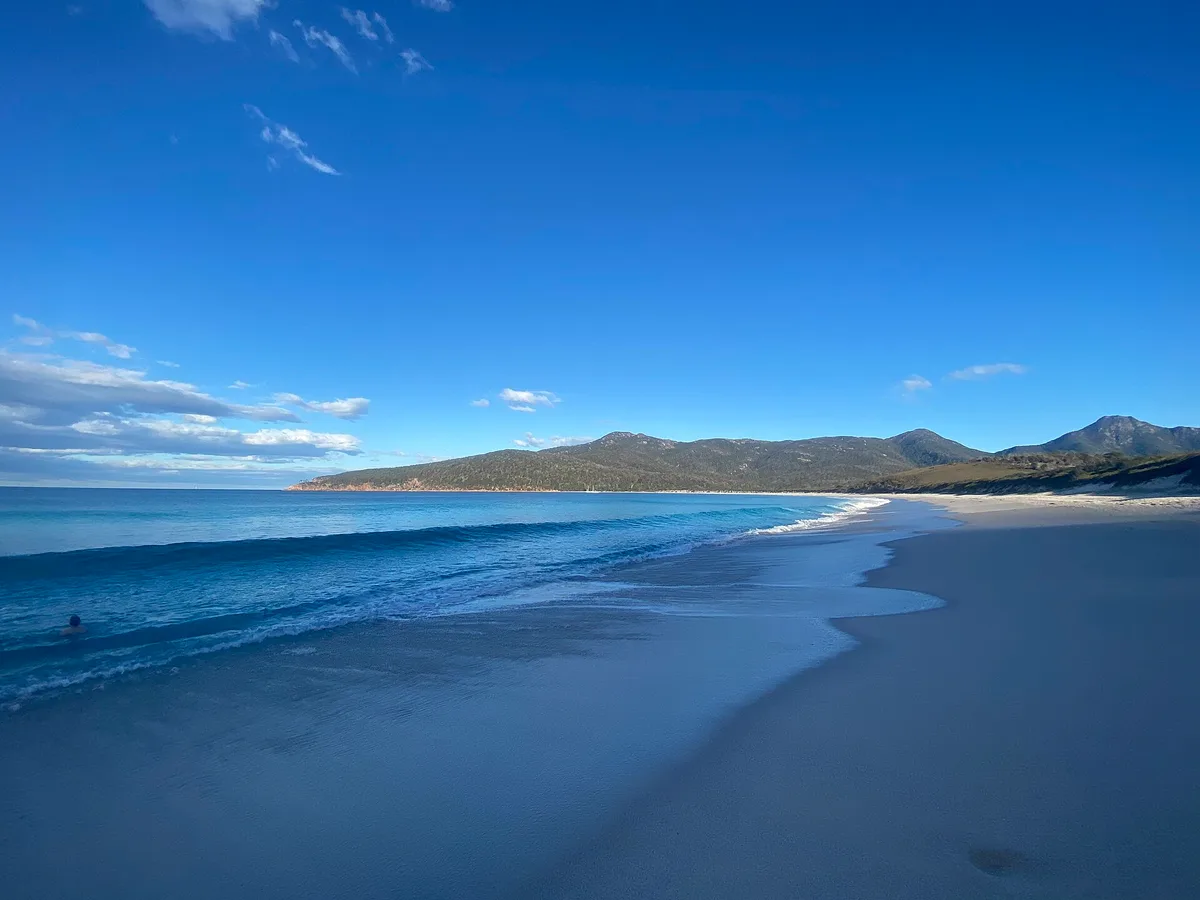
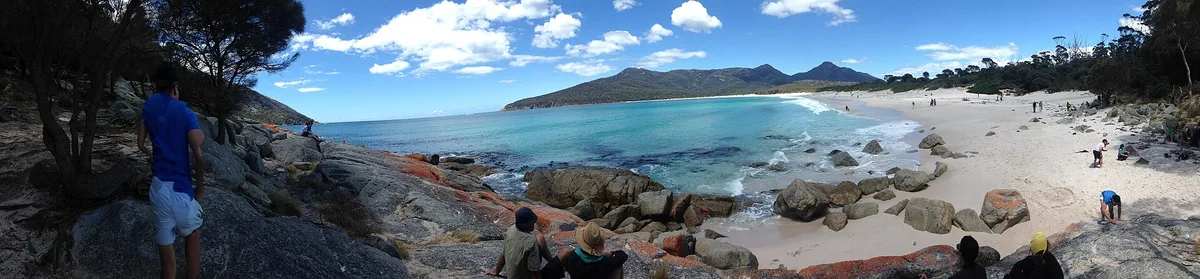
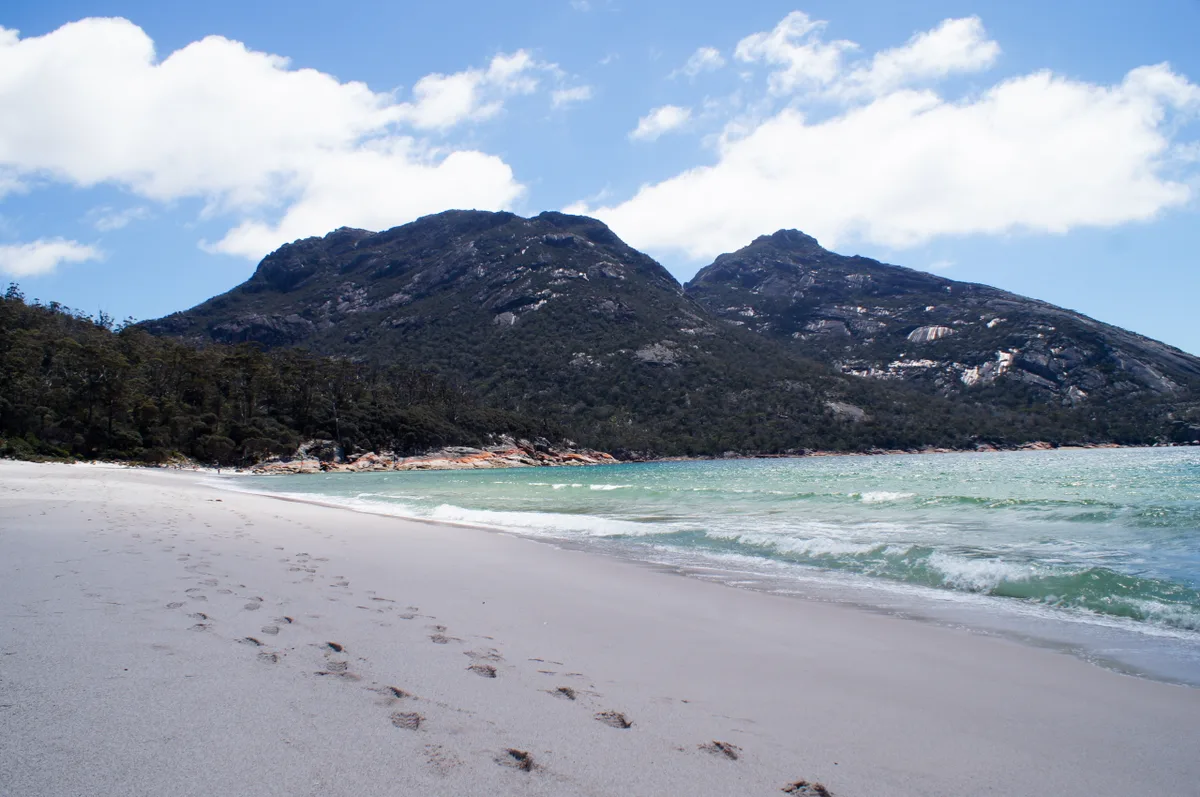
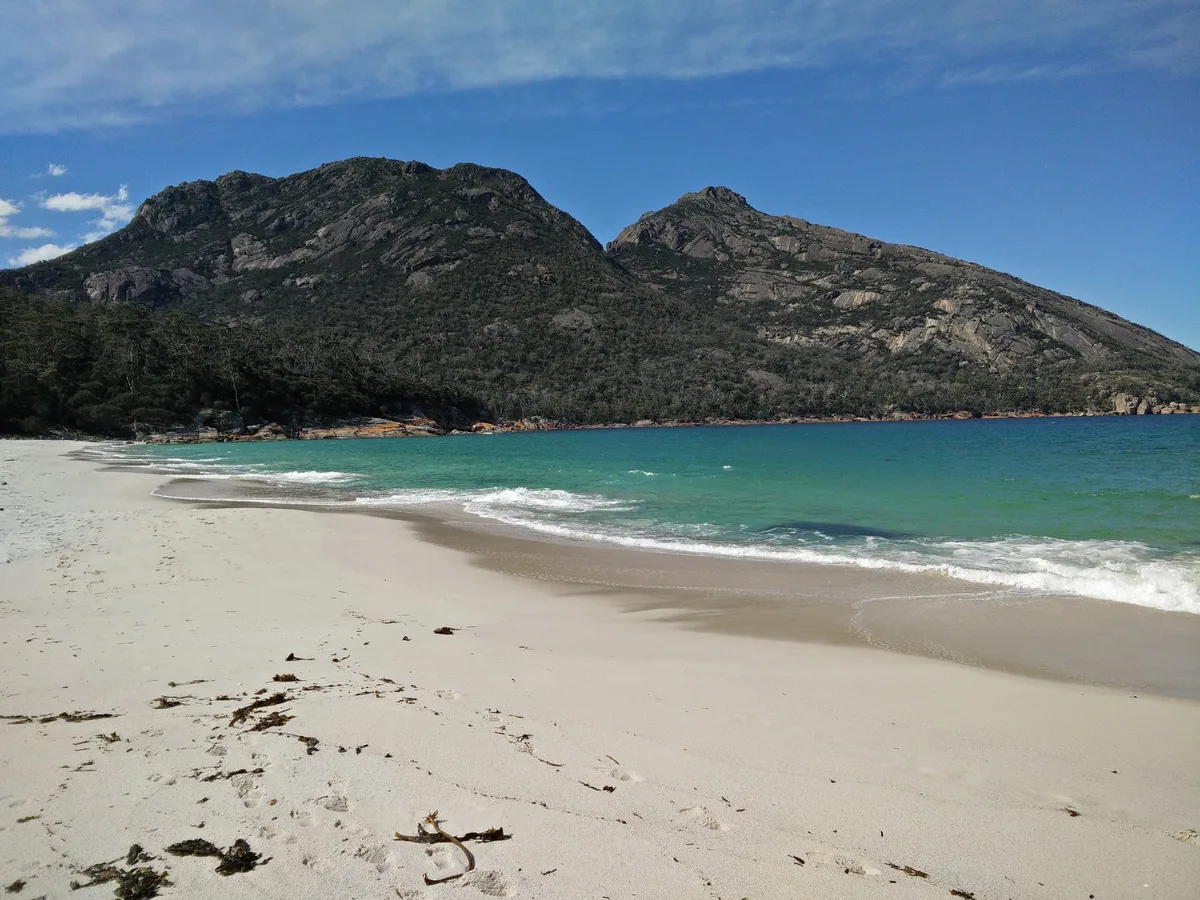
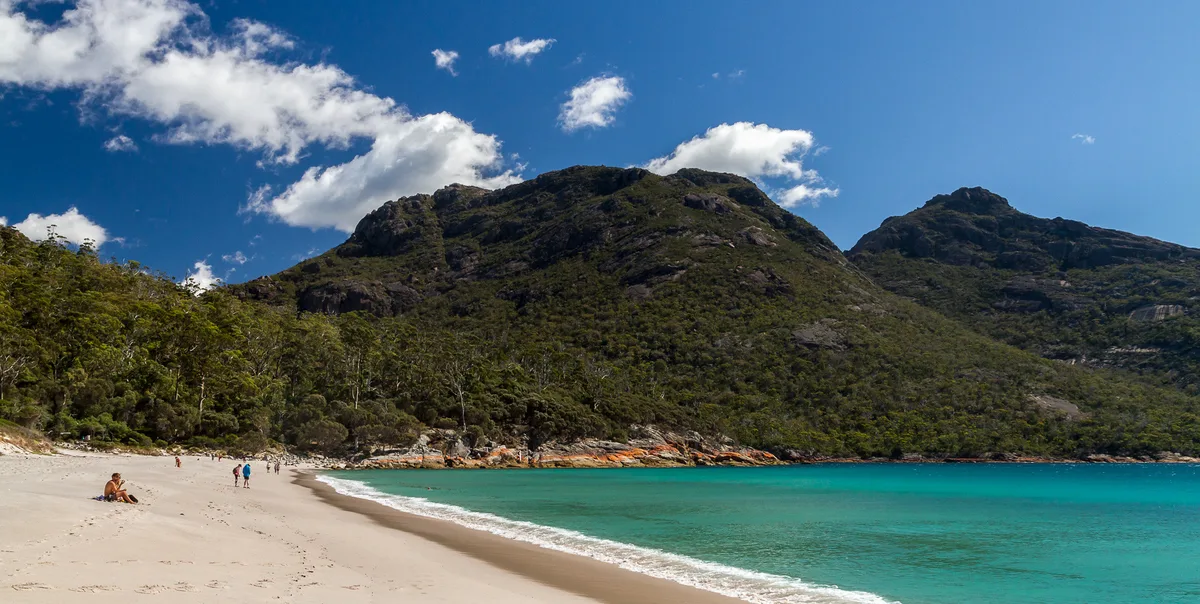
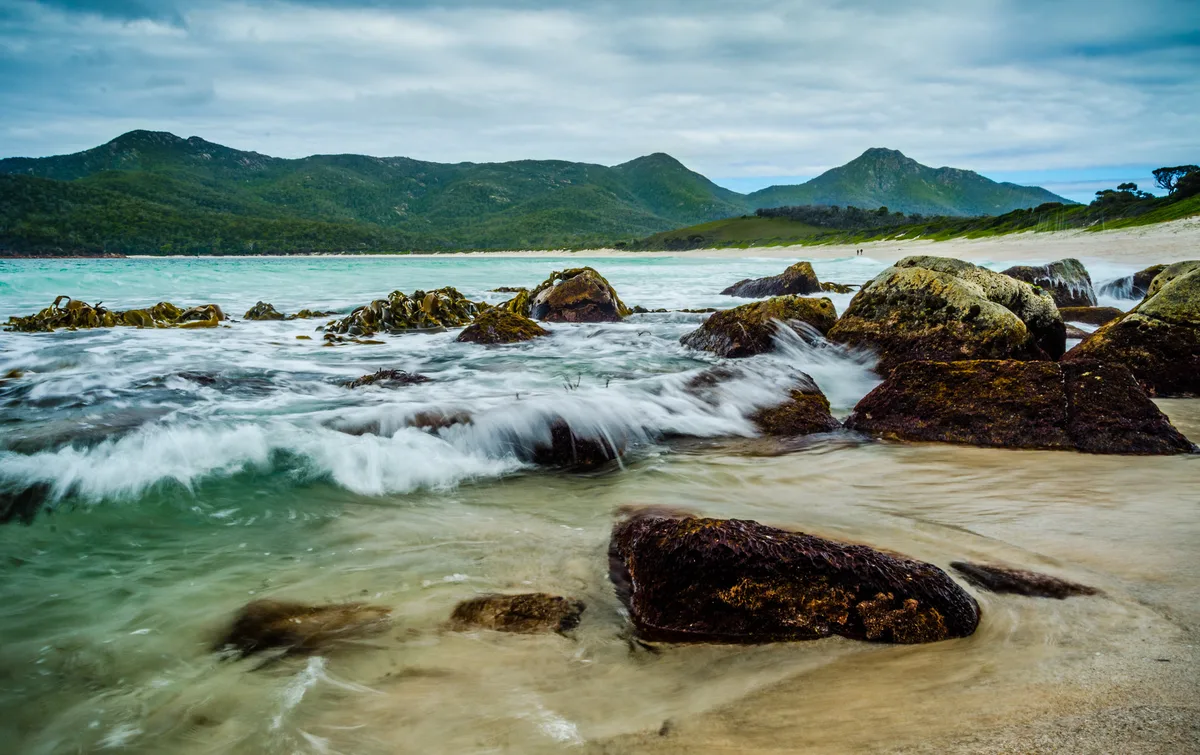
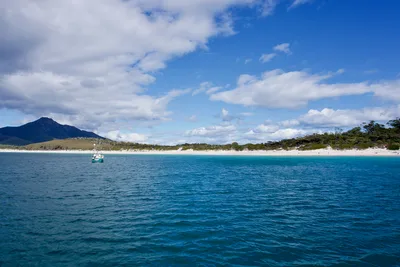
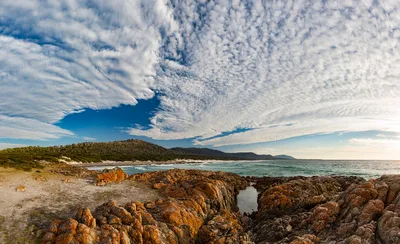
Wineglass Bay sits on the east coast of Tasmania's Freycinet Peninsula, a crescent of silica-white sand framed by towering pink granite headlands and lapped by turquoise water. There are no roads here, no cafés, no showers — just the bay in its raw, unhurried state. The beach stretches roughly 1,700 metres, and on a clear summer morning the colour contrast between the sand, the granite, and the water is as sharp as a postcard. Wombats have been spotted wandering the shoreline at dusk, unbothered by the occasional hiker who's earned their way down. It's wild in the best sense — and the effort required to reach it keeps the experience honest.
How to get there
Wineglass Bay has no road access whatsoever — you arrive on foot or by water, full stop. The classic route is the hike from the Wineglass Bay car park inside Freycinet National Park: a 150-minute return over the saddle between Mt Amos and Mt Mayson, on a rocky trail that is steep in sections and not suitable for wheelchairs or prams. If you'd rather skip the climb, a boat from Coles Bay takes around 30 minutes and runs daily. Entry to Freycinet National Park costs AUD 40.00 per vehicle per day, waived with an Annual All Parks Vehicle Pass (AUD 90.00) or a Holiday National Parks Pass.
Who it's for
For couples
The hike over the saddle and the long, quiet stretch of silica-white sand at the bottom make this one of those rare places where the journey and the destination both deliver — bring a picnic and stay until the daytrippers have gone back over the hill.
For families
Older children who can manage a 150-minute rocky hike will find the wombat sightings and the pink granite headlands genuinely exciting, but the steep saddle trail, the absence of any facilities, and the rip currents in the water make this a poor fit for toddlers, prams, or non-swimmers.
Our take
Rip currents are present and there are no lifeguards — be honest with yourself about swimming conditions before you wade in. That said, Wineglass Bay earns its reputation on everything that surrounds the water: the silica-white sand, the pink granite walls, the saddle view that stops you mid-step. The 150-minute hike is genuinely steep on a rocky trail, so don't underestimate it and don't arrive without water. Skip June through August — cold southerly swells, icy conditions on the saddle track, and short daylight hours make the effort unrewarding. December through March is the window: long days, the best light on the turquoise water, and a real chance of spotting a wombat on the sand at dusk. Worth every step of the climb.
What to do
Before you descend to the beach, stop at the Freycinet National Park Lookout on the saddle (0.5 km from the trail junction) for the classic elevated view of the bay's white crescent — it's the shot most people come for. The Wineglass Bay Lookout activity trail at 1.3 km is a manageable side trip that rewards you with a different angle on the headlands. If you have the legs for more, the Freycinet Peninsula Circuit connects the bay to Hazards Beach, 3.5 km away — a wilder, less-visited stretch of coastline on the western side of the peninsula. Sleepy Bay, a wave-sculpted pink granite cove, is about 4 km away and worth the detour on your way back.
The Freycinet National Park Lookout on the saddle is the iconic frame — the full white crescent of the bay curves between pink granite headlands with turquoise water below, best shot in early morning light.
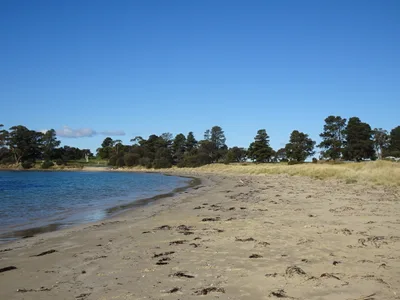
On the beach itself, the base of the southern granite headland gives you the bay's length in one sweep, with the sand's silica brightness doing the heavy lifting on any clear day.
Where to eat
There is no food or drink available at Wineglass Bay — not a kiosk, not a tap, nothing. Pack everything you need before you leave Coles Bay, the nearest village roughly 4.5 km away, and carry it in and out yourself.
Where to stay
There is no accommodation at the beach itself. Coles Bay, about 4.5 km away, is the closest base for visitors exploring Freycinet National Park.
Photography
The saddle lookout at Freycinet National Park Lookout (Wineglass Bay Saddle) is the definitive shot — arrive early morning when the turquoise water catches the low eastern light and the pink granite glows. Down on the beach, the headland reflections in the shallows at either end of the 1,700-metre crescent reward a wide-angle lens, especially in the hour before sunset.
Good to know
No lifeguards patrol this beach and rip currents are present — swim with real caution, stay close to shore, and never swim alone. Carry all the water you'll need for the hike; there are absolutely no facilities at the beach. Pack out every piece of rubbish, light no campfires, and keep strictly to marked trails — these are enforceable national park rules, not suggestions. Dogs are prohibited throughout Freycinet National Park, so leave them at home. True digital-detox territory — bring offline books, because cell signal fades fast and there's nowhere to plug anything in.
GAMES
🕹️ Five minutes of sand?
Three daily games — including the UV simulator set to this beach.
Map
Nearby places
Wineglass Bay Lookout
Coles Bay Lookout
Freycinet National Park Lookout (Wineglass Bay Saddle)
Hazards Beach
Sleepy Bay
Things to see around Glamorgan-Spring Bay
Freycinet National Park Lookout (Wineglass Bay Saddle)
The classic elevated view of Wineglass Bay crescent from the saddle between Mt Amos and Mt Mayson.
Hazards Beach
The wilder western counterpart to Wineglass Bay, reached via the Freycinet Peninsula Circuit.
Sleepy Bay
Wave-sculpted pink granite cove on the eastern tip of the peninsula, short drive from the car park.
GIFT
🎁 Gift this beach
Its exact coastline, your date, your words — on a print or a PDF you print yourself.
Wineglass Bay
THAT DAY
Wineglass Bay, Tasmania
© OpenStreetMap contributors
Clean & decorative, or “That day” with the real sky of your date.
Shipping included 3-6 business days
A question before you order? Contact us
Delivered within minutes on the confirmation page and by email: a ZIP with all 4 print sizes (30×40 cm, 12×16″, 50×70 cm, 18×24″), each as a high-resolution PDF and PNG (300 dpi), plus a screen version. Print at home or at any print shop.
Please complete the delivery address.
Please accept the Terms of Sale.
Almost there — the shop opens very soon.
Secure payment · Printed locally in 30+ countries · 7 languages
Frequently asked
The information on this page is provided for guidance only and may evolve. Access conditions, safety and infrastructure can change without notice. Always check official sources before traveling.
Nearest beaches
Other wild beaches in Australia
Reviews of this beach
- No reviews yet, what a shame — leave yours and share your experience.
Photo credits
Sources and licenses for the photos shown above.
- Photo 1 — Jane6592 · source · CC BY-SA 4.0
- Photo 2 — Samfatemi · source · CC BY-SA 4.0
- Photo 3 — Paulscho203 · source · CC BY-SA 4.0
- Photo 4 — andrewharvey4 · source · CC BY 2.0
- Photo 5 — Stephen Edmonds · source · CC BY-SA 2.0
- Photo 6 — Shaun Versey · source · CC BY-SA 2.0