Sleepy Bay BeachAustralia Beach Guide
Wild pink granite, turquoise water, zero sand

About
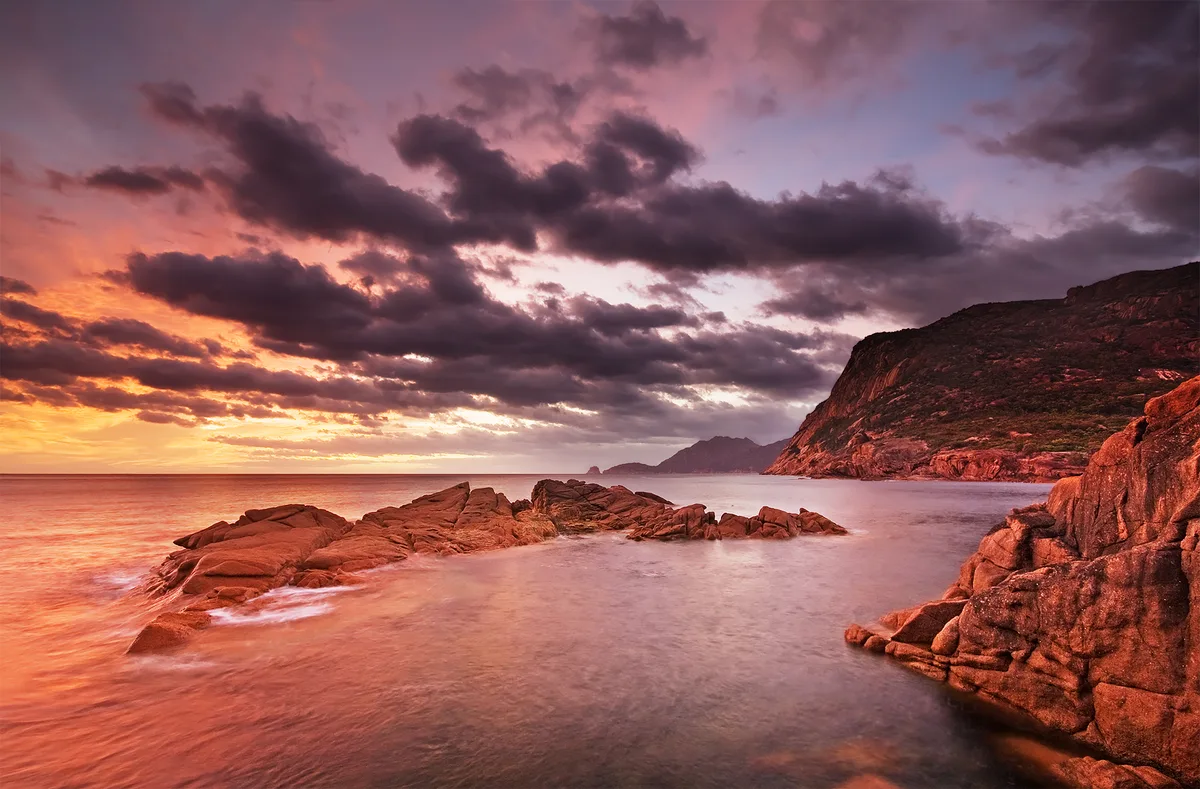
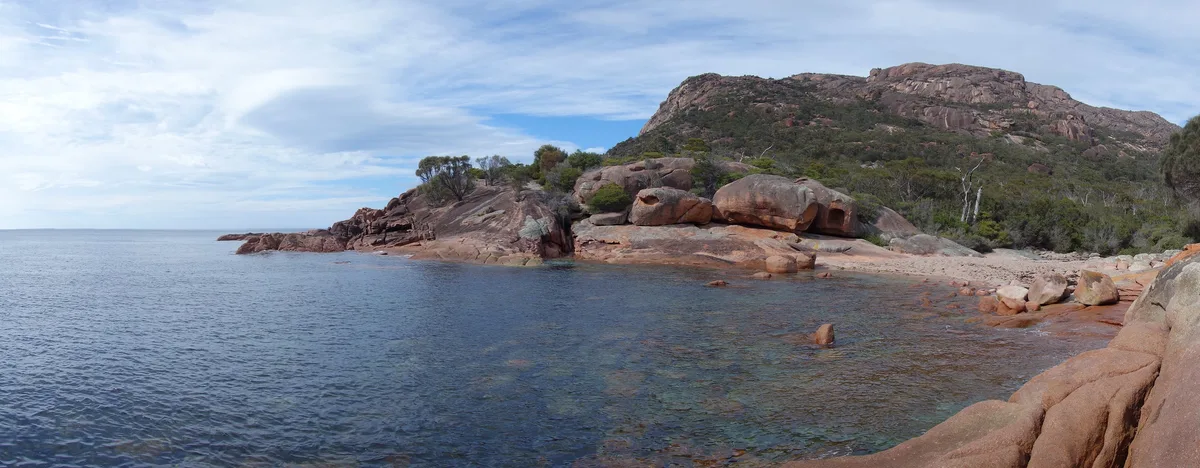
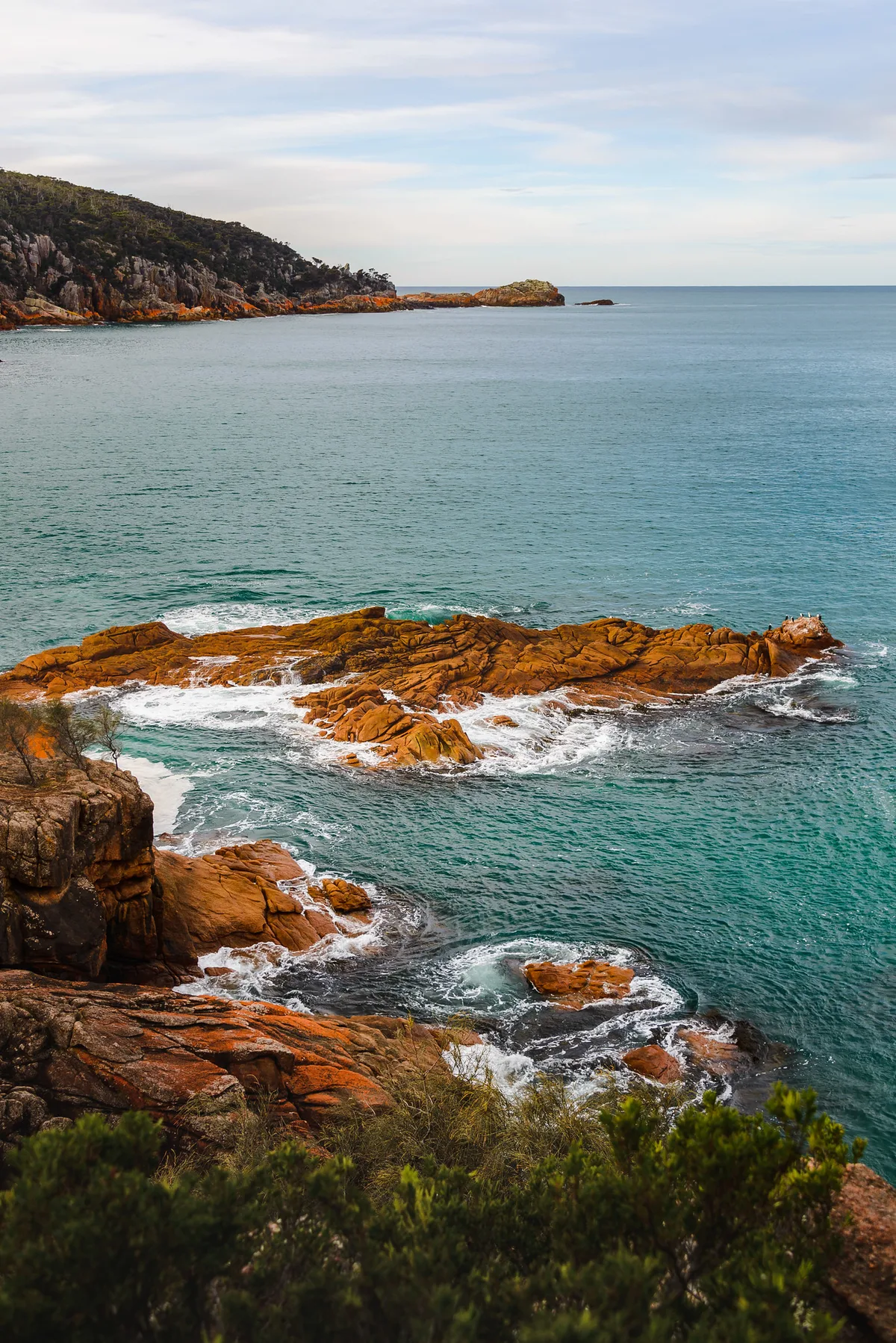
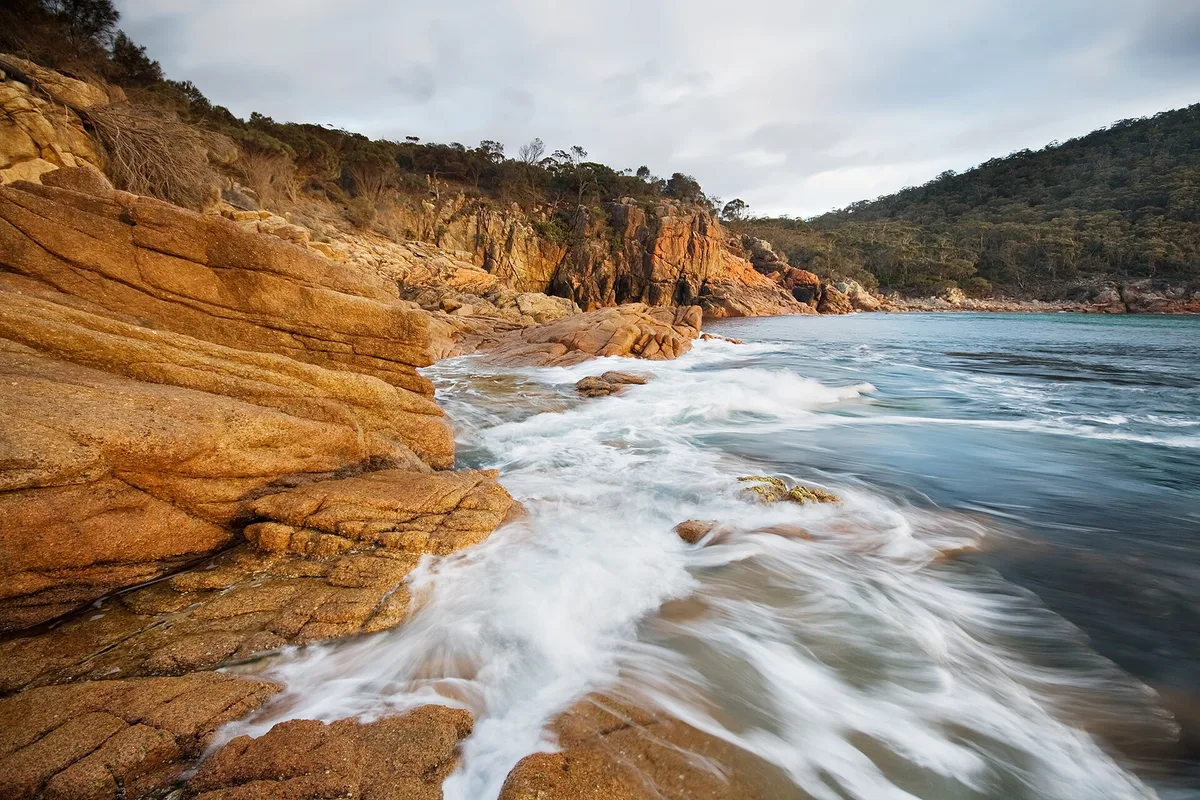
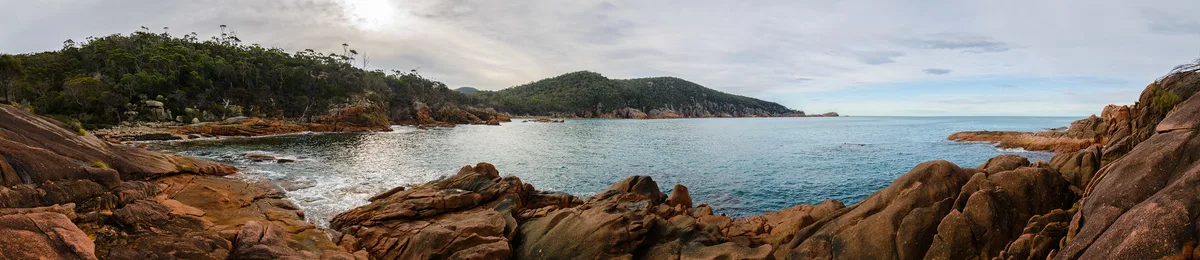
Sleepy Bay sits on Tasmania's east coast within Freycinet National Park, a compact rocky cove where wave-sculpted pink granite meets open Tasman Sea. There's no sand foreshore here — just smooth, rounded boulders shaped over millennia, dropping into turquoise water that surges and retreats with raw southern-ocean energy. The exposure to open sea keeps the vibe genuinely wild, even on calm days. It's a place you come to look, listen, and photograph — not to swim or sunbathe. Quiet by nature, it rewards visitors who arrive early and stay patient.
How to get there
Drive from Coles Bay through Freycinet National Park to the Sleepy Bay car park — about 15 minutes. Parking is paid national park entry at AUD 46.60 per vehicle per day; the small car park fills quickly in peak season, so arrive early. Alternatively, Pennicott Wilderness Journeys operates ferry services to the area, with journey options of approximately 30 minutes and 105 minutes depending on the route. From the car park, a short but steep access track leads down to the cove — allow extra time if conditions are wet.
Who it's for
For couples
Sleepy Bay is a strong choice for couples who want dramatic coastal scenery without the distraction of a busy beach scene — the wild granite foreshore and turquoise water create a naturally intimate setting for slow exploration and photography.
For families
Families with young children should approach with caution: there's no sand, no safe swimming, and the steep rocky track demands sure footing. Older children who are steady on their feet and genuinely interested in geology or coastal landscapes will get more from the visit than toddlers or non-walkers.
Our take
Do not swim here — the rocks are exposed, the surge is real, and there are no lifeguards. That said, Sleepy Bay is one of the most geologically striking coastal spots on Tasmania's east coast, and it earns its place on any serious photographer's itinerary. The wave-sculpted pink granite is the headline act, and the turquoise water framing those boulders is genuinely arresting. Come in the December-to-March window, arrive before the daytrippers claim the small car park, and give yourself time to sit with the landscape rather than rushing a shot. Avoid winter entirely — June through August brings hazardous swells and potentially icy tracks. It's not a beach for lounging or swimming; it's a place for looking hard at something ancient and beautiful.
What to do
The Sleepy Bay Lookout, just 0.3 km away, gives you an elevated perspective over the cove and is worth the short detour before or after descending to the rocks. Cape Tourville Lookout at 7 km offers panoramic Tasman Sea views, and the Cape Tourville Lighthouse at 4 km is accessible and sits on the eastern peninsula tip. For the iconic postcard shot of the region, the Wineglass Bay Lookout — about 2.9 km away — delivers the famous crescent view from the saddle, roughly 45 minutes' walk from the main car park.
The wave-sculpted pink granite boulders at the water's edge are the defining shot — position low against the rocks with the turquoise Tasman Sea filling the frame.
The Sleepy Bay Lookout at 0.3 km gives a wider elevated angle, capturing the full rocky cove in context with the national park ridgeline behind.
Where to eat
Richardson's Bistro and The Bay Restaurant & Hazards Bar are both around 1.4 km away near the Freycinet Lodge precinct, making them the most convenient options after a morning at the cove. There is no food or water available at Sleepy Bay itself, so bring your own supplies for the visit.
Where to stay
Freycinet Lodge, rated 4.5/5 across over 1,000 reviews and just 1.4 km away, is the closest and most established base for exploring the national park. Freycinet Sanctuary, 2.5 km out and rated 4.7/5, is a smaller and highly regarded option, while BIG4 Iluka on Freycinet Holiday Park at 3.2 km suits those after a more flexible, budget-conscious stay.
Photography
The pink granite boulders at water's edge are the primary subject — shoot in the soft light of early morning or late afternoon when the turquoise water contrasts sharply against the rose-toned rock. The Sleepy Bay Lookout at 0.3 km gives a wider compositional frame, ideal for capturing the full sweep of the cove and the open Tasman horizon.
Good to know
Do not enter the water — exposed rocks, powerful surge, and no lifeguards make this genuinely dangerous for swimming. The access track is steep and can be slippery when wet; wear shoes with grip, and skip the visit entirely in June, July, and August when winter swells make the boulder foreshore hazardous and the track can ice over. Dogs are prohibited throughout Freycinet National Park, no exceptions. Stay off fragile granite surfaces where signed, and no campfires are permitted anywhere in the park.
GAMES
🕹️ Five minutes of sand?
Three daily games — including the UV simulator set to this beach.
Map
Nearby places
Richardson's Bistro
The Bay Restaurant & Hazards Bar
Freycinet Lodge
Freycinet Sanctuary
Freycinet Stone Studio 4
The Loft
BIG4 Iluka on Freycinet Holiday Park
Things to see around Glamorgan-Spring Bay
Wineglass Bay Lookout
The iconic saddle lookout over Wineglass Bay crescent, 45 minutes from the main car park.
Coles Bay Beach
Calm sheltered bay beach in Coles Bay township, the nearest swimming option.
Cape Tourville Lighthouse
Accessible lighthouse on the eastern peninsula tip with panoramic Tasman Sea views.
GIFT
🎁 Gift this beach
Its exact coastline, your date, your words — on a print or a PDF you print yourself.
Sleepy Bay Beach
THAT DAY
Sleepy Bay Beach, Tasmania
© OpenStreetMap contributors
Clean & decorative, or “That day” with the real sky of your date.
Shipping included 3-6 business days
A question before you order? Contact us
Delivered within minutes on the confirmation page and by email: a ZIP with all 4 print sizes (30×40 cm, 12×16″, 50×70 cm, 18×24″), each as a high-resolution PDF and PNG (300 dpi), plus a screen version. Print at home or at any print shop.
Please complete the delivery address.
Please accept the Terms of Sale.
Almost there — the shop opens very soon.
Secure payment · Printed locally in 30+ countries · 7 languages
Frequently asked
The information on this page is provided for guidance only and may evolve. Access conditions, safety and infrastructure can change without notice. Always check official sources before traveling.
Nearest beaches
Other wild beaches in Australia
Reviews of this beach
- No reviews yet, what a shame — leave yours and share your experience.
Photo credits
Sources and licenses for the photos shown above.
- Photo 1 — JJ Harrison (https://www.jjharrison.com.au/) · source · CC BY-SA 3.0
- Photo 2 — minuseleven · source · CC BY 2.0
- Photo 3 — Anthony · source · CC BY-ND 2.0
- Photo 4 — JJ Harrison (https://www.jjharrison.com.au/) · source · CC BY-SA 3.0
- Photo 5 — JJ Harrison (https://www.jjharrison.com.au/) (original) This derivative work… · source · CC BY-SA 3.0
- Photo 6 — Anthony · source · CC BY-ND 2.0