Fortescue Bay BeachAustralia Beach Guide
Wild Tasmanian bay where dolerite cliffs meet white sand
About
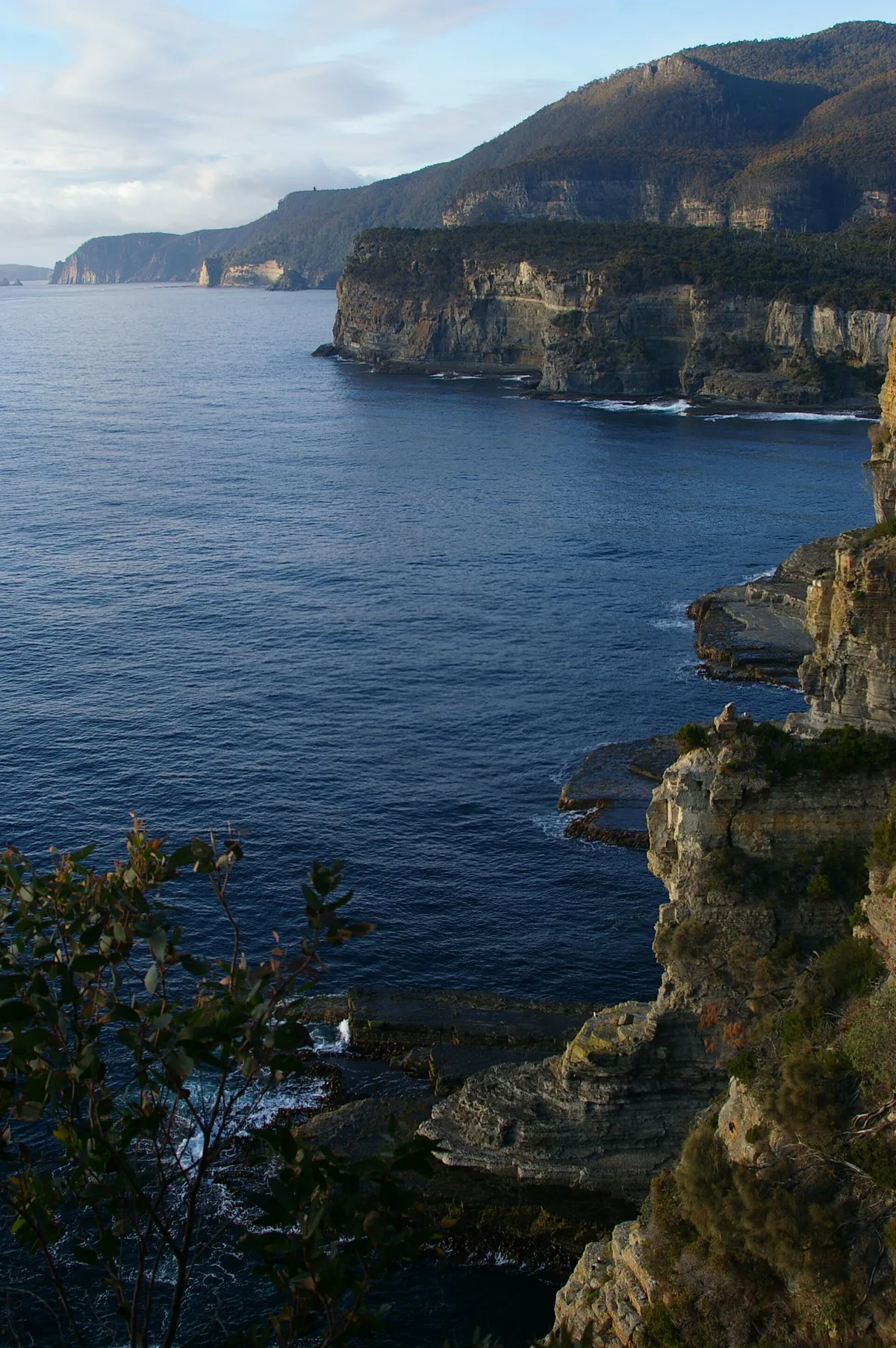
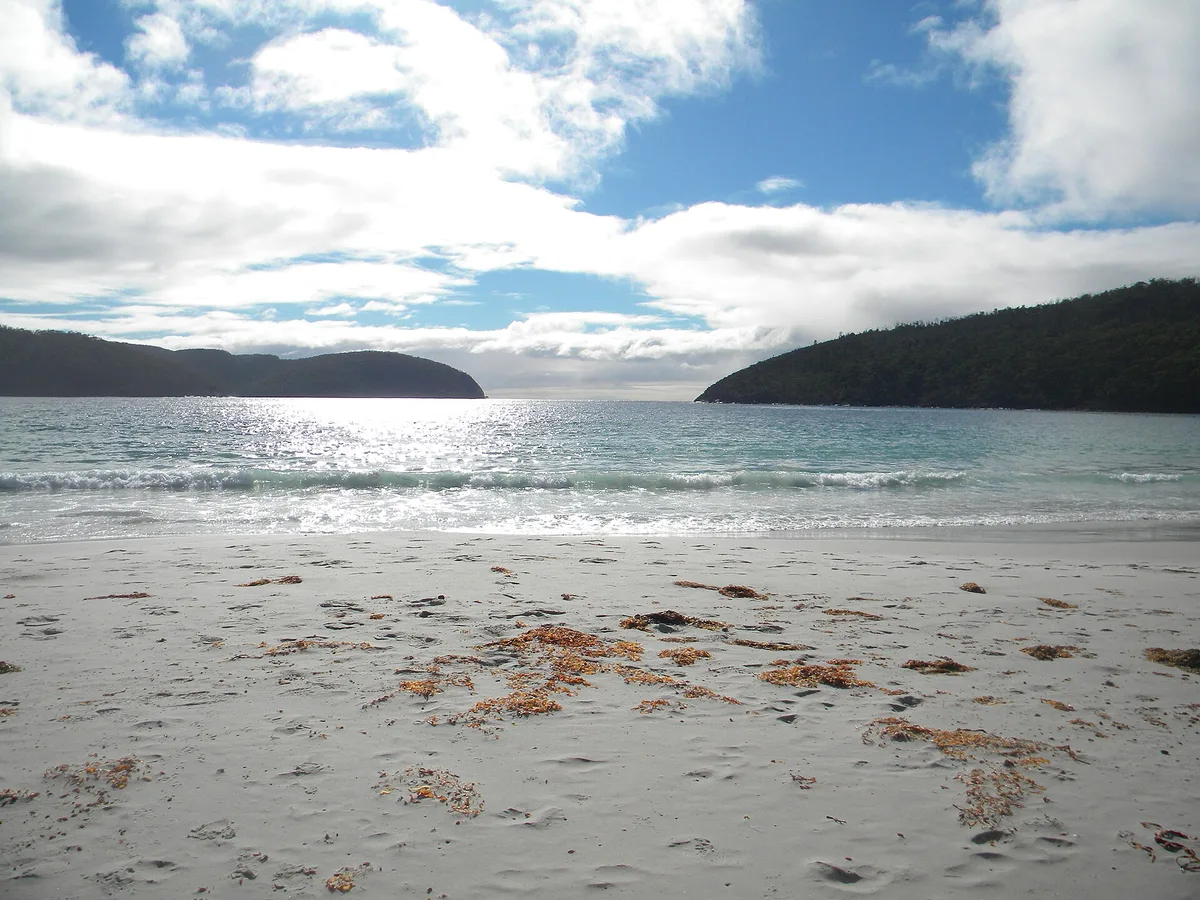
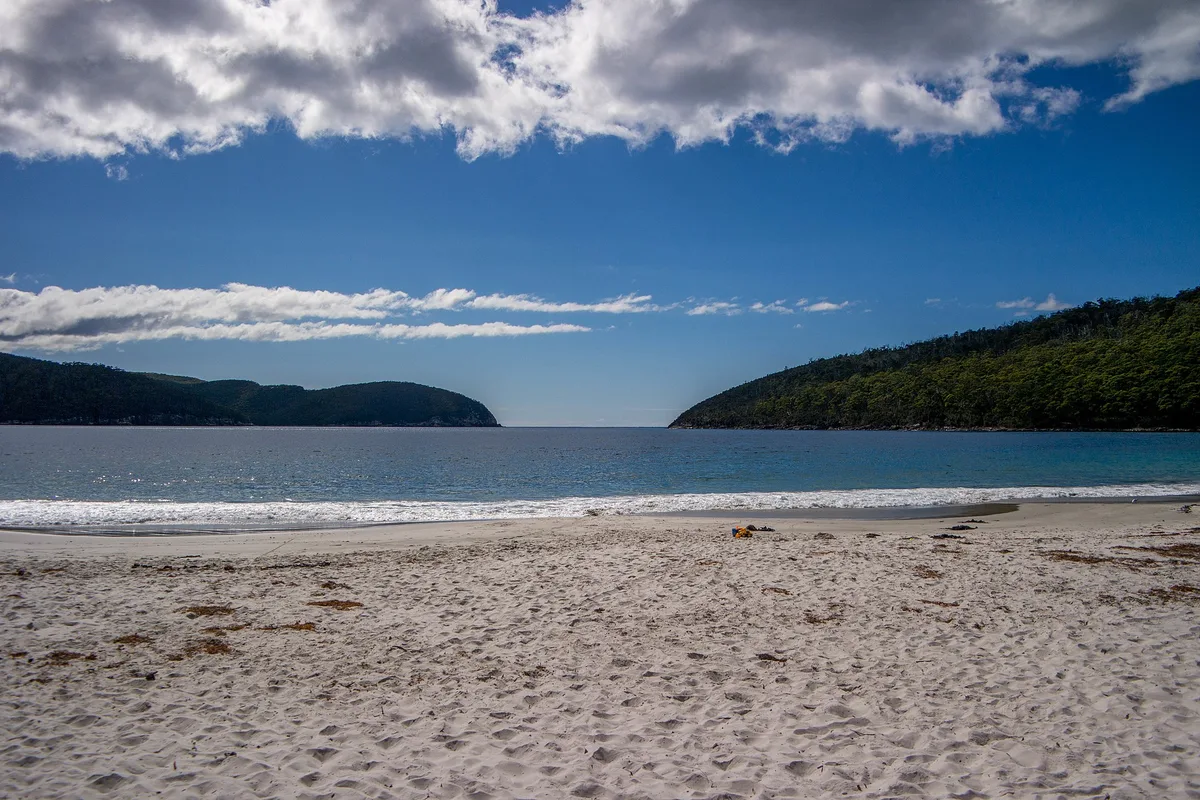
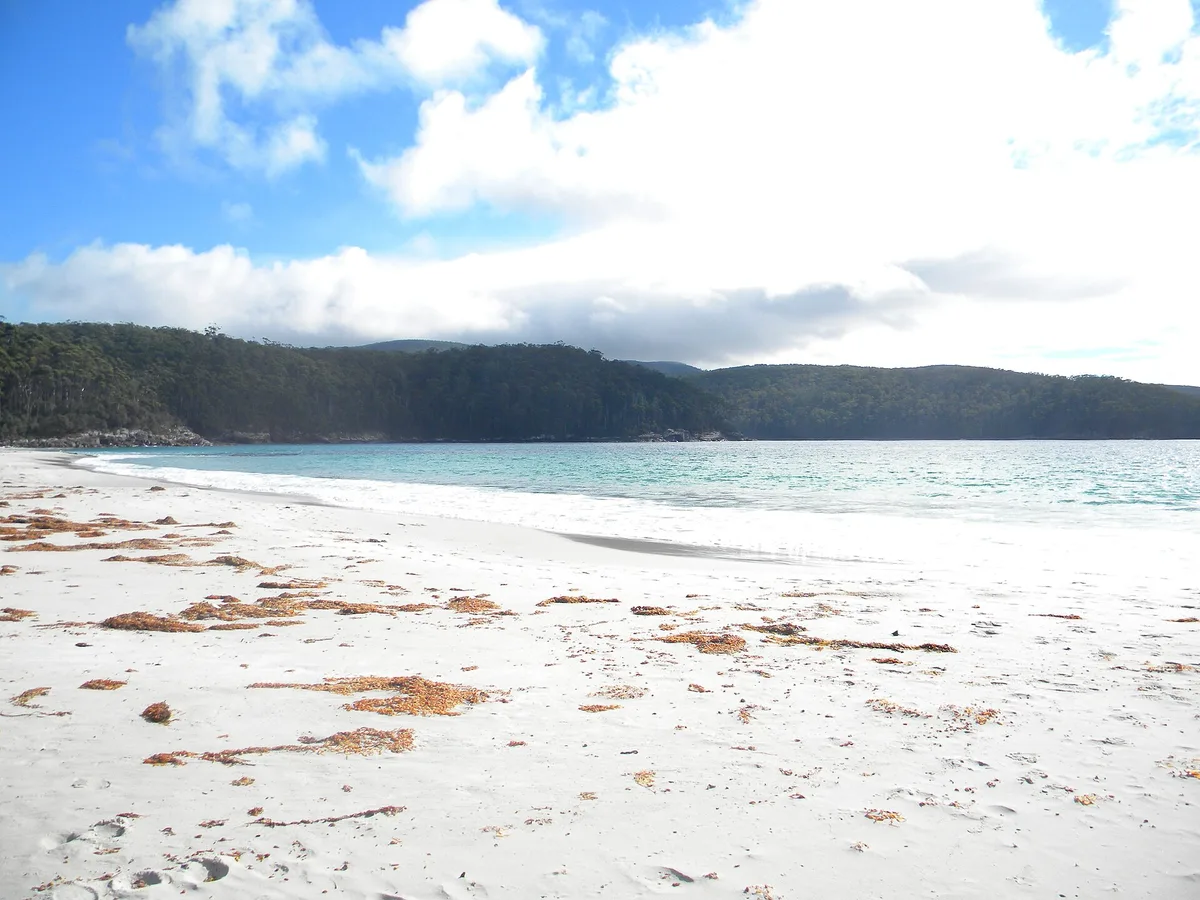
Fortescue Bay Beach sits inside Tasman National Park on the Tasman Peninsula, about 45 minutes from the Arthur Highway. Roughly 800 metres of white sand curves between towering dolerite sea cliffs, with eucalypt forest pressing right down to the waterline — there's no resort strip here, just raw southern wilderness. The water is crystal clear and the bay is sheltered enough to feel calm even when the Southern Ocean is restless beyond the headlands. It's a wild place: the kind that makes you stop talking and just look.
How to get there
Drive from the Arthur Highway via the Tasman Peninsula road — allow 45 minutes to reach the bay. Day visitors are welcome at the campground car park. Entry costs AUD 47.70 per vehicle per 24 hours for Tasman National Park; this fee is waived if you already hold a valid Tasmania Parks Pass. Payment is by card only via the Parks Pass machine in the Day Use car park.
Who it's for
For couples
The combination of a secluded white-sand bay, a five-hour clifftop walk, and a campsite under eucalypts with no phone signal makes Fortescue Bay a genuinely quiet escape for two — bring a good tent and book the campground early.
For families
The sheltered bay offers calmer swimming conditions than the open Tasmanian coast, but note there are no lifeguards — supervise children closely and stay aware of rip currents. The short walk to the beach from the campground car park is manageable for older kids, though the gravel road access and sand entry mean prams are not practical.
Our take
Fortescue Bay is not a beach you stumble across — you have to want it, and that filters out most people. The beach is unpatrolled and the Southern Ocean does not forgive complacency: rip currents are real, the cliffs are hazardous, and sea caves should only be approached by kayak in settled conditions. Get those facts straight first. Once you do, what's here is genuinely rare: white sand backed by ancient dolerite, eucalypts to the waterline, and two of Tasmania's great walks starting from the car park. The Cape Hauy trail alone justifies the drive. Skip June through August — cold, short days, and a campground that feels exposed rather than atmospheric. Come in December or January, book the campground the moment bookings open, and give yourself at least two nights.
What to do
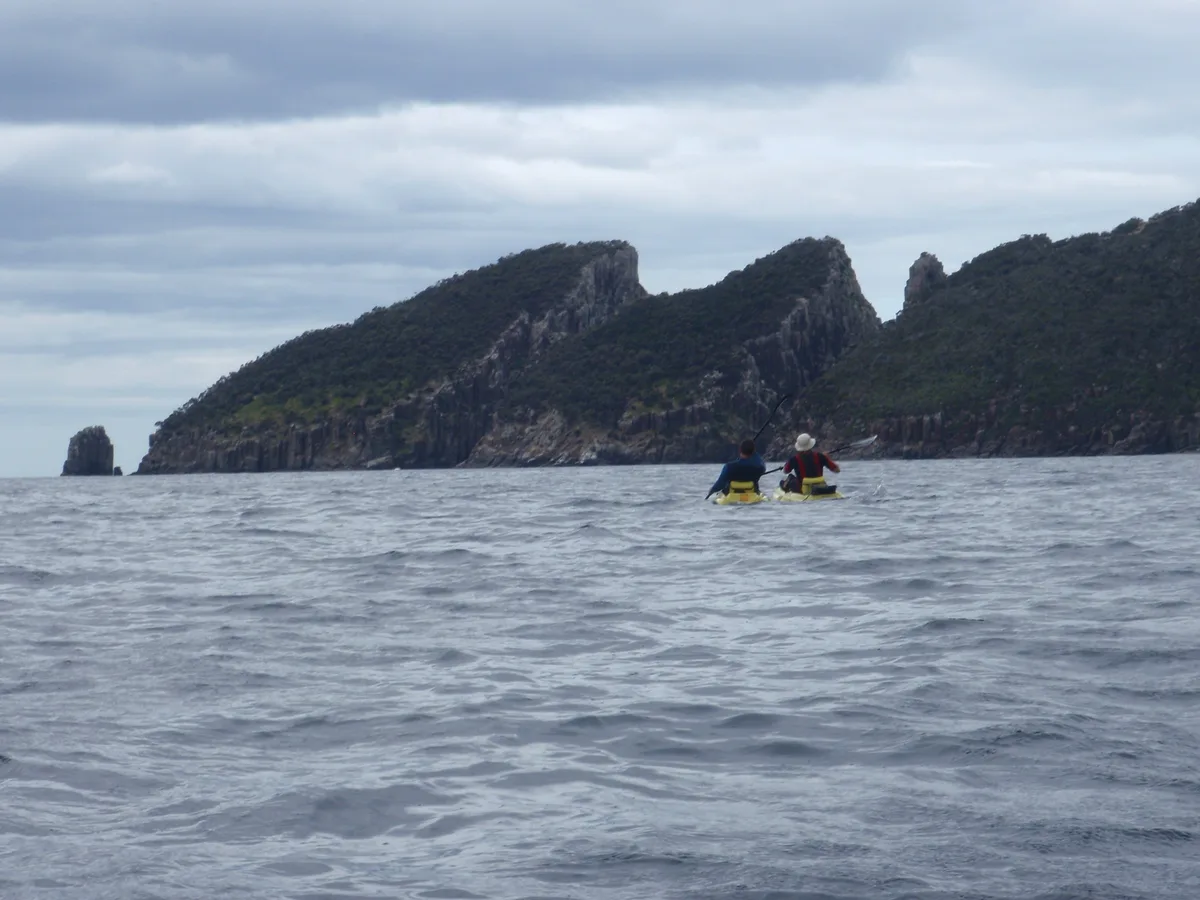
The Cape Hauy Walk starts right at Fortescue Bay — a spectacular five-hour return trail to the dolerite sea stack viewpoint, one of the finest day walks in Tasmania. From the same base, the Three Capes Track leads 11 kilometres to Cape Pillar, home to the highest sea cliffs in the Southern Hemisphere. Sea caves along the bay walls are accessible by kayak only; always check conditions before paddling out. Port Arthur Historic Site, a UNESCO World Heritage convict settlement, is just 7.8 kilometres away and worth a half-day.
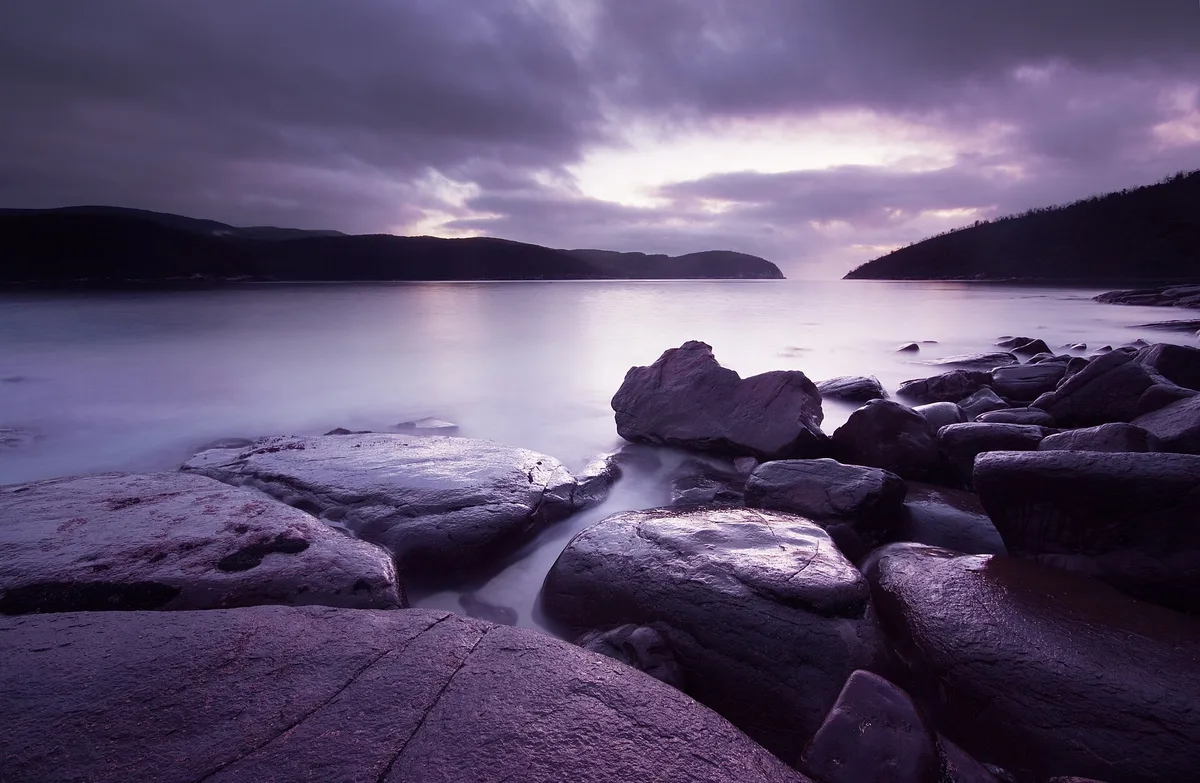
The view from the waterline looking back at the dolerite cliffs with white sand in the foreground is the defining shot — go at sunrise before other visitors arrive.
The eucalypt forest meeting the sand at the bay's edge gives a uniquely Tasmanian frame, and the Cape Hauy Walk clifftop offers dramatic aerial-style perspectives of the bay below.
Where to eat
On the Bay, about 8.5 kilometres from the beach, serves local seafood and is your closest sit-down option after a long walk. The restaurant 1830 is roughly 9 kilometres away if you want something a little more formal. The bay itself has no food vendors, so pack a full day's supplies before you leave the highway.
Where to stay
Cape Pillar Lodge, 8.1 kilometres away, is the closest hotel-style option and suits those who want comfort after a day on the trails. Fox & Hounds Inn is about 8.9 kilometres out and offers a more traditional inn experience. Alternatively, the PWS campground at Fortescue Bay itself puts you right on the sand — book well ahead in summer.
Photography
Shoot from the beach at first light when the dolerite cliffs glow amber and the crystal-clear water reflects the eucalypt canopy — the contrast between white sand and dark rock is sharpest then. The Cape Hauy Walk trailhead area and the cliff-framed bay entrance also reward a wide-angle lens, especially in the golden hour before sunset.
Good to know
No dogs are permitted anywhere in Tasman National Park — leave them at home. The campground books out well in advance during summer (December to February), so reserve through PWS Tasmania before you travel. No campfires are allowed during total fire ban periods, and you must pack out all waste — there are no bins. The beach is unpatrolled with no lifeguards; be alert to rip currents, ocean swells, drop-offs, rocks, and marine stingers and predators before entering the water. Keep well away from the sea cliffs.
GAMES
🕹️ Five minutes of sand?
Three daily games — including the UV simulator set to this beach.
Map
Nearby places
On the Bay
1830
Cape Pillar Lodge
Fox & Hounds Inn
Things to see around Tasman
Cape Hauy Walk
Spectacular 5-hour return walk from Fortescue Bay to the dolerite sea stack viewpoint at Cape Hauy.
Cape Pillar
The highest sea cliffs in the Southern Hemisphere, accessible via the Three Capes Track from Fortescue Bay.
Port Arthur Historic Site
UNESCO World Heritage convict settlement, the most visited historic site in Tasmania.
GIFT
🎁 Gift this beach
Its exact coastline, your date, your words — on a print or a PDF you print yourself.
Fortescue Bay Beach
THAT DAY
Fortescue Bay Beach, Tasmania
© OpenStreetMap contributors
Clean & decorative, or “That day” with the real sky of your date.
Shipping included 3-6 business days
A question before you order? Contact us
Delivered within minutes on the confirmation page and by email: a ZIP with all 4 print sizes (30×40 cm, 12×16″, 50×70 cm, 18×24″), each as a high-resolution PDF and PNG (300 dpi), plus a screen version. Print at home or at any print shop.
Please complete the delivery address.
Please accept the Terms of Sale.
Almost there — the shop opens very soon.
Secure payment · Printed locally in 30+ countries · 7 languages
Frequently asked
The information on this page is provided for guidance only and may evolve. Access conditions, safety and infrastructure can change without notice. Always check official sources before traveling.
Other wild beaches in Australia
More beaches in Tasmania
Reviews of this beach
- No reviews yet, what a shame — leave yours and share your experience.
Photo credits
Sources and licenses for the photos shown above.
- Photo 1 — Tasmoons · source · CC BY-SA 4.0
- Photo 2 — Bill · source · CC BY-SA 4.0
- Photo 3 — Ida Gjerlevsen Nielsen · source · CC BY-SA 4.0
- Photo 4 — Bill · source · CC BY-SA 4.0
- Photo 5 — BotheredByBees · source · CC BY 2.0
- Photo 6 — JJ Harrison (https://www.jjharrison.com.au/) · source · CC BY-SA 3.0