Grande do Rodízio BeachPortugal Beach Guide
Wild Atlantic shore where dinosaurs once walked
About
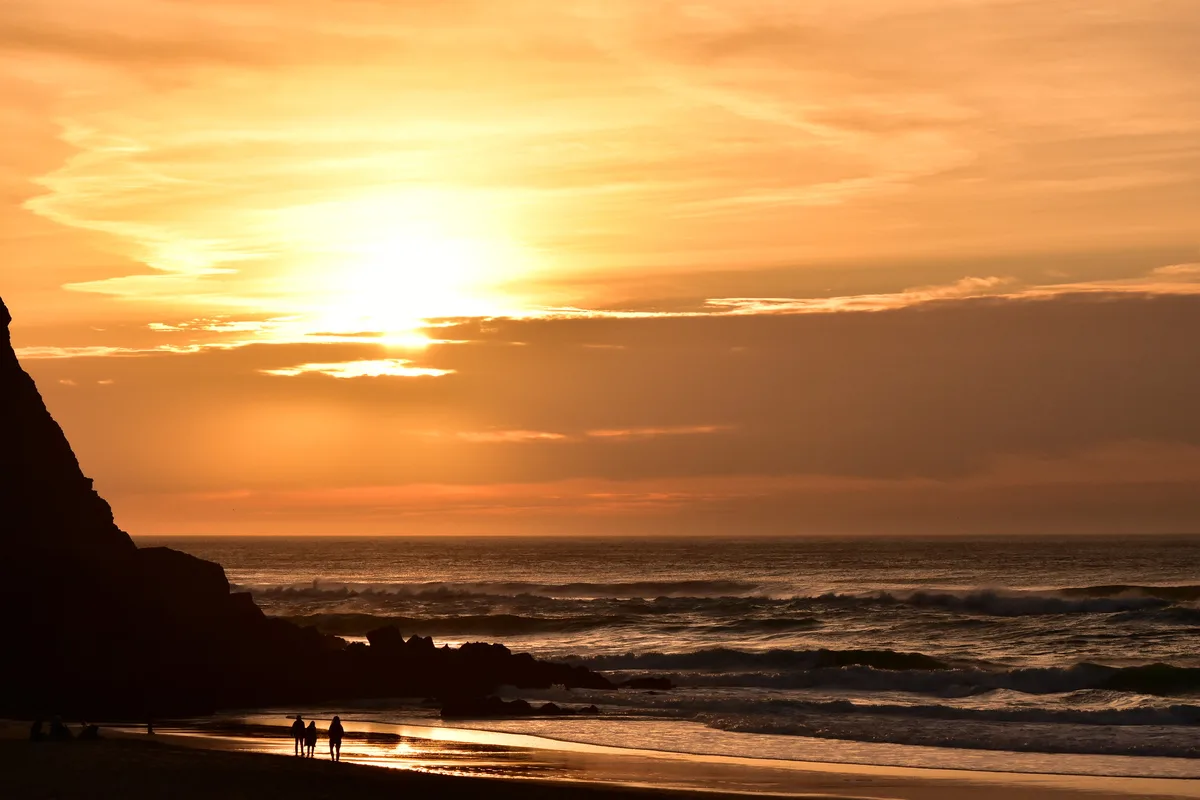
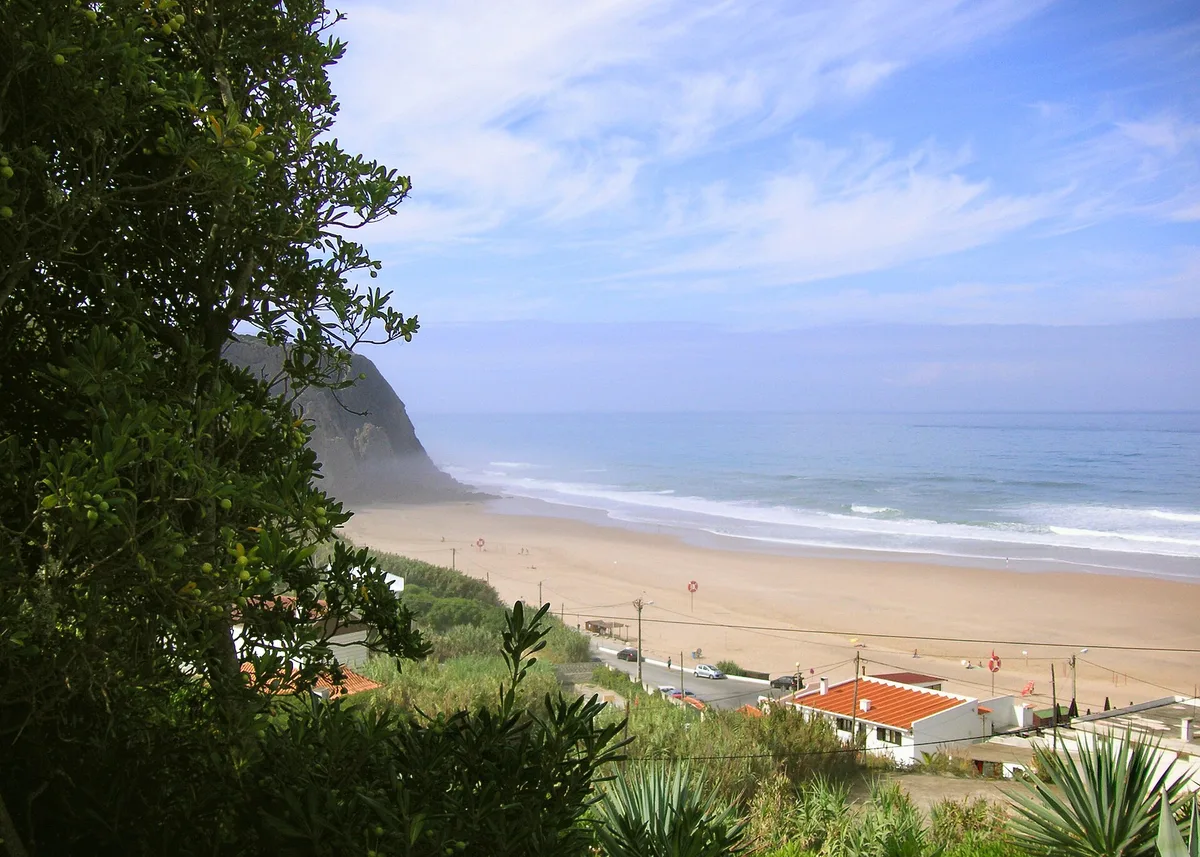
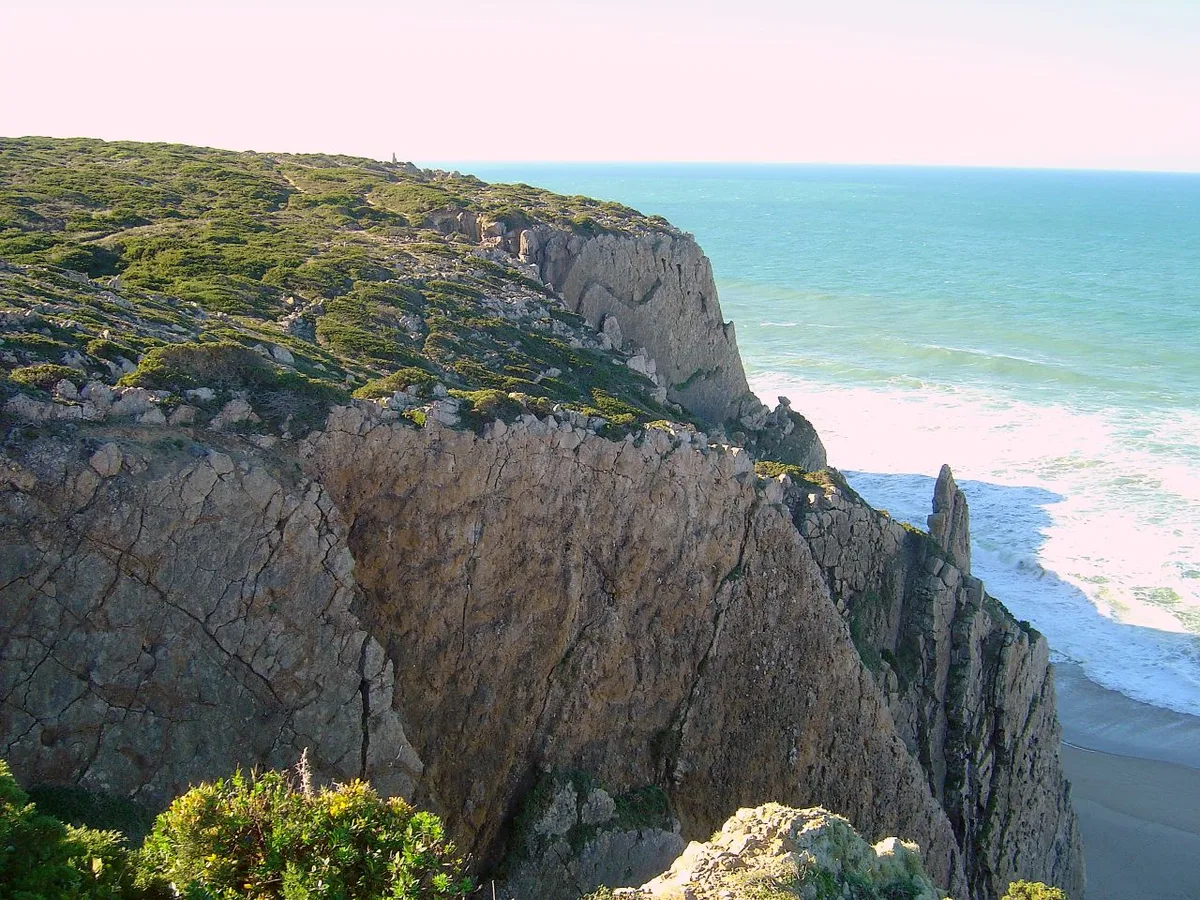
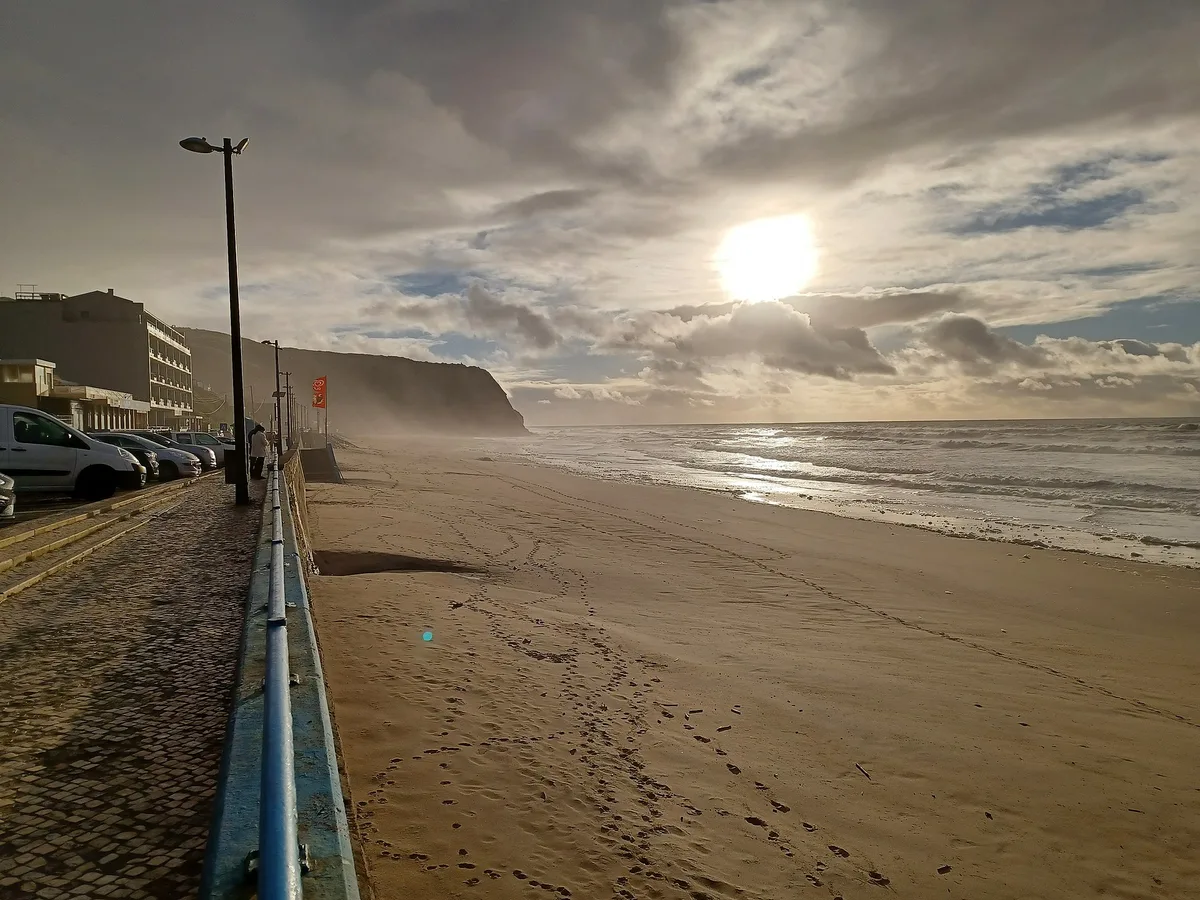
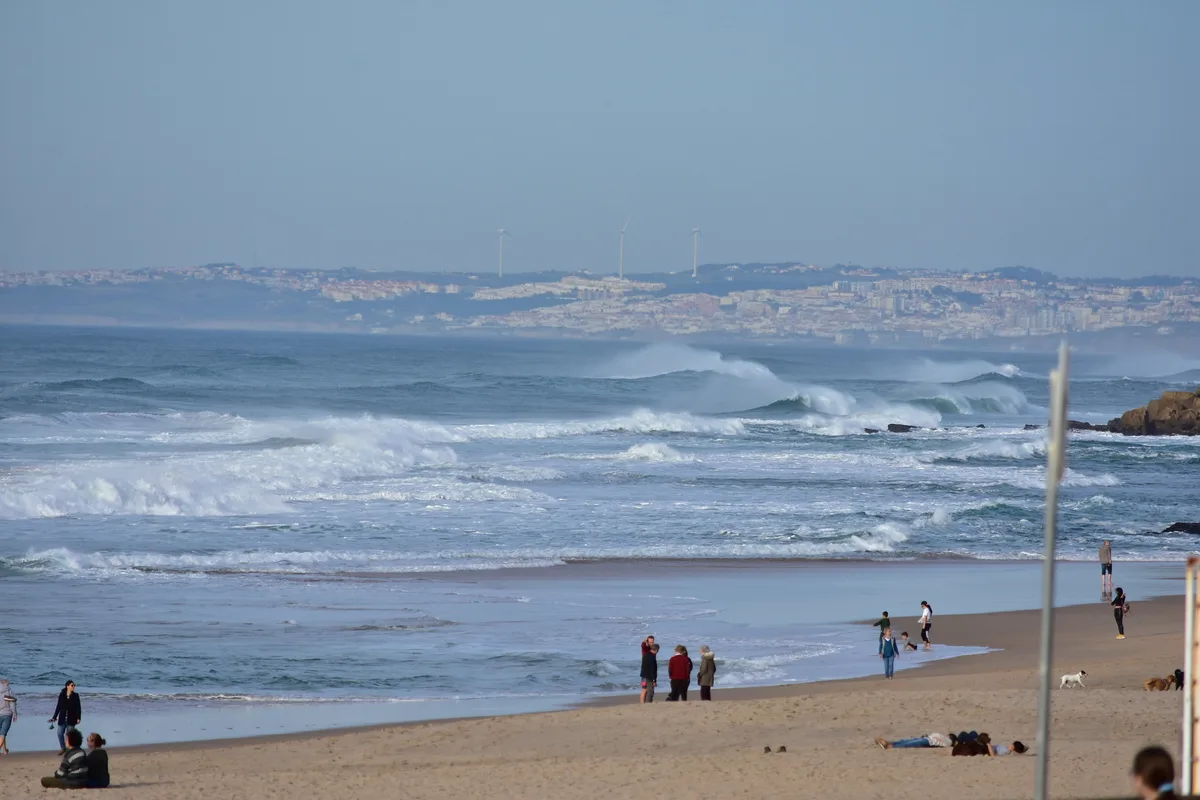
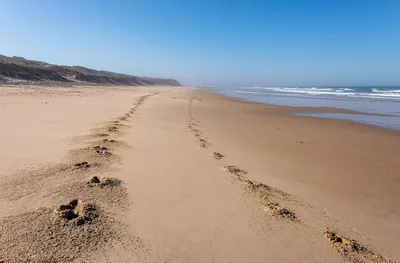
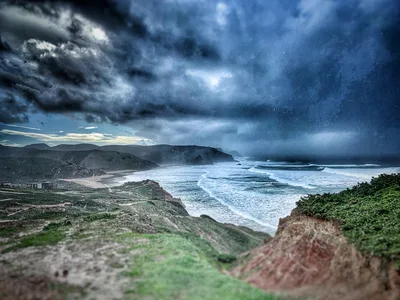
Praia Grande do Rodízio sits on Portugal's Lisbon Coast, a raw stretch of golden sand facing the full force of the Atlantic. Blue ocean swells roll in uninterrupted, shaping a beach that feels genuinely wild — wind-scoured, elemental, and far from manicured. The surrounding cliffs and rocky outcrops hold one of Europe's most remarkable geological secrets: fossilised dinosaur tracks embedded in the shoreline. It's the kind of place where the landscape does the talking, and the Atlantic reminds you who's in charge.
How to get there
From Lisbon, the nearest major airport is Humberto Delgado (LIS), roughly 30km away. You can reach the beach by car, or take a train to Sintra and then a bus (approximately 25 minutes, regular service) or tram from Sintra station. Free parking is available at the entrance and along the beach, though spaces fill up quickly on sunny days — arrive early.
Who it's for
For couples
The wild, windswept atmosphere and the novelty of walking beside 150-million-year-old footprints make this a genuinely unusual day out for two — romantic in a raw, elemental way rather than a polished resort sense.
For families
Families with older children who are curious about geology and prehistory will find the dinosaur track site genuinely exciting, but parents must keep young children away from the water's edge — strong currents and powerful waves make the shoreline hazardous for small swimmers.
Our take
Let's be direct: Praia Grande do Rodízio is not a beach you come to for a lazy swim. Strong currents and powerful waves are a genuine hazard, and the Atlantic here is not forgiving. Respect that, and what you get in return is extraordinary — a wild, golden-sand beach backed by cliffs, tagged with surf energy, and sitting beside one of Europe's most accessible dinosaur fossil sites. The geology alone justifies the trip. Come for the drama, the fossils, and the raw coastal scenery; leave the inflatable rings at home. Best visited June to September, early in the day before the free parking fills up.
What to do
The star attraction beyond the beach itself is the Jazida de icnofósseis da Praia Grande do Rodízio, just 0.4km away — a genuine ichnofossil site where you can see dinosaur footprints preserved in rock, best accessed at low tide. A short drive or walk brings you to the Fojo da Adraga and its viewpoint, the Miradouro do Fojo da Adraga, both about 1.6km away and offering dramatic coastal panoramas. Surfing draws riders to this stretch of coast, though the Atlantic exposure demands respect and experience.
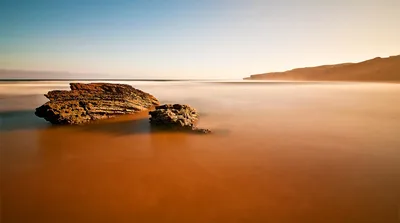
The fossilised dinosaur tracks at the Jazida de icnofósseis, shot at low tide with the Atlantic in the background, are unlike anything else on the Portuguese coast.
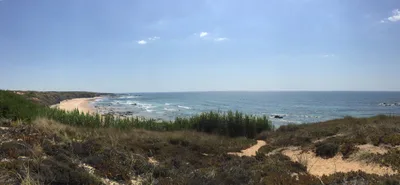
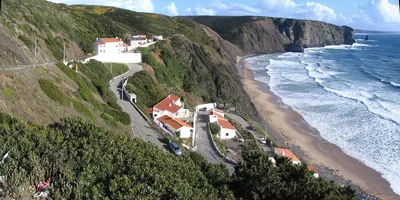
The Miradouro do Fojo da Adraga viewpoint frames the golden sand and deep blue ocean in one wide, dramatic shot — go late afternoon for the best light.
Where to eat
Angra is the closest option, just 0.1km from the beach — handy for a quick bite after a morning on the sand. Restaurante O Crôa (0.6km) and Serra&Mar (1.2km) offer more sit-down dining, while Restaurante Adraga (1.3km) specialises in Portuguese cuisine and is worth the short trip. Ama Pizza (1.3km) rounds out the options if you're after something Italian.
Where to stay
Hotel Arribas, just 0.5km away, is the most convenient base and sits close enough to hear the Atlantic. Apartamentos Turísticos Quinta da Vigia (1km) and Sintra Sol (1.5km) offer self-catering and hotel options within easy reach. For something further afield, Dream Guincho (6.8km) and Chalet Saudade (8.1km) provide alternatives along this dramatic stretch of coast.
Photography
Shoot the dinosaur track site at low tide in the early morning, when golden light rakes across the rock surface and reveals the fossil impressions at their sharpest. The clifftop at Miradouro do Fojo da Adraga (1.6km) gives sweeping views of the golden sand beach against the deep blue Atlantic — late afternoon light is ideal here.
Good to know
Strong currents and powerful waves are a real and present danger here — this is not a calm swimming beach, and you should exercise serious caution before entering the water. Never swim alone, keep children well back from the shoreline when surf is up, and always check local conditions before you go. The wild, exposed nature of this coast means weather can shift fast; bring a windbreaker even in summer. The dinosaur track site nearby (Jazida de icnofósseis) is best visited at low tide — check tide tables before you plan your day.
GAMES
🕹️ Five minutes of sand?
Three daily games — including the UV simulator set to this beach.
Map
Nearby places
Angra
Restaurante O Crôa
Serra&Mar
Restaurante Adraga
Ama Pizza
Hotel Arribas
Apartamentos Turísticos Quinta da Vigia
Sintra Sol
Dream Guincho
Chalet Saudade
Jazida de icnofósseis da Praia Grande do Rodizio
Fojo da Adraga
Miradouro do Fojo da Adraga
GIFT
🎁 Gift this beach
Its exact coastline, your date, your words — on a print or a PDF you print yourself.
Grande do Rodízio Beach
THAT DAY
Grande do Rodízio Beach, Portuguese Atlantic
© OpenStreetMap contributors
Clean & decorative, or “That day” with the real sky of your date.
Shipping included 3-6 business days
A question before you order? Contact us
Delivered within minutes on the confirmation page and by email: a ZIP with all 4 print sizes (30×40 cm, 12×16″, 50×70 cm, 18×24″), each as a high-resolution PDF and PNG (300 dpi), plus a screen version. Print at home or at any print shop.
Please complete the delivery address.
Please accept the Terms of Sale.
Almost there — the shop opens very soon.
Secure payment · Printed locally in 30+ countries · 7 languages
Frequently asked
The information on this page is provided for guidance only and may evolve. Access conditions, safety and infrastructure can change without notice. Always check official sources before traveling.
Nearest beaches
Other wild beaches in Portugal
More beaches in Portuguese Atlantic
Reviews of this beach
- No reviews yet, what a shame — leave yours and share your experience.
Photo credits
Sources and licenses for the photos shown above.
- Photo 1 — Rui Beja · source · CC BY-SA 3.0
- Photo 2 — pedrik · source · CC BY 2.0
- Photo 3 — User:Nikater · source · CC BY-SA 4.0
- Photo 4 — Vitor Oliveira from Torres Vedras, PORTUGAL · source · CC BY-SA 2.0
- Photo 5 — Simon Burchell · source · CC BY-SA 4.0
- Photo 6 — pedrik · source · CC BY 2.0