Ilha do Pessegueiro BeachPortugal Beach Guide
Wild island fort, golden sand, boat access only
About
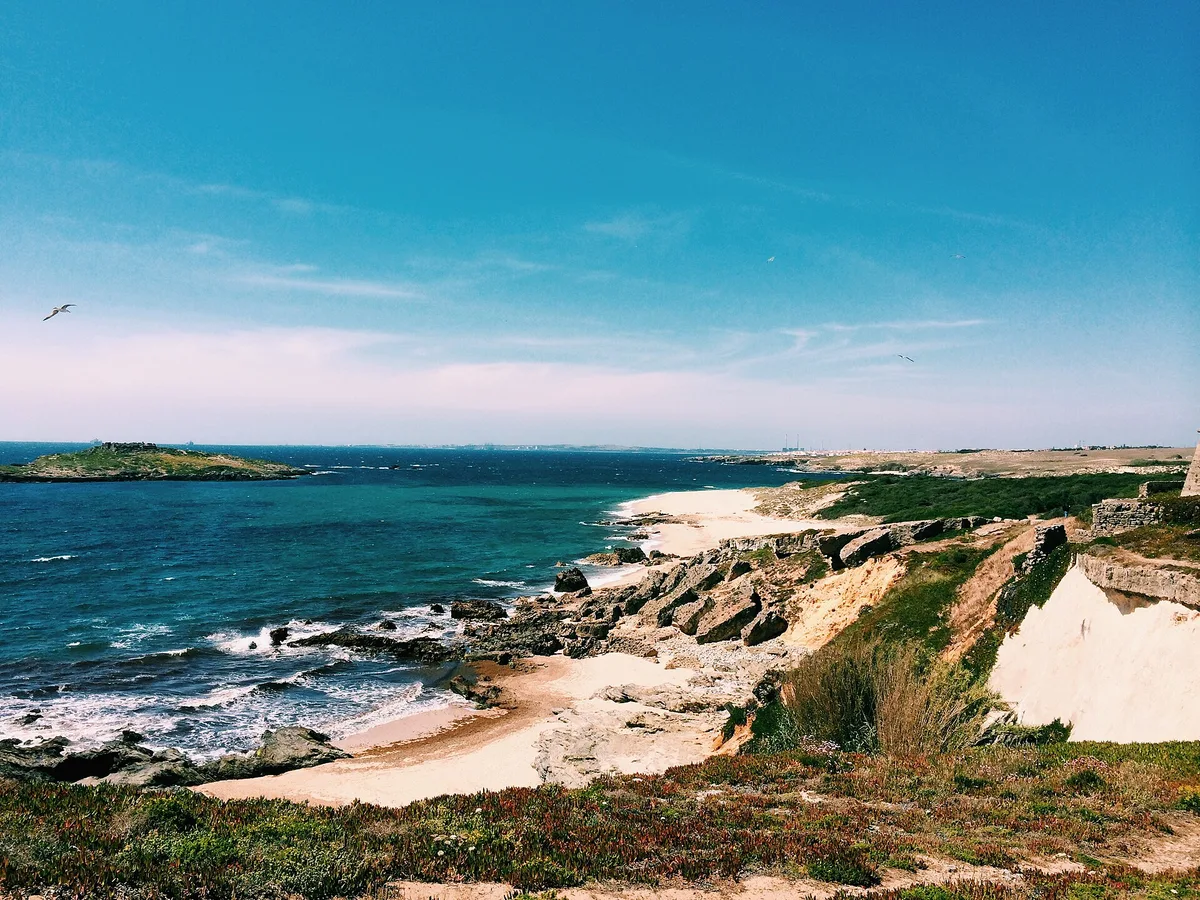
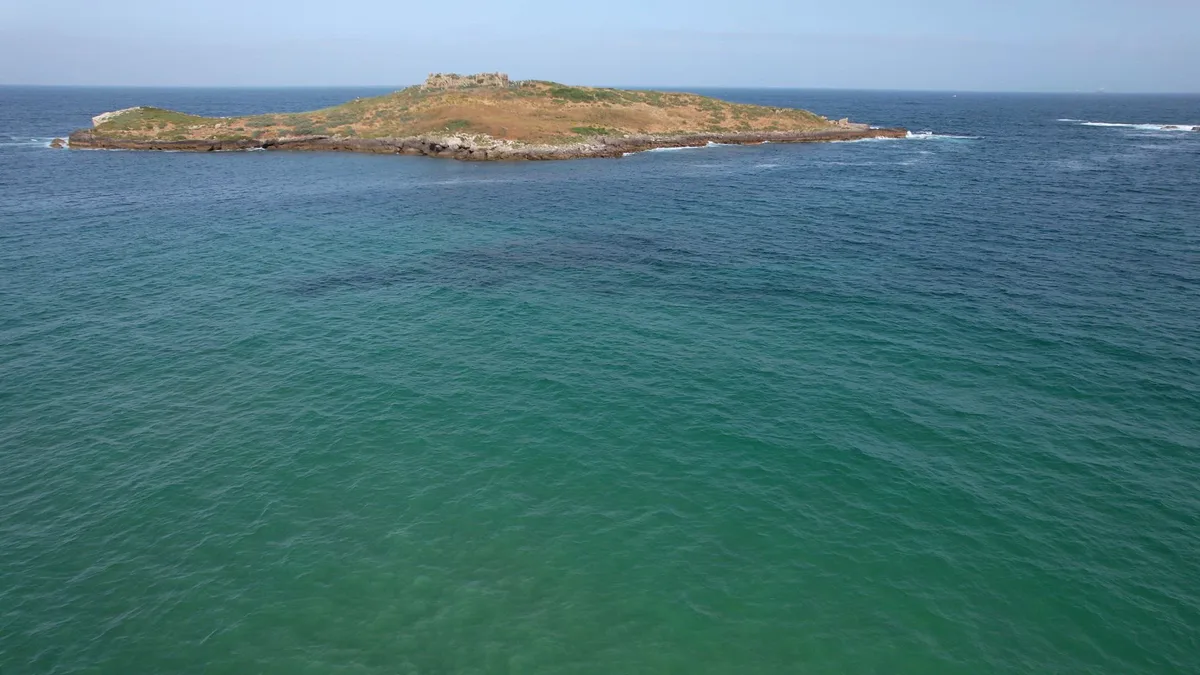
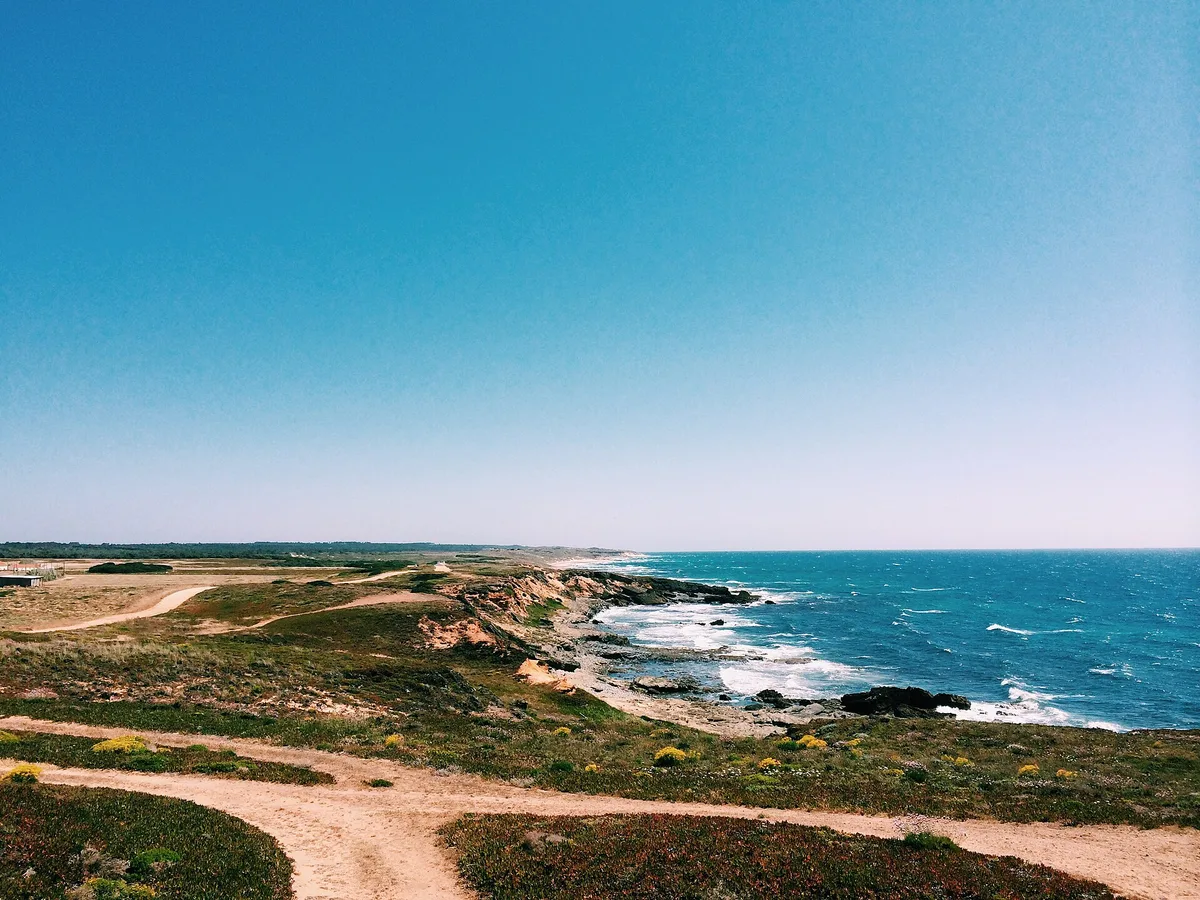
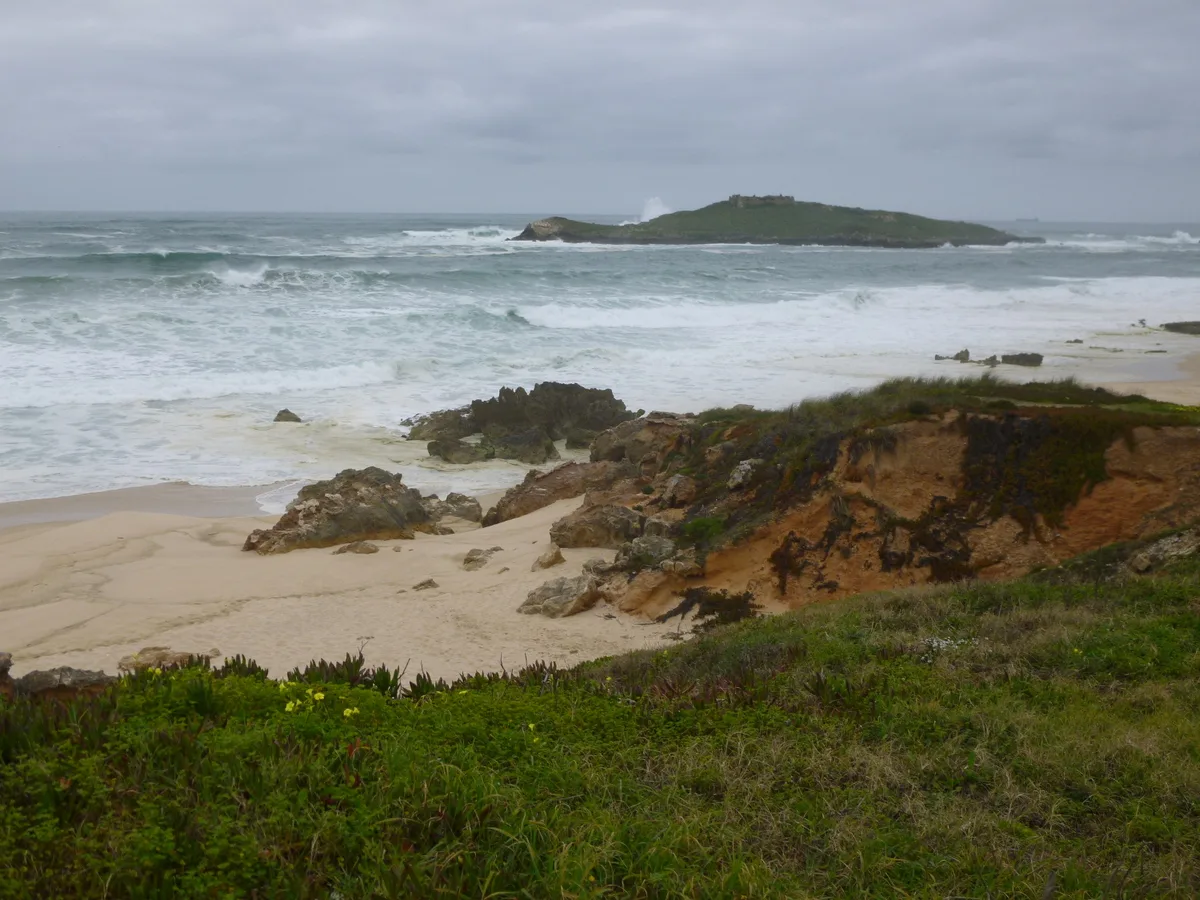
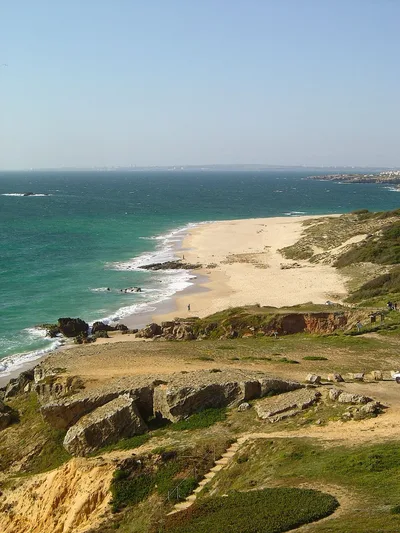
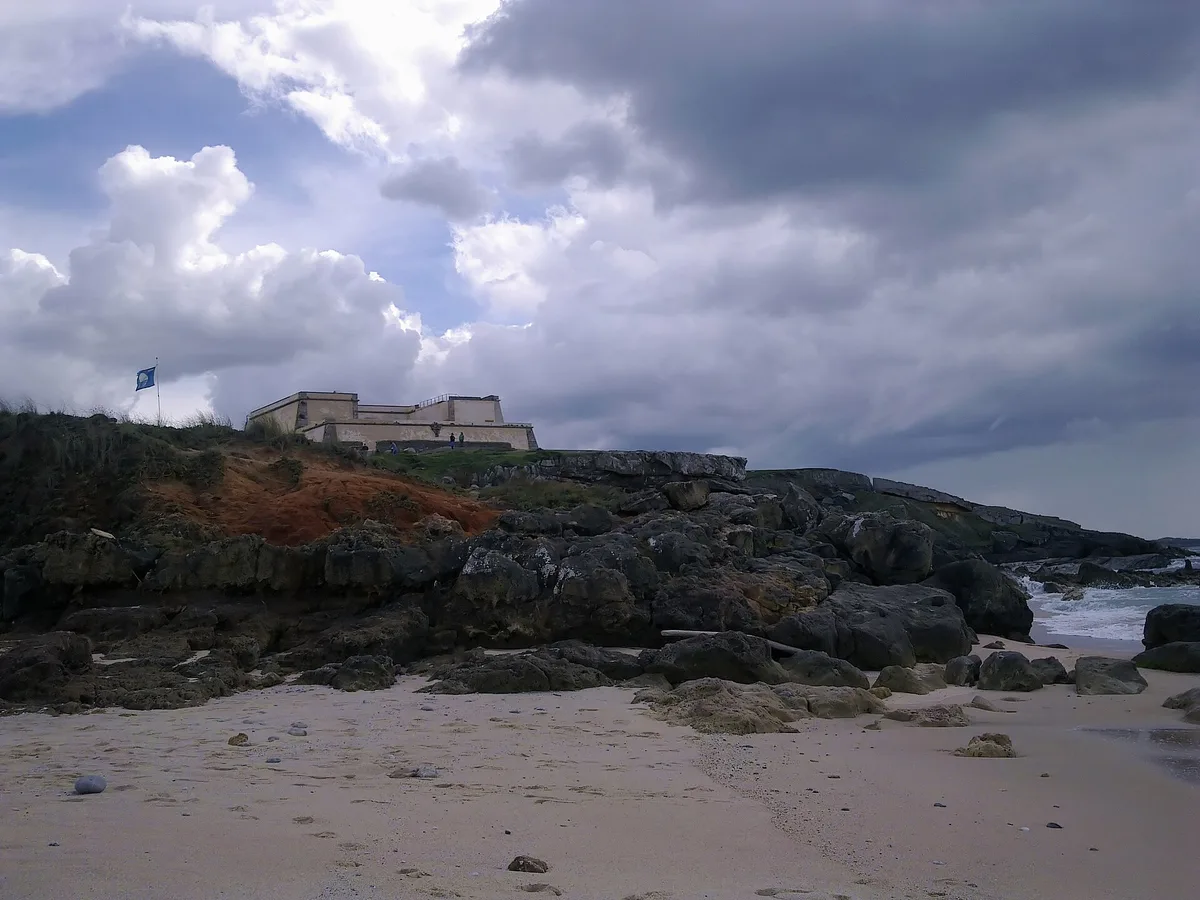
Praia da Ilha do Pessegueiro sits on an uninhabited island off the Costa Vicentina, roughly 250 metres from the Porto Covo shoreline in Alentejo, Portugal. The beach stretches about 350 metres of golden sand lapped by turquoise Atlantic water, with the crumbling silhouette of a 16th-century Portuguese fort rising at the island's centre. There are no roads, no buildings, no permanent infrastructure — just wind, stone, and sea. The protected nature reserve status keeps visitor numbers low and the landscape raw. It's one of the few places on the Portuguese coast where the silence feels genuinely earned.
How to get there
Reach the island only by boat or kayak from Porto Covo jetty on the mainland — there is no road and no bridge. A seasonal boat service runs the crossing in roughly 10 minutes; paddling over by kayak takes around 20 minutes. Access operates May through September only — Atlantic conditions make small-craft crossings dangerous outside those months. There is no parking on the island; leave your vehicle in Porto Covo village before heading to the jetty.
Who it's for
For couples
The combination of a boat crossing, a ruined fort, and a quiet golden-sand beach with no facilities forces you to slow down and actually be present together — rare on the Portuguese coast in summer.
For families
Families with older children who can manage the boat crossing and uneven fort terrain will find the island genuinely adventurous, but note there are no facilities, no shade structures, and no lifeguard — younger children and toddlers need careful supervision near the water and rocky areas.
Our take
Praia da Ilha do Pessegueiro demands effort, and that's exactly the point. The boat-only access, the zero infrastructure, and the nature reserve rules filter out anyone looking for a lounger and a cocktail — what's left is a genuinely wild stretch of golden sand with a 17th-century fort keeping watch over turquoise water. Come prepared: no food, no water, no shelter exists on the island, and if the weather shifts mid-afternoon, you're exposed. Respect those constraints and this place rewards you with a quality of quiet that's almost impossible to find on the Portuguese coast in summer. Go between June and September, check the sea conditions the morning you plan to cross, and bring more water than you think you need.
What to do
The ruined Forte de Pessegueiro, just 0.1 km from the beach, is the island's centrepiece — wander the 16th-century ramparts and look back across the channel to Porto Covo for one of the coast's most striking views. Back on the mainland, Porto Covo village itself is worth an hour of your time: it's considered the best-preserved 18th-century coastal village on the Alentejo coast and the natural base for your island trip. If you have energy left, Praia do Malhão — a 4 km wild beach backed by umbrella pine forest — lies about 5 km away and carries a near-perfect rating from visitors.
The 16th-century fort ruins framed against the turquoise channel, shot from the golden sand at low tide, is the island's most iconic composition.
The view back toward Porto Covo from the fort's seaward wall — mainland cliffs, open Atlantic, and the 500-metre channel below — is a second strong shot worth the short walk up.
Where to eat
There are zero food options on the island, so pack everything before you board. Back in Porto Covo, Marisqueira O Pescador and Vilhena Snack-Bar both serve regional cooking within 2.4 km of the jetty, and Zé Inácio and Lamelas are solid options at the same distance for a post-island meal.
Where to stay
Dreamsea Surf Camp Portugal Alentejo, rated 4.7/5 from over 240 reviews and just 1.5 km away, suits travellers who want an active, outdoors-oriented stay. For a more comfortable base, Porto Covo Praia Hotel & SPA scores 4.6/5 across 534 reviews at 2.8 km. Budget travellers have two well-reviewed camping options nearby: Parque de Campismo da Ilha do Pessegueiro (3.9/5, 1,721 reviews) and Camping Porto Covo (4.1/5, 2,533 reviews).
Photography
Shoot the fort ruins at golden hour from the beach's eastern end — the warm light catches the weathered stone against the turquoise water for a frame that needs no filter. For a wider composition, position yourself at the water's edge looking northwest: the 500-metre channel, the Porto Covo coastline, and the fort in a single shot is the island's signature image.
Good to know
This is a protected nature reserve: camping and open fires are strictly prohibited, and there are no permanent facilities whatsoever — bring all food, water, and supplies you'll need for the day. Boat access is entirely weather-dependent, so check sea conditions before you leave the mainland; if the weather turns while you're on the island, there is no shelter. The crossing window is May to September only — do not attempt the channel outside those months. Stay on marked areas and respect the reserve rules to protect the habitat.
GAMES
🕹️ Five minutes of sand?
Three daily games — including the UV simulator set to this beach.
Map
Nearby places
Vilhena Snack-Bar
Zé Inácio
Lamelas
Marisqueira O Pescador
O Sorriso
Dreamsea Surf Camp Portugal Alentejo
Parque de Campismo da Ilha do Pessegueiro
Camping Porto Covo
Porto Covo Praia Hotel & SPA
Praia dos Buizinhos
Things to see around Sines
Forte de Pessegueiro
16th-century Portuguese fort ruins at the centre of the island, with views across to Porto Covo.
Porto Covo Village
Best-preserved 18th-century coastal village on the Alentejo coast, the departure point for the island.
Praia do Malhão
1 km wild beach backed by umbrella pine forest with no built structures.
GIFT
🎁 Gift this beach
Its exact coastline, your date, your words — on a print or a PDF you print yourself.
Ilha do Pessegueiro Beach
THAT DAY
Ilha do Pessegueiro Beach, Alentejo / Costa Vicentina
© OpenStreetMap contributors
Clean & decorative, or “That day” with the real sky of your date.
Shipping included 3-6 business days
A question before you order? Contact us
Delivered within minutes on the confirmation page and by email: a ZIP with all 4 print sizes (30×40 cm, 12×16″, 50×70 cm, 18×24″), each as a high-resolution PDF and PNG (300 dpi), plus a screen version. Print at home or at any print shop.
Please complete the delivery address.
Please accept the Terms of Sale.
Almost there — the shop opens very soon.
Secure payment · Printed locally in 30+ countries · 7 languages
Frequently asked
The information on this page is provided for guidance only and may evolve. Access conditions, safety and infrastructure can change without notice. Always check official sources before traveling.
Nearest beaches
Other wild beaches in Portugal
Reviews of this beach
- No reviews yet, what a shame — leave yours and share your experience.
Photo credits
Sources and licenses for the photos shown above.
- Photo 1 — Luís Cardoso · source · CC BY-SA 3.0
- Photo 2 — Portuguese_eyes · source · CC BY-SA 2.0
- Photo 3 — Luís Cardoso · source · CC BY-SA 3.0
- Photo 4 — Brigitte from Österreich · source · CC BY-SA 2.0
- Photo 5 — Vitor Oliveira from Torres Vedras, PORTUGAL · source · CC BY-SA 2.0
- Photo 6 — Alvesgaspar · source · CC BY-SA 3.0