Hanga Rau BeachChile Beach Guide
Wild white sand at the edge of Easter Island
About
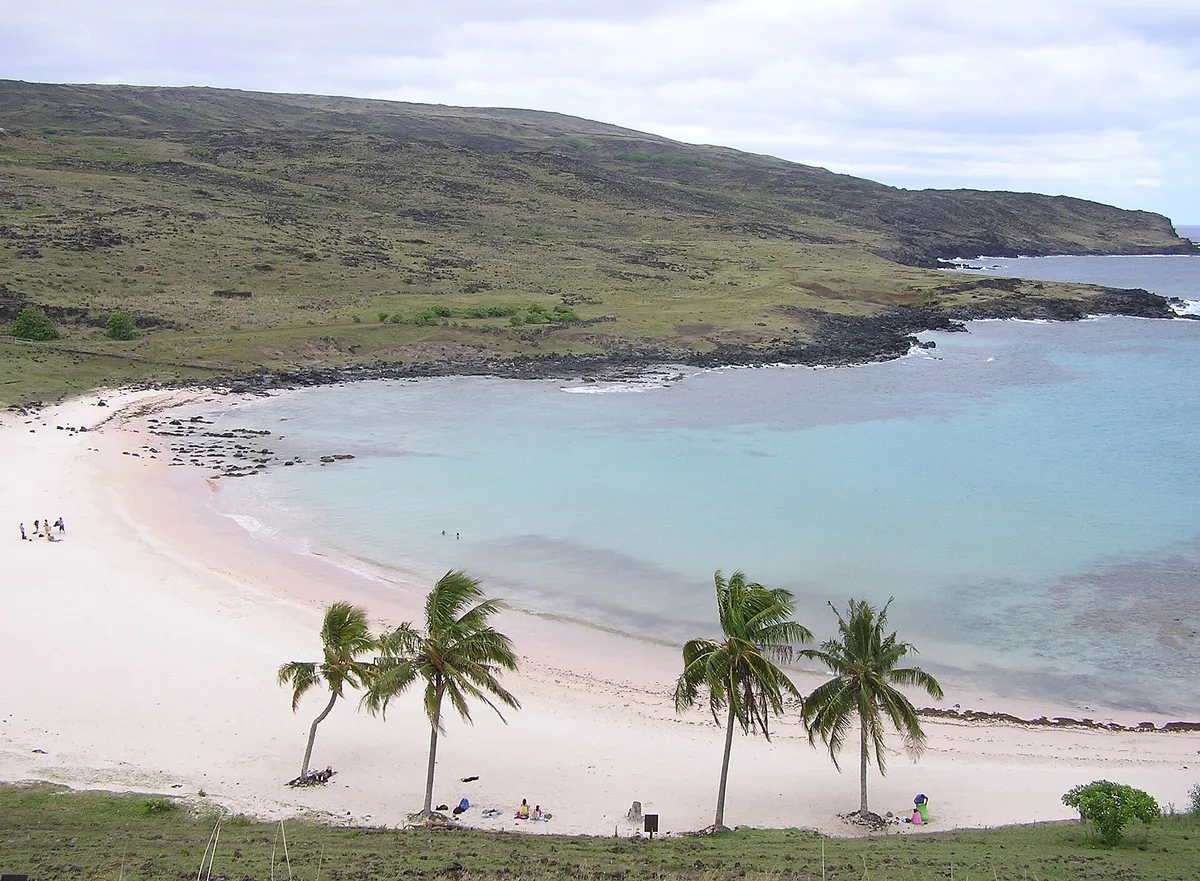
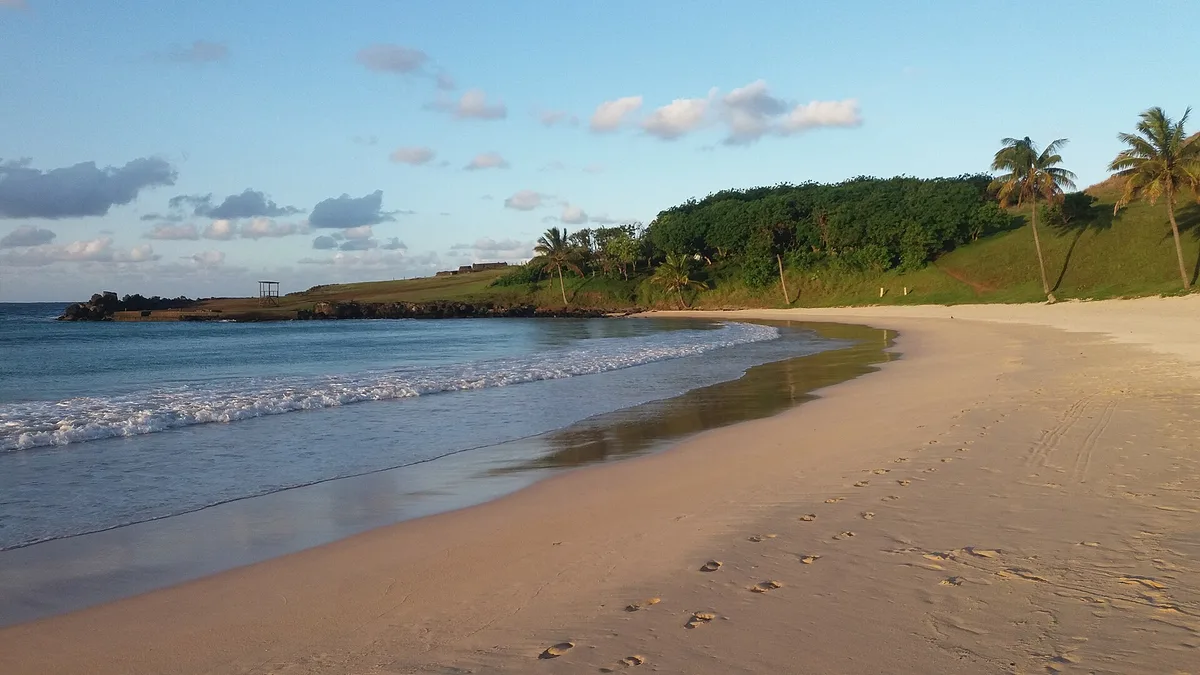
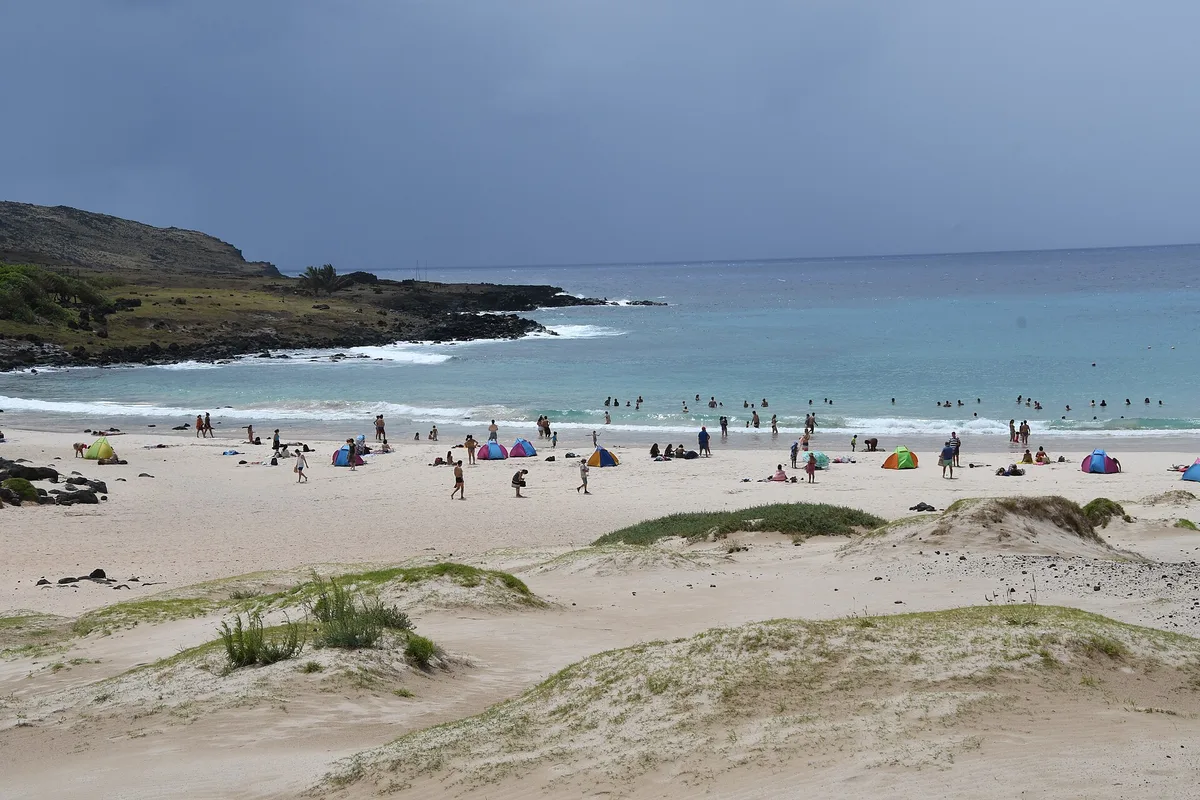
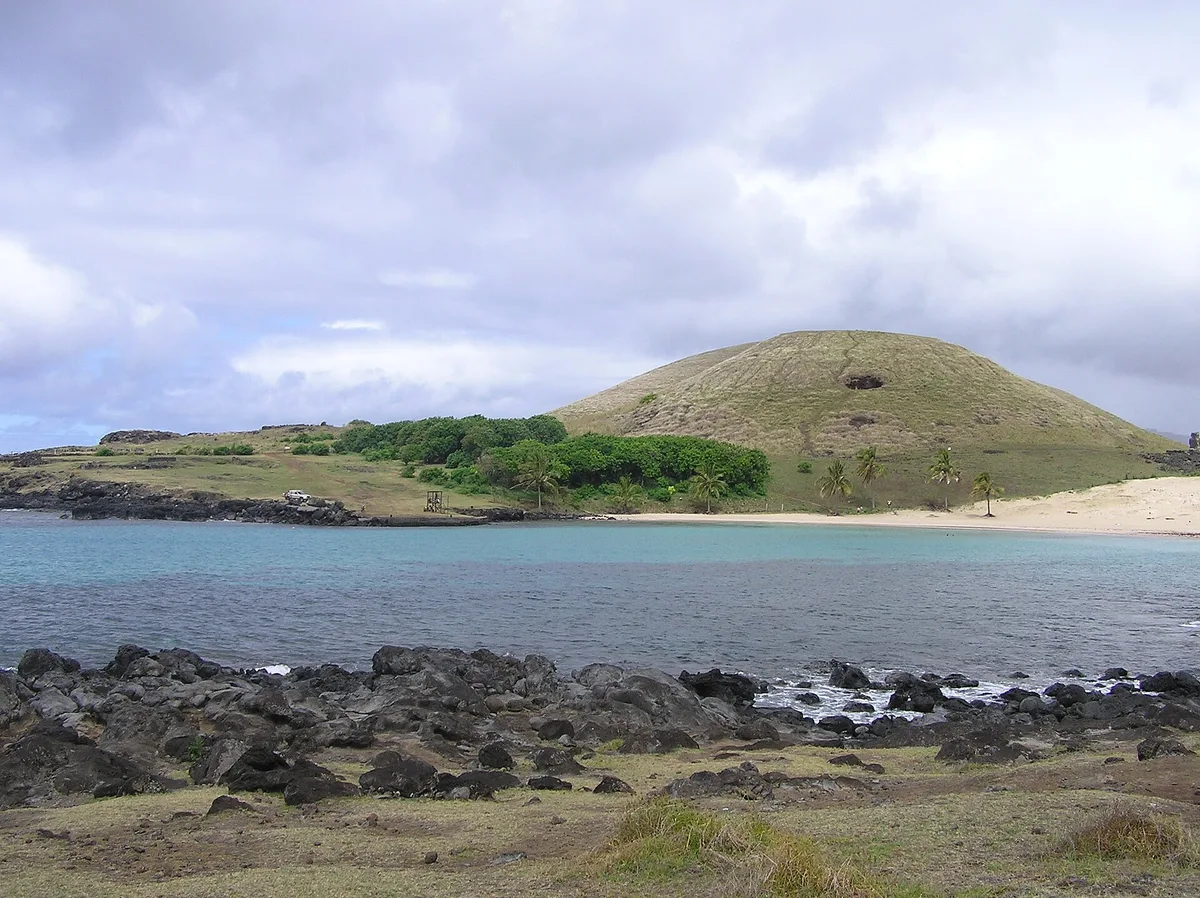
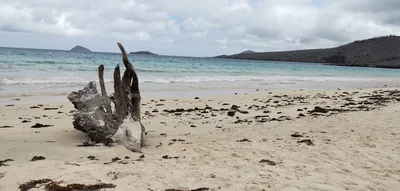
Playa Hanga Rau sits on the northwest coast of Easter Island, tucked against Islote (Motu) Kau with coordinates placing it well beyond the reach of casual visitors. The beach offers white sand meeting turquoise water, backed by a dramatic basalt lava shelf that shapes the entire character of the place. At roughly 80 metres long, it stays empty — not because it's unknown, but because getting here demands real effort. There's no shade whatsoever, the terrain is rough, and the lava shelf adds a layer of unpredictability that keeps the experience raw and honest. Northwest-facing, it catches some of the Pacific's most spectacular sunsets.
How to get there
You can drive or take a taxi from Hanga Roa in around 20 minutes, and free parking is available at the trailhead — but the beach itself is walk-in only from there, over rough coastal terrain. Cycling from Hanga Roa is also possible. A CONAF national park pass is required to enter the area; make sure you have it before you set out. The coastal hiking trail from Hanga Roa is a serious full-day commitment. Wheelchair access is not possible — the terrain is completely unsuitable.
Who it's for
For couples
The combination of an empty beach, turquoise water, and northwest sunset views makes Playa Hanga Rau a genuinely romantic detour — just come prepared as a self-sufficient team, because there's no infrastructure once you're here.
For families
The long walk over rough terrain and the unpredictable lava shelf make this a poor choice for young children or anyone who needs shade and facilities — families with older, experienced hikers who can carry their own water will find it rewarding, but it's not a beach-day destination.
Our take
Playa Hanga Rau is not a beach you stumble onto — it asks something of you before it gives anything back. The lava shelf is the detail that changes everything here: it makes the scenery dramatic and the access genuinely demanding, and you should treat it with respect rather than curiosity when swell is present. Get the CONAF pass, carry water for the full day, and accept that there is no shade, no food, and no one coming to help if you're underprepared. What you get in return is a stretch of white sand and turquoise water on one of the most remote inhabited islands on Earth, with northwest sunset views that are hard to match anywhere on the island. Skip it in the southern hemisphere winter months — May through August is not worth the risk on that lava shelf. Come between December and March, start early, and you'll have one of Easter Island's wildest corners entirely to yourself.
What to do
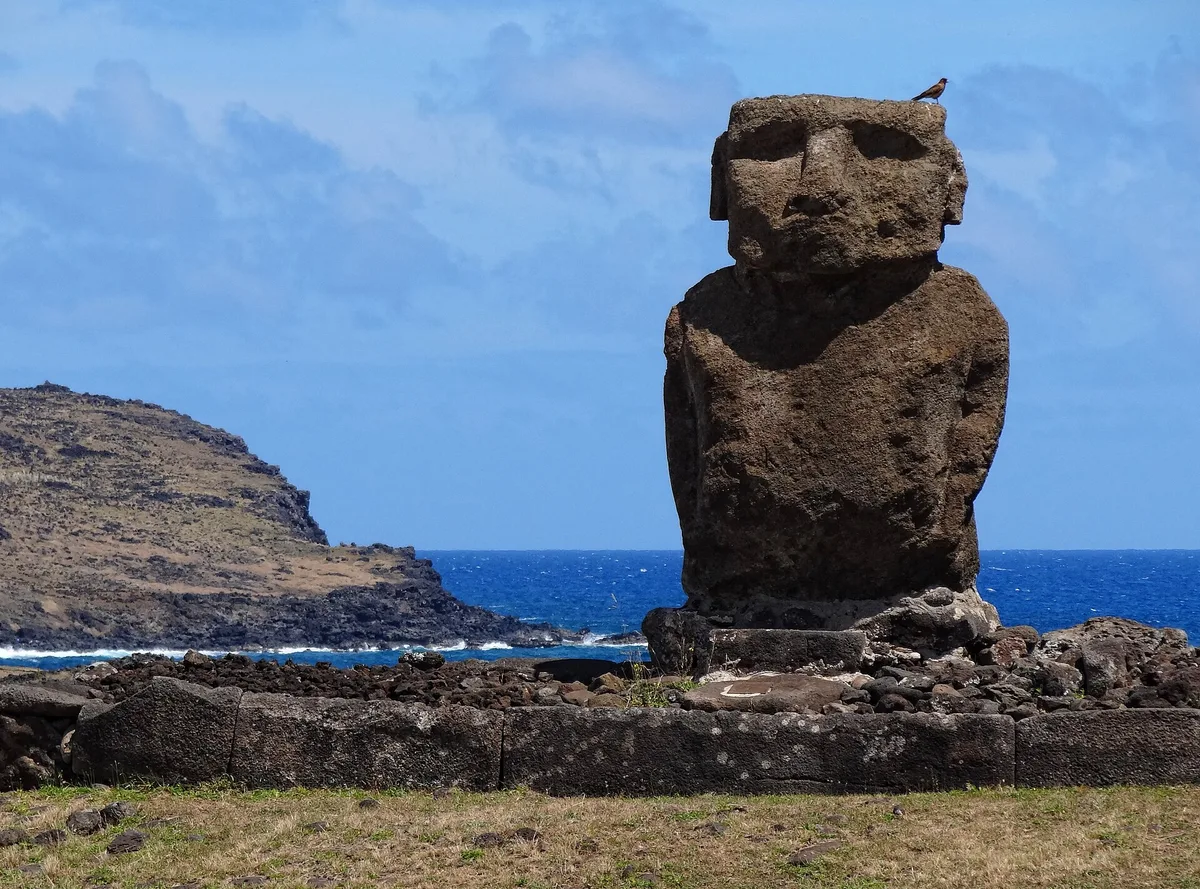
The lava shelf itself is the main draw — explore it carefully at low energy moments, but keep your distance when swell is running. Nearby, Nimo Pou Nauhau sits just 0.3 km away, and both Ahu Ruŋa and Ahu Huarero are within 0.6 km, making this stretch of coast rich with moai culture. Further afield, Ahu Akivi — seven inland moai facing the ocean — is about 6 km away, and the volcanic quarry crater of Rano Raraku, where nearly all moai were carved, is worth the 25 km trip.
The basalt lava shelf framing the turquoise water is the standout shot — shoot wide at low angle to capture the volcanic texture against the sea.
The northwest horizon at sunset delivers vivid colour with no obstructions; arrive 30 minutes before golden hour and work the shoreline where white sand meets the shelf edge.
Where to eat
Taote ote Kai, serving fish, sandwiches, and regional dishes, is the closest option at 0 km from the beach area — plan your meal around it since there's nothing on-site. A mobile snack van operates around 6.7 km away for a quick stop on the road. For a proper sit-down dinner with a view, Moai Sunset is 12.3 km from the beach.
Where to stay
Most accommodation is based back toward Hanga Roa, roughly 12–13 km from the beach. Vai Moana at 12.5 km and Poike at 12.8 km are the closest options, with Hotel Otai and Hotel Rapa Nui both sitting at 13.1 km. Book ahead — Easter Island has limited beds island-wide.
Photography
The northwest-facing aspect makes this beach exceptional for sunset shots: position yourself on or just above the basalt lava shelf as the light drops toward the Pacific horizon. Early morning also works well for the turquoise water against white sand before any wind picks up — arrive at first light for the cleanest reflections.
Good to know
A valid CONAF national park pass is non-negotiable — rangers do check. No camping and no fires are permitted anywhere in the area. There is zero shade on this beach, so bring more water than you think you need and apply serious sun protection before you leave Hanga Roa. Avoid May through August: northwest swell and winter rain make the lava shelf genuinely dangerous and the walk miserable.
GAMES
🕹️ Five minutes of sand?
Three daily games — including the UV simulator set to this beach.
Map
Nearby places
Taote ote Kai
Mobile snack van
Moai Sunset
Les Amores De La Polynesie
Manuia
Vai Moana
Poike
La casa del Kori
Hotel rapa nui
Hotel otai
Things to see around Isla de Pascua
Anakena Beach
The island's only white-sand beach with Ahu Nau Nau moai.
Ahu Akivi
Inland ahu with seven moai facing the ocean.
Rano Raraku
Volcanic quarry crater where nearly all moai were carved.
GIFT
🎁 Gift this beach
Its exact coastline, your date, your words — on a print or a PDF you print yourself.
Hanga Rau Beach
THAT DAY
Hanga Rau Beach, Chilean Pacific
© OpenStreetMap contributors
Clean & decorative, or “That day” with the real sky of your date.
Shipping included 3-6 business days
A question before you order? Contact us
Delivered within minutes on the confirmation page and by email: a ZIP with all 4 print sizes (30×40 cm, 12×16″, 50×70 cm, 18×24″), each as a high-resolution PDF and PNG (300 dpi), plus a screen version. Print at home or at any print shop.
Please complete the delivery address.
Please accept the Terms of Sale.
Almost there — the shop opens very soon.
Secure payment · Printed locally in 30+ countries · 7 languages
Frequently asked
The information on this page is provided for guidance only and may evolve. Access conditions, safety and infrastructure can change without notice. Always check official sources before traveling.
Other beaches in the region
Reviews of this beach
- No reviews yet, what a shame — leave yours and share your experience.
Photo credits
Sources and licenses for the photos shown above.
- Photo 1 — Gillermo Adolfo · source · CC BY 3.0
- Photo 2 — Andreschile79 · source · CC BY-SA 4.0
- Photo 3 — Bjørn Christian Tørrissen · source · CC BY-SA 3.0
- Photo 4 — Joe Ross · source · CC BY-SA 2.0
- Photo 5 — Gillermo Adolfo · source · CC BY 3.0