Hanga Piko BeachChile Beach Guide
Easter Island's working harbour, raw and tourist-free
About
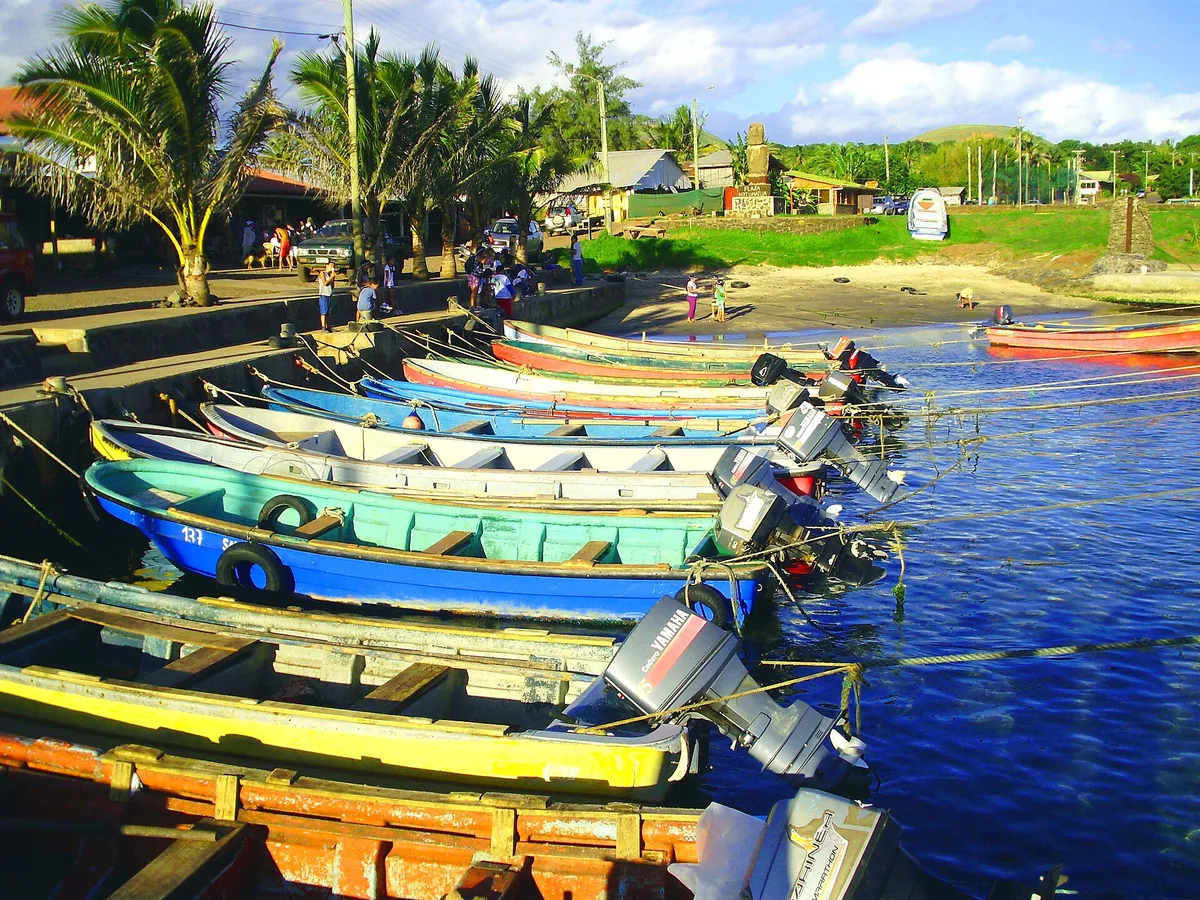
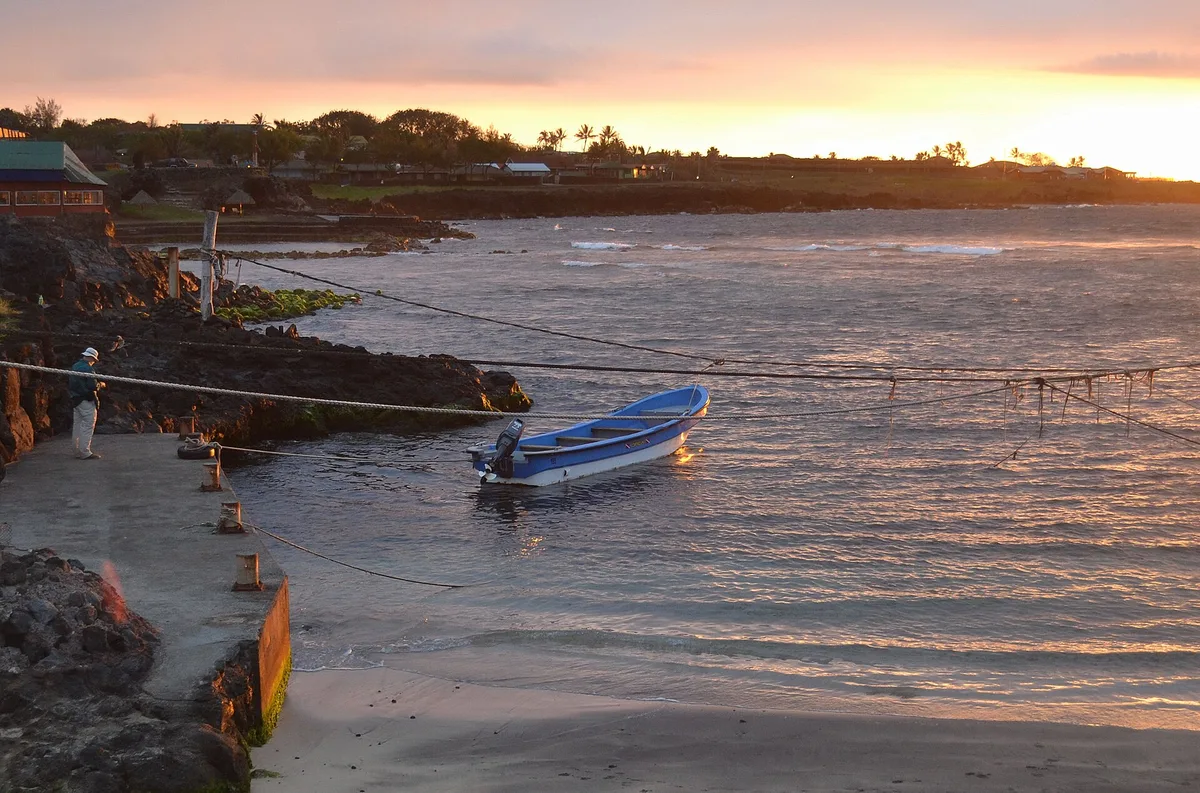
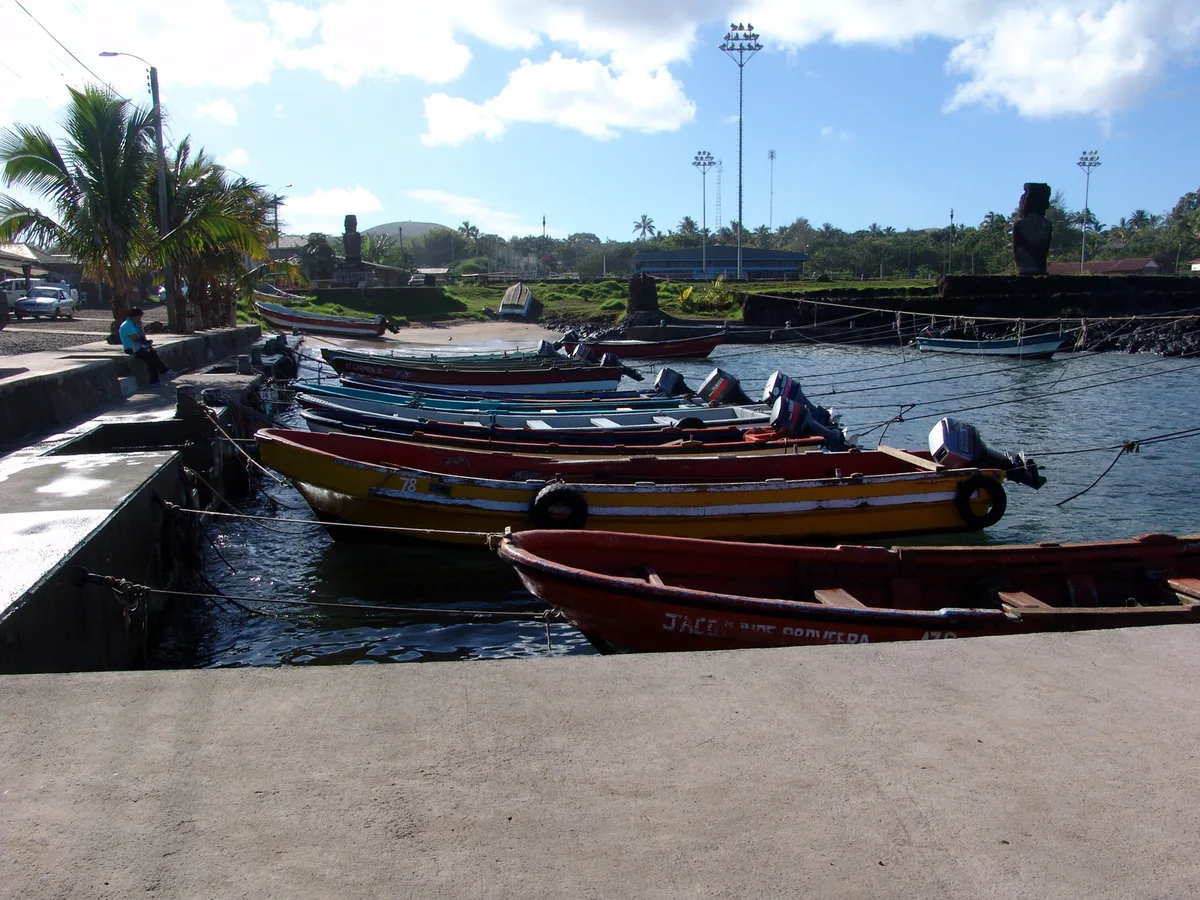
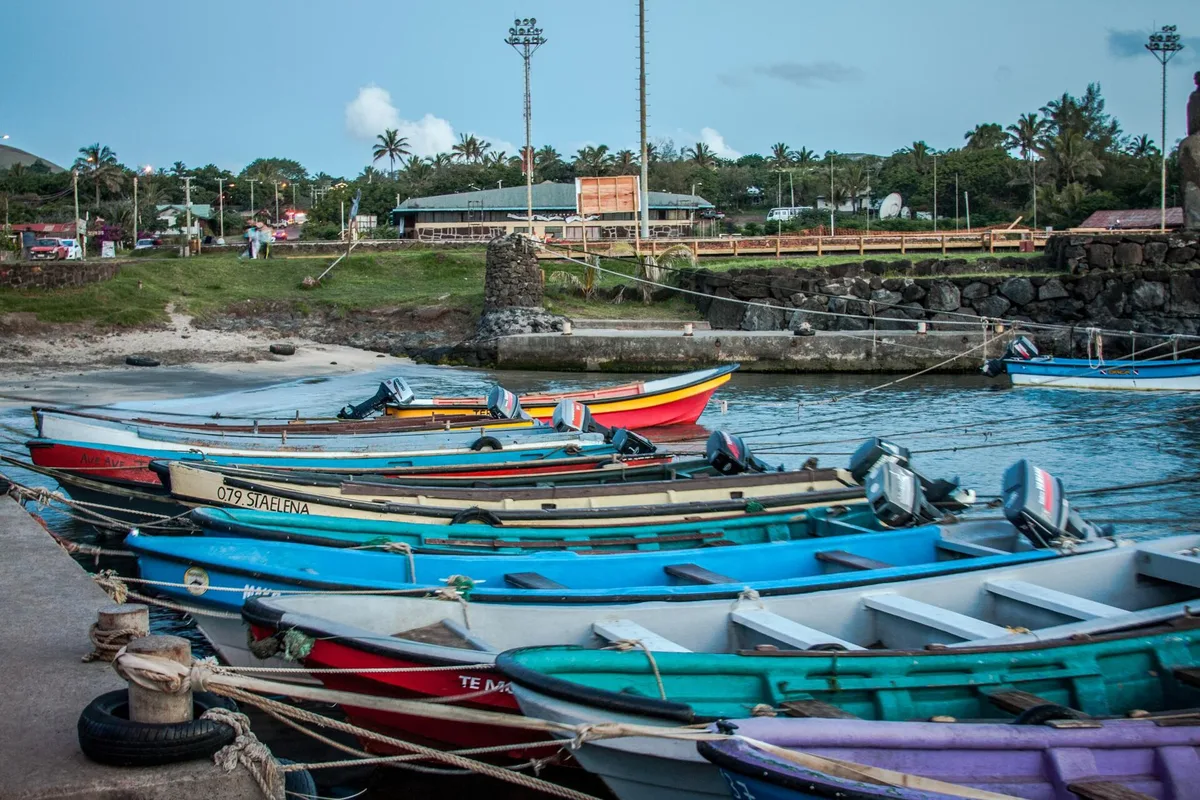
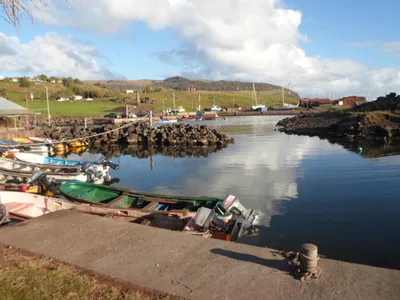
Caleta Hanga Piko is a compact, roughly 80-metre rocky inlet on the edge of Hanga Roa, Easter Island's only town. There's no sand here — just dark basalt rock enclosing a working harbour where traditional wooden fishing boats bob on deep blue water. The atmosphere is entirely local: fishermen haul their catch, engines idle, and the smell of salt and diesel hangs in the air. It's one of the few places on Rapa Nui where daily island life plays out without a tourist audience. Come for the authenticity, not the beach.
How to get there
Caleta Hanga Piko is a 10-minute walk from Hanga Roa town centre, accessible daily with no special equipment or fee required. The flat approach from town is straightforward, though the inlet itself is rocky and uneven underfoot — wear closed shoes. Free street parking is available on adjacent roads in Hanga Roa if you're arriving by vehicle. Mataveri International Airport (IPC) is just 2.3km away, making this an easy first or last stop on your Rapa Nui itinerary.
Who it's for
For couples
Caleta Hanga Piko offers a quietly atmospheric detour for couples who want to see Rapa Nui beyond the moai circuit — share a fresh fish lunch at La Taberna del Pescador and watch the boats come in.
For families
The flat walk from town is manageable, but the rocky, uneven inlet and active boat traffic make this better suited to older children who can follow the rules: no climbing on rocks, no approaching the boat ramp.
Our take
Do not come to Caleta Hanga Piko expecting a beach — there is no sand, and swimming is strictly off-limits due to boat traffic and fuel runoff in the water. What you get instead is something genuinely rare on Easter Island: a working harbour that hasn't been packaged for visitors. The basalt enclosure, the wooden boats, the fishermen going about their morning — it's all real, and it's all unscripted. Keep your distance, follow the rules, and bring a camera rather than a towel. Pair it with a walk to Ahu Tahai at sunset and lunch at La Taberna del Pescador, and you have one of the more honest half-days on the island. Worth the detour.
What to do
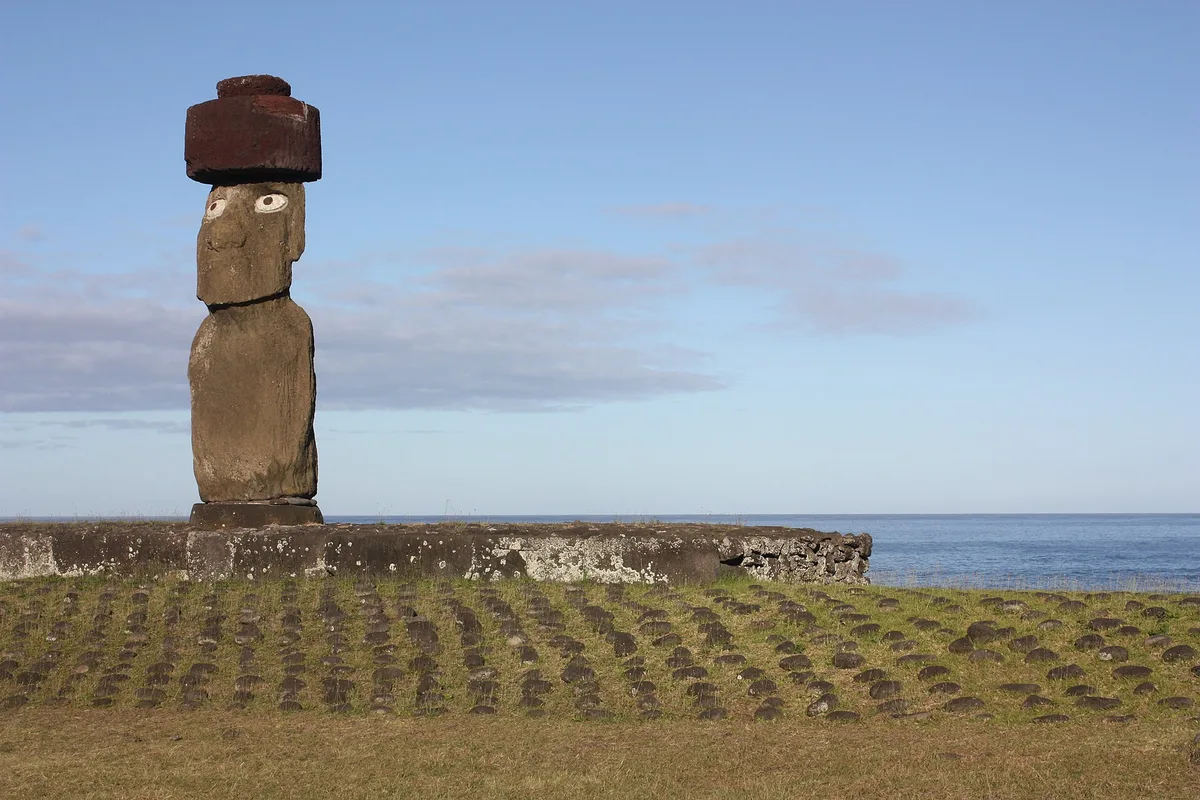
Right at the harbour you can observe turtle sightings at the nearby Avistamiento de tortugas spot, just 0.1km away, and Ahu Hotake sits immediately adjacent. A short walk of 0.2km brings you to Ahu A Roŋo, another ceremonial platform. For a broader cultural sweep, the Museo Antropológico Sebastián Englert is 0.8km away, and the restored ceremonial complex at Ahu Tahai — famous for its sunset moai — is just 1.5km from the harbour.
Frame the traditional wooden fishing boats against the basalt rock enclosure for an image that looks nothing like the typical Easter Island postcard.
The harbour mouth, where the deep blue open water meets the dark volcanic rock, gives strong graphic contrast — best captured in the soft light of early morning.
Where to eat
La Kaleta and La Taberna del Pescador are both right on the doorstep, with the latter specialising in fresh fish — a natural pairing with a harbour visit. Kuki Varua, serving regional cuisine, and Hani Hani are both within 0.1km. Oheho Surf Café is also just 0.1km away if you want a coffee before or after.
Where to stay
Several hotels sit within easy walking distance of the harbour. Hotel Otai is 0.3km away, with Oroŋo at 8km and Hotel Taura'A, Hotel Atariki, and Hotel Rapa Nui all within 0.5km. Staying this close means you can reach the harbour at first light with minimal effort.
Photography
The best shots are of the traditional wooden fishing boats framed against the basalt rock enclosure — morning light from the landward side works well before the sun climbs too high. The contrast between the handmade boats and the deep blue water beyond the harbour wall makes for a compelling, unposed composition.
Good to know
Do not enter the water — this is an active working harbour with boat traffic and fuel runoff present, and the basalt rocks are slippery and hazardous. Respect ongoing fishing operations at all times and never obstruct boat launches; the ramp is a working piece of infrastructure, not a photo prop. Keep a respectful distance from fishermen and their equipment — this is their livelihood, not a performance. Early morning is the quietest and most atmospheric time to visit.
GAMES
🕹️ Five minutes of sand?
Three daily games — including the UV simulator set to this beach.
Map
Nearby places
La Kaleta
La Taberna del Pescador
Kuki Varua
Hani Hani
Oheho Surf Café
Hotel otai
Oroŋo
Hotel Taura'A
Hotel Atariki
Hotel rapa nui
Things to see around Hanga Roa
Ahu Tahai
Restored ceremonial complex with famous sunset moai.
Museo Antropológico Sebastián Englert
Island's main anthropological museum.
Ahu Vinapu
Archaeological site with Inca-style precision stonework.
GIFT
🎁 Gift this beach
Its exact coastline, your date, your words — on a print or a PDF you print yourself.
Hanga Piko Beach
THAT DAY
Hanga Piko Beach, Chilean Pacific
© OpenStreetMap contributors
Clean & decorative, or “That day” with the real sky of your date.
Shipping included 3-6 business days
A question before you order? Contact us
Delivered within minutes on the confirmation page and by email: a ZIP with all 4 print sizes (30×40 cm, 12×16″, 50×70 cm, 18×24″), each as a high-resolution PDF and PNG (300 dpi), plus a screen version. Print at home or at any print shop.
Please complete the delivery address.
Please accept the Terms of Sale.
Almost there — the shop opens very soon.
Secure payment · Printed locally in 30+ countries · 7 languages
Frequently asked
The information on this page is provided for guidance only and may evolve. Access conditions, safety and infrastructure can change without notice. Always check official sources before traveling.
Other beaches in the region
Reviews of this beach
- No reviews yet, what a shame — leave yours and share your experience.
Photo credits
Sources and licenses for the photos shown above.