Punta Suárez BeachEcuador Beach Guide
Wild Española: red sand, lava, and albatross overhead
About
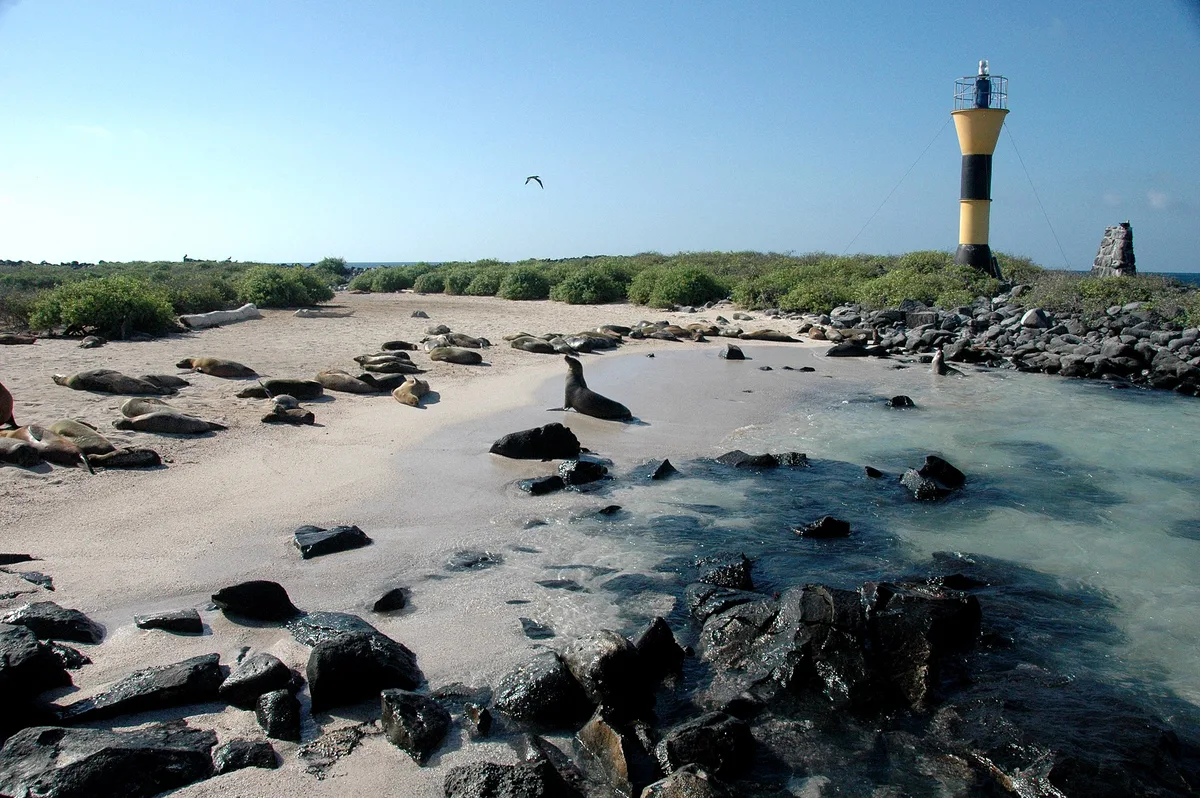
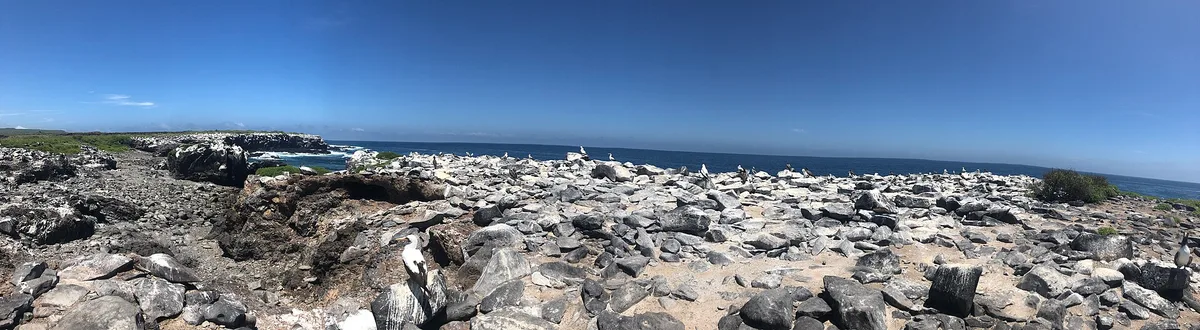
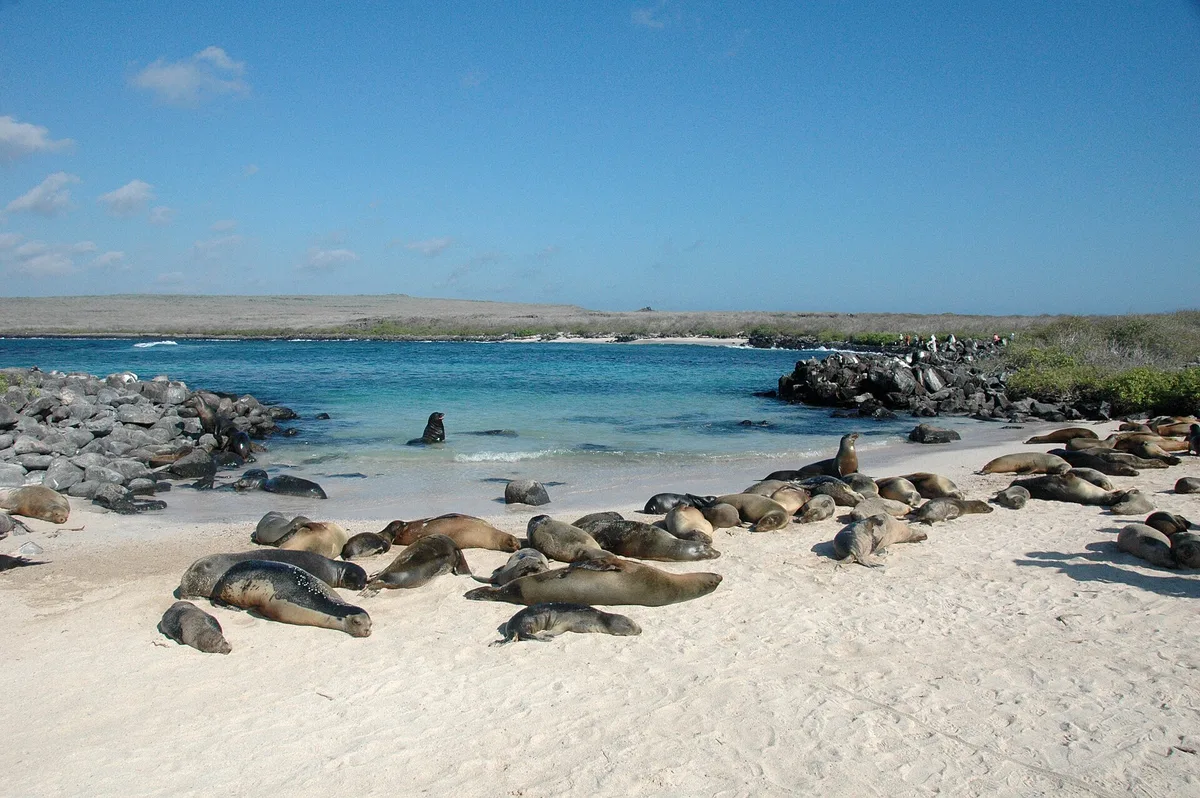
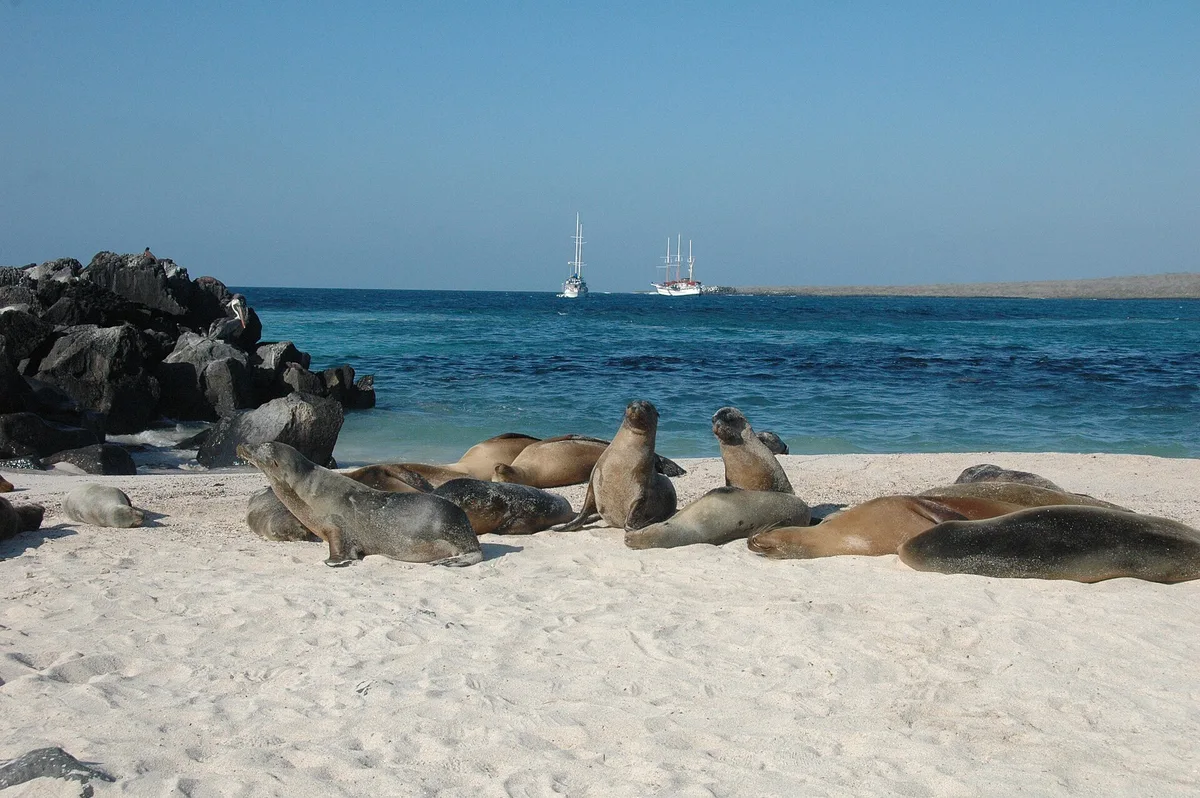
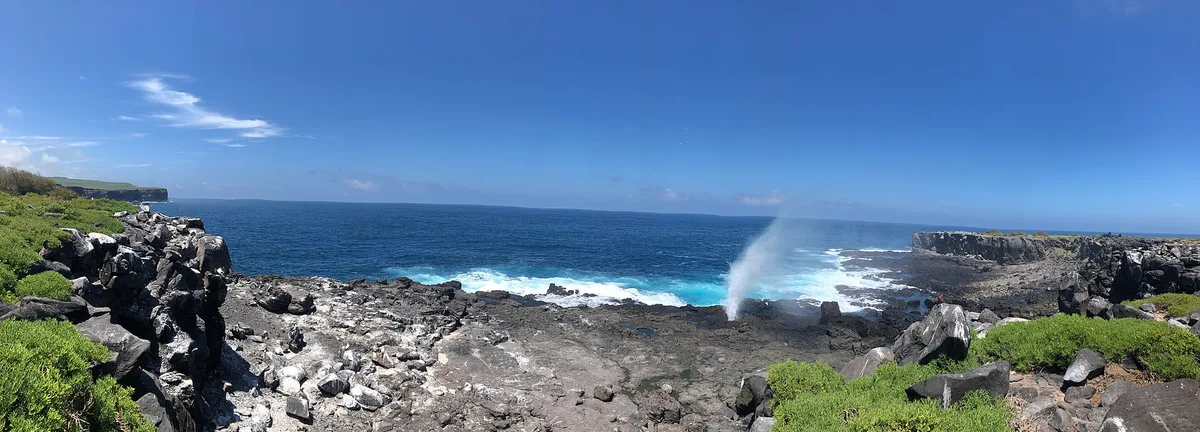
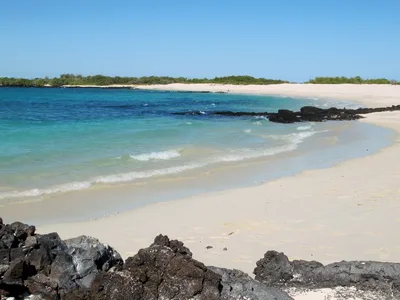
Playa de Punta Suárez sits at the rugged tip of Isla Española, the southernmost island in the Galápagos archipelago, Ecuador. The beach is a striking mix of dark volcanic rock and red-tinged sand, lapped by deep blue open-ocean water that stretches unbroken toward the horizon. This is one of the few places on Earth where waved albatross nest and launch from cliff edges, sharing the lava shoreline with marine iguanas, sea lions, and Nazca boobies. The vibe is uncompromisingly wild — no facilities, no vendors, just raw Galápagos nature at its most elemental. Rated 4.9 out of 5 by visitors, Punta Suárez consistently ranks as one of the most extraordinary wildlife encounters in the islands.
How to get there
Isla Española has no permanent human settlement and no road access — you reach Punta Suárez exclusively by boat as part of a licensed Galápagos day-trip or live-aboard cruise departing from San Cristóbal Airport (SCY), approximately 53 km away. All visits must be made with a certified naturalist guide; independent access to the island is not permitted under Galápagos National Park regulations. There is no parking of any kind — the concept simply doesn't apply here. Confirm your departure point and vessel details with your tour operator before travel.
Who it's for
For couples
Couples who share a passion for wildlife and raw landscapes will find Punta Suárez quietly extraordinary — walking the lava trail together among nesting albatross, with the deep blue ocean below, is an experience that needs no embellishment.
For families
Families with older children who can manage uneven lava terrain and follow strict trail rules will find the wildlife encounters genuinely awe-inspiring; the beach is not suitable for young children or toddlers given the sharp volcanic rock and strong coastal currents.
Our take
Punta Suárez is not a beach you visit to swim or sunbathe — understand that before you book. The draw is something rarer: a functioning, undisturbed wildlife ecosystem where you are the guest, not the main event. The mixed red sand and lava shoreline against open deep blue ocean is visually striking, but the real weight of this place comes from the albatross, the iguanas, the sheer geological rawness underfoot. Access is tightly controlled by the Galápagos National Park, and that control is exactly why it still looks like this. Come in the dry season between May and October when albatross are nesting and the skies are clear. Worth every logistical effort to get here.
What to do
The main draw is the Punta Suárez trail itself, rated an exceptional 4.9 out of 5, which winds through active albatross nesting colonies, past marine iguana basking sites, and along dramatic lava cliffs where blowhole spray can reach impressive heights. Wildlife watching is the defining activity: waved albatross, Española mockingbirds, Nazca boobies, and sea lions are all resident here. Bring binoculars and a long lens — the animals are habituated to humans but the distances on the lava trail can be greater than expected. Photography of the red sand coves against the deep blue ocean is a pursuit in itself.
The red-and-mixed-sand cove framed by black lava rock with deep blue ocean behind it is the signature wide-angle shot — best captured in early morning light before the midday glare flattens the colour.
The albatross nesting colony, where birds display their elaborate courtship dance beak-to-beak, delivers close-up frames found nowhere else on the planet. The blowhole on the lava cliff, where ocean surges shoot spray skyward, rounds out the trio of unmissable compositions.
Where to eat
There are no restaurants, cafés, or food vendors at Punta Suárez — bring your own water and snacks, as your tour operator will typically advise. All provisions must be carried in and out; leave nothing behind on the island.
Where to stay
There is no accommodation on Isla Española. Overnight stays in the area are possible aboard licensed live-aboard vessels that include Punta Suárez on their itinerary, or at hotels on San Cristóbal or Santa Cruz islands before or after your day trip.
Photography
The red sand and mixed lava shoreline photographed against the deep blue open ocean is most vivid in the soft morning light shortly after landing. The cliff-edge albatross launch point — where birds run and take flight — is the single most dramatic frame on the entire trail.
Good to know
All visitors must stay on marked trails and follow their certified guide at all times — straying off-path is a serious violation of Galápagos National Park rules and can result in removal from the islands. The ocean at Punta Suárez is exposed open-ocean with strong, unpredictable currents — do not enter the water from the lava shoreline unsupervised. Wear sturdy closed-toe shoes; the lava terrain is sharp and uneven and can cause serious injury. True digital-detox spot — bring offline books, the cell signal fades and there's nowhere to plug in a laptop.
GAMES
🕹️ Five minutes of sand?
Three daily games — including the UV simulator set to this beach.
Map
Nearby places
Punta Suarez
GIFT
🎁 Gift this beach
Its exact coastline, your date, your words — on a print or a PDF you print yourself.
Punta Suárez Beach
THAT DAY
Punta Suárez Beach, Galápagos
© OpenStreetMap contributors
Clean & decorative, or “That day” with the real sky of your date.
Shipping included 3-6 business days
A question before you order? Contact us
Delivered within minutes on the confirmation page and by email: a ZIP with all 4 print sizes (30×40 cm, 12×16″, 50×70 cm, 18×24″), each as a high-resolution PDF and PNG (300 dpi), plus a screen version. Print at home or at any print shop.
Please complete the delivery address.
Please accept the Terms of Sale.
Almost there — the shop opens very soon.
Secure payment · Printed locally in 30+ countries · 7 languages
Frequently asked
The information on this page is provided for guidance only and may evolve. Access conditions, safety and infrastructure can change without notice. Always check official sources before traveling.
Other beaches in the region
Other wild beaches in Ecuador
More beaches in Galápagos
Reviews of this beach
- No reviews yet, what a shame — leave yours and share your experience.
Photo credits
Sources and licenses for the photos shown above.
- Photo 1 — David Broad · source · CC BY 3.0
- Photo 2 — Mike's Birds from Riverside, CA, US · source · CC BY-SA 2.0
- Photo 3 — David Broad · source · CC BY 3.0
- Photo 4 — David Broad · source · CC BY 3.0
- Photo 5 — Mike's Birds from Riverside, CA, US · source · CC BY-SA 2.0