Punta Cormorant BeachEcuador Beach Guide
Green sand, flamingos, and wild Galápagos magic
About
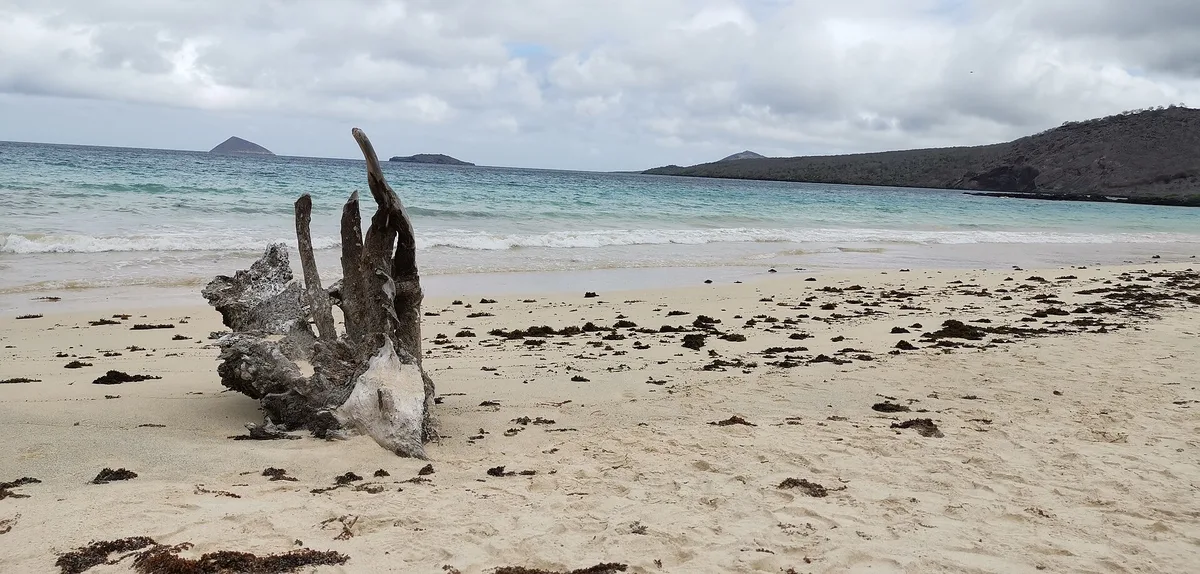
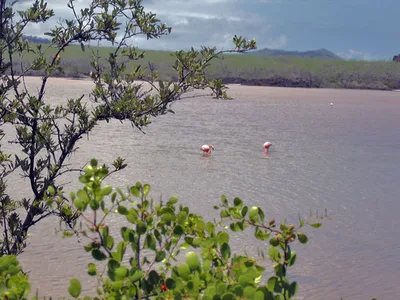
Playa de Punta Cormorant sits on Isla Floreana in the Galápagos Islands, Ecuador — a remote stretch of green-tinted volcanic sand lapped by deep blue water. The olivine minerals in the sand give the beach its distinctive colour, a geological quirk you won't find on most of the planet. Flamingos wade in the brackish lagoon just behind the beach, and the surrounding landscape is raw, volcanic, and utterly wild. A second beach nearby — composed of white coral sand — draws stingrays into its shallows, making it a place to admire rather than enter. This is the Galápagos at its most unfiltered.
How to get there
Playa de Punta Cormorant is reachable only by boat — join a guided day tour departing from Puerto Ayora on Santa Cruz Island, roughly a 90-minute journey each way, with tours running daily. There is no road access and no parking of any kind. Entry requires a Galápagos National Park fee of USD 200, plus a USD 20 Transit Control Card (TCT), both of which fund conservation and local community programmes. Book your tour in advance, especially during the busy dry season.
Who it's for
For couples
The wild, unhurried atmosphere — flamingos, volcanic minerals, and deep blue water with almost no infrastructure — makes Punta Cormorant a genuinely rare shared experience for couples who want nature over nightlife.
For families
Families with older children who are curious about wildlife and geology will find the flamingo lagoon and green sand endlessly fascinating, though parents must keep young ones well away from the stingray-prone white coral sand beach.
Our take
Let's be direct: swimming is off the table at the white coral sand beach — stingrays patrol those shallows and the prohibition is serious. That said, Playa de Punta Cormorant earns its place on any Galápagos itinerary for everything else it offers. The green volcanic sand is genuinely rare, the flamingo lagoon is extraordinary, and the surrounding landscape feels prehistoric in the best possible way. It's a day trip, not a base — you arrive by boat, you absorb it, and you leave with photographs that don't look like anywhere else on Earth. The entry fees are substantial, but they go directly to protecting this ecosystem. Come in the dry season (May to October) for calmer seas and better wildlife sightings. Worth every logistical effort.
What to do
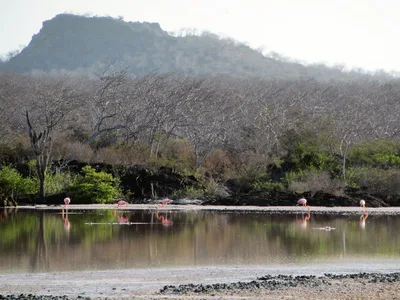
The flamingo lagoon just inland from the beach is the headline act — scan the pink-tinged birds against the volcanic backdrop for a genuinely surreal scene. History buffs can visit the Barril de Correo (Post Office Barrel) about 2.7km away, a centuries-old sailor tradition where visitors leave and collect postcards. Casa de la Baronesa, 1.8km from the beach, adds a layer of mysterious Galápagos lore to the visit. For the more adventurous, Cerro Allieri is a volcanic viewpoint roughly 7.5km out.
The flamingo lagoon behind the beach delivers a surreal frame — pink birds reflected in still water with volcanic hills behind.
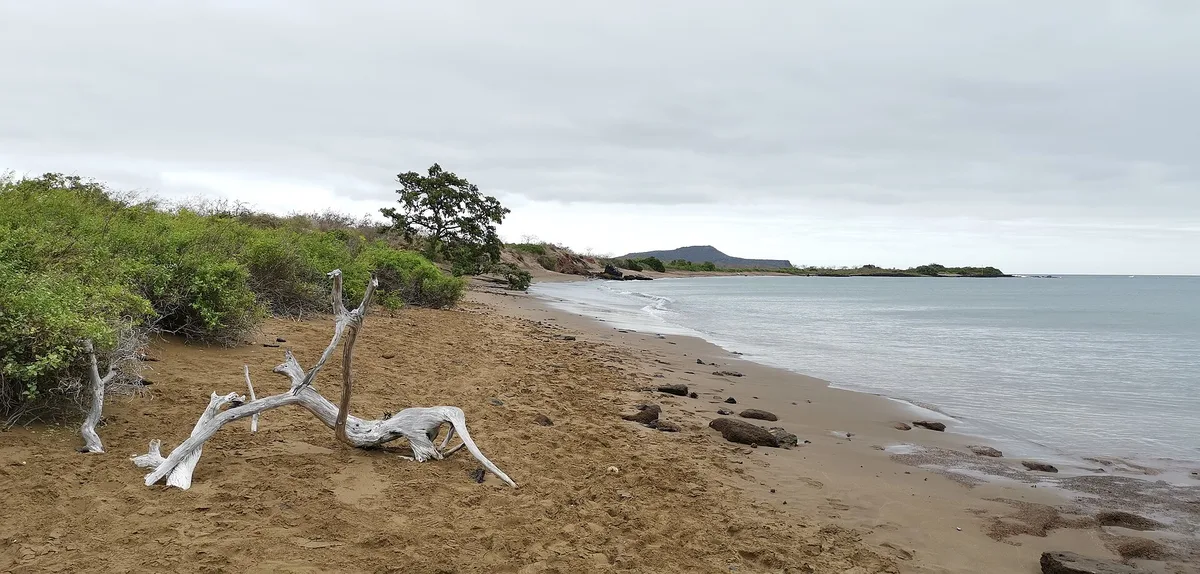
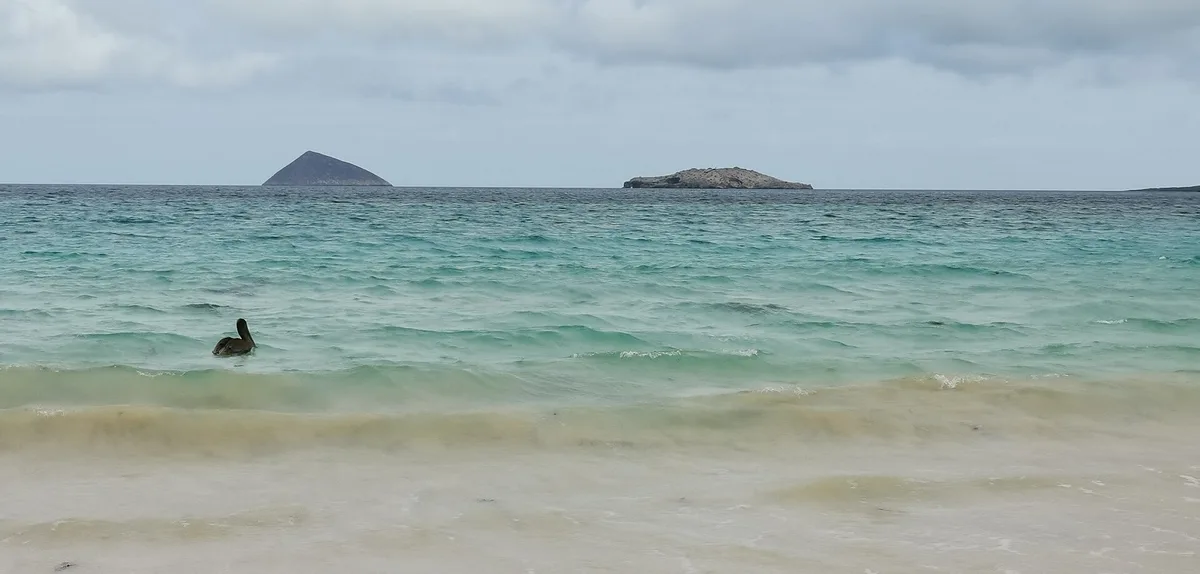
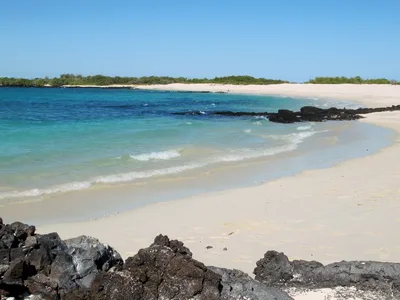
The green olivine sand at the shoreline, shot low against the deep blue water, is one of the most geologically distinctive beach photos in the Galápagos. The volcanic rock outcrops at the edge of the bay add strong foreground texture for wide landscape shots.
Where to eat
There are no restaurants or food stalls at Playa de Punta Cormorant itself — pack everything you need before boarding your boat. The nearest dining option is the Post Office Restaurant, approximately 8.5km away and highly regarded by those who've made the trip. Plan your meals around your tour schedule.
Where to stay
There are no hotels or guesthouses at the beach itself. Visitors typically base themselves on Santa Cruz Island and reach Punta Cormorant as a day trip — check accommodation options in Puerto Ayora before booking your tour.
Photography
Arrive early in the morning when the light is soft and the flamingos are most active in the lagoon — the contrast of pink birds against green sand and blue water is the shot. The olivine-green sand close to the waterline, with volcanic rock framing the scene, makes for a striking wide-angle composition.
Good to know
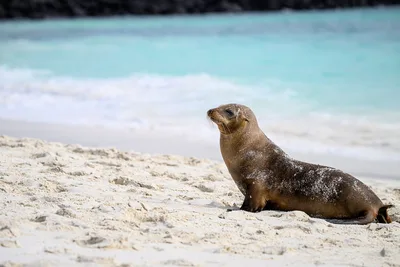
Swimming is strictly prohibited at the white coral sand beach due to stingrays hidden in the shallow sand — do not enter the water there, no matter how inviting it looks. At the green sand beach, swimming is rated moderate, but stay alert and shuffle your feet in any shallow area to avoid disturbing stingrays. All visits are conducted within Galápagos National Park rules: stay on marked paths, keep distance from wildlife, and take nothing from the beach. True digital-detox territory — bring offline books, cell signal fades fast and there's nowhere to plug in a laptop.
GAMES
🕹️ Five minutes of sand?
Three daily games — including the UV simulator set to this beach.
Map
Nearby places
Post Office Restaurant
GIFT
🎁 Gift this beach
Its exact coastline, your date, your words — on a print or a PDF you print yourself.
Punta Cormorant Beach
THAT DAY
Punta Cormorant Beach, Galápagos
© OpenStreetMap contributors
Clean & decorative, or “That day” with the real sky of your date.
Shipping included 3-6 business days
A question before you order? Contact us
Delivered within minutes on the confirmation page and by email: a ZIP with all 4 print sizes (30×40 cm, 12×16″, 50×70 cm, 18×24″), each as a high-resolution PDF and PNG (300 dpi), plus a screen version. Print at home or at any print shop.
Please complete the delivery address.
Please accept the Terms of Sale.
Almost there — the shop opens very soon.
Secure payment · Printed locally in 30+ countries · 7 languages
Frequently asked
The information on this page is provided for guidance only and may evolve. Access conditions, safety and infrastructure can change without notice. Always check official sources before traveling.
Other beaches in the region
Other wild beaches in Ecuador
More beaches in Galápagos
Reviews of this beach
- No reviews yet, what a shame — leave yours and share your experience.
Photo credits
Sources and licenses for the photos shown above.
- Photo 1 — Z thomas · source · CC BY-SA 4.0
- Photo 2 — David Stanley from Nanaimo, Canada · source · CC BY 2.0
- Photo 3 — Z thomas · source · CC BY-SA 4.0
- Photo 4 — Z thomas · source · CC BY-SA 4.0
- Photo 5 — Galapagosonline aka Movera aka obv (talk) · source · CC BY 3.0