Hanga Kio'e BeachChile Beach Guide
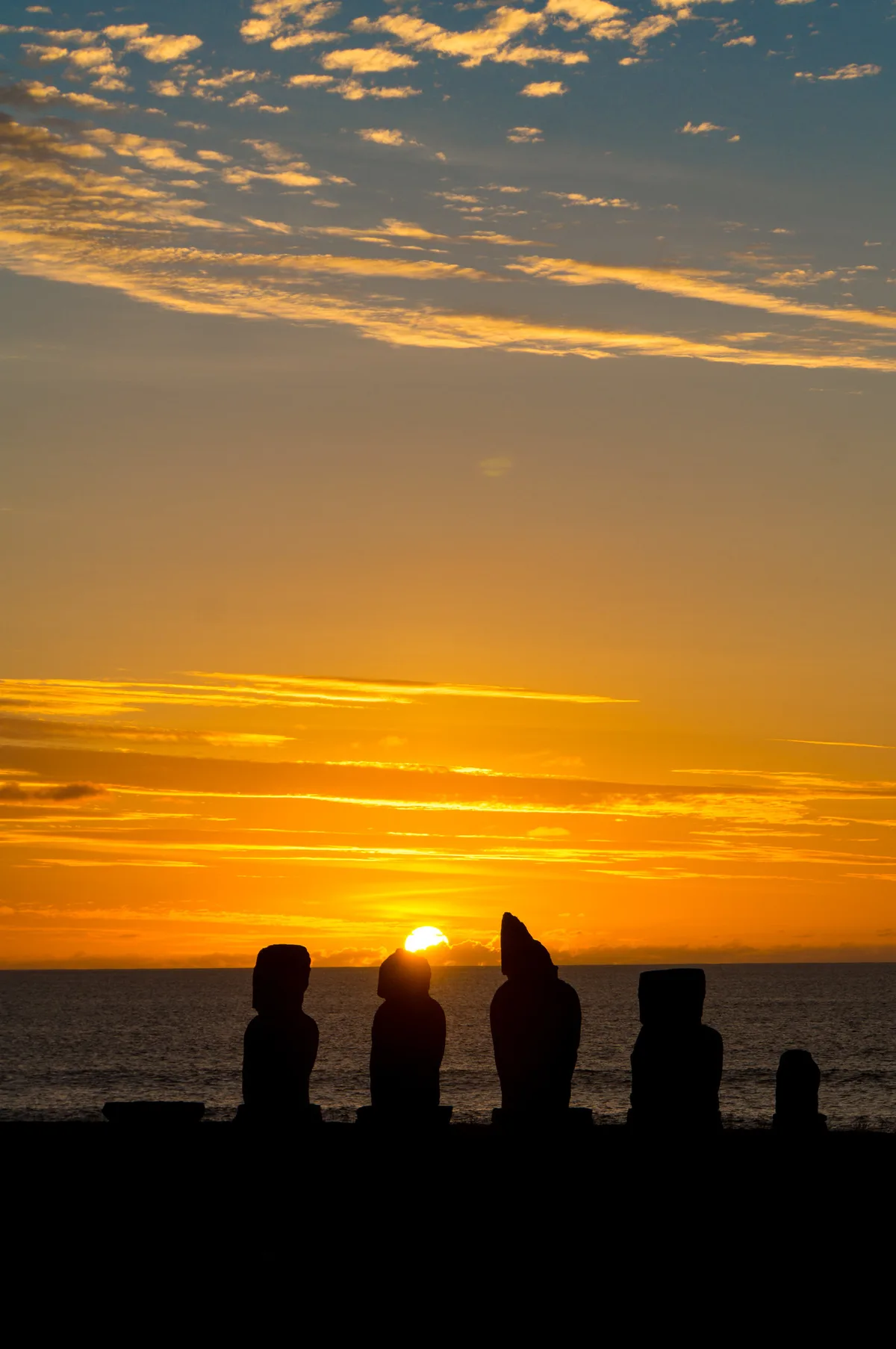
Moai, grey sand, and blue Pacific at sunset
About
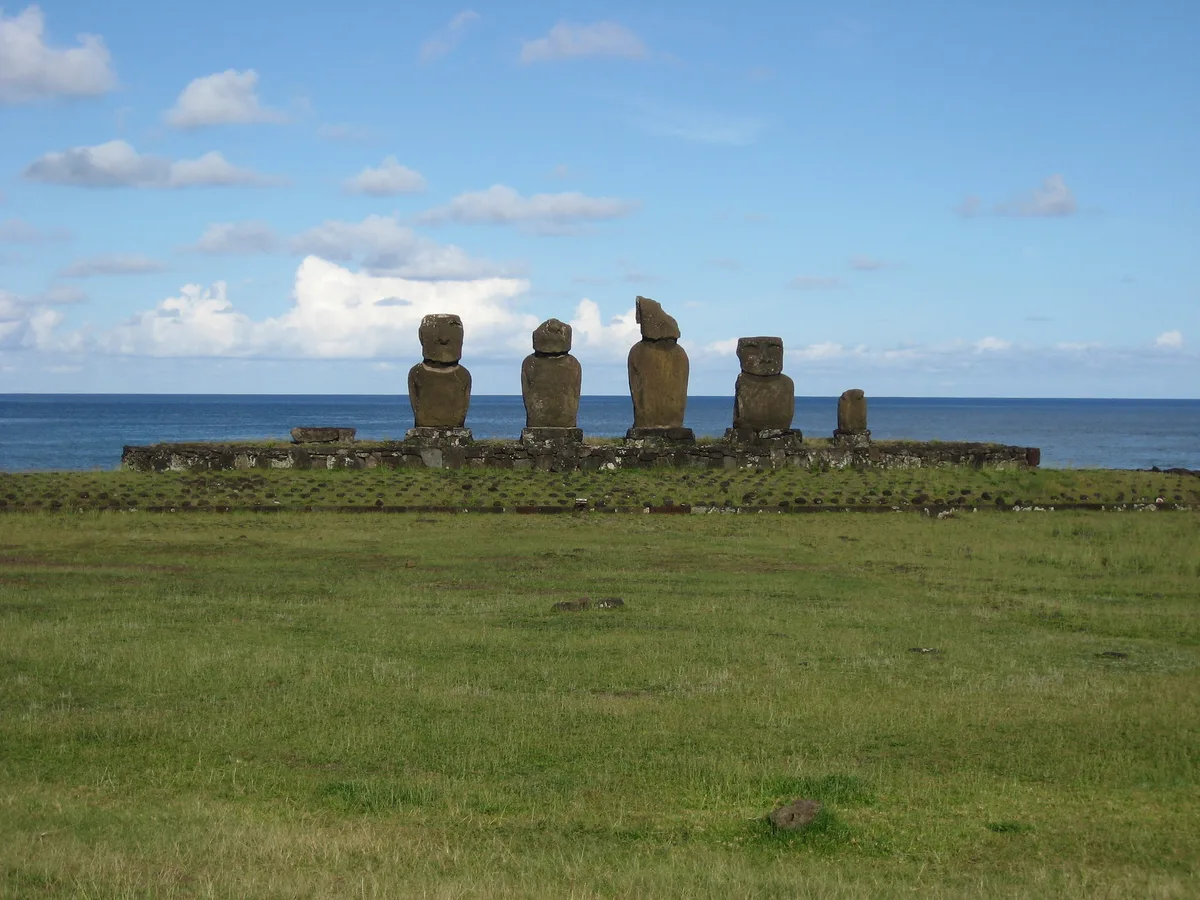
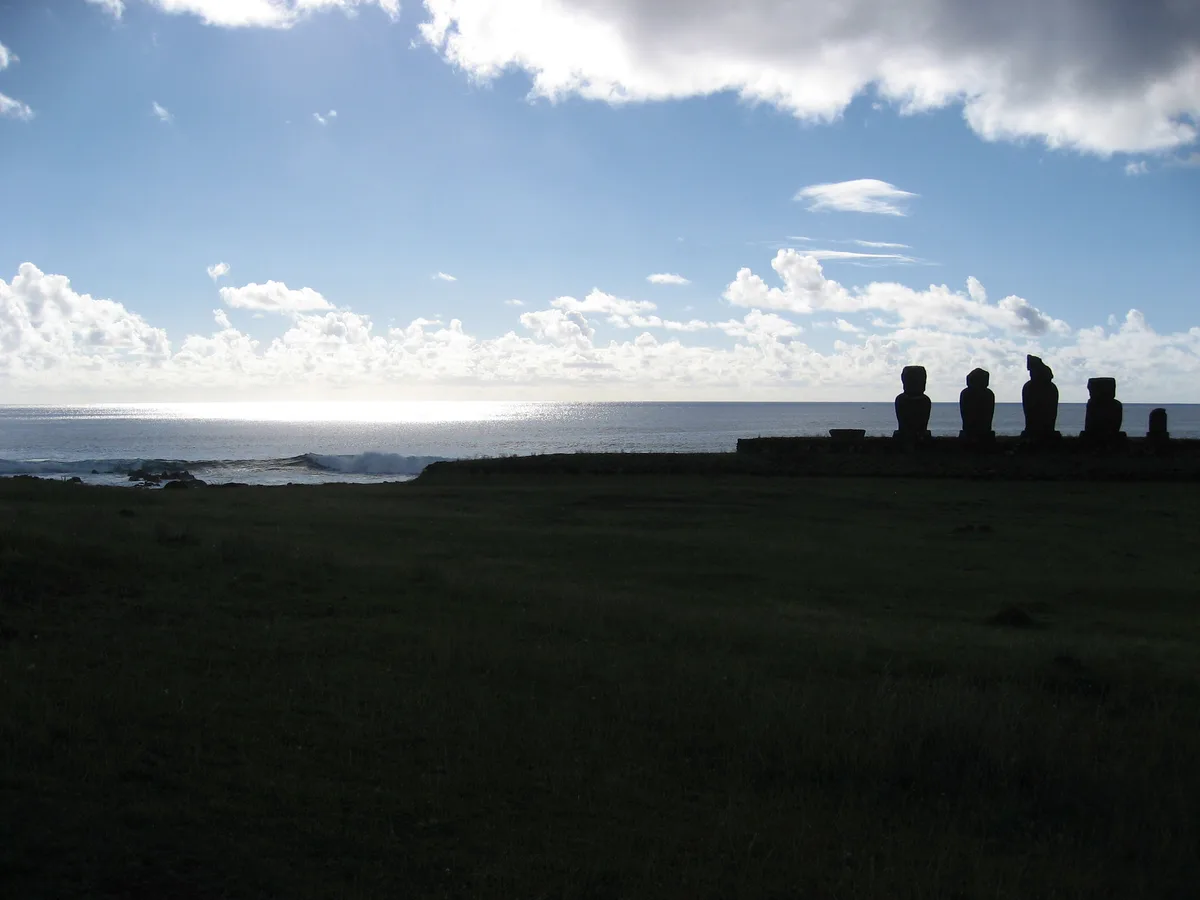
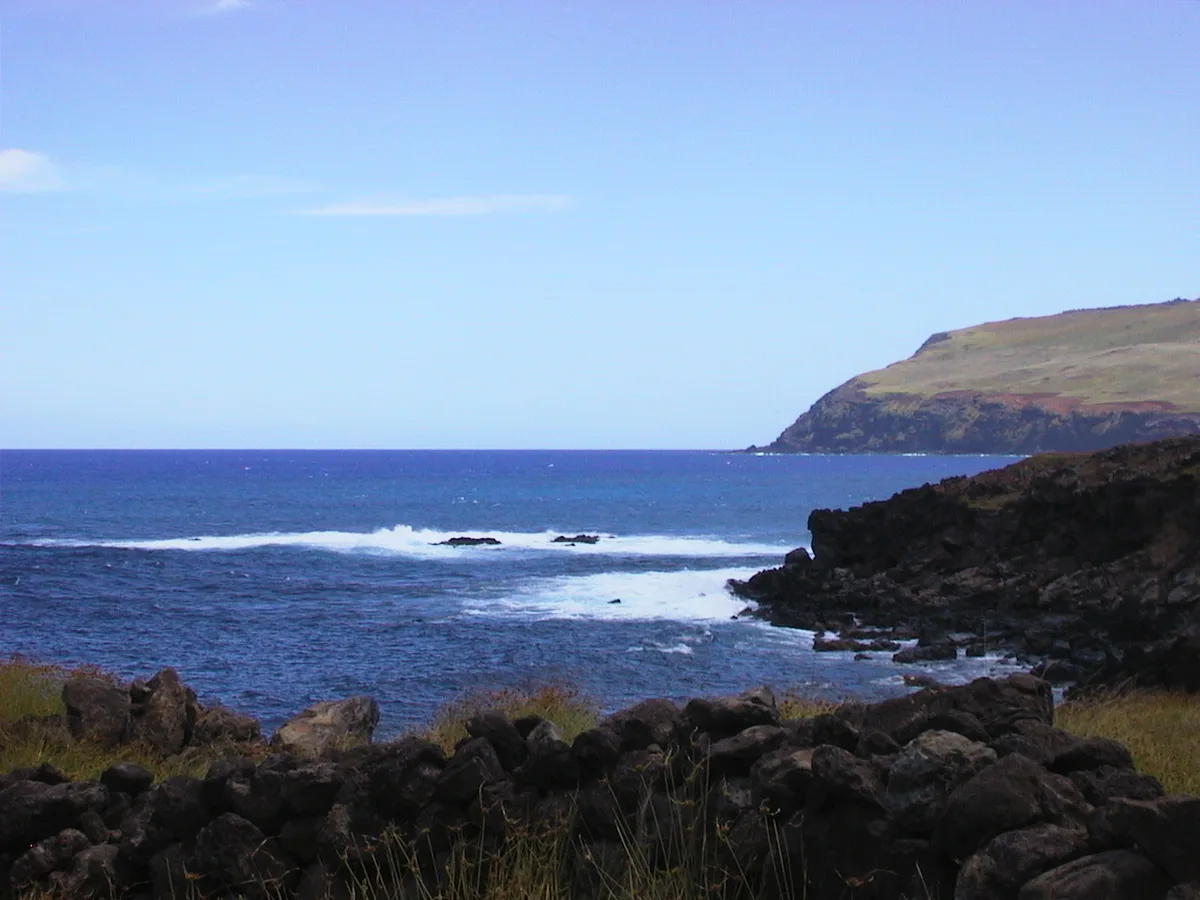
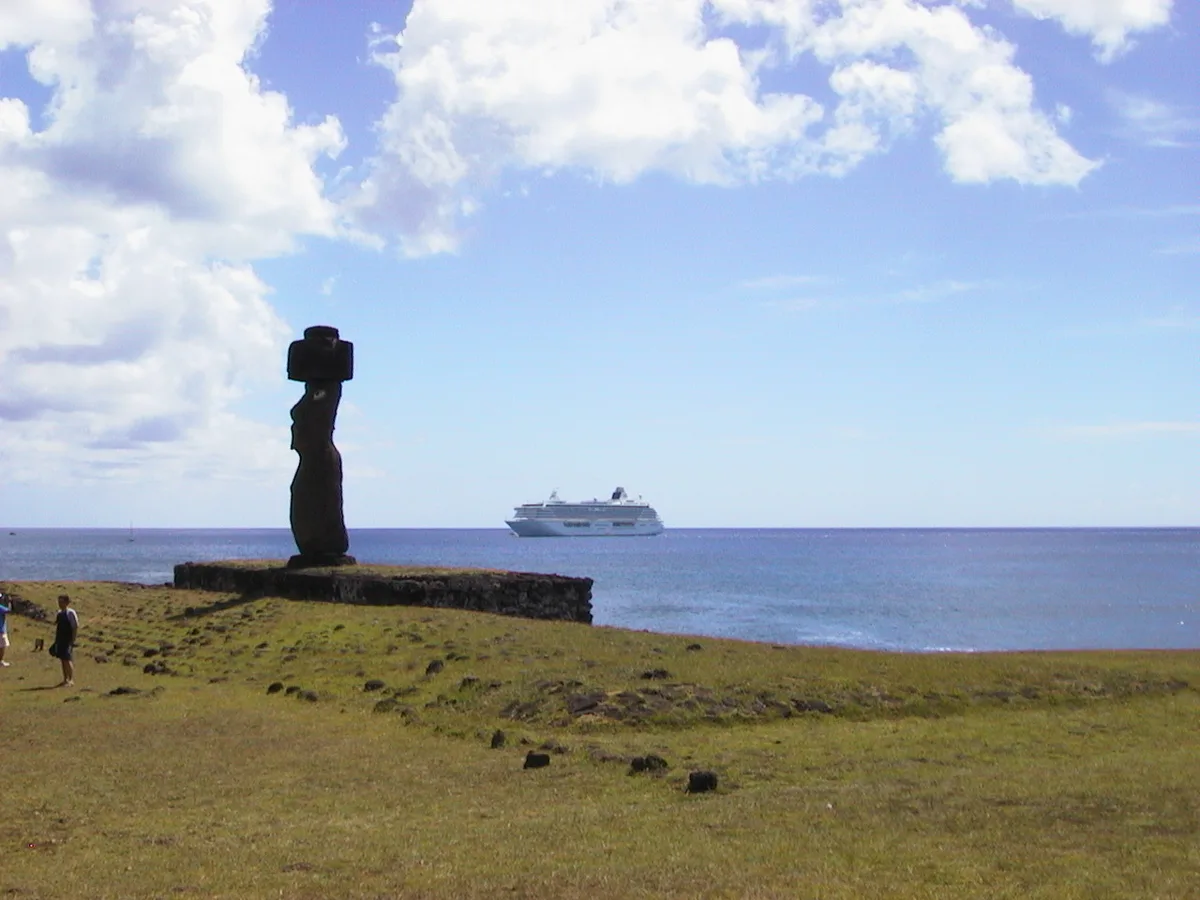
Playa Hanga Kio'e sits at the edge of the Tahai ceremonial complex in Hanga Roa, where grey volcanic sand meets open blue Pacific water on the western coast of Easter Island. The cove is small and quiet — a local teenage swimming spot rather than a tourist showpiece — with rocks that emerge and submerge with the tides. Just metres away, Ahu Ko Te Riku stands watch: the only fully restored moai on the island, complete with coral eyes and a red scoria topknot. Facing due west, the beach catches the full drama of the Pacific sunset, and the silhouette of the moai against the fading sky is one of the most photographed scenes on Rapa Nui. The vibe is relaxed and unhurried, the kind of place where you sit on dark sand and let the island's weight settle on you.
How to get there
The beach is an easy 10-minute walk along the coastal path from Hanga Roa town centre, or a 5-minute drive. A small unpaved free parking lot sits near the Tahai complex entrance. The beach falls within Rapa Nui National Park, so a valid CONAF national park pass is required — currently priced at 95,000 CLP (approximately 99 USD). The park is open from sunrise to sunset daily.
Who it's for
For couples
The westward-facing cove with its moai silhouette at sunset is one of the most quietly dramatic spots on Easter Island — bring a blanket, sit on the dark volcanic sand, and watch the Pacific sky change colour with almost no one else around.
For families
The easy flat coastal walk from Hanga Roa makes it accessible with children, and the proximity to the Museo Antropológico Sebastián Englert (400 metres) gives younger visitors real context for what they're seeing — though parents should keep kids well clear of the rocks at high tide and note there is no lifeguard.
Our take
Playa Hanga Kio'e is not a swimming destination first — it's an archaeological one that happens to have grey sand and blue water at its feet. The submerged rocks and absent lifeguard mean you enter the water at your own risk, and water shoes are not optional. That said, the setting is genuinely hard to beat: a quiet cove, the only fully restored moai on Easter Island standing metres away, and a west-facing horizon that delivers one of the Pacific's great sunsets. Skip June through August when winter swell increases wave action in the cove. Come between December and March, arrive an hour before sunset, buy your CONAF pass in advance, and keep your hands off the stones.
What to do
Ahu Ko Te Riku, just 50 metres from the waterline, is the centrepiece — the only moai on the island with its coral eyes fully restored, and worth a long, quiet look. The broader Ahu Tahai complex, 100 metres away, comprises three restored ahu platforms and gives real context to the ceremonial landscape you're standing in. A short walk of 400 metres brings you to the Museo Antropológico Sebastián Englert, the island's main anthropological museum, which fills in the history that the stones can only hint at.
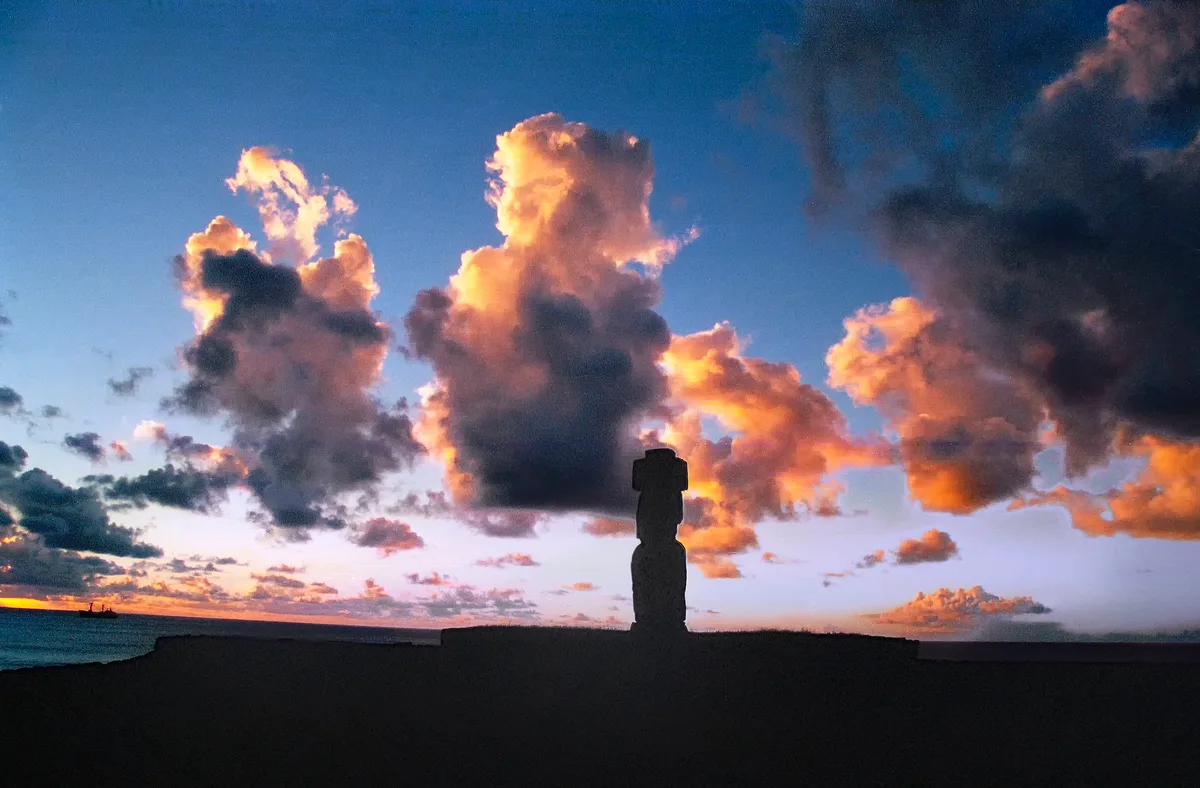
The classic frame is Ahu Ko Te Riku shot from the beach at sunset — moai and topknot in silhouette against the blue-to-orange Pacific sky, with grey volcanic sand in the foreground.
The three ahu platforms of the Tahai complex 100 metres north offer a wider composition, especially effective in the soft light just after sunrise when the stone takes on a warm glow.
Where to eat
Moai Sunset, 700 metres from the beach, is the closest option and well-placed for a post-sunset meal. A little further at 1.2 kilometres you'll find Topa Ra'ā, Manuia, and the regional kitchen of Les Amores De La Polynesie. For a more local flavour, Donde la Tía Sonia at 1.3 kilometres is a regional spot worth the short walk.
Where to stay
Vai Moana at 1.2 kilometres is the closest listed hotel to the beach. For more options, Poike and Hotel Otai are both 1.6 kilometres away, while Hotel Rapa Nui and Oroŋo sit at 1.8 and 2 kilometres respectively — all within easy reach of the Tahai complex.
Photography
The unmissable shot is Ahu Ko Te Riku at golden hour — position yourself slightly south so the moai's topknot silhouettes cleanly against the western sky as the sun drops into the Pacific. Arrive 30 minutes before sunset for the best light on the grey sand and blue water, and stay for the afterglow when the ahu platforms turn deep amber.
Good to know
Your CONAF national park pass must be purchased before entry — don't assume you can buy it on the spot at the cove. Never touch the moai or the ahu platforms; it's prohibited and damages irreplaceable heritage. No camping and no fires are permitted anywhere in the park. Rocks submerge at high tide, making the cove slippery and unpredictable — water shoes are strongly recommended, and there is no lifeguard on duty.
GAMES
🕹️ Five minutes of sand?
Three daily games — including the UV simulator set to this beach.
Map
Nearby places
Moai Sunset
Topa Ra'ā
Les Amores De La Polynesie
Manuia
Donde la Tía Sonia
Things to see around Hanga Roa
Ahu Ko Te Riku
Moai with restored coral eyes and red scoria topknot — the only fully restored moai on the island.
Ahu Tahai
Restored ceremonial complex with three ahu platforms.
Museo Antropológico Sebastián Englert
Island's main anthropological museum.
GIFT
🎁 Gift this beach
Its exact coastline, your date, your words — on a print or a PDF you print yourself.
Hanga Kio'e Beach
THAT DAY
Hanga Kio'e Beach, Chilean Pacific
© OpenStreetMap contributors
Clean & decorative, or “That day” with the real sky of your date.
Shipping included 3-6 business days
A question before you order? Contact us
Delivered within minutes on the confirmation page and by email: a ZIP with all 4 print sizes (30×40 cm, 12×16″, 50×70 cm, 18×24″), each as a high-resolution PDF and PNG (300 dpi), plus a screen version. Print at home or at any print shop.
Please complete the delivery address.
Please accept the Terms of Sale.
Almost there — the shop opens very soon.
Secure payment · Printed locally in 30+ countries · 7 languages
Frequently asked
The information on this page is provided for guidance only and may evolve. Access conditions, safety and infrastructure can change without notice. Always check official sources before traveling.
Other beaches in the region
Reviews of this beach
- No reviews yet, what a shame — leave yours and share your experience.
Photo credits
Sources and licenses for the photos shown above.
- Photo 1 — https://www.linkedin.com/in/HametnerUwe/ · source · Public Domain
- Photo 2 — https://www.linkedin.com/in/HametnerUwe/ · source · Public Domain
- Photo 3 — JP Lies · source · CC BY-SA 2.0
- Photo 4 — nyanchew · source · CC BY 2.0
- Photo 5 — Gabriele Giuseppini · source · CC BY 3.0
- Photo 6 — Gabriele Giuseppini · source · CC BY 3.0