Conchas BeachSpain Beach Guide
Wild Atlantic shore where the volcano meets the sea
About
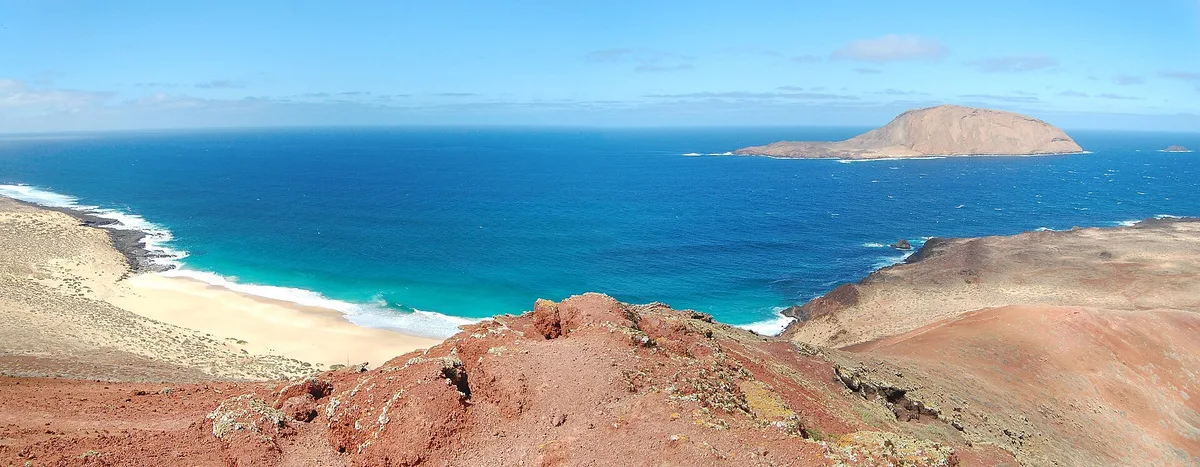
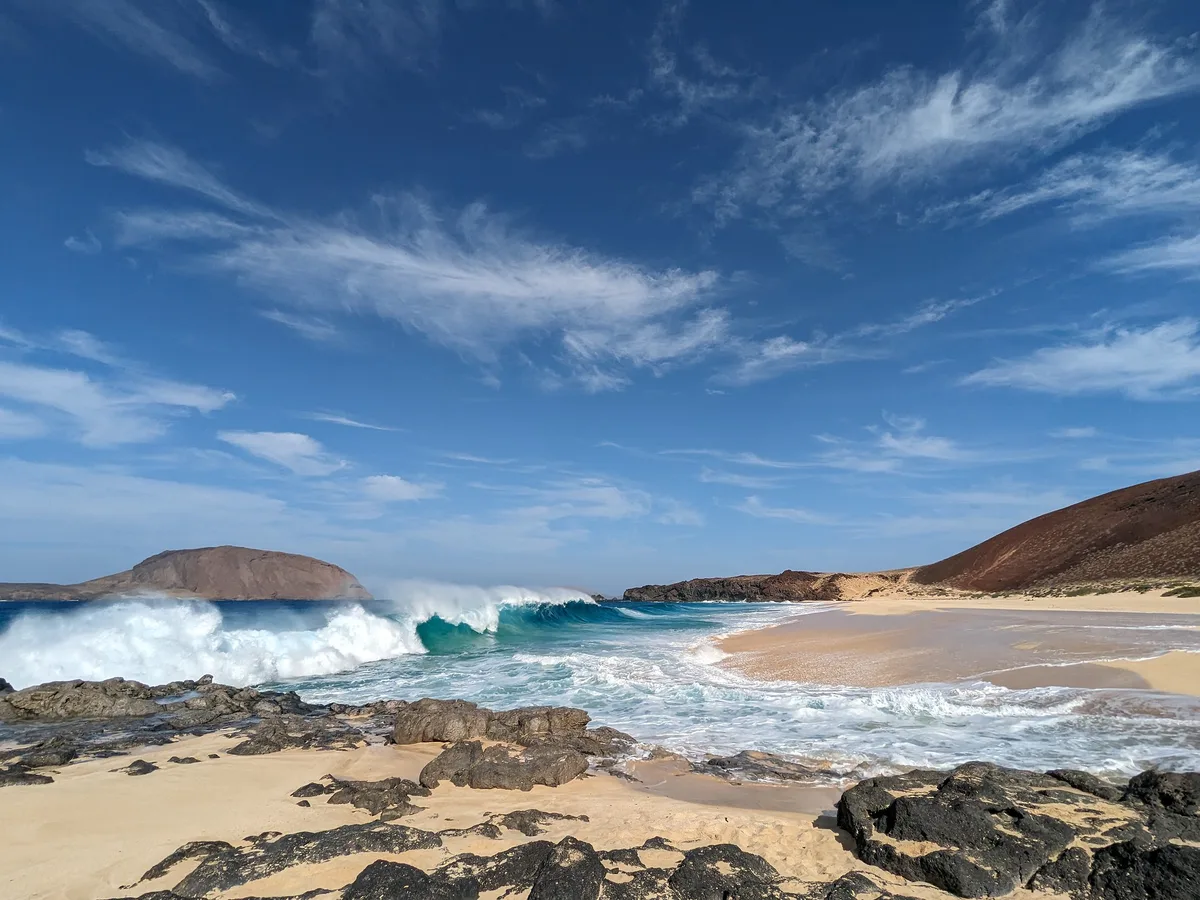
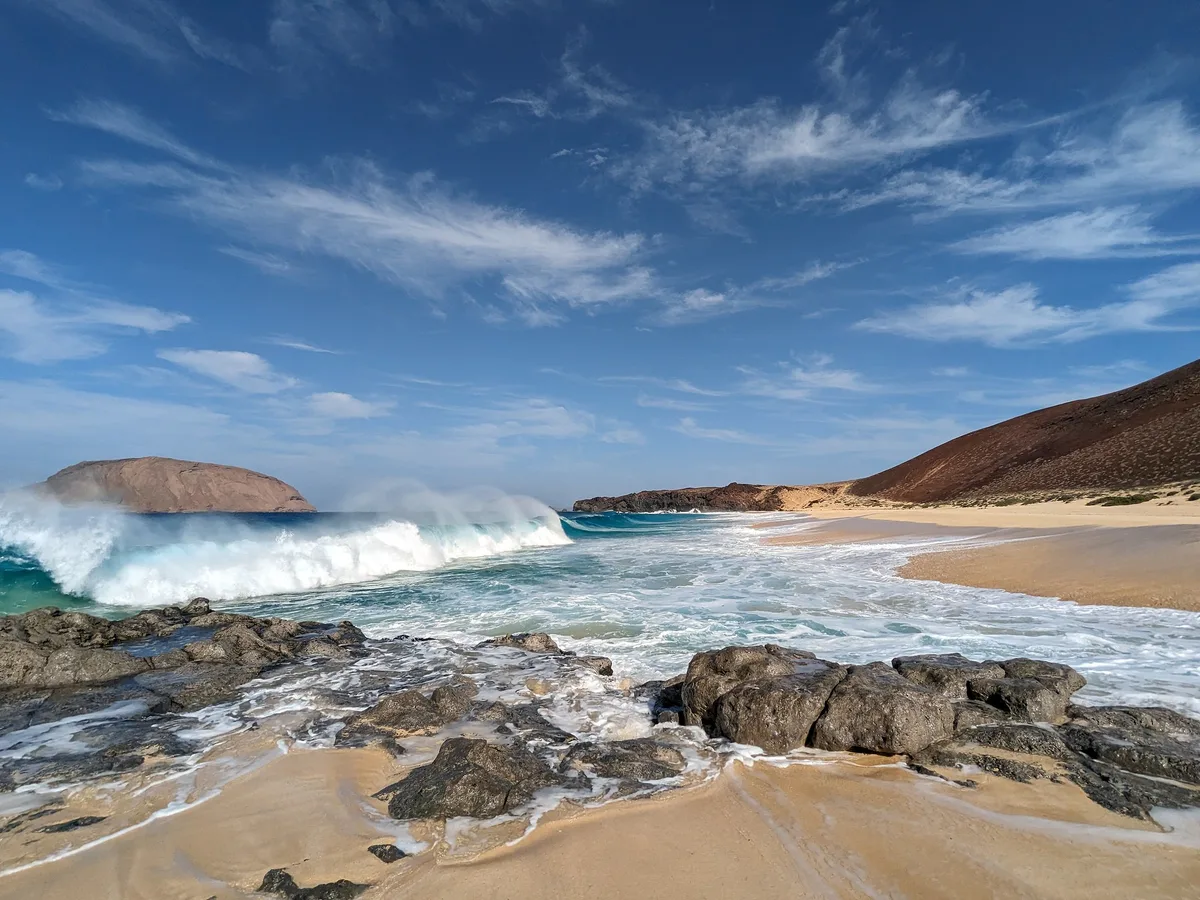
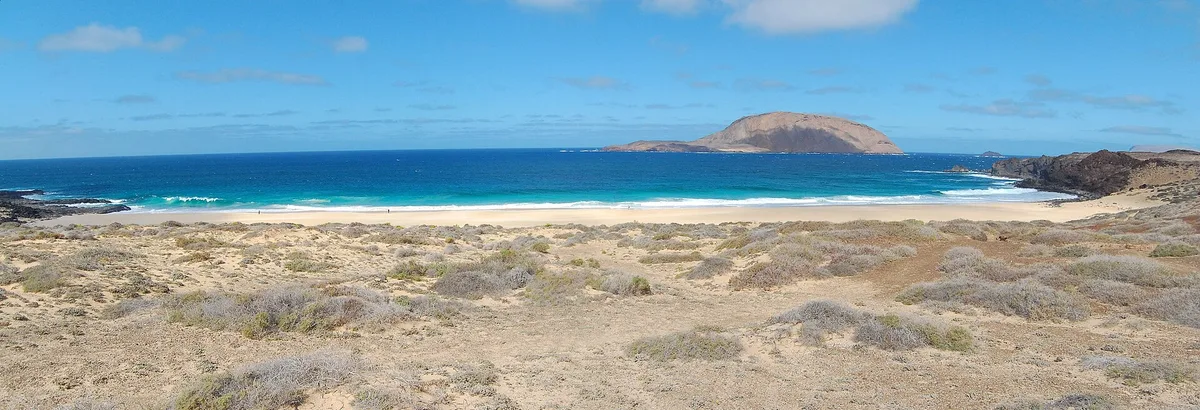
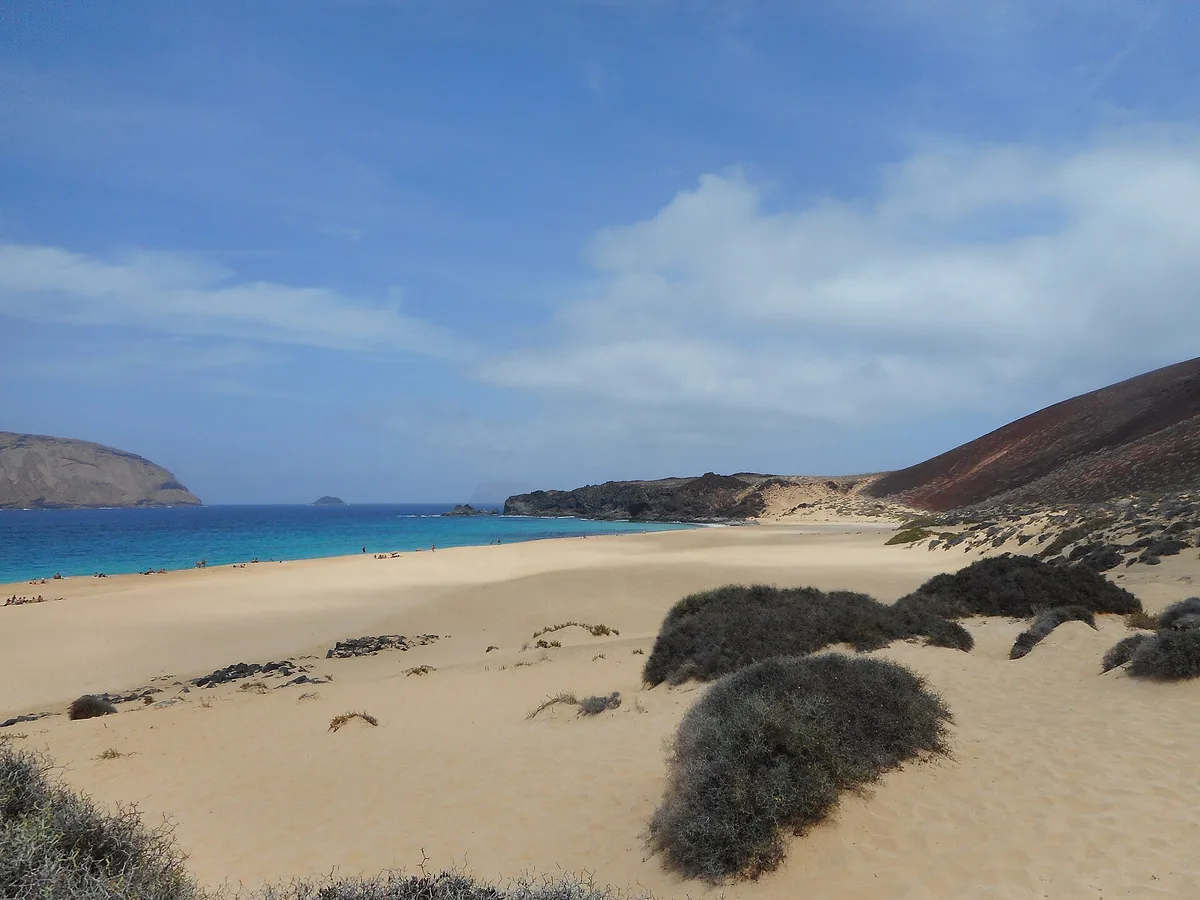
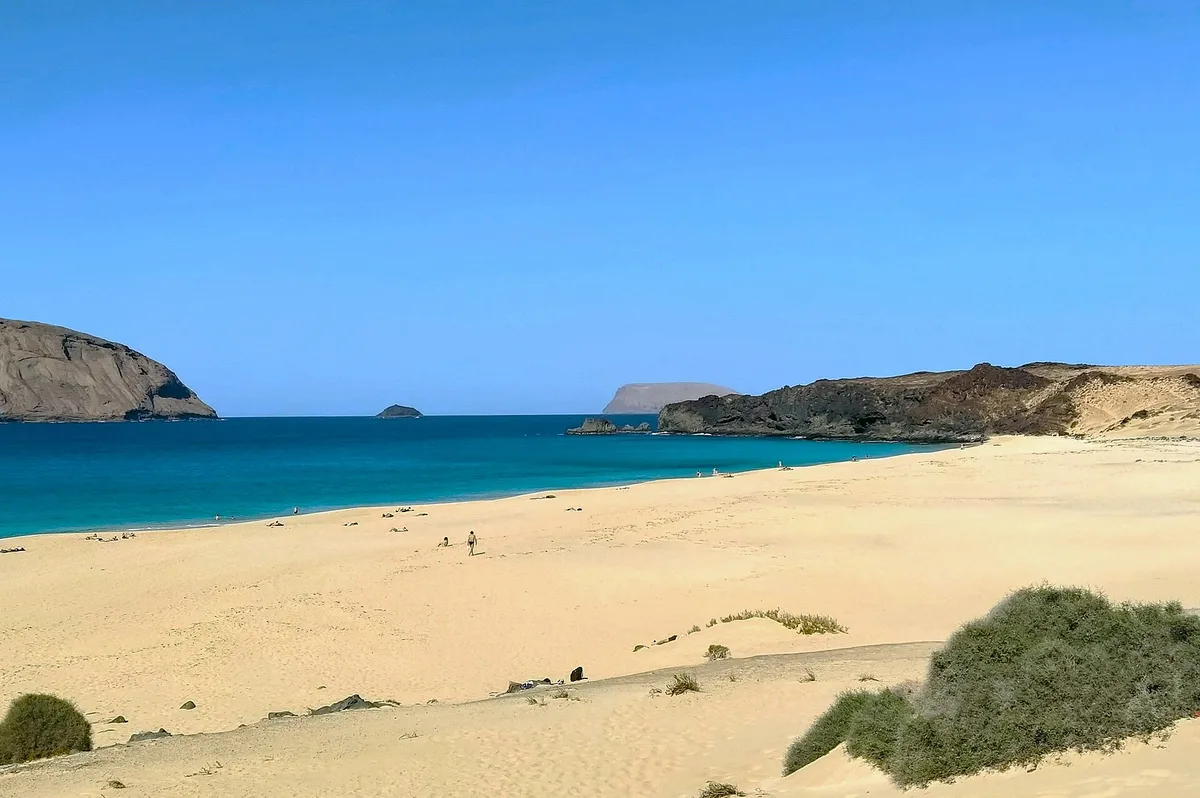
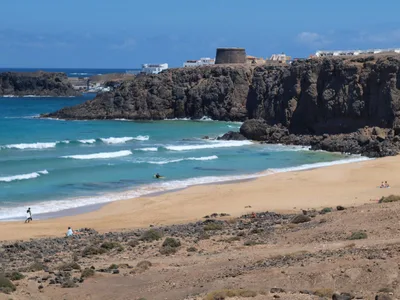
Playa de las Conchas stretches along the northern tip of La Graciosa, the car-free island sitting just off Lanzarote's coast in the Chinijo Archipelago. Golden sand meets turquoise Atlantic water here, with the rust-red volcanic cone of Montaña Bermeja rising directly behind the beach — a backdrop that stops you mid-step. The beach is completely undeveloped: no sunbeds, no bars, no showers, nothing but wind, sand, and open ocean. That exposure is exactly what makes it extraordinary, and exactly what makes it unforgiving. It's quiet in the way only genuinely remote places can be — the kind of quiet you feel in your chest.
How to get there
Playa de las Conchas is reachable only by crossing from the mainland — take the daily ferry from Órzola on Lanzarote, a 25-minute crossing to Caleta del Sebo, the island's only village. From Caleta del Sebo, you can hike to the beach in around 60 minutes, rent a bicycle and ride there in about 20 minutes, or take a 4x4 taxi in roughly 10 minutes. No motor vehicles are permitted anywhere on La Graciosa, so there is no parking of any kind — leave your car in Órzola before boarding the ferry. César Manrique-Lanzarote Airport (ACE) is approximately 37.7 km away on Lanzarote.
Who it's for
For couples
For couples who want solitude without a resort, Las Conchas delivers — golden sand, turquoise water, a volcanic cone at your back, and almost no one else around. Just come prepared: the romance is real, but so is the wind.
For families
Families with young children should think carefully before visiting — swimming is dangerous year-round due to strong Atlantic currents, there are no facilities whatsoever, no shade, and the sandy tracks are a challenge with pushchairs or young kids on foot. Older, adventurous children who can handle a ferry crossing and a bike ride will find the landscape genuinely dramatic.
Our take
Let's be direct: the Atlantic currents at Playa de las Conchas are dangerous year-round, and no view is worth ignoring that. Do not swim here. With that said, this is one of the most visually arresting beaches in the Canary Islands — golden sand, turquoise water, a red volcanic cone as a backdrop, and an island with no cars, no roads to the beach, and no infrastructure of any kind. Getting here requires a ferry from Órzola, then a bike ride or a hike across La Graciosa, and that effort filters out almost everyone who isn't serious about it. Avoid December through February, when Atlantic swells make the beach actively dangerous and the ferry crossing rougher. Come between June and September, bring everything you need, and treat this place as the marine reserve it is.
What to do
The red volcanic cone of Montaña Bermeja sits just 0.5 km behind the beach and is climbable, rewarding you with panoramic views over Las Conchas and the surrounding Atlantic. Back in Caleta del Sebo, roughly 5 km away, you'll find the island's only restaurants and bicycle hire — worth a stop before or after the beach. On Lanzarote itself, the César Manrique-designed Mirador del Río clifftop viewpoint, about 7.5 km away, looks directly down over La Graciosa and gives you a striking aerial perspective of the island you just explored.
The classic shot is from the waterline looking south toward Montaña Bermeja — the rust-red cone against golden sand and turquoise water is as striking as it sounds.
Climb partway up Montaña Bermeja for an elevated view of the full beach arc curving into the Atlantic, best in the hour before midday when the light hits the sand directly.
Where to eat
There are no food or drink facilities at Playa de las Conchas — bring everything you need from the ferry or from Caleta del Sebo, the only village on La Graciosa, where a handful of restaurants serve visitors. Pack more water than you think you'll need; the sun and wind on this exposed beach are relentless.
Where to stay
There is no accommodation at or near Playa de las Conchas itself. Caleta del Sebo, the sole settlement on La Graciosa, is the closest base, and Lanzarote offers the full range of options for those making a day trip via the Órzola ferry.
Photography
Shoot Montaña Bermeja's red cone reflected against the turquoise water in the early morning, when the low Atlantic light turns the volcanic rock a deep burnt orange. The beach's northern end, where the golden sand curves toward open ocean, gives you an unobstructed wide-angle frame with no infrastructure to crop out.
Good to know
Do not enter the water. Strong Atlantic currents make swimming dangerous year-round — this is not a judgment call, it is a hard rule. The beach has zero facilities, so bring all your food, drinking water, and sun protection; there is no shade anywhere on the sand. No camping is permitted without a permit, no motor vehicles are allowed on La Graciosa, and marine reserve regulations apply throughout the area — respect them. Sandy tracks across the island are difficult to navigate and are impassable for wheelchairs or mobility aids. True digital-detox spot — bring offline books, the cell signal fades and there's nowhere to plug in a laptop.
GAMES
🕹️ Five minutes of sand?
Three daily games — including the UV simulator set to this beach.
Map
Nearby places
Arcos de los Caletones
Things to see around Teguise
Montaña Bermeja
Red volcanic cone immediately behind Las Conchas beach, climbable for panoramic views.
Caleta del Sebo
The only village on La Graciosa, with restaurants and bicycle hire.
Mirador del Río
César Manrique-designed clifftop viewpoint on Lanzarote overlooking La Graciosa.
GIFT
🎁 Gift this beach
Its exact coastline, your date, your words — on a print or a PDF you print yourself.
Conchas Beach
THAT DAY
Conchas Beach, Canary Islands
© OpenStreetMap contributors
Clean & decorative, or “That day” with the real sky of your date.
Shipping included 3-6 business days
A question before you order? Contact us
Delivered within minutes on the confirmation page and by email: a ZIP with all 4 print sizes (30×40 cm, 12×16″, 50×70 cm, 18×24″), each as a high-resolution PDF and PNG (300 dpi), plus a screen version. Print at home or at any print shop.
Please complete the delivery address.
Please accept the Terms of Sale.
Almost there — the shop opens very soon.
Secure payment · Printed locally in 30+ countries · 7 languages
Frequently asked
The information on this page is provided for guidance only and may evolve. Access conditions, safety and infrastructure can change without notice. Always check official sources before traveling.
Nearest beaches
Other wild beaches in Canary Islands
More beaches in Canary Islands
Reviews of this beach
- No reviews yet, what a shame — leave yours and share your experience.
Photo credits
Sources and licenses for the photos shown above.
- Photo 1 — Artsuaga · source · CC BY-SA 3.0
- Photo 2 — bmr-mam · source · CC BY-SA 2.0
- Photo 3 — bmr-mam · source · CC BY-SA 2.0
- Photo 4 — Artsuaga · source · CC BY-SA 3.0
- Photo 5 — Bolinhodeamor · source · CC BY-SA 4.0
- Photo 6 — Alberto-g-rovi · source · CC BY 4.0