Jameos del AguaSpain Beach Guide
Lanzarote's volcanic lava-tube pools meet César Manrique genius
About
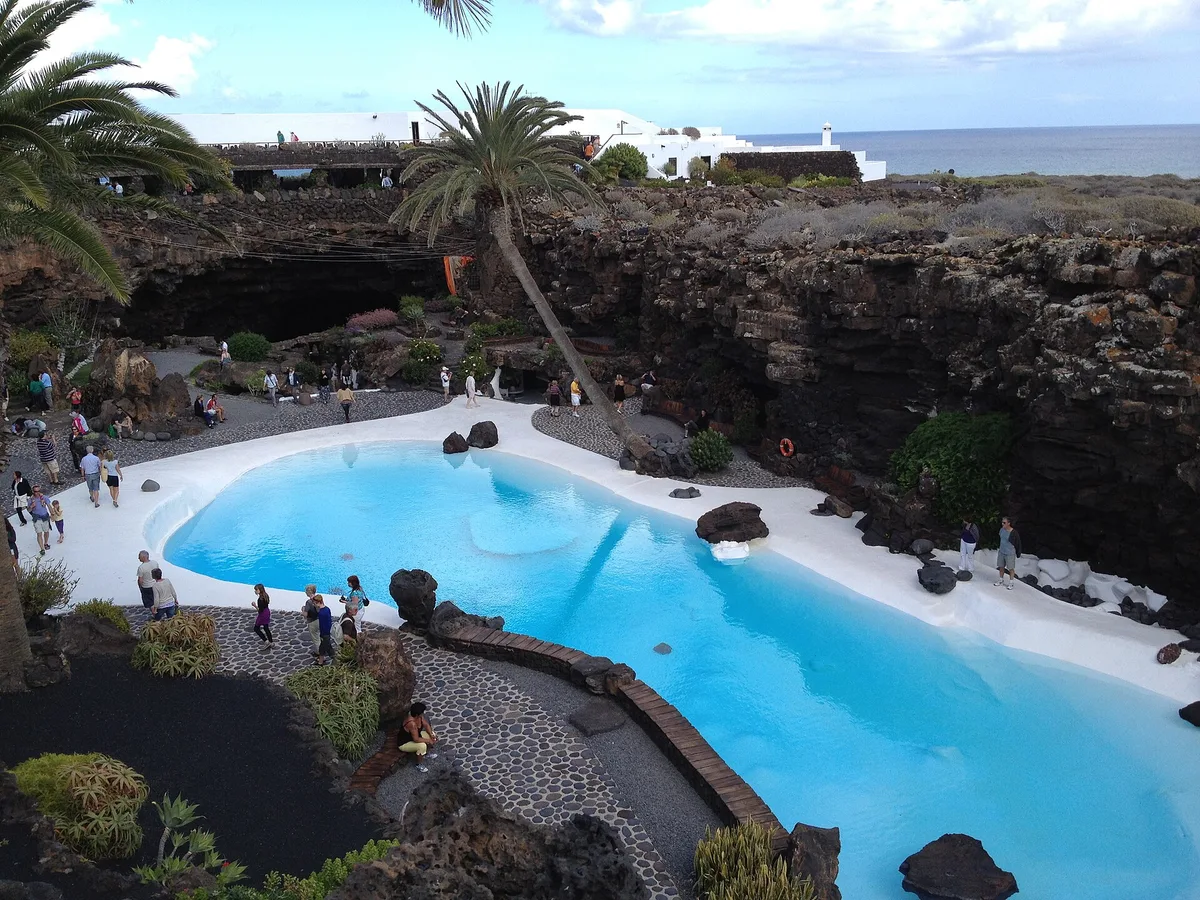
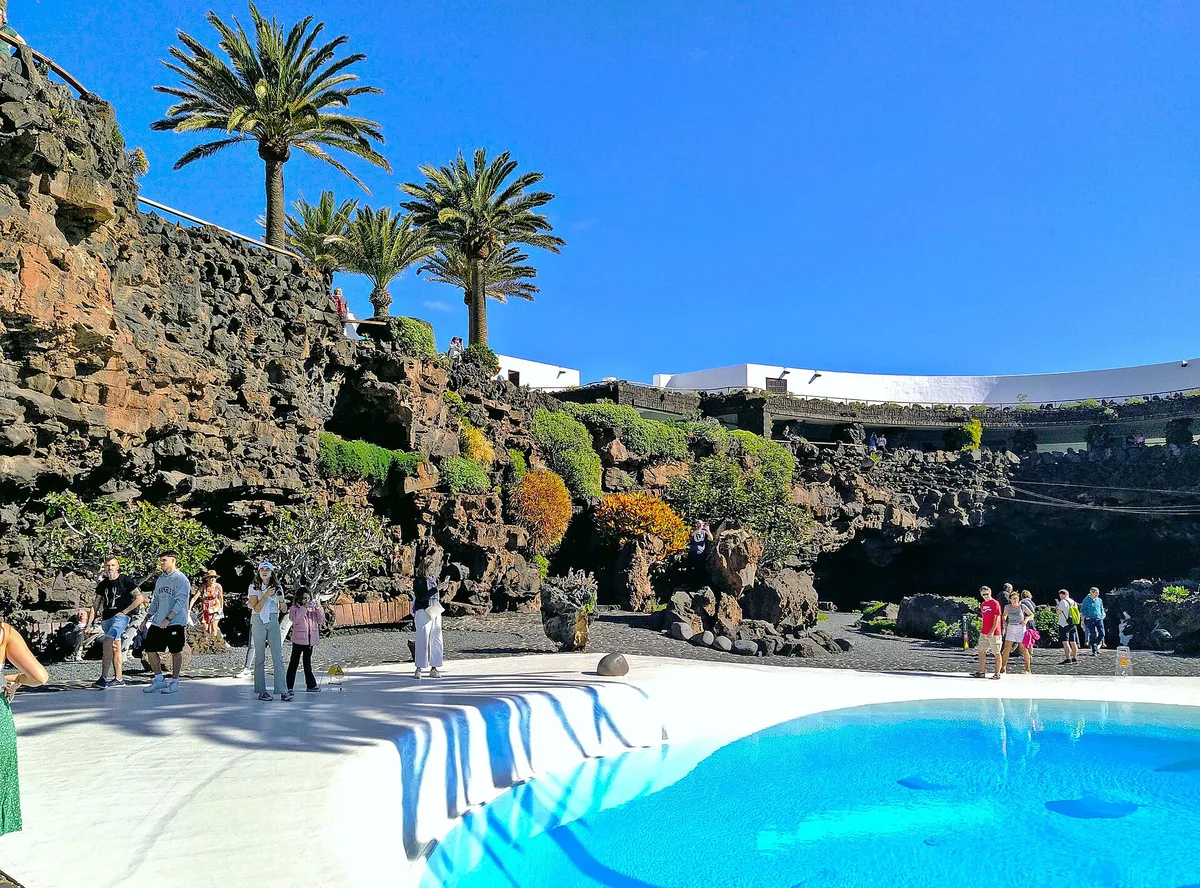
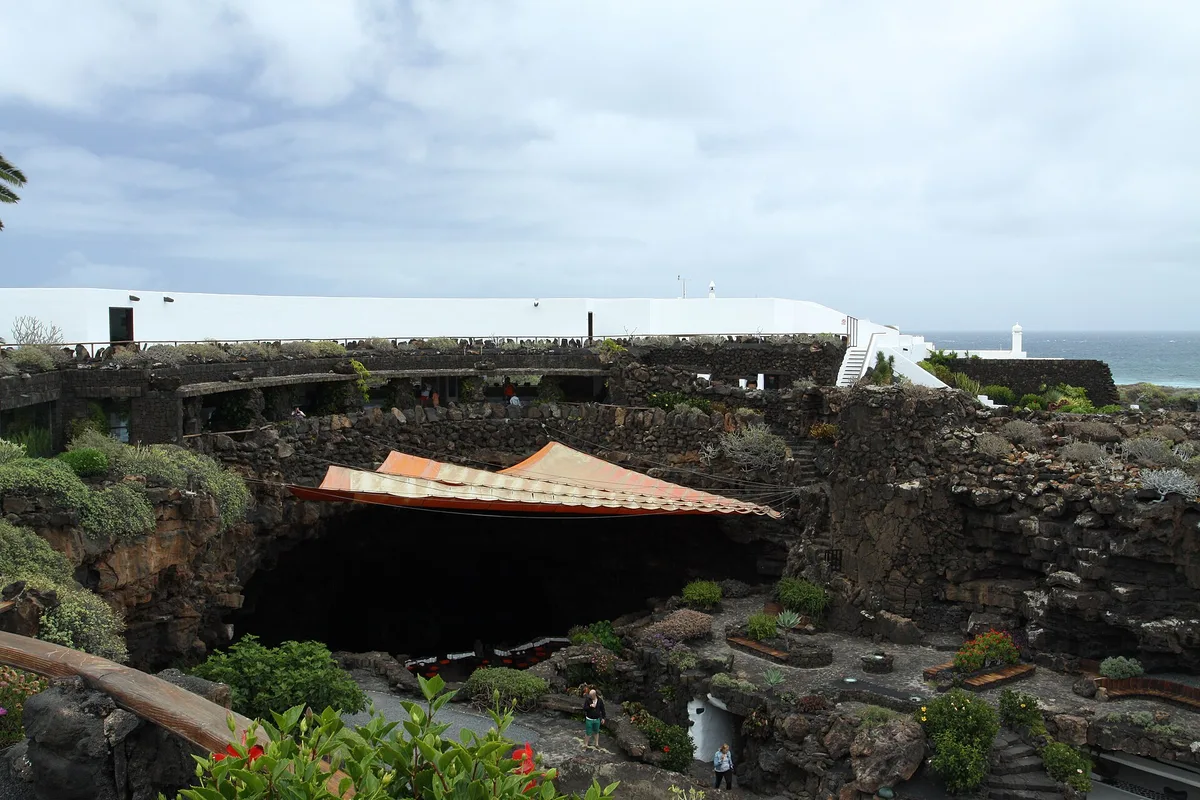
Piscinas Naturales de Jameos del Agua sits on Lanzarote's northeastern coast, where the Atlantic Ocean forces its way through submarine tunnels into an ancient lava tube, creating seawater pools of crystal-clear water unlike anything else in the Canary Islands. There's no sand here — just raw, black volcanic rock carved by millennia of geological drama, with the ocean arriving not as waves but as a quiet, subterranean pulse. Above and around the pools, César Manrique's extraordinary cultural complex transforms the cave into an architectural landmark, blending art, nature, and volcanic geology seamlessly. The pools themselves are home to Munidopsis polymorpha, the blind albino crab found almost nowhere else on Earth, making this as much a living laboratory as a landscape. At roughly 50 metres in length, the site is compact but utterly singular — wild in character, quiet in atmosphere.
How to get there
From Arrecife, the drive takes around 26 minutes by car; from Costa Teguise, allow 22 minutes. A bus runs from Arrecife three times daily, with a journey time of approximately 41 minutes — useful if you'd rather not drive. Free parking is available at the Jameos del Agua complex car park. Entry to the Jameos del Agua Art, Culture and Tourism Center — which includes the lava-tube pools, auditorium, and other installations — costs €15 per person.
Who it's for
For couples
The wild, geological atmosphere and quiet visitor numbers make this an unusual and genuinely memorable stop for couples who prefer substance over beach-blanket scenery — pair it with the Mirador del Río viewpoint for a full day of Manrique-tinged Lanzarote.
For families
Older children with an interest in geology, wildlife, or architecture will find the blind albino crabs and lava-tube setting genuinely fascinating, but note that rough lava terrain makes the site impractical for pushchairs or young children who need easy footing — plan accordingly.
Our take
Let's be direct: you cannot swim here, and that's not a technicality — the pools are a protected habitat for one of the rarest creatures on the planet, and the rules exist for good reason. What Piscinas Naturales de Jameos del Agua offers instead is something harder to find: a geological experience that feels genuinely otherworldly, where the Atlantic arrives silently through submarine tunnels and crystal-clear seawater fills chambers of ancient volcanic rock. César Manrique's cultural complex above adds a layer of architectural intelligence that few natural sites anywhere can match. It's quiet, it's wild, and it rewards visitors who come to look rather than splash. Wear sturdy shoes, budget €17 for entry, and give yourself at least half a day — combine it with Cueva de los Verdes and Mirador del Río and you have one of the most coherent day itineraries on Lanzarote. Skip it in winter if Atlantic swells are running; come between June and September for the best conditions.
What to do
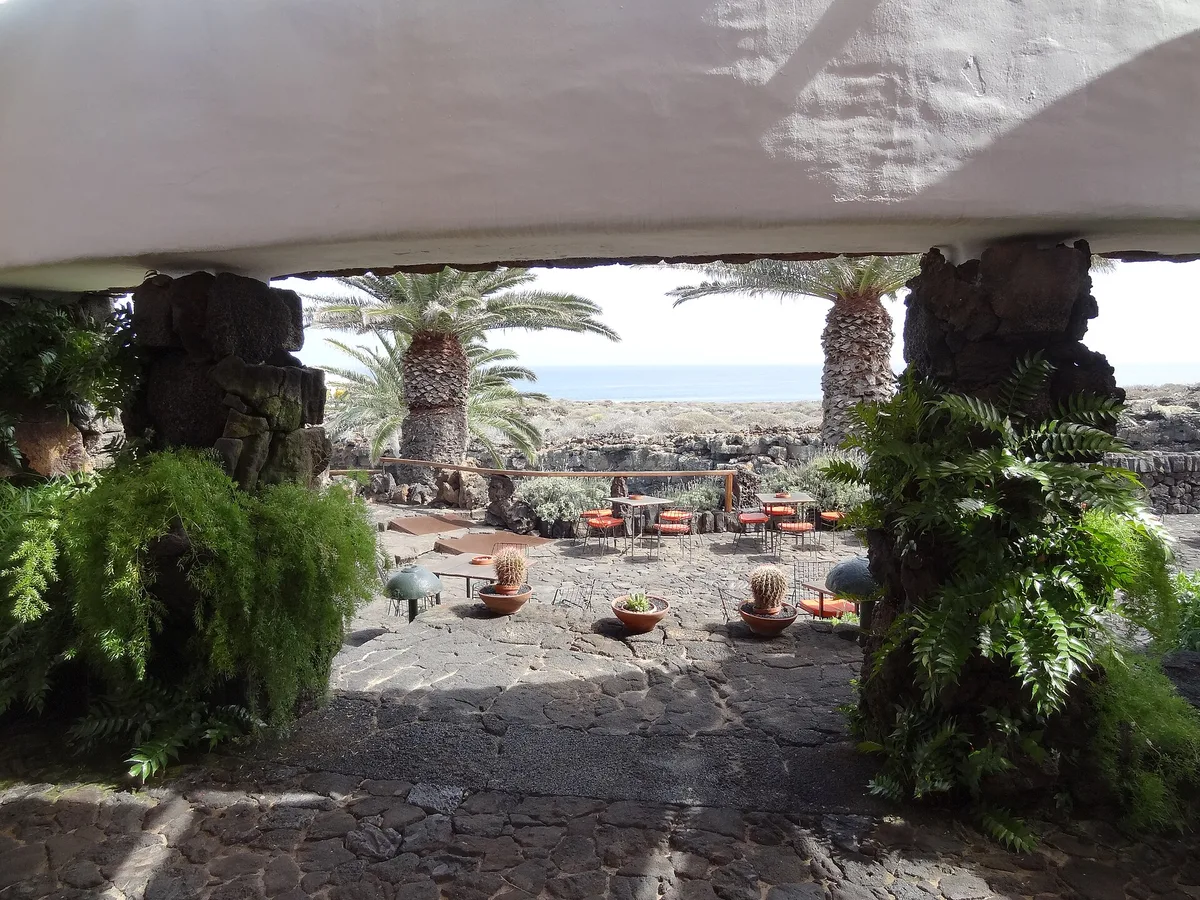
The Jameos del Agua cave complex itself is the main event — a César Manrique-designed cultural space inside the volcanic lava tube, with the albino crab habitat at its heart. Two kilometres away, Cueva de los Verdes is part of the same volcanic tunnel system and offers a spectacular underground extension of the same geological story. Further along the coast, Mirador del Río — another Manrique creation — delivers clifftop views over La Graciosa from 7.9 kilometres away and is well worth the short detour.
The cave interior's mirror-still seawater pools, lit by natural and architectural light, are the defining shot — frame the albino crab habitat from the walkway above for scale and atmosphere.
Outside, the raw black lava coastline against the deep blue Atlantic gives you a completely different, elemental composition that captures the wild character of this site.
Where to eat
The Jameos del Agua Restaurante sits just 0.2 kilometres from the pools and is the most convenient option after your visit. For something a little further afield, Sol y Luna and Palenke are both around 2 kilometres away and offer regional dining options. El Marinero and Amanecer are roughly 4 kilometres out if you want to extend the day.
Where to stay
Apartamentos Esmeralda is the closest listed accommodation, sitting 13.8 kilometres from the site — a practical base for exploring this corner of Lanzarote. Given the limited on-site lodging options nearby, booking ahead is sensible, particularly in peak summer months.
Photography
The interior of the lava tube — with its still, crystal-clear seawater pools reflecting the cave ceiling — is the single most photogenic spot on site, best captured in the morning when visitor numbers are lowest. Outside, the contrast of black volcanic rock against the Atlantic horizon makes for stark, dramatic wide-angle shots, especially in the golden hour before the complex closes.
Good to know
Swimming in the natural pools is strictly forbidden: the ecosystem is fragile and the blind albino crabs (Munidopsis polymorpha) that live here are endangered — do not enter the water under any circumstances. Do not disturb the crabs, and no diving is permitted in the cave pools. The access path to exterior areas crosses rough lava terrain, so wear sturdy, closed-toe shoes — sandals will let you down. Avoid visiting in December, January, or February, when Atlantic swells can make the exterior pools rough and unsafe.
GAMES
🕹️ Five minutes of sand?
Three daily games — including the UV simulator set to this beach.
Map
Nearby places
Jameos del Agua Restaurante
Jameos del Agua Restaurante
Palenke
Sol y Luna
Cases Lucho
El Marinero
Amanecer
Apartamentos Esmeralda
Things to see around Haría
Jameos del Agua cave complex
César Manrique-designed cultural space inside a volcanic lava tube, home to the blind albino crab Munidopsis polymorpha.
Cueva de los Verdes
Spectacular lava tube cave system, part of the same volcanic tunnel as Jameos del Agua.
Mirador del Río
César Manrique-designed clifftop viewpoint overlooking La Graciosa.
GIFT
🎁 Gift this beach
Its exact coastline, your date, your words — on a print or a PDF you print yourself.
Jameos del Agua
THAT DAY
Jameos del Agua, Canary Islands
© OpenStreetMap contributors
Clean & decorative, or “That day” with the real sky of your date.
Shipping included 3-6 business days
A question before you order? Contact us
Delivered within minutes on the confirmation page and by email: a ZIP with all 4 print sizes (30×40 cm, 12×16″, 50×70 cm, 18×24″), each as a high-resolution PDF and PNG (300 dpi), plus a screen version. Print at home or at any print shop.
Please complete the delivery address.
Please accept the Terms of Sale.
Almost there — the shop opens very soon.
Secure payment · Printed locally in 30+ countries · 7 languages
Frequently asked
The information on this page is provided for guidance only and may evolve. Access conditions, safety and infrastructure can change without notice. Always check official sources before traveling.
Nearest beaches
Other wild beaches in Canary Islands
More beaches in Canary Islands
Reviews of this beach
- No reviews yet, what a shame — leave yours and share your experience.
Photo credits
Sources and licenses for the photos shown above.
- Photo 1 — MoveinBlue · source · CC BY-SA 3.0
- Photo 2 — Alberto-g-rovi · source · CC BY 4.0
- Photo 3 — Chmee2 · source · CC BY-SA 3.0
- Photo 4 — Mrhugues · source · CC BY-SA 4.0