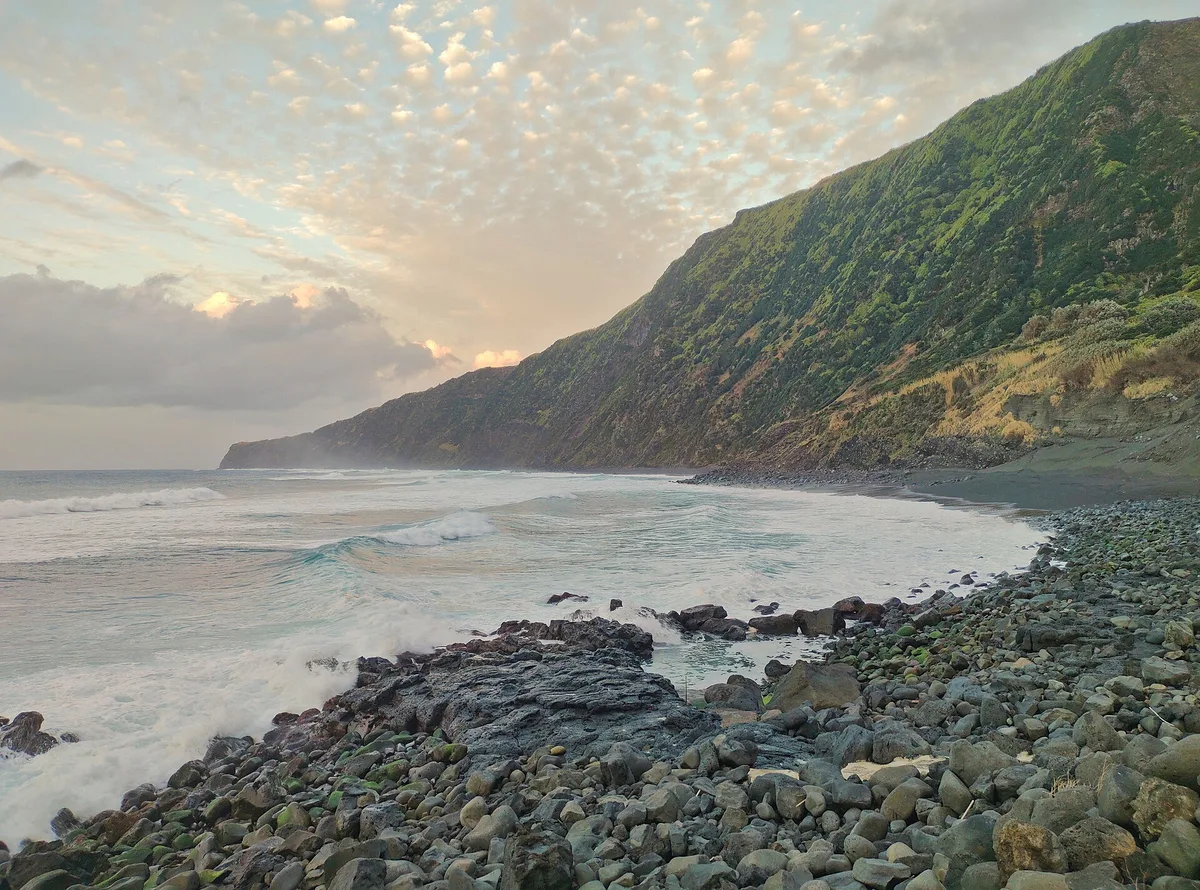
Flamengos BeachPortugal Beach Guide
Wild lava shore where a stream meets the Atlantic
About
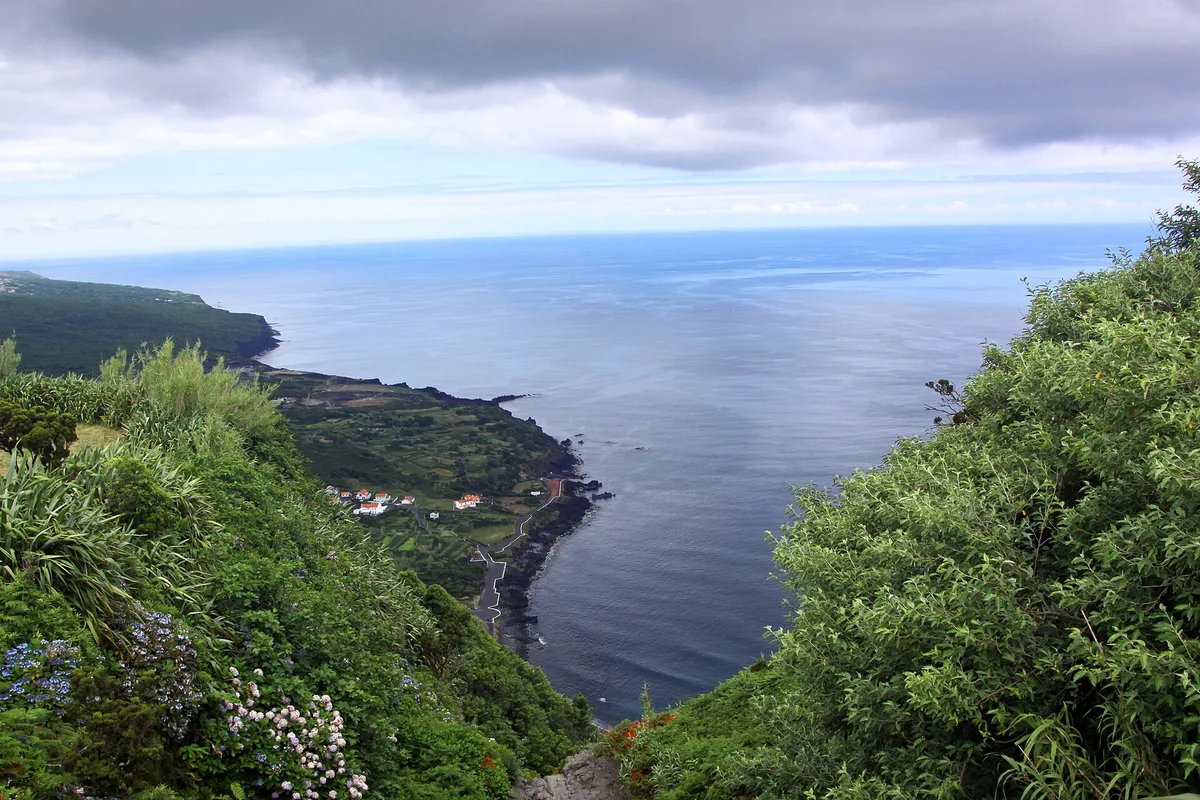
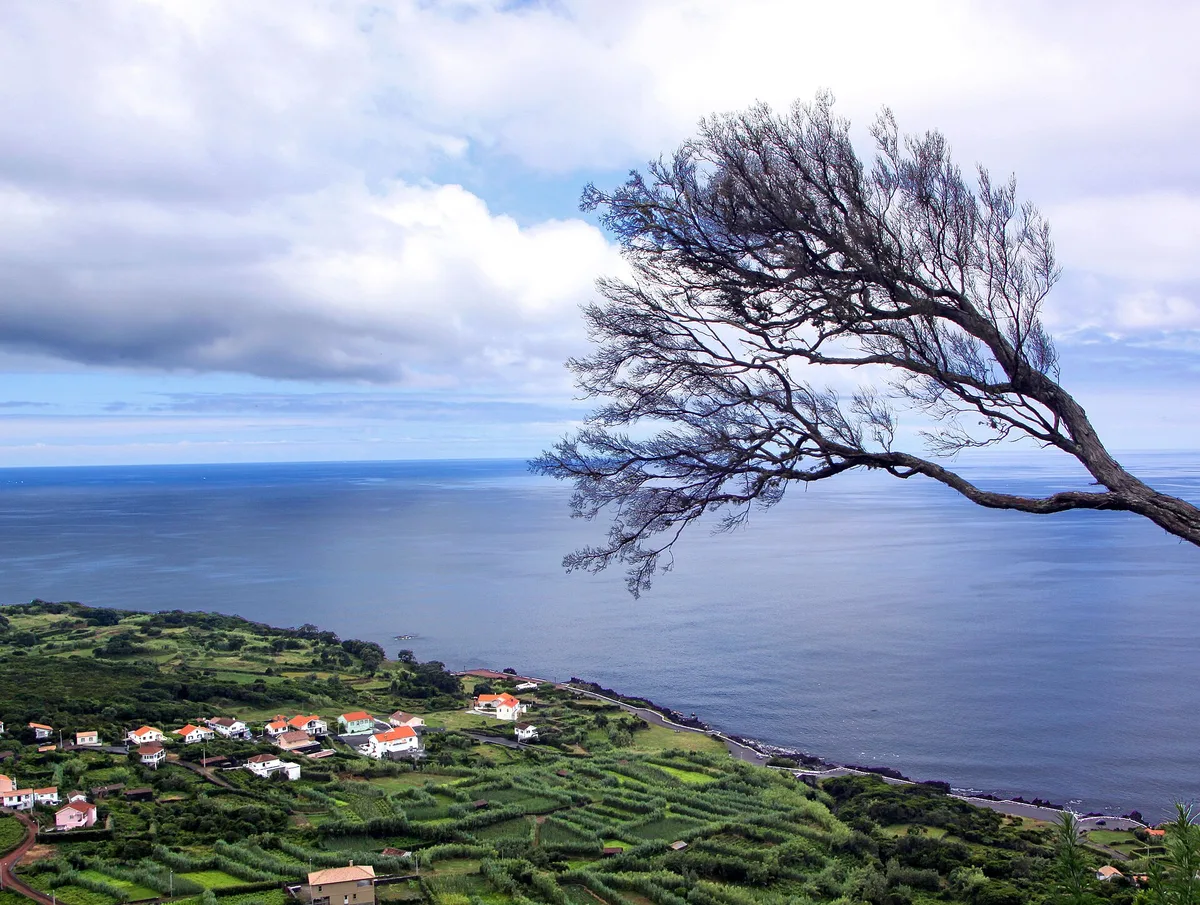
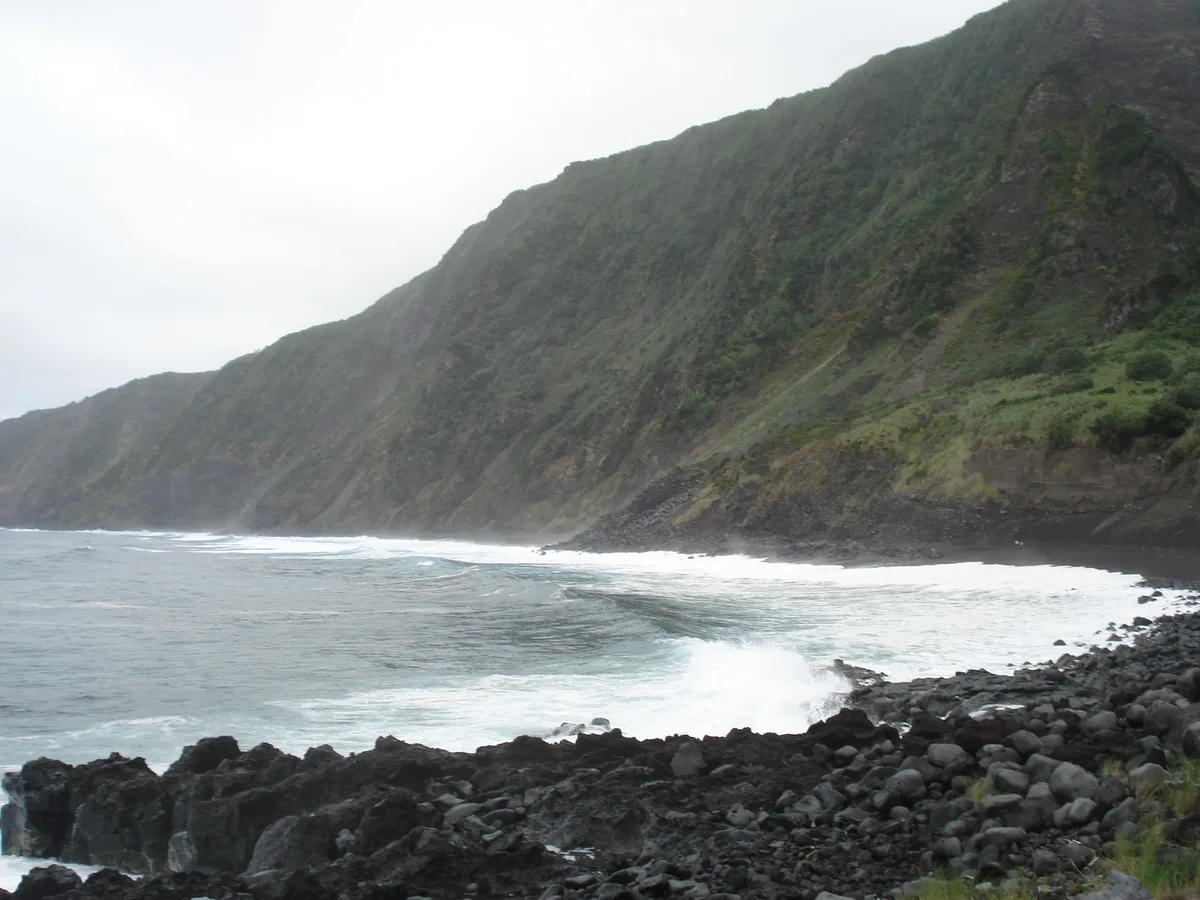
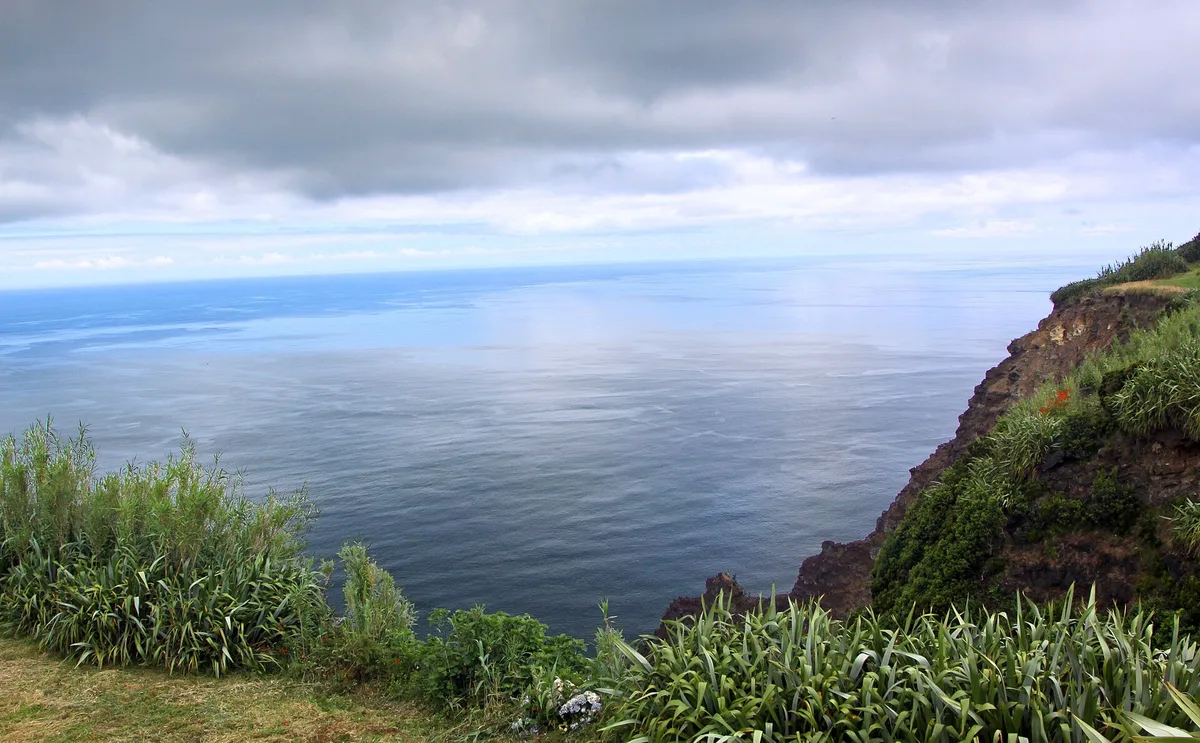
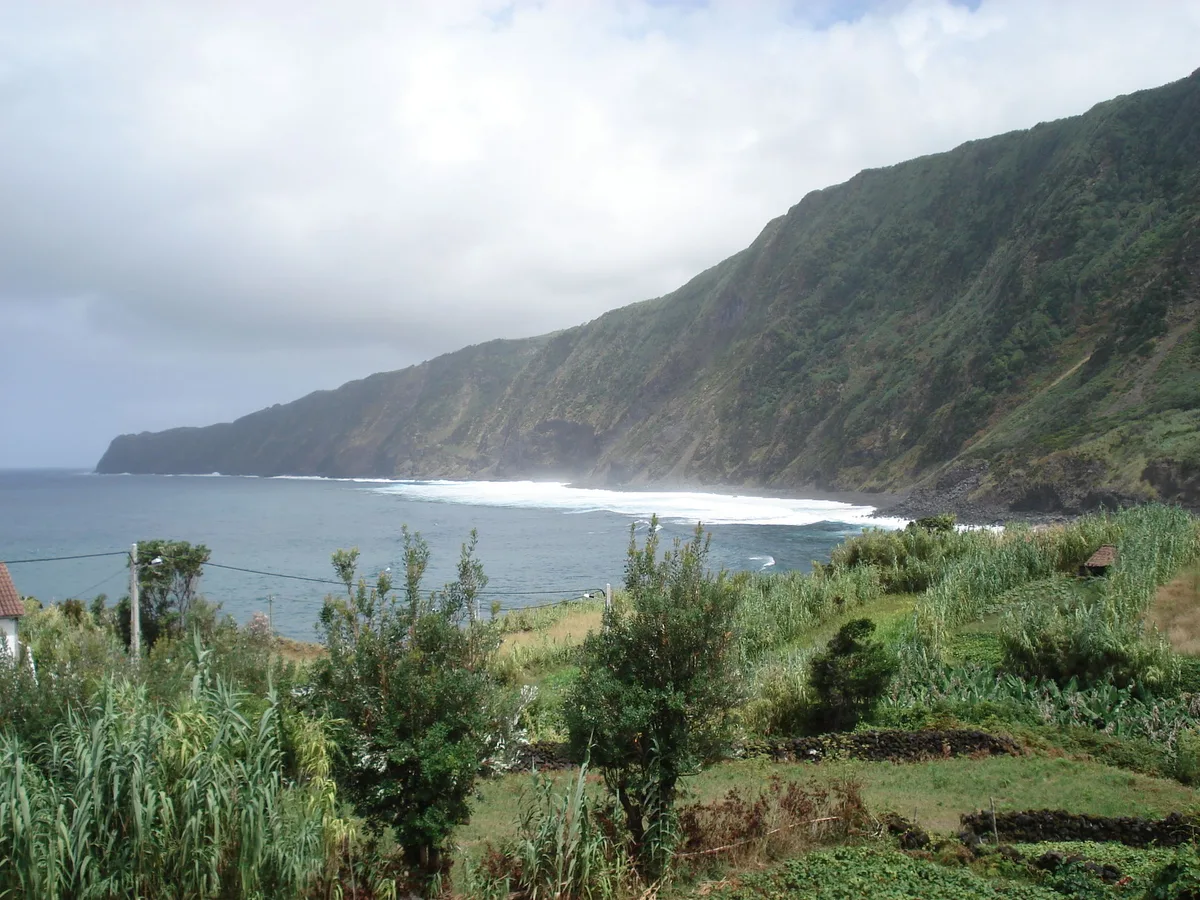
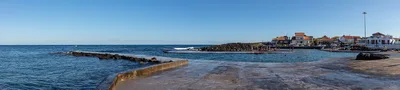
Zona Balnear do Flamengos is a raw, 30-metre stretch of dark basalt shore on Faial's coast, completely off the tourist map and proud of it. A freshwater stream cuts through the valley and spills into the blue Atlantic here, creating a rare mixing zone that draws curious locals and almost nobody else. The ruined stone mill standing nearby is the only sign that humans once worked this landscape — now nature has quietly reclaimed it. There's no sand, no facilities, and no lifeguard: just volcanic rock, moving water, and the kind of silence that's genuinely hard to find. It's wild in the best and most literal sense.
How to get there
From Flamengos village, follow the valley path on foot — the walk takes around 20 minutes and is rated moderate, so wear sturdy shoes. There's no dedicated parking at the shore itself, but informal free parking is available in Flamengos village at the trailhead. No entry fee applies. The path and lava shore are not accessible for wheelchairs.
Who it's for
For couples
If you and your partner want somewhere genuinely empty and unhurried, this is it — the 20-minute valley walk in, the sound of the stream, and the ruined mill create an atmosphere that no busy beach can replicate.
For families
The hike in is moderate and manageable for older children, but the rocky lava shore, absence of a lifeguard, and stream currents make it unsuitable for young kids or non-swimmers — families with toddlers should head to Zona Balnear do Salão instead.
Our take
No lifeguard, no sand, no café, no signpost pointing the way — Zona Balnear do Flamengos asks something of you before it gives anything back. The 20-minute walk from Flamengos village is the price of admission, and it keeps the place genuinely empty. Swimming is moderate-rated but unsupervised, so honest self-assessment matters here. What you get in return is a dark basalt shore where a stream meets the Atlantic beside a crumbling stone mill, on an island that most visitors never leave Horta to explore properly. It's not for everyone, and that's exactly the point. Come in July or August, pack your own lunch, and leave no trace.
What to do
The Miradouro da Ribeira das Cabras is just 0.7 km away and rewards you with dramatic coastal views worth the short detour. A little further, the Miradouro da Ribeira Funda at 2.3 km offers another vantage point over Faial's rugged north coast. For a bigger excursion, Caldeira de Faial — the island's central volcanic caldera with a 2 km wide crater and a rim hiking trail — sits about 5.5 km away and is one of the Azores' most striking natural landmarks. The nearby Zona Balnear do Salão, 3 km south, offers a concrete pier and a more sheltered rock-bathing alternative if the stream is running high.
The ruined stone mill against the open blue Atlantic is the defining frame at this shore — shoot it from the lava rocks at the water's edge for maximum contrast.
The stream mouth, where freshwater visibly merges with the sea over dark basalt, is a quieter but equally striking composition, especially in the soft morning light.
Where to eat
There are no restaurants at the shore, so pack your own food and water before you leave Flamengos. The closest option is Pátio, about 6.2 km away, followed by Campo dos Sabores at 9.1 km. For regional Azorean cooking, Taberna Azevedo and Restaurante Avózinha are both worth the drive at around 11–12 km.
Where to stay
Quinta da Meia Eira, rated 4.8/5 across 96 reviews and roughly 10 km from the shore, is the closest well-regarded base for exploring this part of Faial. Azul Singular, 11 km away and rated 4.9/5 by 185 guests, is the highest-rated option in the area and books up fast in summer. Quinta Das Buganvílias at 10.6 km rounds out a strong trio of highly rated stays within easy reach.
Photography
The ruined stone mill framed against the blue Atlantic makes the strongest single shot — arrive in the morning when the light comes in low from the east and catches the dark basalt. The stream mouth itself, where freshwater visibly meets the ocean, is worth a wide-angle frame at any time of day.
Good to know
Come between June and September — stream flow increases dramatically in autumn and winter, turning the shore muddy and making access genuinely difficult from October through March. There is no lifeguard on site, so swim with caution and never enter the water alone. The freshwater-saltwater mixing zone can affect footing on the rocks, so step carefully near the stream mouth. Nearest help is back in Flamengos village, so bring water, a charged phone, and let someone know your plan.
GAMES
🕹️ Five minutes of sand?
Three daily games — including the UV simulator set to this beach.
Map
Nearby places
Pátio
Campo dos Sabores
Taberna Azevedo
Restaurante Avózinha
Restaurante Mitos
Quinta da Meia Eira
Quinta Das Buganvílias
Azul Singular
H18
Estrela do Atlântico
Miradouro da Ribeira das Cabras
Miradouro da Ribeira Funda
Miradouro para o Cabeço do Canto
Caldeira de Faial
Museu da Horta (Whaling Museum)
Zona Balnear do Salão
Things to see around Flamengos
Caldeira de Faial
Faial's central volcanic caldera with a 2 km wide crater and rim hiking trail.
Museu da Horta (Whaling Museum)
Museum in the old whaling factory at Porto Pim documenting Faial's whaling history.
Zona Balnear do Salão
South-coast rock bathing area with a concrete pier near Salão hamlet.
GIFT
🎁 Gift this beach
Its exact coastline, your date, your words — on a print or a PDF you print yourself.
Flamengos Beach
THAT DAY
Flamengos Beach, Azores
© OpenStreetMap contributors
Clean & decorative, or “That day” with the real sky of your date.
Shipping included 3-6 business days
A question before you order? Contact us
Delivered within minutes on the confirmation page and by email: a ZIP with all 4 print sizes (30×40 cm, 12×16″, 50×70 cm, 18×24″), each as a high-resolution PDF and PNG (300 dpi), plus a screen version. Print at home or at any print shop.
Please complete the delivery address.
Please accept the Terms of Sale.
Almost there — the shop opens very soon.
Secure payment · Printed locally in 30+ countries · 7 languages
Frequently asked
The information on this page is provided for guidance only and may evolve. Access conditions, safety and infrastructure can change without notice. Always check official sources before traveling.
Nearest beaches
Other wild beaches in Azores
More beaches in Azores
Reviews of this beach
- No reviews yet, what a shame — leave yours and share your experience.
Photo credits
Sources and licenses for the photos shown above.
- Photo 1 — The Cosmonaut · source · CC BY-SA 4.0
- Photo 2 — Guillaume Baviere from Helsingborg, Sweden · source · CC BY 2.0
- Photo 3 — Guillaume Baviere from Helsingborg, Sweden · source · CC BY 2.0
- Photo 4 — Ruben JC Furtado · source · CC BY-SA 3.0
- Photo 5 — Guillaume Baviere from Helsingborg, Sweden · source · CC BY 2.0
- Photo 6 — Ruben JC Furtado · source · CC BY-SA 3.0