Mosteiros BeachPortugal Beach Guide
Black sand, basalt stacks, and wild Atlantic sunsets
About
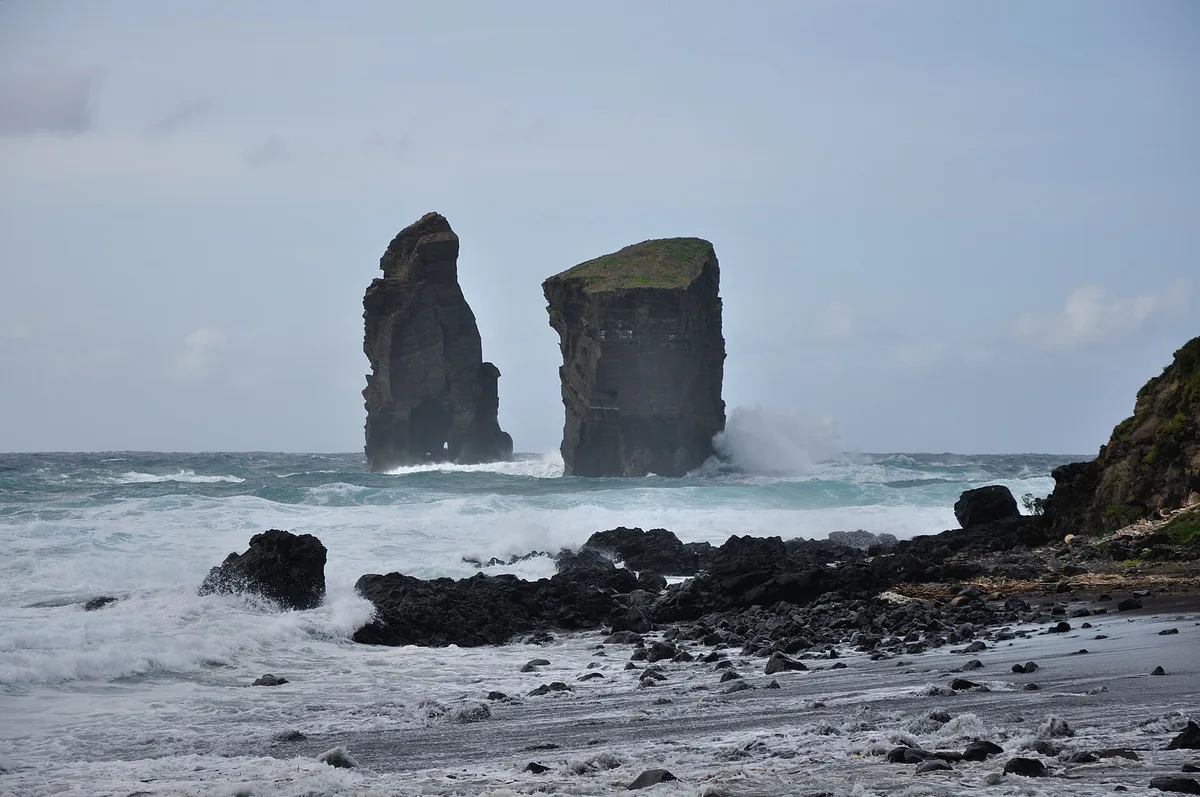
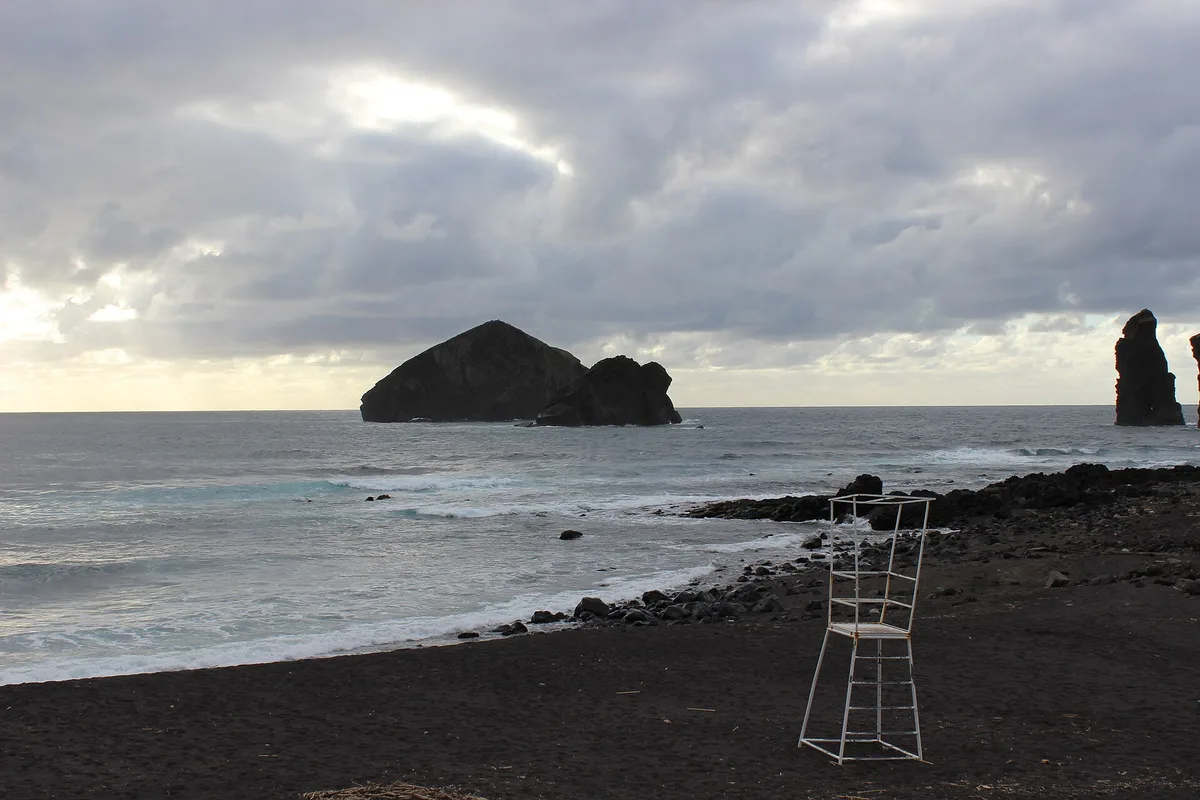
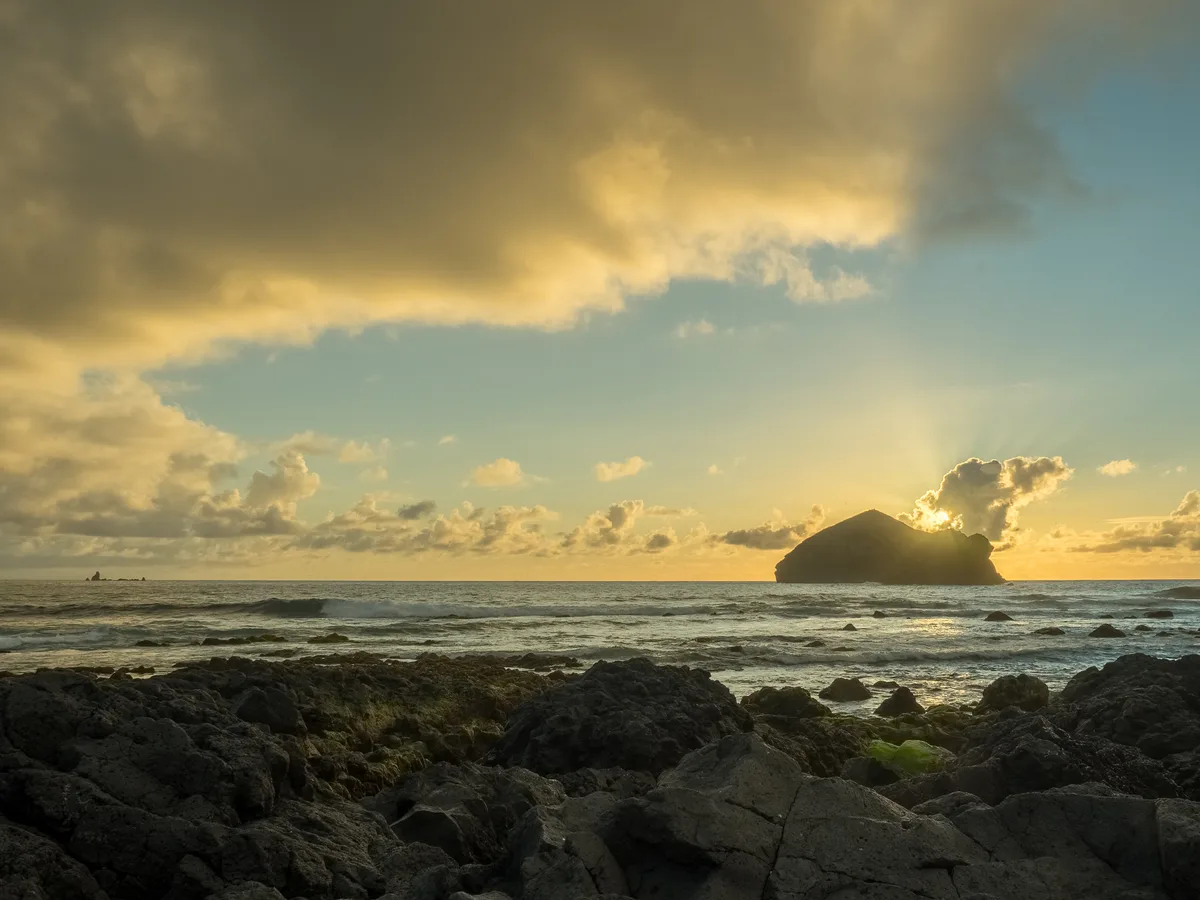
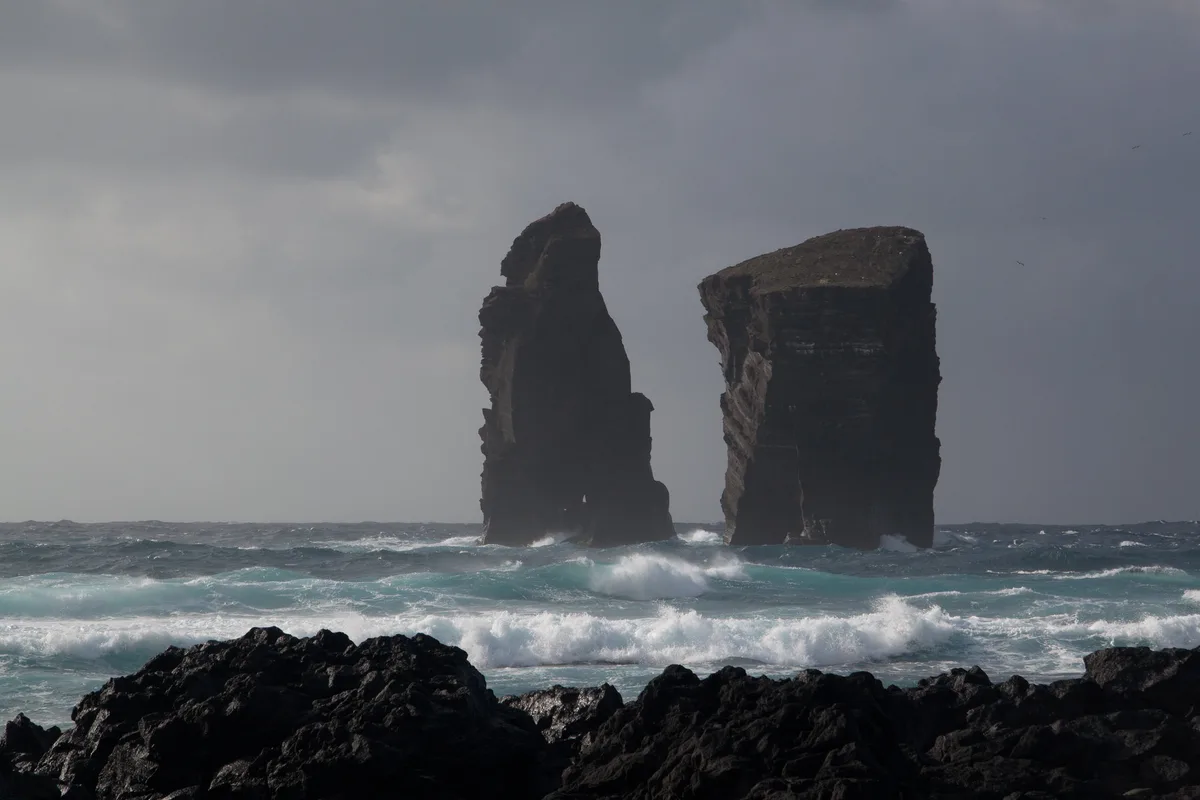
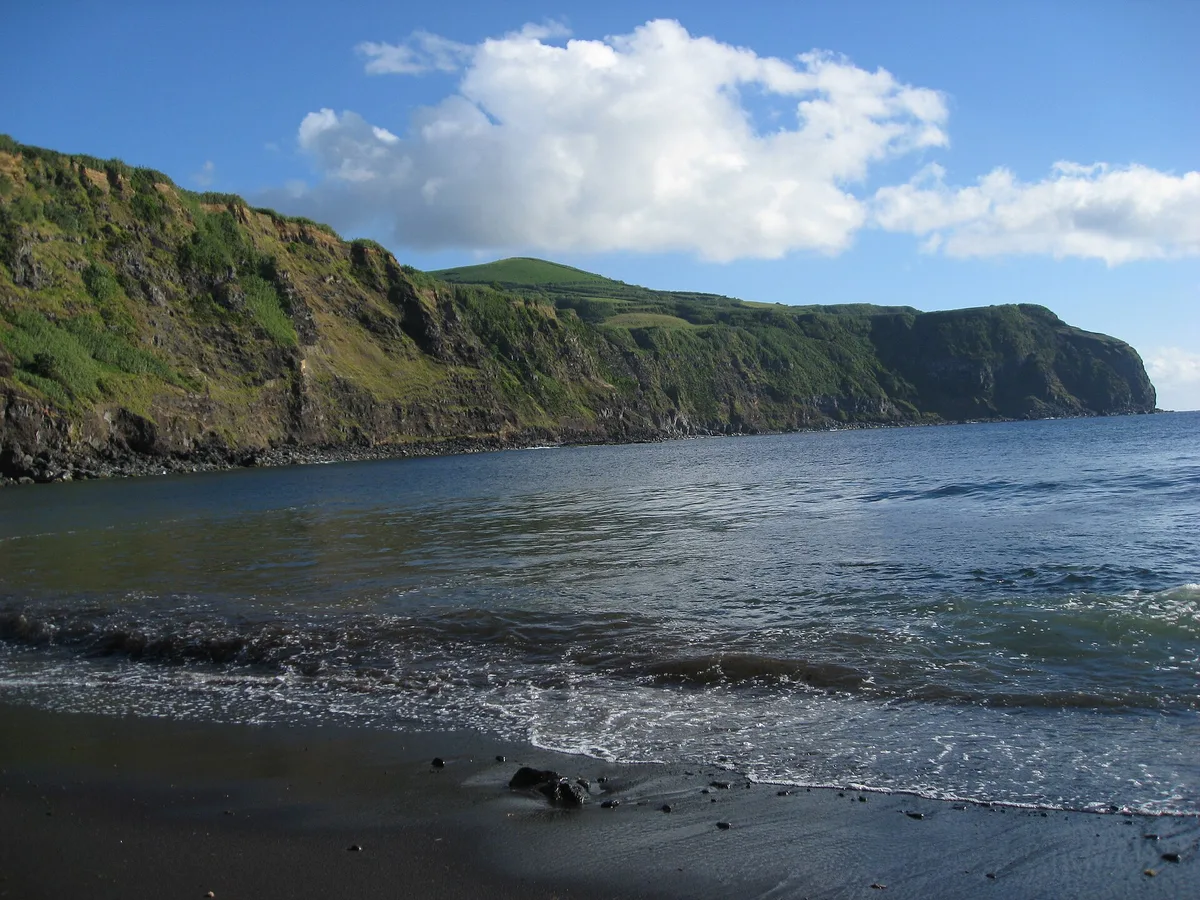
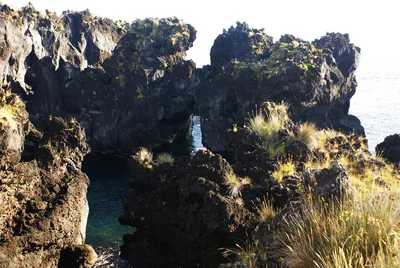
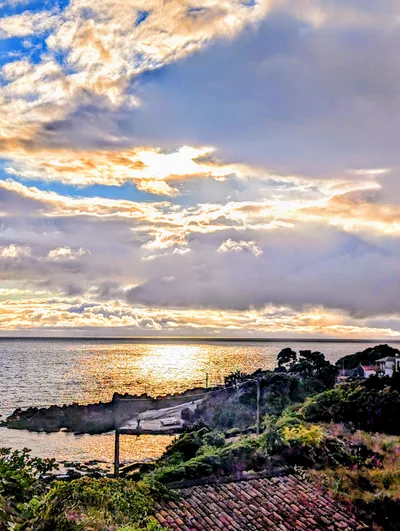
Praia dos Mosteiros sits at the western tip of São Miguel, where the Atlantic hits volcanic rock with real force. The beach is a striking mix of black sand and dark basalt, backed by cliffs and watched over by a ruined windmill perched on the clifftop above. Offshore, dramatic sea stacks rise from deep blue water — the kind of silhouette that stops you mid-step. The vibe here is wild and unpolished, a far cry from the manicured resort beaches you'll find elsewhere in Portugal. It faces due west, which means the sunsets are genuinely spectacular.
How to get there
From Ponta Delgada, it's roughly 50 minutes by car or 52 minutes by bus, with multiple services running daily on weekdays and weekends. From the nearby village of Ginetes, both the drive and the bus ride take about 15 minutes, with bus services running Monday to Saturday. There's a small free car park near the beach access point, and additional street parking is available in Mosteiros village. No entry fee applies.
Who it's for
For couples
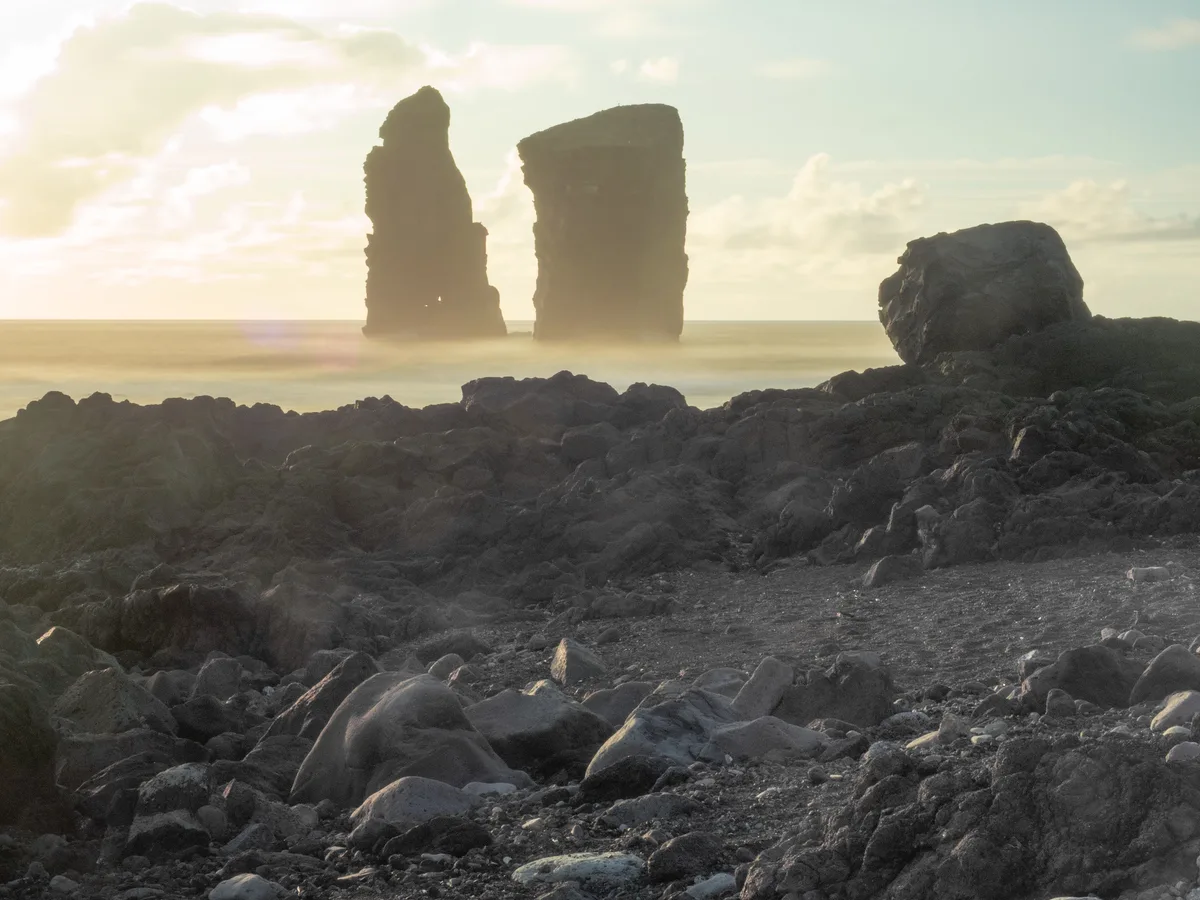
The west-facing exposure and the silhouette of the sea stacks at dusk make this one of the better sunset spots on São Miguel — bring a blanket, arrive an hour before sundown, and you'll have a genuinely memorable evening.
For families
Dogs are welcome under standard seasonal rules, so four-legged family members can join. That said, the rocky entry points and mixed-sand surface mean this beach suits older children who are steady on their feet rather than toddlers; there is no adapted access.
Our take
Check the safety situation before you wade in — winter swells are genuinely dangerous here, rocky entries demand attention, and there's no lifeguard outside summer. Get that right, and Praia dos Mosteiros delivers something rare: a volcanic Atlantic beach that hasn't been smoothed out for mass tourism. The black sand and basalt stacks are visually arresting, the sunset exposure is as good as it gets on São Miguel, and the ruined windmill on the cliff adds a layer of atmosphere you won't find on the island's more polished beaches. It's accessible enough — free parking, regular buses from Ponta Delgada — without feeling overrun. Worth the detour, but go in summer, respect the flags, and watch your footing on the rocks.
What to do
Ponta do Castelo, just 0.3km away, is worth a short walk for coastal views. Two miradouros — Miradouro do Caminho Velha at 0.7km and Miradouro do Pico de Mafra at 0.8km — give you elevated perspectives over the western coastline that are hard to beat. Further afield, the Sete Cidades Crater Lakes (12km) offer a completely different face of São Miguel: twin volcanic lakes, one blue and one green, set inside a UNESCO-listed caldera. If you want something warmer, the Praia de Ferraria Thermal Pool (8km) is fed by underwater volcanic hot springs — a genuinely unusual swim.
The basalt sea stacks shot from the black sand shoreline at sunset is the defining frame — arrive 30 minutes before the sun drops for the best light.
The ruined clifftop windmill makes a striking secondary subject, best captured from below on the beach or from the nearby miradouros along the western coast.
Where to eat
Gazcidla and Ilhéu are both within 0.2km of the beach and are your closest options after a session on the sand. Restaurante O Chico is just 0.3km away if you want a sit-down meal. For a slightly longer walk, Briza do Mar at 1.1km and Restaurante Micaelense at 2.5km round out the local dining scene.
Where to stay
Mosteiros Place, just 0.5km from the beach, is the obvious base if you want to wake up close to the water. For something with more distance and a different character, Hotel Solar Do Conde is 14.3km away.
Photography
The basalt sea stacks are the hero shot — frame them from the beach at golden hour for the full effect, with the deep blue Atlantic behind them. The ruined windmill on the clifftop photographs beautifully at sunset, especially from the Miradouro da Boca do Inferno viewpoint 7.3km along the coast.
Good to know
Always check the flag system in summer — it's mandatory here, and swimming when a red or yellow flag is raised puts you at real risk. Outside the summer season there is no lifeguard on duty, so you're on your own. Rocky entry points require careful footing; water shoes are a smart call. Avoid visiting between November and February: winter Atlantic swells make swimming dangerous and access to the cove hazardous.
GAMES
🕹️ Five minutes of sand?
Three daily games — including the UV simulator set to this beach.
Map
Nearby places
Gazcidla
Ilhéu
Restaurante O Chico
Briza do Mar
Restaurante Micaelense
Mosteiros Place
Hotel Solar Do Conde
Ponta do Castelo
Miradouro do Caminho Velha
Miradouro do Pico de Mafra
Sete Cidades Crater Lakes
Praia de Ferraria Thermal Pool
Miradouro da Boca do Inferno
Things to see around Ponta Delgada
Sete Cidades Crater Lakes
Twin volcanic crater lakes — one blue, one green — inside a caldera, a UNESCO-listed landscape.
Praia de Ferraria Thermal Pool
Natural thermal seawater pool fed by underwater volcanic hot springs.
Miradouro da Boca do Inferno
Dramatic coastal viewpoint overlooking volcanic cliffs on the western coast.
GIFT
🎁 Gift this beach
Its exact coastline, your date, your words — on a print or a PDF you print yourself.
Mosteiros Beach
THAT DAY
Mosteiros Beach, Azores
© OpenStreetMap contributors
Clean & decorative, or “That day” with the real sky of your date.
Shipping included 3-6 business days
A question before you order? Contact us
Delivered within minutes on the confirmation page and by email: a ZIP with all 4 print sizes (30×40 cm, 12×16″, 50×70 cm, 18×24″), each as a high-resolution PDF and PNG (300 dpi), plus a screen version. Print at home or at any print shop.
Please complete the delivery address.
Please accept the Terms of Sale.
Almost there — the shop opens very soon.
Secure payment · Printed locally in 30+ countries · 7 languages
Frequently asked
The information on this page is provided for guidance only and may evolve. Access conditions, safety and infrastructure can change without notice. Always check official sources before traveling.
Nearest beaches
Other wild beaches in Azores
More beaches in Azores
Reviews of this beach
- No reviews yet, what a shame — leave yours and share your experience.
Photo credits
Sources and licenses for the photos shown above.
- Photo 1 — Hansueli Krapf This file was uploaded with Commonist · source · CC BY-SA 3.0
- Photo 2 — JCNazza · source · CC BY 3.0
- Photo 3 — ajay_suresh · source · CC BY 2.0
- Photo 4 — ajay_suresh · source · CC BY 2.0
- Photo 5 — timsackton · source · CC BY-SA 2.0
- Photo 6 — Eduardo Manchon · source · CC BY-SA 3.0