Santa Iria BeachPortugal Beach Guide
Wild volcanic shore where green valleys meet blue Atlantic
About
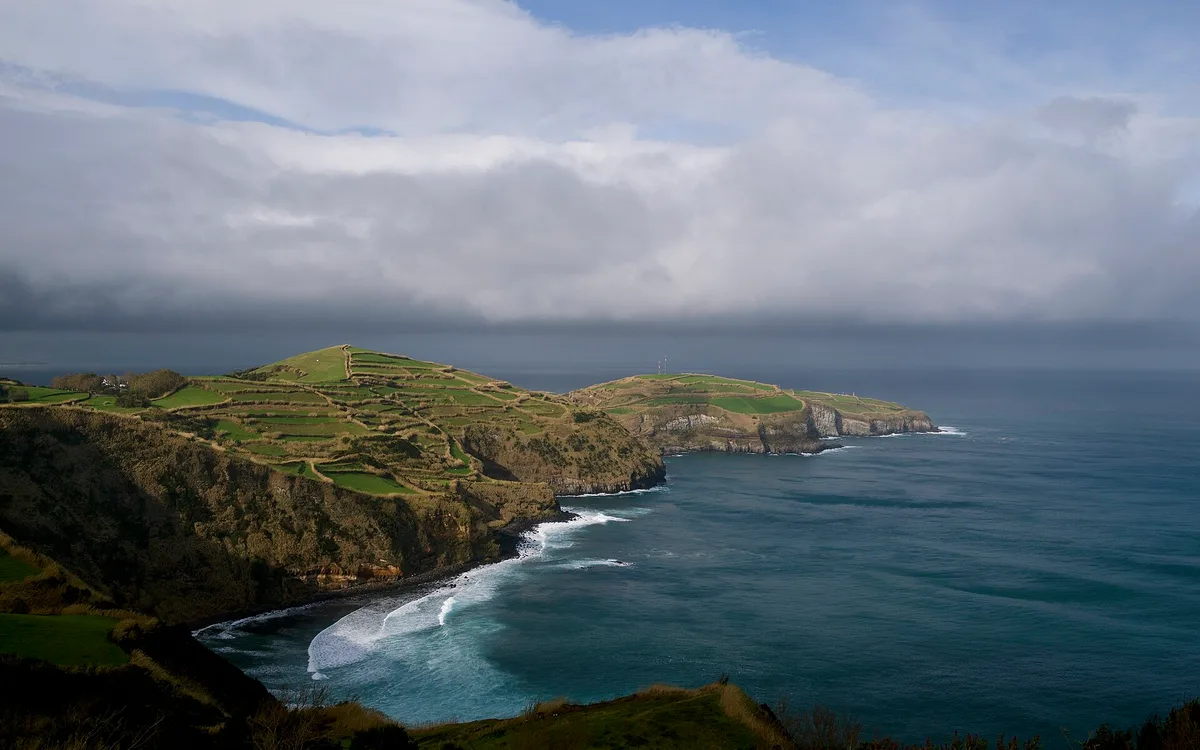
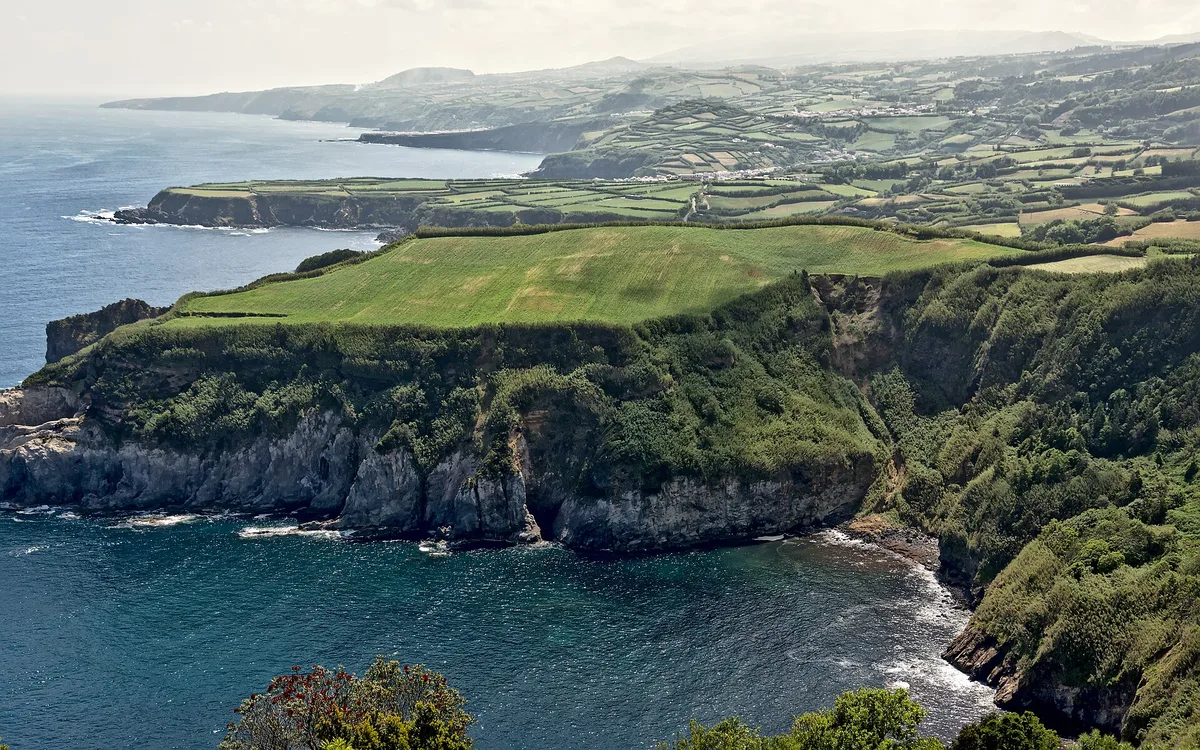
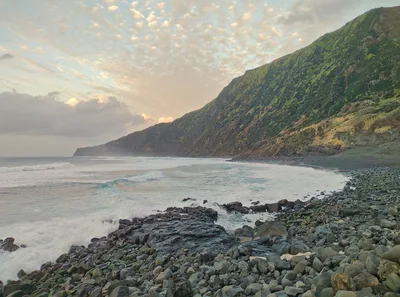
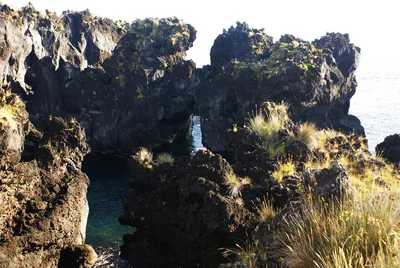
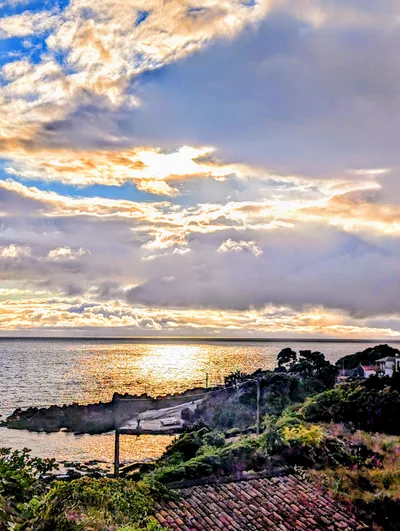
Praia de Santa Iria sits on São Miguel's remote northeast coast, backed by a steep green valley that drops dramatically to a stretch of dark volcanic sand. A freshwater stream crosses the beach before meeting the open Atlantic — an unusual detail that makes this place feel genuinely untamed. The water runs deep blue, the black sand absorbs the light, and the silence is broken only by waves and birdsong. There are no facilities here: no sunbeds, no kiosks, no lifeguard. It's a raw, elemental corner of the Azores that rewards those willing to make the effort.
How to get there
From Ribeira Grande, the drive takes around 15 minutes; from Ponta Delgada, allow 40 minutes. Free parking is available near Ribeirinha, but spaces are limited — from there, a steep walk of 5 to 15 minutes brings you down to the beach. The descent is rough and uneven, making this site inaccessible for wheelchair users or anyone with limited mobility. There is no entry fee.
Who it's for
For couples
For couples who want solitude over spectacle, Santa Iria delivers — the steep valley backdrop, the stream, and the near-total absence of other visitors create an atmosphere that's genuinely private and atmospheric. Just come prepared: it's a place to sit, watch the waves, and breathe, not to swim.
For families
Families with young children should approach with caution — swimming is dangerous, there are no facilities, and the steep access path is demanding. Older children who enjoy wild, exploratory landscapes and can handle a hike will find it memorable, but it's not a beach-day destination in the traditional sense.
Our take
Do not come to Praia de Santa Iria expecting a swim. The sea here is genuinely dangerous — strong currents, a rocky bottom, no lifeguard — and that verdict doesn't soften in summer. What you do get is one of the most visually striking and quietly powerful beaches on São Miguel: black volcanic sand, a freshwater stream, a wall of green valley rising behind you, and blue Atlantic stretching ahead. The isolation is real. The silence is real. Visit between June and September, wear solid footwear for the steep descent, and treat this as a landscape experience rather than a beach day. Worth the detour for photographers, nature lovers, and anyone who finds raw coastline more compelling than a sunlounger.
What to do
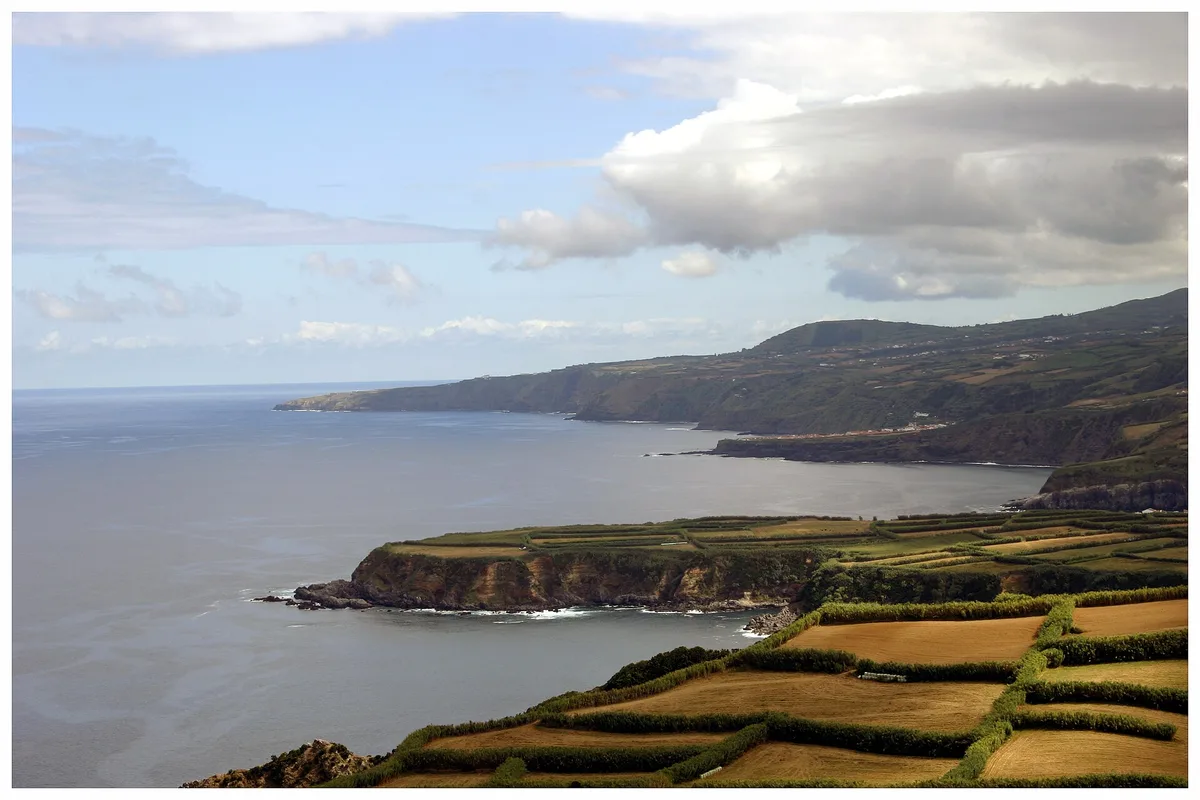
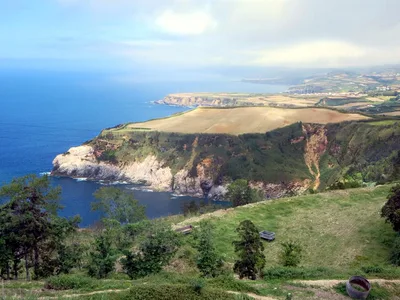
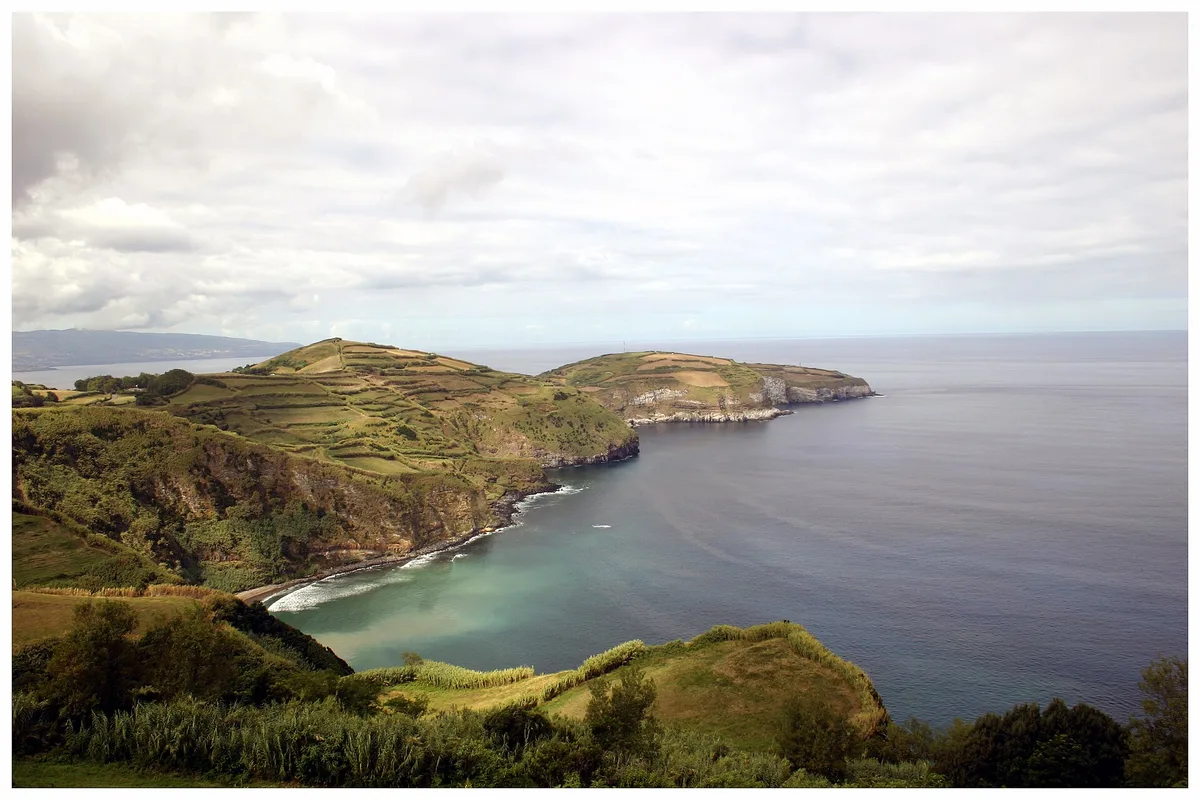
The Miradouro de Santa Iria sits right at the trailhead and delivers sweeping views over the northeast coast before you even reach the sand — don't rush past it. A short walk of around 1.2 kilometres leads to a cascata (waterfall) worth the detour. Further afield, the Ponta do Arnel Lighthouse, about 12 kilometres away, offers dramatic clifftop perspectives over the same wild coastline, and Nordeste Village at 10 kilometres gives a feel for traditional Azorean life at the island's northeastern tip.
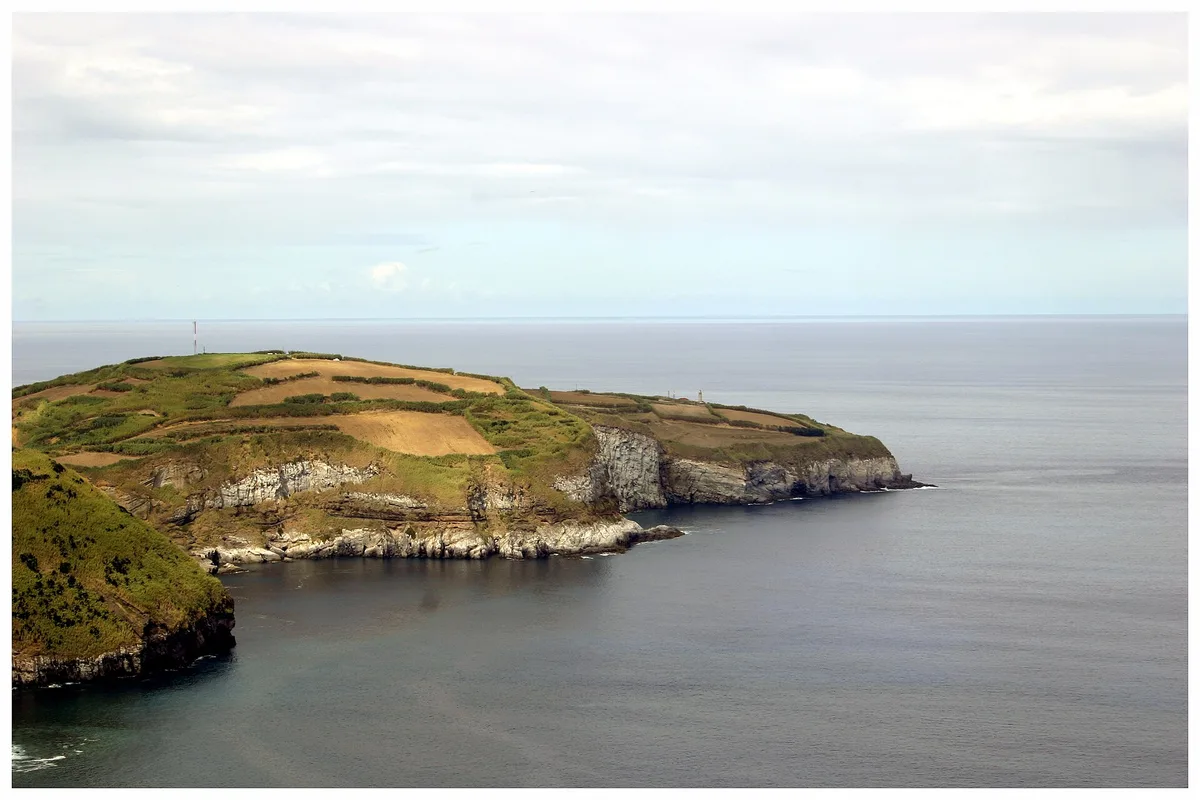
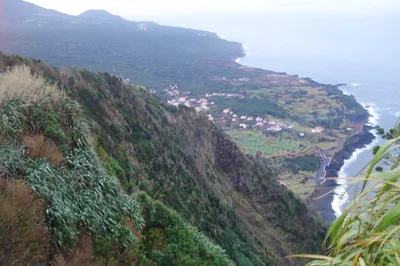
The Miradouro de Santa Iria above the beach is the standout frame — valley, coastline, and dark sand all in one shot.
On the beach itself, the freshwater stream crossing the black volcanic sand toward the open blue Atlantic is a composition you won't find at any other beach on the island. Arrive in the morning for the clearest light and fewest visitors in the background.
Where to eat
There are no restaurants on the beach itself, so eat before you arrive or pack your own. The closest option is Maré Cheia, roughly 1.6 kilometres away. Silêncio das Palavras and Restaurante Caldeiras are both within 3.6 kilometres if you want a sit-down meal after the hike back up.
Where to stay
The nearest accommodation is Alojamento local Dália, around 6 kilometres from the beach — a practical base for exploring the northeast coast. For something further afield with more amenities, Quinta Santa Barbara Casas Turisticas is about 13.7 kilometres away, and Vista do Vale at 14.2 kilometres rounds out the options in the broader area.
Photography
The best shots come from the Miradouro de Santa Iria at the top of the valley, where the full sweep of the coastline and the dark volcanic sand below frame perfectly in morning light. Down on the beach, the freshwater stream cutting across the black sand toward the blue Atlantic makes for a striking foreground element — golden hour before sunset intensifies the contrast.
Good to know
Swimming is dangerous here — strong currents, a rocky bottom, and rapidly changing sea conditions make entering the water a serious risk. There is no lifeguard on duty, and the beach is not recommended for non-swimmers under any circumstances. Between April and early summer, Portuguese Man of War have been recorded along this coastline, so scan the shoreline and shallows before approaching the water's edge. Dogs are welcome with no formal restrictions, but bring everything you need — food, water, first aid — because there is nothing on-site.
GAMES
🕹️ Five minutes of sand?
Three daily games — including the UV simulator set to this beach.
Map
Nearby places
Maré Cheia
Silêncio das Palavras
Restaurante Caldeiras
Restaurante o Emigrante
Casa Pasto Flor
Alojamento local Dália
Quinta Santa Barbara Casas Turisticas
Residencia Bem Estar Dona Adelina
Vista do Vale
Furnas Lake Forest Living
Things to see around Ribeira Grande
Miradouro do Nordeste
Panoramic viewpoint over the wild northeast coastline of São Miguel.
Nordeste Village
Traditional Azorean village at the northeastern tip of São Miguel with a scenic church.
Ponta do Arnel Lighthouse
Historic lighthouse on the northeast tip of São Miguel with dramatic coastal views.
GIFT
🎁 Gift this beach
Its exact coastline, your date, your words — on a print or a PDF you print yourself.
Santa Iria Beach
THAT DAY
Santa Iria Beach, Azores
© OpenStreetMap contributors
Clean & decorative, or “That day” with the real sky of your date.
Shipping included 3-6 business days
A question before you order? Contact us
Delivered within minutes on the confirmation page and by email: a ZIP with all 4 print sizes (30×40 cm, 12×16″, 50×70 cm, 18×24″), each as a high-resolution PDF and PNG (300 dpi), plus a screen version. Print at home or at any print shop.
Please complete the delivery address.
Please accept the Terms of Sale.
Almost there — the shop opens very soon.
Secure payment · Printed locally in 30+ countries · 7 languages
Frequently asked
The information on this page is provided for guidance only and may evolve. Access conditions, safety and infrastructure can change without notice. Always check official sources before traveling.
Nearest beaches
Other wild beaches in Azores
More beaches in Azores
Reviews of this beach
- No reviews yet, what a shame — leave yours and share your experience.