Second BeachUnited States Beach Guide
Dark sand, sea stacks, and wild Pacific solitude
About
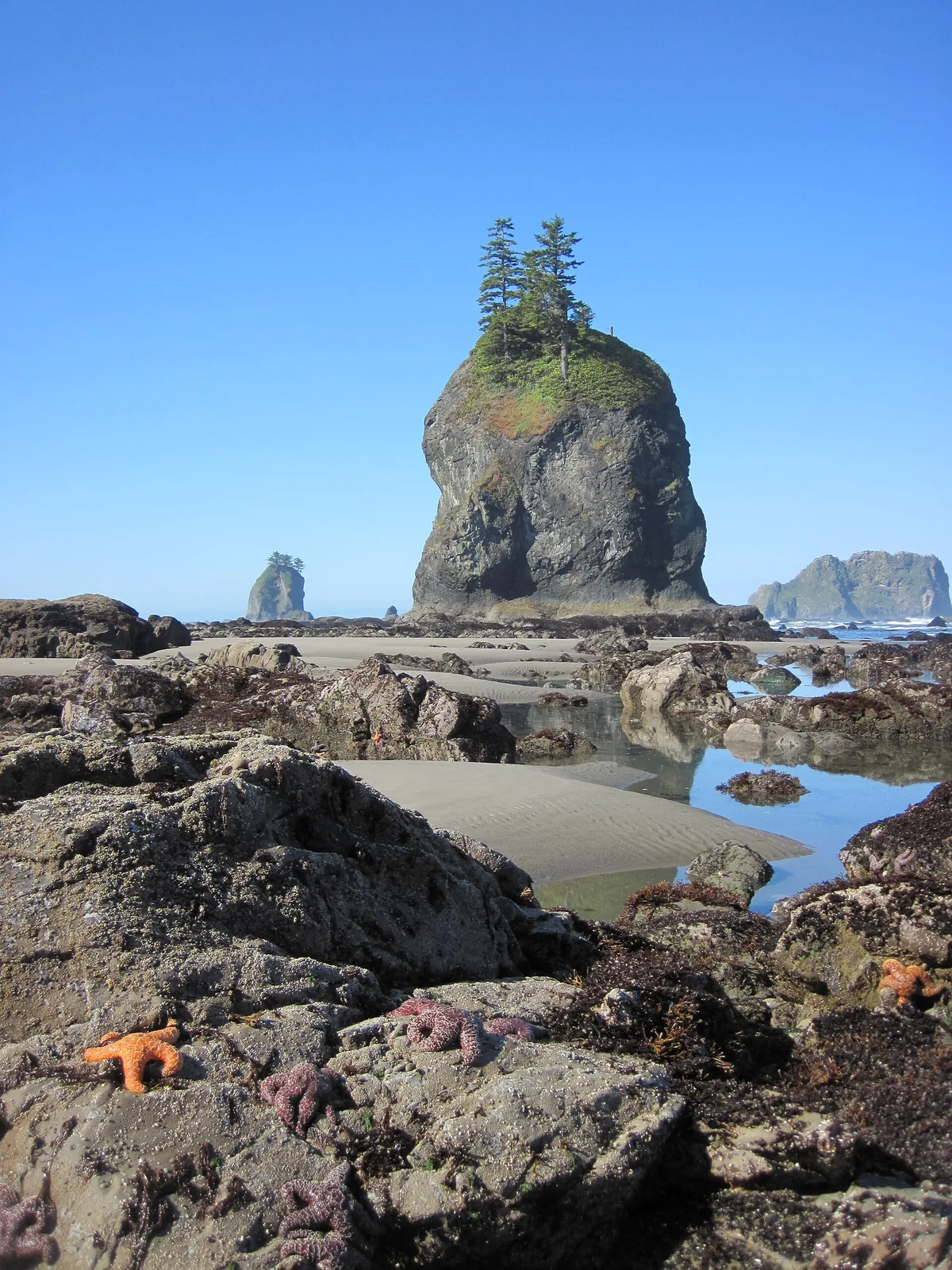
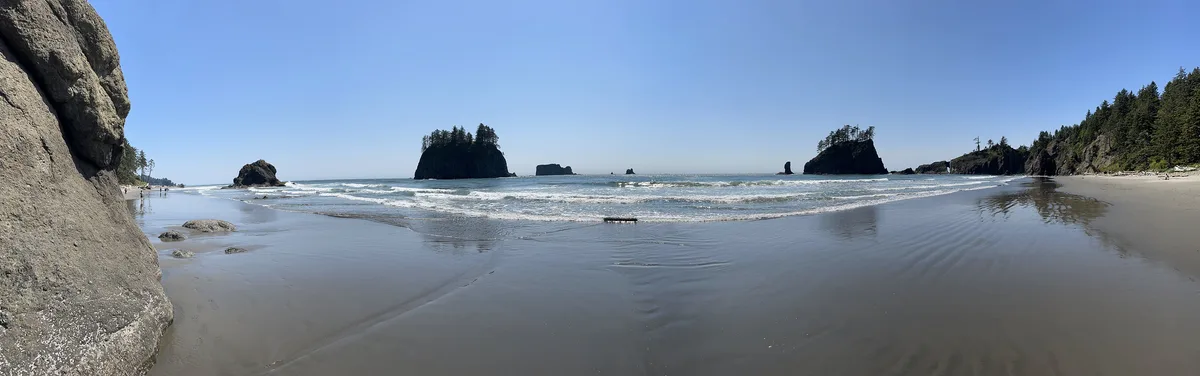
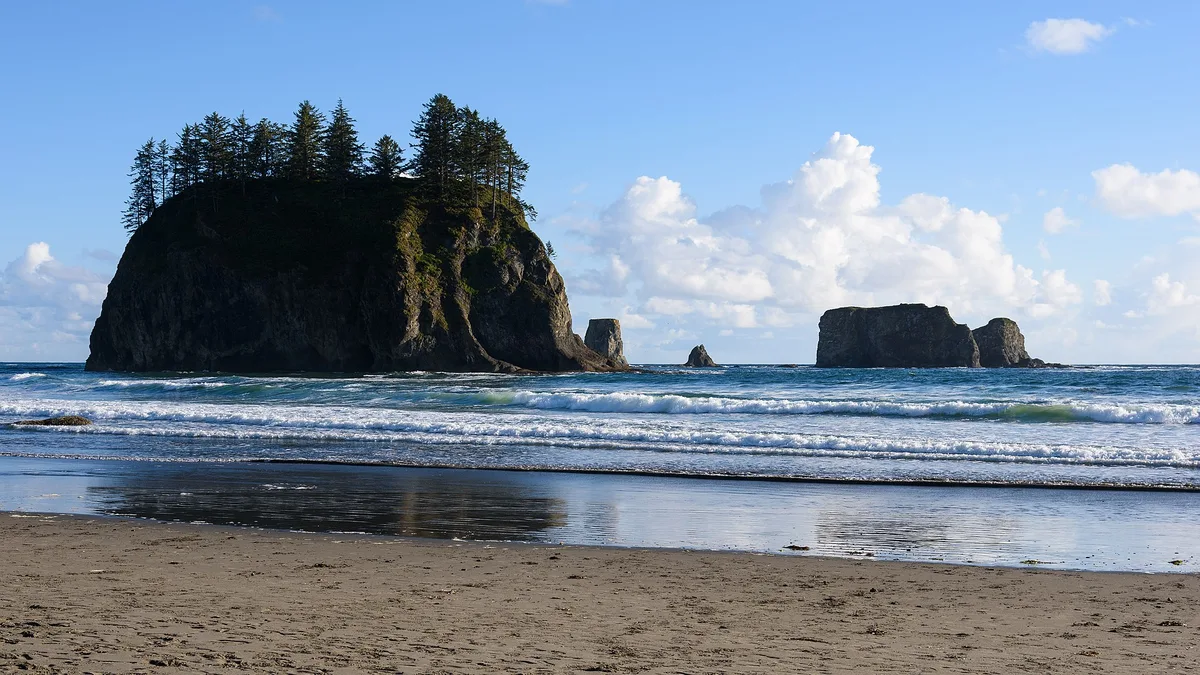
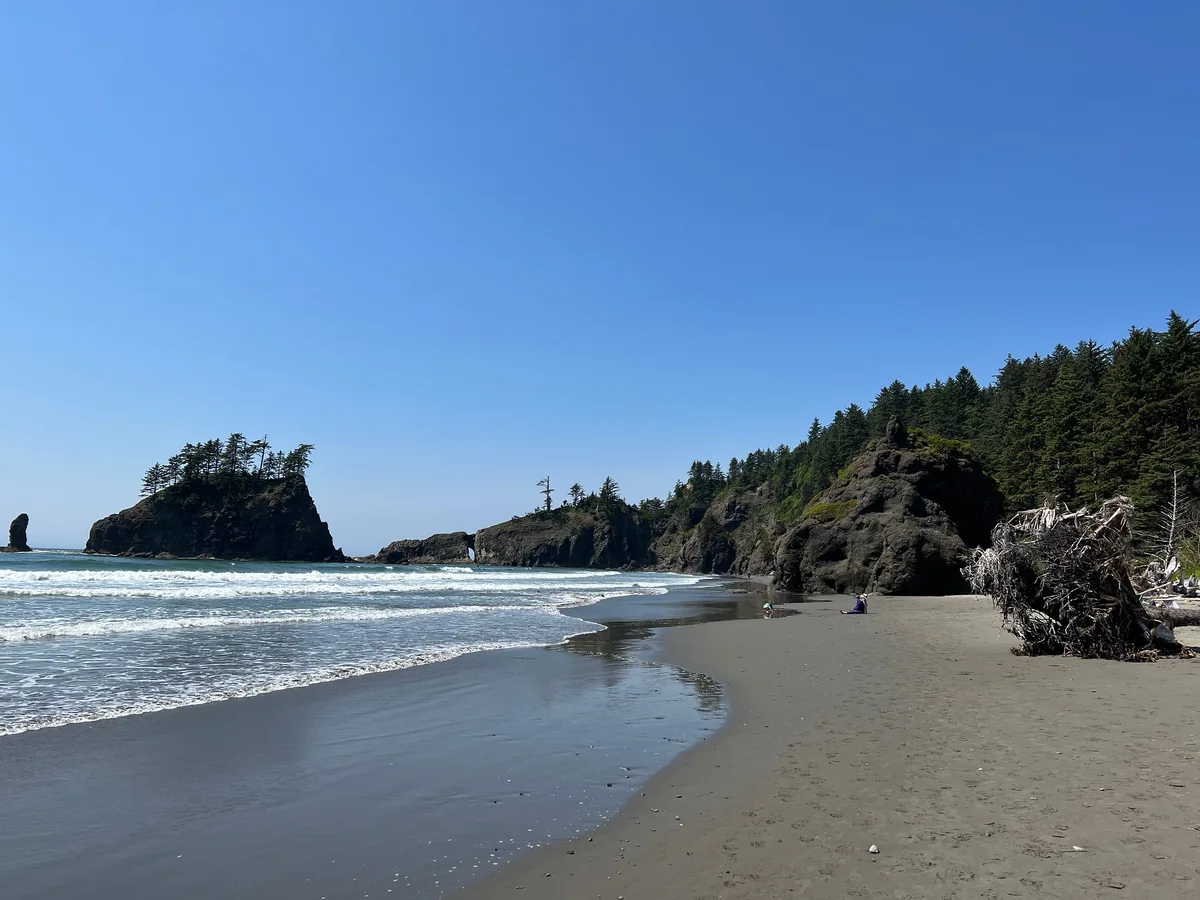
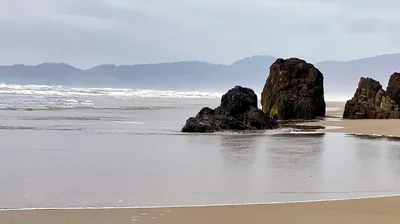
Second Beach sits on the Olympic Peninsula's rugged coast within Quileute tribal territory, a wide dark-sand crescent backed by old-growth Sitka spruce that filters grey Pacific light into something elemental. The sand is a deep charcoal-grey, the water a cold, churning grey-green, and the horizon is broken by Crying Lady Rock — a dramatic sea stack that anchors every view. At low tide, tide pools emerge along the rocky edges, alive with anemones and sea stars. You earn this place: it's hike-in only, and that walk through old-growth forest is part of the experience.
How to get there
Drive La Push Road to the Second Beach trailhead, where free NPS parking is available — though the lot fills fast on summer weekends. A 20-minute forest hike brings you to the beach; there is no road access to the sand itself. Olympic National Park charges a $30 per vehicle entry fee, waived with an America the Beautiful Pass or qualifying discounted passes. The beach is open year-round, but the trail and beach conditions vary dramatically by season.
Who it's for
For couples
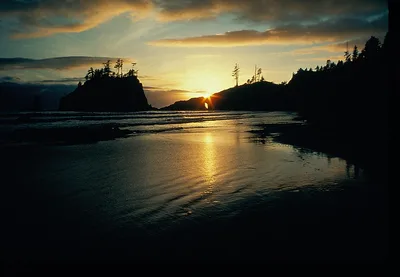
The hike-in access filters out casual visitors, so you'll often find long stretches of dark sand with only the sound of waves and wind — a genuinely private feel that's rare on the Pacific Coast. Sunset behind Crying Lady Rock is the payoff.
For families
Older children who can handle a 20-minute forest trail will find the tide pools endlessly engaging at low tide, but this beach is not suitable for young children near the water — sneaker waves are unpredictable and the ocean here is dangerous. No facilities, no lifeguards, and no cell service mean you need to be fully self-sufficient.
Our take
Second Beach is not a beach you stumble onto — you hike to it, you earn it, and it asks something of you in return. The sneaker wave risk here is real and must be stated plainly: do not enter the water, do not stand close to the surf line, and never take your eyes off the ocean. That said, the combination of dark-sand crescent, ancient Sitka spruce, and Crying Lady Rock rising from grey Pacific water is as visually powerful as the Pacific Northwest gets. Come in June through September for the best trail conditions and longest daylight. Avoid November through February — heavy rain, a muddy trail, high surf, and elevated sneaker wave risk make the experience genuinely unpleasant and more dangerous. This is a beach for photographers, hikers, and anyone who wants wild coast without the polish. It delivers exactly that.
What to do
The tide pools at the base of Crying Lady Rock reward a slow low-tide exploration — check tide tables before you go. A short detour to the 1st Beach Overlook (1.6km away) gives a completely different coastal perspective without a long hike. Third Beach, 5km south, is the gateway to the wilderness coast backpacking route if you're ready to go deeper into the Olympic backcountry. La Push, the Quileute Tribal Village just 2km away, offers First Beach access and essential cultural context for this coastline.
Crying Lady Rock is the defining shot — frame it from the wet sand at low tide with the grey water reflecting the stack for maximum drama.
The old-growth Sitka spruce forest edge where the tree line meets the dark sand crescent offers a moody, layered composition that works especially well in overcast Pacific light.
Where to eat
Three Rivers Restaurant, about 7km from the trailhead, is your best nearby option for a burger after the hike — plan your meal around it because there is absolutely nothing to eat on the beach or trail. Bring your own water and snacks; the beach has no facilities whatsoever.
Where to stay
The Quileute Oceanside Resort, 0.6km away and rated 4.4/5 across over 677 reviews, is the closest full-service option and puts you right in the La Push village context. Mora Campground, 3.8km away and rated 4.6/5, is the practical base for anyone doing multiple coastal hikes. Lonesome Creek Store & Resort, just 2.2km out, rounds out the options for those wanting something smaller.
Photography
Shoot Crying Lady Rock at golden hour when the grey water catches low Pacific light and the sea stack casts long shadows across the dark sand — arrive early to secure a clean foreground at the waterline. The forest edge where the Sitka spruce meets the sand makes a strong compositional frame, especially in morning mist.
Good to know
Sneaker waves are a genuine, documented hazard here — never turn your back on the ocean, and do not enter the water under any circumstances. No pets are permitted on Olympic National Park beaches, so leave your dog at the accommodation. Campfires require a permit, wilderness camping requires a separate permit, and Leave No Trace is strictly enforced — pack out everything you pack in. The trail turns muddy and slippery from October through April, and there is no cell service on the trail or beach, so download offline maps before you leave the car.
GAMES
🕹️ Five minutes of sand?
Three daily games — including the UV simulator set to this beach.
Map
Nearby places
Three Rivers Restaurant
Lonesome Creek Store & Resort
Quileute Oceanside Resort
Quileute Oceanside Resort & RV Park
Mora Campground
Coastland Camp and Retreat
Things to see around Clallam County
La Push (Quileute Tribal Village)
Home of the Quileute Nation with First Beach access and tribal cultural context.
Third Beach
Longer hike-in beach south of Second Beach, gateway to the wilderness coast backpacking route.
Forks Timber Museum
Small museum documenting the logging history of the Olympic Peninsula.
GIFT
🎁 Gift this beach
Its exact coastline, your date, your words — on a print or a PDF you print yourself.
Second Beach
THAT DAY
Second Beach, Pacific Northwest
© OpenStreetMap contributors
Clean & decorative, or “That day” with the real sky of your date.
Shipping included 3-6 business days
A question before you order? Contact us
Delivered within minutes on the confirmation page and by email: a ZIP with all 4 print sizes (30×40 cm, 12×16″, 50×70 cm, 18×24″), each as a high-resolution PDF and PNG (300 dpi), plus a screen version. Print at home or at any print shop.
Please complete the delivery address.
Please accept the Terms of Sale.
Almost there — the shop opens very soon.
Secure payment · Printed locally in 30+ countries · 7 languages
Frequently asked
The information on this page is provided for guidance only and may evolve. Access conditions, safety and infrastructure can change without notice. Always check official sources before traveling.
Nearest beaches
Other wild beaches in United States
More beaches in Pacific Northwest
Reviews of this beach
- No reviews yet, what a shame — leave yours and share your experience.
Photo credits
Sources and licenses for the photos shown above.
- Photo 1 — Olympic National Park · source · Public Domain
- Photo 2 — Olympic National Park · source · Public Domain
- Photo 3 — daveynin · source · CC BY 2.0
- Photo 4 — King of Hearts · source · CC BY-SA 4.0
- Photo 5 — daveynin · source · CC BY 2.0