Ruby BeachUnited States Beach Guide
Dark sand, wild coast, sea stacks at every turn
About
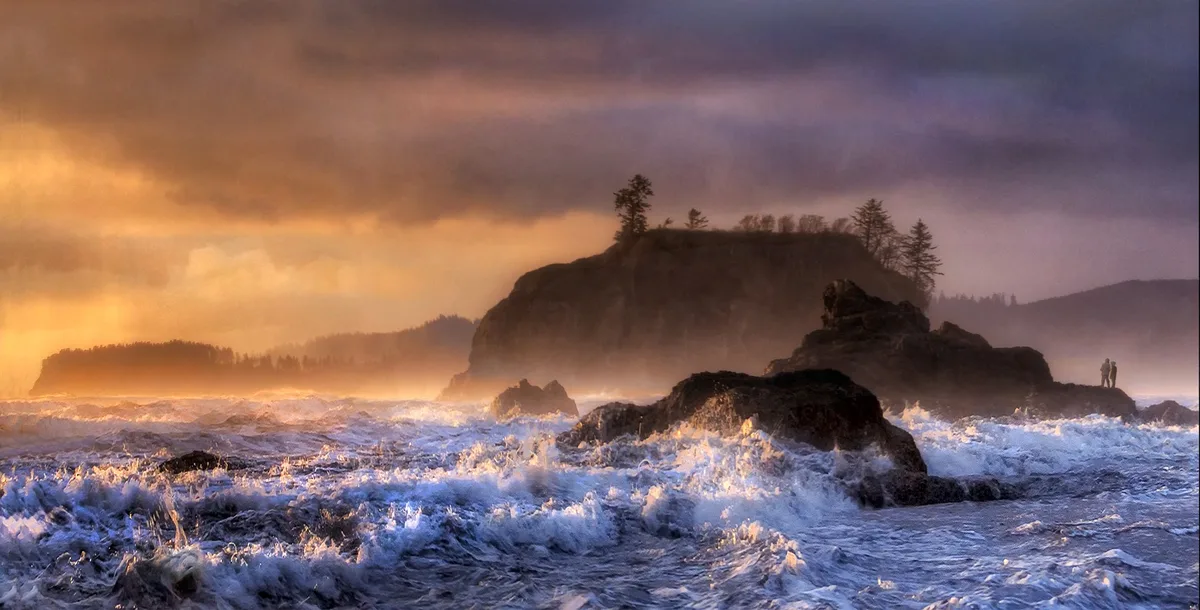
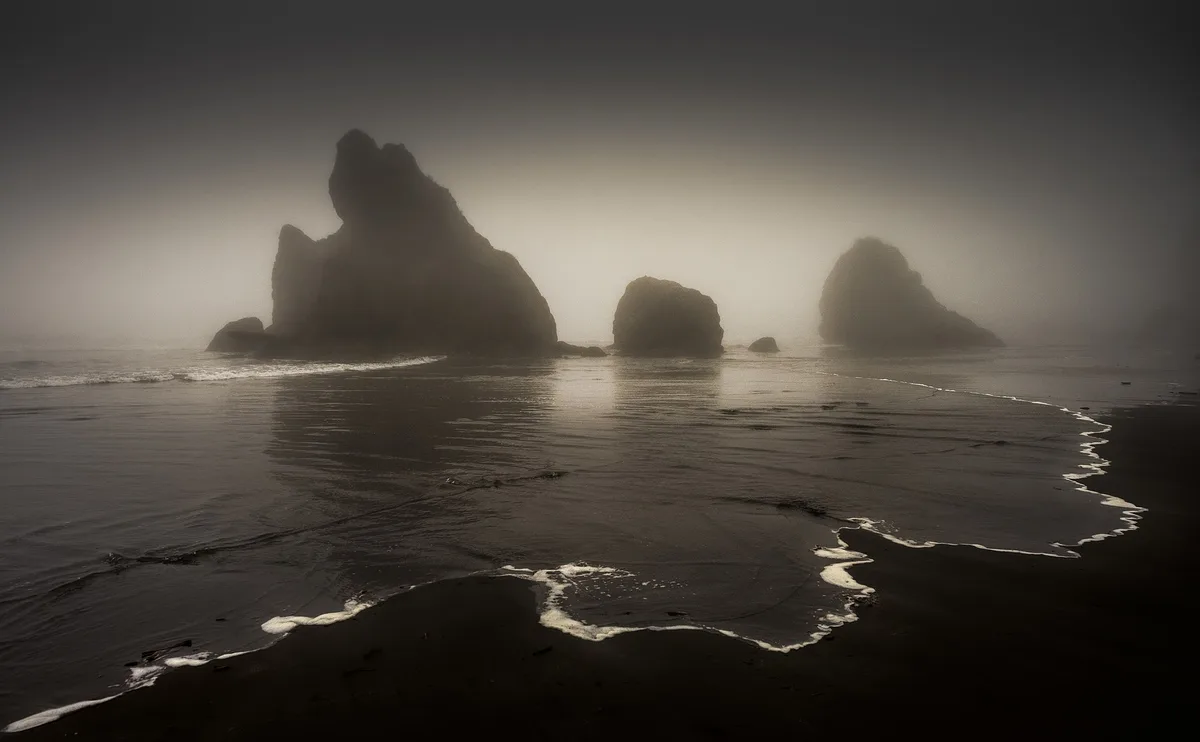
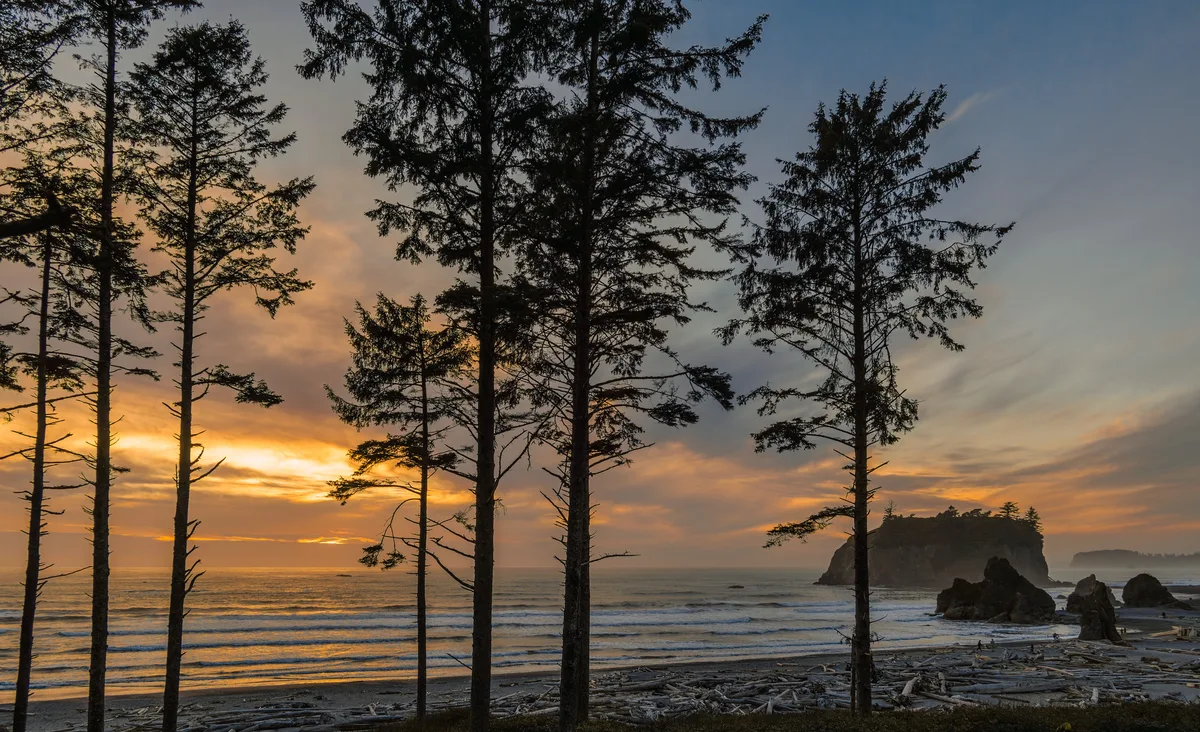
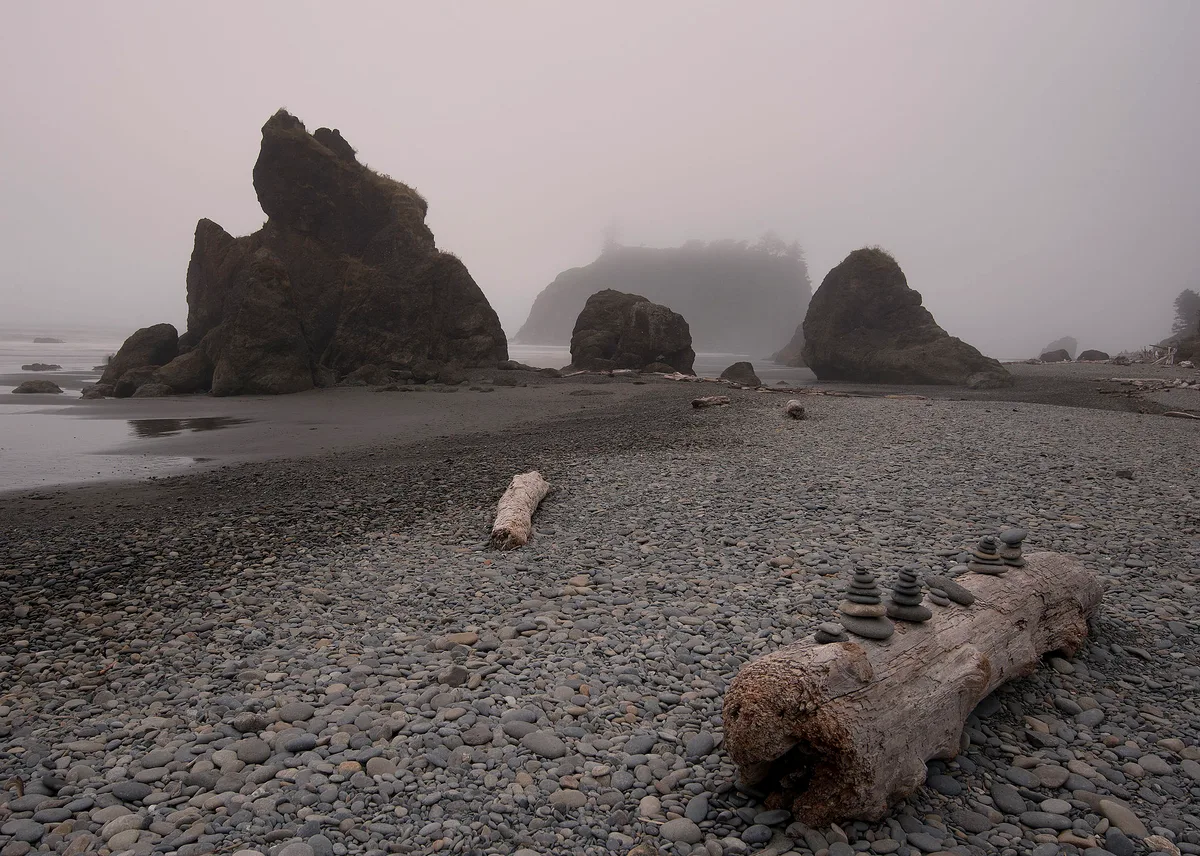
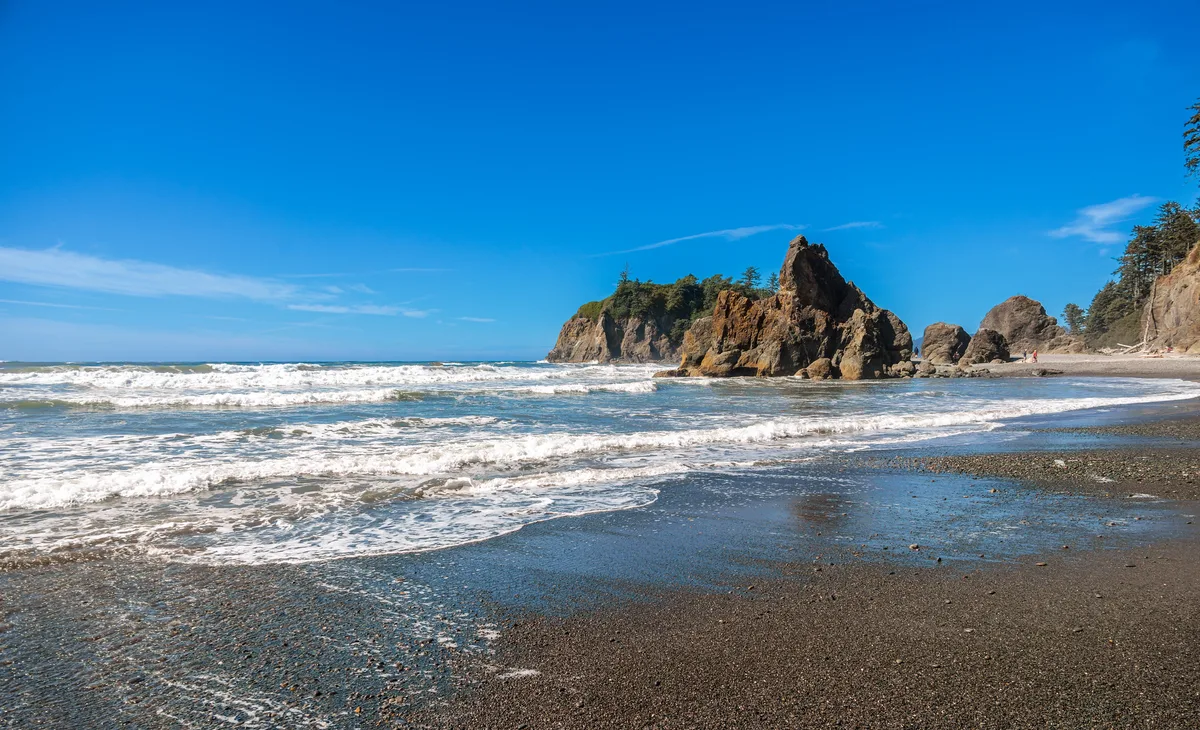
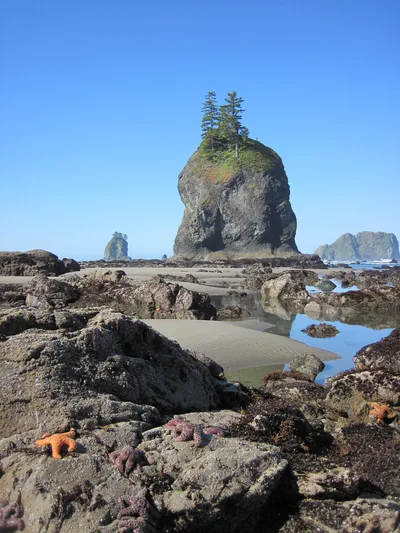
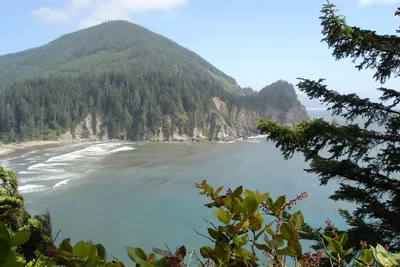
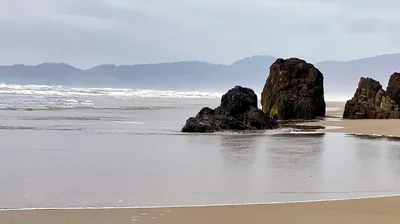
Ruby Beach sits on the Olympic Peninsula's raw Pacific edge, where reddish-grey garnet-flecked sand meets grey, churning ocean. Forested sea stacks rise dramatically from the surf zone, and Abbey Island anchors the scene like a sentinel just offshore. Cedar Creek spills across the beach, tide pools emerge at low tide, and massive driftwood logs line the shore like bleached bones. It's wild in the truest sense — untamed, loud, and visually relentless.
How to get there
Turn off US-101 near milepost 164 and you'll reach the small NPS parking lot in about two minutes. Parking is free, but the lot fills by 9 a.m. on summer weekends — arrive early. A $30 Olympic National Park entry fee applies unless you carry an America the Beautiful Pass or an Olympic National Park Annual Pass. A short unpaved path leads to the beach; the sand and cobble surface is not wheelchair accessible.
Who it's for
For couples
The dramatic sea stacks, crashing grey surf, and long stretches of dark garnet sand create a genuinely cinematic backdrop for couples who want wild scenery over beach-club comfort. Low-tide walks around the tide pools feel exploratory and unhurried.
For families
Families with older children can enjoy tide-pool exploration at low tide and the striking landscape, but the beach is not suitable for young children near the water — sneaker waves, riptides, and rolling driftwood logs pose real hazards. No pets are allowed, and the cobble-and-sand path is not pushchair-friendly.
Our take
Ruby Beach is not a place to swim, sunbathe, or unwind with a cocktail — and that's exactly the point. The danger here is real: sneaker waves have caught visitors off guard, riptides run through the surf zone, and the cold grey ocean demands respect at all times. What the beach delivers instead is raw, photogenic wilderness — garnet-flecked dark sand, towering sea stacks, tide pools full of life at low water, and a scale that makes you feel genuinely small. Arrive before 9 a.m. on summer weekends or the parking lot will be full. Skip the winter months entirely. This is a beach for photographers, careful explorers, and anyone who wants to stand in front of something genuinely powerful — just keep your distance from the water. True digital-detox territory: cell signal fades, there's nowhere to plug in a laptop, and the ocean is loud enough to drown out everything else.
What to do
At low tide, explore the tide pools tucked around the sea stacks — they reward patience and a slow pace. A short drive leads to the Big Cedar Tree, roughly 4.4 km away, and the legendary Tree of Life is about 11 km up the coast near Kalaloch. For a longer excursion, the Hoh Rain Forest Visitor Center is 48 km away, offering the Hall of Mosses trail through a UNESCO World Heritage temperate rainforest where Roosevelt elk roam freely.
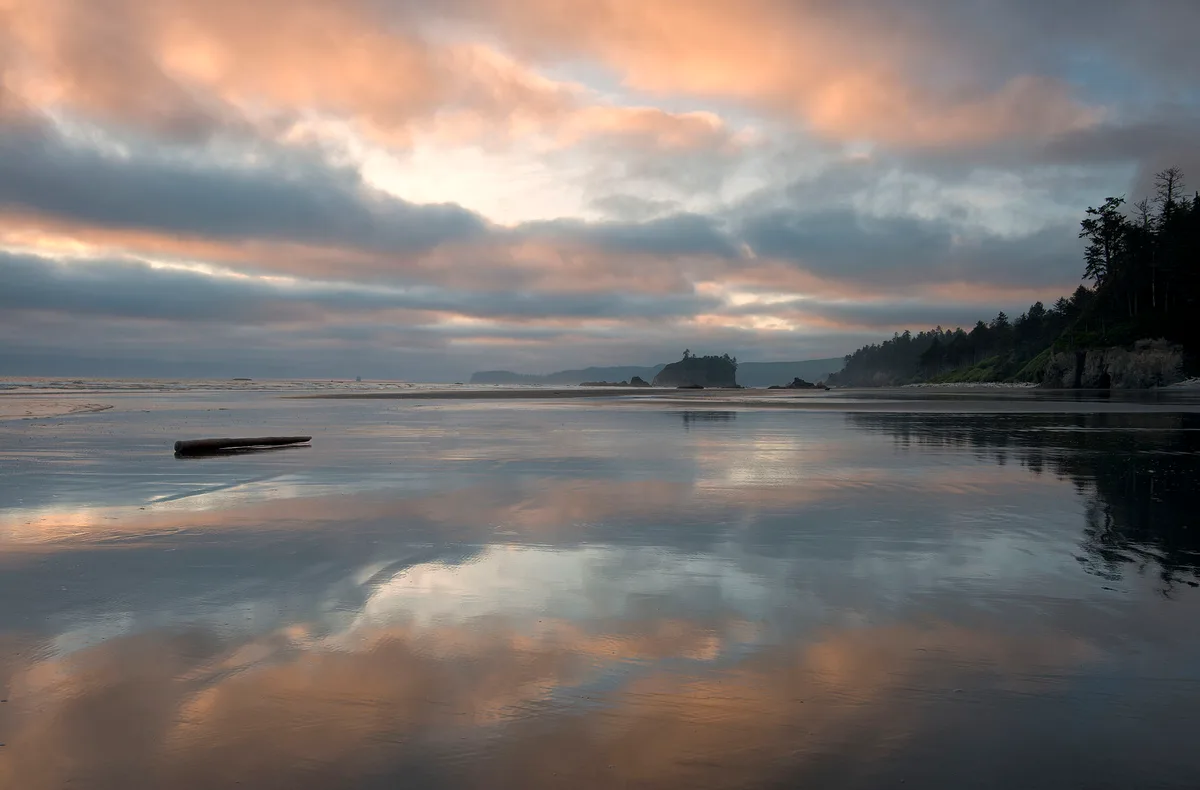
Frame Abbey Island sea stack from the wet sand at low tide with Cedar Creek in the foreground for a layered, moody composition.
The large driftwood accumulations along the upper beach photograph beautifully against the dark garnet sand, especially under the flat grey Pacific light of an overcast morning.
Where to eat
There are no restaurants or food vendors at Ruby Beach itself — bring everything you need. The nearest option is Creekside Restaurant, about 12 km away. Plan your meals before you arrive; this is not a beach with a snack bar around the corner.
Where to stay
The closest options cluster within 5–11 km of the beach. WoodSea Enterprise and Hoh Chalet, both around 5 km away, offer cabin-style stays close to the forest, while Rain Forest Hostel at 6.5 km is a solid budget pick with strong reviews. For something more adventurous, Hoh Humm Adventure Campsite sits about 10 km out.
Photography
The best shots are at low tide when the sea stacks, tide pools, and Cedar Creek outflow align in the foreground with Abbey Island behind — golden hour before sunset turns the dark garnet sand a deep copper. Overcast days, common here, actually flatter the moody grey water and dark sand better than harsh midday sun.
Good to know
Do NOT enter the water — sneaker waves have killed visitors here, riptides are common, and the water stays a brutal 40–60°F year-round. Never turn your back on the ocean, stay well back from the surf line, and do not sit or play on driftwood logs, especially near high tide, as powerful waves can roll them without warning. No pets are permitted on Olympic National Park beaches, campfires below the high tide line require a permit, and collecting rocks, sand, or garnets is strictly prohibited. Leave No Trace applies to everything — pack out what you pack in. Avoid November through February when storms, high surf, and dangerous sneaker waves make access hazardous.
GAMES
🕹️ Five minutes of sand?
Three daily games — including the UV simulator set to this beach.
Map
Nearby places
Creekside Restaurant
WoodSea Enterprise
Hoh Chalet A cozy cabin on the Olympic Peninsula
Rain Forest Hostel
Hoh Humm Adventure Campsite
Mosquito Creek
Big Cedar Tree
Tree of Life
Things to see around Jefferson County
Hoh Rain Forest Visitor Center
UNESCO World Heritage temperate rainforest with Hall of Mosses trail and Roosevelt elk.
Kalaloch Lodge
Historic NPS lodge on the coast with access to Kalaloch Beach and the famous Tree of Life.
Quinault Rain Forest
Ancient temperate rainforest surrounding Lake Quinault with world-record-sized trees.
GIFT
🎁 Gift this beach
Its exact coastline, your date, your words — on a print or a PDF you print yourself.
Ruby Beach
THAT DAY
Ruby Beach, Pacific Northwest
© OpenStreetMap contributors
Clean & decorative, or “That day” with the real sky of your date.
Shipping included 3-6 business days
A question before you order? Contact us
Delivered within minutes on the confirmation page and by email: a ZIP with all 4 print sizes (30×40 cm, 12×16″, 50×70 cm, 18×24″), each as a high-resolution PDF and PNG (300 dpi), plus a screen version. Print at home or at any print shop.
Please complete the delivery address.
Please accept the Terms of Sale.
Almost there — the shop opens very soon.
Secure payment · Printed locally in 30+ countries · 7 languages
Frequently asked
The information on this page is provided for guidance only and may evolve. Access conditions, safety and infrastructure can change without notice. Always check official sources before traveling.
Nearest beaches
Other wild beaches in United States
More beaches in Pacific Northwest
Reviews of this beach
- No reviews yet, what a shame — leave yours and share your experience.
Photo credits
Sources and licenses for the photos shown above.
- Photo 1 — John Fowler from Placitas, NM, USA · source · CC BY 2.0
- Photo 2 — John Fowler from Placitas, NM, USA · source · CC BY 2.0
- Photo 3 — Bernd Thaller from Graz, Austria · source · CC BY 2.0
- Photo 4 — TerryDOtt · source · CC BY 2.0
- Photo 5 — John Fowler from Placitas, NM, USA · source · CC BY 2.0
- Photo 6 — TerryDOtt · source · CC BY 2.0