Salinas BeachSpain Beach Guide
Golden sands, blue flag, and Asturian soul
 🎁 Gift idea: the star map of your most beautiful night↓
About
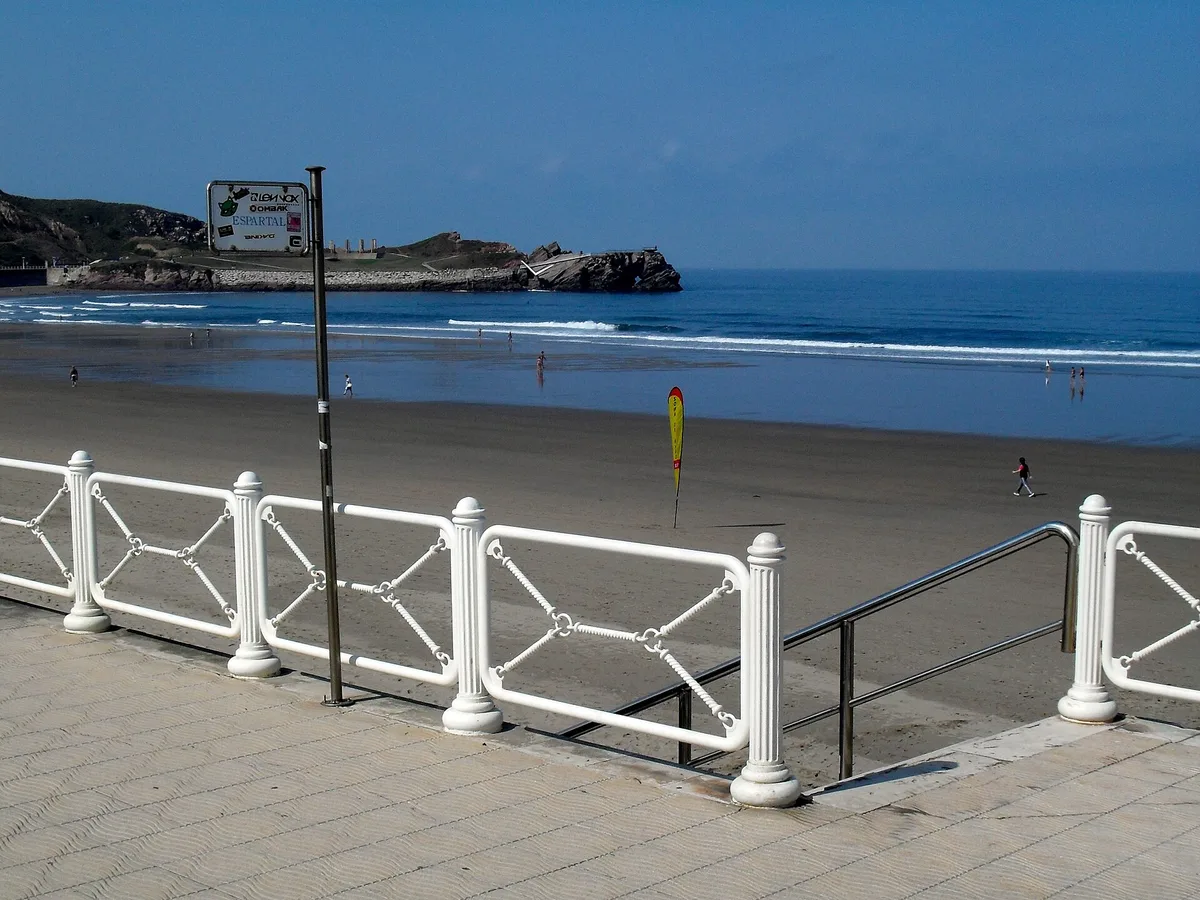
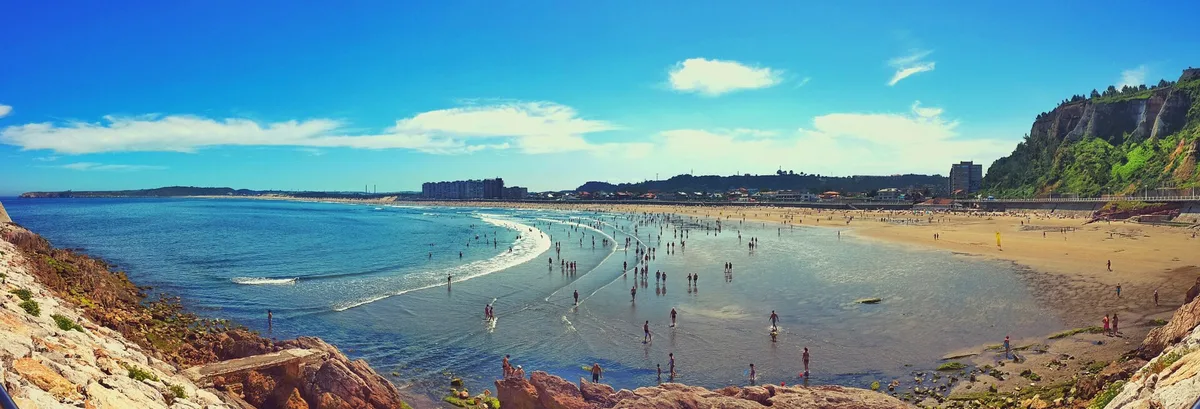
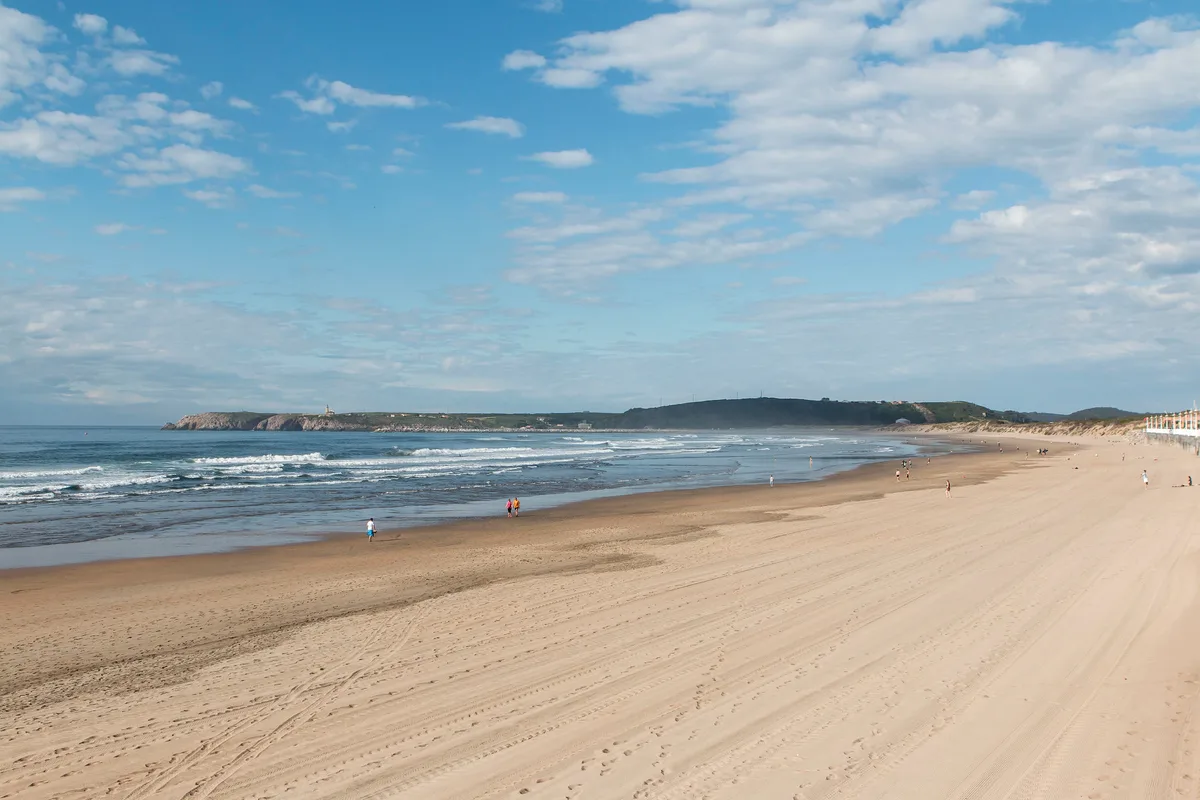
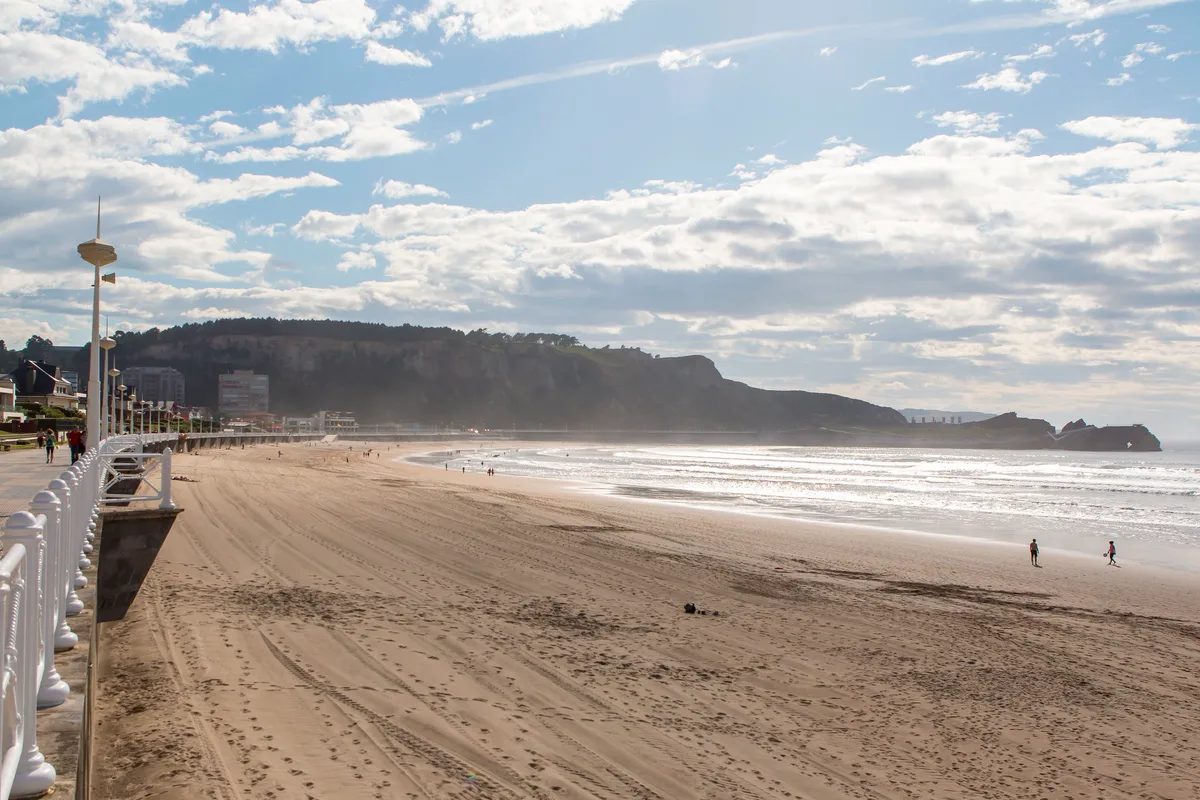
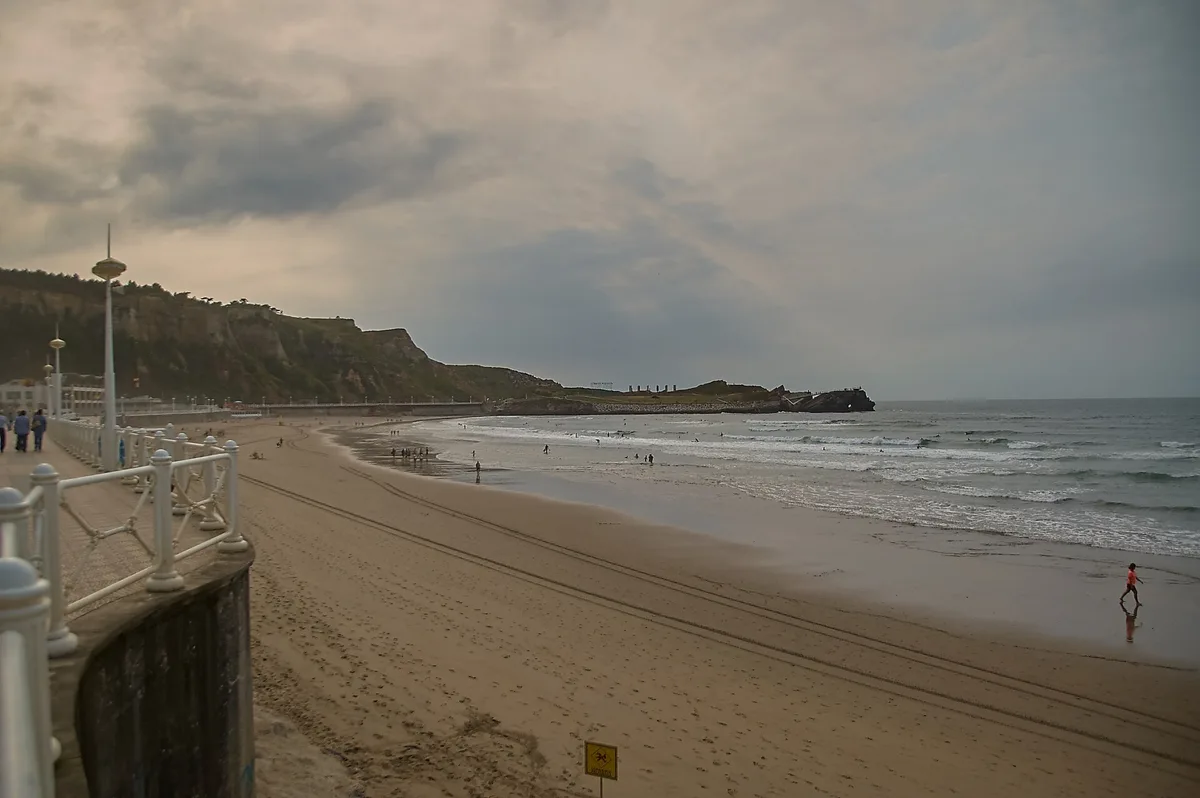
Playa Salinas stretches roughly 1,200 metres of golden sand along the Asturias coast near Avilés, where the blue Atlantic rolls in against a backdrop of dunes and promenade. The beach holds a Blue Flag, a reliable signal of clean water and well-maintained facilities. Behind the shoreline, the Dunas de El Espartal dune system — a recognised Natural Monument — adds a wild, windswept edge to what is otherwise a well-organised family beach. It's busy in summer, no question, but the long promenade gives you room to breathe. The vibe is relaxed and local, the kind of place where Asturian families have been coming for generations.
How to get there
From Salinas town centre, the beach is a five-minute drive. Regular buses run daily from Avilés, making it easy to arrive without a car. Parking is free along Calle Pablo Laloux and in adjacent asphalt lots — extensive, but genuinely difficult to find a space in summer. Note that the town hall may introduce paid parking regulation during peak summer months, so check locally before you arrive.
Who it's for
For couples
The promenade walk at dusk, with the golden sand stretching out below and the dune system glowing in the evening light, gives Playa Salinas a quietly romantic edge away from the summer daytripper rush.
For families
Blue Flag water quality, easy access, free parking, and a long flat promenade make this a practical and enjoyable choice for families — just supervise children closely in the water given the risk of currents and underwater pits at low tide.
Our take
Playa Salinas is a solid, well-equipped beach with genuine character — golden sand, a Blue Flag, a remarkable dune system, and an anchor museum within walking distance. But go in clear-eyed about the water: strong currents and underwater pits are a real hazard here, not a footnote. Swim with caution, stay alert at low tide, and keep children close. The beach is at its best from June to September; outside those months the Atlantic turns cold and rough, and November through February is best avoided entirely. Parking is free but summer availability is a genuine headache — get there early or take the bus from Avilés. This is a family beach that rewards the prepared visitor.
What to do
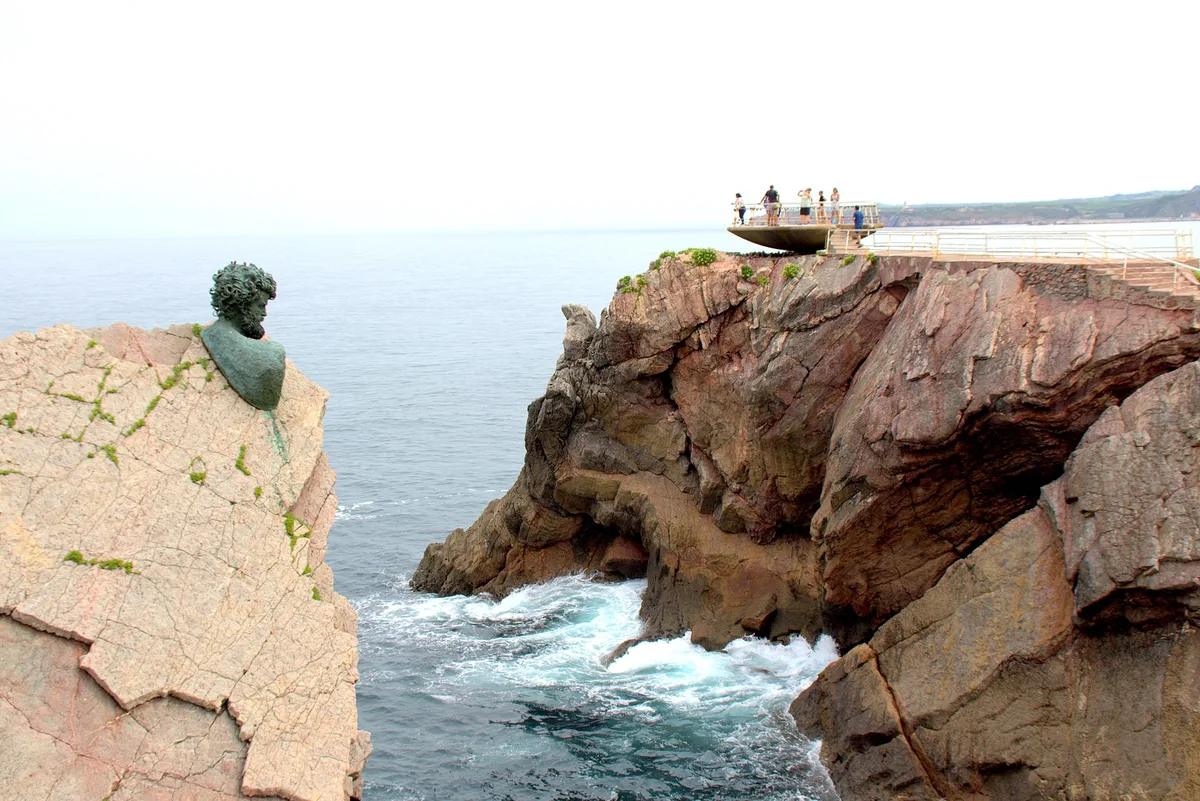
The Museo de Anclas Philippe Cousteau sits just 0.5km away — an open-air anchor museum on a rocky promontory with a 360° viewpoint that's worth the short walk. The Dunas de El Espartal dune system begins right at the beach, offering a rare chance to walk through a Natural Monument with unique fauna and coastal vegetation. Further afield, the Cabo Peñas lighthouse (12.3km, rated 4.7/5) is one of the finest viewpoints on the Asturian coast and makes a strong half-day excursion.
The open-air anchor museum on the rocky promontory delivers a dramatic foreground of weathered anchors with the blue Atlantic behind — shoot it at golden hour for maximum impact.
The Dunas de El Espartal dune crests offer a surprisingly wild composition just steps from the beach, especially effective in morning light before visitors arrive. The promenade looking back toward the golden sand with the dune system in the distance makes a clean, wide-angle shot that captures the full scale of the beach.
Where to eat
Real Balneario de Salinas is the landmark dining address right on the beach — a classic Asturian institution with a sea-facing setting. For something a short walk away, La Luna (0.5km) and Ewan (0.4km) are both close enough for a post-swim meal. If you're willing to drive a few kilometres, La Chalana Seafood Restaurant (3km, 4.4/5) and Sidrería Tierra Astur Avilés (3.9km, 4.4/5) are both well-regarded local favourites.
Where to stay
Hotel Piedras (2.9km, 4.5/5) is the closest well-rated option to the beach. In Avilés itself, Palacio de Avilés, Affiliated by Meliá (3.9km, 4.5/5) offers a more polished stay with strong reviews. For a spa option, URH Zen Balagares Hotel & Spa (6.5km, 4.2/5) adds a wellness angle to your Asturian trip.
Photography
The golden hour before sunset is ideal for shooting the dune system from the beach — the low light catches the texture of the Dunas de El Espartal beautifully against the blue Atlantic. For elevated shots, the rocky promontory at the Museo de Anclas Philippe Cousteau (0.5km) gives a sweeping 360° view of the coastline that works well in the morning before the beach fills up.
Good to know
Strong currents and underwater pits can form at Playa Salinas, particularly at low tide — exercise real caution when swimming and keep a close eye on children near the water's edge. Avoid the sea entirely if conditions look rough; the Atlantic here is not forgiving. Arrive early in summer if you want a parking spot — the free lots fill fast. The promenade and parking areas are accessible for visitors with reduced mobility.
GAMES
🕹️ Five minutes of sand?
Three daily games — including the UV simulator set to this beach.
Map
Nearby places
Real Balneario de Salinas
Ewan
La Luna
Sidrería Tierra Astur Avilés
La Chalana Seafood Restaurant
El mesonin de Tere
Parrilla - Sidrería Los Sauces
Hotel Palacio de la Magdalena
URH Zen Balagares Hotel & Spa
Palacio de Avilés, Affiliated by Meliá
Hotel Piedras
Hotel La Serrana
Things to see around Castrillón
Museo de Anclas Philippe Cousteau
Open-air anchor museum on rocky promontory with 360° viewpoint.
Dunas de El Espartal
Dune system recognized as Natural Monument with unique fauna and vegetation.
Cudillero
Picturesque fishing village with colorful houses and Miradores Route.
GIFT IDEA · MARCEL ET LES BLONDES
🎁 Give a moment, not a thing


What’s the occasion?

 💑 Dating anniversaryTwo dates, two starry skies
 💍 Wedding anniversaryCotton, silver, golden…
 🎂 BirthdayTheir own newspaper front page
 👶 New babyThe stars on the day they were bornValentine’s DayOur two moons, as a print
Shipping €5, free from €49 · made to order, shipped within 48 hAlso: our engraved wooden bracelets, €23.90 →
Frequently asked
The information on this page is provided for guidance only and may evolve. Access conditions, safety and infrastructure can change without notice. Always check official sources before traveling.
Nearest beaches
Other family beaches in Spain
More beaches in Asturias
Reviews of this beach
- No reviews yet, what a shame — leave yours and share your experience.
Photo credits
Sources and licenses for the photos shown above.