Ajuy BeachSpain Beach Guide
Black volcanic sand, ancient caves, wild Atlantic edge
About
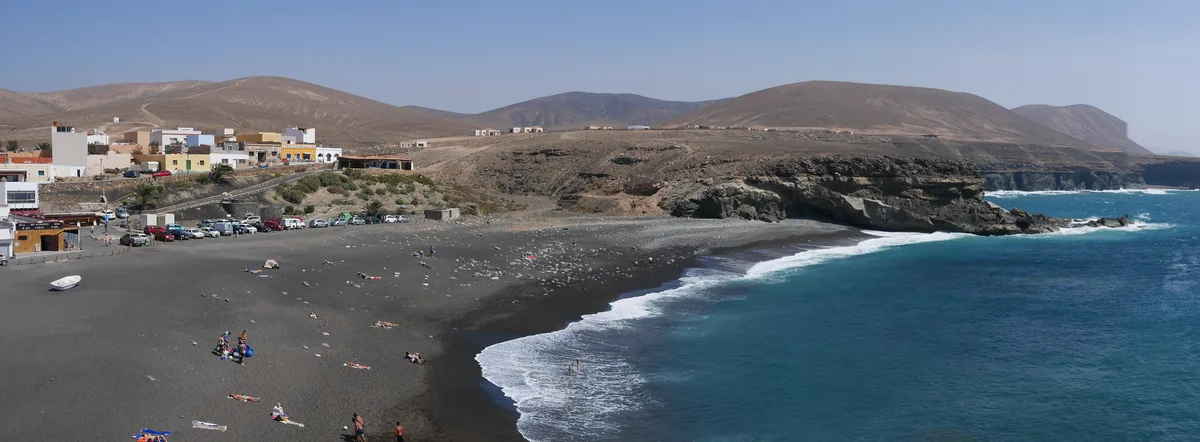
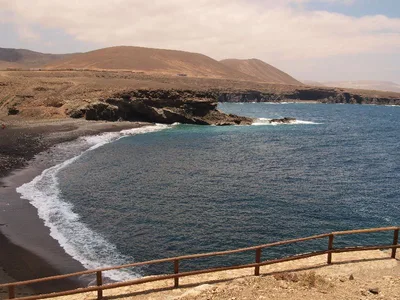
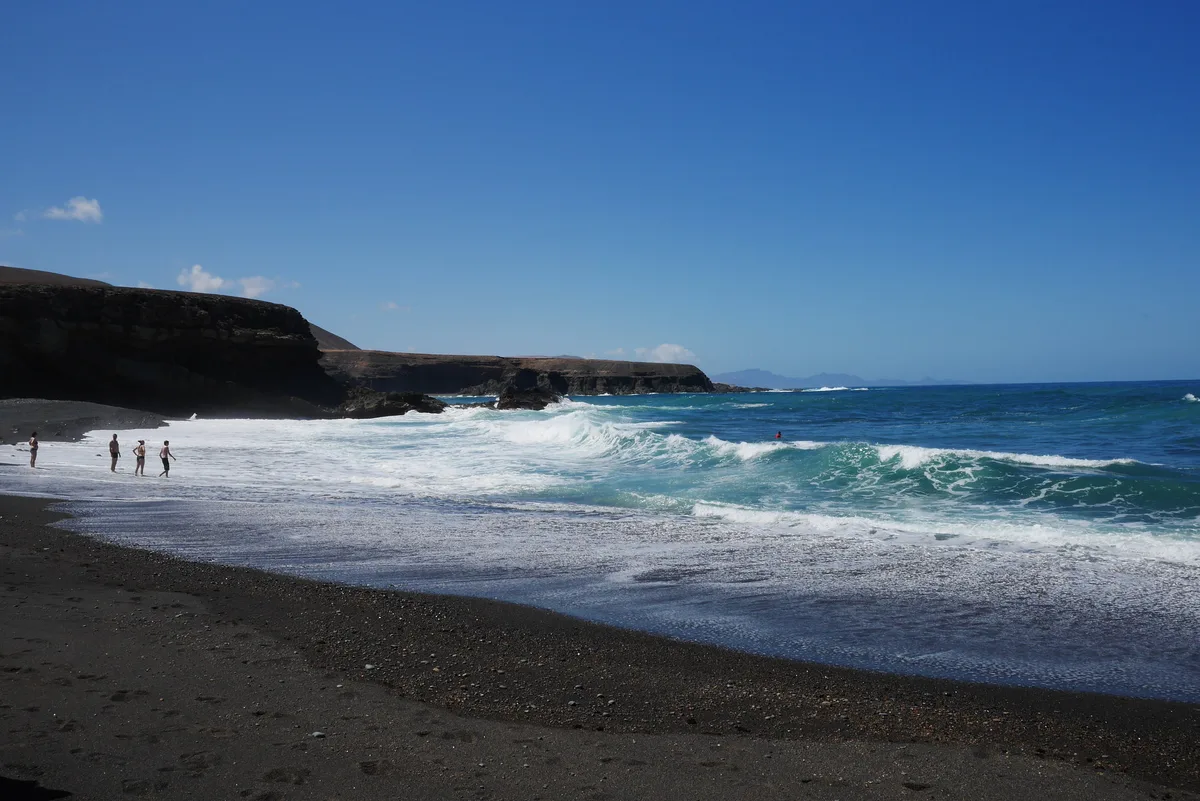
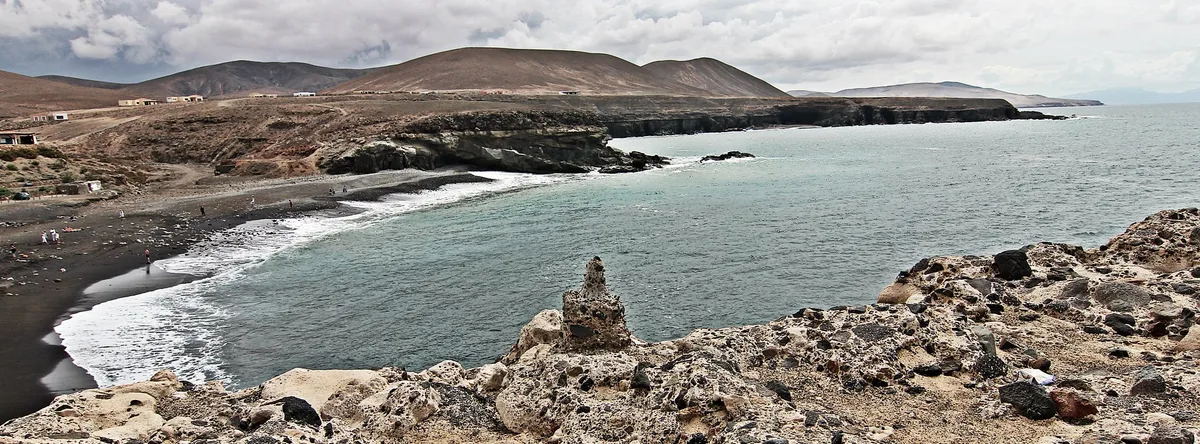
Playa de Ajuy sits on the western coast of Fuerteventura, in the municipality of Pájara, where black volcanic sand meets deep blue Atlantic water beneath a dramatic backdrop of ochre cliffs. The beach is compact and quiet, with traditional fishing boats resting on the dark sand — a reminder that this is still a working fishing village, not a resort strip. Just steps away, the Cuevas de Ajuy sea caves cut into the cliff face, exposing ocean floor that is 70 million years old — the oldest rock outcrop in the Canary Islands. The overall vibe is wild and elemental: wind-scoured, geologically ancient, and refreshingly free of the package-holiday atmosphere found elsewhere on the island.
How to get there
Playa de Ajuy is easy to reach by car from Pájara via the FV-621 road, a drive of around 10 minutes. A once-daily bus also runs from Pájara, taking approximately 7 minutes. Free parking is available at the entrance to Ajuy village — no app, no ticket machine, no fee. There is no entry fee to the beach or the caves.
Who it's for
For couples
The quiet, wild atmosphere and the shared experience of walking into 70-million-year-old sea caves make Ajuy a genuinely memorable stop for couples who prefer geology and drama over sunbeds and cocktails.
For families
The caves are fascinating for curious children, but parents should note that swimming is dangerous due to strong currents, the volcanic sand and cave terrain are uneven and not accessible for pushchairs, and the once-daily bus means timing your visit carefully if you're without a car.
Our take
Do not come to Playa de Ajuy expecting a swim — strong currents and waves make the water dangerous, full stop. What you do get is something rarer: a wild, quiet black-sand beach on Fuerteventura's western edge, backed by ochre cliffs and fronted by deep blue Atlantic water, with 70-million-year-old ocean floor exposed in the sea caves a two-minute walk away. The oldest rock in the Canary Islands is right here, free to visit, self-guided, and almost always uncrowded. The fishing boats on the black sand, the cave walls, the coastal path to Playa de los Muertos — this is a place for walkers, geology enthusiasts, and photographers, not sunbathers. Avoid December, January, and February when Atlantic swells are at their worst and can block the cave entrance entirely. Come between June and September, check the tide before entering the caves, and keep well back from the water's edge. Worth the detour — just not for a dip.
What to do
The Cuevas de Ajuy are the headline attraction: a free, self-guided walk into sea caves that expose 70-million-year-old ocean floor — the oldest rock in the Canary Islands — carved into the ochre cliffs just 0.2 km from the beach. From Ajuy, a coastal path leads 0.8 km to Playa de los Muertos, a black volcanic pebble beach framed by dramatic barranco walls. Back near the village, the Mirador Hornos de cal at 0.3 km offers elevated views over the coastline, and Rocas Blancas is worth a short detour at 0.1 km.
The Cuevas de Ajuy cave entrance is the most striking shot on this stretch of coast — ochre rock, black sand, and blue Atlantic all in one frame.
The fishing boats resting on the dark volcanic sand with the cliff backdrop make for a compelling foreground-to-sky composition. For wider landscape drama, the Mirador Hornos de cal at 0.3 km offers an elevated vantage point.
Where to eat
A handful of small restaurants cluster right at the village edge, within 0.1 km of the beach. La Pescadora, La Bodeguita de Ajuy, La Maresia, and Cuevas de Ajuy all sit within easy walking distance and cater to the fishing-village setting. Jaula de Oro is also on the doorstep if you want to eat before or after the cave walk.
Where to stay
Ajuy itself is a tiny fishing village with no hotels on site — the nearest options are Era de La Corte at 14.2 km and Hôtel rural Huerta Viejo at 14.5 km, both rural retreats that suit the unhurried pace of this corner of Fuerteventura. Plan your visit as a day trip from elsewhere on the island, or base yourself at one of these rural properties for a quieter stay.
Photography
The best shots are at the cave entrance, where ochre cliff walls frame the dark volcanic sand and blue ocean in a single frame. For a wider composition, position yourself on the beach with the traditional fishing boats in the foreground and the ochre cliffs behind.
Good to know
Do not enter the water. Strong currents and waves make swimming dangerous at Playa de Ajuy, and Atlantic swell makes conditions particularly hazardous in winter — avoid the beach for swimming in December, January, and February. The cave visit is free and self-guided, but take care on wet rocks inside, and crucially, check the tide before entering — high tide can block the cave entrance entirely. Bring water and sun protection, as facilities are limited on the beach itself.
GAMES
🕹️ Five minutes of sand?
Three daily games — including the UV simulator set to this beach.
Map
Nearby places
Jaula de Oro
Cuevas de Ajuy
La Pescadora
La Bodeguita de Ajuy
La Maresia
Era de La Corte
Hôtel rural Huerta Viejo
Cuevas de Ajuy
Playa de los Muertos
Pájara Church (Iglesia de Nuestra Señora de Regla)
Things to see around Pájara
Cuevas de Ajuy
Sea caves in the cliff face exposing 70-million-year-old ocean floor — the oldest rock outcrop in the Canary Islands.
Playa de los Muertos
Black volcanic pebble beach accessible via coastal path from Ajuy, with dramatic barranco walls.
Pájara Church (Iglesia de Nuestra Señora de Regla)
GIFT
🎁 Gift this beach
Its exact coastline, your date, your words — on a print or a PDF you print yourself.
Ajuy Beach
THAT DAY
Ajuy Beach, Canary Islands
© OpenStreetMap contributors
Clean & decorative, or “That day” with the real sky of your date.
Shipping included 3-6 business days
A question before you order? Contact us
Delivered within minutes on the confirmation page and by email: a ZIP with all 4 print sizes (30×40 cm, 12×16″, 50×70 cm, 18×24″), each as a high-resolution PDF and PNG (300 dpi), plus a screen version. Print at home or at any print shop.
Please complete the delivery address.
Please accept the Terms of Sale.
Almost there — the shop opens very soon.
Secure payment · Printed locally in 30+ countries · 7 languages
Frequently asked
The information on this page is provided for guidance only and may evolve. Access conditions, safety and infrastructure can change without notice. Always check official sources before traveling.
Nearest beaches
Other wild beaches in Canary Islands
More beaches in Canary Islands
Reviews of this beach
- No reviews yet, what a shame — leave yours and share your experience.
Photo credits
Sources and licenses for the photos shown above.
- Photo 1 — anarodlop · source · CC BY-SA 2.0
- Photo 2 — mroszewski · source · CC BY-SA 3.0
- Photo 3 — oliverundgerlinde · source · CC BY-SA 3.0
- Photo 4 — claudia.schillinger · source · CC BY-ND 2.0
- Photo 5 — noksokoivisto · source · CC BY 2.0
- Photo 6 — dicau58 · source · CC BY-SA 2.0