Sotavento de Jandía BeachSpain Beach Guide
Golden dunes, turquoise lagoons, and world-class wind
About
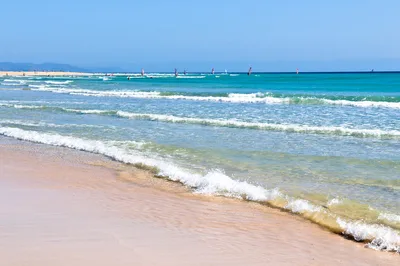
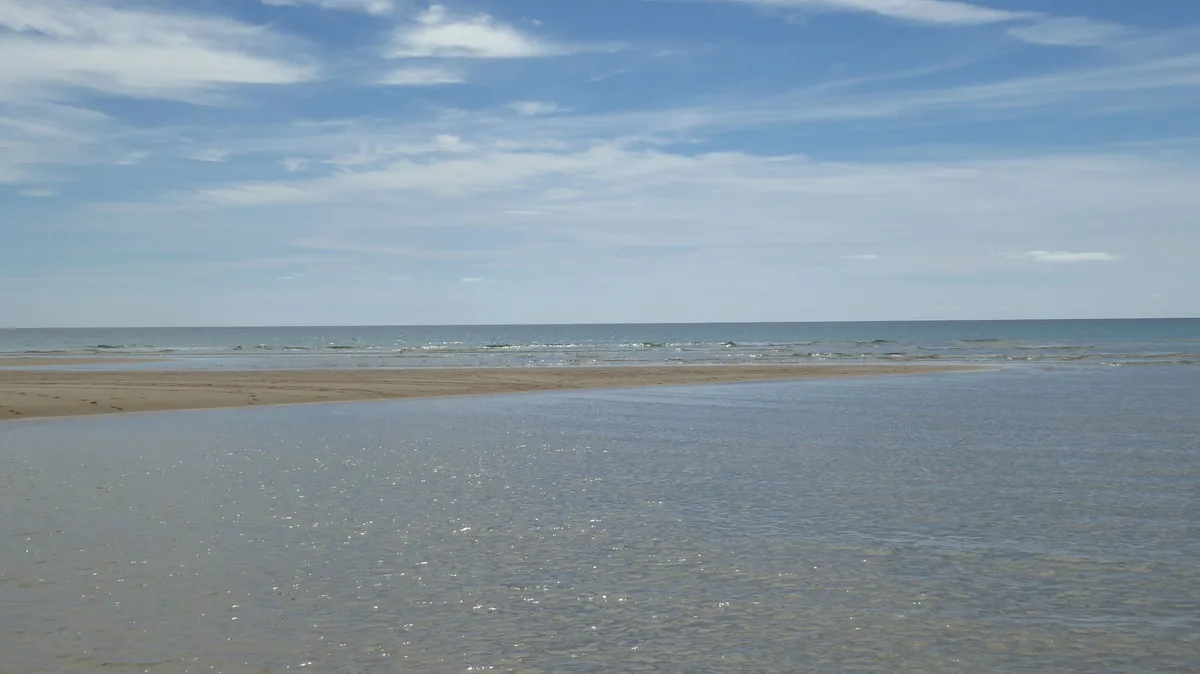
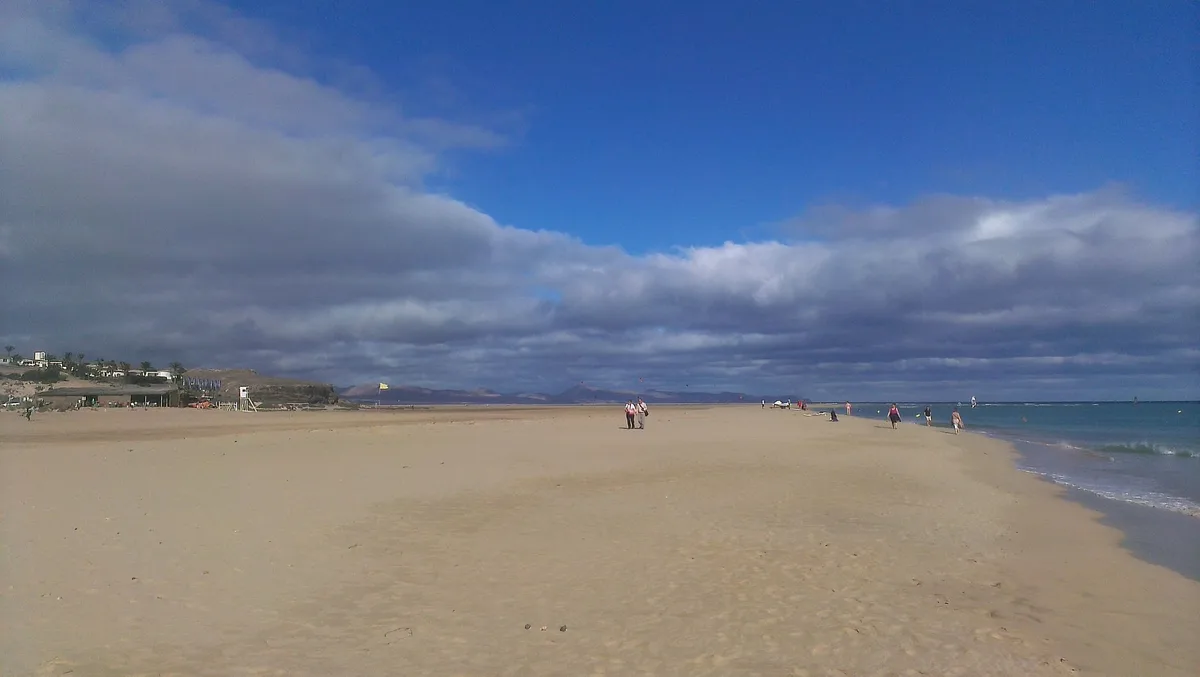
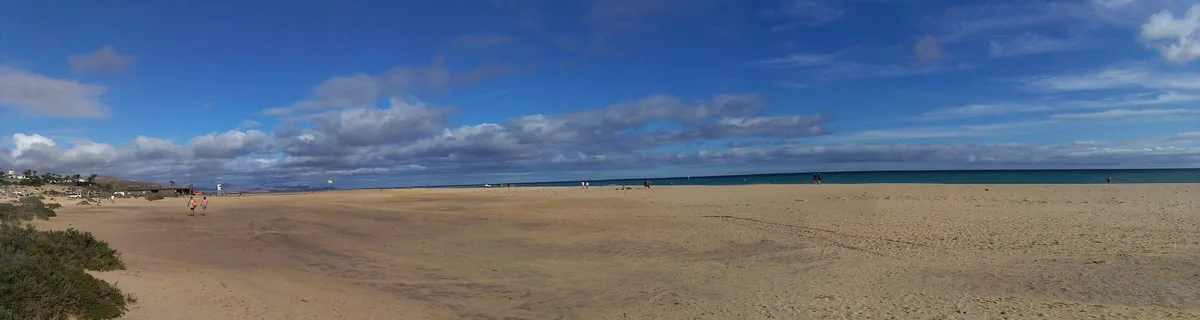
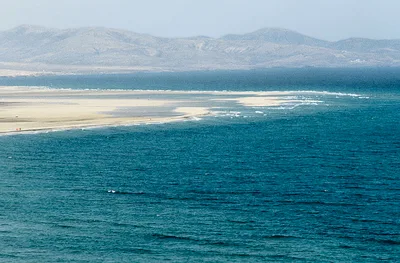
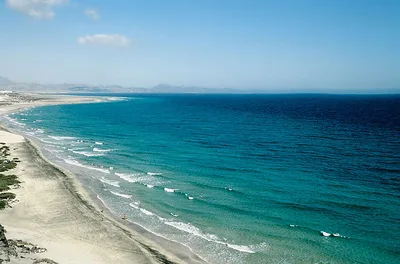
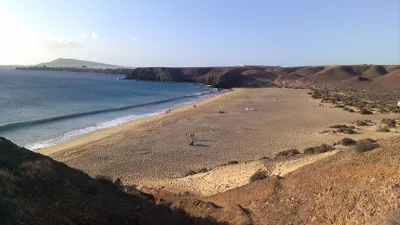
Playa de Sotavento de Jandía sweeps along the southern coast of Fuerteventura in a near-continuous 30-kilometre arc of golden sand, making it one of the most dramatic beach landscapes in the Canary Islands. At low tide, a shallow tidal lagoon opens up behind the sandbar, turning the shoreline into a glassy mirror of turquoise water that stretches as far as you can see. A corridor of dunes backs the beach, rippling inland under the near-constant trade winds that have made this stretch a world windsurfing championship venue. The vibe is wild and open — this is not a resort beach, it's a working natural landscape where the wind has the final say. Natural park regulations govern the entire area, keeping the dunes intact and the atmosphere refreshingly unmanicured.
How to get there
From Costa Calma or the FV-2 highway, the beach is roughly a 10-minute drive. Bus lines 1, 5, 6, and 10 connect Costa Calma and Morro Jable to the beach regularly, making a car optional. Several free car parks line the FV-2 access road — no fees, no apps — but they fill quickly on peak summer days, so arrive early. There is no hard path to the waterline; soft sand means wheelchair access is not practical.
Who it's for
For couples
The vast scale of the beach means you can easily find a quiet stretch of golden sand well away from the action — low tide reveals the lagoon at its most serene, and the dune corridor behind makes for a genuinely wild, romantic backdrop at sunset.
For families
The shallow tidal lagoon at low tide is the standout draw for families — calm, warm, and knee-deep in places — but always check the tide before letting children wade far, as depth varies dramatically and there are no lifeguards on duty anywhere along the beach.
Our take
Playa de Sotavento de Jandía is a serious beach for people who respect what nature actually does here — the wind is not a backdrop, it's the whole point. There are no lifeguards, the lagoon depth shifts with every tide, and rip channels can open where the lagoon meets the open sea, so complacency is not an option. That said, for windsurfers, kitesurfers, and anyone who wants a genuinely wild stretch of golden sand and turquoise water without a resort hotel blocking the view, this place is hard to beat in the Canary Islands. Avoid July and August if you want solitude — the PWA World Championship brings large temporary infrastructure and a surge of visitors to the central section. Come in June or September instead: the wind is still strong, the lagoon is at its most photogenic, and the dune corridor feels like it belongs to you. The free parking, regular bus connections, and easy road access mean there's no logistical excuse not to make the trip. Just bring water, respect the park rules, and watch where the lagoon ends and the open sea begins.
What to do
The beach itself is the main event, but the Morro Jable Promenade — about 12 km away — connects the town to the Matorral lighthouse and a turtle nesting beach, making it a rewarding half-day excursion. Further afield, the Cuevas de Ajuy sea caves at 34 km expose 70-million-year-old ocean floor, the oldest rock outcrop in the Canary Islands and genuinely worth the drive. Pájara Church (Iglesia de Nuestra Señora de Regla), about 22 km away, offers a quiet cultural counterpoint to all that wind and sand. The Mirador del norte Playa Barlovento viewpoint, 6.5 km out, gives you a sweeping elevated perspective over the whole coastline.
The tidal lagoon at low tide is the signature shot — position yourself at the water's edge at golden hour for a wide-angle frame of turquoise water, golden sand, and the dune corridor stretching to the horizon.
The dune backing offers elevated vantage points where the full sweep of the 30-kilometre beach arc becomes visible, especially striking in the warm light of early morning. During July and August, the central beach section fills with the vivid sails of world-championship windsurfers and kitesurfers — a dynamic, colourful contrast against the wild natural landscape.
Where to eat
The nearest dining options are a few kilometres from the beach itself — Tierra Dorada is the closest at 2.7 km, a reasonable stop after a morning on the sand. El Marinero and Marabú sit around 4.8–4.9 km away if you want more choice, while Betancuria, about 6 km out, covers everything from pizza to regional Spanish dishes. Pack a proper lunch if you plan a full day on the beach; there are no restaurants on the sand itself.
Where to stay
The closest hotels cluster around 5–6 km from the beach — H10 Playa Esmeralda and Hotel Esmeralda Maris are both roughly 5.3 km away and well-positioned for daily beach access. R2 Pájara Beach at 5.6 km and Labranda Golden Beach Hotel at 6.2 km are solid alternatives, with Apartamentos Morasol at the same distance rounding out the options.
Photography
Shoot the tidal lagoon at low tide in the early morning, when the turquoise water lies glassy and the golden sand reflects the soft Atlantic light with almost no visitors in frame. For dramatic action shots, the central section of the beach during July and August transforms into a spectacle of colourful kite and windsurf sails against the dune backdrop — a rare chance to capture world-championship-level watersports in a wild natural setting.
Good to know
Natural park rules are firm: no camping, no off-road driving on the dunes, and you must stay behind fencing in protected dune zones — rangers do patrol. There are no lifeguards anywhere on this beach, so self-reliance is essential. Strong thermal winds peak in July and August; in designated zones, kitesurfers and windsurfers have right of way — give them a wide berth. The tidal lagoon looks inviting but its depth changes dramatically with the tide, and shorebreak and rip channels can form where the lagoon meets the open sea — always check conditions before wading far from shore.
GAMES
🕹️ Five minutes of sand?
Three daily games — including the UV simulator set to this beach.
Map
Nearby places
Tierra Dorada
El Marinero
Marabú
Soravento
Betancuria
H10 Playa Esmeralda
Hotel Esmeralda Maris
R2 Pájara Beach
Apartementos Morasol
Labranda Golden Beach Hotel
Cuevas de Ajuy
Pájara Church (Iglesia de Nuestra Señora de Regla)
Morro Jable Promenade
Things to see around Pájara
Cuevas de Ajuy
Sea caves exposing 70-million-year-old ocean floor, the oldest rock outcrop in the Canary Islands.
Pájara Church (Iglesia de Nuestra Señora de Regla)
Morro Jable Promenade
Seafront walkway connecting Morro Jable town to the Matorral lighthouse and turtle nesting beach.
GIFT
🎁 Gift this beach
Its exact coastline, your date, your words — on a print or a PDF you print yourself.
Sotavento de Jandía Beach
THAT DAY
Sotavento de Jandía Beach, Canary Islands
© OpenStreetMap contributors
Clean & decorative, or “That day” with the real sky of your date.
Shipping included 3-6 business days
A question before you order? Contact us
Delivered within minutes on the confirmation page and by email: a ZIP with all 4 print sizes (30×40 cm, 12×16″, 50×70 cm, 18×24″), each as a high-resolution PDF and PNG (300 dpi), plus a screen version. Print at home or at any print shop.
Please complete the delivery address.
Please accept the Terms of Sale.
Almost there — the shop opens very soon.
Secure payment · Printed locally in 30+ countries · 7 languages
Frequently asked
The information on this page is provided for guidance only and may evolve. Access conditions, safety and infrastructure can change without notice. Always check official sources before traveling.
Nearest beaches
Other wild beaches in Canary Islands
More beaches in Canary Islands
Reviews of this beach
- No reviews yet, what a shame — leave yours and share your experience.
Photo credits
Sources and licenses for the photos shown above.
- Photo 1 — rbrands · source · CC BY-ND 2.0
- Photo 2 — Kurt-Georg · source · CC BY-ND 2.0
- Photo 3 — Kurt-Georg · source · CC BY-ND 2.0
- Photo 4 — Kurt-Georg · source · CC BY-ND 2.0
- Photo 5 — LBM1948 · source · CC BY-SA 4.0
- Photo 6 — LBM1948 · source · CC BY-SA 4.0