Saint-Colomban BeachFrance Beach Guide
Wild Atlantic dunes, pale sand, and open skies
About
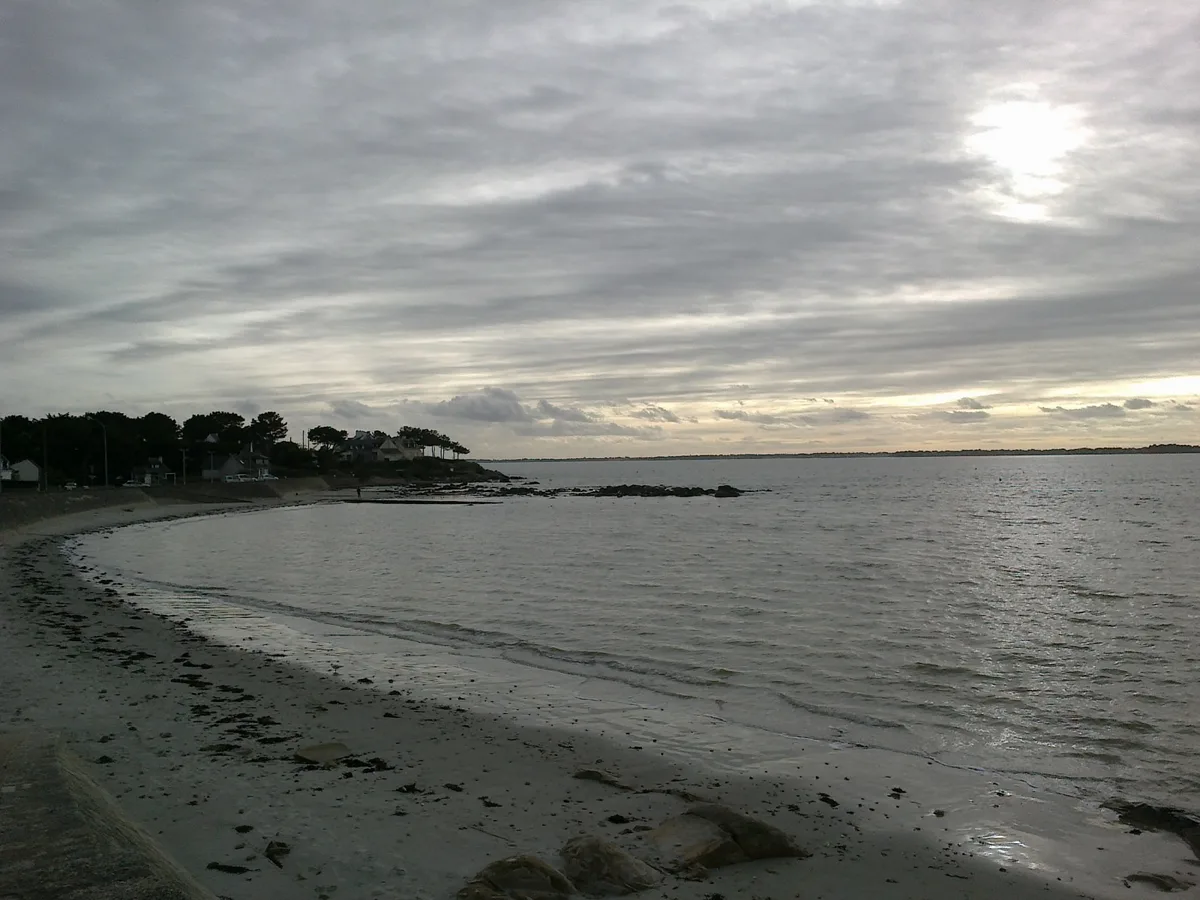
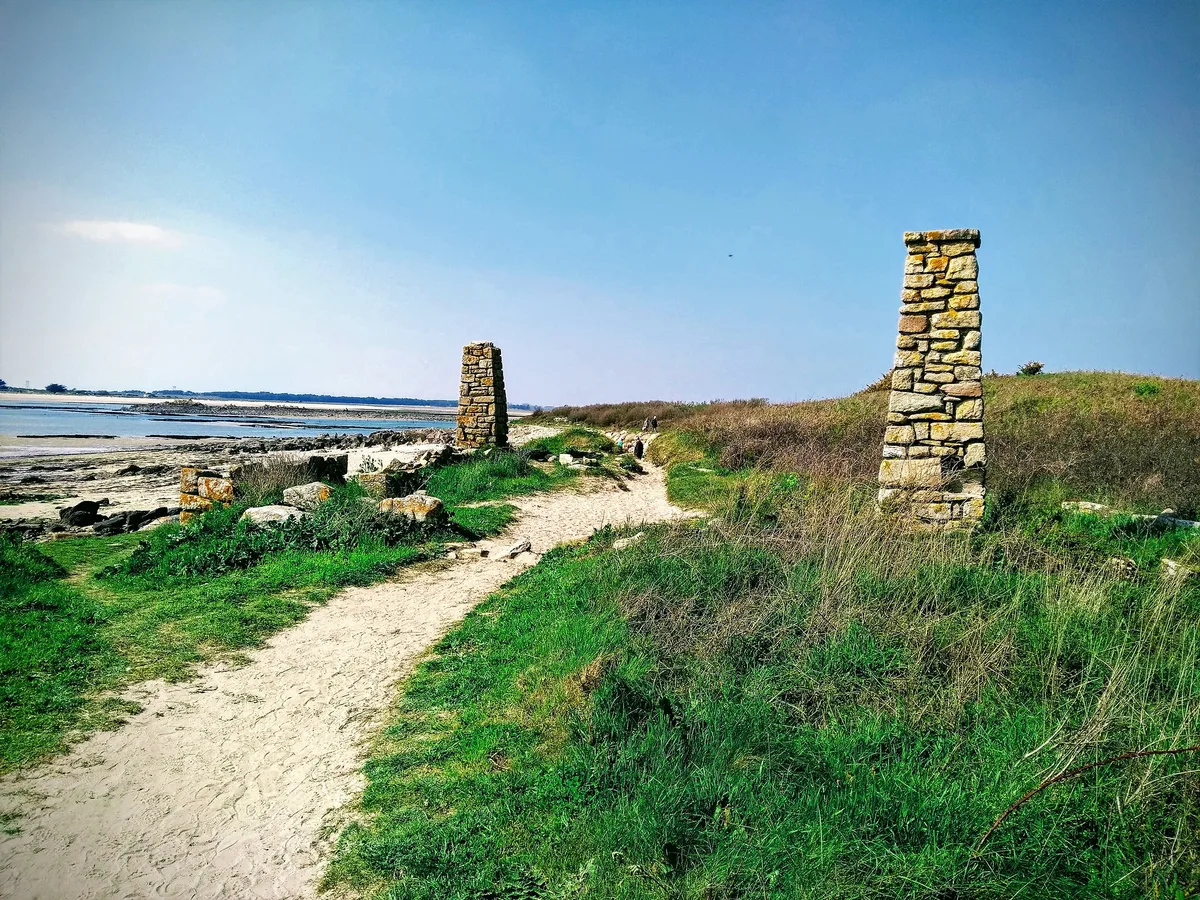
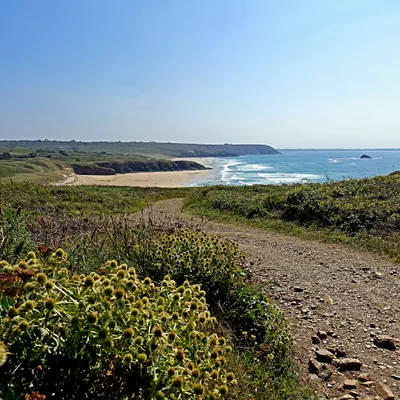
Plage de Saint-Colomban stretches about 500 metres along the southern Brittany coast near Carnac, backed by an intact dune cordon that keeps the landscape feeling raw and unhurried. The pale sand runs wide and flat, meeting turquoise Atlantic water that shifts with every swell rolling in from the open ocean. Exposure to the Atlantic means the sea is rarely glassy — there's almost always movement here, and the air carries that sharp salt edge that Breton beaches do so well. Views across to the Quiberon peninsula give the horizon a dramatic frame, and commercial development is kept deliberately low, so what you see is mostly sky, dune grass, and water. It's a wild beach in the truest sense: no promenade, no beach bars every fifty metres, just a long pale sweep of coast.
How to get there
From Carnac-Plage, Plage de Saint-Colomban is roughly a 5-minute drive — easy access by car on a daily basis. Free parking is available directly at the beach access point, though it fills by mid-morning in July and August, so arrive early in peak season. There is no entry fee. The soft sand approach means dedicated wheelchair infrastructure is not confirmed on site.
Who it's for
For couples
The low commercial density and wild dune backdrop make this a genuinely quiet spot for a long walk along pale sand with Atlantic wind in your face — no resort noise, just open coast and the Quiberon peninsula on the horizon.
For families
Supervised swimming zones are in place during July and August, which gives families a safer window for letting kids in the water — but stay within the flagged areas and keep a close eye outside lifeguard hours, as rip currents are a real risk on this exposed Atlantic beach.
Our take
Rip currents are a genuine hazard at Saint-Colomban — the Atlantic swell is not decorative, and outside the July–August lifeguard window you are swimming unsupervised on an exposed coast. Respect that, and this beach rewards you with something increasingly rare on the Breton coast: about 500 metres of pale sand backed by living dunes, with no resort infrastructure cluttering the view. The turquoise water and Quiberon peninsula views are the real draw, and the low commercial density means you're not fighting for space with beach vendors. Arrive early in summer — the free parking is a bonus, but it goes fast. The Carnac megaliths a short drive away make this a natural base for a few days of coast and prehistory combined. For anyone who wants a wild Atlantic beach without driving to the ends of the earth, Saint-Colomban is a serious option.
What to do
The Alignements de Carnac, just 3 kilometres away, are the world's largest megalithic standing-stone alignments and genuinely worth a half-day. Pair that with the Musée de Préhistoire de Carnac, 4 kilometres out, which holds an extensive Neolithic artefact collection that puts the stones in context. For a change of scenery, the Presqu'île de Quiberon is 7.5 kilometres away — a dramatic Atlantic peninsula with wild Côte Sauvage cliffs that mirror the exposed character of Saint-Colomban itself. The Petit train des Alignements, 1.4 kilometres from the beach, offers a relaxed way to tour the megalithic site.
Frame the intact dune cordon with the pale sand foreground and open turquoise Atlantic behind — best in the soft light of early morning before the beach fills.
The southern end of the beach offers a clear sightline to the Quiberon peninsula, giving you a dramatic layered horizon shot that captures the full wild character of this coast.
Where to eat
Le Sinko is the closest option at just 0.1 kilometres from the beach — handy for a quick bite before or after a swim. La Thalasso, 1.3 kilometres away, is your go-to for Breton crêpes. Further along, Le Bistro and La Canopée are both around 1.6 kilometres out if you want a sit-down meal with more choice.
Where to stay
Les Deux Mers and L'Auberge du Petit Matelot are the closest options, both within 3.2 kilometres of the beach and well-placed for an early morning arrival before the parking fills. For something further out with more facilities, Hôtel La Voile Bleue at 8.2 kilometres or Hôtel du Golf de Saint-Laurent at 9 kilometres are solid choices.
Photography
The intact dune cordon at the back of the beach makes a strong foreground element — shoot toward the Quiberon peninsula at golden hour for the best light on the pale sand and turquoise water. Early morning, before visitors arrive, gives you the full 500-metre stretch almost to yourself with clean, uncluttered compositions.
Good to know
Dogs are prohibited on the beach during July and August — plan accordingly if you're travelling with a pet. Supervised swimming zones are flagged and lifeguarded in July and August only; outside those months, there is no supervision, so swim with real caution. Rip currents are possible when Atlantic swell is running — do not underestimate the sea here, even on a sunny day. Parking fills fast in high summer, so a pre-9am arrival is your best move.
GAMES
🕹️ Five minutes of sand?
Three daily games — including the UV simulator set to this beach.
Map
Nearby places
Le Sinko
La Thalasso
Le Bistro
La Canopée
Restaurant du casino
Les Deux Mers
L'Auberge du Petit Matelot
Centre de vacances Keravel
Hôtel La Voile Bleue
Hôtel du Golf de Saint-Laurent
Alignements de Carnac
Musée de Préhistoire de Carnac
Presqu'île de Quiberon
Things to see around Carnac
Alignements de Carnac
World's largest megalithic standing-stone alignments.
Musée de Préhistoire de Carnac
Prehistoric museum with extensive Neolithic artefact collection.
Presqu'île de Quiberon
Dramatic Atlantic peninsula with wild Côte Sauvage cliffs.
GIFT
🎁 Gift this beach
Its exact coastline, your date, your words — on a print or a PDF you print yourself.
Saint-Colomban Beach
THAT DAY
Saint-Colomban Beach, Brittany
© OpenStreetMap contributors
Clean & decorative, or “That day” with the real sky of your date.
Shipping included 3-6 business days
A question before you order? Contact us
Delivered within minutes on the confirmation page and by email: a ZIP with all 4 print sizes (30×40 cm, 12×16″, 50×70 cm, 18×24″), each as a high-resolution PDF and PNG (300 dpi), plus a screen version. Print at home or at any print shop.
Please complete the delivery address.
Please accept the Terms of Sale.
Almost there — the shop opens very soon.
Secure payment · Printed locally in 30+ countries · 7 languages
Frequently asked
The information on this page is provided for guidance only and may evolve. Access conditions, safety and infrastructure can change without notice. Always check official sources before traveling.
Nearest beaches
Other wild beaches in France
More beaches in Brittany
Reviews of this beach
- No reviews yet, what a shame — leave yours and share your experience.
Photo credits
Sources and licenses for the photos shown above.
- Photo 1 — rene boulay · source · CC BY-SA 3.0
- Photo 2 — muztiko · source · CC BY-ND 2.0
- Photo 3 — marsupilami92 · source · CC BY 2.0
- Photo 4 — TheStarch · source · CC BY 2.0