Anse Rouge BeachFrance Beach Guide
Rust-red rocks, blue Atlantic, zero tourist infrastructure
About
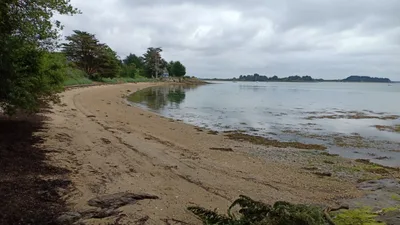
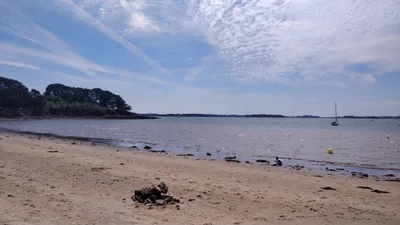
Plage de l'Anse Rouge is a raw, ~150-metre cove on the Île de Noirmoutier where dramatic iron-oxide cliff faces bleed rust and ochre tones down to a mixed sand-and-rock shoreline. The blue Atlantic pushes in with real force here, and the geology is the main event — those reddish rock faces are unlike anything else on the island. There's no café, no sunbed rental, no lifeguard post: just the coastal path, the wind, and the sound of waves meeting stone. Access is on foot only, which keeps the place reliably empty even in high summer. It's a wild stretch of coast that rewards the curious and punishes the unprepared.
How to get there
There is no road access and no parking at the beach itself. Leave your car in Barbâtre village and follow the coastal path — the walk takes roughly 15 minutes. The terrain is rocky and the path can be muddy after rain, so wear proper footwear before you set off. There is no entry fee.
Who it's for
For couples
The empty cove and wild, unmanicured atmosphere make this a genuinely private spot for couples who'd rather explore geology and coastal scenery than fight for a patch of sand. The 15-minute walk in filters out casual visitors and gives the whole place a sense of discovery.
For families
The rocky terrain, difficult path access, and lack of lifeguard supervision make this a poor choice for young children or non-swimmers. Families with older, sure-footed kids who are interested in geology and coastal nature may find it rewarding, but it demands careful supervision throughout.
Our take
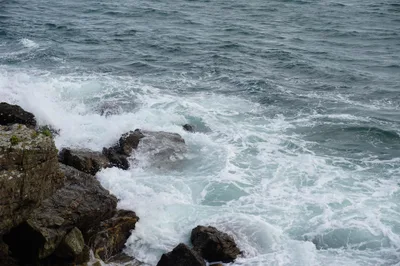
Plage de l'Anse Rouge is not a beach you stumble onto — you earn it with a 15-minute coastal walk and sensible footwear. Come for the geology, not the swimming: the Atlantic swell here is unpredictable, there's no lifeguard, and the rocky cove demands respect. What you get in return is one of the most visually striking stretches of coastline on Noirmoutier, with rust-coloured rock faces that look almost geological theatre against the open blue water. It stays empty because the access filters people out, and that emptiness is the whole point. Avoid it entirely from November through February — Atlantic storms and muddy paths make the approach genuinely dangerous. Time it for June to September, arrive early, and bring a camera with a wide lens.
What to do
The Château de Noirmoutier, a 12th-century castle, is about 2.1km away and worth the short detour after your coastal walk. The Marais salants de Noirmoutier — traditional salt marshes producing the island's famous fleur de sel — are 3.9km from the beach and offer a completely different side of the island. For a dramatic natural spectacle, the Passage du Gois tidal causeway, which links Noirmoutier to the mainland, is 13.6km away. The Petit Train is a gentle option 2.2km out if you're travelling with younger visitors.
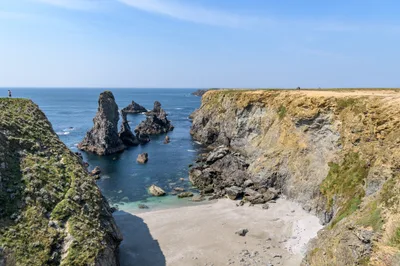
The rust-red iron-oxide cliff faces shot against the blue Atlantic are the defining frame — get low on the mixed sand-and-rock shore to maximise the colour contrast.
The elevated coastal path just before the descent into the cove gives a wide-angle overview of the entire bay, best captured in the hour before sunset when the ochre tones are at their warmest.
Where to eat
L'Anse Rouge restaurant, sharing its name with the cove, is just 0.4km away — a convenient stop after the walk. Les Prateaux is the closest option at 0.3km and doubles as a hotel. La Mer Veille, also 0.4km out, serves crêpes if you want something quick and casual.
Where to stay
Les Prateaux at 0.3km is the most convenient base, putting you within easy reach of the coastal path. Hôtel Saint-Paul and Koat Ar Mor are both under 1km away for a slightly wider choice. La Villa en l'Île (1.1km) and La Chaize (1.2km) offer a bit more distance from the shoreline if you prefer a quieter setting.
Photography
The reddish iron-oxide rock faces are the primary subject — shoot them in the low golden light of early morning or late afternoon when the rust tones saturate and contrast sharply against the blue water. The coastal path approach also offers elevated angles looking down into the cove, making it a strong composition point before you descend to the shore.
Good to know
There is no lifeguard supervision at any point — swim at your own risk and stay alert, as Atlantic swell can reach the rocks unexpectedly. The path becomes slippery after rain, and suitable footwear is essential, not optional. Rocky cove terrain means sandals or flip-flops are a bad idea. Dogs are subject to the island-wide June–September prohibition that likely applies here, so check current local signage before bringing a pet.
GAMES
🕹️ Five minutes of sand?
Three daily games — including the UV simulator set to this beach.
Map
Nearby places
Les Prateaux
La Potinère
La Voile Rouge
La Mer Veille
L'Anse Rouge
Les Prateaux
Hôtel Saint-Paul
Koat Ar Mor
La Villa en l'Île
La Chaize
Things to see around Barbâtre
Passage du Gois
Tidal causeway linking Noirmoutier to the mainland.
Marais salants de Noirmoutier
Traditional salt marshes producing the island's famous fleur de sel.
Château de Noirmoutier
12th-century castle in the island's main town.
GIFT
🎁 Gift this beach
Its exact coastline, your date, your words — on a print or a PDF you print yourself.
Anse Rouge Beach
THAT DAY
Anse Rouge Beach, Pays de la Loire
© OpenStreetMap contributors
Clean & decorative, or “That day” with the real sky of your date.
Shipping included 3-6 business days
A question before you order? Contact us
Delivered within minutes on the confirmation page and by email: a ZIP with all 4 print sizes (30×40 cm, 12×16″, 50×70 cm, 18×24″), each as a high-resolution PDF and PNG (300 dpi), plus a screen version. Print at home or at any print shop.
Please complete the delivery address.
Please accept the Terms of Sale.
Almost there — the shop opens very soon.
Secure payment · Printed locally in 30+ countries · 7 languages
Frequently asked
The information on this page is provided for guidance only and may evolve. Access conditions, safety and infrastructure can change without notice. Always check official sources before traveling.
Nearest beaches
Other wild beaches in France
Reviews of this beach
- No reviews yet, what a shame — leave yours and share your experience.
Photo credits
Sources and licenses for the photos shown above.
- Photo 1 — Zigaar · source · CC BY-ND 2.0
- Photo 2 — Zigaar · source · CC BY-ND 2.0
- Photo 3 — etienne.baudon · source · Public Domain