Guérinière BeachFrance Beach Guide
Golden sands, oyster culture, and serious tides
About
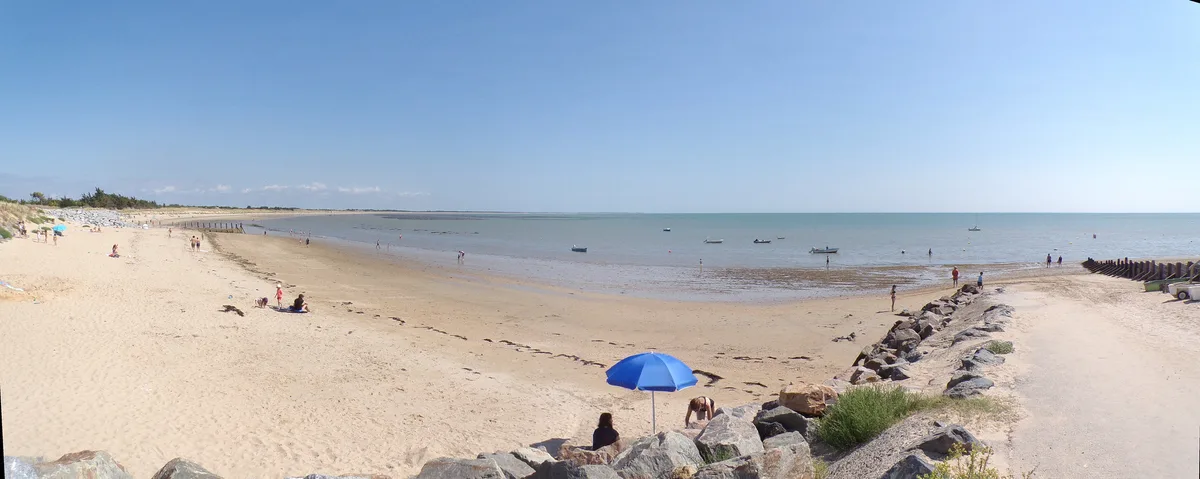
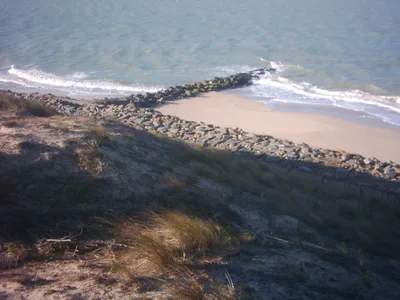
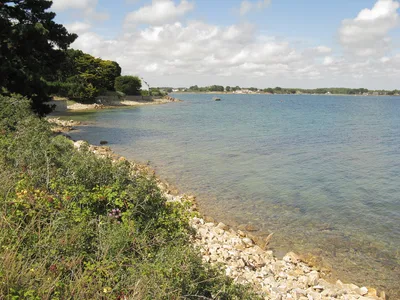
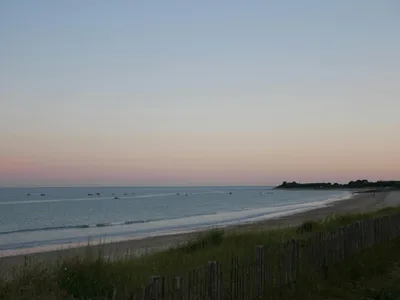
Plage de la Guérinière sits right at the doorstep of its namesake village on the eastern shore of Île de Noirmoutier, Vendée. The beach stretches roughly 600 metres of golden sand backed by the flat geometry of salt-pan dykes — a landscape that feels quietly unlike anywhere else on the Atlantic coast. At mid-to-high tide, the water turns a genuine turquoise, shallow and calm enough for a relaxed paddle. To the north, a harbour jetty frames the scene, and an oyster stall is never far away. The tidal range here is significant: low tide pulls the sea back more than 200 metres, exposing muddy sand that changes the beach's character entirely.
How to get there
The beach sits directly in front of La Guérinière village centre — you can walk from the main street in about three minutes. Free parking is available near the beach access, though spaces can be limited at peak summer weekends, so arriving early pays off. Ferries operated by Compagnie Vendéenne and Yeu Continent connect the island to the mainland, with crossing times ranging from 30 to 60 minutes depending on the route. No entry fee applies.
Who it's for
For couples
The relaxed, local pace and oyster-stall proximity make this an easy afternoon for two — pick up fresh oysters, find a spot on the golden sand at high tide, and let the salt-pan views do the rest.
For families
The flat, easy beach access and calm turquoise water at mid-to-high tide suit younger swimmers well, but keep a close eye on the tide — the sea retreats fast and far, and there is no lifeguard on duty.
Our take
Plage de la Guérinière is not a beach that performs for you — it simply exists, quietly and on its own terms. The tidal range is the single most important thing to understand before you visit: arrive at low tide and you'll find muddy flats stretching to the horizon, unsuitable for swimming and not what the photos suggest. Time it right — mid-to-high tide on a June or July afternoon — and the turquoise water, golden sand, and salt-pan backdrop deliver something genuinely distinctive on the French Atlantic coast. There is no lifeguard, so this is a beach for self-sufficient visitors who read the conditions. The oyster culture, the harbour jetty, the working landscape behind the dunes — these details reward the curious traveller over the passive sunbather. Worth the detour, but only if you check the tides first.
What to do
The Marais salants de Noirmoutier, just 3 kilometres away, are traditional salt marshes still worked by paludiers harvesting fleur de sel — a short cycle or drive that puts the salt-pan backdrop of the beach into vivid context. The Maison des écluses à poissons, 1.4 kilometres from the beach, explores the island's traditional fish-trap heritage. For a broader island perspective, the 12th-century Château de Noirmoutier is 4 kilometres away and houses a local history museum. And if the tides have you curious, the Passage du Gois — a tidal causeway passable only at low water — is 4.2 kilometres away and unlike anything most visitors have seen.
The salt-pan dyke backdrop at mid-tide is the defining shot — golden sand in the foreground, flat geometric marshland behind, turquoise water catching the light between them.
The harbour jetty to the north gives a strong leading-line composition, best in the softer light of early morning before the village wakes up.
Where to eat
Within easy walking distance of the beach, Le Pilotis and La cabane d'Adrien both focus on seafood — fitting choices when oyster stalls are practically on your doorstep. For something more broadly French, Chez Patacol and Le Bon'Homme are both around 0.6–0.7 kilometres away. Le Kiosque rounds out the local options at a similar distance.
Where to stay
Hôtel Des Dunes is the closest option at 1.6 kilometres, keeping you well within reach of the beach. Further afield, Le Général d'Elbée and Fleur de Sel are both around 3.9 kilometres away in the island's main town, offering a more central island base.
Photography
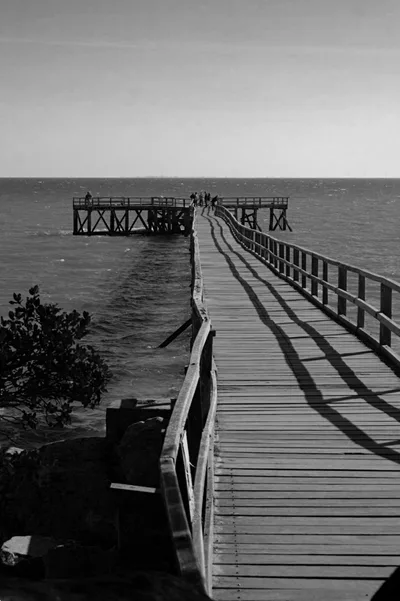
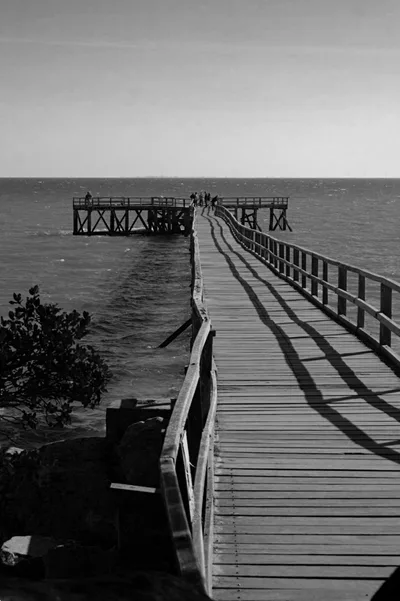
The most striking shot is from the beach looking south along the dyke at mid-tide, when the turquoise water reflects the flat salt-pan landscape behind — golden hour before sunset amplifies the warm tones of the golden sand. The harbour jetty to the north gives a second strong composition, especially at high tide when the water is full and the village roofline sits cleanly above the frame.
Good to know
Always check the tide table before you go — the tidal range is significant, and low tide exposes over 200 metres of muddy sand that's unsuitable for swimming. Plan your visit around mid-to-high tide if swimming is the goal. There is no confirmed lifeguard post on this beach, so swim with appropriate caution. Respect the working oyster-culture areas near the harbour jetty — these are active production zones, not tourist infrastructure.
GAMES
🕹️ Five minutes of sand?
Three daily games — including the UV simulator set to this beach.
Map
Nearby places
Chez Patacol
Le Pilotis
Le Bon'Homme
La cabane d'Adrien
Le Kiosque
Hôtel Des Dunes
Punta Lara
Le Général d'Elbée
Fleur de Sel
L'Île Ô Château
Things to see around La Guérinière
Château de Noirmoutier
12th-century castle in the island's main town with a local history museum.
Marais salants de Noirmoutier
Traditional salt marshes still worked by paludiers producing fleur de sel.
Passage du Gois
Tidal causeway linking Noirmoutier to the mainland, passable only at low tide.
GIFT
🎁 Gift this beach
Its exact coastline, your date, your words — on a print or a PDF you print yourself.
Guérinière Beach
THAT DAY
Guérinière Beach, Pays de la Loire
© OpenStreetMap contributors
Clean & decorative, or “That day” with the real sky of your date.
Shipping included 3-6 business days
A question before you order? Contact us
Delivered within minutes on the confirmation page and by email: a ZIP with all 4 print sizes (30×40 cm, 12×16″, 50×70 cm, 18×24″), each as a high-resolution PDF and PNG (300 dpi), plus a screen version. Print at home or at any print shop.
Please complete the delivery address.
Please accept the Terms of Sale.
Almost there — the shop opens very soon.
Secure payment · Printed locally in 30+ countries · 7 languages
Frequently asked
The information on this page is provided for guidance only and may evolve. Access conditions, safety and infrastructure can change without notice. Always check official sources before traveling.
Nearest beaches
Other relaxed beaches in France
Reviews of this beach
- No reviews yet, what a shame — leave yours and share your experience.
Photo credits
Sources and licenses for the photos shown above.
- Photo 1 — etienne.baudon · source · Public Domain
- Photo 2 — Pippobuono · source · CC BY-SA 4.0
- Photo 3 — Pippobuono · source · CC BY-SA 4.0
- Photo 4 — License pending verification
- Photo 5 — Pippobuono · source · CC BY-SA 4.0