Port-Coton BeachFrance Beach Guide
Monet's wild Atlantic stage — spectacular, not swimmable
About
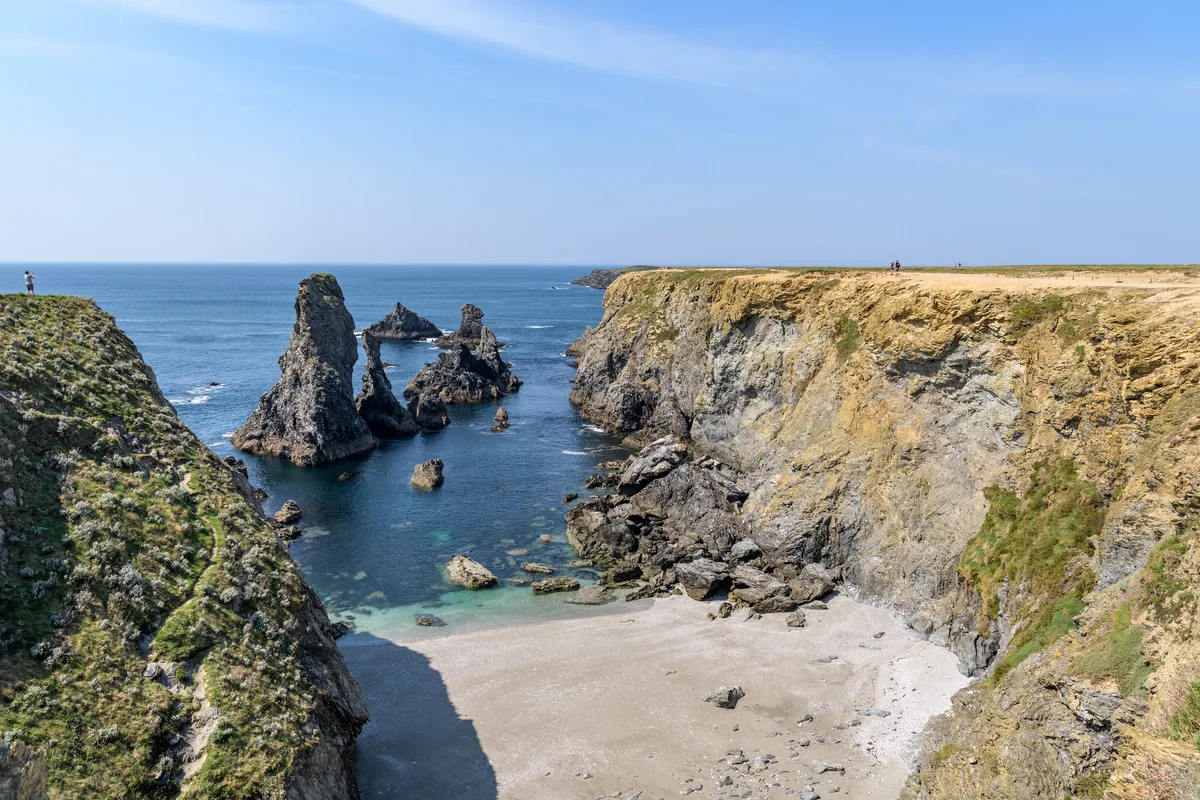
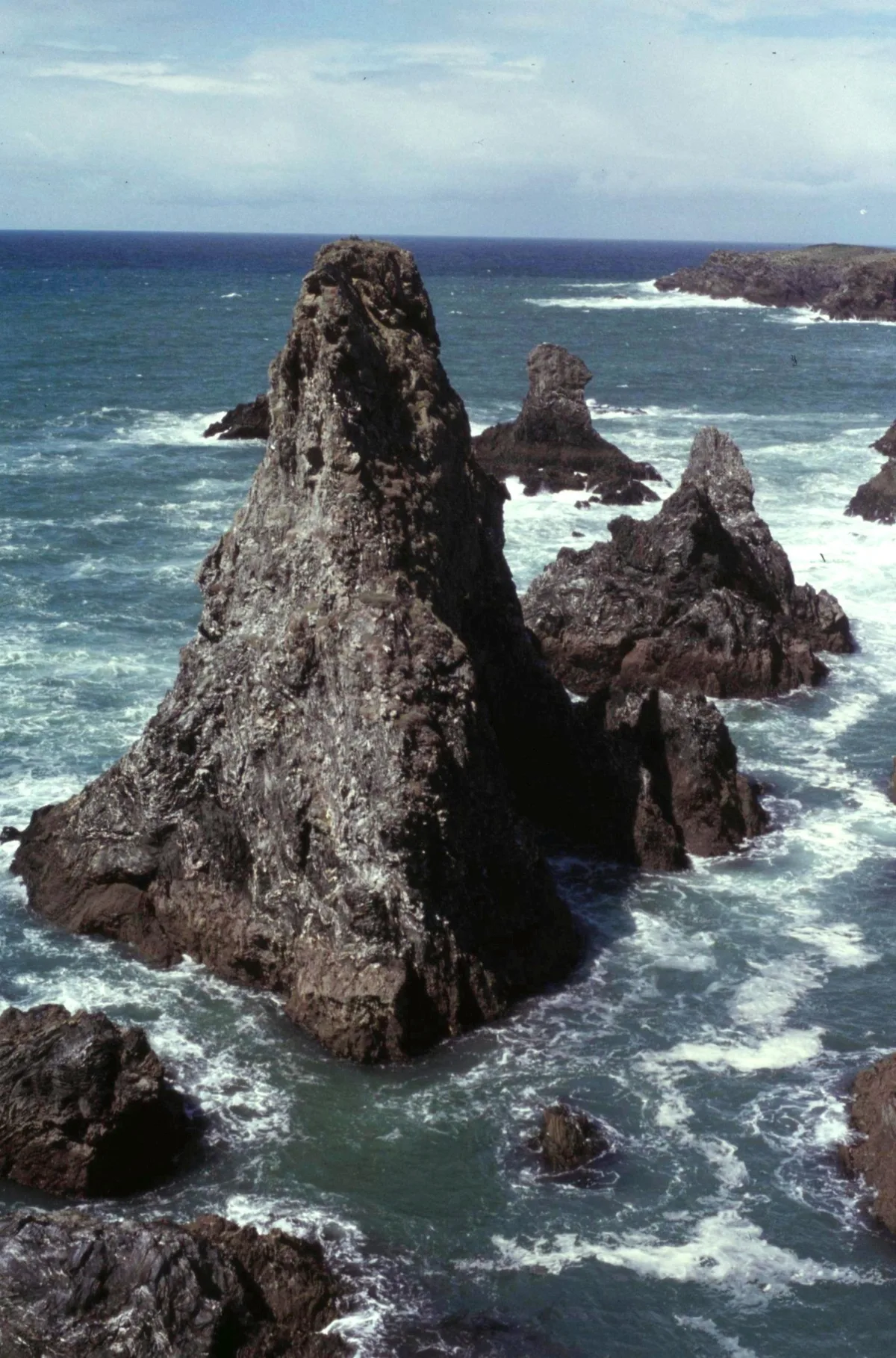
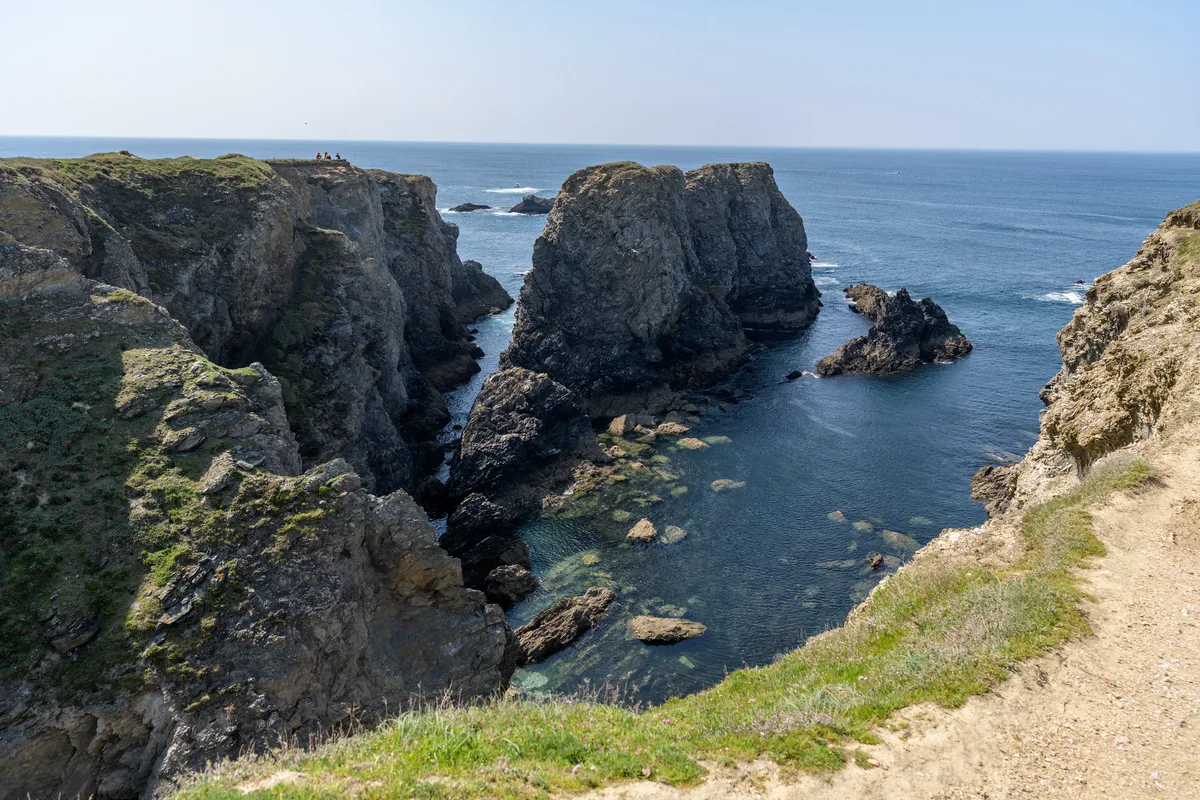
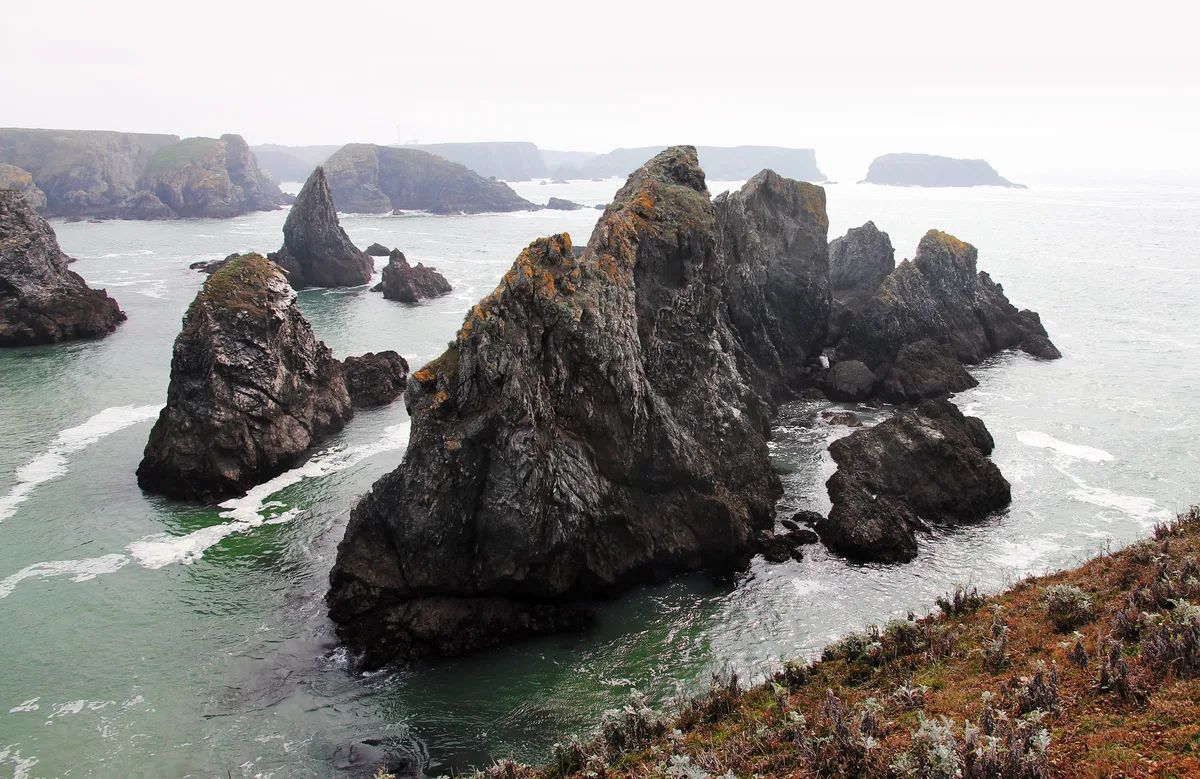
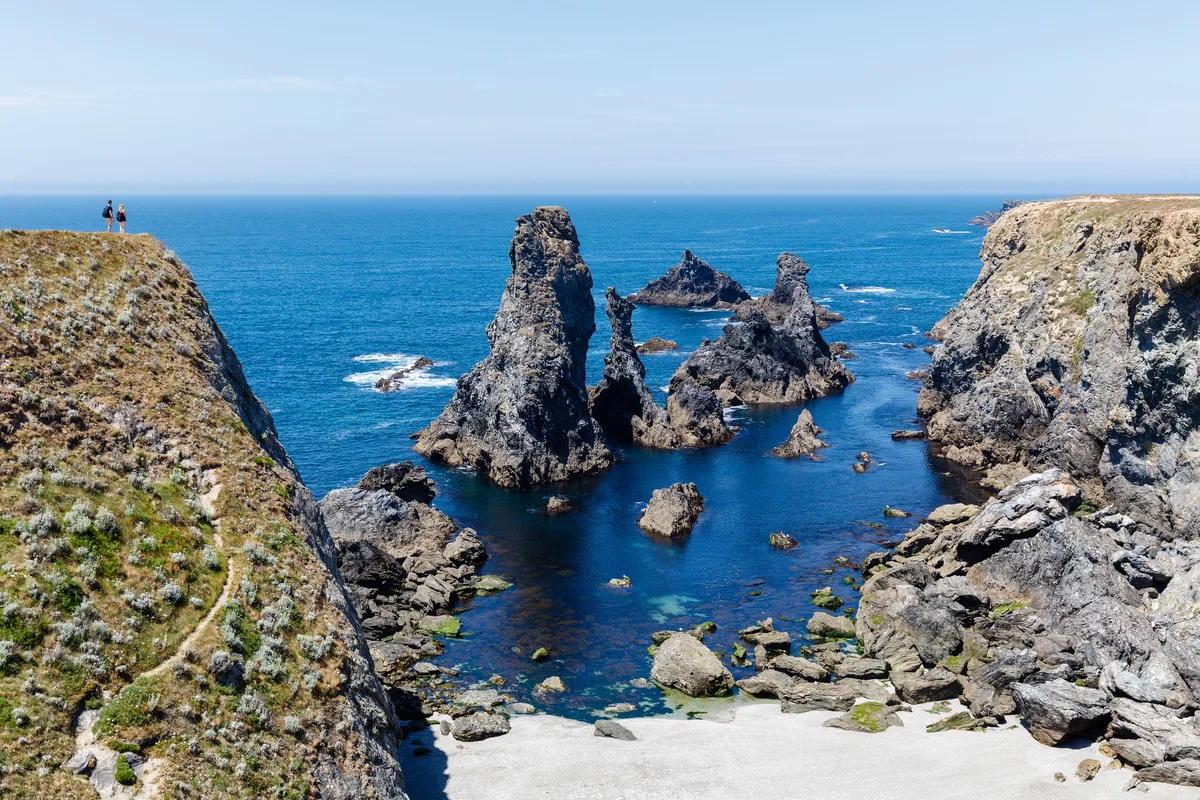
Plage de Port-Coton sits on the Côte Sauvage of Belle-Île-en-Mer, a roughly 200-metre stretch of grey sand and exposed rock platform where the Atlantic doesn't so much arrive as detonate. Needle-like schist stacks pierce the blue water offshore, trailing white foam that Claude Monet famously captured in a series of paintings here in the 1880s. The vibe is raw and elemental — waves surge onto the rock platform without warning, and the air carries a permanent salt-spray mist. This is not a beach you come to lie on; it's a place you come to witness.
How to get there
From the mainland, catch the daily ferry from Quiberon — the crossing takes around 45 minutes and lands you on Belle-Île. From Bangor village, Port-Coton is just a 6-minute drive. A large free car park sits near the viewpoint, so arriving by car is straightforward once you're on the island.
Who it's for
For couples
Port-Coton rewards couples who want spectacle over sunbathing — standing together on the rock platform as Atlantic waves crash against the schist stacks is genuinely arresting, and the Monet connection gives the visit a cultural layer that lingers.
For families
Families with older children who understand cliff-edge safety will find the geology and Monet history genuinely engaging, but this is not a beach for toddlers or young children — the rock platform, unexpected wave surges, and strict no-swimming conditions make it unsuitable for small kids.
Our take
Be clear-eyed about what Port-Coton is: a viewpoint, not a beach in any conventional sense. Swimming is not possible and not permitted — the rock and swell conditions are dangerous, full stop. What it offers instead is something rarer: a front-row seat to the Atlantic at full force, framed by geological structures dramatic enough to stop Monet in his tracks. The grey sand exists mostly as a backdrop to the schist stacks and the blue water churning between them. Come for the spectacle, respect the platform, keep the leash on the dog, and don't push toward the cliff edges. Worth the ferry crossing from Quiberon without question — just don't pack a swimsuit.
What to do
The Grand Phare de Belle-Île, Brittany's tallest lighthouse, is just 1 kilometre away and open to visitors in summer — well worth combining with a Port-Coton visit. A short 1.5-kilometre walk brings you to Plage de Port-Goulphar, an iconic twin-cove beach below basalt stacks that Monet also painted. If you want to stretch further, Plage de Donnant — Belle-Île's dramatic surf beach flanked by schist cliffs — is 4.5 kilometres away.
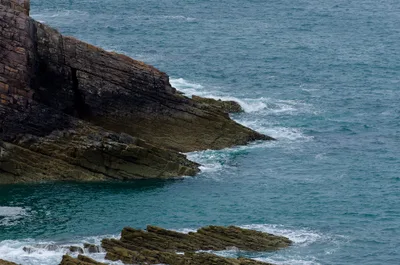
The schist needle stacks framed against deep blue Atlantic water are the signature shot — position yourself low on the rock platform (safely back from the edge) to capture foam surging between the columns.
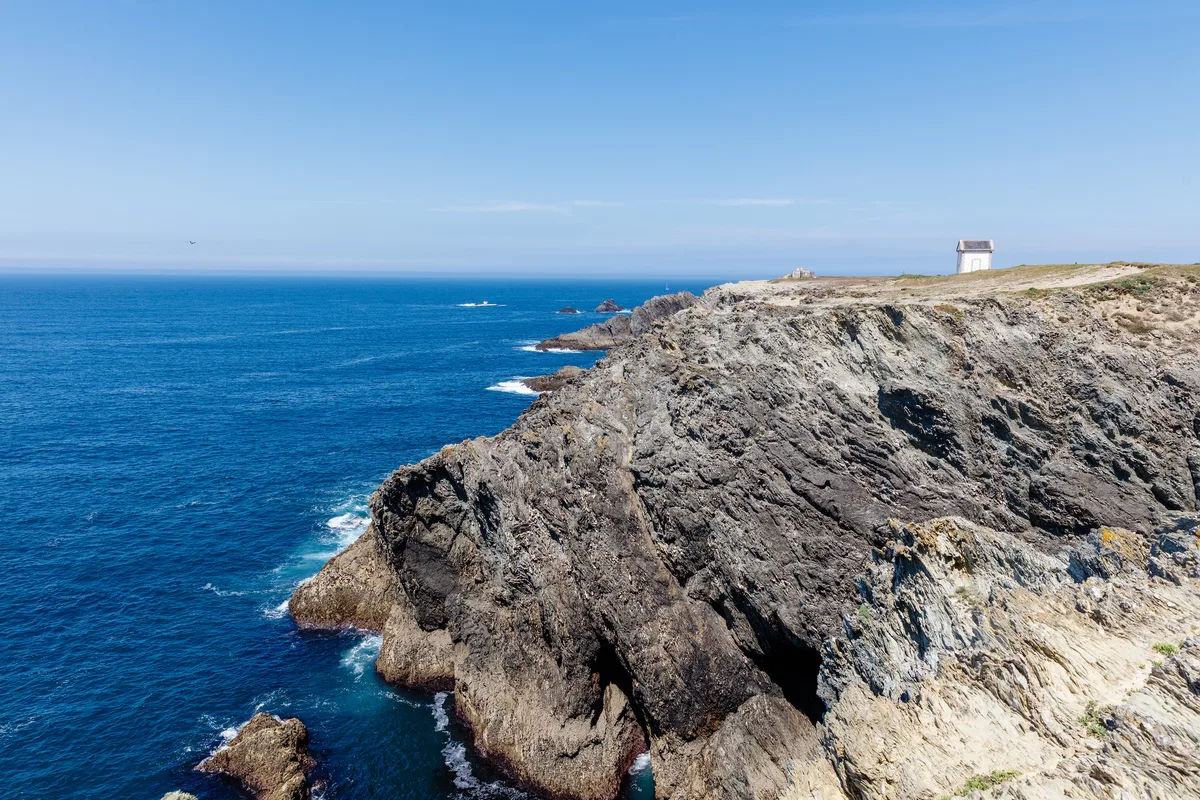
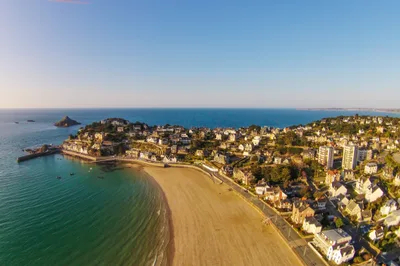
The viewpoint above the car park gives a wider elevated angle showing the full stack formation and the Côte Sauvage coastline stretching south.
Where to eat
Le Marie-Galante, a French restaurant just 0.6 kilometres from the beach, is the closest option for a proper sit-down meal. Le Kervi at 1.5 kilometres and L'Après Soleil at 1.7 kilometres offer further choices without driving far. For something more regional, La Mère Michèle in Sauzon serves crêpes and savoury galettes — a Breton staple worth the 7.2-kilometre trip.
Where to stay
Most hotels are clustered around Le Palais, roughly 8 kilometres from Port-Coton. Citadelle Vauban is a standout option at 8 kilometres, occupying the island's historic Vauban fortress. Hôtel Atlantique and Grand Hôtel de Bretagne are both around 7.9 kilometres away if you prefer a more classic hotel stay.
Photography
The schist needle stacks are most dramatic when shot from the rock platform at golden hour, with Atlantic foam swirling around their bases against the deep blue water. Morning light from the eastern approach gives cleaner contrast on the grey rock faces — arrive before the daytrippers for unobstructed compositions.
Good to know
Swimming is strictly prohibited — dangerous rock formations and powerful Atlantic swell make entering the water genuinely life-threatening. Waves can surge unexpectedly onto the rock platform, and spray makes surfaces slippery even on calm-looking days; stay well back from cliff edges at all times. Dogs are welcome on the rock platform but must be kept on a leash, especially near the cliff edges. Avoid visiting between December and February, when Atlantic swells make the platform hazardous.
GAMES
🕹️ Five minutes of sand?
Three daily games — including the UV simulator set to this beach.
Map
Nearby places
Le Marie-Galante
Le Kervi
L’Après Soleil
Villa Simone
La Mère Michèle
Hôtel Saint-Amant
Grand Hôtel de Bretagne
Hôtel Atlantique
Citadelle Vauban
Hôtel Le Cardinal
Things to see around Bangor
Grand Phare de Belle-Île
The tallest lighthouse in Brittany, open to visitors in summer.
Plage de Port-Goulphar
Iconic twin-cove beach below basalt stacks, painted by Monet.
Plage de Donnant
Belle-Île's iconic surf beach with dramatic schist cliffs.
GIFT
🎁 Gift this beach
Its exact coastline, your date, your words — on a print or a PDF you print yourself.
Port-Coton Beach
THAT DAY
Port-Coton Beach, Brittany
© OpenStreetMap contributors
Clean & decorative, or “That day” with the real sky of your date.
Shipping included 3-6 business days
A question before you order? Contact us
Delivered within minutes on the confirmation page and by email: a ZIP with all 4 print sizes (30×40 cm, 12×16″, 50×70 cm, 18×24″), each as a high-resolution PDF and PNG (300 dpi), plus a screen version. Print at home or at any print shop.
Please complete the delivery address.
Please accept the Terms of Sale.
Almost there — the shop opens very soon.
Secure payment · Printed locally in 30+ countries · 7 languages
Frequently asked
The information on this page is provided for guidance only and may evolve. Access conditions, safety and infrastructure can change without notice. Always check official sources before traveling.
Nearest beaches
Other wild beaches in France
More beaches in Brittany
Reviews of this beach
- No reviews yet, what a shame — leave yours and share your experience.
Photo credits
Sources and licenses for the photos shown above.