Königsstuhl BeachGermany Beach Guide
Chalk cliffs, wild Baltic coast, geology at its rawest
 🎁 Gift idea: the star map of your most beautiful night↓
About
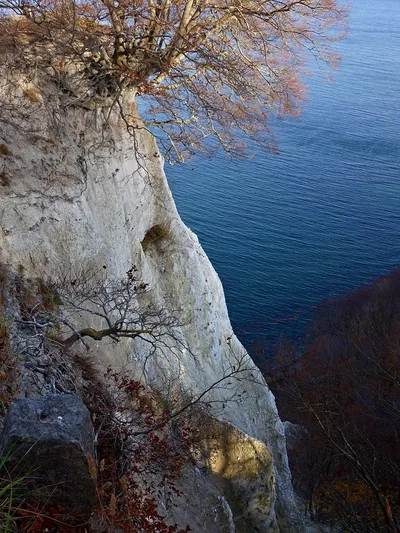
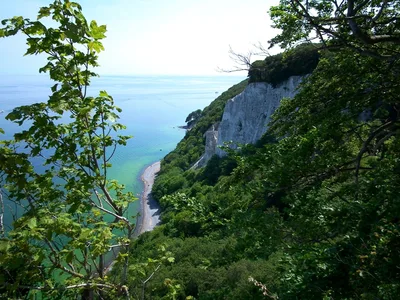
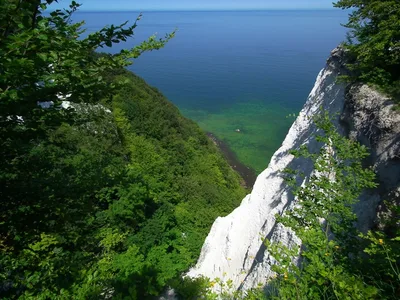
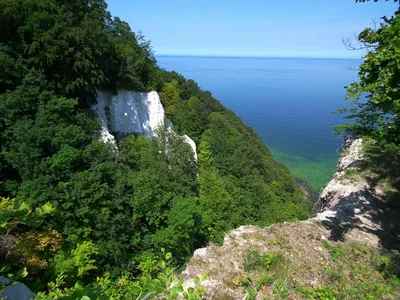
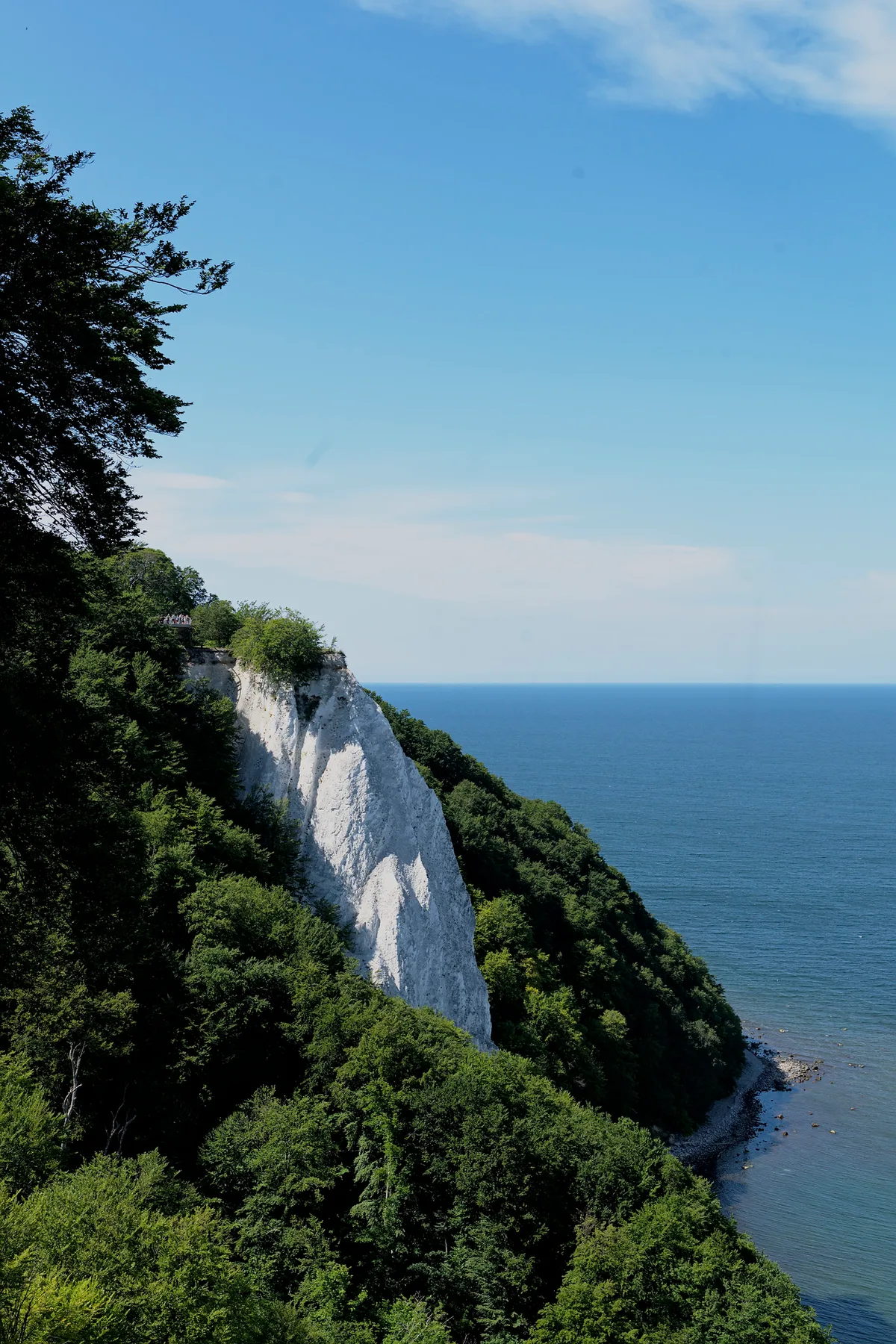
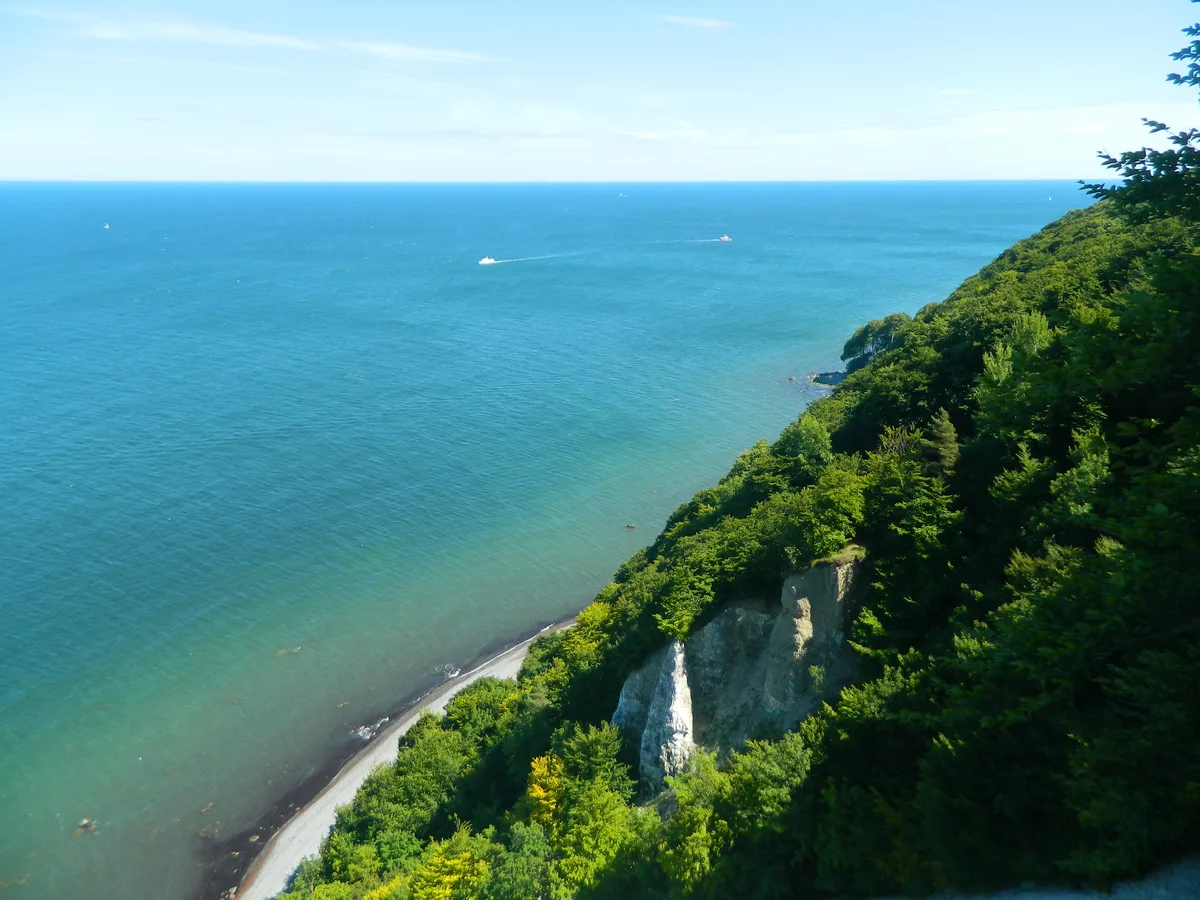
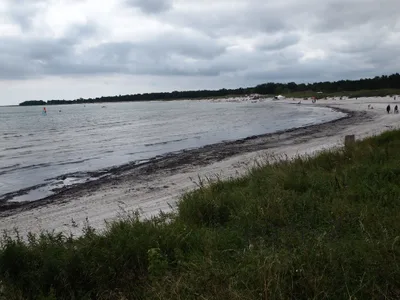
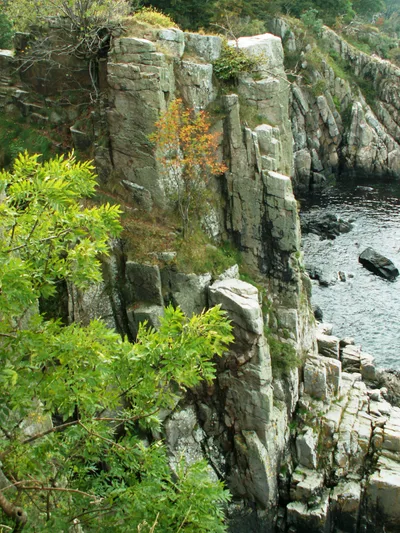
Königsstuhl rises 118 metres above the Baltic Sea as a sheer chalk cliff face — one of Germany's most dramatic coastal landmarks. The narrow base beach below is pebble and white sand, lapped by blue Baltic water, but it's the geology that commands attention: the cliffs are actively eroding, shedding chalk in real time. Above, a UNESCO World Heritage beech forest crowns the headland, the same scene that inspired Caspar David Friedrich's defining Romantic-era paintings. The vibe is wild and elemental — this is not a sunbathing destination, it's a place where nature is visibly, audibly at work.
How to get there
Private cars must park at Hagen (paid parking, €8/day, motorhome spaces also available) — vehicles are restricted beyond this point. From Hagen you can take the shuttle bus or hike 45 minutes to the Nationalpark-Zentrum; from Sassnitz, a bus runs daily, or you can hike the full 180-minute coastal trail. Entry to the Nationalpark-Zentrum, Skywalk, exhibition, cinema and guided tours costs €12 per adult. The cliff-base beach is reached only by a steep trail from the top — check at the visitor centre before descending, as access is subject to closure after rockfalls.
Who it's for
For couples
The clifftop trail through the UNESCO beech forest to Stubbenkammer is one of the most atmospheric walks on the German Baltic coast — the combination of ancient woodland and sheer white chalk dropping to blue water below is hard to match for a dramatic afternoon out.
For families
The Nationalpark-Zentrum's exhibitions, cinema and guided tours give younger visitors real context for what they're seeing, but note that the cliff-base trail is steep and not suitable for small children, and the water is off-limits for swimming — plan the day around the clifftop paths and the visitor centre.
Our take
Safety first, and it cannot be overstated here: the water at Königsstuhl is off-limits. Strong currents and active rockfall make the cliff base genuinely hazardous, and the base beach closes without notice after falls — this is not a swimming beach by any definition. What Königsstuhl is, unambiguously, is one of the most geologically and culturally loaded coastal sites in Germany: 118 metres of living chalk cliff, a UNESCO forest, and a direct line to the Romantic movement's most iconic landscape painting. Come for the hiking, the viewpoints, and the raw spectacle of a coastline that is visibly changing. Avoid July and August if you can — shuttle bus queues at Hagen get long and the Stubbenkammer viewpoint gets packed. June or September gives you the same drama with far fewer people sharing it. Worth the detour from anywhere on Rügen.
What to do
The Nationalpark-Zentrum Königsstuhl, just 100 metres from the cliff edge, runs geology and ecology exhibitions alongside a cinema and guided tours — a solid hour well spent before you step outside. From there, the Stubbenkammer viewpoint (0.5 km) delivers the classic panorama over the chalk coast that Friedrich painted two centuries ago. Victoria-Sicht, a further 300 metres along the clifftop path, offers a slightly different angle on the same white cliff faces. The marked hiking trails through the UNESCO beech forest are the real draw for anyone who wants more than a viewpoint selfie.
The Stubbenkammer viewpoint frames the full 118-metre chalk cliff face against open blue Baltic water — the exact composition Friedrich painted, and still the most powerful angle on the coast.
The cliff-base beach, when accessible, puts you beneath a wall of white chalk that dwarfs everything around it; shoot looking upward in morning light for scale. The UNESCO beech forest path between Hagen and the viewpoint offers dense green canopy shots that contrast sharply with the white cliffs waiting at the end.
Where to eat
The on-site Bistro (0.2 km) covers coffee, tea, cake and juice — useful for a quick refuel before or after the cliff trail. Baumhaus Hagen (2.2 km) and Inselglück (3 km) are the nearest sit-down options with regional cooking, while Seekiste (3.2 km) and Restaurant am Meer (3.6 km) round out the local choices if you're heading back towards Sassnitz.
Where to stay
Baumhaus Hagen (2.2 km) doubles as both restaurant and hotel, making it the most convenient base for an early start on the trails. Hotel Schloss Ranzow (2.3 km) and Hotel Pension Nordwind (3.2 km) are close alternatives, with Parkhotel del Mar and Meeresgruß both within 6.2 km for those who prefer a bit more distance from the day-visitor flow.
Photography
The Stubbenkammer viewpoint at first light gives you the chalk cliffs glowing against blue Baltic water with minimal visitors — arrive before 10:00 to beat the shuttle buses. For a different perspective, the steep trail to the cliff base (when open) puts you directly beneath the 118-metre chalk face, where the scale becomes genuinely hard to frame.
Good to know
Stay strictly on marked paths at the cliff edge — active erosion means the ground can give way without warning. Do NOT enter the water at the cliff base: strong currents and falling debris make swimming at Königsstuhl genuinely dangerous, and the base beach closes periodically after rockfalls. No rock collecting is permitted anywhere in the national park, and dogs are prohibited in the core zone. The Nationalpark-Zentrum (daily 10:00–18:00, seasonal variation) is your first stop — staff can tell you whether the cliff-base trail is open that day.
GAMES
🕹️ Five minutes of sand?
Three daily games — including the UV simulator set to this beach.
Map
Nearby places
Bistro
Baumhaus Hagen
Inselglück
Seekiste
Restaurant am Meer
Baumhaus Hagen
Hotel Schloss Ranzow
Hotel Pension Nordwind
Parkhotel del Mar
Meeresgruß
Nationalpark-Zentrum Königsstuhl
Stubbenkammer viewpoint
Sassnitz ferry port
Things to see around Sassnitz
Nationalpark-Zentrum Königsstuhl
Visitor centre for Jasmund National Park with geology and ecology exhibits.
Stubbenkammer viewpoint
Classic clifftop viewpoint over the chalk coast, subject of Friedrich's painting.
Sassnitz ferry port
Working ferry terminal with connections to Sweden and Denmark.
GIFT IDEA · MARCEL ET LES BLONDES
🎁 Give a moment, not a thing


What’s the occasion?

 💑 Dating anniversaryTwo dates, two starry skies
 💍 Wedding anniversaryCotton, silver, golden…
 🎂 BirthdayTheir own newspaper front page
 👶 New babyThe stars on the day they were bornValentine’s DayOur two moons, as a print
Shipping €5, free from €49 · made to order, shipped within 48 hAlso: our engraved wooden bracelets, €23.90 →
Frequently asked
The information on this page is provided for guidance only and may evolve. Access conditions, safety and infrastructure can change without notice. Always check official sources before traveling.
Nearest beaches
Other wild beaches in Germany
More beaches in Baltic Sea
Reviews of this beach
- No reviews yet, what a shame — leave yours and share your experience.
Photo credits
Sources and licenses for the photos shown above.
- Photo 1 — Chpagenkopf · source · CC BY-SA 3.0
- Photo 2 — 7alaskan · source · CC BY-SA 3.0
- Photo 3 — 7alaskan · source · CC BY-SA 3.0
- Photo 4 — 7alaskan · source · CC BY-SA 3.0
- Photo 5 — marsupium photography · source · CC BY-SA 2.0
- Photo 6 — Ruben Holthuijsen · source · CC BY 2.0