Coumeenoole BeachIreland Beach Guide
Wild Atlantic cove where cliffs meet cinematic gold
 🎁 Gift idea: the star map of your most beautiful night↓
About
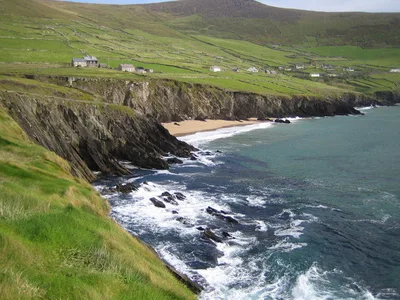
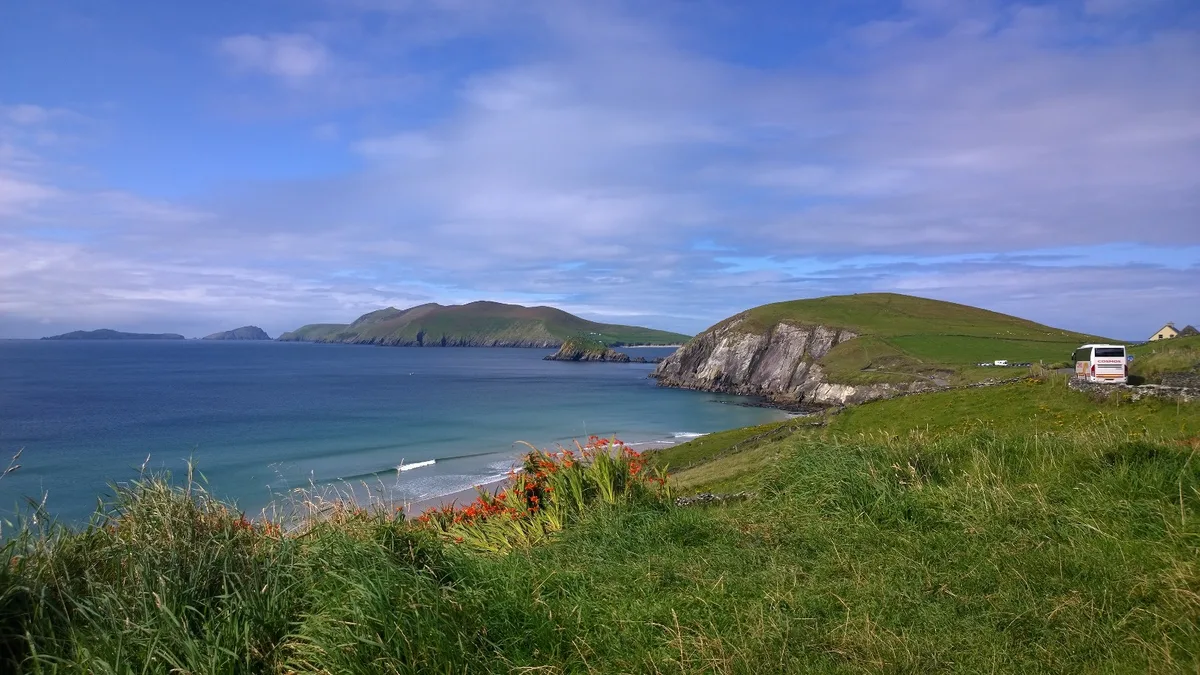
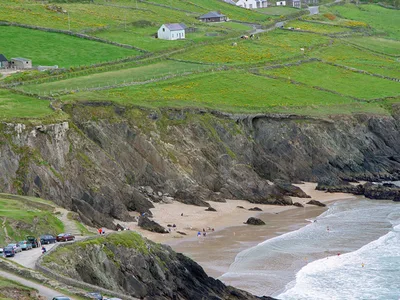
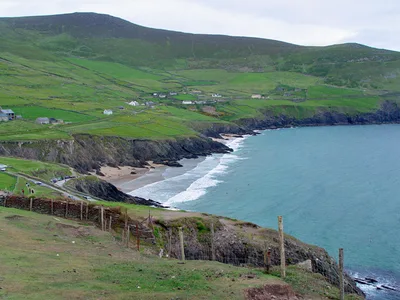
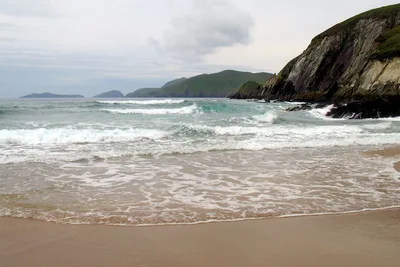
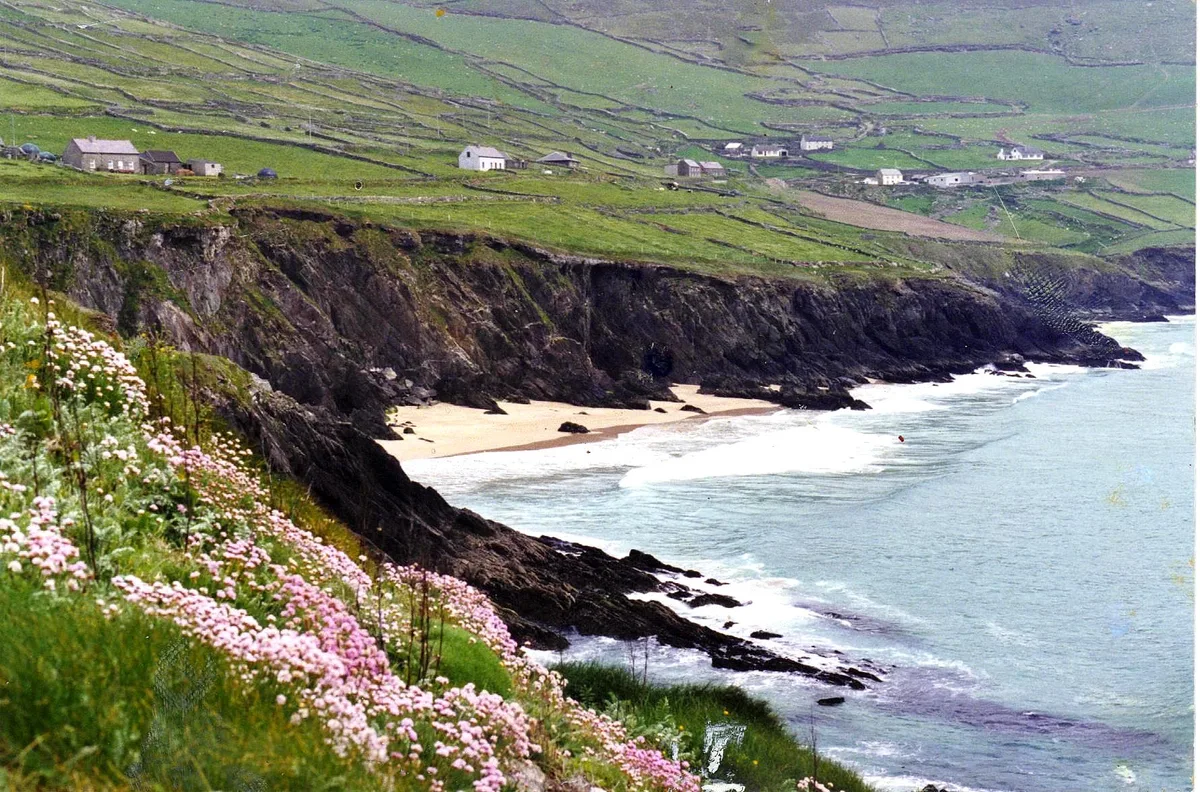
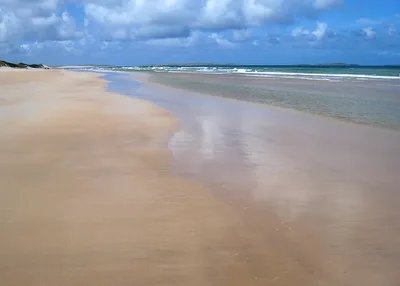
Coumeenoole Beach is a compact, cliff-enclosed cove on the Dingle Peninsula in County Kerry, Ireland — roughly 200 metres of golden sand backed by dramatic Atlantic headlands. The blue ocean here is raw and powerful, driven by an open-ocean swell that shapes the beach's wild character. It's best known as a filming location for Ryan's Daughter and as a highlight stop on the Slea Head Drive, where the Blasket Islands sit on the horizon like a faded watercolour. The air carries salt and the sound of waves crashing against the cliffs, and on clear days the light is extraordinary. This is not a swimming beach — it's a place to stand, look, and feel the full weight of the Atlantic.
How to get there
Most visitors arrive by car from Dingle town, a 35-minute drive along the Slea Head Drive. From Dunquin village it's just 5 minutes. A small, free roadside car park serves the beach, but spaces are limited — coaches and large campervans are strictly prohibited on the narrow cliff road. The descent to the beach is via a cliff path that requires care, especially with dogs.
Who it's for
For couples
The raw, windswept drama of Coumeenoole — golden sand, towering cliffs, and that unbroken view to the Blasket Islands — makes it a genuinely striking place to share with someone. Come early before other visitors arrive and you'll have the cove almost to yourselves.
For families
Families with older children who can manage the steep cliff path will find the beach rewarding as a stop on the Slea Head Drive, and the nearby 'Hold a Baby Lamb' experience 2km away adds a memorable detour. Young children and toddlers should be kept well clear of the water — the swell is dangerous with no exceptions.
Our take
Do not swim here — that is the first and most important thing to know about Coumeenoole. The Atlantic swell is powerful and the currents are genuinely dangerous; this is a beach for looking, not entering the water. With that understood, it's one of the most visually striking coves on the Irish coast: golden sand, sheer cliffs, blue open ocean, and the Blasket Islands sitting on the horizon like a scene from another century. It earns its place on the Slea Head Drive not through facilities or comfort — there are none — but through sheer, unfiltered Atlantic drama. Come between June and September, arrive early to secure one of the limited parking spaces, and leave the large vehicle at home. Worth the detour.
What to do
From the beach, the view across to Great Blasket Island — an uninhabited island with a remarkable Irish-language literary tradition — is reason enough to linger. Dunquin Pier, just 2km away, is the departure point for Blasket Island ferries and a place to watch traditional naomhóg currachs. The Blasket Centre (Ionad an Bhlascaoid), 8.7km from the beach, is an award-winning museum dedicated to the life and literature of the islanders. Dunmore Head and Slea Head, both within 1.5km, extend the dramatic coastal walk.
The cliff-top viewpoint above the cove is the signature shot — frame the golden sand arc against the blue Atlantic with the Blasket Islands in the distance.
Down on the beach, shooting upward toward the enclosing cliff walls gives a dramatic sense of scale. The Ryan's Daughter connection adds a cinematic layer that rewards wide, moody compositions in soft morning or late-afternoon light.
Where to eat
An tIascaire, 2.6km away, is the closest option after a windswept visit. Stonehouse at 3.7km and The Skipper — a French restaurant 7.5km out — are both worth the short drive along the peninsula. Pack something to eat at the beach itself; there are no facilities on-site.
Where to stay
Old Irish Farmhouse, just 2km from the beach, puts you closest to the cove and the Slea Head scenery. For more amenities, Dingle Bay Hotel, The Lantern Townhouse, and Benner's Hotel are all around 13–14km away in Dingle town.
Photography
The cliff tops above the cove offer the classic wide shot — golden sand framed by dark rock walls with the Blasket Islands on the horizon — and the light is best in the late afternoon when it rakes across the Atlantic from the west. Down on the beach, the interplay of blue ocean, golden sand, and cliff shadow makes for strong compositions even on overcast days.
Good to know
Do NOT enter the water under any circumstances — the Atlantic swell and currents here are extremely dangerous and swimming is strictly prohibited. The cliff path descent can be slippery when wet, so wear grip-soled footwear and stick to the marked path. Large vehicles including coaches and oversized campervans must not attempt the narrow approach road. Dogs are welcome but need careful handling on the cliff descent.
GAMES
🕹️ Five minutes of sand?
Three daily games — including the UV simulator set to this beach.
Map
Nearby places
an tIascaire
Stonehouse
The Skipper
Tigh T.P.
Danno's Restaurant
Old Irish farmhouse
Dingle Bay Hotel
The Lantern Townhouse
Benner's Hotel
Great Blasket Island
Dunquin Pier
Blasket Centre (Ionad an Bhlascaoid)
Things to see around Dunquin
Great Blasket Island
Uninhabited island with ferry access from Dunquin, famous for its Irish-language literary tradition.
Dunquin Pier
Traditional naomhóg (currach) launching pier and departure point for Blasket Island ferries.
Blasket Centre (Ionad an Bhlascaoid)
Award-winning interpretive centre dedicated to the life and literature of the Blasket Islanders.
GIFT IDEA · MARCEL ET LES BLONDES
🎁 Give a moment, not a thing
What’s the occasion?
 💑 Dating anniversaryTwo dates, two starry skies
 💍 Wedding anniversaryCotton, silver, golden…
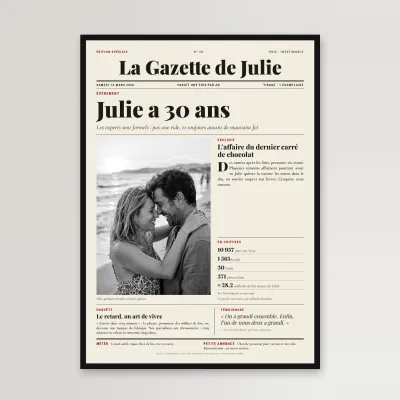 🎂 BirthdayTheir own newspaper front page
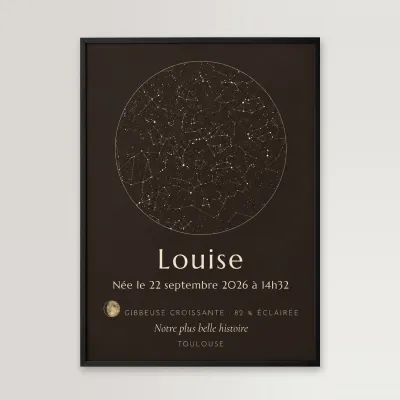 👶 New babyThe stars on the day they were bornValentine’s DayOur two moons, as a print
Shipping €5, free from €49 · made to order, shipped within 48 hAlso: our engraved wooden bracelets, €23.90 →
Frequently asked
The information on this page is provided for guidance only and may evolve. Access conditions, safety and infrastructure can change without notice. Always check official sources before traveling.
Nearest beaches
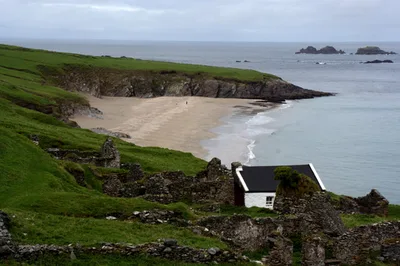
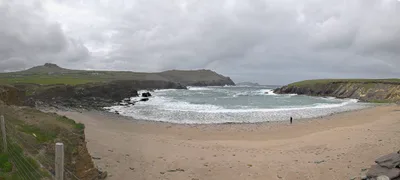
Other wild beaches in Ireland
More beaches in Irish Coast
Reviews of this beach
- No reviews yet, what a shame — leave yours and share your experience.
Photo credits
Sources and licenses for the photos shown above.
- Photo 1 — Nigel Cox · source · CC BY-SA 2.0
- Photo 2 — James Emmans · source · CC BY-SA 2.0
- Photo 3 — Peter Church · source · CC BY-SA 2.0
- Photo 4 — Peter Church · source · CC BY-SA 2.0
- Photo 5 — Sharon Loxton · source · CC BY-SA 2.0
- Photo 6 — D Gore · source · CC BY-SA 2.0