Clogher BeachIreland Beach Guide
Wild Atlantic drama where cliffs meet turquoise water
 🎁 Gift idea: the star map of your most beautiful night↓
About
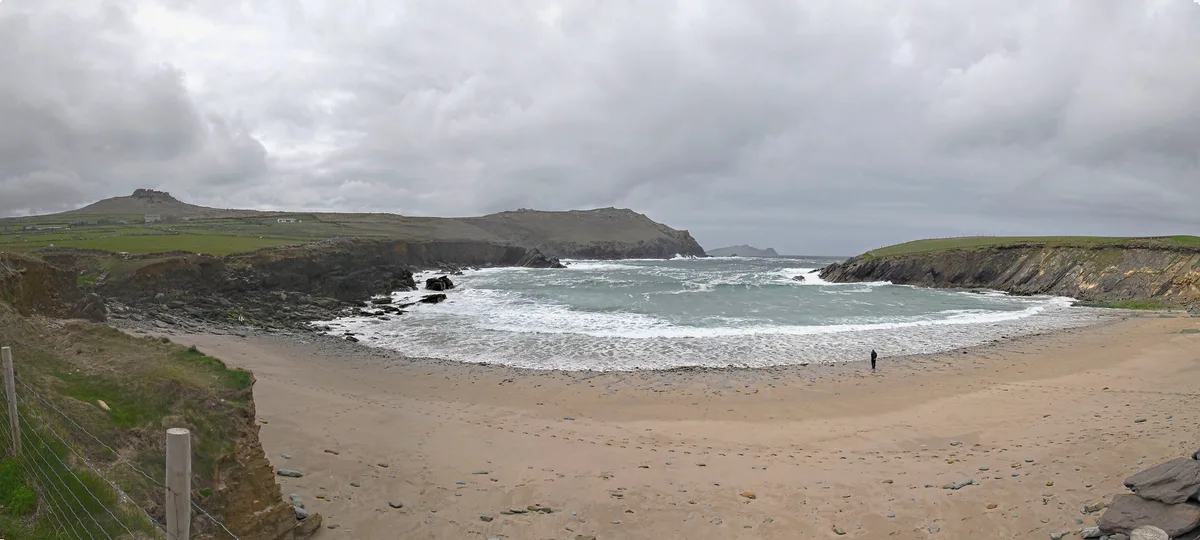
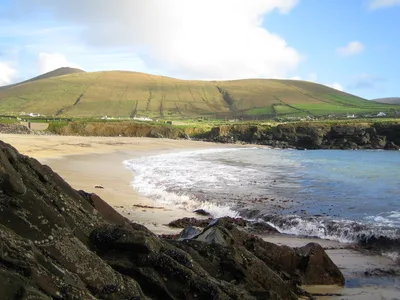
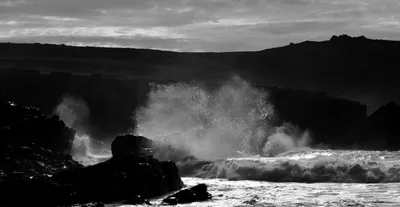
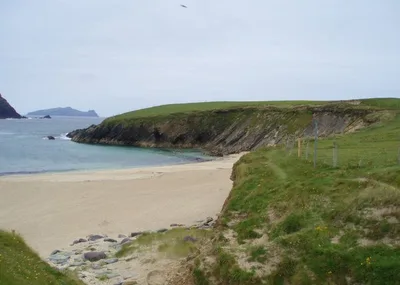
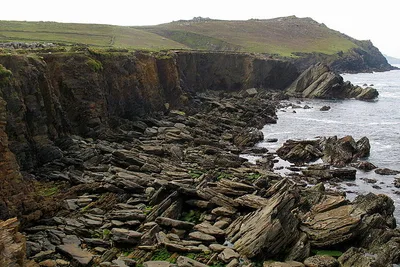
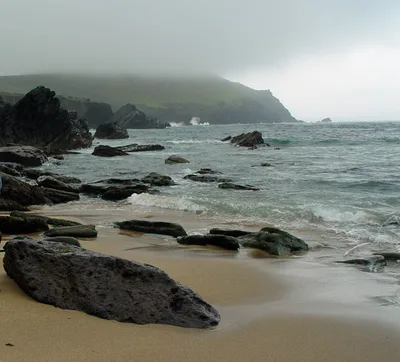
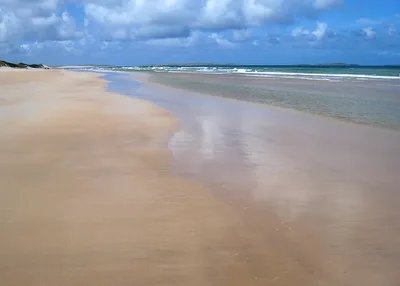
Clogher Beach is a compact, cliff-enclosed cove on the Dingle Peninsula in County Kerry, stretching roughly 200 metres of white sand against a backdrop of turquoise Atlantic water. Towering rock formations frame the shore on both sides, and a striking sea stack rises from the surf just offshore — one of the most photogenic geological features on the Irish coast. The surrounding cliffs channel the wind and amplify the sound of the ocean, giving the place a raw, elemental atmosphere that feels genuinely remote. Sybil Head looms to the north, adding another layer of drama to an already striking scene. It's quiet here — visitor numbers stay low, and the wild vibe is very much the point.
How to get there
From Ballyferriter village it's a 10-minute drive; from Dingle town, allow around 15 minutes. A ferry option also serves the beach in approximately 5 minutes. Parking is free at a small roadside pull-off, but spaces are very limited — arrive early or expect to walk a short distance. There is no entry fee, but the cliff path descent to the beach is steep and uneven, so wear sturdy footwear.
Who it's for
For couples
Clogher's wild, quiet atmosphere and dramatic cliff scenery make it a compelling place for couples who want solitude and raw coastal beauty without the distraction of facilities or other visitors. The short walk down to the cove feels like a private discovery.
For families
Families with older children who can manage a steep, uneven cliff path will find the rock pool geology and sea stack formations genuinely engaging — but this is not a beach for young children or non-swimmers, given the dangerous currents and complete absence of a lifeguard.
Our take
Be clear-eyed about what Clogher Beach is and is not: this is a photography and geology destination, not a swimming beach. The dangerous currents are real, the absence of a lifeguard is real, and no amount of scenic beauty changes that calculus — do not enter the water. What you do get is one of the most visually arresting coves on the Dingle Peninsula: white sand, turquoise Atlantic water, a sea stack that looks like it was placed there for dramatic effect, and cliff walls that shut out the rest of the world. It's quiet, it's wild, and the cliff path descent keeps casual visitors away. Come between June and September, arrive early to secure one of the very few parking spaces, and treat the place as the landscape spectacle it is rather than a beach day out.
What to do
Sybil Head viewpoint is just 1 km away and delivers sweeping views over the Three Sisters and Blasket Sound — well worth the short detour before or after the beach. About 5 km along the peninsula, Dún an Óir (Fort del Oro) marks the site of a 1580 massacre during the Desmond Rebellions, a sobering and historically rich stop. The Blasket Centre at Dunquin, 8 km away, is an award-winning museum dedicated to the literature and life of the Blasket Islanders — a genuine cultural highlight of the region. Rock pool exploration along the beach's geological formations is a rewarding low-key activity for those who want to linger.
The sea stack viewed from the cliff path above the cove is the defining shot — frame it with the white sand and turquoise water in the foreground for maximum impact.
The cliff walls themselves, particularly where they converge at the cove entrance, create a natural frame that works well in both portrait and landscape orientation. Sybil Head, 1 km away, adds a dramatic wide-angle backdrop that contextualises the whole headland.
Where to eat
The closest option is an tIascaire, 2.7 km from the beach — a sensible first stop after a visit. Further along, Stonehouse (6.7 km) and Tigh T.P. (6.9 km) offer regional choices, while The Skipper brings a French angle at 7.4 km. Pack a lunch if you want to eat on-site; there is nothing at the beach itself.
Where to stay
Old Irish Farmhouse, 6.5 km away, is the nearest base and suits the wild, rural character of this stretch of Kerry. For more amenities, Dingle Bay Hotel and Benner's Hotel are both around 13 km away in Dingle town, offering a comfortable return after a day on the peninsula.
Photography
The sea stack and cliff-enclosed cove are the headline shots — position yourself on the upper cliff path for a wide composition that takes in both the white sand and the turquoise water below. Early morning light in summer (June to September) is ideal, when low-angle sun catches the rock faces and the Atlantic has its best colour.
Good to know
Do NOT enter the water — dangerous currents and Atlantic swell make swimming at Clogher Beach genuinely hazardous, and there is no lifeguard on duty at any time. Swimming is strictly not recommended; this warning applies regardless of how calm the sea looks on a given day. Dogs are welcome with no formal restrictions, but keep them under control on the cliff path, which requires real care on the descent. Avoid visiting between November and February, when severe Atlantic storms make both the sea and the cliff path actively dangerous.
GAMES
🕹️ Five minutes of sand?
Three daily games — including the UV simulator set to this beach.
Map
Nearby places
an tIascaire
Stonehouse
Tigh T.P.
The Skipper
Danno's Restaurant
Old Irish farmhouse
Dingle Bay Hotel
The Lantern Townhouse
Benner's Hotel
Sybil Head
Blasket Centre (Ionad an Bhlascaoid)
Dún an Óir (Fort del Oro)
Things to see around Ballyferriter
Sybil Head
Dramatic headland with views over the Three Sisters and Blasket Sound.
Blasket Centre (Ionad an Bhlascaoid)
Award-winning interpretive centre dedicated to the life and literature of the Blasket Islanders.
Dún an Óir (Fort del Oro)
Site of the 1580 massacre of Spanish and Italian troops during the Desmond Rebellions.
GIFT IDEA · MARCEL ET LES BLONDES
🎁 Give a moment, not a thing


What’s the occasion?
 💑 Dating anniversaryTwo dates, two starry skies
 💍 Wedding anniversaryCotton, silver, golden…
 🎂 BirthdayTheir own newspaper front page
 👶 New babyThe stars on the day they were bornValentine’s DayOur two moons, as a print
Shipping €5, free from €49 · made to order, shipped within 48 hAlso: our engraved wooden bracelets, €23.90 →
Frequently asked
The information on this page is provided for guidance only and may evolve. Access conditions, safety and infrastructure can change without notice. Always check official sources before traveling.
Nearest beaches
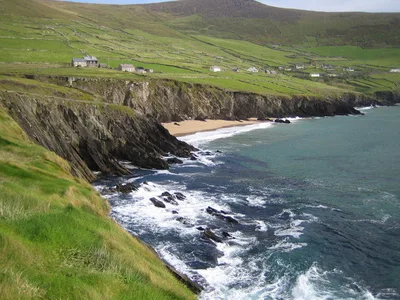
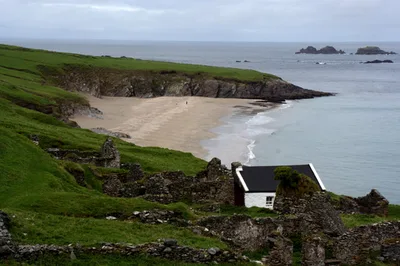
Other wild beaches in Ireland
More beaches in Irish Coast
Reviews of this beach
- No reviews yet, what a shame — leave yours and share your experience.
Photo credits
Sources and licenses for the photos shown above.
- Photo 1 — aaronx · source · CC BY 2.0
- Photo 2 — Nigel Cox · source · CC BY-SA 2.0
- Photo 3 — barbara walsh · source · CC BY-SA 2.0
- Photo 4 — Sharon Loxton · source · CC BY-SA 2.0
- Photo 5 — Sharon Loxton · source · CC BY-SA 2.0
- Photo 6 — Peter Church · source · CC BY-SA 2.0