Te Whanganui-A-Hei (Cathedral Cove) BeachNew Zealand Beach Guide
New Zealand's iconic sea arch, earned by foot or boat
About
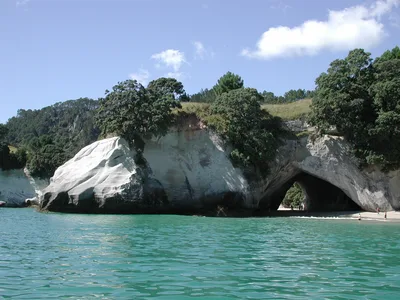
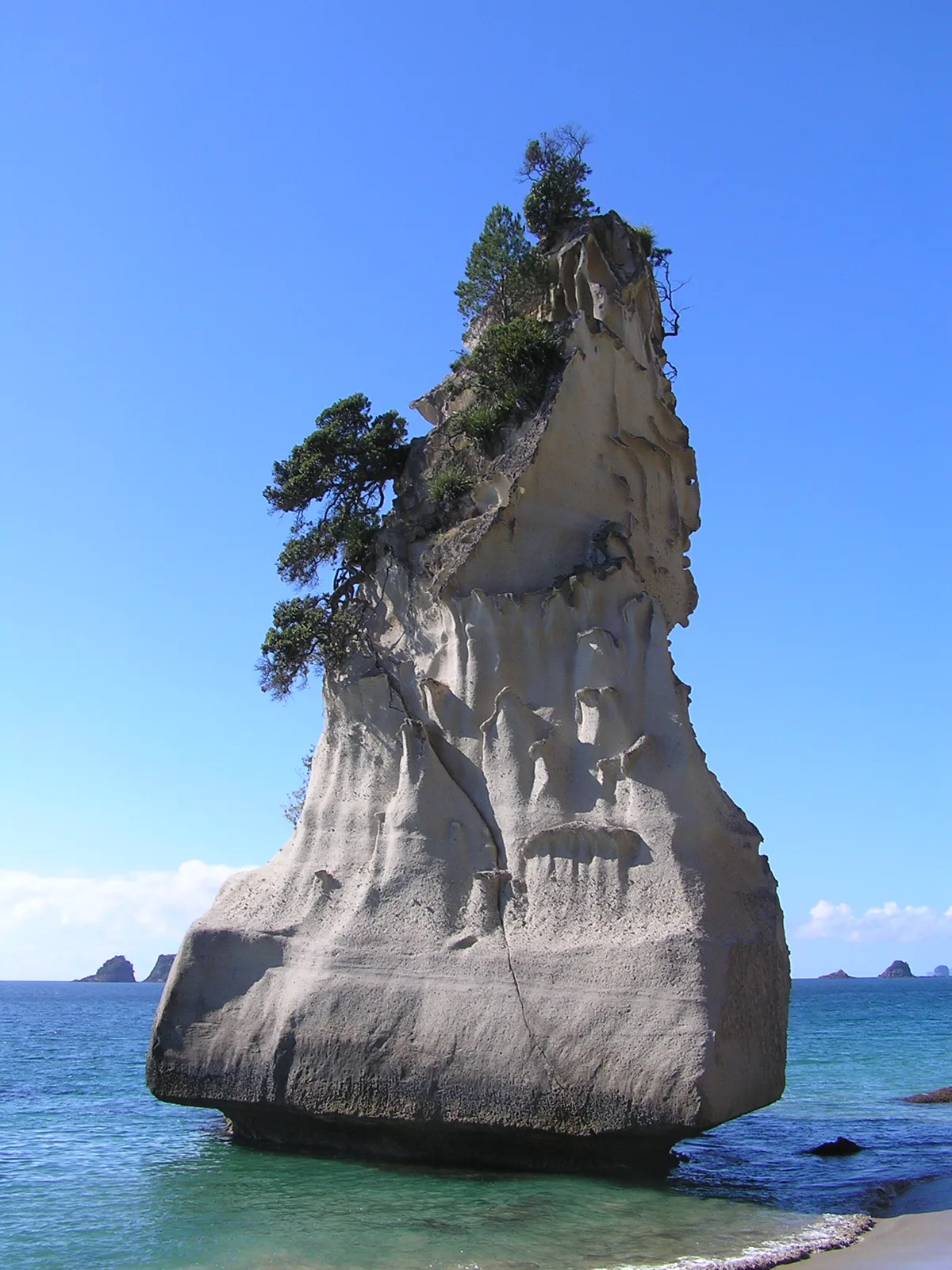
Te Whanganui-A-Hei (Cathedral Cove) is one of New Zealand's most recognisable coastal landmarks — a white-sand double cove on the Coromandel Peninsula, split by a towering rhyolite sea arch you can walk straight through at low tide. The crystal-clear water shifts from pale aquamarine in the shallows to deeper blue offshore, framed by eroded volcanic cliffs and the distinctive Te Hoho Rock stack rising from the sea. It sits entirely within Te Whanganui-A-Hei Marine Reserve, which means the underwater world is unusually intact — fish are unafraid, and the rock formations are vivid. The vibe is wild and elemental, even when the cove is busy with visitors. Since 2021, all vehicle access has been removed, so the only way in is on foot or by water.
How to get there
Reach Cathedral Cove by foot or by boat — there is no road access and no parking at the beach. On foot, the track starts from the Hahei car park on Grange Road and takes around 45 minutes each way; the path is steep with steps and can be slippery after rain. By water, a seasonal boat or water taxi from Hahei Beach covers the distance in about 15 minutes. No entry fee applies to the beach itself, but respect the marine reserve rules from the moment you arrive.
Who it's for
For couples
The 45-minute coastal walk in and the wild, elemental atmosphere make this a genuinely rewarding shared experience — arrive early, before the day-trippers, and you'll have the white sand and crystal-clear water largely to yourselves.
For families
Older children who can manage a steep, stepped track will love the arch and the snorkelling, but the path is not accessible for pushchairs or wheelchairs, the water is unpatrolled, and rips are a real risk — supervise young swimmers closely and skip the arch entirely if swell is running.
Our take
Cathedral Cove earns its reputation, but go in clear-eyed about the risks. The water is unpatrolled, rips are present, and swell through the arch can surge without warning — this is not a beach to switch off your judgment. That said, the marine reserve snorkelling is exceptional, the twin cove formation is genuinely dramatic, and the pedestrian-only access since 2021 has restored a sense of wildness that road access had eroded. Avoid December and January unless you're willing to hike in before 8am; the shoulder months of March and November give you the best light, manageable visitor numbers, and calmer sea conditions. The 45-minute track is the price of admission — it's steep, it's real, and it keeps the experience honest. Worth every step.
What to do
The marine reserve is the main event — snorkelling among fish and rock formations in crystal-clear water is the reason most visitors make the trip. Kayakers can paddle in from Hahei, which adds a genuinely satisfying approach and lets you explore the twin cove formation from the water. Just 7.5km away, Hot Water Beach lets you dig your own geothermal pool in the sand at low tide — a logical half-day pairing. The Tokawhakairo McHands Lookout, only 1.25km from the cove, rewards the short detour with elevated views over the arch and coastline.
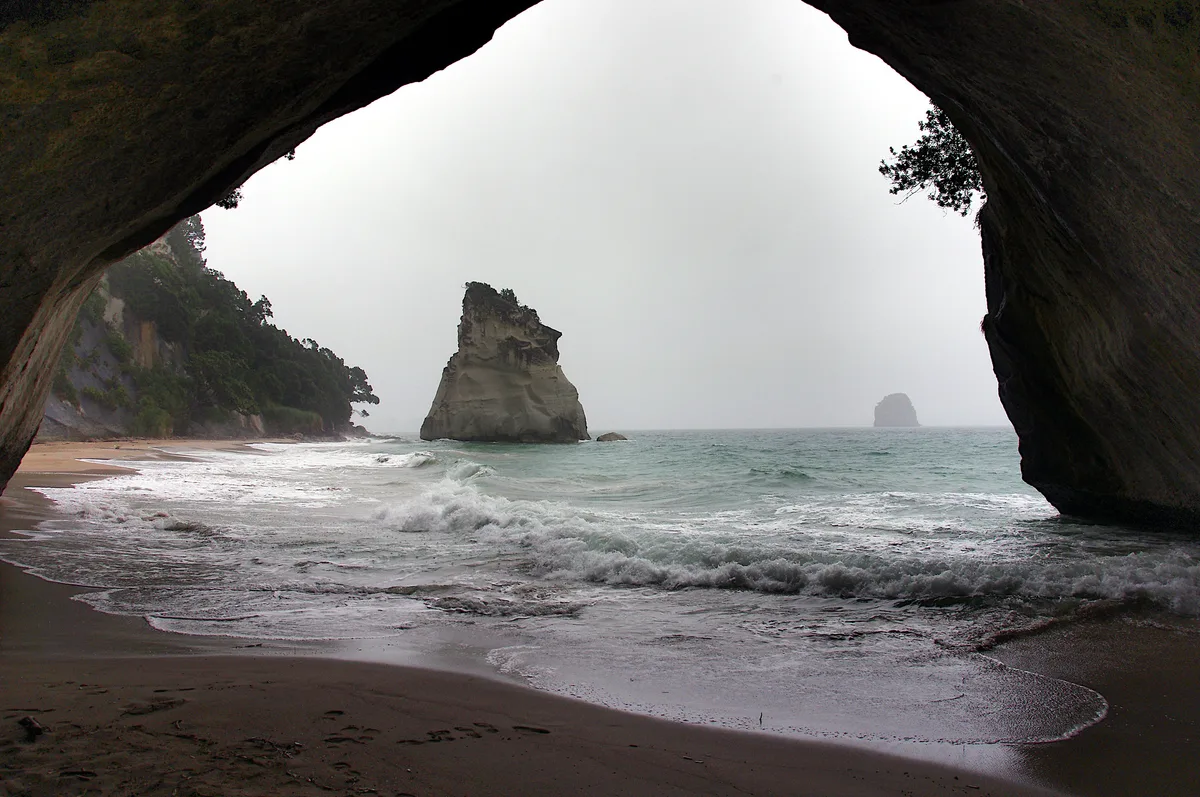
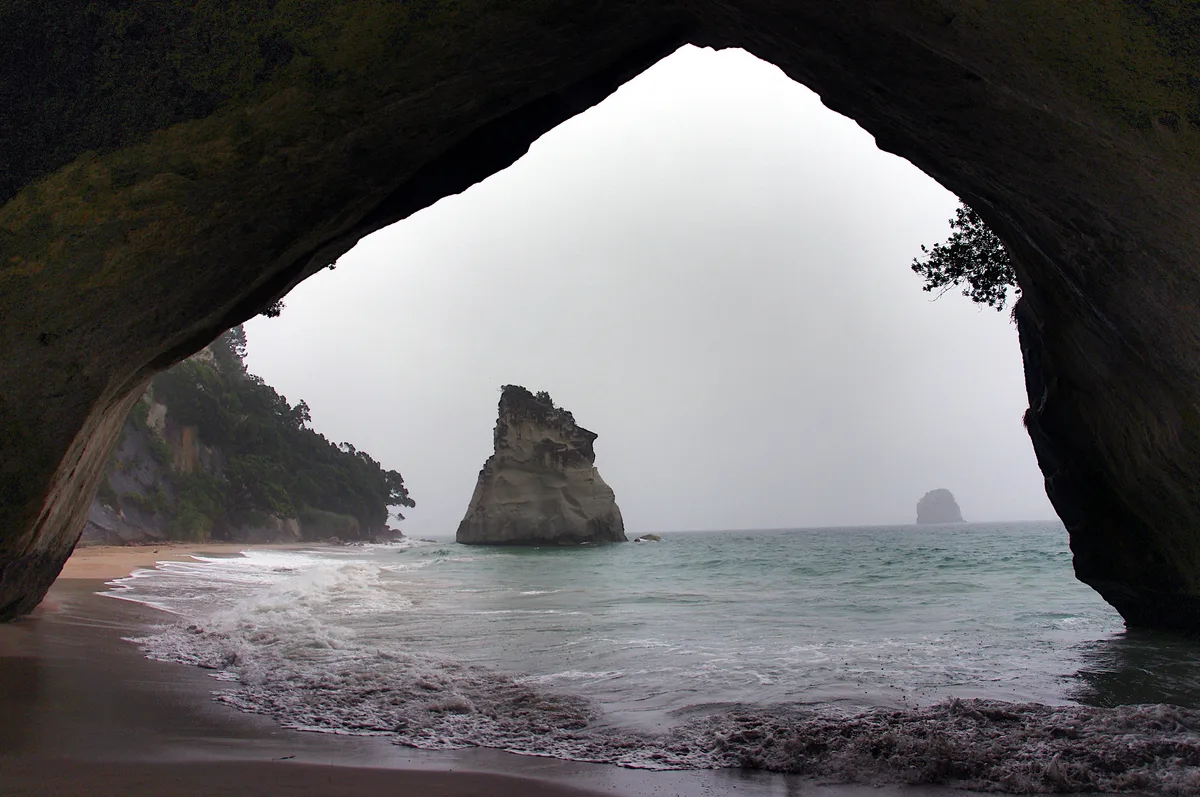
The rhyolite arch shot from inside the tunnel — white sand underfoot, both coves visible through the frame — is the definitive Cathedral Cove image; mid-morning light from the east is ideal.
Te Hoho Rock stack photographed from the waterline at low tide, with the arch receding behind it, gives a second strong composition that avoids the most replicated angle.
Where to eat
There's no food or water on the beach itself, so pack everything you need before you set out. Back in Hahei village, The Pour House (1.7km) covers international fare, while The Church Bistro (2.2km) is a reliable option for a sit-down meal after the walk. Both are close enough to reach quickly once you're back on the village side.
Where to stay
Tatahi Lodge Beach Resort in Hahei (1.7km, rated 4.6/5 from 331 reviews) is the closest well-reviewed option and a solid base for an early-morning start. The Church Accommodation Hahei (2.2km, rated 4.8/5 from 214 reviews) is the highest-rated stay in the area. Budget travellers can try Hahei Campsite (2.2km, 4.5/5), which keeps you close to the track without the resort price.
Photography
The rhyolite arch frames a near-perfect symmetrical shot — position yourself on the white sand inside the tunnel at mid-morning when the light pours through from the east and illuminates both coves simultaneously. Te Hoho Rock stack, shot from the waterline at low tide with the arch in the background, is the second classic composition and works best in the golden hour before the cove fills with visitors.
Good to know
No vehicles are permitted on the beach, and the marine reserve rules are strict — no fishing, no collecting shells or marine life, no exceptions. Swell can surge powerfully through the arch with little warning, so check sea conditions before you step into or near it. The water is unpatrolled by lifeguards and is prone to rips, and the rocky coastline hides underwater hazards — swim with caution and stay aware. The track can be treacherous after rain, and rockfall risk increases during or after heavy rain; if December or January is your only window, arrive before 8am or the cove will be shoulder-to-shoulder.
GAMES
🕹️ Five minutes of sand?
Three daily games — including the UV simulator set to this beach.
Map
Nearby places
The Pour House
The Church Bistro
Tatahi Lodge Beach Resort, Hahei
Hahei Beach Resort
Hahei Campsite
The Church Accommodation Hahei
Tokawhakairo McHands Lookout
Things to see around Hahei
Te Whanganui-A-Hei Marine Reserve
Protected marine reserve with excellent snorkelling among fish and rock formations.
Hot Water Beach
Geothermal beach where visitors dig hot pools in the sand at low tide.
Hahei
Small coastal village with cafes, kayak hire and water taxi services.
GIFT
🎁 Gift this beach
Its exact coastline, your date, your words — on a print or a PDF you print yourself.
Te Whanganui-A-Hei (Cathedral Cove) Beach
THAT DAY
Te Whanganui-A-Hei (Cathedral Cove) Beach, Waikato
© OpenStreetMap contributors
Clean & decorative, or “That day” with the real sky of your date.
Shipping included 3-6 business days
A question before you order? Contact us
Delivered within minutes on the confirmation page and by email: a ZIP with all 4 print sizes (30×40 cm, 12×16″, 50×70 cm, 18×24″), each as a high-resolution PDF and PNG (300 dpi), plus a screen version. Print at home or at any print shop.
Please complete the delivery address.
Please accept the Terms of Sale.
Almost there — the shop opens very soon.
Secure payment · Printed locally in 30+ countries · 7 languages
Frequently asked
The information on this page is provided for guidance only and may evolve. Access conditions, safety and infrastructure can change without notice. Always check official sources before traveling.
Nearest beaches

Other wild beaches in New Zealand
Reviews of this beach
- No reviews yet, what a shame — leave yours and share your experience.
Photo credits
Sources and licenses for the photos shown above.
- Photo 1 — Pseudopanax at English Wikipedia · source · Public Domain
- Photo 2 — ogwen · source · CC BY-SA 3.0
- Photo 3 — Juhele_CZ · source · CC0 1.0
- Photo 4 — Juhele_CZ · source · CC0 1.0