Cooks BeachNew Zealand Beach Guide
Where Captain Cook landed, white sand and calm blue water await
About
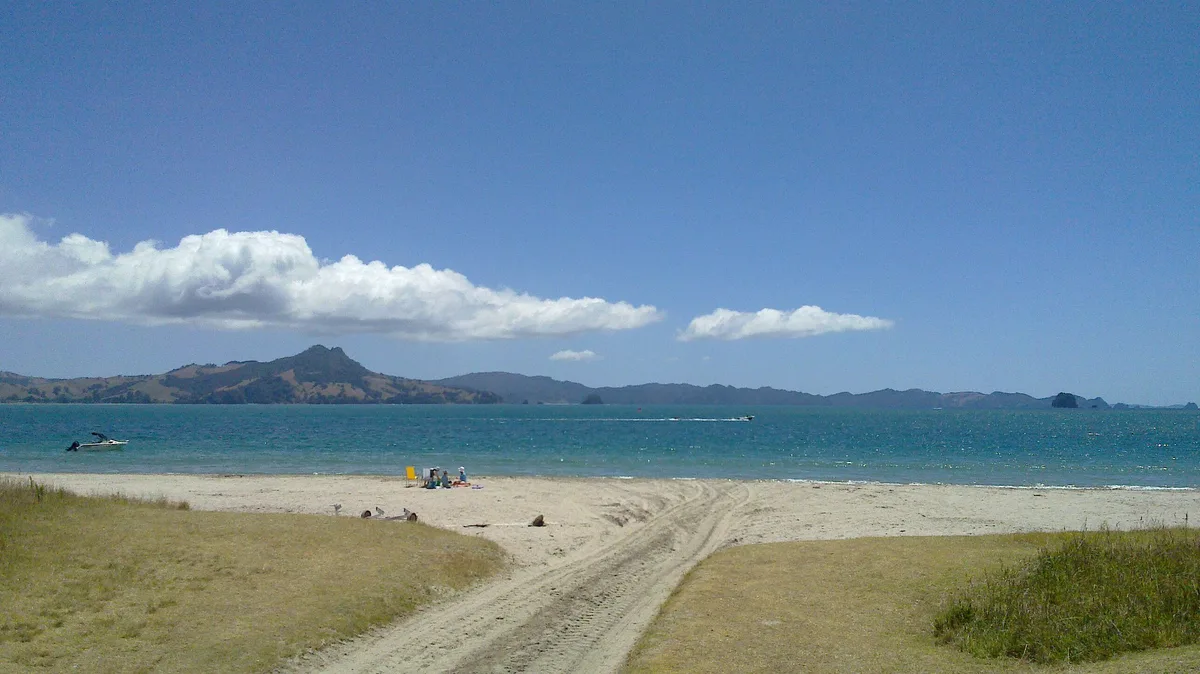
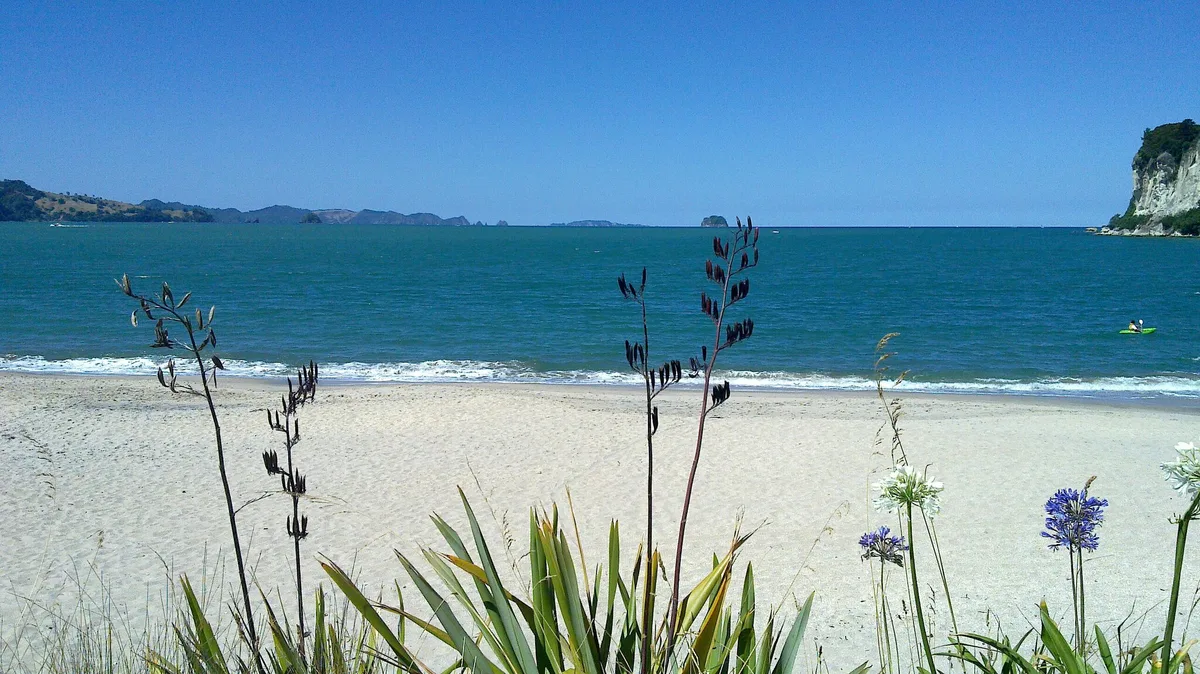
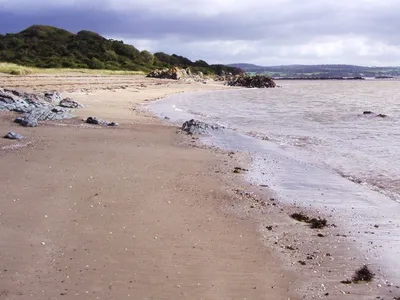
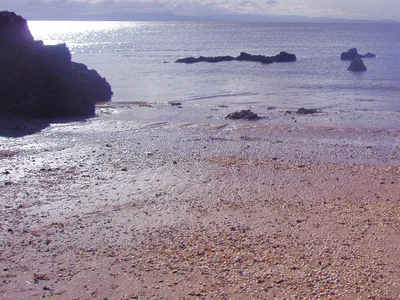
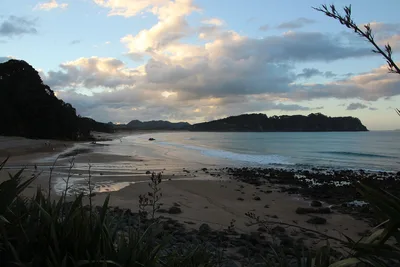
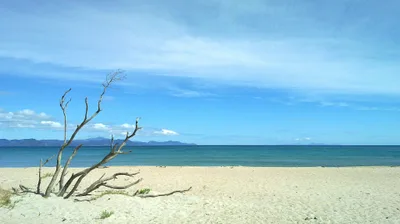
Cooks Beach stretches roughly 3,000 metres of white sand along the sheltered southern shore of Mercury Bay, on the Coromandel Peninsula of New Zealand's North Island. The blue water here is calm and gentle — protected by the bay's natural curve — making it one of the more relaxed swimming spots on this coastline. This is the place where Captain Cook stepped ashore in 1769 to observe the Transit of Mercury, and that history hangs lightly but meaningfully over every visit. Views across the water toward Whitianga frame the horizon, and the pace is unhurried, family-oriented, and genuinely easy to enjoy.
How to get there
From Whitianga, drive via SH25, Hot Water Beach Road, and Purangi Road — about 35 minutes by car. Alternatively, take the ferry from Whitianga ferry terminal to Ferry Landing, then walk to the beach; the whole journey takes around 29 minutes and runs daily. Parking near the beach is metered; free parking may be available at the beach reserve, but if you're launching a boat trailer at the Purangi Reserve boat ramp, a fee applies. There is no entry fee to the beach itself.
Who it's for
For couples
The historic weight of the Captain Cook landing site and the quiet evening light over Mercury Bay make this a genuinely atmospheric spot for two — walk the reserve at dusk, then catch the ferry back to Whitianga for dinner.
For families
Calm, sheltered blue water and a flat white-sand beach with easy access make Cooks Beach one of the more practical family swimming spots on the Coromandel — just note the beach is unpatrolled, so keep a close eye on young swimmers at all times.
Our take
Cooks Beach earns its place on any Coromandel itinerary on two counts: the calm, swimmable blue water backed by white sand, and the genuine historical weight of the 1769 Cook landing. It's not a dramatic surf beach — it's a place to slow down, let the kids wade in safely, and actually read the reserve signage rather than walk past it. The unpatrolled status is the one thing to take seriously; the water looks benign, but conditions can change and there's no lifeguard to call on. The ferry from Whitianga is the smarter arrival — it cuts the drive, and the crossing itself frames the bay beautifully. Come in December through March for the best weather, and get there early if you want the white sand to yourself.
What to do
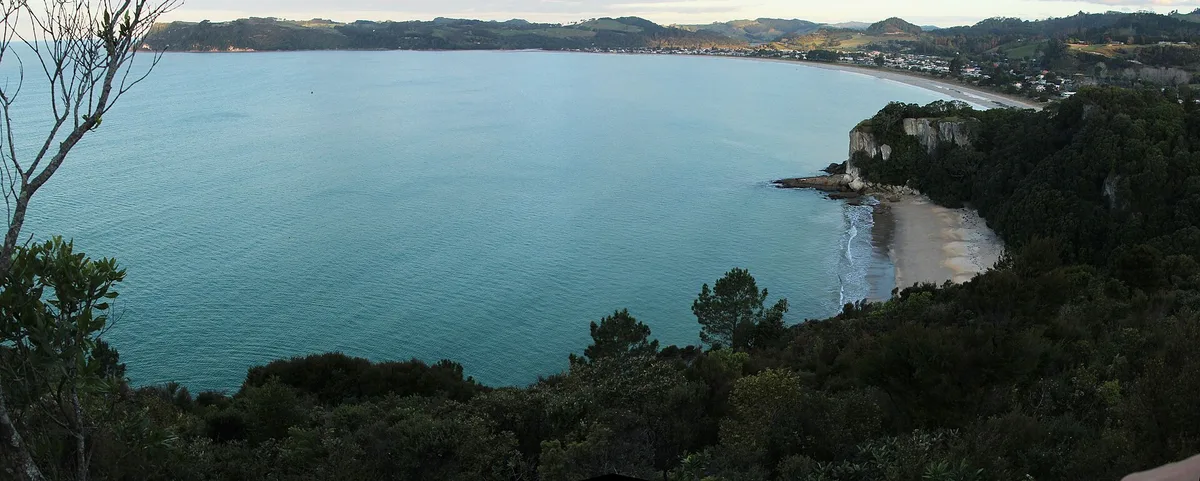
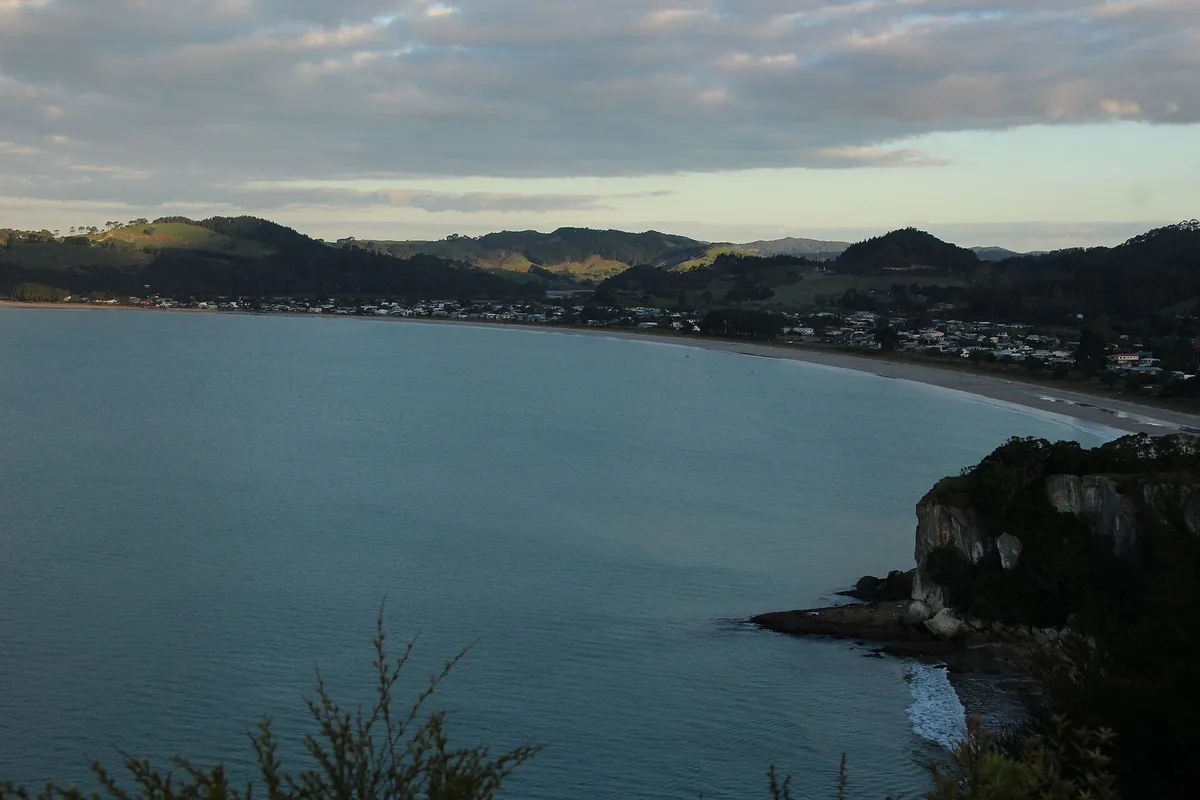
The Captain Cook Memorial Reserve, about 1 kilometre from the beach, commemorates Cook's 1769 observation of the Transit of Mercury and is worth a short walk. From Shakespeare Cliff Lookout, roughly 1.4 kilometres away, you get sweeping views over Mercury Bay that put the whole coastline in perspective. Flaxmill Bay, 2 kilometres along, is a compact sheltered cove with good snorkelling around rocky outcrops — a worthwhile half-day side trip. The historic observation site and Mercury Bay View Point are also clustered near the cliff, so you can tick all three in a single outing.
Shakespeare Cliff Lookout delivers the classic Mercury Bay panorama — white sand, blue water, and the Whitianga skyline in a single frame.
The Captain Cook Memorial Reserve offers a more intimate, historically textured shot with interpretive signage and coastal bush as backdrop. For water-level colour, the calm shallows at the northern end of the beach in morning light show the contrast between white sand and blue water at their clearest.
Where to eat
The nearest dining options are across the water in Whitianga, about 2.9 kilometres away — Salt, Blue Lagoon Bar and Eatery, Stoked Restaurant and Bar, Clove for Indian cuisine, and Marina Bay Eatery all sit within the same cluster. It's worth packing a picnic if you want to eat on the beach itself, as there are no restaurants directly on the sand. The ferry crossing makes a Whitianga dinner a natural end to the day.
Where to stay
Most accommodation is based in Whitianga, roughly 3 to 3.2 kilometres from the beach. Crowsnest Apartments and Marina Park Apartments are the closest options at around 3 kilometres, while Oceans Resort Whitianga and Beachside Resort Whitianga sit slightly further at 3.2 kilometres. All are convenient for the ferry crossing back to Cooks Beach each morning.
Photography
The best shots come from Shakespeare Cliff Lookout at golden hour, when the blue water of Mercury Bay catches the low light and the white sand curves away below you. Early morning on the beach itself — before the day-trippers arrive — gives you clean foreground sand with the Whitianga shoreline visible across the water.
Good to know
Cooks Beach is not patrolled by Surf Life Saving NZ — swim with caution and never assume conditions are safe simply because the water looks calm. Dogs are welcome on the beach outside patrolled swimming hours, so check local signage before letting them off the lead. The flat sandy shore and easy road access make it generally suitable for wheelchairs. Arrive before mid-morning in summer to secure a good spot before day visitors arrive from Whitianga.
GAMES
🕹️ Five minutes of sand?
Three daily games — including the UV simulator set to this beach.
Map
Nearby places
Salt
Blue Lagoon Bar and Eatery
Stoked Restaurant and Bar
Clove
Marina Bay Eatery
Crowsnest Apartments
Marina Park Apartments
Oceans Resort Whitianga
Beachside Resort Whitianga
Shakespeare Cliff Lookout
Location of Captain Cooks Observation of the Transit of Mercury
Mercury Bay View Point
Things to see around Cooks Beach
Captain Cook Memorial Reserve
Reserve commemorating Cook's 1769 observation of the Transit of Mercury.
Whitianga
Main service town of Mercury Bay with shops, restaurants and ferry terminal.
Flaxmill Bay
Compact sheltered cove with good snorkelling around rocky outcrops.
GIFT
🎁 Gift this beach
Its exact coastline, your date, your words — on a print or a PDF you print yourself.
Cooks Beach
THAT DAY
Cooks Beach, Waikato
© OpenStreetMap contributors
Clean & decorative, or “That day” with the real sky of your date.
Shipping included 3-6 business days
A question before you order? Contact us
Delivered within minutes on the confirmation page and by email: a ZIP with all 4 print sizes (30×40 cm, 12×16″, 50×70 cm, 18×24″), each as a high-resolution PDF and PNG (300 dpi), plus a screen version. Print at home or at any print shop.
Please complete the delivery address.
Please accept the Terms of Sale.
Almost there — the shop opens very soon.
Secure payment · Printed locally in 30+ countries · 7 languages
Frequently asked
The information on this page is provided for guidance only and may evolve. Access conditions, safety and infrastructure can change without notice. Always check official sources before traveling.
Nearest beaches

Reviews of this beach
- No reviews yet, what a shame — leave yours and share your experience.
Photo credits
Sources and licenses for the photos shown above.
- Photo 1 — TobiasPMP · source · CC BY-SA 2.0
- Photo 2 — Takver from Australia · source · CC BY-SA 2.0
- Photo 3 — Takver from Australia · source · CC BY-SA 2.0
- Photo 4 — TobiasPMP · source · CC BY-SA 2.0
- Photo 5 — Ann Cook · source · CC BY-SA 2.0
- Photo 6 — Ann Cook · source · CC BY-SA 2.0