Princetown BeachAustralia Beach Guide
Wild estuary beach where the Twelve Apostles watch over golden sand
About
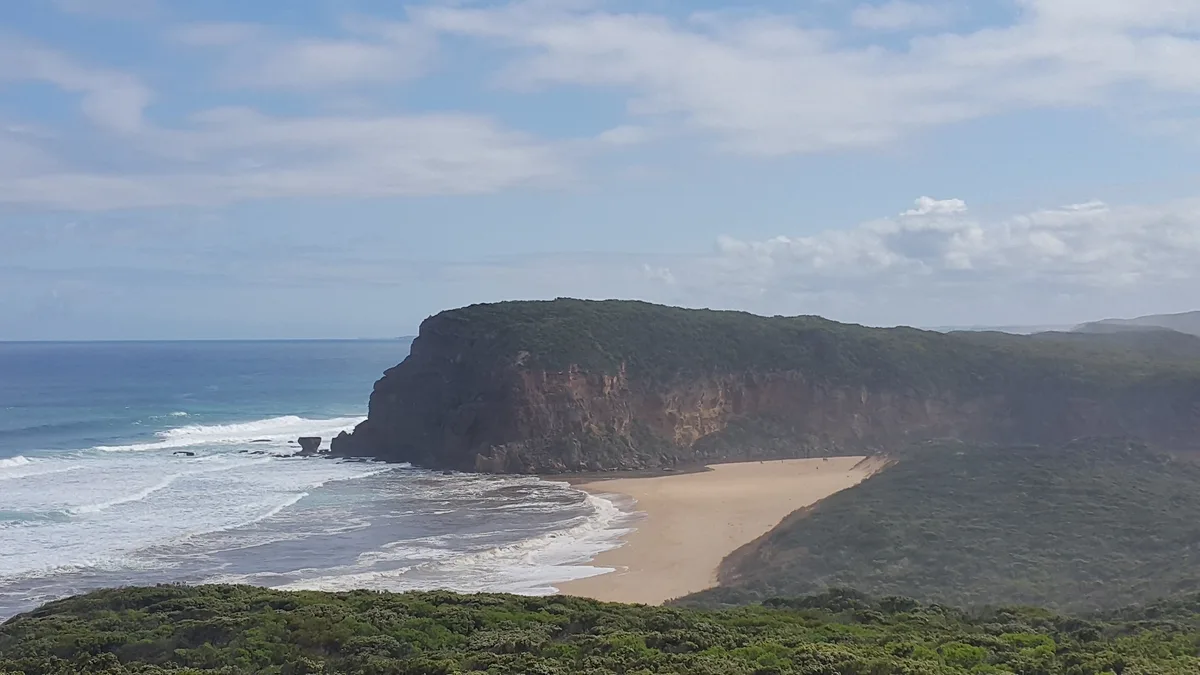
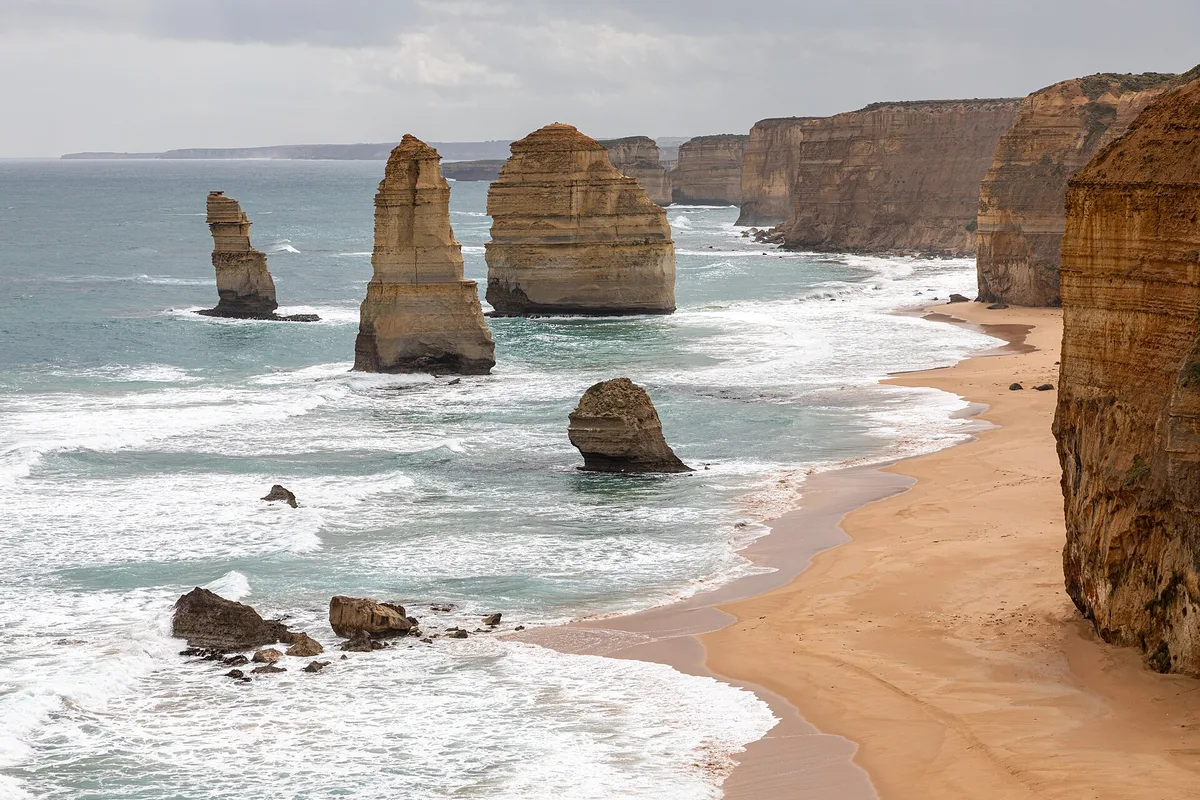
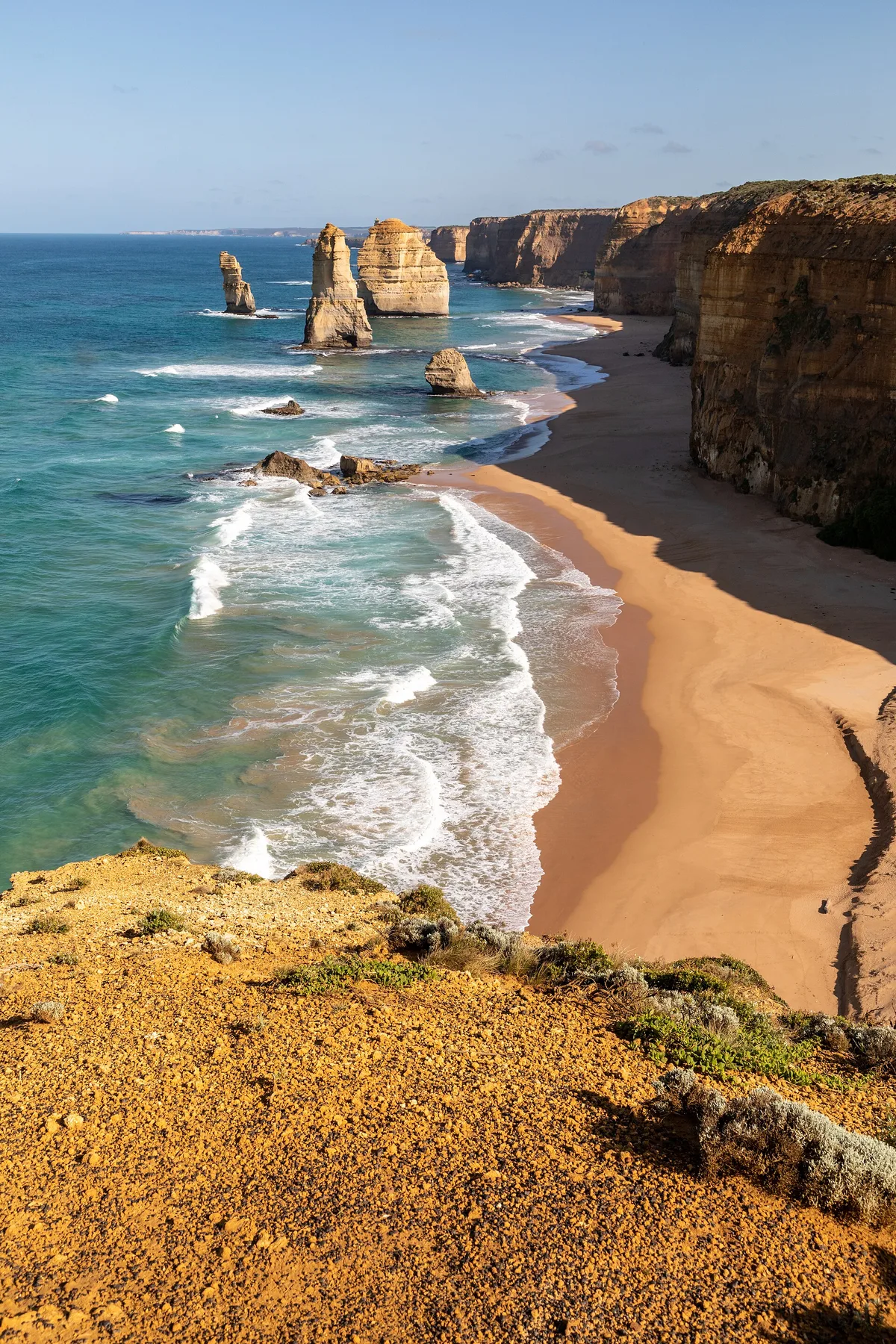
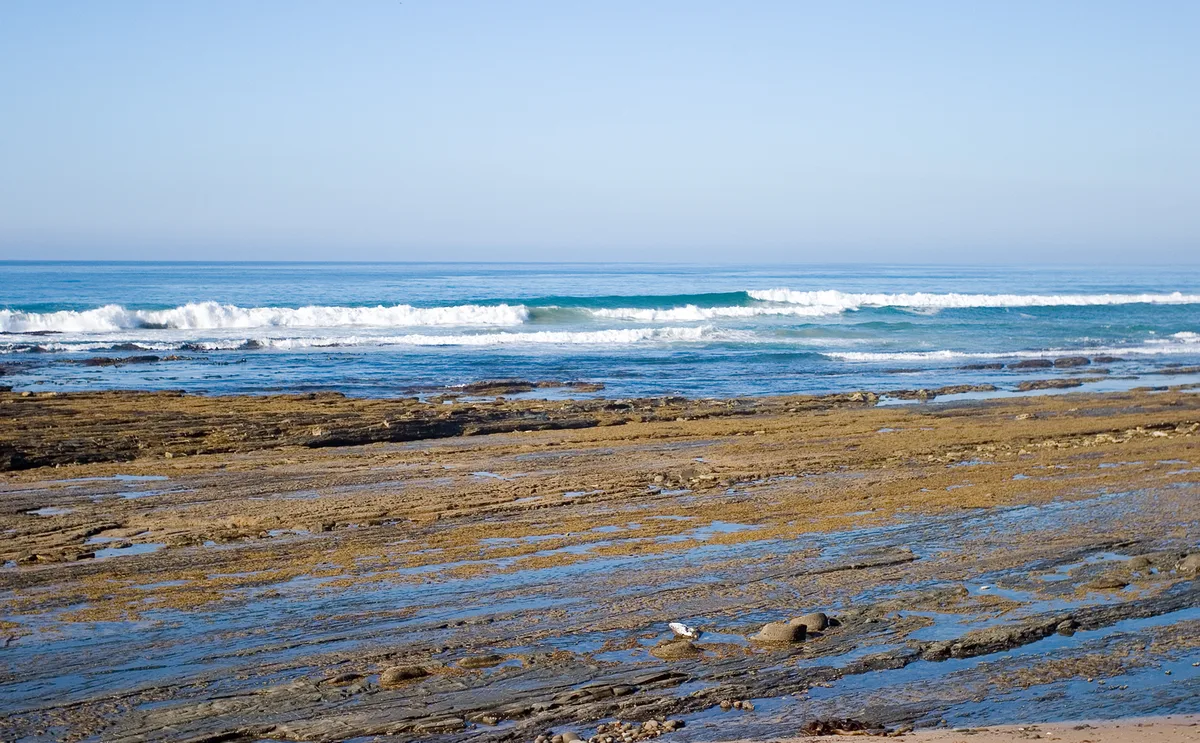
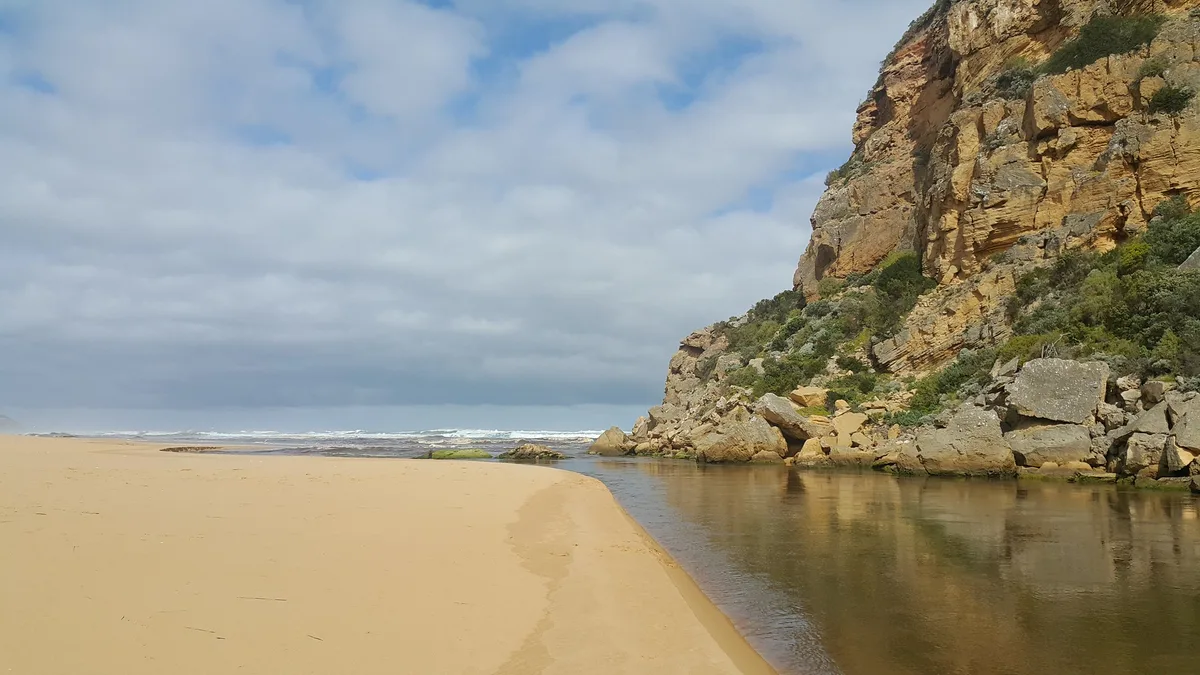
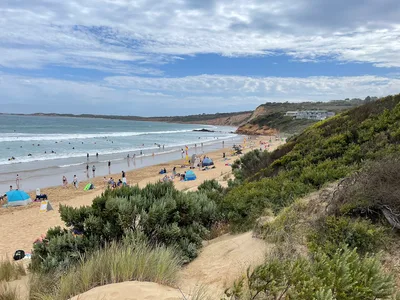
Princetown Beach stretches roughly 800 metres of golden sand along the Great Ocean Road in Victoria, Australia, where the Gellibrand River meets the Southern Ocean in a broad, shifting estuary. The water runs a moody grey, whipped by Southern Ocean swells, and the dune system behind the beach rises and rolls in a way that makes the place feel genuinely remote. Wetlands fringe the estuary, alive with birdlife, while to the west the limestone stacks of the Twelve Apostles punctuate the horizon. There is no tourist infrastructure here — no kiosk, no lifeguard tower, no beach shower — just wind, birds, and an enormous sky. It's wild in the truest sense, and it stays that way because almost nobody comes.
How to get there
Drive from Port Campbell along the Great Ocean Road — Princetown Beach is roughly 10 minutes by car and accessible daily. A basic unsealed car park is available at no charge, though facilities are non-existent beyond the parking area itself. No entry fee applies. The soft sand and estuary terrain make wheelchair access impractical once you leave the car park.
Who it's for
For couples
Couples who want solitude without a visitors will find it here — long stretches of golden sand, big skies, and a horizon full of sea stacks make for a quietly dramatic afternoon together. Just come prepared: there's nothing to buy and nowhere to sit except the dunes.
For families
Families with older children who are curious about nature — birdwatching, dune exploration, estuary geography — will find plenty to engage with, but young children must be kept well away from the water at all times given the dangerous surf and unpatrolled conditions.
Our take
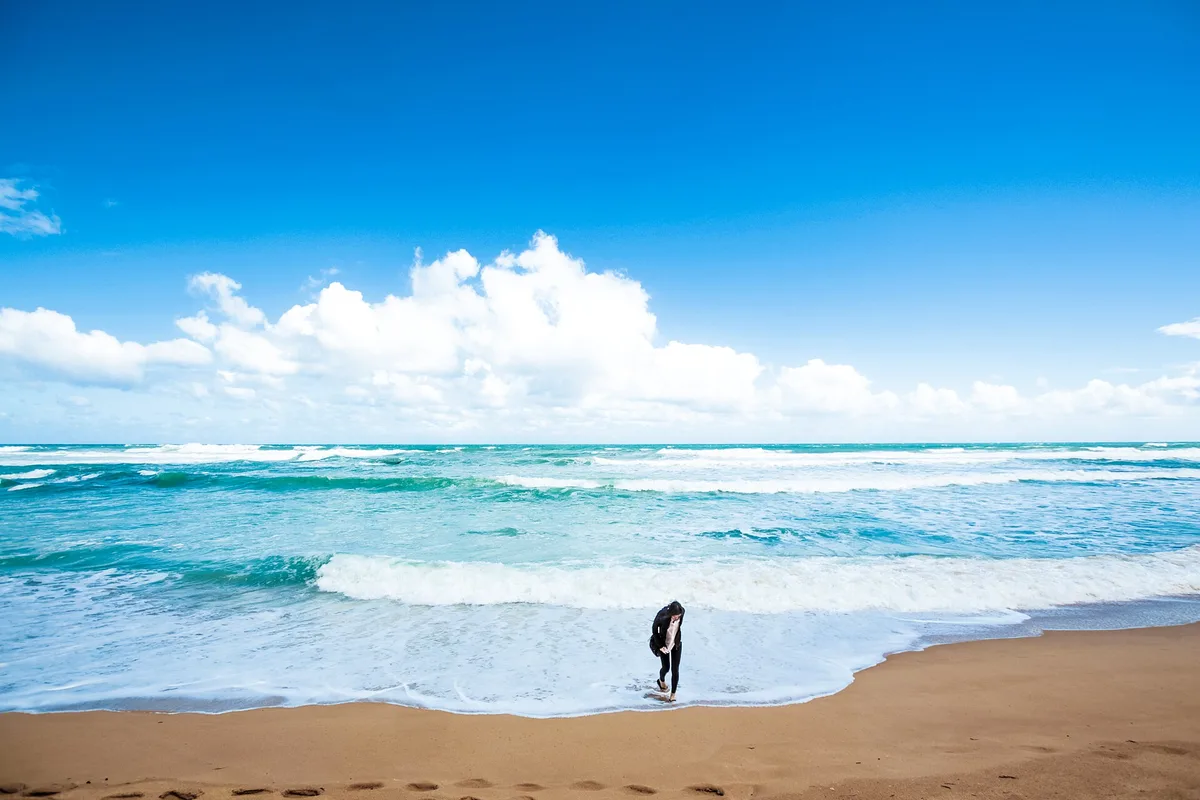
Do not come to Princetown Beach to swim — the water is dangerous, the beach is unpatrolled, and the rips are real. Come instead for the scale of the place: 800 metres of golden sand with almost nobody on it, a living estuary, a dune system you can lose yourself in, and the Twelve Apostles visible on the horizon without the coach-park chaos. It's one of the few spots on the Great Ocean Road that still feels genuinely unmediated. Skip the winter months of June, July, and August — cold temperatures and heavy surf make the visit miserable and the conditions worse. Time it for December through March, arrive at dawn, and bring binoculars for the wetland birds. Worth the detour, but go in with clear eyes about what it is: a wild, beautiful, and unforgiving stretch of coast.
What to do
The Anne and Geg Lookout, just 1.5 km away, rewards a short drive with elevated coastal views. Push a little further — 5.6 km — to Walk Victoria's Icons Lookout for a sweeping panorama that puts the Twelve Apostles in full context. Gibson Steps at 6.1 km lets you descend to beach level beside towering limestone cliffs, and the Twelve Apostles themselves are only 7.9 km west — the most visited site on the entire Great Ocean Road. Loch Ard Gorge, 12 km along, adds shipwreck history and dramatic cliff scenery to the day.
The dune crests looking west at sunset frame the Twelve Apostles on the horizon above golden sand — one of the most underused compositions on the Great Ocean Road.
The Gellibrand River estuary mouth, with its braided channels cutting through the dunes, photographs beautifully in flat morning light.
Where to eat
There are no food or drink facilities at Princetown Beach itself — bring everything you need from town. Tee's Treats, a laptop-friendly café 1.7 km away, is the closest option for a coffee or a bite before or after your visit.
Where to stay
The Princetown Recreation Reserve (rated 4.2/5 from 396 reviews) and the Princetown Camping Reserve (4.9/5 from 7 reviews) both sit about 1.1 km from the beach and are the closest bases. For something more private, Otway Coastal Villas (4.9/5, 13 reviews) is 2 km out, and Kangaroobie (4.1/5, 145 reviews) offers another option at 1.8 km.
Photography
Shoot from the dune crests in the golden hour before sunset, when the low light catches the golden sand and silhouettes the Twelve Apostles on the western horizon. The Gellibrand River estuary at dawn offers reflections and birdlife that reward patience and a long lens.
Good to know
Do not enter the water. The beach is unpatrolled, and dangerous rips and shore dump make swimming strictly off-limits — there are no lifeguards to call for help. The estuary mouth shifts position seasonally, so check conditions carefully before attempting any crossing on foot. In the wetlands, keep your distance from nesting birds and do not disturb them — this is protected habitat. Camping is not permitted anywhere on the beach or surrounds.
GAMES
🕹️ Five minutes of sand?
Three daily games — including the UV simulator set to this beach.
Map
Nearby places
Princetown Recreation Reserve
Princetown Camping Reserve
13th Apostle Accommodation
Kangaroobie
Otway Coastal Villas
Things to see around Princetown
Twelve Apostles
Iconic limestone sea stacks in Port Campbell National Park — most visited site on the GOR.
Loch Ard Gorge
Dramatic gorge with shipwreck history and limestone cliffs.
Port Campbell National Park
Coastal national park protecting the Twelve Apostles and associated limestone formations.
GIFT
🎁 Gift this beach
Its exact coastline, your date, your words — on a print or a PDF you print yourself.
Princetown Beach
THAT DAY
Princetown Beach, Great Ocean Road
© OpenStreetMap contributors
Clean & decorative, or “That day” with the real sky of your date.
Shipping included 3-6 business days
A question before you order? Contact us
Delivered within minutes on the confirmation page and by email: a ZIP with all 4 print sizes (30×40 cm, 12×16″, 50×70 cm, 18×24″), each as a high-resolution PDF and PNG (300 dpi), plus a screen version. Print at home or at any print shop.
Please complete the delivery address.
Please accept the Terms of Sale.
Almost there — the shop opens very soon.
Secure payment · Printed locally in 30+ countries · 7 languages
Frequently asked
The information on this page is provided for guidance only and may evolve. Access conditions, safety and infrastructure can change without notice. Always check official sources before traveling.
Nearest beaches
Other wild beaches in Australia
More beaches in Great Ocean Road
Reviews of this beach
- No reviews yet, what a shame — leave yours and share your experience.
Photo credits
Sources and licenses for the photos shown above.
- Photo 1 — sbittinger · source · CC BY 2.0
- Photo 2 — Dietmar Rabich · source · CC BY-SA 4.0
- Photo 3 — Dietmar Rabich · source · CC BY-SA 4.0
- Photo 4 — Ferdinand Stöhr fellowferdi · source · CC0
- Photo 5 — Sheba_Also 43,000 photos · source · CC BY-SA 2.0
- Photo 6 — sbittinger · source · CC BY 2.0