Santinho BeachBrazil Beach Guide
Ancient petroglyphs, golden sand, and raw Atlantic surf
About
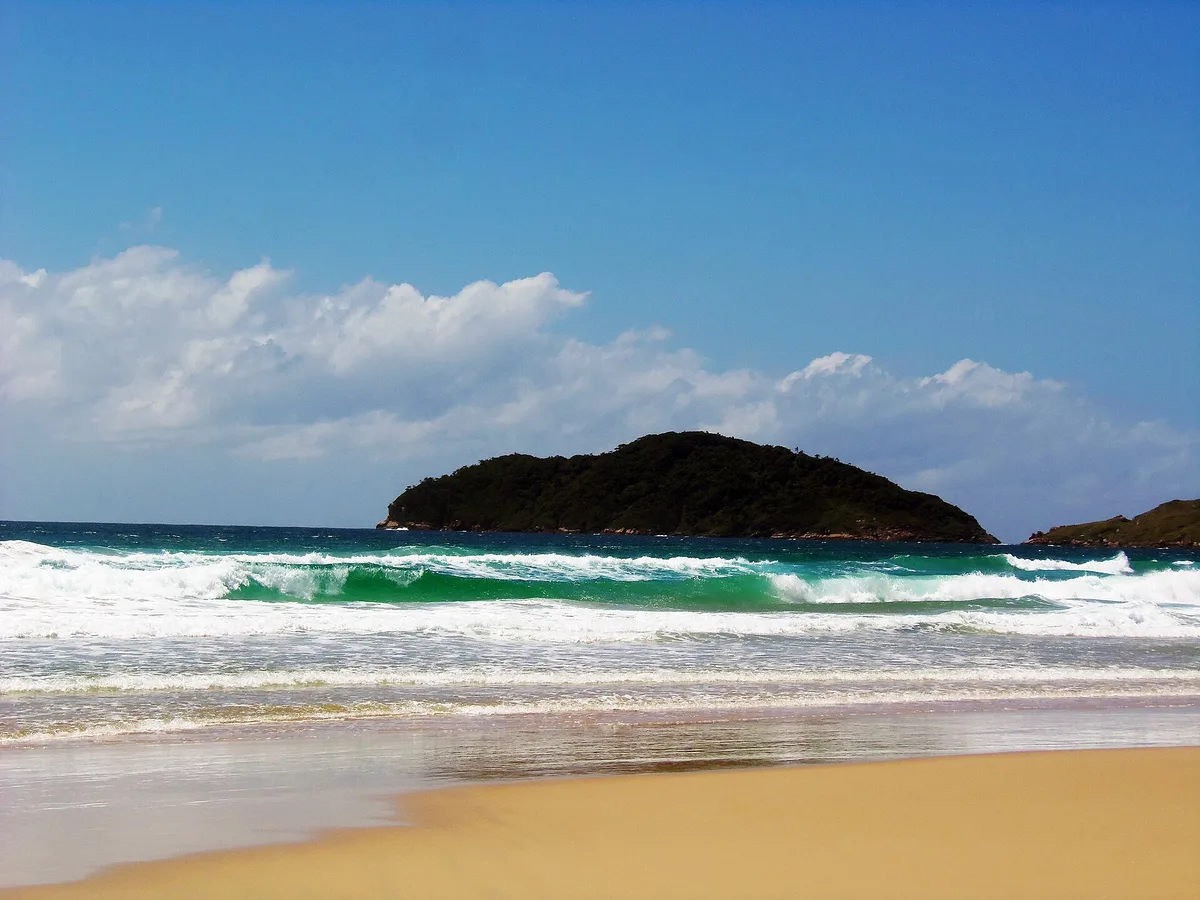
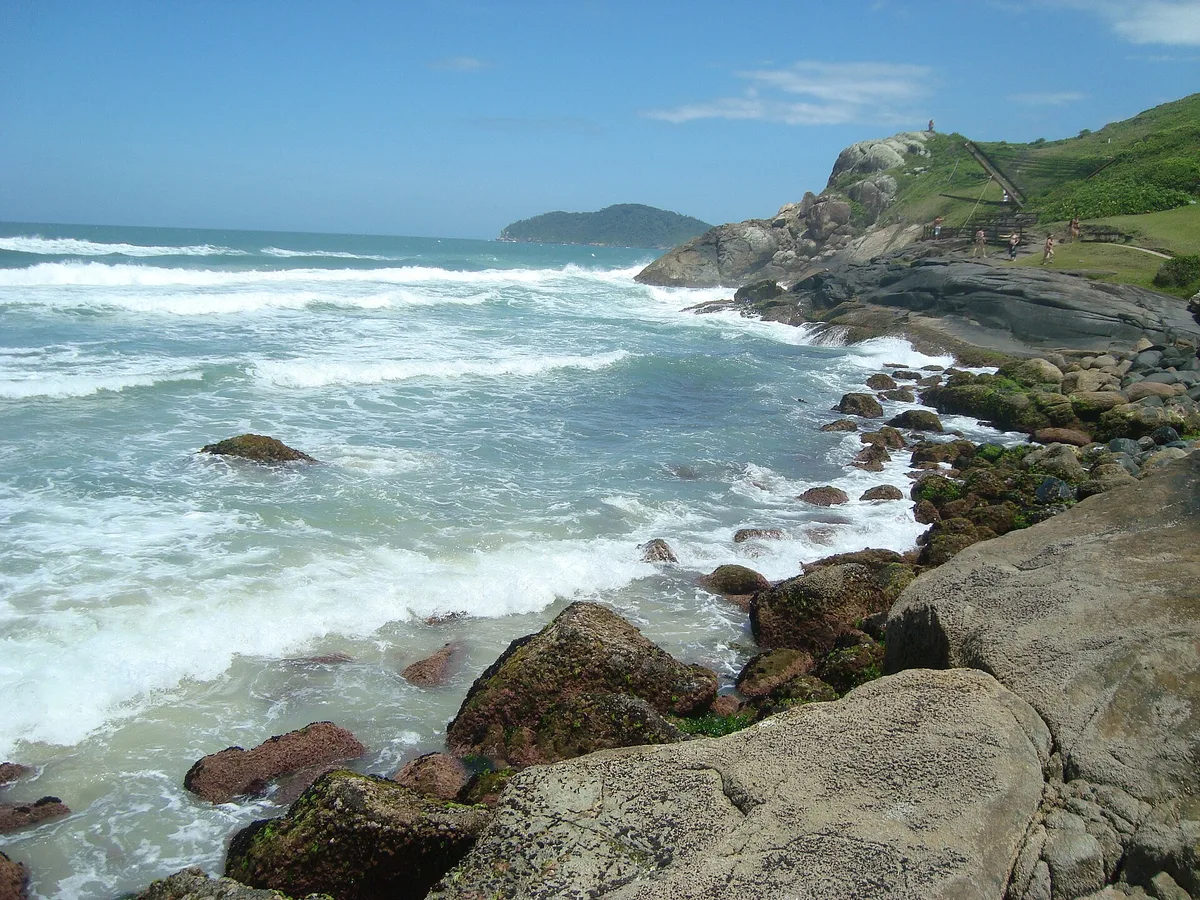
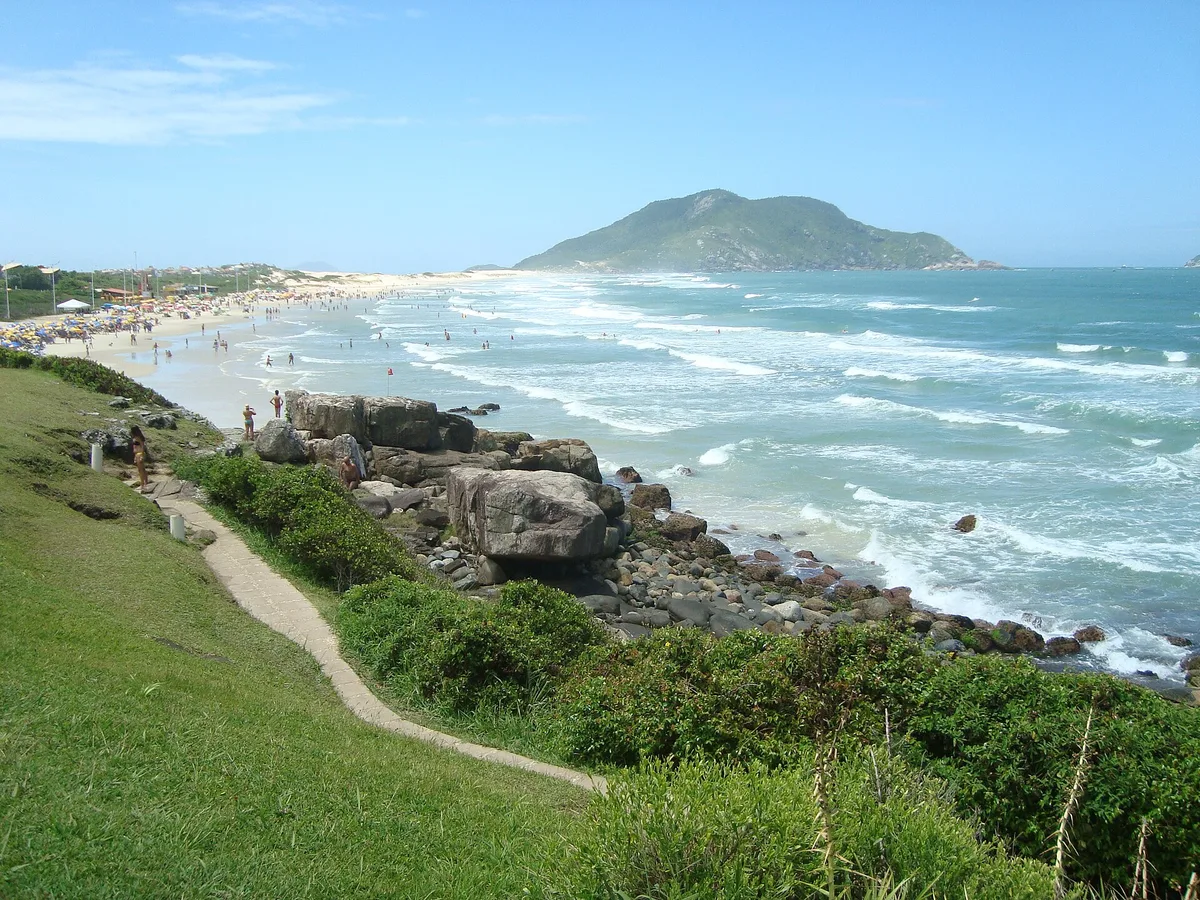
Praia do Santinho stretches roughly 2 kilometres along the north coast of Florianópolis, its golden sand backed by restinga dune vegetation that has changed little since the first humans carved figures into the cliff face here centuries ago. The blue Atlantic arrives with force — strong shore break, open swells, and a wild energy that sets this beach apart from the polished resort strips to the south. At low tide, pre-Columbian petroglyphs emerge from the cliff rock at the beach's edge, one of the most remarkable archaeological sites you'll find on any Brazilian beach. Development is deliberately low-density, so the horizon stays clean and the dunes stay intact. It's a place that rewards curiosity over comfort.
How to get there
From Florianópolis city centre, the drive takes around 45 minutes by car; buses run frequently on the same route if you'd rather skip the wheel. Parking is available at the entrance — a mix of limited free public spaces and some paid options — but fills fast in summer, so arrive early. Hercílio Luz International Airport (FLN) is 29 km away. There is no entry fee to the beach itself.
Who it's for
For couples
The low-density development and wild Atlantic backdrop make Santinho genuinely quiet outside peak season — a long walk on golden sand with almost no one else around is easy to find in April or May. The petroglyph discovery at low tide adds a shared experience that goes well beyond a standard beach day.
For families
Families with older children who are curious about archaeology will get a lot from the petroglyph site, but parents should know the shore break is strong and the safety flags must be respected — this is not a calm paddling beach for very young children. The easy road and bus access, plus parking at the entrance, at least makes the logistics straightforward.
Our take
Praia do Santinho earns its place on the north coast of Florianópolis not through polish but through substance. The shore break is strong and demands respect — rips, rocks, and urchins are real hazards, and the flags are there for a reason. Swim carefully or watch from the sand. What makes this beach genuinely worth the 32-minute drive is the petroglyph site: pre-Columbian carvings on the cliff face, visible only at low tide, sitting right there on a public beach with no fence and no queue. Plan your visit around the tides, wear shoes for the rocky approach, and don't touch the carvings. Avoid December through February when the beach gets busy and petroglyph access becomes harder. Come in April, May, or November — the Atlantic is still warm enough, the golden sand is largely yours, and the restinga dunes look exactly as they should.
What to do
The petroglyphs are the headline act — plan your visit around low tide and allow time to study the carvings properly. Two viewpoints nearby, the Mirante at 1.2 km and Mirante do Cachorro at 1.6 km, offer elevated perspectives over the coastline worth the short walk. Parque Estadual do Rio Vermelho, 8 km away, adds Atlantic forest trails and a freshwater lagoon to the day. The 18th-century Fortaleza de São José da Ponta Grossa, 15 km northwest, rounds out the archaeology and history angle if you have a full day.
The petroglyph cliff face at low tide is unlike anything else on the Brazilian coast — frame the ancient carvings against the blue Atlantic for a shot that needs no filter.
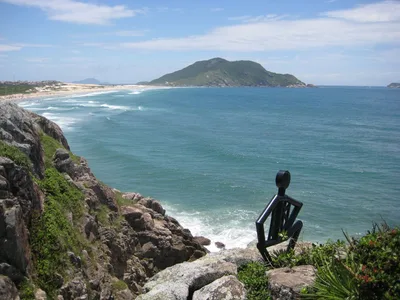
The Mirante do Cachorro at 1.6 km delivers a sweeping view of the golden sand and open ocean that photographs best in the warm late-afternoon light.
Where to eat
Rancho do Pescador, just 400 metres from the beach, is the closest option for a post-swim meal. A few kilometres further you'll find Toscana, Restaurante Petisqueira, Bauru da Ilha for Brazilian plates, and Restaurante O Pescador — all within about 3.2 km. Bring snacks and water if you plan to stay all day; on-beach infrastructure is minimal by design.
Where to stay
Pousada Marvel and Residencial Orleans are both around 2 km from the beach and represent the closest overnight options. Pousada Ancoradouros at 2.5 km and Pousada Favareto or Ingleses Praia Hotel at just under 3 km give you a few more choices without straying far from the north coast.
Photography
The petroglyph cliff at low tide is the single most photogenic subject on the beach — early morning light from the east hits the carvings cleanly and keeps the sand in shadow. The Mirante do Cachorro at 1.6 km gives a wide-angle view of the full golden sand arc and blue Atlantic that works best in the late afternoon.
Good to know
The petroglyphs are only visible at low tide — check tidal tables before you go or you'll find nothing but water-covered rock. Do not touch or damage the petroglyphs under any circumstances; they are an irreplaceable archaeological record. Always swim between the flags: the shore break here is strong, and inexperienced swimmers should exercise real caution — watch for rips, rocks, and sea urchins. Cliff access to the petroglyph area involves uneven terrain, so wear closed shoes if you plan to explore that section.
GAMES
🕹️ Five minutes of sand?
Three daily games — including the UV simulator set to this beach.
Map
Nearby places
Rancho do Pescador
Toscana
Restaurante Petisqueira
Bauru da Ilha
Restaurante O pescador
Pousada Marvel
Residencial Orleans
Pousada Ancoradouros
Pousada Favareto
Ingleses Praia Hotel
Praia dos Ingleses
Fortaleza de São José da Ponta Grossa
Parque Estadual do Rio Vermelho
Things to see around Florianópolis
Praia dos Ingleses
Large family beach immediately to the south with full infrastructure.
Fortaleza de São José da Ponta Grossa
18th-century Portuguese colonial fort on the northwest coast.
Parque Estadual do Rio Vermelho
State park with Atlantic forest, trails and a freshwater lagoon near the north coast.
GIFT
🎁 Gift this beach
Its exact coastline, your date, your words — on a print or a PDF you print yourself.
Santinho Beach
THAT DAY
Santinho Beach, Brazilian Atlantic
© OpenStreetMap contributors
Clean & decorative, or “That day” with the real sky of your date.
Shipping included 3-6 business days
A question before you order? Contact us
Delivered within minutes on the confirmation page and by email: a ZIP with all 4 print sizes (30×40 cm, 12×16″, 50×70 cm, 18×24″), each as a high-resolution PDF and PNG (300 dpi), plus a screen version. Print at home or at any print shop.
Please complete the delivery address.
Please accept the Terms of Sale.
Almost there — the shop opens very soon.
Secure payment · Printed locally in 30+ countries · 7 languages
Frequently asked
The information on this page is provided for guidance only and may evolve. Access conditions, safety and infrastructure can change without notice. Always check official sources before traveling.
Nearest beaches
Other wild beaches in Brazil
More beaches in Brazilian Atlantic
Reviews of this beach
- No reviews yet, what a shame — leave yours and share your experience.
Photo credits
Sources and licenses for the photos shown above.
- Photo 1 — Amanda Likes · source · CC BY-SA 4.0
- Photo 2 — Mauro Soares · source · CC BY-SA 3.0
- Photo 3 — Felipe cancian · source · CC BY-SA 3.0
- Photo 4 — atramos · source · CC BY 2.0
- Photo 5 — Mauro Soares · source · CC BY-SA 3.0