Papakolea Green Sand BeachUnited States Beach Guide
One of Earth's four green-sand beaches — earn it
About
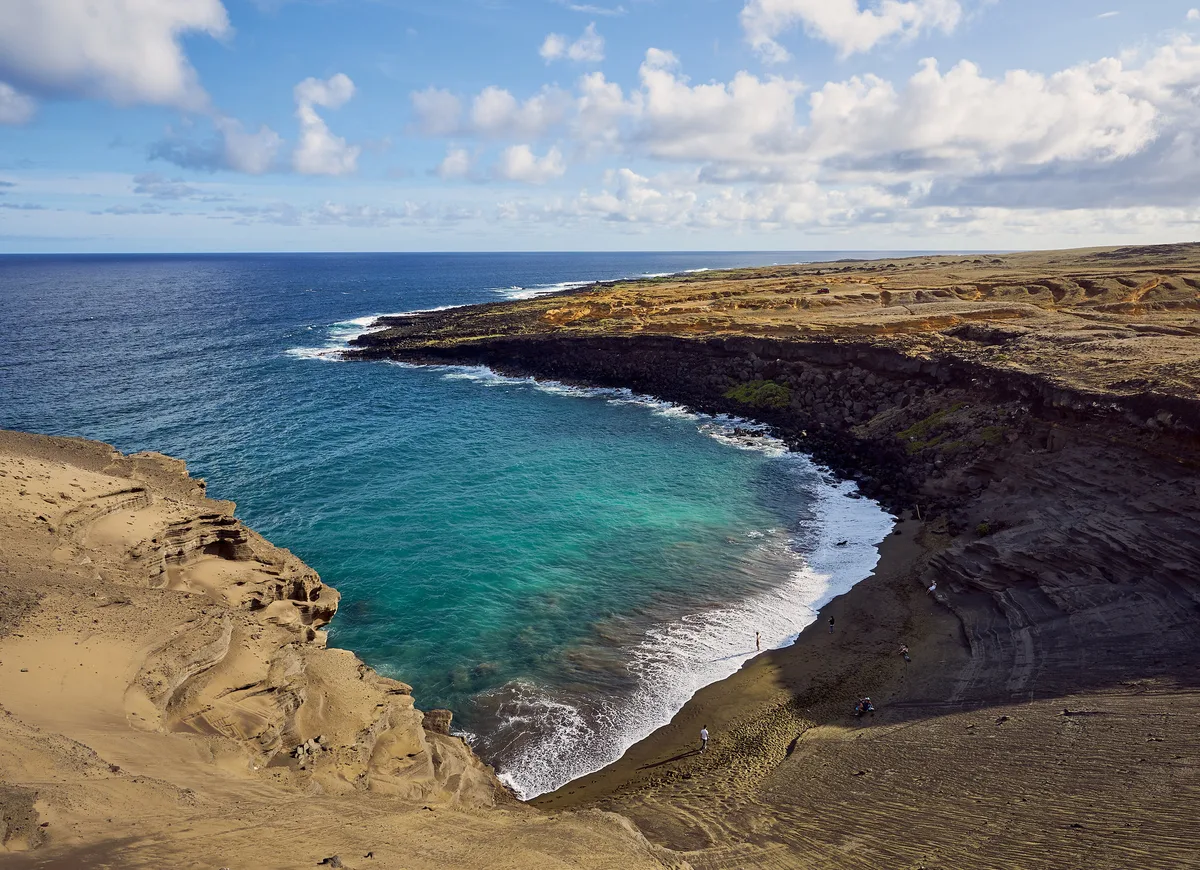
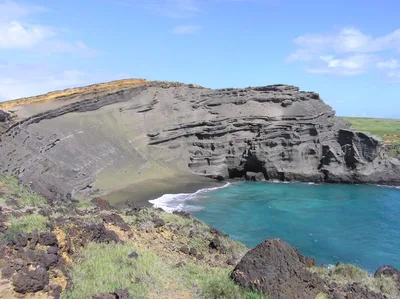
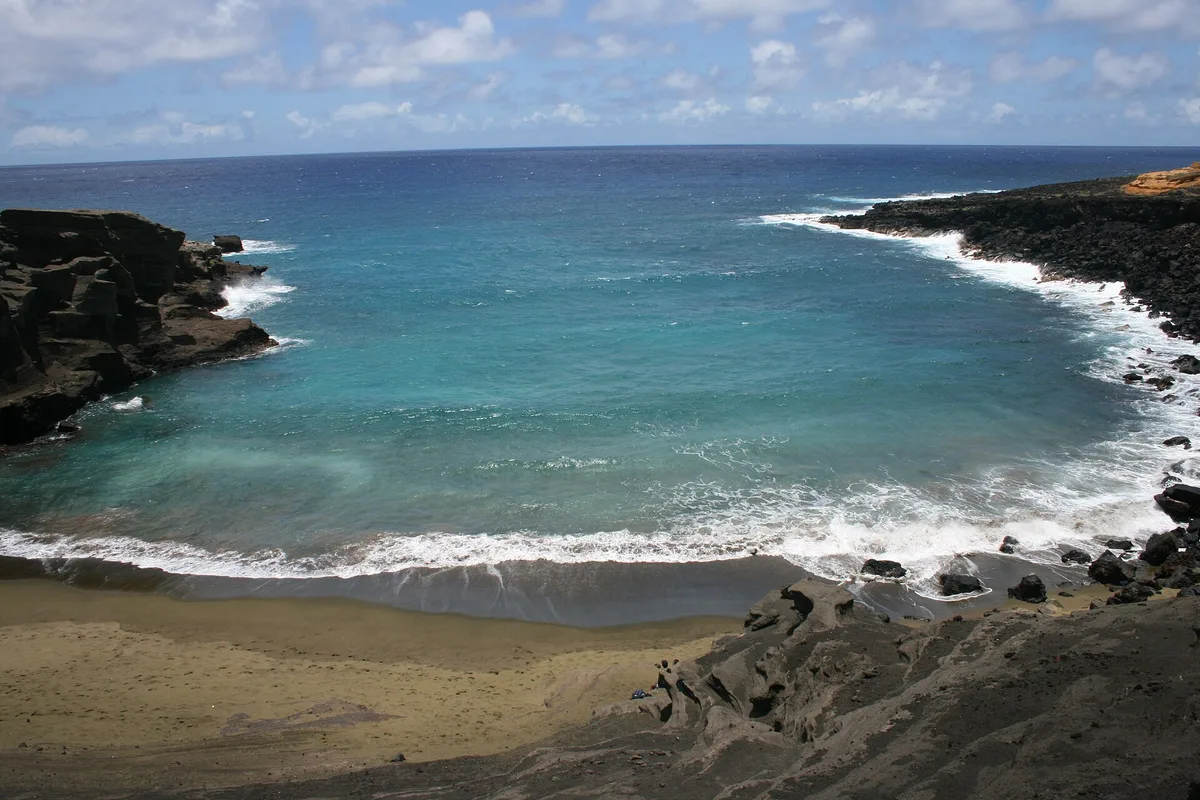
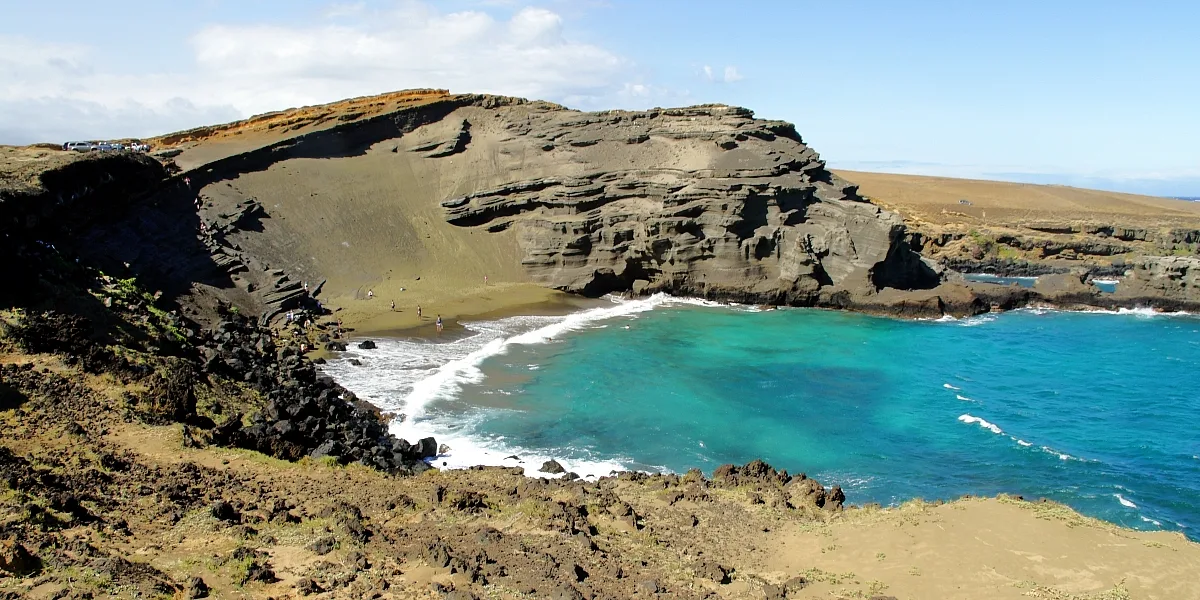
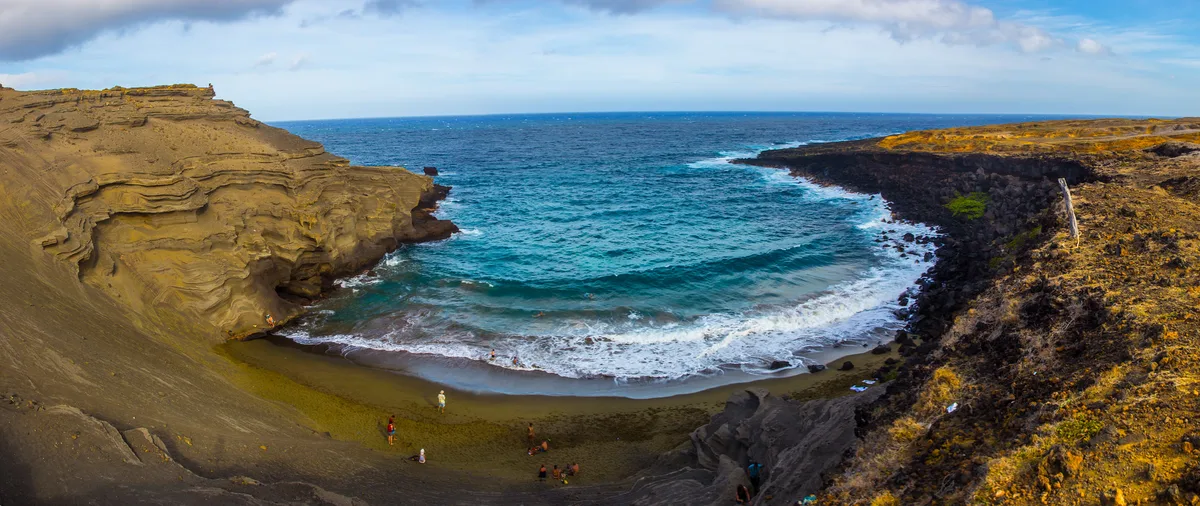
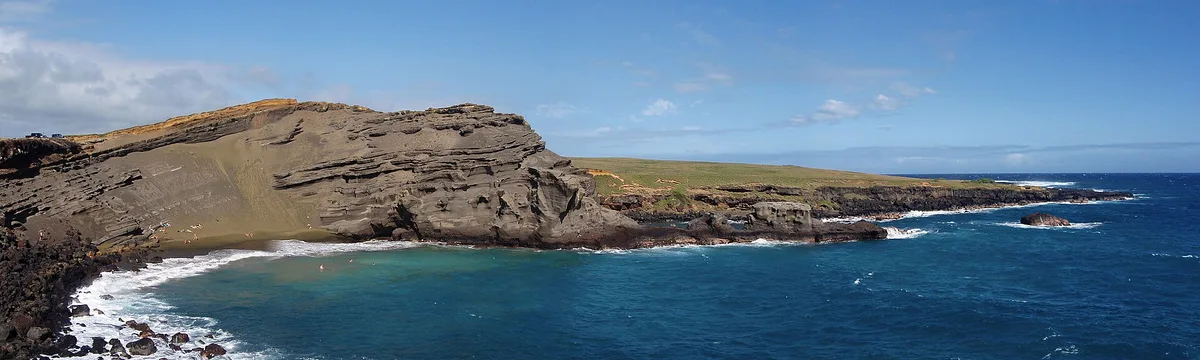
Papakolea Green Sand Beach sits inside an eroded cinder cone at the southern tip of Hawaiʻi Island, its shore carpeted in olivine crystals that give the sand a vivid, unmistakable green colour against the deep blue of the open Pacific. The cove is small — roughly 50 metres of shoreline — carved by centuries of wave action eating into ancient volcanic rock, and the scale of the geology around you is humbling. Wind scours the exposed lava fields constantly, and the descent into the cinder cone bowl feels like dropping into another world. This is one of only four green-sand beaches on the planet, and the remoteness is part of what keeps it that way.
How to get there
The only legal way to reach Papakolea is on foot: a 2.5–3 mile hike each way across open, exposed lava terrain from the unpaved free parking area at the end of South Point Road — allow around 60 minutes each way. Unofficial local shuttle trucks operate from the same parking area charging roughly $20–30 round trip, but these services are unpermitted, illegal, and cause measurable environmental damage to the trail; hiking is the only responsible choice. There is no entry fee. Once at the rim, a steep descent on loose, crumbling dirt and rock brings you down to the beach itself — take it slowly.
Who it's for
For couples
The 2.5-mile hike in and out gives couples a genuine shared challenge, and the small, wild cove at the end — green sand, blue water, no facilities — rewards the effort with a sense of real discovery that a drive-up beach simply cannot replicate.
For families
Older children and teenagers who can handle a 5–6 mile round-trip hike in full sun will find the geology genuinely fascinating, but the steep crumbling descent into the cove, the dangerous water, and the complete lack of facilities make this unsuitable for young children or anyone who needs shade, rest stops, or swimming.
Our take
Let's be direct: the water at Papakolea is off-limits. Dangerous currents and a punishing shore break have no lifeguard to counter them, and the remote location means any emergency is serious. That said, this beach earns its reputation on geology alone — green olivine sand in a collapsed cinder cone, one of four such beaches on Earth, reached only by a 5-mile round-trip hike across open lava. The difficulty is the point. Come prepared with water, sun protection, and solid footwear, and leave with nothing but photographs. Avoid November through February when winter swells make the cove more dangerous and the exposed hike miserable in rain. The best months are May through October when conditions are most stable — go early, hike smart, and respect the place.
What to do
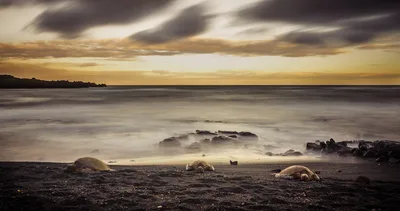
Before or after the hike, follow the coastline roughly 1.5 km to find a striking sea arch sculpted from the same volcanic rock. Ka Lae — South Point — is just 4.6 km away and marks the southernmost point in the United States, where dramatic sea cliffs drop into the ocean and ancient Hawaiian canoe mooring holes are still visible in the rock. If you have more time, Punalu'u Black Sand Beach 26.7 km north offers a completely different volcanic shore experience and is one of the most reliable spots on the island to see green sea turtles hauled out on the sand.
The rim of the cinder cone is the defining shot — stand at the edge and capture the full bowl of green sand meeting deep blue ocean with the volcanic walls framing everything.
At beach level, get low and shoot the olivine-green sand in the foreground with the blue Pacific filling the background; morning light before 10 a.m. gives the richest colour contrast.
Where to eat
There are zero facilities at the beach, so eat before you leave. Pizza Pazza and El Encanto Food Truck, both within about 14 km back toward Naalehu, are worth the drive after the hike. Big Dogs Hot Dogs, roughly 15 km away, has built a serious local following and is a solid stop on the way back to the highway.
Where to stay
A handful of off-grid, secluded properties within 4 km of the trailhead offer 180-degree ocean views — genuinely useful if you want to start the hike at first light before the day's heat builds. Pele's Eye, rated 4.8 out of 5 from 18 reviews and about 5.8 km away, is the closest named option with a track record.
Photography
The best shot is from the rim of the cinder cone looking down: green sand, blue ocean, volcanic walls — shoot in the morning when the sun is behind you and the green colour pops most vividly. At beach level, frame the olivine-flecked sand close against the deep blue water with the eroded cone walls rising in the background for a composition that makes the geology the story.
Good to know
Do not remove any sand or olivine crystals — it is illegal and directly damages the beach that makes this place worth visiting. No fires are permitted, and you must pack out every piece of trash you bring in. The hike is entirely without shade under intense Hawaiian sun and strong winds, so carry at least 2–3 litres of water per person and serious sun protection. Do NOT enter the water: dangerous currents and a powerful shore break make swimming extremely hazardous, there are no lifeguards, and the remote location means help is a very long way away.
GAMES
🕹️ Five minutes of sand?
Three daily games — including the UV simulator set to this beach.
Map
Nearby places
Kalaekilohana Inn & Retreat
Pizza Pazza
Taco Bout Aloha
El Encanto Food Truck
Big Dogs Hot Dogs
A charming, secluded, off-grid, quiet and a 180 degree view of the ocean.
A charming, secluded, off-grid, quiet and a 180 degree view of the ocean.
A charming, secluded, off-grid, quiet and a 180 degree view of the ocean.
Pele’s Eye
Just minutes from Green Sands Beach and Volcano!
Ka Lae (South Point)
Punalu'u Black Sand Beach
Hawaii Volcanoes National Park
Things to see around Ka'u
Ka Lae (South Point)
Southernmost point in the United States with dramatic sea cliffs and ancient Hawaiian canoe mooring holes.
Punalu'u Black Sand Beach
Accessible black-sand beach with reliable green sea turtle haul-outs.
Hawaii Volcanoes National Park
UNESCO World Heritage site with active volcanic landscapes including Kilauea crater.
GIFT
🎁 Gift this beach
Its exact coastline, your date, your words — on a print or a PDF you print yourself.
Papakolea Green Sand Beach
THAT DAY
Papakolea Green Sand Beach, Hawaii
© OpenStreetMap contributors
Clean & decorative, or “That day” with the real sky of your date.
Shipping included 3-6 business days
A question before you order? Contact us
Delivered within minutes on the confirmation page and by email: a ZIP with all 4 print sizes (30×40 cm, 12×16″, 50×70 cm, 18×24″), each as a high-resolution PDF and PNG (300 dpi), plus a screen version. Print at home or at any print shop.
Please complete the delivery address.
Please accept the Terms of Sale.
Almost there — the shop opens very soon.
Secure payment · Printed locally in 30+ countries · 7 languages
Frequently asked
The information on this page is provided for guidance only and may evolve. Access conditions, safety and infrastructure can change without notice. Always check official sources before traveling.
Other beaches in the region
Other wild beaches in Hawaii
More beaches in Hawaii
Reviews of this beach
- No reviews yet, what a shame — leave yours and share your experience.
Photo credits
Sources and licenses for the photos shown above.