Waipio Valley BeachUnited States Beach Guide
Sacred black sand valley, dramatic walls, no swimming
About
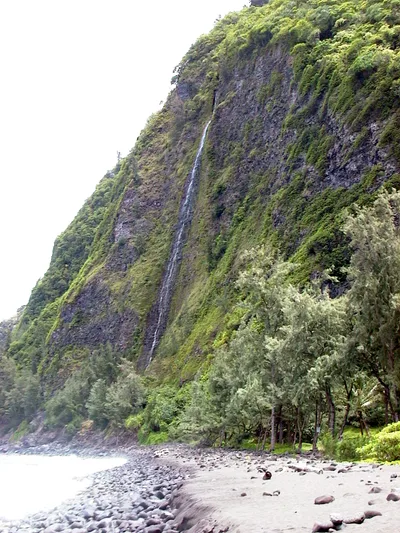
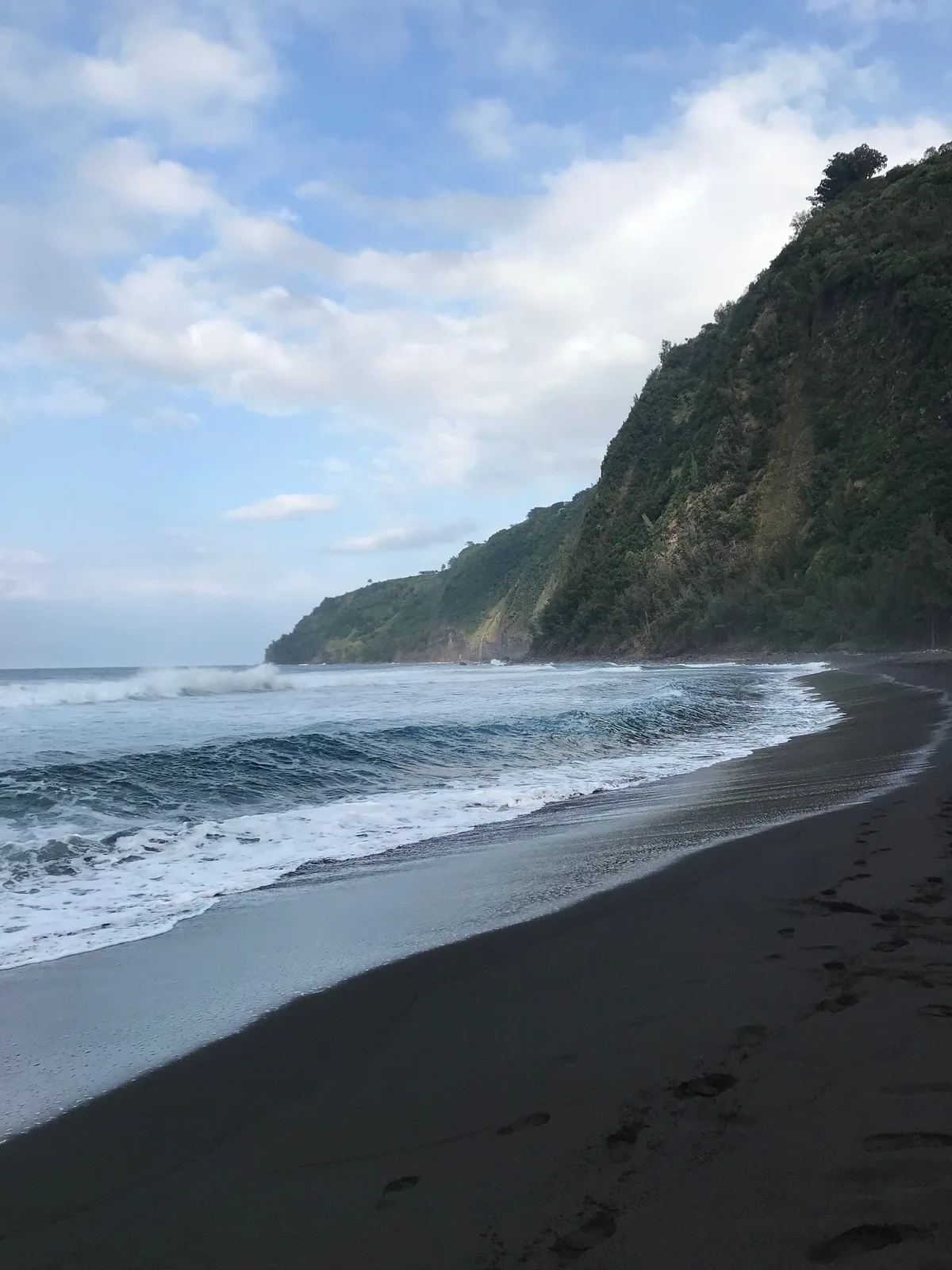
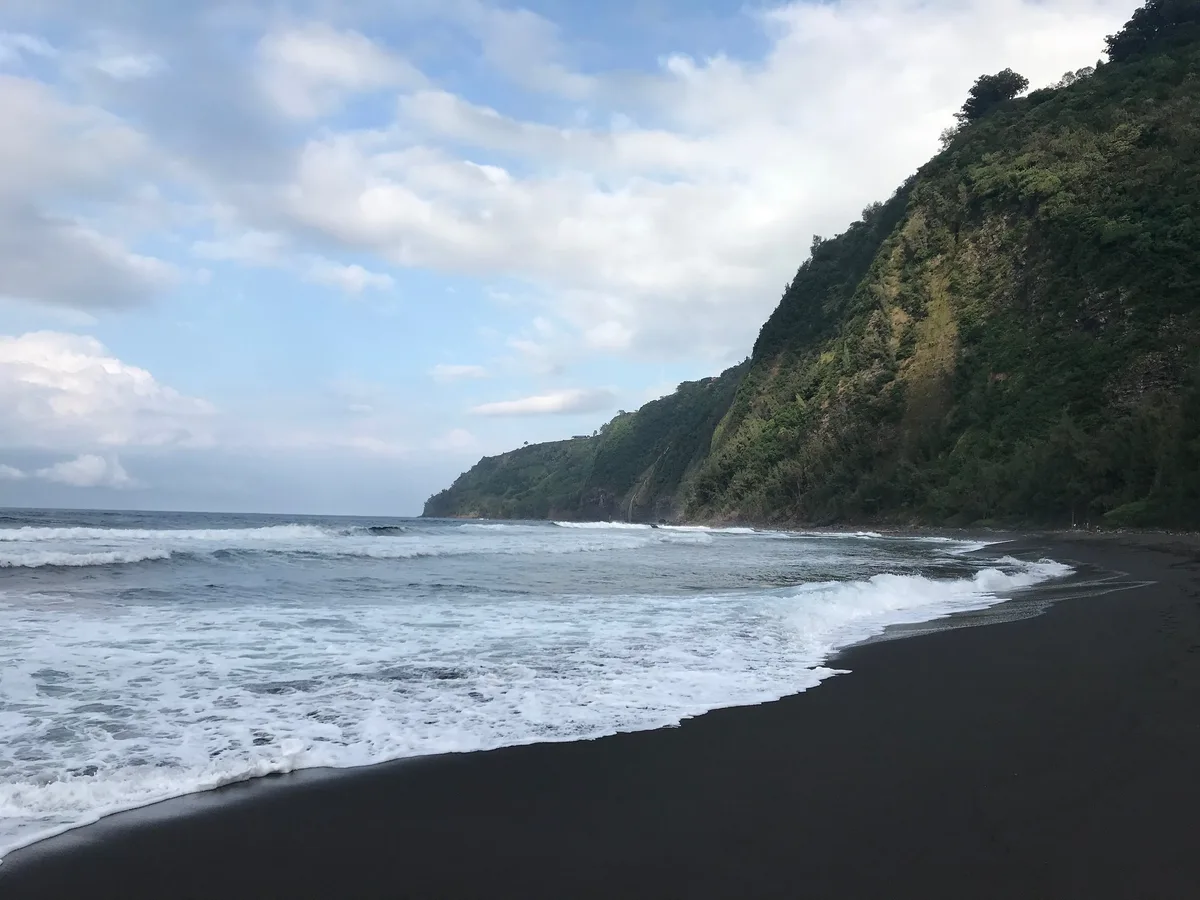
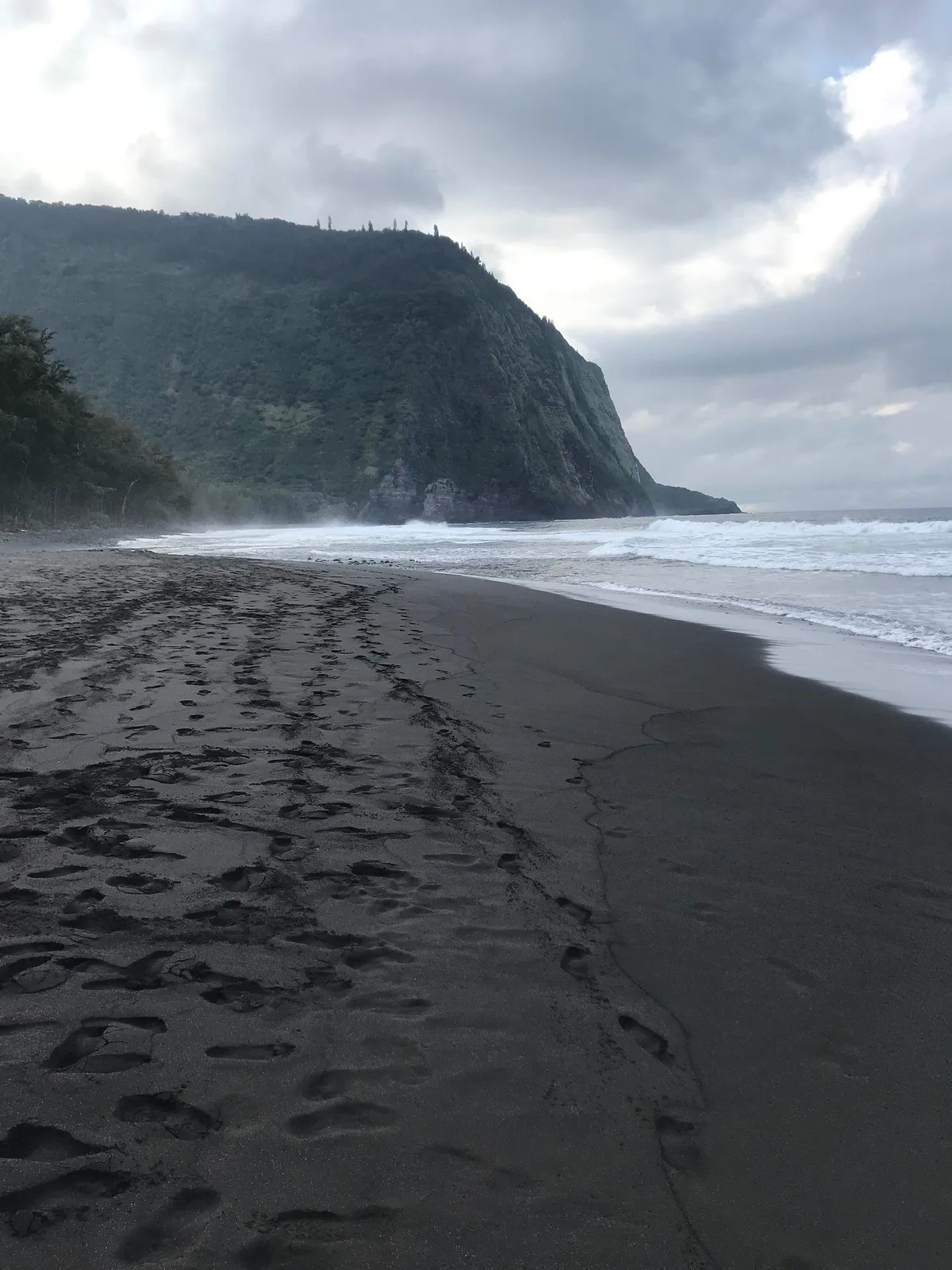
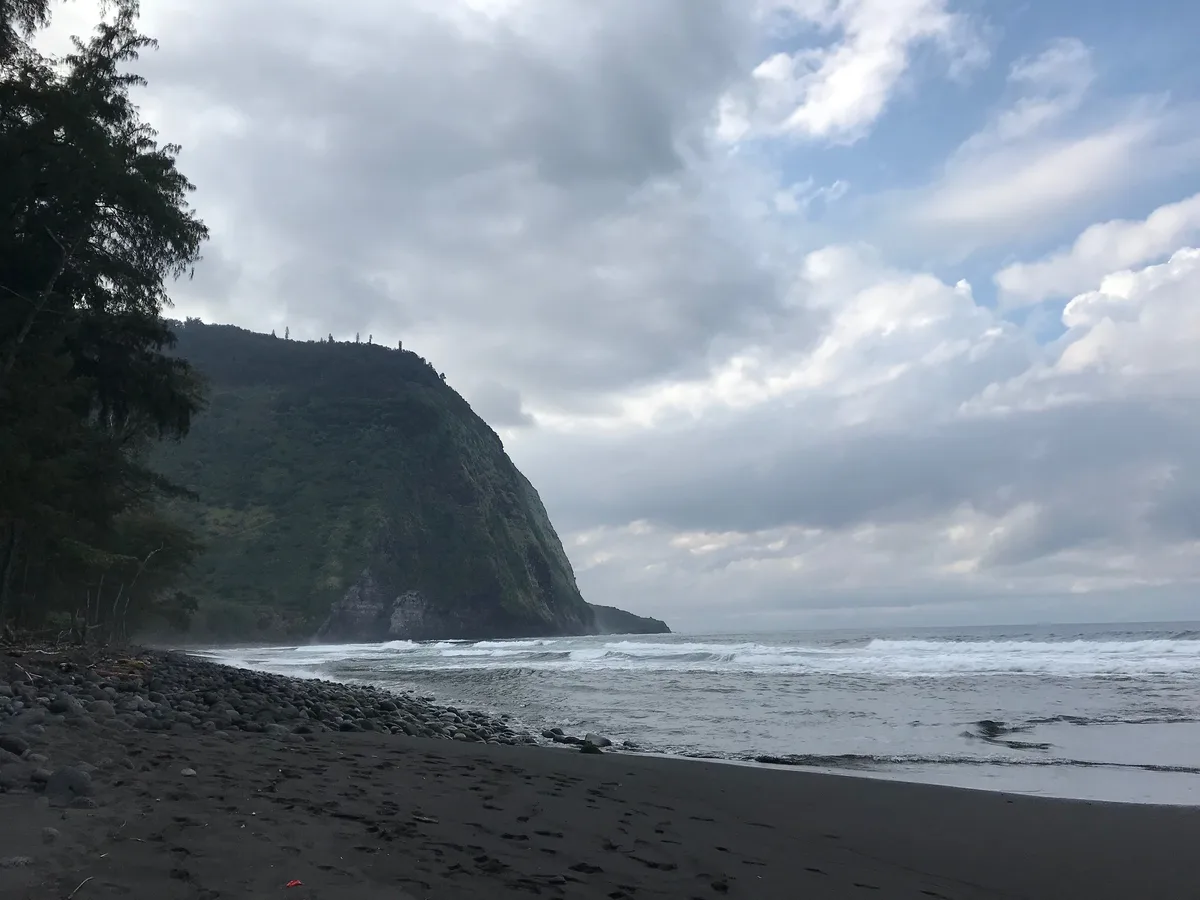
Waipio Valley Beach stretches roughly 600 metres of dark volcanic black sand at the foot of 2,000-foot valley walls on Hawaiʻi Island's Hāmākua Coast. The Wailoa River meets the deep blue Pacific here at a taro field river delta, with Hiʻilawe waterfall visible in the distance against the green cliffs. It's one of the most culturally significant landscapes in all of Hawaiʻi — a sacred valley where taro farming has continued for centuries. The wild, untouched vibe is real: visitor access is tightly controlled, the valley stays quiet, and the scale of the place is genuinely humbling.
How to get there
Non-resident visitors can only reach the valley floor via a licensed shuttle tour departing from the Waipio Valley Overlook parking area — tours run daily and take approximately 90 minutes. The overlook itself sits at the end of Highway 240 and has a free parking lot; that viewpoint is accessible to everyone. Waipio Valley Road descends at a 25% grade and is restricted to Hawaiʻi County residents, permitted tour operators, and Native Hawaiians with low-range 4WD vehicles — as of May 2026, pedestrian hiking down the road is also prohibited for visitors. Book a licensed tour operator in advance; there is no walk-in access to the beach for non-residents.
Who it's for
For couples
The sheer scale of the valley walls and the quiet, controlled access make this an intensely atmospheric place to experience together — arrive at the overlook at sunrise before tour groups gather for an uninterrupted view over the black sand and blue water below.
For families
The valley floor is not suitable for young children — the access is restricted, flash flooding is a real risk, and there is no swimming. Families with older children can enjoy the overlook viewpoint and the cultural context of the tour, but this is not a beach day destination.
Our take
Waipio Valley Beach is not a beach you go to swim, sunbathe, or play in the water — do not attempt any of that. The rip currents are dangerous year-round, and the valley's restricted access exists for good reason: this is sacred Hawaiian land, still actively farmed, and the environment can turn hazardous fast with flash flooding and a river crossing that becomes dangerous after rain. What it is, unambiguously, is one of the most visually and culturally powerful places in the Hawaiian Islands — 600 metres of black volcanic sand backed by 2,000-foot walls, taro fields, and a waterfall, reached only by those who plan ahead and book a tour. The overlook alone justifies the drive from anywhere on the island. Come for the scale, the history, and the landscape — not for a beach day.
What to do
The Waipio Valley Overlook, just 0.5km from the beach, delivers one of the most dramatic viewpoints on the island — the full sweep of black sand, valley walls, and ocean from above is worth the drive to Honokaa alone. From the overlook area, the Waimanu and King's Trailhead at 1km opens up longer backcountry routes for permitted hikers. The Whitefin Shark Fishpond at Lalakea Lokoʻiʻa, 0.6km away, is a historic Hawaiian fishpond that adds cultural depth to any visit. For a broader sense of the region, Honokaa Town at 10km offers plantation-era architecture, local shops, and the Honokaa People's Theatre.
The Waipio Valley Overlook at 0.5km is the single most photographed vantage point — frame the full arc of black sand, valley walls, and deep blue ocean from the railing at golden hour.
On the valley floor via tour, the taro fields with the Hiʻilawe waterfall rising behind them make a uniquely Hawaiian composition. The contrast of dark volcanic sand against the blue Pacific at the river delta is the defining shot of the beach itself.
Where to eat
Waipiʻo Cookhouse, just 1.9km from the valley, is the closest option for a meal after your tour. Further out in Waimea, around 12–13km away, you'll find a cluster of options including The Fish & The Hog Market Cafe, Big Island Brewhaus for burgers, and Ippy's Hawaiian BBQ. Pack snacks and water for the valley itself — there are no food or drink facilities on the valley floor.
Where to stay
The closest options sit right at the valley's edge: Waipio Valley and Ocean View at 0.6km and Waipio Glass House and Cliff House both at 0.9km put you within earshot of the overlook. Hale Kukui Orchard and Resort, 1.4km out, carries a strong 4.8-star rating across 22 reviews and offers a more resort-style stay surrounded by orchard land. Waipio Heaven at 1.2km rounds out the immediate area for those wanting to linger.
Photography
Shoot from the Waipio Valley Overlook at first light — the low morning sun rakes across the valley walls and catches the black sand beach and blue ocean below in a single frame. On the valley floor (via tour), position yourself with the taro fields and Hiʻilawe waterfall backdrop behind the black sand for the most layered, culturally rich composition.
Good to know
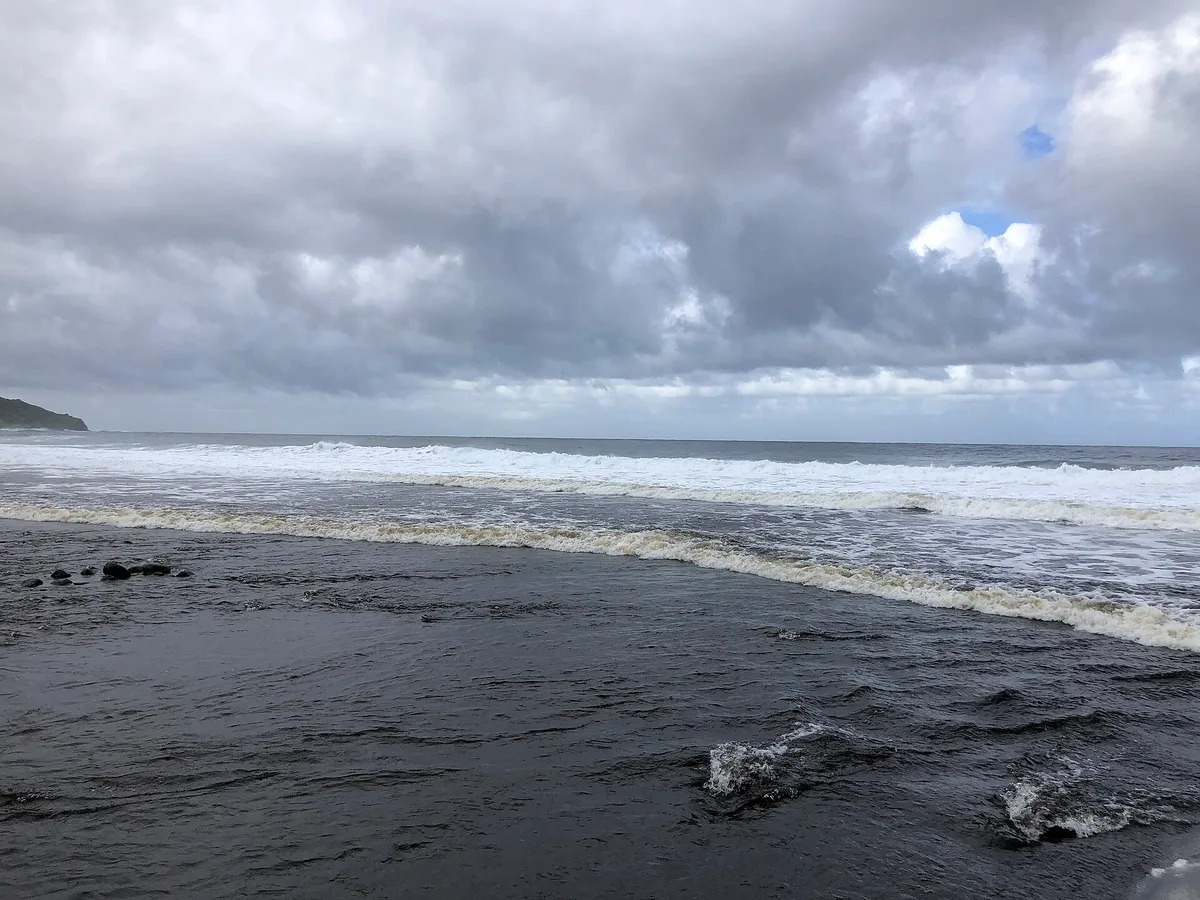
Do NOT enter the water under any circumstances — strong rip currents at the river mouth and frequent high surf make swimming dangerous year-round. Flash flooding can strike the valley floor rapidly after heavy rain, and the river crossing can become impassable without warning; check conditions before your tour. Respect the taro farmers and stay off private agricultural land in the valley — this is a living, working community, not a park. Avoid visiting November through March when heavy winter rain makes conditions slippery and flash flood risk increases significantly.
GAMES
🕹️ Five minutes of sand?
Three daily games — including the UV simulator set to this beach.
Map
Nearby places
Waipi'o Cookhouse
The Fish & The Hog Market Cafe
Big Island Brewhaus
Dan-o's Doner
Ippy’s Hawaiian BBQ
Waipio Valley and Ocean View
Waipio Glass House
Cliff House
Waipio Heaven
Hale Kukui Orchard and Resort
Waipio Lookout
Whitefin Shark Fishpond - Lalakea Loko I'a
Waimanu & King's Trailhead
Things to see around Hawaii County
Waipio Valley Overlook
Dramatic overlook of the sacred valley at the end of Highway 240 — one of the most photographed views on the island.
Akaka Falls State Park
442-foot Akaka Falls and 100-foot Kahuna Falls accessible via a short loop trail through tropical rainforest.
Honokaa Town
Historic plantation-era town with local shops, restaurants, and the Honokaa People's Theatre.
GIFT
🎁 Gift this beach
Its exact coastline, your date, your words — on a print or a PDF you print yourself.
Waipio Valley Beach
THAT DAY
Waipio Valley Beach, Hawaii
© OpenStreetMap contributors
Clean & decorative, or “That day” with the real sky of your date.
Shipping included 3-6 business days
A question before you order? Contact us
Delivered within minutes on the confirmation page and by email: a ZIP with all 4 print sizes (30×40 cm, 12×16″, 50×70 cm, 18×24″), each as a high-resolution PDF and PNG (300 dpi), plus a screen version. Print at home or at any print shop.
Please complete the delivery address.
Please accept the Terms of Sale.
Almost there — the shop opens very soon.
Secure payment · Printed locally in 30+ countries · 7 languages
Frequently asked
The information on this page is provided for guidance only and may evolve. Access conditions, safety and infrastructure can change without notice. Always check official sources before traveling.
Nearest beaches
Other wild beaches in Hawaii
More beaches in Hawaii
Reviews of this beach
- No reviews yet, what a shame — leave yours and share your experience.
Photo credits
Sources and licenses for the photos shown above.