Wai'ānapanapa State Park BeachUnited States Beach Guide
Volcanic black sand, wild beauty, serious hazards
About
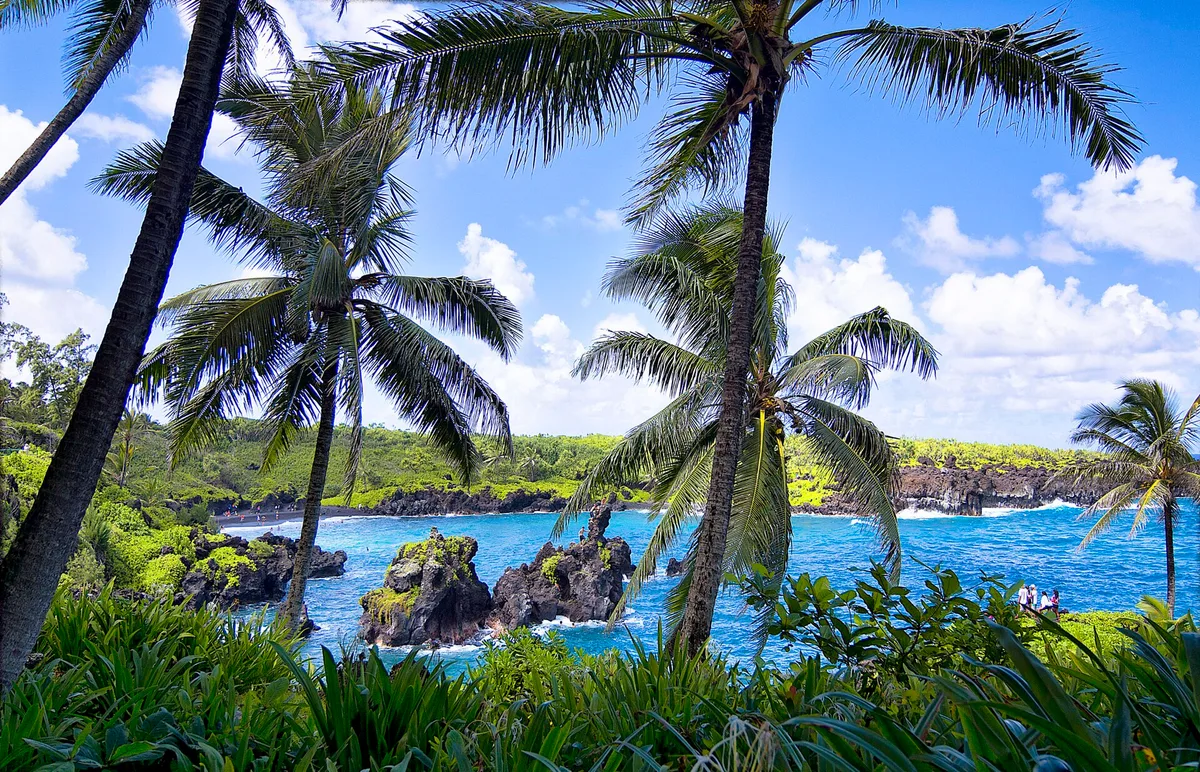
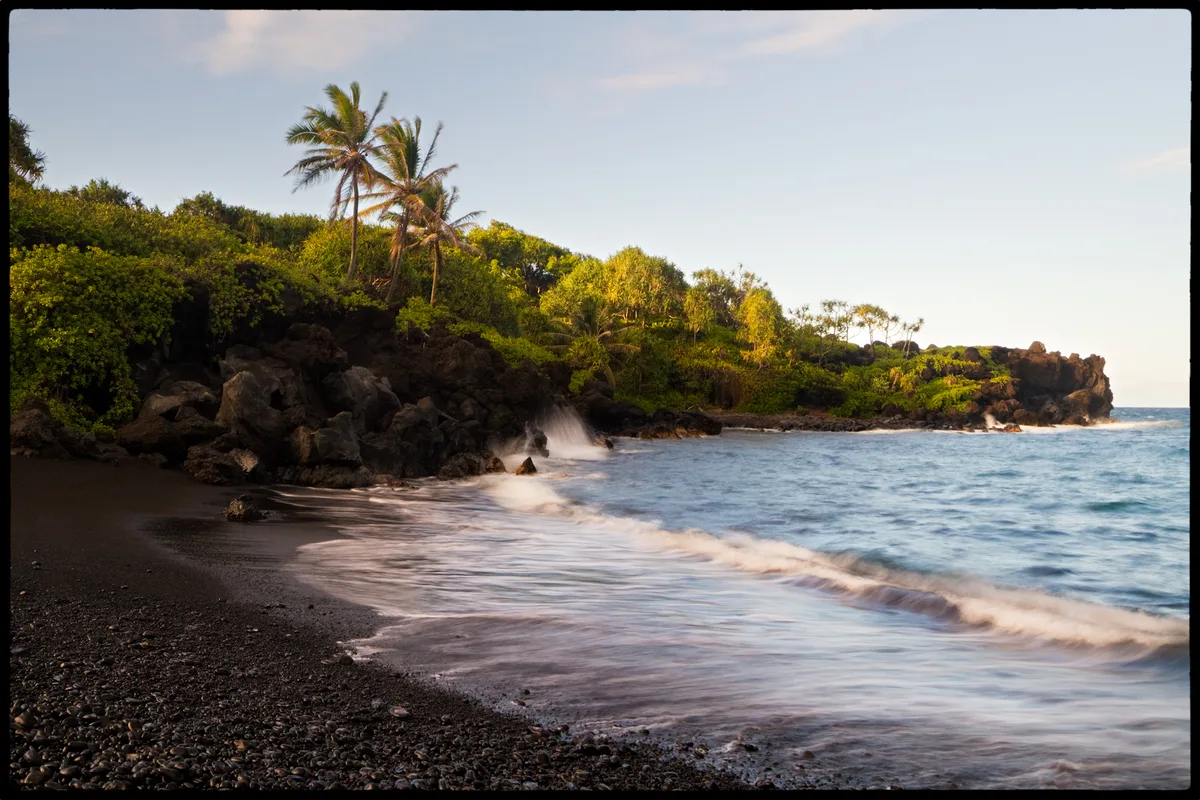
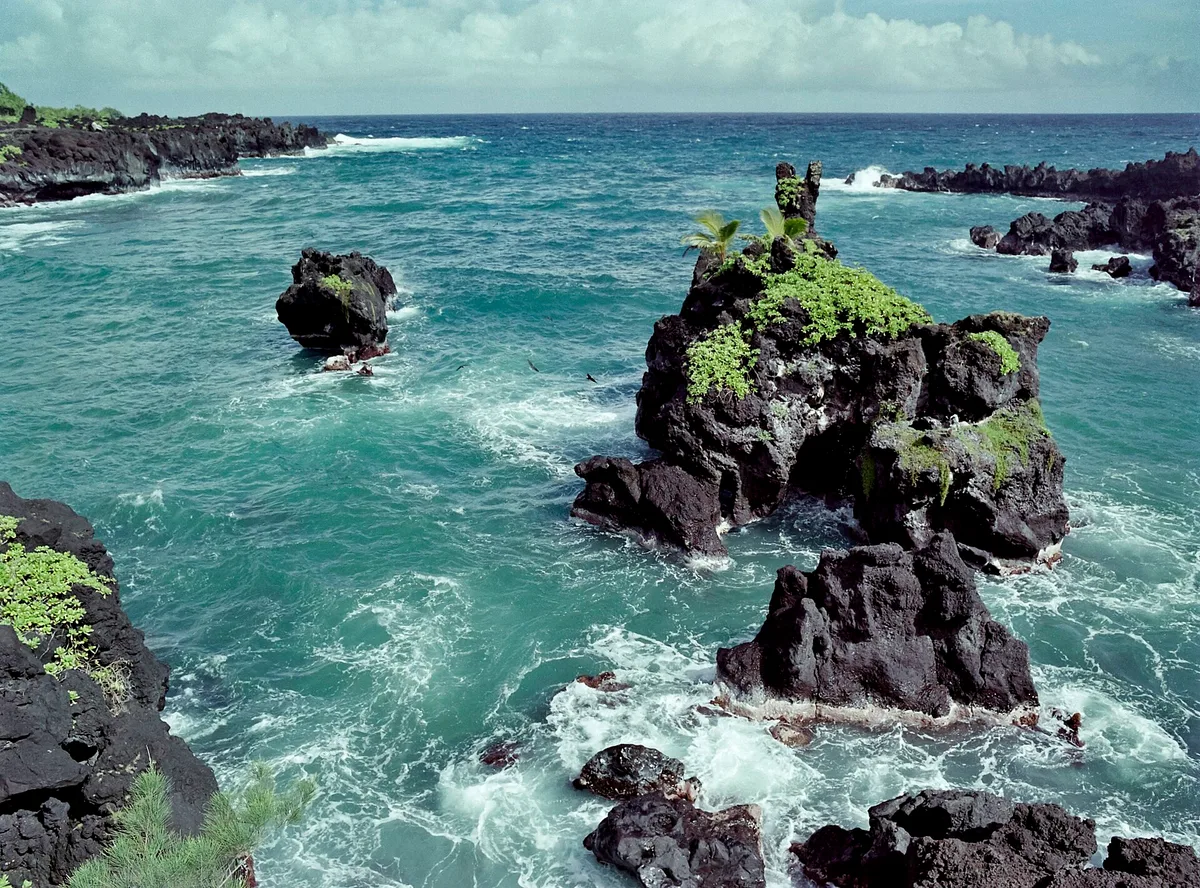
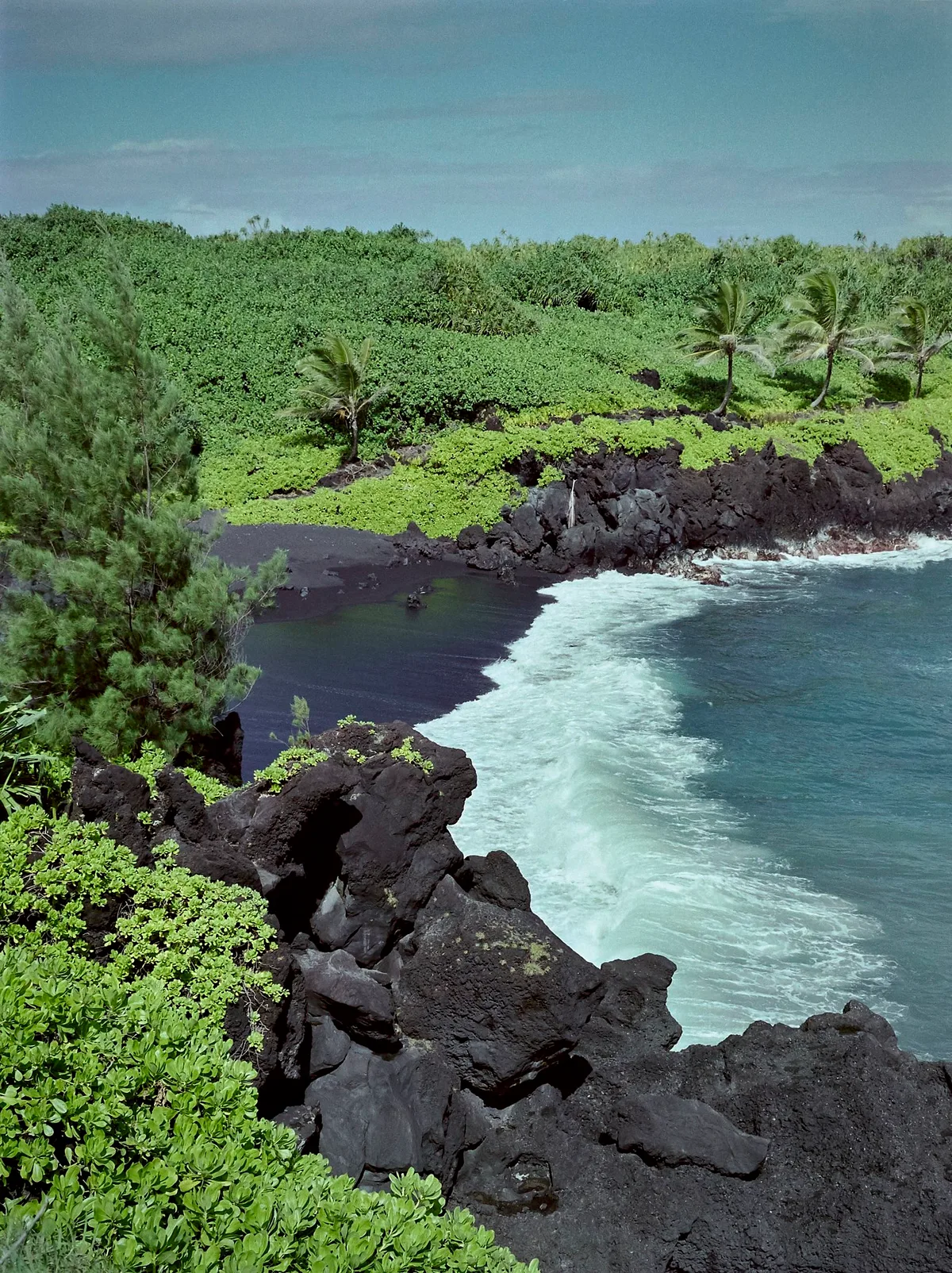
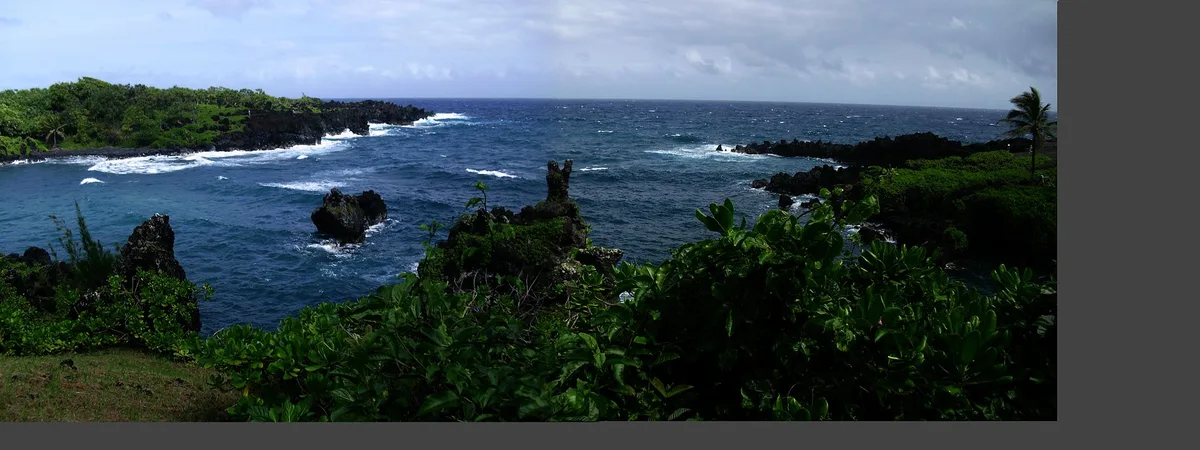
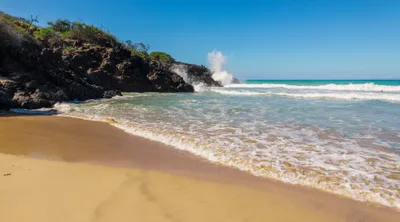
Wai'ānapanapa State Park Beach sits on Maui's remote eastern coast near Hāna, where jet-black basalt sand and pebbles meet deep blue open ocean in one of Hawaii's most striking coastal scenes. The beach stretches roughly 180 metres, framed by dramatic lava formations, a sea arch, and a dense hala forest that lines the coastal trail. Ancient Hawaiian burial sites lie nearby, lending the place a weight that goes beyond scenery. The vibe is wild and elemental — this is not a lounging beach, it's a place you come to witness. Waves crash hard against lava shelves, the air smells of salt and wet stone, and the contrast of black volcanic sand against blue water is unlike anything else in the Pacific.
How to get there
Wai'ānapanapa is about 10 minutes by car from Hāna town via the Hāna Highway. The park is open daily from 7:00 AM to 6:00 PM. Non-residents must book in advance through the Hawaii DLNR reservation system at gostateparks.hawaii.gov or gowaianapanapa.com — day-of entry is not guaranteed. Paid parking is $10 USD per vehicle, and there's a $5 USD per person entry fee for non-residents; Hawaii residents with valid ID are exempt from both fees.
Who it's for
For couples
The raw, elemental landscape — black volcanic sand, crashing blue ocean, sea arch, ancient forest trail — makes this a powerful shared experience for couples who want something far beyond a standard beach day.
For families
Older children who can follow trail rules and stay well back from the water's edge will find the blowholes and lava formations genuinely fascinating, but this beach is not suitable for young children near the shoreline given the dangerous surge and uneven black pebbles.
Our take
Let's be direct: Wai'ānapanapa is one of the most visually striking beaches in Hawaii, and it is also genuinely dangerous. Do not go in the water — the surge, currents, and wave action against lava have killed people here, and there is no lifeguard. Come for the photography, the coastal trail, the sea arch, and the rare experience of standing on jet-black volcanic sand beside deep blue open ocean. The advance reservation requirement is real and enforced, so plan ahead or you won't get in. Avoid November through February when winter swells make the lava shoreline even more hazardous. This is a place that demands respect, not a beach day — and visitors who arrive with that mindset leave with some of the most extraordinary images of their trip.
What to do
Two blowholes sit within 0.6 km of the beach and are worth the short walk — the lava coastline amplifies the drama. The hala forest coastal trail is one of the park's highlights, threading through ancient landscape with views back over the black volcanic sand. Hana Lava Tubes, 3.1 km away, offer a guided underground experience that pairs naturally with a visit here. Further afield, 'Ohe'o Gulch (Seven Sacred Pools) at 20 km south delivers tiered freshwater pools inside Haleakalā National Park.
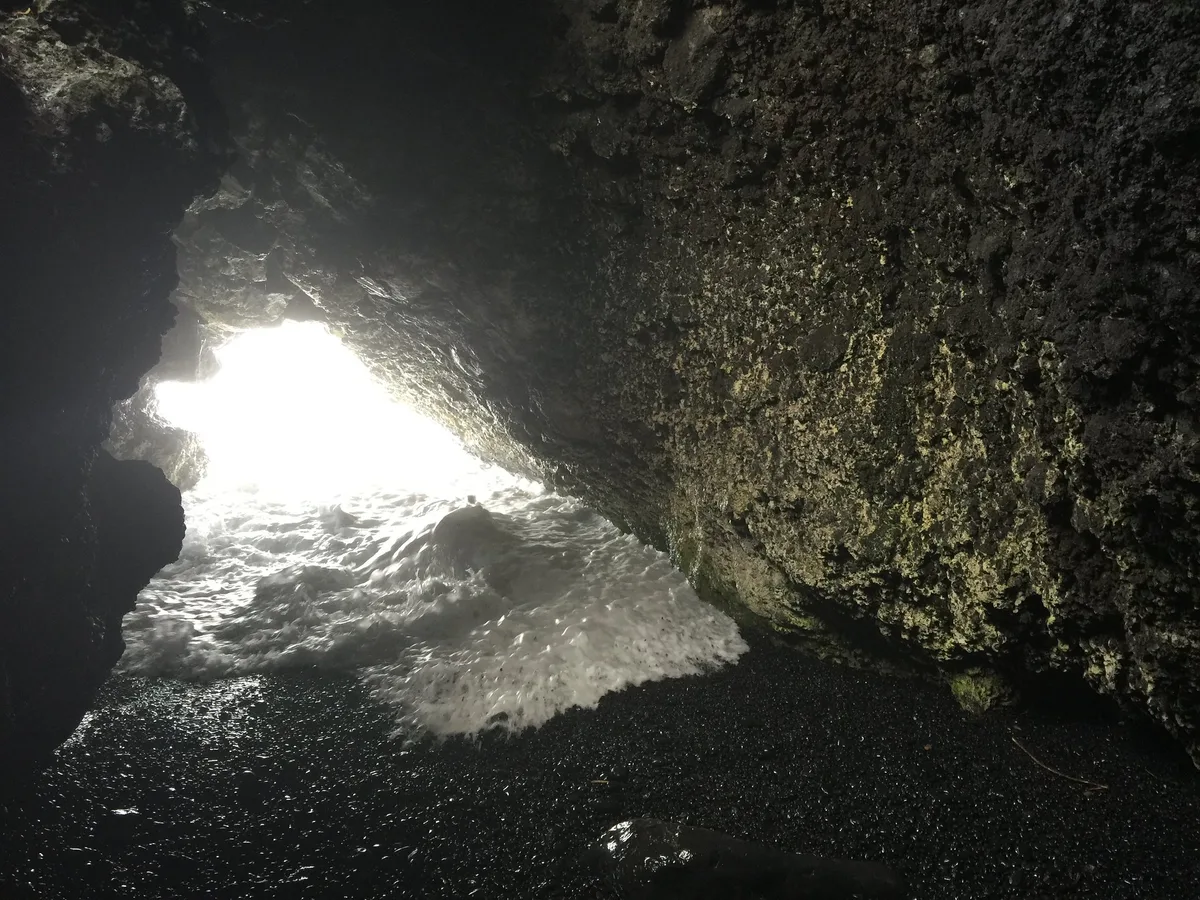
The sea arch framing deep blue ocean against jet-black volcanic sand is the defining shot — position yourself on the marked coastal trail for the cleanest angle.
The lava tube cave entrances draped in coastal vegetation offer a moody, shadowed composition, while the hala forest trail looking back toward the beach delivers a layered foreground-to-ocean frame that works especially well in morning light.
Where to eat
Hana Fresh, 2.2 km away, is your closest option after leaving the park. The Bamboo Hale (2.4 km) and The Preserve Hana (3.4 km) round out the small but solid dining scene near Hāna town — plan your meal before or after your visit since there's nothing to eat inside the park itself.
Where to stay
Cozy Cottage sits just 1.2 km from the park, making it the most convenient base if you want an early start before the day's visitors arrive. Hana Maui Resort, 3.5 km away, offers a more resort-style stay while keeping you deep in the Hāna experience.
Photography
Arrive at or just after 7:00 AM for low-angle morning light that turns the black volcanic sand almost iridescent against the deep blue ocean — the sea arch is your anchor shot. The lava tube cave entrances and the hala forest trail also reward a slower walk with a camera, especially in the softer light of early morning.
Good to know
Book your reservation well ahead — this is not a walk-up beach for non-residents, and spots fill fast. Do NOT enter the water: swimming is dangerous due to powerful surge, strong currents, dangerous shorebreak, and wave action against lava — fatalities have occurred from falling into the ocean from cliffs and getting trapped in sea caves. No lifeguard is on duty, falling rocks are a hazard, and Portuguese man o' war can be present. Stay on marked trails at all times, and do not enter the lava tubes without a guide.
GAMES
🕹️ Five minutes of sand?
Three daily games — including the UV simulator set to this beach.
Map
Nearby places
Hana Fresh
The Bamboo Hale
The Preserve Hana
Poke Bobs
Fish Taco’s
Cozy Cottage
Hana Maui Resort
Things to see around Hāna
Hāna Town
Remote East Maui community; Hāna Cultural Center and Hāna Bay nearby.
Hamoa Beach
Grey volcanic sand crescent enclosed by lava cliffs; Road to Hāna landmark.
'Ohe'o Gulch (Seven Sacred Pools)
Tiered freshwater pools within Haleakalā National Park south of Hāna.
GIFT
🎁 Gift this beach
Its exact coastline, your date, your words — on a print or a PDF you print yourself.
Wai'ānapanapa State Park Beach
THAT DAY
Wai'ānapanapa State Park Beach, Hawaii
© OpenStreetMap contributors
Clean & decorative, or “That day” with the real sky of your date.
Shipping included 3-6 business days
A question before you order? Contact us
Delivered within minutes on the confirmation page and by email: a ZIP with all 4 print sizes (30×40 cm, 12×16″, 50×70 cm, 18×24″), each as a high-resolution PDF and PNG (300 dpi), plus a screen version. Print at home or at any print shop.
Please complete the delivery address.
Please accept the Terms of Sale.
Almost there — the shop opens very soon.
Secure payment · Printed locally in 30+ countries · 7 languages
Frequently asked
The information on this page is provided for guidance only and may evolve. Access conditions, safety and infrastructure can change without notice. Always check official sources before traveling.
Nearest beaches
Other wild beaches in Hawaii
More beaches in Hawaii
Reviews of this beach
- No reviews yet, what a shame — leave yours and share your experience.
Photo credits
Sources and licenses for the photos shown above.
- Photo 1 — Dana Hutchinson · source · CC BY 3.0
- Photo 2 — Pedro Szekely from Los Angeles, USA · source · CC BY-SA 2.0
- Photo 3 — Gaétan · source · CC BY-SA 2.0
- Photo 4 — Pirate des îles moderne · source · CC BY-SA 2.0
- Photo 5 — Bring Back Words · source · CC BY-SA 2.0
- Photo 6 — TerryKihei · source · CC BY-SA 3.0