Anse Caïman BeachSeychelles Beach Guide
La Digue's unmarked pocket beach, earned by bicycle
About
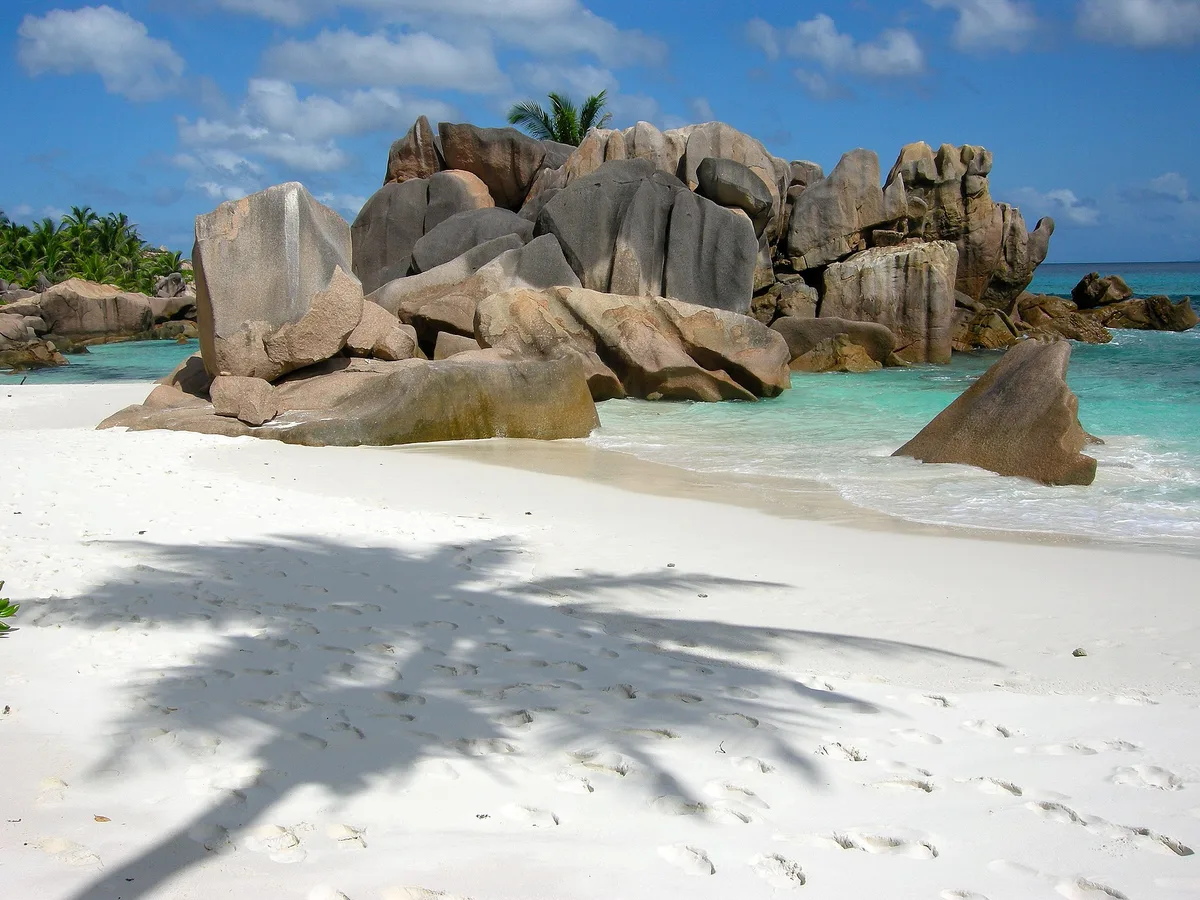
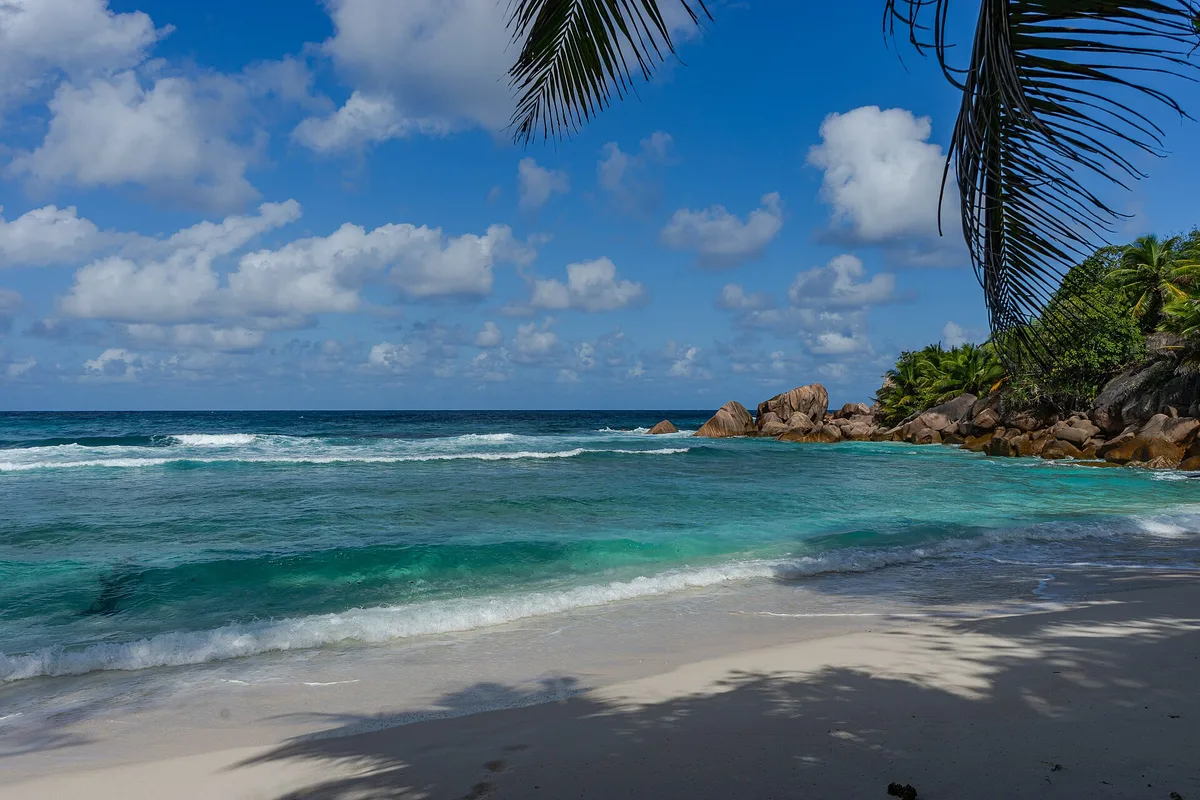
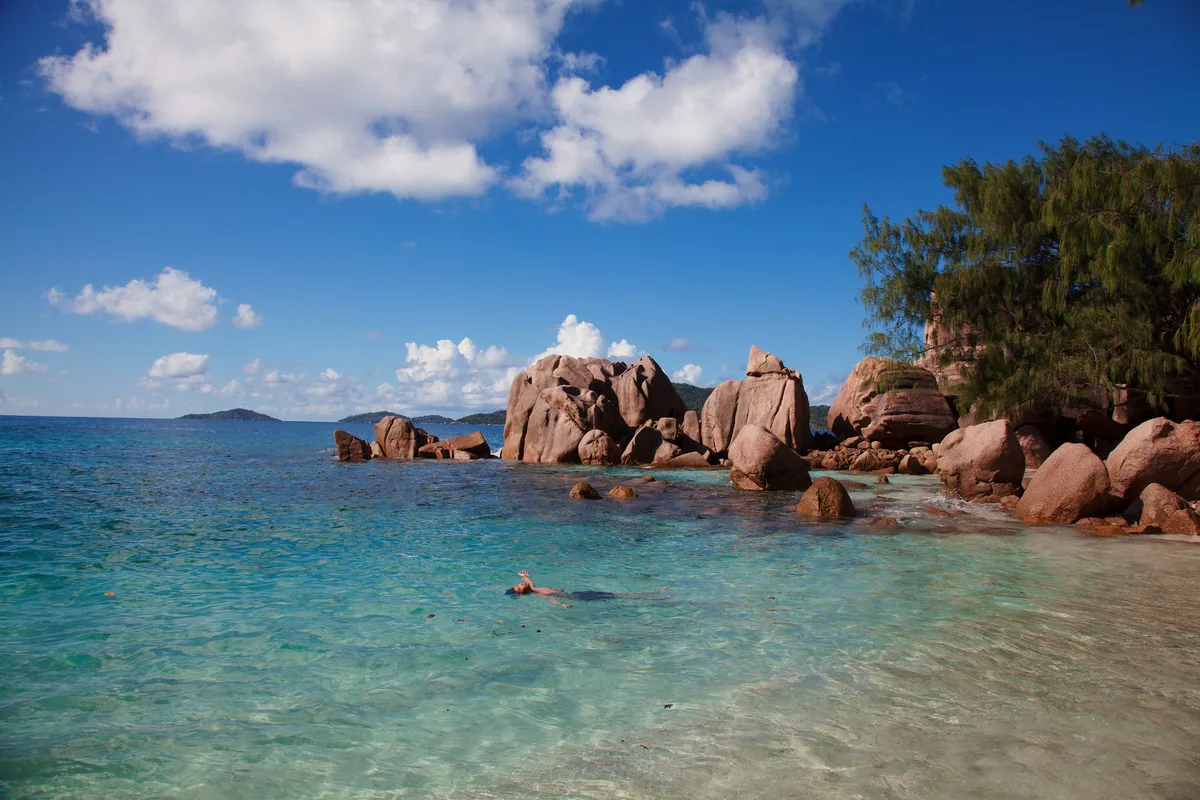
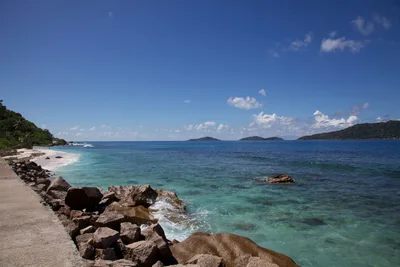
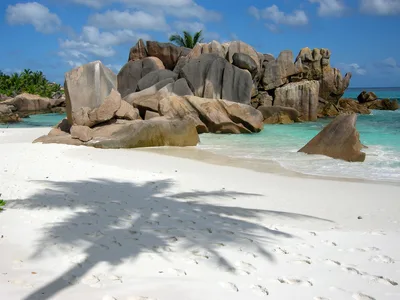
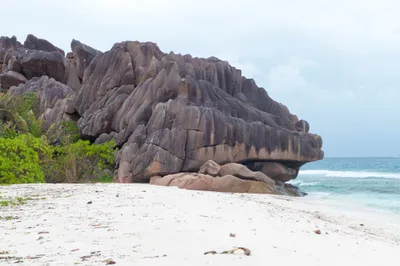
Anse Caiman is a small, wild pocket beach on La Digue's east coast, enclosed by twin granite outcrops that frame a strip of white sand against open blue water. There's no signage, no path marker, no facility — you find it by spotting a gap in the vegetation along the east-coast bicycle track between Anse Banane and Grand Anse. At roughly 60 metres long, it holds almost no one; on most days you'll have the sand entirely to yourself. The granite boulders, the raw shoreline, and the absence of any human infrastructure give it a genuinely wild character that's increasingly rare in the Seychelles.
How to get there
Anse Caiman sits on La Digue, an island with no cars — so there's no parking, no road, and no driving involved at any stage. Reach it by bicycle along the east-coast track, looking for an unmarked vegetation gap between Anse Banane and Grand Anse; the ride from either beach takes roughly five minutes. There is no entry fee, no signage, and no formal path — access is moderate in difficulty and not accessible for those with mobility limitations.
Who it's for
For couples
The near-guaranteed solitude and the raw granite enclosure make Anse Caiman one of La Digue's most private stretches of white sand — arrive mid-morning on a calm day between November and April and you'll likely have it entirely to yourselves.
For families
The lack of facilities, unmarked access, and surf and current risk on exposed days make Anse Caiman a poor choice for families with young children — Grand Anse La Digue, 0.8 km south, is a better-equipped alternative.
Our take
Anse Caiman rewards the curious and the self-sufficient. Before anything else: the surf and currents on this exposed east coast are real — check the sea state before you wade in, and on rough days, keep your feet dry. That said, on a calm morning between November and April, this small white-sand beach enclosed by granite is one of the quietest spots on an already quiet island. You won't find a sign, a bin, or a beach bar — just the sound of the ocean and the occasional cyclist who knows where to look. The bicycle circuit connection makes it easy to combine with Anse Banane to the north and Grand Anse to the south in a single half-day ride. Skip it entirely from May through September unless you're happy to simply sit on the sand and watch the swell. For anyone willing to do a little navigating, it's worth the detour.
What to do
Anse Banane, just 0.5 km north, is an east-coast beach with remnants of a banana plantation and makes a natural first stop on the bicycle circuit. Head 0.8 km south and you reach Grand Anse La Digue, the island's longest undeveloped beach. Further afield, the Veuve Nature Reserve — about 2.5 km away — protects the habitat of the endemic Seychelles Paradise Flycatcher, one of the rarest birds on earth.
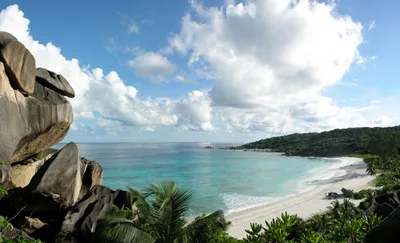
Stand at the southern granite outcrop and shoot north along the beach to capture the full curve of white sand framed by boulders and blue water.
The vegetation gap at the access point, with dappled light filtering through, makes a strong environmental portrait shot. At low sun angles, the granite faces catch warm light that contrasts sharply with the deep blue of the open ocean behind.
Where to eat
There are no food vendors or facilities at Anse Caiman — pack everything before you set out. The closest option is Chez Jules, about 1.1 km away, serving Creole and Cajun food alongside fresh juices. Belle Vue Café (1.3 km) and Loutier Coco (1.7 km) both offer regional cooking worth stopping at on your way back.
Where to stay
Chateau St. Cloud, roughly 2 km from the beach, is the closest hotel option on the island. Chloe's Cottage and Ylang Ylang are both around 2.3 km away, offering a more intimate guesthouse feel. Pension Michel-Villa Roche Bois and Diguoise Guesthouse are also within 2.7 km if you want to base yourself close to the east-coast circuit.
Photography
The twin granite outcrops are the defining shot — position yourself at the waterline at either end of the beach to frame the white sand between the boulders with open blue water behind. Morning light from the east hits this coast directly and is ideal before the midday glare flattens the scene.
Good to know
Surf and currents can be significant on exposed days — always assess conditions carefully before entering the water, and if the sea looks rough, stay out. There are no facilities and no shade, so bring water, sun protection, and everything you need before you leave your guesthouse. Dogs are welcome with no formal restrictions. Visit between November and April for calmer seas; the southeast trades from May through September push surf and currents onto this exposed east-facing shore, making swimming risky and the beach less enjoyable.
GAMES
🕹️ Five minutes of sand?
Three daily games — including the UV simulator set to this beach.
Map
Nearby places
Chez Jules
Belle Vue Café
Loutier Coco
Zerof
La Digue Pizzeria
Chateau St. Cloud
Chloe's Cottage
Ylang Ylang
Pension Michel-Villa Roche Bois
Diguoise Guesthouse
Things to see around La Digue
Anse Banane
East-coast beach with banana plantation remnant, north of Anse Caiman
Grand Anse La Digue
La Digue's longest undeveloped beach, south of Anse Caiman
Veuve Nature Reserve
Protected habitat of the endemic Seychelles Paradise Flycatcher
GIFT
🎁 Gift this beach
Its exact coastline, your date, your words — on a print or a PDF you print yourself.
Anse Caïman Beach
THAT DAY
Anse Caïman Beach, Seychelles Inner Islands
© OpenStreetMap contributors
Clean & decorative, or “That day” with the real sky of your date.
Shipping included 3-6 business days
A question before you order? Contact us
Delivered within minutes on the confirmation page and by email: a ZIP with all 4 print sizes (30×40 cm, 12×16″, 50×70 cm, 18×24″), each as a high-resolution PDF and PNG (300 dpi), plus a screen version. Print at home or at any print shop.
Please complete the delivery address.
Please accept the Terms of Sale.
Almost there — the shop opens very soon.
Secure payment · Printed locally in 30+ countries · 7 languages
Frequently asked
The information on this page is provided for guidance only and may evolve. Access conditions, safety and infrastructure can change without notice. Always check official sources before traveling.
Nearest beaches
Reviews of this beach
- No reviews yet, what a shame — leave yours and share your experience.